Skip to content

Watershed Associations

Watershed Associations Website posts

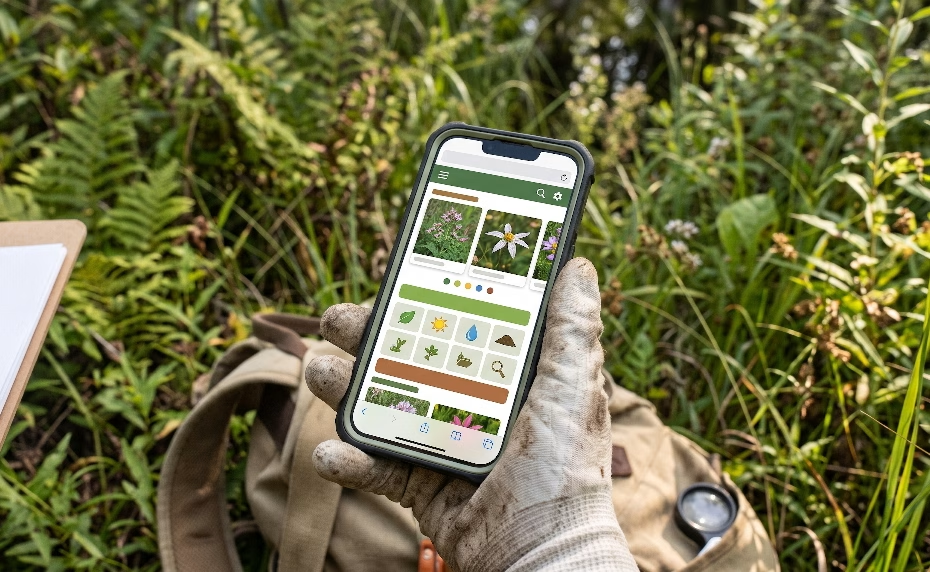
A mobile-first nature website on a smartphone.

Easy Mobile-First Nature: Optimizing Sites for Field Volunteers & Citizen Scientists

Field volunteers, restoration crews, and citizen scientists frequently look up regional plant availability on trail, but slow desktop-centric nursery sites fail in low-signal outdoor environments. Discover how mobile-first nature design, sun-readable high-contrast interfaces, offline PWA caching, and responsive live inventory… Read More »Easy Mobile-First Nature: Optimizing Sites for Field Volunteers & Citizen Scientists

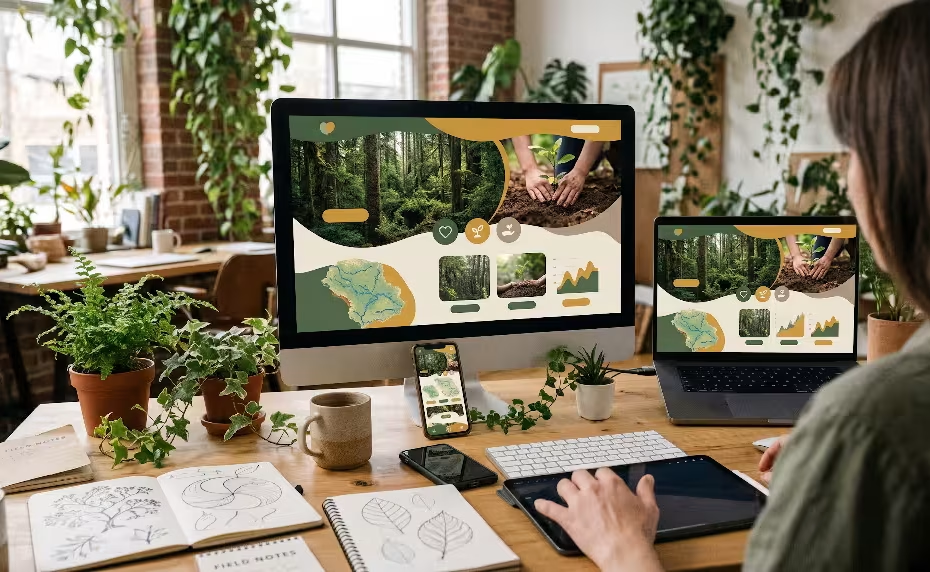
A man using biophilic ui design.

Biophilic UI Design: A Comprehensive Guide to Bridging the Digital-to-Nature Gap for Conservation Groups

Digital interfaces for environmental causes frequently rely on clinical grids and rigid Euclidean layouts that induce cognitive fatigue. Biophilic UI design leverages evolutionary biology, neuroaesthetics, and computational mathematics to realign the viewport with human neurology. By implementing logarithmic fractal distributions,… Read More »Biophilic UI Design: A Comprehensive Guide to Bridging the Digital-to-Nature Gap for Conservation Groups

A woman looking at environmental non-profit websites.

Why Environmental Non-Profit Websites Fail to Convert Donors (And How to Fix It)

Environmental non-profit websites regularly underperform commercial conversion benchmarks due to cognitive fatigue, fragmented checkout flows, and sterile UI architectures. By replacing generic corporate templates with biophilic interface patterns, transparent impact tiers, and frictionless mobile giving, conservation organizations can eliminate digital… Read More »Why Environmental Non-Profit Websites Fail to Convert Donors (And How to Fix It)

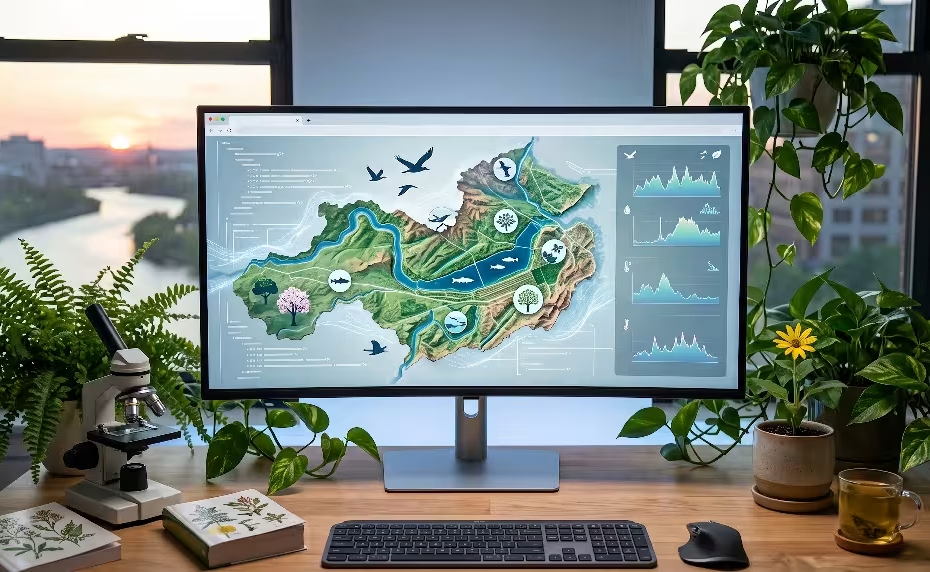
Live species feeds on a website.

A Proven Guide to Using Live Species Feeds to Improve Local Watershed SEO

Traditional local SEO relies on static zip codes, but modern semantic search requires physical entity validation. Integrating live species feeds and USGS hydrologic unit data into server-side JSON-LD schema anchors your digital architecture to real-world watershed catchments, significantly enhancing algorithmic… Read More »A Proven Guide to Using Live Species Feeds to Improve Local Watershed SEO

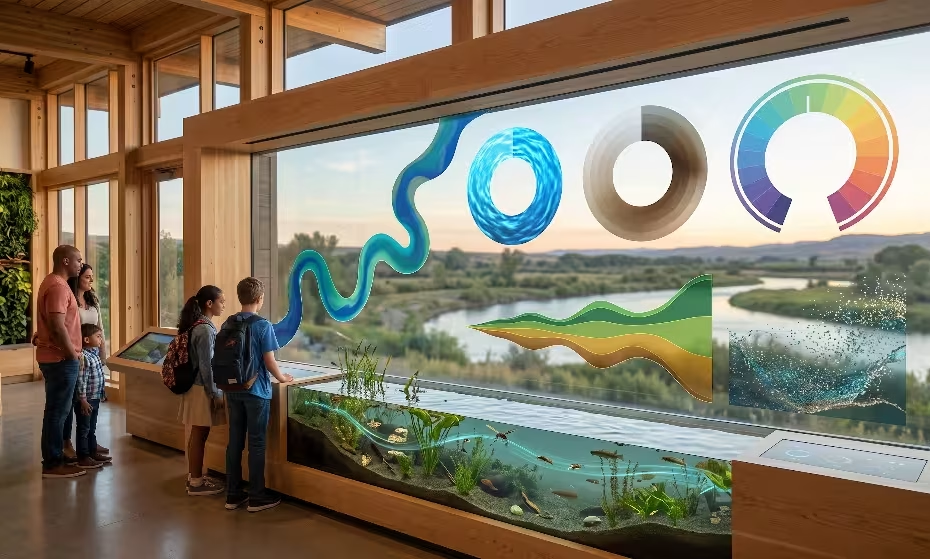
Visualizing water quality for waterbodies.

An Easy Guide to Visualizing Water Quality for Public Understanding

Raw hydrological telemetry often alienates the public with uncontextualized figures and abstract chemical thresholds. This technical guide outlines how to visualize water quality metrics using biophilic design systems, cognitive load reduction, and tiered visual disclosure. Learn how to transform continuous… Read More »An Easy Guide to Visualizing Water Quality for Public Understanding

Flora and fauna widgets for websites.

iNaturalist vs GBIF API for Live Flora and Fauna Widgets; A Comprehensive Comparison

An architectural evaluation of the iNaturalist and GBIF APIs for engineering dynamic live flora and fauna widgets. Discover key technical differences in data schemas, Darwin Core mapping, rate limits, photo licensing, and caching strategies to optimize biophilic UI components for… Read More »iNaturalist vs GBIF API for Live Flora and Fauna Widgets; A Comprehensive Comparison

The owner of this website has made a commitment to accessibility and inclusion, please report any problems that you encounter using the contact form on this website. This site uses the WP ADA Compliance Check plugin to enhance accessibility.