
Table of Contents
The Paradigm Shift in High-End Sustainable Web Design
Welcome to the new era of luxury digital spaces. For many years, a quiet battle has been going on between heavy design choices and the goals of saving our planet. Traditional web design for high-end eco-friendly showrooms used to rely on massive, unoptimized files. Designers loved to use giant video backgrounds that played automatically. They loaded sites with heavy code that made web browsers work overtime.
This old way of building websites hurts the environment because it requires a lot of energy from data servers. It creates a major conflict for brands that want to showcase high-end eco-friendly showrooms. A physical space might use reclaimed wood and solar power, but its website could be wasting huge amounts of electrical energy.
The good news is that we now have a clear resolution to this issue. We can use functional green web design to build sites that look incredibly expensive while keeping their digital carbon footprint small. The carbon footprint is the total amount of greenhouse gases made by our digital actions. We can achieve this balance by using biophilic design, which means bringing elements of nature into our digital systems. When we build websites for high-end eco-friendly showrooms, we do not have to sacrifice beauty for sustainability. Instead, we use smart engineering to make the site load fast, look clean, and use less power.
There is a major value proposition for companies that adopt this modern way of building websites. Elite shoppers who look for high-end eco-friendly showrooms expect the brands they love to act responsibly. When a website loads instantly and uses green infrastructure, it builds deep brand trust. It also helps to drop your bounce rate, which is the percentage of visitors who leave a site after looking at only one page.
By adopting corporate digital responsibility, which is the duty of a business to use digital technology in a way that helps society and the planet, you protect the earth. At the same time, you make your brand look more professional and exclusive to wealthy customers who care about the environment.
The diagram above shows the main parts of this style. As an expert in biology and web design, I use these exact pillars at Silphium Design LLC to help brands build beautiful sites. Let us dive deep into how these concepts can transform your online presence.
The Architectural Synthesis: Biophilic Design Principles Applied to UI/UX
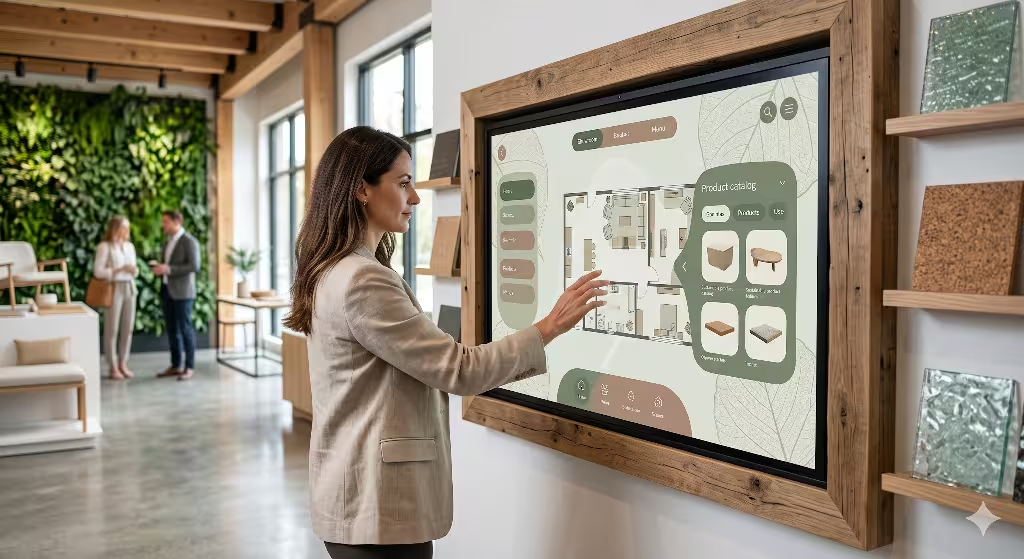
When we design spaces for high-end eco-friendly showrooms, we must think about how the human brain reacts to nature. Biophilic design is the practice of connecting people with the natural world through the spaces we build. We can translate physical biophilia directly into the user interface, which is the visual layout of a website.
When people view physical high-end eco-friendly showrooms, they feel calm because of the open spaces and natural light. We can create that same feeling on a website by using plenty of blank space and smooth layouts. This lowers the cognitive load, which is the amount of mental effort it takes to understand a web page. When users feel calm, they spend more time exploring your services.
Visual patterns and textures play a huge role in web design for high-end eco-friendly showrooms. Instead of using massive photography files that slow down web browsers, we can use clean vector patterns. Vectors are digital shapes made with math equations instead of pixels, so they look perfectly sharp at any size while using tiny amounts of data. We can design these patterns to mimic organic fractals, which are repeating shapes found in things like ferns, clouds, and river systems.
Humans are naturally wired to enjoy these shapes. We can also mix these organic shapes with natural, muted colors like soft moss greens, warm stone grays, and deep ocean blues. When we couple these choices with dark mode options, we save up to 60 percent of the power used by modern mobile phone screens. This keeps the presentation looking very high-end while protecting battery life and the environment.
We also use a concept called prospect and refuge when designing websites for high-end eco-friendly showrooms. In nature, animals love to have a wide view of their surroundings, which is called prospect. They also need a safe place to hide, which is called refuge. We can use this concept to build highly effective navigation systems. The top hero section of the website acts as the prospect. It gives the user a grand, expansive view of what the brand offers.
As the user scrolls down, we create refuge zones. These are clean, framed boxes containing text blocks where the user can read specific details without distractions. This balance makes the digital experience feel safe, structured, and luxurious. It gives online visitors the same feelings of comfort and security they would experience if they walked directly into physical high-end eco-friendly showrooms.
As you can see in the luxury website design example above, using natural colors and elegant structures makes a digital platform look highly exclusive. You do not need loud colors or annoying animations to capture attention. True luxury speaks softly through balance and clean lines.
Technical Execution & Asset Optimization Pipelines
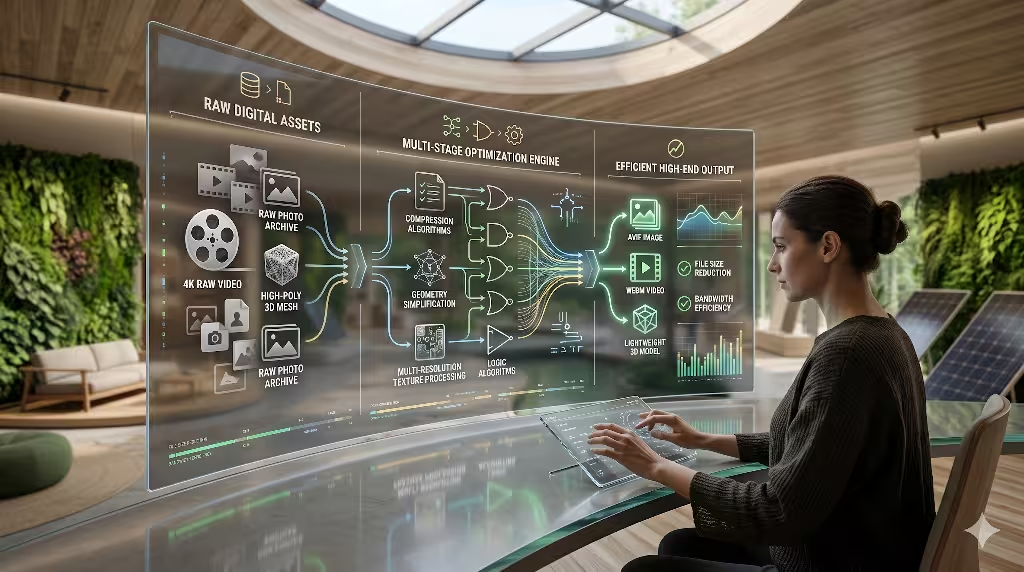
Building elite websites for high-end eco-friendly showrooms requires a deep understanding of web design. The first major step is optimizing the algorithmic asset layer, which is just a technical phrase for how we handle images, fonts, and scripts. Traditional web pages are weighed down by old file types like JEPGs and PNGs.
When we build digital spaces for high-end eco-friendly showrooms, we replace those old file types completely with AVIF files. AVIF is a modern image format that makes files incredibly small while keeping the details crisp. We also use WOFF2 files for typography, which are compressed font files that load instantly. By removing bloated code libraries and using vanilla JavaScript, which is plain programming code without extra attachments, we make the website incredibly fast.
+-------------------------------------------------------+
|  OLD METHOD: Heavy Luxury Design                      |
|  - Large JPEGs/PNGs -> High Server Energy             |
|  - Overloaded Code  -> Slow Page Load Speed           |
+-------------------------------------------------------+
                           |
                           v
+-------------------------------------------------------+
|  NEW METHOD: Optimized Sustainable UX                 |
|  - AVIF & WOFF2 Files -> Tiny Data Payloads           |
|  - Clean Vanilla JS   -> Fast, Green Performance      |
+-------------------------------------------------------+
The next part of our technical pipeline involves setting up eco-conscious infrastructure. Every time someone loads a website, a physical server somewhere in the world has to spin up and use electricity. To build sustainable websites for high-end eco-friendly showrooms, we must host our files on green web servers. These are data centers powered by 100 percent verified renewable energy sources like wind and solar power.
We also use edge computing and Content Delivery Networks, which are systems of servers spread across the globe. Instead of making a user in Boston pull data from a server in California, the website loads from a local server nearby. This drastically reduces the distance data has to travel, which shrinks the total digital carbon footprint of your brand.
When these engineering pieces come together, the results are incredible. Websites built for high-end eco-friendly showrooms using these methods load in less than a second. They use a fraction of the energy of a standard website. This is incredibly important for search engines because speed is a major factor in how websites are ranked. By optimizing your asset pipelines, you are not just helping the planet. You are making sure that your business ranks higher on search result pages, which brings more luxury clients straight to your digital doorstep.
Designing the Showroom Experience: Curated Minimalism & Interactive Storytelling
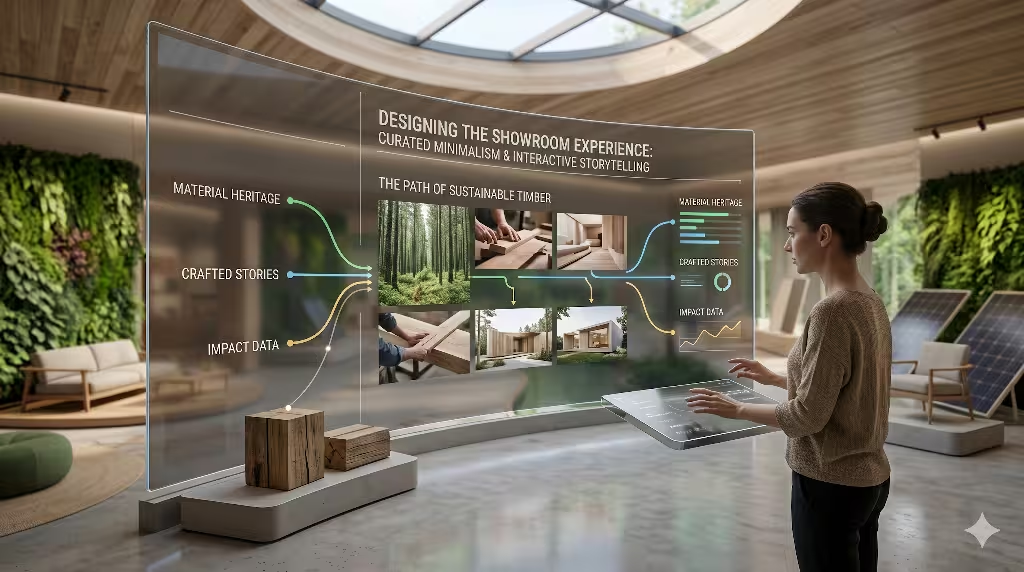
A digital experience for high-end eco-friendly showrooms must feel like a curated gallery walk. We achieve this by using curated minimalism, which means removing everything that does not add value. Instead of crowding the screen with text and flashing buttons, we allow the products to breathe. If you are showcasing sustainable furniture, solar arrays, or green building materials, the layout must look clean and deliberate. We use advanced CSS styles to create smooth, flowing movements as the user scrolls. These movements use the built-in power of the user’s device instead of running heavy background programs. This keeps the experience feeling buttery smooth while keeping power usage low.
Interactive storytelling is another way to connect with high-net-worth clients who are looking for high-end eco-friendly showrooms. Wealthy consumers do not just buy a product, they buy the story behind it. We can design lightweight interactive graphics that show the history of your items. For example, a user could click on a luxury flooring material and instantly see a clean timeline of its journey. The site can show how the wood was harvested from a sustainable forest, processed in a solar-powered mill, and treated with zero-VOC finishes, which are coatings that do not release harmful chemicals into the air. We can present this data without slowing down the site by using clean text charts and tiny vector graphics.
[Forest Sourcing] ---> [Solar Powered Mill] ---> [Zero-VOC Coating] ---> [Your Showroom]
Finally, we must design frictionless conversion funnels for high-end eco-friendly showrooms. A conversion funnel is the path a user takes on a website to become a paying customer, such as booking a private tour or calling a designer. To keep this process green, we follow the W3C Web Sustainability Guidelines. These rules state that a website should help users find what they want in as few clicks as possible. When a website is confusing, users waste time clicking around, which forces servers to run longer and burn more electricity. By designing a crystal-clear path to your contact page, you save the user’s energy and the planet’s energy at the exact same time.
Frequently Asked Questions about High-End Eco-Friendly Showrooms
Here are the top three questions regarding high-end eco-friendly showrooms along with their answers.
How can a luxury website reduce its digital carbon footprint without losing its premium appeal?
The secret lies in the difference between visual luxury and technical weight. True luxury on the internet is defined by speed, cleanliness, and flawless performance. You can reduce your digital carbon footprint by optimizing your code behind the scenes while keeping the front of your site looking gorgeous. When you use crisp custom typography, large amounts of whitespace, and highly compressed AVIF images, your site looks like an exclusive art gallery. Elite shoppers appreciate clean design that does not waste their time or device battery. By stripping away heavy animations and messy code tracking systems, you make the site run faster. This gives your clients a premium experience while reducing server load to protect the environment.
What exactly are the core rules of biophilic web design for eco-friendly brands?
The core rules revolve around biomimicry, which means copying the smart designs found in nature. First, you must use responsive fluid layouts that expand and contract smoothly, matching the natural flow of water or growing plants. Second, you must use a color scheme that feels organic, relying on natural tones that rest the eyes. Third, you must never use disruptive elements like unexpected pop-ups or loud video ads. In nature, environments are cohesive and peaceful. Biophilic web design requires us to create that same peace online. Navigation should feel like a gentle walk down a garden path, where information appears naturally exactly when the user needs it.
Does sustainable web hosting negatively impact site speed or local search rankings?
No, sustainable web hosting actually improves your site speed and boosts your local search rankings. Some people worry that green servers are less powerful, but that is a myth. Modern green hosting companies use top-tier solid-state drives and global network systems that are incredibly fast. When you host websites for high-end eco-friendly showrooms on green infrastructure, your page speed improves. Google tracks how fast your pages load using a system called Core Web Vitals. Because green hosting platforms are optimized for efficiency, they help your site pass these tests with flying colors. This tells Google that your site provides a great user experience, which lifts your ranking on local map packs and organic search results.
Search Engine & Generative Engine Optimization (SEO/GEO) Strategy
To make sure your platform stands out online, we must design a multi-layered search strategy for high-end eco-friendly showrooms. The first step is local intent optimization. Most wealthy clients want to visit physical spaces before making huge purchases. This means your website must be tuned to attract local buyers. We achieve this by embedding specific local phrases into your content and metadata. Instead of just targeting general words, we focus on targeted combinations like luxury sustainable showroom in Boston or premium eco-friendly design gallery. This ensures that your site ranks at the top when local interior designers and wealthy homeowners search for high-end eco-friendly showrooms in their specific regions.
+--------------------------------------------------------+
|  Local Search Intent Strategy Matrix                   |
+--------------------------------------------------------+
|  [Geographic Token]  +  [Core Luxury Eco Keyword]      |
|  Example: "Boston"   +  "high-end eco-friendly showrooms"|
+--------------------------------------------------------+
The next step is semantic entity linking. Modern search engines do not just count keywords anymore. They look at how words relate to each other as ideas, which we call entities. When we build websites for high-end eco-friendly showrooms, we use a special code called JSON-LD schema markup. This code sits in the background and talks directly to search engine crawlers. It explicitly links your business to major recognized entities like biophilic architecture, sustainable development, and green building certifications. This helps search engines understand exactly what your business does, which builds massive algorithmic authority for your brand.
Finally, we must optimize for Generative Engine Optimization, which means making your site ready for AI search assistants. When a user asks an AI assistant to find the best high-end eco-friendly showrooms, the AI reads the internet to find the clearest answers. To make sure the AI selects your business, your website content must be highly structured. We use clear definition paragraphs, well-organized bullet points, and data tables that outline your eco-friendly credentials. By presenting your facts clearly, you ensure that AI search engines will trust your data and recommend your physical showrooms to clients worldwide.
The Blueprint for Future-Proof Digital Showrooms
In summary, the digital world is changing fast, and web design for high-end eco-friendly showrooms must evolve with it. We have shown that you do not have to choose between luxury design and environmental responsibility. By merging computer science with biophilic design principles, we can create digital spaces that are both stunning and sustainable. These optimized systems lower data waste, speed up load times, and build deep trust with elite eco-conscious shoppers.
The next step for forward-thinking brands is to take immediate action. You can start by running your current website through digital sustainability tools like Ecograder or Web Carbon calculators. These tools will show you exactly how much energy your site uses and where you can make improvements. Making the switch to optimized assets and green hosting is a powerful investment. It honors your company’s dedication to the earth while giving you a massive advantage in search engine rankings. Let us build digital spaces that reflect the beauty of our physical world, creating a cleaner, faster, and more sustainable web for everyone.
Technical Appendix: Structural JSON-LD for Search Engines
Below is the structured schema code that should be embedded into the header of your website to implement the semantic entity linking discussed in section six.
JSON
{
  "@context": "https://schema.org",
  "@type": "RealEstateAgent",
  "name": "Silphium Design LLC",
  "description": "Expert web design for high-end eco-friendly showrooms using biophilic design and sustainable architecture principles.",
  "url": "https://www.silphiumdesign.com",
  "knowsAbout": [
    "Biophilic Design",
    "Sustainable Architecture",
    "Green Building",
    "Search Engine Optimization"
  ],
  "address": {
    "@type": "PostalAddress",
    "addressLocality": "Boston",
    "addressRegion": "MA",
    "addressCountry": "US"
  }
}