
Table of Contents
Modern environments, whether physical buildings or digital web pages, often fight against human nervous systems. When we design spaces and user interfaces that align with natural biological patterns, we unlock measurable economic returns.
In this article, we will examine how biophilic design justifies premium pricing across physical buildings and digital platforms. We will cover the biological foundations of human perception, answer common industry questions regarding costs, quantify return on investment, detail the core design elements, and provide a clear framework for presenting premium pricing to your executive clients and stakeholders.
The Biological Basis of Value: Why Human Hardware Demands Nature
To understand how biophilic design justifies premium pricing, we must first look at human biology. Human beings spent over 99 percent of their evolutionary history living in direct contact with natural environments. Our sensory systems, brain structures, and physiological responses evolved to process natural inputs like sunlight, wind, organic shapes, and natural acoustics. Modern indoor environments and digital screens represent a sudden evolutionary mismatch. When people spend time in sterile, artificial environments, their bodies experience subtle but constant stress. This stress elevates cortisol levels, lowers heart rate variability, and causes mental fatigue.
When a client asks how biophilic design justifies premium pricing, the answer starts with cognitive performance. In modern work environments, human brains rely heavily on directed attention. Directed attention is the mental effort required to focus on a screen, analyze numbers, or write code while ignoring distractions. This cognitive mechanism wears out quickly. When directed attention is exhausted, people make more mistakes, process information slower, and feel higher stress.
Attention Restoration Theory, developed by Stephen and Rachel Kaplan, proves that natural patterns restore directed attention. Nature engages what psychologists call soft fascination. Natural elements like moving leaves, shifting light, flowing water, or organic visual curves catch our attention effortlessly. This gentle engagement allows the brain’s focused attention mechanisms to rest and recharge.
+-----------------------------------------------------------------------+
|                       EVOLUTIONARY MISMATCH                           |
| Artificial Environments -> High Cortisol -> Directed Attention Fatigue|
+-----------------------------------------------------------------------+
                                   |
                                   v
+-----------------------------------------------------------------------+
|                    BIOPHILIC INTERVENTION                             |
| Natural Patterns -> Soft Fascination -> Restored Cognitive Function   |
+-----------------------------------------------------------------------+
                                   |
                                   v
+-----------------------------------------------------------------------+
|                        ECONOMIC VALUE                                 |
| Higher Productivity -> Increased Well-Being -> Premium Pricing Basis  |
+-----------------------------------------------------------------------+
This biological mechanism applies directly to digital user interfaces. When a user visits a complex web application or e-commerce platform, high cognitive friction leads to fast bounce rates and abandoned carts. By applying biophilic user experience principles, such as natural spatial proportions, organic transition rhythms, and biomimetic color palettes, we reduce mental fatigue for web users. This lower cognitive load keeps users engaged longer and thus can command premium pricing.
Because biophilic design improves user attention, lowers stress, and increases cognitive processing speed, it delivers superior real-world outcomes. This direct link between natural patterns and human brain performance is the core reason how biophilic design justifies premium pricing for clients who want higher engagement, better productivity, and increased revenues. Any service that improves human brain function naturally commands premium pricing in competitive markets.
Understanding these biological facts helps agencies and developers explain why simple visual design is no longer enough. Standard flat design treats users like machines. Biophilic design treats users like biological organisms. When you build environments that support human biology, you deliver a higher level of performance. This performance advantage explains how biophilic design justifies premium pricing across commercial real estate, corporate offices, luxury hospitality, and high-converting web applications. Clients pay more when you can prove that your work lowers stress and improves mental clarity.
Is Biophilic Design Expensive to Implement?
Direct Answer: Biophilic design is not inherently expensive. While complex structural changes or live botanical installations can add 1 percent to 15 percent to initial capital expenditures, simple natural interventions cost very little extra. When evaluated across the total lifespan of a building or digital site, biophilic features reduce long-term operational costs, boost user performance, and generate higher revenue, clearly demonstrating how biophilic design justifies premium pricing.
Many project owners hesitate to adopt biophilic principles because they assume natural integration requires massive capital expenditure. They picture expensive living plant walls with automated irrigation systems, complex timber structures, or custom architectural water features. While these large features certainly exist, biophilic design is a flexible framework rather than a single expensive product. It ranges from low-cost material selections to complete structural alignments.
When evaluating implementation expenses, decision makers must split costs into two main categories: initial capital expenditure (CapEx) and long-term operational expenditure (OpEx).
- Capital Expenditure (CapEx): Integrating natural light, natural material finishes, or biophilic UI patterns during the initial design phase adds minimal upfront cost. Choosing natural wood textures instead of synthetic laminates or arranging desks near existing windows requires thoughtful planning rather than higher budgets. In digital development, setting up organic grid structures and circadian color modes requires smart design logic, not extra server costs.
- Operational Expenditure (OpEx): High-quality biophilic systems lower operating costs over time. Natural daylighting strategies reduce artificial lighting electricity bills. Natural ventilation strategies lower heating and cooling demands. In digital products, biophilic layouts reduce user drop-off rates, lowering customer acquisition costs.
+-------------------------------------------------------------------------+
|                    CAPEX VS. OPEX INVESTMENT MODEL                      |
+----------------------------+--------------------------------------------+
| Capital Expenditure (CapEx)| Initial addition of 1% to 15% for natural  |
|                            | materials, lighting, or dynamic UI layouts.|
+----------------------------+--------------------------------------------+
| Operational Yield (OpEx)   | Lower energy bills, reduced bounce rates,   |
|                            | higher tenant and user retention rates.    |
+----------------------------+--------------------------------------------+
| Value Proposition          | Shows how biophilic design justifies       |
|                            | premium pricing over long asset lifespans. |
+----------------------------+--------------------------------------------+
When clients look only at initial building or development budgets, they miss the broader financial picture. A slightly higher upfront investment in natural design yields ongoing financial returns. This steady stream of operational savings and user efficiency gains demonstrates how biophilic design justifies premium pricing.
Furthermore, low-touch biophilic choices provide immediate value without adding construction complexity. Using fractal patterns in wall coverings, selecting non-toxic natural materials, or organizing software screens with natural visual hierarchies costs almost the same as traditional choices. Yet, these small details significantly raise the perceived quality of the finished product.
When presenting project budgets to decision makers, designers should highlight that biophilic integration is an investment in functional performance. By framing natural elements as tools for human health and digital conversion, you help clients see past the initial cost tag. This perspective shows how biophilic design justifies premium pricing by delivering clear financial value year after year.
The Economic Proof: Quantifying the Biophilic Premium
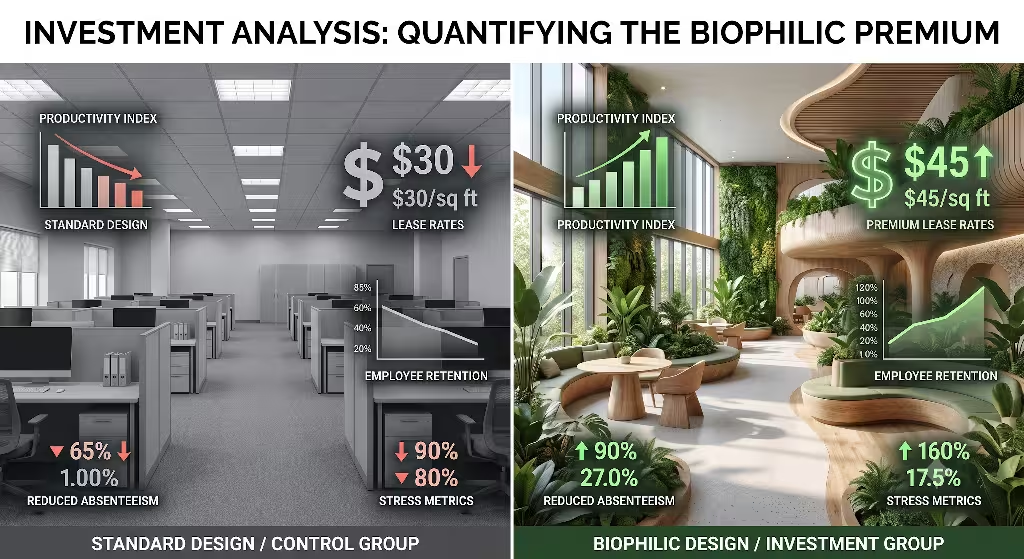
To win executive approval, design professionals must back up biological theories with hard economic data. The financial benefits of biophilic design are well documented across commercial real estate, workplace management, hospitality, and digital sales platforms. These empirical metrics clearly show how biophilic design justifies premium pricing.
In commercial real estate, properties that feature strong biophilic elements consistently outperform standard commodity buildings. Studies in urban centers show that office buildings with natural views, abundant sunlight, and indoor green spaces command rental rate premiums between 7 percent and 20 percent over comparable market rates. Furthermore, biophilic properties maintain higher occupancy rates and experience shorter vacancy periods. Tenants are willing to sign longer leases and pay higher rent for spaces that support employee health and productivity.
+--------------------------------------------------------------------------+
|                  BIOPHILIC PREMIUM FINANCIAL METRICS                     |
+---------------------------+----------------------------------------------+
| Real Estate Lease Rates   | 7% to 20% rental rate premium over standard  |
|                           | commercial market rates.                     |
+---------------------------+----------------------------------------------+
| Hospitality Room Rates    | 18% to 23% higher daily room rates for rooms |
|                           | with natural views and green elements.       |
+---------------------------+----------------------------------------------+
| Workplace Expenses        | 90% of business costs go to human personnel; |
|                           | a 1% productivity rise pays for redesign.    |
+---------------------------+----------------------------------------------+
| Digital Sales Impact      | Lower bounce rates and higher conversion     |
|                           | through reduced user cognitive friction.     |
+---------------------------+----------------------------------------------+
In corporate environments, business costs break down into three general categories: 1 percent for energy, 9 percent for property rent, and 90 percent for employee salaries and benefits. Because 90 percent of a company’s operating budget goes directly to its people, even tiny improvements in employee performance yield massive financial returns.
Industry research from environmental consulting firm Terrapin Bright Green shows that biophilic workplace interventions increase worker productivity by 6 percent to 12 percent, while reducing absenteeism by up to 15 percent. If a corporate redesign improves worker efficiency by just 1 percent, that gain fully offsets the entire cost of the renovation within 12 to 24 months. This clear return on human capital is a primary reason how biophilic design justifies premium pricing for commercial clients.
In retail and hospitality, the financial impact is equally clear. Guests at luxury hotels consistently demonstrate a willingness to pay 18 percent to 23 percent more per night for rooms with views of natural landscapes or integrated indoor greenery. In retail stores, consumers spend up to 12 percent more on goods framed by natural materials, biophilic lighting, and indoor vegetation. Customers perceive products sold in biophilic environments as higher quality.
In digital product design, we observe matching financial trends. Web platforms built with biophilic user interface principles achieve higher conversion rates and longer average session durations. When digital layouts mirror natural proportions, users navigate complex sales funnels with less hesitation. Lowering mental strain raises user trust. This boost in digital sales performance shows how biophilic design justifies premium pricing for custom web agencies.
By connecting natural design choices directly to increased lease rates, improved worker output, higher hotel room prices, and increased web sales, designers can prove the value of their proposals. These measurable economic outputs clearly explain how biophilic design justifies premium pricing to investors and corporate executives.
What Are the Main Elements of Biophilic Design That Increase Value?
Understanding how biophilic design justifies premium pricing requires a clear knowledge of its fundamental building blocks. Biophilic design is not just about putting a plant on a desk or adding a green color palette to a website. It is a detailed taxonomy of spatial and biological patterns established by Stephen Kellert and Edward O. Wilson. These elements fall into three main categories: Direct Experience of Nature, Indirect Experience of Nature, and Space and Place Conditions.
+--------------------------------------------------------------------------+
|                  CORE ELEMENTS OF BIOPHILIC DESIGN                       |
+----------------------------+---------------------------------------------+
| Direct Connections         | Dynamic daylight, fresh airflow, natural    |
|                            | water sounds, live indoor plants.           |
+----------------------------+---------------------------------------------+
| Indirect Connections       | Natural wood and stone, biomorphic curves,  |
|                            | mathematical fractal patterns.              |
+----------------------------+---------------------------------------------+
| Spatial Conditions         | Prospect (open views) and Refuge (safe,     |
|                            | protected retreat zones).                   |
+----------------------------+---------------------------------------------+
1. Direct Experience of Nature
Direct experiences involve real, physical contact with natural elements within an environment.
- Dynamic Natural Light: Providing access to natural sunlight that shifts throughout the day helps maintain human circadian rhythms. Correct lighting improves sleep patterns, boosts daytime mood, and enhances mental focus.
- Airflow and Temperature Variability: Subtle variations in air movement and temperature mirror natural outdoor breezes. These small physical changes keep occupants alert and comfortable.
- Presence of Water: Visual and acoustic exposure to flowing water reduces stress, lowers blood pressure, and improves relaxation.
- Living Plants and Vegetation: Integrating living plant communities cleans indoor air, lowers ambient noise, and provides direct visual connection to natural life cycles.
2. Indirect Experience of Nature
Indirect experiences use representations, patterns, and natural materials to evoke biological responses.
- Natural Materials: Using real wood, natural stone, wool, and leather creates tactile and visual richness. People naturally respond to the warmth and texture of unrefined materials.
- Biomorphic Forms and Patterns: Incorporating natural shapes, curves, and biological textures into architecture and digital interfaces avoids hard artificial lines.
- Natural Fractals: Utilizing repeating mathematical patterns found in nature, such as fern fronds, snowflake geometries, or coastline shapes, provides visual interest without overwhelming the brain.
3. Space and Place Conditions
Spatial conditions structure physical or digital environments to trigger deep biological feelings of safety and awareness.
- Prospect: Designing open sightlines that allow people to scan their surrounding environment. Prospect provides a feeling of control and situational awareness.
- Refuge: Creating secure, sheltered zones where people can retreat, focus, or rest while keeping an eye on the broader space.
- Mystery and Peril: Incorporating subtle spatial turns that encourage exploration, or safe elevated views that create excitement without actual danger.
When these core elements are combined thoughtfully, they transform simple spaces into engaging environments. The resulting boost in human well-being explains how biophilic design justifies premium pricing for residential, commercial, and digital design projects.
Consumer Psychology: How Biophilic Design Drives Willingness to Pay

The psychological link between natural elements and consumer behavior is a powerful driver of market value. Understanding this connection helps explain how biophilic design justifies premium pricing across luxury products, corporate offices, and consumer web applications. When people enter a space or use a software tool built with natural principles, their subconscious evaluation of value changes immediately.
Environmental psychology demonstrates that natural environments trigger positive emotional responses while lowering defensive instincts. In commercial spaces, natural lighting, organic materials, and gentle acoustics create a sense of authenticity and luxury. Consumers associate these natural features with quality, care, and prestige. As a result, their sensitivity to price drops significantly.
+-------------------------------------------------------------------------+
|                  CONSUMER PSYCHOLOGY & PERCEIVED VALUE                  |
| Natural Environment -> Positive Emotion -> Reduced Defensive Instincts |
+-------------------------------------------------------------------------+
                                   |
                                   v
+-------------------------------------------------------------------------+
|                      ELEVATED PERCEIVED QUALITY                         |
| Customers view brand as authentic, ethical, and high-status.            |
+-------------------------------------------------------------------------+
                                   |
                                   v
+-------------------------------------------------------------------------+
|                    INCREASED WILLINGNESS TO PAY                         |
| Reduced price sensitivity supports premium pricing across products.     |
+-------------------------------------------------------------------------+
This psychological shift affects several key areas of consumer behavior:
- Perceived Product Value: Products displayed in biophilic retail settings are consistently appraised at higher monetary values than identical items shown in plain settings. The natural frame enhances the perceived worth of the item.
- Dwell Time and Engagement: Shoppers and website visitors stay longer in environments that incorporate natural lighting, plant life, and organic spatial flow. Increased dwell time directly correlates with higher average order values and higher conversion rates.
- Brand Trust and Credibility: Companies that invest in natural, sustainable, and biophilic design send a strong signal of stability and social responsibility. Consumers trust these brands more readily, which helps support premium pricing for their offerings.
In digital UX design, biophilic principles create similar psychological effects. Standard modern websites often overwhelm visitors with bright artificial colors, sudden pop-ups, and dense text layouts. This high visual noise creates subtle user anxiety, causing visitors to leave quickly.
When a web agency uses biophilic user interface principles, such as gentle color gradients, natural spatial spacing, and smooth movement rhythms, the website feels calmer and easier to navigate. Users process information faster and feel more confident in their purchasing decisions. This elevated user experience allows brands to sell products at higher price points, illustrating how biophilic design justifies premium pricing in digital markets.
By tapping into deeply rooted biological preferences, biophilic design alters how consumers judge quality, trust, and price. When a design agency helps clients harness these unconscious psychological triggers, they deliver clear commercial advantage. This value creation demonstrates how biophilic design justifies premium pricing across physical and online sales channels.
What Is the Return on Investment (ROI) of Biophilic Design?
Direct Answer: The return on investment (ROI) of biophilic design is calculated by measuring direct energy savings, increased lease or sales revenue, and improvements in human productivity against the initial investment cost. Because human personnel account for the largest operating cost in modern businesses, even minor productivity improvements yield massive ROI, clearly proving how biophilic design justifies premium pricing.
Measuring the return on investment of biophilic projects requires looking at both hard financial savings and soft productivity gains. To calculate overall ROI accurately, project leaders can use a structured financial formula that combines energy reductions, tenant or customer revenue increases, and workforce performance improvements.
                  (Energy Savings + Revenue Increases + Productivity Gains) - CapEx
Biophilic ROI = ----------------------------------------------------------------------
                                              CapEx
Let us examine each component of this ROI equation in detail:
1. Direct Energy and Operational Savings
Biophilic strategies like daylight harvesting, dynamic shading, and natural ventilation lower utility expenses. Maximizing natural daylight reduces electric lighting usage. Strategic indoor plantings improve air quality and help regulate indoor humidity levels. These ongoing operational savings accumulate over the lifespan of a property, providing a reliable baseline ROI.
2. Revenue Expansion and Lease Premiums
Property owners who incorporate biophilic elements command higher lease rates, maintain higher occupancy levels, and experience lower tenant turnover. In hospitality and retail, biophilic features drive higher nightly room rates and increased customer spending. For digital products, biophilic UX increases conversion rates and lifetime customer value. These revenue gains add directly to the ROI calculation, demonstrating how biophilic design justifies premium pricing.
3. Human Capital Productivity Gains
The largest financial returns come from improvements in human capital. In office environments, employee compensation costs dwarf building construction and maintenance expenses. By reducing sick days, lowering turnover rates, and improving cognitive focus, biophilic design generates financial gains that far outweigh the original design investment.
+--------------------------------------------------------------------------+
|                  THREE PILARS OF BIOPHILIC ROI                           |
+--------------------------+-----------------------------------------------+
| Operational Savings      | Lower electricity, heating, and cooling costs |
|                          | through natural ventilation and daylighting.  |
+--------------------------+-----------------------------------------------+
| Revenue Expansion        | Higher lease rates, elevated room pricing, and |
|                          | higher digital sales conversions.             |
+--------------------------+-----------------------------------------------+
| Human Capital Gains      | Lower employee turnover, fewer sick days, and |
|                          | higher daily output and focus.                |
+--------------------------+-----------------------------------------------+
When all three pillars are combined, the total return on investment for biophilic design frequently exceeds 100 percent within the first two to three years. Over a ten-year timeline, the financial return is many times higher than the initial capital outlay.
This total financial model gives design teams a powerful tool when speaking to financial directors and executive boards. By framing natural design as a multi-vector financial asset rather than an optional visual addition, you show how biophilic design justifies premium pricing for serious commercial developments and high-end digital builds.
Strategic Framework: How to Present Premium Pricing Models to Clients
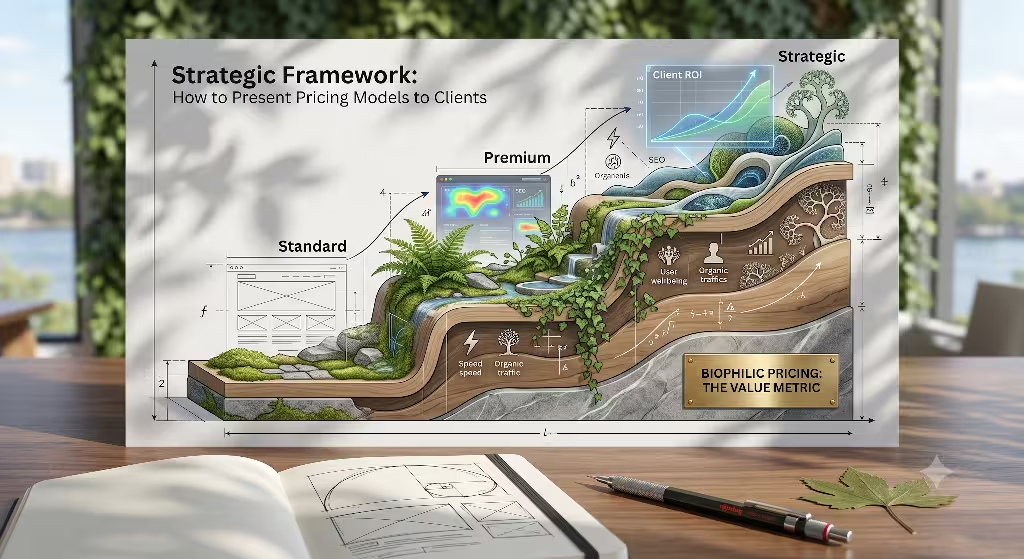
To successfully pitch biophilic services, design professionals must move away from traditional cost-plus billing methods. Charging by the hour or adding a flat markup on materials fails to capture the true business value created by natural design. Instead, teams should adopt a value-based pricing methodology that reflects the financial returns delivered to the client. This approach clearly demonstrates how biophilic design justifies premium pricing.
When presenting proposals, designers should structure their offerings into a clear three-tiered value model. This structure gives clients options while anchoring the highest tier around complete biological and spatial integration.
+--------------------------------------------------------------------------+
|                 THREE-TIERED VALUE PRICING ARCHITECTURE                  |
+-------------------+--------------------+---------------------------------+
| Level 1: Surface  | Basic natural      | Low CapEx, modest conversion    |
| Integration       | finishes & colors  | and aesthetic improvement.      |
+-------------------+--------------------+---------------------------------+
| Level 2: Sensory  | Circadian lighting | Mid CapEx, measurable health    |
| Alignment         | & acoustic control | and productivity gains.         |
+-------------------+--------------------+---------------------------------+
| Level 3: Full     | Complete biophilic | Strategic CapEx, maximum asset  |
| Biological System | spatial/UX build   | value and market leadership.    |
+-------------------+--------------------+---------------------------------+
Level 1: Surface Integration
This introductory tier focuses on low-touch aesthetic adjustments. In physical architecture, this includes selecting natural wood finishes, warm stone materials, and basic botanical accents. In digital UX, it involves implementing biomimetic color schemes and simple natural grid layouts. This tier requires low initial capital expenditure and offers modest improvements in user comfort and brand presentation.
Level 2: Sensory Alignment
The intermediate tier incorporates dynamic sensory systems. In physical spaces, this adds circadian lighting setups, acoustic dampening natural materials, and integrated indoor water features or plant walls. In digital environments, it introduces dynamic micro-interactions, circadian UI color shifts, and natural motion rhythms that lower mental fatigue. This tier requires moderate investment and delivers measurable gains in worker focus, health, and user engagement.
Level 3: Full Biological System Integration
The highest tier represents complete architectural or digital alignment with human biology. Physical builds feature optimized daylighting access, structural biomorphic architecture, full indoor plant ecosystems, and refined prospect-and-refuge spatial layouts. Digital applications feature fully customized biophilic design systems tailored to minimize cognitive friction across complex sales channels. This tier commands the highest investment and yields maximum asset value, top market pricing, and long-term competitive separation.
Using a tiered framework changes the client conversation from “Why is this so expensive?” to “Which level of financial performance and health optimization do we want to achieve?” By showing how higher investment levels yield greater human productivity and sales revenue, you make it easy for clients to see how biophilic design justifies premium pricing across every phase of the project.
Final Thoughts on Premium Pricing and Biophilic Design
Biophilic design is not a fleeting trend or a superficial decoration style. It is an essential engineering approach that aligns physical and digital spaces with human biology. By meeting our deep biological need for natural patterns, biophilic environments lower physiological stress, restore mental focus, and elevate overall user well-being.
Throughout this guide, we have examined the biological, economic, and psychological mechanisms that drive these results. From rental rate premiums in commercial real estate to improved user engagement on digital web platforms, the evidence is clear. Designing for human biology delivers superior financial performance. This proven performance capability is the foundation of how biophilic design justifies premium pricing for forward-thinking design firms and their visionary clients.
+-------------------------------------------------------------------------+
|                  BIOPHILIC IMPLEMENTATION BLUEPRINT                     |
+------------------+------------------------------------------------------+
| 1. Biological    | Audit physical and digital spaces for sources of     |
|    Audit         | cognitive strain, poor lighting, and visual noise.   |
+------------------+------------------------------------------------------+
| 2. Multi-Sensory| Layer natural lighting, organic materials, acoustics,|
|    Integration   | and biomorphic shapes into core project plans.       |
+------------------+------------------------------------------------------+
| 3. ROI Value     | Connect natural design choices directly to user      |
|    Framing       | productivity, dwell time, and revenue growth.        |
+------------------+------------------------------------------------------+
| 4. Tiered        | Present structured options showing how biophilic     |
|    Proposals     | design justifies premium pricing at every level.     |
+------------------+------------------------------------------------------+
Strategic Action Plan for Decision Makers
To capture these benefits in your upcoming projects, follow this simple implementation blueprint:
- Conduct a Biological Audit: Examine your existing physical offices or digital software interfaces to identify sources of mental fatigue, poor lighting, or sterile artificial layouts.
- Prioritize High-Impact Natural Elements: Integrate dynamic lighting, real wood and stone textures, and biomorphic forms into high-traffic areas and primary user flows.
- Frame Design Choices Around Business Outcomes: When speaking with stakeholders, focus on how natural design improves human focus, lowers health costs, and drives higher sales conversion rates.
- Adopt Value-Based Pricing Models: Position your design services as strategic investments in human performance and asset value, clearly demonstrating how biophilic design justifies premium pricing.
By integrating natural principles into every stage of your design process, you create environments and software tools that feel better, perform better, and endure longer. At Silphium Design LLC, we remain committed to advancing this vital intersection of biology, architecture, and computer science, helping our clients unlock the full biological and economic value of biophilic design.