
Nature has a way of making us feel better. When you sit by a stream or watch the waves at the beach, your brain changes. This isn’t just a feeling; it is biology. At Silphium Design LLC, we study how these natural patterns can be brought into the digital world. The internet is often full of sharp corners, bright boxes, and rigid lines.
But the human mind prefers something different. This is why fluid, water-inspired design feels calming and engaging to people who visit a website. In this article, we will look at how moving away from stiff boxes and toward a fluid style can make the internet a better place for everyone. We will explore the science of the brain, the way we look at screens, and how a fluid approach to building websites helps businesses keep their visitors happy and relaxed.
Table of Contents
The Evolutionary Pull of Water
Human beings grew up in nature. For thousands of years, our ancestors looked at trees, clouds, and water. None of these things are shaped like a perfect square. Because of this, our eyes and brains are trained to process organic shapes much more easily than sharp ones. When a website uses a fluid layout, it taps into this ancient part of our history. We call this “Aqua-morphism.” It is a fancy way of saying we make websites look and move like water.
The reason why fluid, water-inspired design feels calming and engaging is that it doesn’t fight against our natural instincts. A fluid shape is gentle. It leads the eye from one place to another without a “stop and start” feeling. Think about a river. It doesn’t turn at a ninety-degree angle; it curves. When a website mimics this fluid motion, our brains relax because we don’t have to work as hard to understand where to look next. This fluid style makes a digital space feel more like a home and less like a machine.
The Science of “Blue Mind” in Digital Spaces
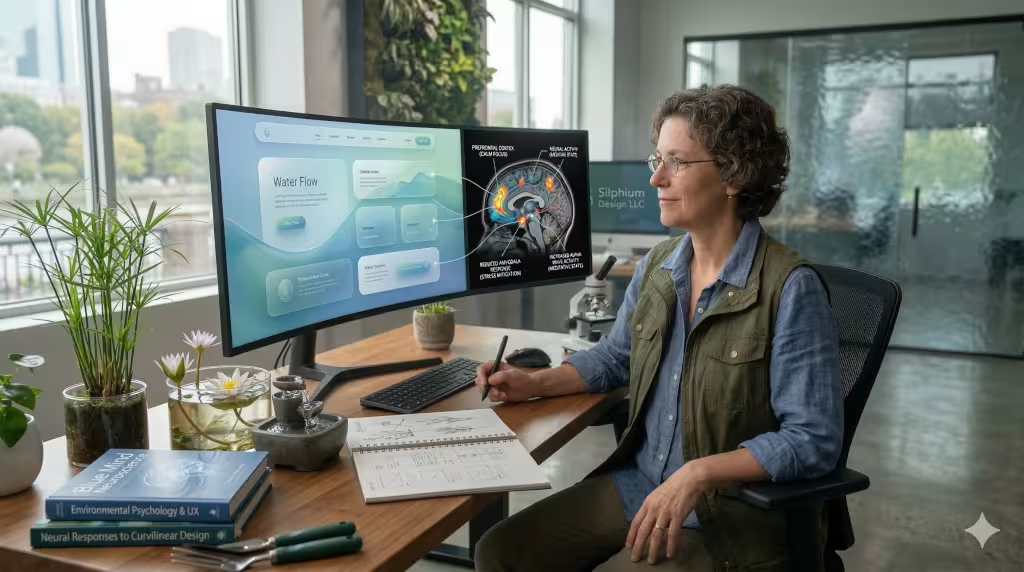
Scientists have discovered a state called the “Blue Mind.” This is a mildly meditative state we enter when we are near, in, or under water. It is the opposite of the “Red Mind,” which is full of stress and anxiety. Most of the internet is built for the Red Mind. It is full of flashing lights and loud colors. But a fluid design helps bring the Blue Mind to the screen.
When you see fluid curves on a screen, your brain releases chemicals that help you feel safe. A rigid, boxy design can actually make your cortisol levels go up. Cortisol is the hormone that makes you feel stressed. By using a fluid visual language, we lower that stress. We use “Soft Fascination,” which is a type of focus that doesn’t tire you out. Looking at a fluid animation of a wave is like looking at a fire in a fireplace. You are paying attention, but you aren’t getting tired. This is why a fluid design is so powerful for keeping people on a website for a long time.
Basic Elements of Water-Inspired UI/UX
To make a site feel like water, we have to change the way we build the user interface, or UI. The first step is getting rid of the “grid” that most designers use. Instead of a grid, we use curvilinear geometry. This means we use shapes that have curves like a pebble or a drop of rain. A fluid button might pulse gently when you hover over it, just like a ripple in a pond.
Micro-interactions are another big part of this. When you click a menu, it shouldn’t just “pop” open. It should slide open in a fluid motion. We use colors that look like they have depth. Instead of one flat blue, we use a fluid gradient that moves from dark teal to light seafoam. This creates a sense of translucency. When a user feels like they can “see through” the design, the website feels lighter and more breathable. Using a fluid approach to these small details makes the whole experience feel expensive and high-quality.
Why Water Drives Engagement
Engagement is just a word for how much someone likes and uses a website. A fluid design makes people want to stay. This is because of something called “Flow State.” When a person is in a flow state, they lose track of time because they are enjoying what they are doing. A fluid website helps this happen because there are no visual “speed bumps.”
If a website is clunky, you have to think about where to click. That breaks your flow. But if the design is fluid, your eye follows the “current” of the page. We use fluid lines to point toward the most important parts of the page, like a “Buy Now” button or a contact form. Instead of screaming for attention, the fluid design gently guides the user there. This natural movement is much more effective at getting people to take action than a big, red, square button.
The Power of Fluid Typography
Even the words on a page can be fluid. In the past, fonts were very stiff. Today, we can use “variable fonts.” These are fonts that can change their weight and width in a fluid way as you scroll down the page. This keeps the reading experience from feeling boring.
Imagine a headline that grows slightly thicker as you move your mouse over it, like a sponge soaking up water. This fluid motion keeps the brain active. It tells the user that the site is “alive.” When a site feels alive, it builds a stronger connection with the person using it. Fluid typography is one of the best ways to make a site feel modern and high-tech while still being very easy to read.
Why Water-Inspired Color Palettes Matter
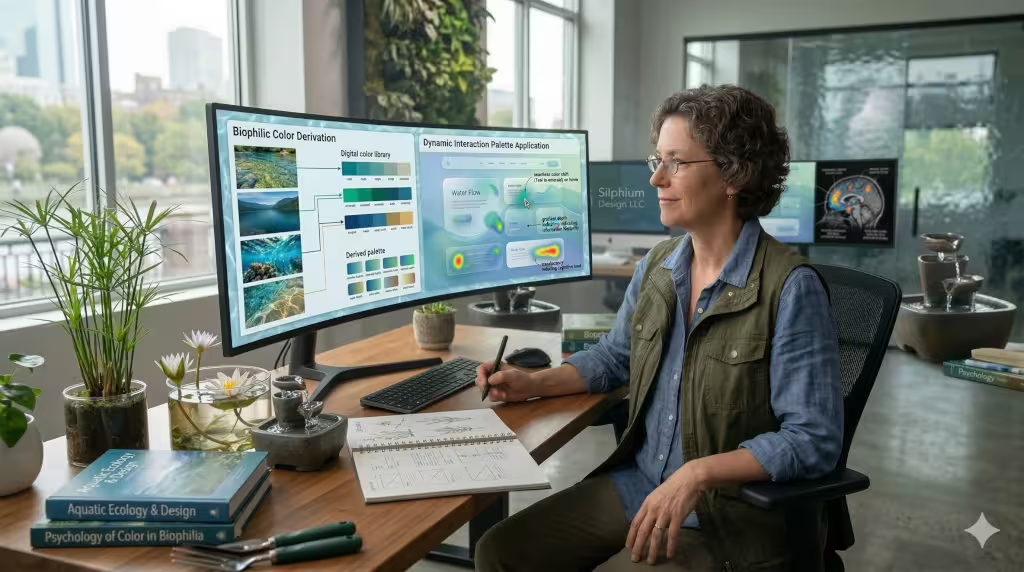
Color is a huge part of why fluid, water-inspired design feels calming and engaging. If you look at the ocean, it isn’t just one color. It is a fluid mix of blues, greens, and grays. We bring this into web design by using “mesh gradients.”
A mesh gradient is a fluid blend of several colors that seem to move and shift. It looks much more natural than a solid color. These fluid colors mimic the way light hits water. It creates a sense of “depth.” When a screen has depth, it feels like a window rather than a flat piece of glass. This makes the user feel more immersed in the website. A fluid color palette can set the mood for the entire brand, making it feel trustworthy and deep.
How a Water Design Changes User Behavior
When we talk about a fluid design, we are talking about more than just looks. We are talking about how people behave. Imagine walking through a crowded city with sharp corners and busy streets. Now imagine walking through a park with a winding, fluid path. In the park, you walk slower. you look around more. You are more likely to notice the small details.
A fluid website works the same way. When a user arrives at a fluid landing page, they stop “scanning” and start “reading.” Most people scan websites in an “F” shape, looking for keywords and then leaving. But a fluid layout breaks that habit. The fluid lines lead the user’s eyes in a more circular or wandering path. This means they spend more time looking at your content. Because the fluid design is so pleasing, they don’t feel like they are being sold something. They feel like they are exploring.
Implementing Fluid Layouts Without Frustration
For a long time, web designers were taught to put everything in a container. It was like putting groceries in a box. But a fluid layout lets the content breathe. We use “CSS Grid” and “Flexbox” to create layouts that are fluid. This means the website looks good on a giant computer screen and a tiny phone.
The layout is fluid because it stretches and shrinks like a rubber band. This is very important for SEO. Google loves websites that work well on all devices. A fluid design is the best way to make sure your site is “mobile-friendly.” Instead of having to build two different websites, we build one fluid one that changes shape to fit the user’s needs. This fluid approach saves time and money.
Common Questions Answered about Fluidity in Websites
Many people wonder what biophilic web design actually is. Simply put, it is the practice of bringing nature into the digital world. It isn’t just about putting a picture of a tree on a homepage. It is about using the rules of nature, like a fluid movement, to build the site itself.
People also ask how design affects mood. The answer is that every shape and color sends a signal to your nervous system. Sharp shapes send a “danger” signal. Soft, fluid shapes send a “safe” signal. This is why a fluid design makes you feel calm.
Another common question is why organic shapes are used in web design today. For a long time, computers weren’t powerful enough to show smooth, fluid curves easily. Everything had to be a block. But now, our phones and computers are very fast. We can finally make the internet look as fluid and natural as the real world. We are moving away from the “industrial” look of the past and moving toward a “biological” look.
Technical SEO and Performance Considerations
You might think that making a website move in a fluid way would make it slow. If a site is slow, it won’t show up on Google. This is a big concern for SEO. However, we use modern tools like SVGs and Lottie files to create fluid animations that are very small in file size. This keeps the website fast.
We also have to think about accessibility. Some people get dizzy when things move too much on a screen. Even though we love fluid design, we always make sure there is an option to reduce motion. A fluid design should be inclusive. It should feel good for everyone, regardless of how they see or interact with the world. We balance beauty with speed so that the fluid experience doesn’t hurt the site’s ranking.
Case Studies: Nature in the Browser
At Silphium Design LLC, we have seen great results with this fluid style. We recently worked with a local pool company whose main product involved water and needed a new website. We designed the site to have a main hero with pool water that moved and splash sound when you first enter the site. Going further, each of the image boxes were curved to mimic the shape of water.
This resulted in many people coming to the site. The effects of the water movement and the sound brought an added dimension to an otherwise flat website of images. This proves that a fluid design is a smart business move, not just a pretty one.
The Psychological Comfort of Water Motion
There is a concept in psychology called “affordance.” An affordance is a hint that tells you how to use something. For example, a handle on a door is an affordance that tells you to pull. In a fluid design, we use motion as an affordance.
If a menu slides out in a fluid way, it tells the user’s brain where that menu came from and where it will go when it closes. This makes the website feel “logical.” If things just appear and disappear, it can be jarring. But fluid motion connects the dots. This sense of logic makes the user feel in control. When a user feels in control, they are much more likely to stay and explore. This is a big reason why fluid, water-inspired design feels calming and engaging.
Creating Fluid Boundaries
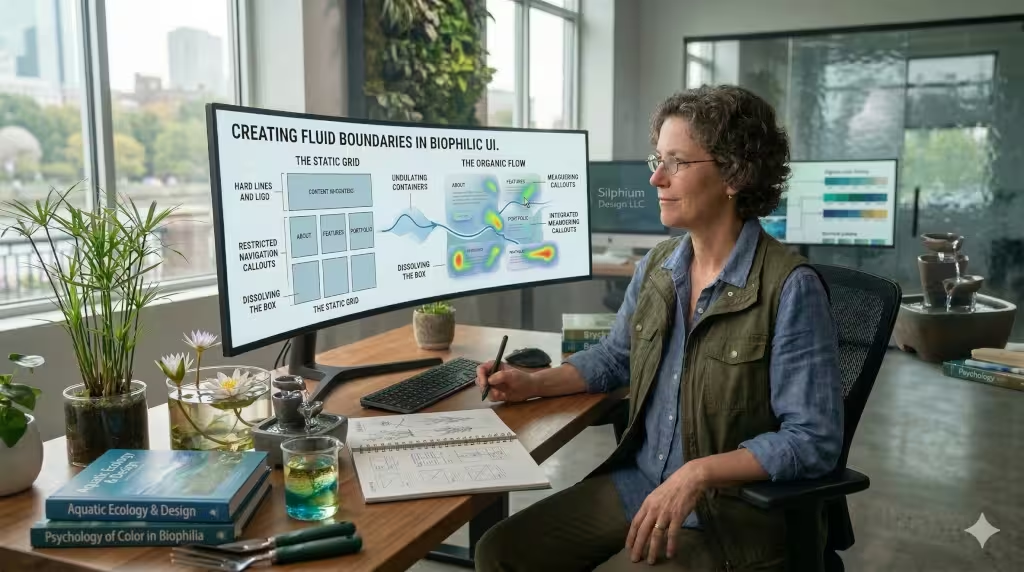
In a normal design, you use a line to separate two sections. In a fluid design, we use “waves” or “blobs.” These are fluid separators. They create a soft transition from one part of the story to the next.
Using fluid boundaries makes the page feel shorter. When you have a hard line, the brain sees it as a “stop” sign. You might decide to stop scrolling there. But a fluid wave encourages you to keep going. It’s like being pulled along by a gentle tide. This keeps people moving toward the bottom of the page, where the most important information usually is. The fluid nature of the page makes the long journey feel easy.
Bringing Fluidity to E-commerce
Can a fluid design help you sell more products? Yes. When people are shopping, they are often stressed. They are worried about spending money or making the wrong choice. A fluid design lowers that stress.
Imagine an online store for tea. If the site is blocky and harsh, it doesn’t match the feeling of drinking tea. But if the site has fluid animations and soft colors, it sets the right mood. The customer feels relaxed. In a relaxed state, people are more likely to make a purchase. A fluid design helps create a “lifestyle” feeling around a product. It turns a simple transaction into a pleasant experience.
The Role of Fluidity in Branding
Your brand is the “personality” of your business. If your brand wants to be seen as innovative and friendly, a fluid design is the way to go. Rigid designs often feel old-fashioned or “corporate” in a bad way. A fluid design feels fresh and modern.
It shows that your company is flexible. In a fast-changing world, being fluid is a good thing. It tells your customers that you can adapt to their needs. By using a fluid visual style, you are communicating your brand’s values without even saying a word. The fluid shapes speak to the subconscious mind, building a bond of trust and creativity.
Understanding the Fluid Nature of the Internet
The internet itself is fluid. It is always changing. Every second, new information is added. A website that is “static” or “stiff” feels out of place on the fluid web. By using a fluid design, you are making your site feel like it belongs in the modern world.
We think of websites as living things. They should grow and move. A fluid design allows for this growth. It is easier to add new features to a fluid layout than to a rigid one. This makes your website “future-proof.” You won’t have to start from scratch every few years because your fluid foundation is built to change.
The Beauty of Fluid Photography
Even the way we use photos can be fluid. Instead of putting a photo in a square box, we can use a fluid “mask.” This gives the photo an organic shape. We can also use “parallax scrolling.” This is when the background moves at a different speed than the foreground.
It creates a fluid sense of 3D space. It makes the user feel like they are moving through a real environment. When photos move in a fluid way, they feel more emotional. They tell a story instead of just showing a product. This emotional connection is why fluid, water-inspired design feels calming and engaging to so many people.
Designing for the Fluid Human Experience
At the end of the day, we aren’t designing for computers. We are designing for people. People are fluid. Our moods change, our needs change, and the way we use the web changes. A fluid design respects that.
It doesn’t force the user to act like a robot. It invites them to act like a human. It provides a space where they can feel calm, focused, and engaged. By choosing a fluid path, we are making the digital world a little bit more like the natural world. And that is a win for everyone.
The Future is Liquid
As we look toward the future, the internet will only become more integrated into our lives. We shouldn’t have to look at “boxes” all day. The world is fluid, and our digital lives should be fluid too. By embracing the reasons why fluid, water-inspired design feels calming and engaging, we can build a web that supports human health.
Biophilic design is not just a trend that will go away. It is a return to what makes us human. When we trade the rigid grid for a fluid flow, we create a better experience for the user and a more successful site for the owner. It is time to let the water in and make the internet a more fluid place to be.