Here at Silphium Design LLC, we have spent a lot of time looking at the deep connection between the natural world and the digital space. My background in biology and computer science has taught me that the best solutions are not invented. They are discovered. Nature has had billions of years to test what works. When we bring these lessons into our work, we create websites that do more than just look good. We create websites that feel right.
In this article, we will look at how the benefits of biomimicry for creating user-friendly websites can change your digital brand. We will explore how nature’s own rules can make your site faster, easier to use, and more successful. This is not just about pretty pictures of trees. It is about using the logic of life to build better tools for people.
Table of Contents
What is Biomimicry in Web Design?
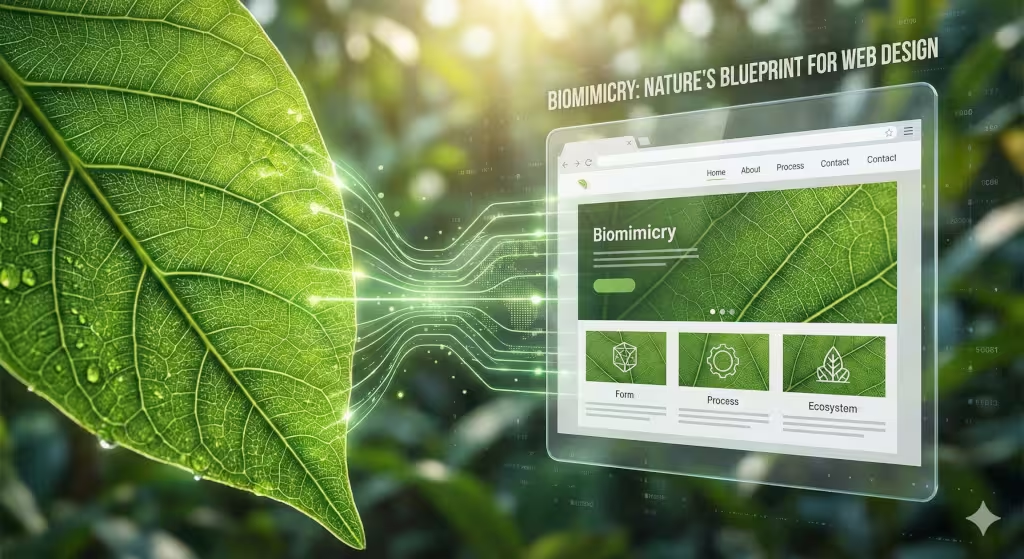
To truly understand the benefits of biomimicry for creating user-friendly websites, we must first look at what this field actually represents. At Silphium Design LLC, we view biomimicry as a bridge. It is a bridge between the biological world and the digital world. In nature, every shape and every action has a reason. A leaf is shaped the way it is to catch the most sunlight. A spider spins a web that is both strong and light to catch food. Biomimicry takes these smart “designs” from nature and applies them to how we build the internet.
When we use biomimicry in web design, we are not just making a site look like a forest. That would just be decoration. True biomimicry is about function. It is about asking, “How would nature organize this information?” or “How would a natural system handle this many users at once?” By asking these questions, we find solutions that have been tested by evolution for millions of years. This makes biomimicry a powerful tool for solving modern technical problems.
The Three Levels of Biomimicry in Design
To make a website truly user-friendly, we look at biomimicry on three different levels. Each level adds a new layer of value to the person using the site.
- The Level of Form: This is the most basic level. It involves using the shapes and patterns found in the natural world. For example, using the spirals of a shell to decide where to put a menu. This type of biomimicry helps the human eye feel at ease because it recognizes these shapes from the real world.
- The Level of Process: This level is about how things work. We look at how a cell communicates or how a forest stays healthy. In web design, this might mean creating a “self-healing” code or a navigation system that changes based on how people move. This type of biomimicry makes a website much more resilient and smart.
- The Level of Ecosystem: This is the highest level of biomimicry. It looks at how many different things work together as a whole. A website is not just one page; it is a collection of images, text, and code. We use ecosystem-level biomimicry to make sure all these parts work together without wasting any energy.
Why Biomimicry Makes Websites Better for Humans
The primary reason biomimicry is so helpful for creating user-friendly websites is that humans are part of nature. Our brains grew up in the woods and the fields, not in front of glowing screens. Because of this, our minds are naturally “tuned” to certain patterns. When a website ignores these patterns, our brains have to work harder. This leads to tired eyes and frustration.
By using biomimicry, we are speaking the “language” of the human brain. We use natural rhythms and flows that feel right to the user. This is a huge advantage for any business. If a user feels comfortable on your site, they are more likely to stay, read your content, and trust your brand. This is why biomimicry is not just a trend; it is a better way to build the future of the web.
Nature as a Mentor, Not Just a Resource
In the old way of design, people often thought of nature as something to be used or copied. In the world of biomimicry, we think of nature as a mentor. We look at a coral reef and see a perfect model for a high-traffic database. We look at the way a flower opens and see a perfect model for a mobile menu.
Using biomimicry allows us at Silphium Design LLC to stop guessing what might work. Instead, we look at what already works in the most successful system on Earth: life itself. This shift in thinking is what allows us to create websites that are not only beautiful but also incredibly powerful and easy for everyone to use.
The Benefits of Biomimicry for Creating User-Friendly Websites
The biggest goal of any website is to be helpful to the person using it. If a site is hard to use, people will leave. Nature is the master of making things work without wasted effort. One of the main benefits of biomimicry for creating user-friendly websites is that it reduces what we call cognitive load. This is just a fancy way of saying it makes the brain work less to find what it needs.
Nature uses patterns that our brains already know. When a website follows these patterns, it feels familiar right away. This creates trust. It also makes the site much faster to use. For example, the way a tree grows branches is very similar to how a good website organizes its pages. This natural order helps users guess where they need to click next.
Using the Golden Ratio for Visual Balance
One of the most famous patterns in nature is the golden ratio. You can see it in the spiral of a seashell or the way seeds are arranged in a sunflower. This mathematical pattern is known as phi. In math, we write it like this:
phi = 1 + sqrt5/2 approx 1.618
When we use this ratio in our website layouts, the design feels balanced. It helps the eye move naturally from one part of the page to the next. This is one of the key benefits of biomimicry for creating user-friendly websites because it guides the user to the most important information without them even thinking about it. At Silphium Design, we use this to place buttons and text in the perfect spots.
Swarm Intelligence and Website Search
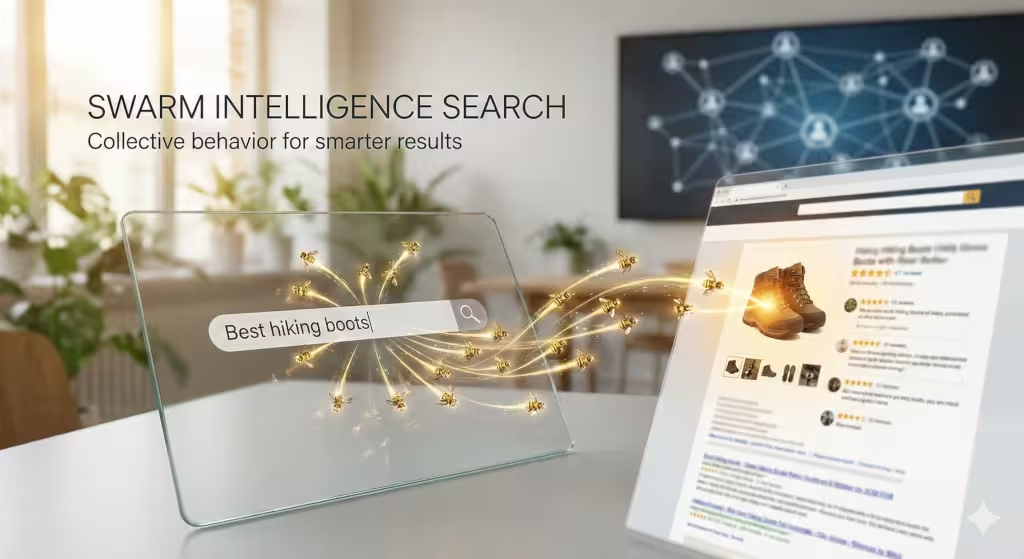
In our work at Silphium Design LLC, we often see search bars that are frustrating to use. They are stiff and only understand exact words. This is where the magic of biomimicry can truly shine. By looking at how swarms in nature find what they need, we can build search tools that feel like they have a mind of their own.
The Power of Collective Intelligence
Swarm intelligence is the study of how groups of simple animals, like ants or bees, work together to do complex tasks. No single ant is “the boss.” Instead, they all follow very simple rules. When thousands of these small actions add up, the whole group becomes incredibly smart.
When we apply this type of biomimicry to a website search bar, we stop relying on a single piece of code to find an answer. Instead, the search system looks at the behavior of every user who has ever used the site. Each user is like a single bee in a hive. If a hundred people search for “blue shoes” and ninety of them click on a specific pair of sneakers, the website learns. It “tags” that product as the best answer. This is a massive benefit of biomimicry for creating user-friendly websites because the site gets smarter every single day.
Digital Pheromones: Marking the Path
In the world of biology, ants use chemicals called pheromones to show their friends the way to a piece of fruit. The more ants that walk the path, the stronger the smell becomes. In the digital world, we can use “digital pheromones.”
Every time a user clicks a link after a search, they are leaving a digital scent. Our design systems use this biomimicry to highlight the most popular and helpful paths. This helps new users find what they need even faster. If the search bar sees that a path is getting “weak” (meaning people are not clicking it anymore), it moves that result lower. This ensures the most relevant information is always at the top. This is exactly how nature keeps its systems efficient and useful.
Particle Swarm Optimization for Faster Results
Another way we use biomimicry is through something called Particle Swarm Optimization. Think of a flock of birds looking for a place to land. They don’t just look at what is right in front of them. They watch where their neighbors are going. If one bird finds a great spot, the whole flock shifts toward it.
On a website, we can use “particles” of data to “fly” through the site’s content to find the best match for a user’s question. This happens in a fraction of a second. Instead of checking every single page one by one, these digital particles work together to zero in on the best answer. This speed is a major benefit of biomimicry for creating user-friendly websites. It prevents the user from waiting and helps them feel like the website truly understands their needs.
Reducing “Search Friction” with Nature’s Logic
“Search friction” is what happens when a user has to type five different things before they find what they want. It is the opposite of a user-friendly experience. Nature hates friction. A stream of water always finds the path of least resistance.
By using swarm-based biomimicry, we create a path of least resistance for your customers. We can even predict what a user is looking for before they finish typing. We do this by looking at what the “swarm” of previous users did in the same situation. This makes the search feel helpful and intuitive. It takes the work off the user and puts it onto the smart, natural system we have built for them.
Why This Matters for Your Business
At Silphium Design LLC, we know that a search bar is often the first thing a customer uses. If it fails, they leave. By using biomimicry to power your search, you are giving your users the “wisdom of the crowd.” You are making sure that the most helpful content is always easy to find.
This type of smart design does more than just help people find products. It builds a feeling of harmony. When a website works the way nature works, people feel a sense of peace and trust. They don’t feel like they are fighting with a machine. They feel like they are interacting with a living, breathing system that is there to help them.
Mycelium Networks and Site Structure
Underneath the forest floor, there is a giant network of fungus called mycelium. It connects trees and plants, helping them share nutrients and information. It is the most efficient network on Earth. When we design the structure of a website, we can learn a lot from mycelium.
Instead of a simple top-down list, we can create a web of links that are all connected. This helps search engines like Google understand how your pages relate to each other. It also helps users find related topics easily. A “mycelial” structure ensures that no page is a dead end. This keeps people on your site longer, which is a big win for your business.
Feedback Loops: Sensing and Responding
In nature, every living thing has to sense its environment. A plant grows toward the light. A squirrel runs when it hears a sound. This is a feedback loop. On a website, we need these same loops. When a user hovers their mouse over a button, the button should change color. This tells the user, “I see you, and I am ready.”
These small movements are called micro-interactions. They are a form of biomimicry that makes a website feel alive. If a site does not respond to a user, it feels “dead” or broken. By using natural feedback loops, we make the experience much more friendly and satisfying.
Color Theory from the Natural World
Nature uses color for very specific reasons. Bright colors might warn of danger, while soft greens and blues help us feel calm. When we choose colors for a website, we should look at these natural rules. Using colors found in a forest or by the ocean can reduce eye strain.
We also look at something called structural coloration. This is how a butterfly wing looks blue even though it has no blue paint on it. It uses tiny shapes to reflect light. While we cannot do this on a screen exactly, we can use gradients and lighting effects that mimic how light hits objects in nature. This makes the website look deeper and more real.
Digital Pheromones and User Paths
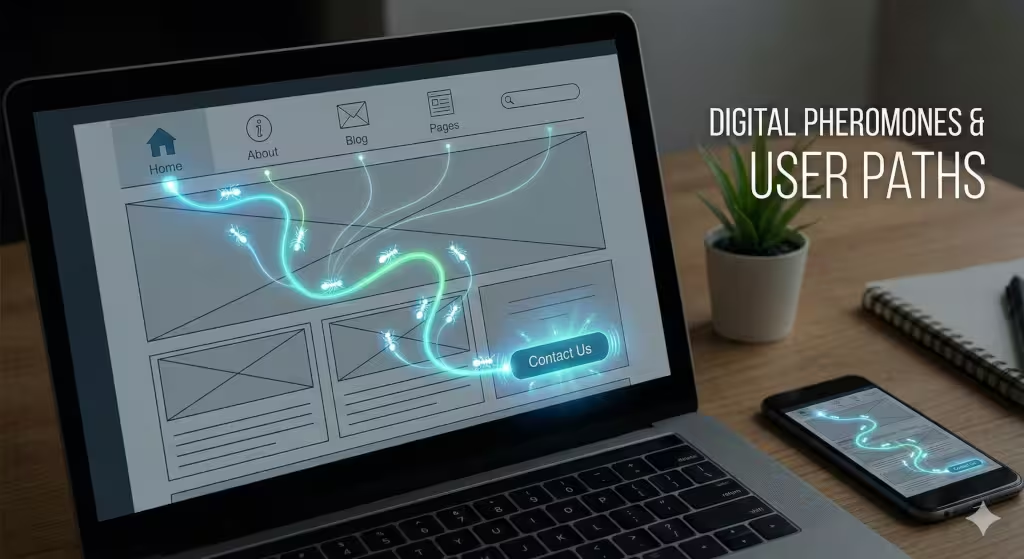
Ants leave a chemical trail called pheromones to show other ants the way to food. We can do the same thing with “digital pheromones.” By looking at heatmaps, we can see where most people are clicking. We can then make those paths easier to see for new users.
If we see that most people want to find your “Contact Us” page, we can make that path very clear. We are essentially strengthening the trail. This is a very effective way to use biomimicry to improve the flow of your website. It removes the guesswork for the user and leads them straight to the goal.
Sustainable Design and Resource Efficiency
Nature never wastes energy. Every leaf and every bug has a job. Many websites today are “heavy.” They have too many big files and messy code. This makes them slow and bad for the environment because they use more electricity.
By using biomimicry, we can build “lean” websites. We only use the code that is needed. We optimize images just like a desert plant stores only the water it needs. This makes the site load much faster. Speed is one of the most important parts of a user-friendly website. People do not like to wait. A fast site is a happy site.
Adaptive Resilience: Evolving with the User
The world is always changing, and nature adapts to survive. A website should do the same. This is called adaptive design. It means the site looks great on a phone, a tablet, or a big computer screen. But it can go even further.
An “evolving” website might change its layout based on what a user likes. If a person always looks at your blog, the blog might move to the front page for them. This kind of personalization is a form of biomimicry. It mimics how a living thing changes its habits to better fit its environment. It makes the website feel like it was made just for that one person.
Questions Answered about Biomimicry
How does biomimicry improve user experience?
It aligns the website with how the human brain naturally perceives the world. This makes the site easier to understand and more comfortable to use.
What are some examples of biomimicry in web design?
Examples include using the golden ratio for layouts, swarm logic for search, and natural color palettes to reduce eye strain.
Is biomimicry the same as biophilic design?
They are related but different. Biophilic design focuses on the look and feel of nature, like using wood textures. Biomimicry focuses on how nature functions and solves problems.
Why SEO Loves Nature-Inspired Design
You might be surprised to learn that search engines like Google actually prefer websites built with biomimicry in mind. Google’s goal is to give people the most helpful and easiest-to-use results. Since nature-inspired design focuses on being user-friendly, it naturally matches what Google wants.
When your site is fast, easy to navigate, and has a clear structure, you will rank higher in search results. Using the logic of biomimicry helps you hit all the marks that search engines care about. It is a smart way to get more traffic and keep people happy once they arrive.
The Future of Silphium Design
At Silphium Design LLC, we believe that the future of the internet is not more technology. It is better technology that works like nature. By using the benefits of biomimicry for creating user-friendly websites, we help our clients stand out in a crowded digital world.
We don’t just build pages. We grow digital ecosystems. If you want a website that feels as natural as a walk in the woods but works with the power of modern science, you are in the right place.