
Welcome to the intersection of nature and technology. At Silphium Design LLC, we believe that the internet should not be a cold, static place. For too long, web designers have built sites that look the same in the heat of July as they do in the frost of January. This is not how the human brain works.
We are biological creatures. We evolved in forests, near rivers, and under the shifting light of the sun. Our bodies have internal clocks that tell us when to wake up, when to eat, and how to feel based on the time of year. When a website ignores these cycles, it feels “dead” to the user. By using seasonal website templates, you can breathe life back into your digital presence.
This guide will show you how to use these tools to create a website that feels like a living, breathing part of the natural world. We will explore how spring, summer, fall, and winter designs can improve your search engine rankings and make your visitors feel right at home.
Table of Contents
The Biological Case for Seasonal UI
Humans have a deep, built-in love for nature. Scientists call this biophilia. It is the reason we feel calm when we look at a park and stressed when we are stuck in a windowless room. Most websites are like windowless rooms. They are filled with gray boxes and stiff lines. However, when you use seasonal website templates, you are opening a window. You are telling the visitor that your brand is aware of the world around it. This creates an immediate bond of trust.
In the world of web design, we often talk about user experience or UX. A big part of UX is how a site makes a person feel. If it is a snowy day outside and your website is showing bright, tropical beach photos, it creates a “clash” in the user’s mind. Their eyes see summer, but their body feels winter. This small bit of confusion can make them leave your site. By matching your look to the time of year with seasonal website templates, you lower this stress. You make the site feel “right.” This leads to more time spent on your pages, which is a big signal to search engines like Google that your site is high quality.
Spring Templates: Vernal Reawakening and Growth
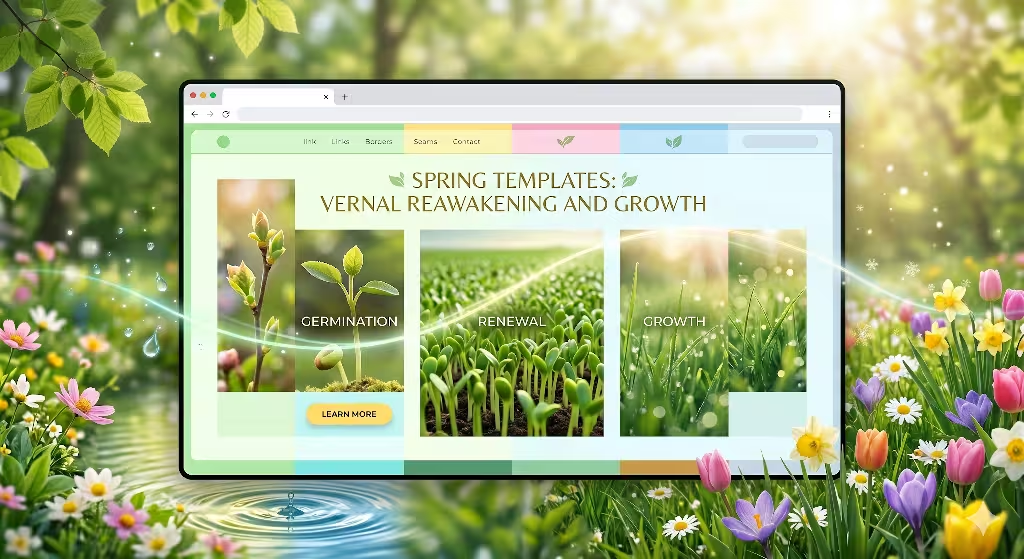
Spring is the season of new beginnings. In nature, we see tiny green buds and the return of birds. The light becomes brighter and more frequent. When you choose seasonal website templates for the spring, you want to capture this feeling of energy. You should look for designs that use light greens and soft yellows. These colors suggest growth and health. This website would be similar to my own website at Silphium Design.
In biophilic design, we use something called fractal patterns. These are shapes that repeat themselves at different sizes, like the branches of a tree or the veins in a leaf. Spring is the perfect time to use these patterns in your background. They are very pleasing to the human eye because our brains are trained to find them in the woods. Good seasonal website templates will use these natural shapes to guide the user’s eyes toward your most important information.
Another trick for spring is to use subtle movement. Think about how a flower sways in a light breeze. You can add very small animations to your buttons or headers that mimic this movement. It should not be loud or fast. It should be gentle. When seasonal website templates include these tiny natural movements, they keep the user engaged without making them feel overwhelmed. From an SEO standpoint, spring is a great time to refresh your content. Just as nature clears away the old leaves, you can clear away old blog posts and update them with new facts.
Summer Templates: Peak Saturation and Solar Influence
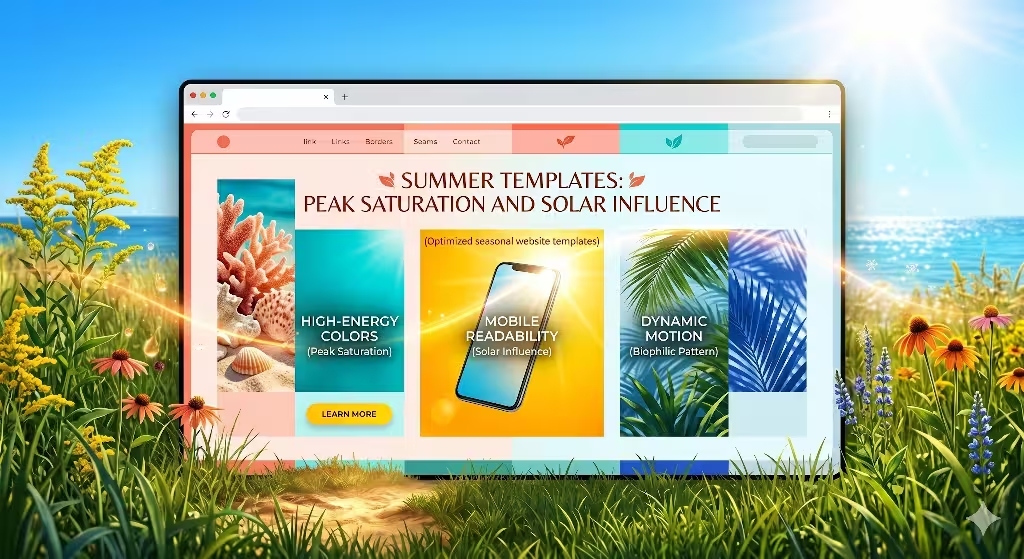
Summer is the time of maximum energy. The sun is high, and the colors in nature are at their most intense. When you pick seasonal website templates for summer, you need to think about how people use the internet during this time. Many people are outside. They might be looking at their phones in bright sunlight. This means your design needs high contrast. If your colors are too pale, the user will not be able to read your text.
Summer seasonal website templates often use deep blues to represent water and bright yellows for the sun. Using images of water can actually have a cooling effect on the person looking at the screen. This is a psychological trick. If someone is hot and tired, a website that looks “cool” and refreshing will make them want to stay longer.
In the world of SEO, summer is a competitive time. You want your site to be fast. Large, heavy images can slow your site down. The best seasonal website templates for summer are optimized to load quickly on mobile devices. We also look at “glanceability.” This means a user can understand your main point in just a second or two. Since people are busy during the summer, your seasonal website templates must get straight to the point.
Fall Templates: Harvest, Texture, and Transition
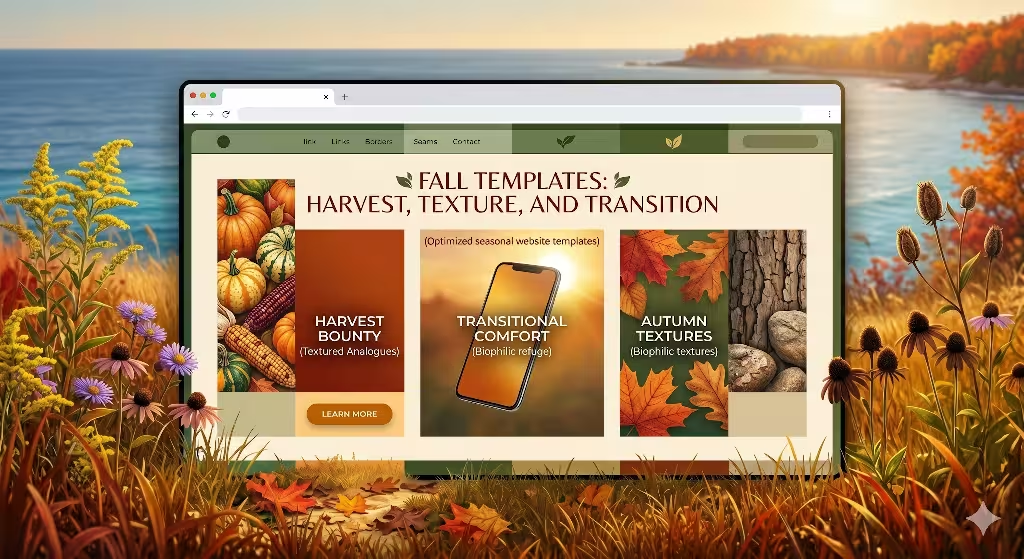
As the year turns toward fall, the mood changes. We go from the high energy of summer to a time of gathering and getting ready. This is the season of texture. Think about the rough bark of a tree or the crunch of dry leaves. Your seasonal website templates for fall should reflect this tactile feeling. You can use background images that look like wood, stone, or heavy paper. These textures make the digital world feel more “real” and solid.
The colors of fall are warm and rich. Think of burnt orange, deep red, and golden brown. These colors make people feel safe and cozy. In design theory, we talk about “Prospect and Refuge.” This means humans like to have a clear view of what is ahead (Prospect) but also a safe place to hide (Refuge). You can use fall seasonal website templates to create “Refuge” by using dark borders or cozy content boxes that stand out against a natural background.
From a search perspective, fall is when people start looking for reliability. They are settling in for the colder months. If your seasonal website templates look sturdy and warm, people will trust your brand more. This is also a great time to use keywords related to the harvest or the end of the year. By updating your seasonal website templates to match the autumn mood, you show that your business is mature and dependable.
Winter Templates: Dormancy, Structure, and Minimalism
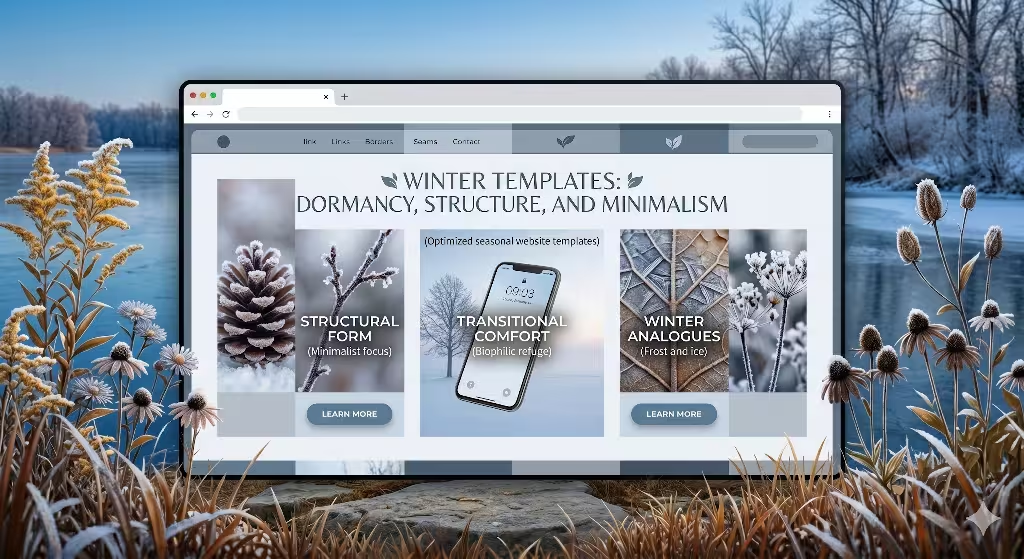
Winter is a time of rest. In nature, the leaves are gone, and we can see the “bones” of the forest. This is the perfect time for a minimalist design. When selecting seasonal website templates for winter, look for lots of white space. White space is the empty area around your text and pictures. Just like a field covered in fresh snow, white space makes everything look clean and organized. It helps the user focus on exactly what you want them to see.
During winter, the days are short and the light is blue. This can be hard on the eyes. Good seasonal website templates for winter will use softer tones. You might use a dark mode or colors that do not give off too much harsh blue light. This makes your site more comfortable to read at night.
Winter is also a time of high stress for many people because of the holidays. Your seasonal website templates should aim to reduce this stress. Use simple navigation. Do not clutter the screen with too many pop-ups or flashing ads. A calm, quiet website will be a breath of fresh air for a tired user. For SEO, winter is when you should focus on your core “evergreen” content. Use the quiet season to make sure your seasonal website templates are technically perfect and ready for the rush of the new year.
Technical Implementation: Seasonal State Management
You might be wondering how to manage all these changes without working 24 hours a day. The secret is automation. You do not need to build four different websites. Instead, you use seasonal website templates that can change their “skin” based on the date. We do this using something called CSS variables and/or a JavaScript switch.
Think of a CSS variable as a bucket. You can name one bucket “Brand Color.” In the spring, you fill that bucket with green. In the fall, you fill it with orange. By changing just a few lines of code, the entire look of your seasonal website templates will shift. You can even set this to happen automatically. Your website can look at the computer’s clock and decide which version of the seasonal website templates to show.
Speed is also very important. When you add seasonal decorations to your site, you must make sure they do not slow it down. Google cares a lot about how fast your page loads. If your seasonal website templates have big, beautiful images, make sure they are compressed. This means the file size is small, but the image still looks great. Using modern image formats like WebP can help your seasonal website templates stay fast and rank well in search results.
Another technical tip is to use “Schema Markup.” This is a special code that tells search engines exactly what is on your page. If you are running a seasonal sale or have special seasonal content, this code helps Google show that information directly in the search results. This makes people more likely to click on your site.
How Can Seasonal Website Templates Improve My SEO?
Many people ask how changing the look of a site helps with search engine optimization. The answer is about “Freshness” and “User Signals.” Google likes sites that are updated often. When you change your design using seasonal website templates, you are sending a signal that the site is being cared for. It tells the search engine that the information is likely to be current.
Also, when users enjoy the look of your site, they stay longer. This is called “dwell time.” If someone clicks on your site and leaves immediately, it tells Google that your page was not helpful. But if they stay and look around because they love your seasonal website templates, Google thinks your site is excellent. This helps you move up in the search rankings. Seasonal website templates give you a reason to refresh your layout four times a year, which keeps both users and search bots interested.
What Elements Should I Change in a Seasons-Themed Template?
You do not have to change every single thing on your page. In fact, it is better if you keep your main logo and navigation the same so people still recognize your brand. The best things to change in your seasonal website templates are the “Hero” images, the background colors, and the fonts.
The “Hero” image is the big picture at the very top of your home page. This is the first thing people see. If this image matches the current season, the user immediately feels the biophilic connection. You can also change the small icons on your site. For example, in the winter, your “Add to Cart” button might have a tiny bit of frost on the edge. In the summer, it might have a sunbeam. These small touches in your seasonal website templates make the experience feel special.
Is It Better to Use a Dedicated Seasonal Landing Page or a Site-Wide Theme?
This is a very common question. Some people think they should make a brand new page for every season. However, from an SEO perspective, it is usually better to keep your main URLs the same and just change the look. If you create a new page and then delete it when summer comes, you lose all the search power that page built up.
Instead, use your seasonal website templates to update your main home page. This keeps your “link equity” in one place. It also ensures that anyone who has bookmarked your site will see the fresh, seasonal look without having to find a new link. If you have a specific event, like a “Summer Sale,” you can have a landing page for that, but your seasonal website templates should still apply to the whole site to keep the brand feeling consistent.
Can Biophilic Design Increase User Retention?
Yes, it absolutely can. Scientific studies have shown that seeing images of nature can lower a person’s heart rate and reduce stress. When people are less stressed, they are more likely to make a purchase or sign up for a newsletter. They are also more likely to remember your site.
By using seasonal website templates that follow biophilic rules, you are creating a “digital garden.” People like to spend time in gardens. They don’t like to spend time in gray, boring hallways. If your website feels like a pleasant natural environment, your visitors will come back again and again. This repeat traffic is very valuable for your business and your SEO rankings.
Finding the Best Keywords for Seasonal Search
To get the most out of your seasonal website templates, you need to know what people are searching for. Search habits change with the weather. In the spring, people search for “cleaning,” “growth,” and “outdoors.” In the winter, they search for “gifts,” “warmth,” and “holidays.”
You should do keyword research for every season. Look for words that fit your business and the time of year. Then, make sure those words are included in your seasonal website templates. For example, if you sell coffee, you might use “refreshing iced lattes” in your summer seasonal website templates and “cozy cinnamon lattes” in your winter version. This helps you show up in the right searches at the right time.
The Importance of Accessibility in Seasonal Design
While we want our seasonal website templates to look beautiful, they must also be easy for everyone to use. This includes people who might have trouble seeing or who use a screen reader. Sometimes, when we use seasonal colors, we might choose combinations that are hard to read. For example, light green text on a white background can be very difficult for some people.
Always check the contrast of your seasonal website templates. There are free tools online that can tell you if your text is easy enough to read. Also, make sure that any seasonal images you use have “alt text.” This is a short description of the image that a screen reader can read out loud. If you have a picture of a snowy forest in your winter seasonal website templates, the alt text should say “Photograph of a quiet forest covered in snow.” This makes your site better for everyone and helps with SEO too.
Seasonal Content Planning
Using seasonal website templates is just one part of the puzzle. You also need a plan for your content. Think about your blog or your news section. Each season gives you a new topic to talk about. In the fall, you might write about “harvesting success” or “preparing for the end of the year.” In the spring, you could talk about “spring cleaning your business.”
When your writing matches your seasonal website templates, the whole site feels unified. It shows that you are putting thought into your digital presence. This attention to detail is what sets great brands apart from average ones. It also gives you more chances to use your target keywords in a way that feels natural and helpful to the reader.
Tracking Your Results
After you have set up your seasonal website templates, you need to see if they are working. Use a tool like Google Analytics to track how people are using your site. Are they staying longer? Are they clicking more buttons?
Compare your results from this year to your results from last year when you didn’t use seasonal website templates. You will likely see that people are more engaged. You can also see which seasons are the most popular for your specific audience. This information helps you make your seasonal website templates even better for the next year.
Synchronizing with the User
At the end of the day, web design is about connection. We want to connect a business with a person. The best way to do that is to speak the language of nature. By using seasonal website templates, you are honoring the biological reality of your visitors. You are creating a space that feels comfortable, familiar, and alive.
Whether it is the bright energy of a spring morning or the quiet peace of a winter night, your website should reflect the beauty of the world. This approach is not just good for the soul; it is good for business. It helps you rank higher in search engines, keeps people on your site longer, and builds a brand that people truly love.
Don’t let your website stay stuck in one season forever. Explore the world of seasonal website templates and see how a biophilic approach can transform your digital architecture. Your users will thank you, and your search engine rankings will show the results.
The natural world is always changing. Your website should be too. Start your journey with seasonal website templates today and bring the rhythm of the seasons to your online home.