
Table of Contents
Selling a living native plant on the internet is nothing like selling a coffee mug, a cotton shirt, or a steel hammer. A coffee mug sits quietly on a warehouse shelf, looks the exact same in January as it does in July, and never needs water or sunlight while waiting in a cardboard box. Native plants are living, breathing organisms tied to the rhythms of the seasons. They wake up in spring, stretch toward the sun in summer, drop their seeds in autumn, and sleep underground in winter dormancy.
When an online nursery builds its website using the same rigid templates made for factory goods, friction happens fast; impacting customer experience. Today, everyday gardeners no longer view native plants as simple shelf decor or disposable yard filler. They treat native flora as meaningful ecological investments that feed monarch butterflies, cool hot neighborhoods, and restore local wildlife habitats. Even with this strong motivation, online native plant stores still see high bounce rates and abandoned shopping carts. Shoppers leave because they worry a plant will not survive in their local soil, cannot tell where the seeds came from, or fear opening a crushed box of dead stems.
Solving these problems requires a thoughtful approach to customer experience across every screen and shipping label. In this guide, we will walk through a complete ten-part framework for improving customer experience in online native plant shopping by uniting intuitive website design, honest botanical data, and gentle live-root logistics.
Precision Geographic and Ecoregional Filtering Beyond Hardiness Zones
Most online garden centers ask shoppers a single geographic question: what is your USDA Plant Hardiness Zone? While knowing the average coldest winter temperature in a region has some value, relying on hardiness zones alone often damages the customer experience. A Zone 6 garden in humid, rainy Pennsylvania has completely different rainfall patterns, summer heat levels, and native plant communities than a Zone 6 garden in dry, high-desert Utah. If a shopper in Salt Lake City buys a woodland fern simply because the website says it survives Zone 6 winters, that plant will quickly scorch in the dry mountain air.
Why USDA Hardiness Zones Are Not Enough
To build an accurate and helpful customer experience, online native plant nurseries must pair ZIP-code lookups with EPA Level III and Level IV Ecoregion maps alongside state-level native status records. Ecoregions group landscapes by shared geology, rainfall, soil chemistry, and natural plant communities. When a shopper types in their ZIP code at the top of a nursery website, the catalog should automatically highlight species that naturally evolved in that exact ecological neighborhood. Explaining why a plant belongs in a shopper’s local ecoregion turns a basic store filter into a trusted ecological advisor. Buyers feel confident knowing they are choosing species built to thrive in their local climate without constant watering or chemical fertilizers.
Microclimate and Site-Condition Filters
Even within a single town or ecoregion, one yard can hold several distinct microclimates. A shady, damp corner near a downspout needs very different roots than a sunny, sandy strip next to a concrete driveway. A well-structured customer experience lets shoppers filter plants using clear, everyday site conditions:
- Sunlight levels: Full sun (six or more hours of direct light), part shade (three to six hours), and deep woodland shade.
- Soil moisture: Dry or xeric soils that drain fast, medium or mesic garden loam, and wet or hydric soils near ponds and rain gardens.
- Soil texture: Heavy clay, loose sand, rocky gravel, or rich humus.
- Wildlife pressure: Plants that naturally resist browsing by hungry white-tailed deer and cottontail rabbits.
When a customer can check boxes for “part shade,” “clay soil,” and “deer resistant” in three seconds, the website narrows hundreds of unfamiliar botanical choices down to a manageable list of winners. That clarity removes guesswork and elevates the customer experience before the buyer even clicks on a single plant page.
Automatic Interstate Shipping and Plant Rules
Nothing frustrates an excited gardener more than spending an hour filling a shopping cart, paying for an order, and receiving a cancellation email three days later because their state restricts certain plants or soil types. Agricultural departments enforce strict rules to stop invasive insects, soil nematodes, and plant diseases from crossing state borders. Integrating automated compliance databases such as Plant Sentry directly into the shopping cart protects the customer experience. As soon as a shopper enters their shipping state, the website checks every item against state agricultural laws in real time and politely alerts the buyer if a specific potted plant cannot cross their state line, often suggesting a compliant bare-root alternative right away.
Taxonomic Search Architecture and Synonym Mapping
A great search bar acts like a knowledgeable nursery worker standing beside the customer in the greenhouse aisle. Unfortunately, standard e-commerce search tools struggle with the naming habits of the plant world. Casual gardeners usually search using familiar common names, while landscapers, restoration ecologists, and master gardeners often type formal Latin binomials. If a website search engine only looks for exact title matches, shoppers hit dead ends and abandon the site.
Connecting Latin Names and Everyday Common Names
Consider a popular native milkweed like Asclepias tuberosa. Depending on where a shopper grew up, they might search for “butterfly weed,” “orange milkweed,” “pleurisy root,” or the Latin name itself. Furthermore, regional common names frequently overlap across completely different species.
Smart search engines such as Algolia or Elasticsearch allow nurseries to build rich synonym dictionaries behind the scenes. When a shopper types any common name, regional nickname, or slightly misspelled Latin term, the search bar immediately connects them to the exact right plant profile. Delivering fast, forgiving search results is one of the highest-impact upgrades for the digital customer experience.
Handling Updated Scientific Plant Names
Botany is an active science, and plant taxonomists regularly update scientific names as DNA research reveals how species are related. For example, New England aster was known for decades as Aster novae-angliae, before botanists reclassified it as Symphyotrichum novae-angliae. Many gardening books, seed packets, and municipal planting lists still print the older Latin names. If an experienced buyer types Aster novae-angliae into a nursery search bar and sees “No results found,” they will assume the nursery lacks stock and click over to a competitor. Mapping legacy scientific names directly to current botanical names preserves the customer experience for both beginners and seasoned professionals.
Searching by Wildlife Value and Ecological Job
Many modern shoppers do not come to an online nursery with a Latin plant name in mind. Instead, they arrive with an ecological goal. They want to save monarch butterflies, feed early-spring bumblebees, stop erosion on a steep hillside, or plant a keystone oak tree that supports hundreds of local caterpillar species. By tagging every plant in the database with verified wildlife data from the National Wildlife Federation (NWF) Native Plant Finder and the Xerces Society for Invertebrate Conservation, nurseries let customers search by ecological function. Typing “monarch host plant” or “hummingbird flowers” yields an instant, curated collection of native species, making the customer experience deeply rewarding.
Biophilic Product Detail Pages and Botanical Data Cards
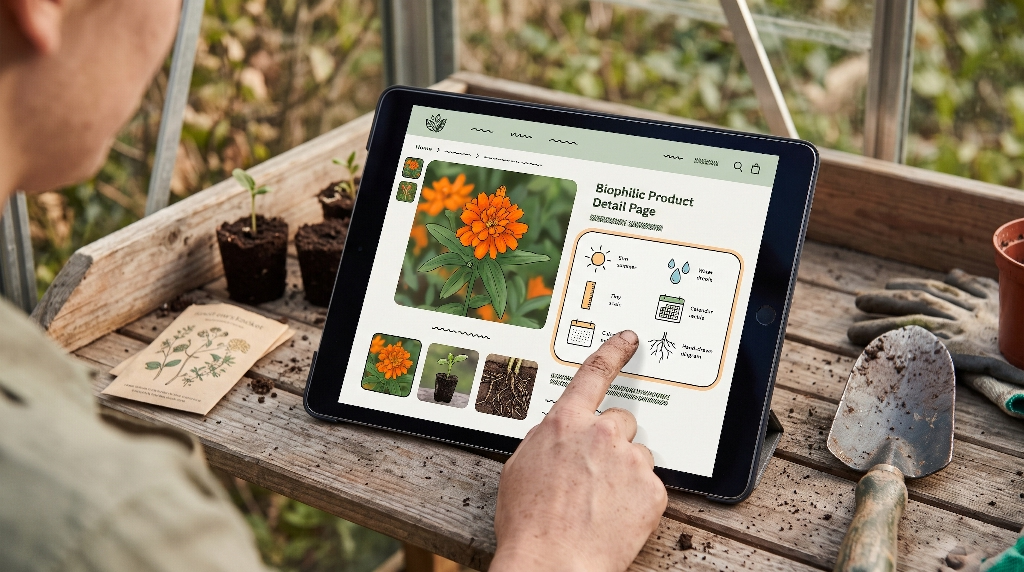
Once a shopper clicks from a search result onto a product detail page, the layout of that page determines whether they feel empowered or overwhelmed. Many traditional plant websites dump five paragraphs of dense, academic text onto the screen alongside a single blurry photograph of a flower petal. For a homeowner trying to plan a backyard garden on a phone screen, walls of text create instant fatigue and weaken the customer experience.
Replacing Walls of Text with Scannable Botanical Data Cards
Biophilic web design borrows clarity and harmony from the natural world, organizing complex biological facts into calm, visual patterns that the human brain processes effortlessly. At the top of every plant page, right beside the main photograph, nurseries should display a clean Botanical Data Card. This visual grid uses clear icons and short labels to highlight five core biological traits:
- Light needs: Sun, part shade, or shade icon.
- Water needs: Drops indicating dry, medium, or wet soil tolerance.
- Mature size: Expected height and width at full maturity, such as 3 feet tall by 2 feet wide.
- Bloom window: Specific months when flowers appear, along with petal color.
- Root architecture: Visual indicator showing deep taproots, fibrous spreading roots, or shallow rhizomes.
A scannable Botanical Data Card lets shoppers verify within five seconds whether a plant fits their space. Keeping vital facts visible without scrolling dramatically improves the customer experience and reduces post-purchase returns.
Multi-Stage Photos and Real-World Size Comparisons
Native perennials change dramatically from month to month, and they rarely look like tropical grocery-store houseplants when they ship from a nursery. If a product page only shows a lush, three-year-old plant bursting with summer blossoms, a customer opening a box of small spring plugs or dormant bare roots may feel misled. High-performing product pages include a multi-stage photo gallery showing:
- Close-up blooms and leaf textures in peak summer.
- Autumn foliage color and winter seed heads that feed songbirds.
- A nursery pot or deep landscape plug held next to a human hand or ruler for true scale.
- What the plant looks like when shipped in spring, summer, and autumn dormancy.
Showing honest scale and seasonal stages builds realistic expectations and protects the customer experience from unpleasant surprises on delivery day.
Turning Plant Tags into Clear Ecological Stories
In a physical garden center, shoppers pick up plastic plant tags to read care tips. Online, the area right next to the “Add to Cart” button serves as that digital plant tag. Instead of generic marketing slogans, nurseries should share concrete ecological facts in plain language. Telling a buyer that swamp milkweed serves as a primary host plant for monarch caterpillars and attracts native swallowtail butterflies connects their purchase to a tangible environmental impact, enriching the overall customer experience.
Radical Provenance Transparency: Straight Species, Nativars, and Ecotypes
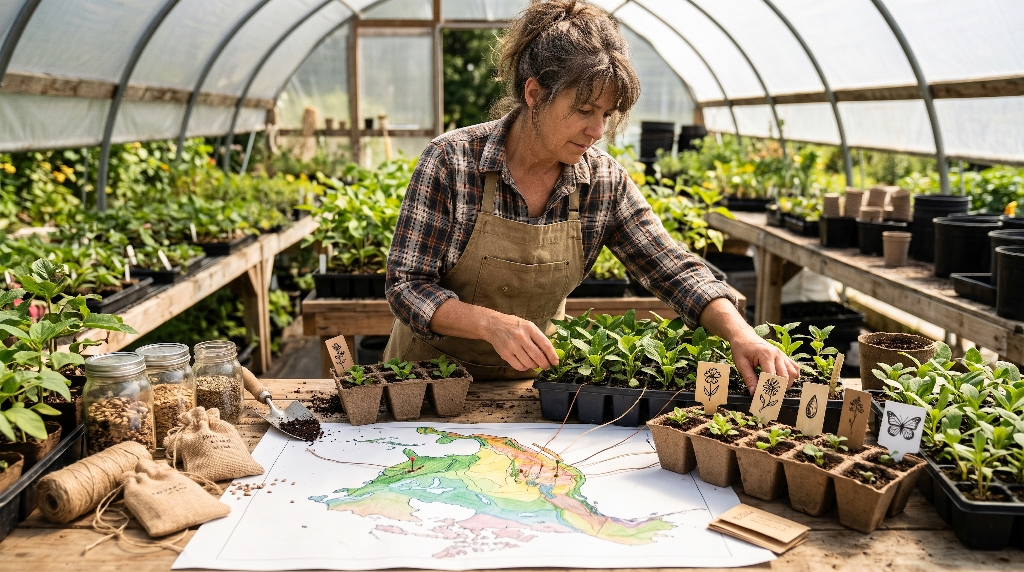
As native plant gardening has grown more popular, shoppers have become much smarter about plant genetics and nursery growing practices. Today’s eco-conscious buyers ask tough questions before spending their money. They want to know whether a plant is a wild-type straight species or a human-bred cultivar, where the parent seeds were gathered, and whether the roots were treated with chemical pesticides. Open, honest answers build fierce brand loyalty and elevate the customer experience.
Straight Species Versus Cultivars and Nativars
In the horticultural trade, a “straight species” is a plant grown from open-pollinated seeds that carries the natural genetic diversity of wild populations. A “nativar” is a cultivated variety of a native plant, often cloned from a single individual to produce extra-large petals, unusual purple leaves, or a compact dwarf shape. While some nativars support pollinators well, research shows that double-flowered or altered-leaf cultivars can block bees from reaching nectar or make leaves inedible to native caterpillars. Nurseries should clearly badge every product as either “Open-Pollinated Straight Species” or “Cultivated Variety (Nativar)” and explain the ecological trade-offs honestly. Giving buyers clear choices respects their intelligence and strengthens the customer experience.
Seed Origin and Local Ecotype Tracking
A wildflower native to North America can still struggle if its seeds came from a climate a thousand miles away. A black-eyed Susan grown from Texas seeds carries genetic triggers tuned to warm southern winters, meaning it may sprout too early and die during an April frost in Wisconsin. Leading mail-order nurseries like Prairie Moon Nursery and Izel Native Plants earn deep respect by publishing the exact state or county of seed origin on their product pages. Displaying a simple “Seed Provenance” badge showing where the parent population grew assures buyers that the plant is genetically adapted to their region, creating a trustworthy customer experience.
Clear Promises Against Neonicotinoids and Invasive Plants
Nothing breaks trust faster than buying a pollinator plant only to learn it was treated with systemic insecticides that poison visiting bees. Neonicotinoids stay inside plant tissues for months, turning nectar and pollen toxic to insects. Nurseries should feature a prominent, verifiable pledge confirming that all seeds and live plants are grown 100 percent free of neonicotinoids and harmful synthetic pesticides. Furthermore, native nurseries should clearly state that they never sell aggressive non-native invasive plants alongside native stock, ensuring every corner of the catalog supports healthy ecosystems and a consistent customer experience.
Curated Ecological Bundles and Aesthetic Reassurance
Many homeowners love the idea of replacing thirsty turfgrass with native wildflowers, yet they hesitate to hit the checkout button because of one nagging fear: what if my yard ends up looking like an overgrown weed patch? Neighbors and strict Homeowners Associations (HOAs) often enforce neatness rules, and beginners frequently feel overwhelmed when trying to design a balanced flowerbed from scratch. Pre-designed garden kits and visual planning tools remove design paralysis and transform the customer experience.
Solving the Weedy Yard Fear and HOA Rules
When tall prairie plants grow alone without structural companions, they can flop over onto sidewalks in late summer and look untidy. Smart online nurseries solve this problem by offering curated ecological garden bundles tailored to real residential spaces, such as a “Tidy Front Border Kit,” a “Sunny Mailbox Hellstrip Bundle,” or a “Woodland Shade Retreat.” Good garden kits pair colorful blooming perennials with neat, clumping native grasses and sedges (Carex species) that act as a green frame, hold taller stems upright, and keep the bed looking intentional and manicured all year long. Offering ready-made, HOA-friendly designs takes the stress out of plant selection and creates an effortless customer experience.
Interactive Garden Layout and Spacing Calculators
Buying individual plants online often leaves beginners confused about quantities. Should they buy three coneflowers or twelve to fill a ten-foot border? Including a simple garden spacing calculator and a downloadable planting map on bundle pages solves this puzzle immediately. A shopper enters the length and width of their garden bed, and the tool calculates the exact number of plugs needed based on each species’ mature spread, populating the shopping cart with one click. Providing a numbered planting grid showing which short plants go in front and which tall plants go in back guarantees professional-looking results and a joyful customer experience.
Visual Bloom Calendars Across All Four Seasons
A common mistake among first-time gardeners is buying ten plants that all bloom in July, leaving the yard bare in May and September. On every garden bundle page, nurseries should display a horizontal four-season bloom calendar. Colored bars show the exact months each plant in the kit produces flowers, foliage, and winter seed heads. Seeing visual proof that purple asters will follow yellow black-eyed Susans and spring bluebells reassures shoppers that their investment will bring continuous beauty across the year, boosting confidence and improving the customer experience.
Transparent Stock Forecasting and Seasonal Pre-Order UX
Unlike plastic garden ornaments stored in endless warehouse rows, native plants follow biological production timelines. A nursery cannot simply print more deep-rooted perennial plugs overnight when a popular species sells out during a busy April weekend. Communicating living inventory cycles honestly prevents shopper frustration and builds a resilient customer experience.
Explaining Live Growing Cycles Instead of Dead-End Out-of-Stock Labels
When a standard e-commerce store runs out of an item, it slaps a blunt “Out of Stock” banner across the page, which usually causes the visitor to leave the website immediately. In an online native plant nursery, a batch of seedlings might simply be two weeks away from developing strong enough roots to survive shipping. Replacing cold “Sold Out” messages with transparent growing updates—such as “Next crop rooting now; available for shipping May 15″—keeps shoppers engaged. Adding a simple one-click email or text alert button lets buyers reserve their spot in line without repeatedly refreshing the page, turning a potential dead end into a helpful customer experience.
Automatic Shipping Windows Matched to Local Frost Dates
Timing is everything when planting live perennials. Shipping tender green shoots to Minnesota in early March exposes them to freezing snowstorms, while shipping bare-root woodland plants to Georgia in late July exposes them to brutal heat. Advanced native plant stores integrate frost-date calendars directly into checkout. When a buyer enters their ZIP code, the store automatically assigns the safest spring or autumn shipping window for their region and displays that exact date range clearly before payment. Taking the burden of seasonal timing off the shopper’s shoulders protects plant health and refines the customer experience.
Saved Wishlists for Multi-Season Garden Planning
Restoring a yard with native flora rarely happens in a single weekend. Gardeners often plant bare-root shrubs in early spring, add warm-season grasses in June, and sow native wildflower seeds in late autumn before winter snow arrives. Providing persistent, organized wishlists inside user accounts lets shoppers save plants across different seasons, compare sun and soil notes, and convert saved lists into orders when the right planting window opens. Supporting multi-season planning builds long-term habits and deepens the customer experience.
Stress-Free Live-Root Logistics and Sustainable Packaging
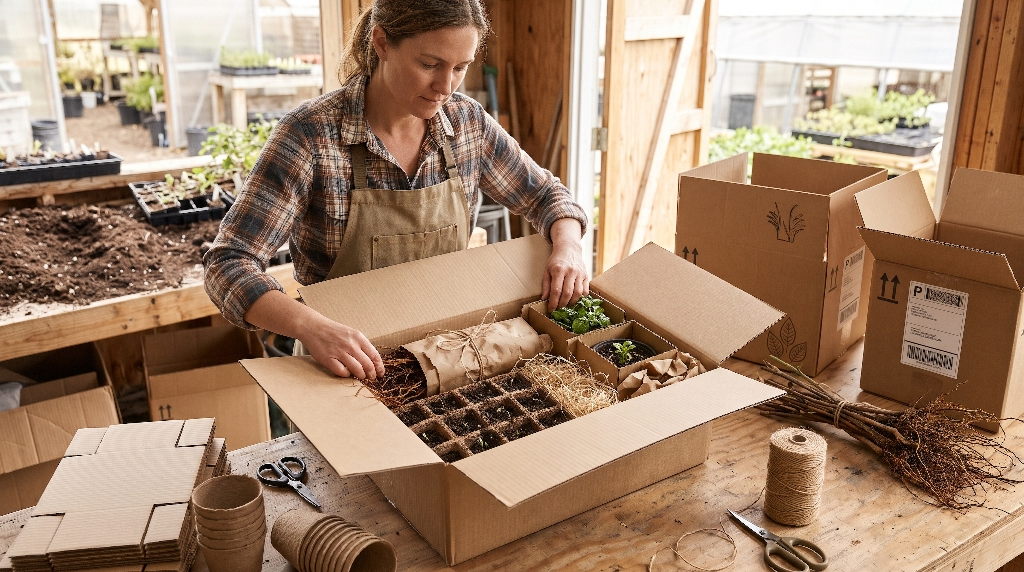
The moment a customer clicks “Place Order,” their biggest worry begins: will these living plants survive the journey inside a dark delivery truck? Shipping live flora across the country is the ultimate test of an online nursery’s operations. Masterful packaging and clear transit communication turn the anxious unboxing moment into a memorable highlight of the customer experience.
Comparing Bare-Root Plants, Landscape Plugs, and Potted Stock
Many online shoppers do not understand the difference between bare-root plants, deep landscape plugs, and standard gallon pots, which leads to confusion when boxes arrive. Nurseries should include a clear comparison guide right on product and shipping pages so buyers can choose the best root format for their budget and physical ability:
| Root Format | What It Looks Like | Best Planting Season | Key Advantage for Shoppers |
| Bare-Root Stock | Dormant roots packed in damp moss without soil | Early spring or late autumn | Lowest shipping cost and lightweight handling for large orders |
| Deep Landscape Plugs | Tall, narrow root cylinders (typically 2 by 5 inches) | Spring through early autumn | Fast root establishment and minimal transplant shock in tough soil |
| Potted Container Stock | Mature plants growing in 1-quart or 1-gallon soil pots | Spring or autumn | Immediate visual presence and larger stems on planting day |
Educating buyers on why deep landscape plugs outperform shallow, root-bound garden-center pots helps shoppers appreciate the value inside their package and elevates the customer experience.
Crush-Proof, Plastic-Free Packaging That Matches Buyer Values
People who buy native plants to heal the environment care deeply about reducing waste. Opening a box packed with styrofoam peanuts, bubble wrap, and heavy black plastic pots creates an uncomfortable clash with their eco-friendly values. Leading native nurseries engineer sturdy, plastic-free packaging using custom folded cardboard inserts that lock pots securely in place even if a delivery driver turns the box upside down. Breathable paper wraps, compostable wood wool, and biodegradable coir or paper pulp pots keep roots moist and stems unbroken while allowing customers to recycle or compost the entire box. Aligning packaging materials with customer values strengthens trust and enhances the customer experience.
Weather-Hold Triggers and Live-Arrival Guarantees
Even the strongest cardboard box cannot protect live leaves if a package sits inside a parked delivery van during a 100-degree heat wave or a sub-zero blizzard. Automated shipping systems should cross-check destination weather forecasts before printing shipping labels, automatically pausing shipments when extreme heat or cold threatens the route. Sending a proactive message saying, “We are holding your plants until Thursday so they travel safely past this week’s heat wave,” shows genuine care and builds a remarkable customer experience. Pairing weather holds with a clear, photo-verified live-arrival replacement guarantee removes all financial risk for the buyer.
Biophilic Web Design, Accessibility, and Mobile-First Performance
A nursery website is the digital front porch of the business. How that website looks, loads, and responds on a smartphone shapes how shoppers judge the quality of the plants inside the greenhouse. Biophilic web design creates a calm, inviting digital space inspired by nature while ensuring top technical speed and accessibility for every user.
Natural Color Palettes with High Contrast for Outdoor Reading
Biophilic design draws from natural landscapes—using warm earth tones, soft sage greens, creamy off-whites, and organic rounded shapes that lower visual stress. However, beauty must never come at the expense of readability. Many dedicated gardeners are older adults, and many shoppers browse nursery catalogs while standing outside in bright backyard sunlight checking their garden beds. Every piece of text on the site must meet WCAG 2.1 AA accessibility standards, maintaining a contrast ratio of at least 4.5 to 1 between text and background colors. Pairing calming natural hues with crisp, dark charcoal typography ensures effortless reading anywhere and protects the customer experience.
Fast Page Speeds for Photo-Heavy Plant Catalogs
High-resolution photographs of blossoms, leaves, and garden designs make a plant website shine, yet oversized image files are the number-one cause of slow loading times on mobile phones. Research consistently shows that over half of mobile visitors leave a page if it takes longer than three seconds to load. Technical optimization keeps Core Web Vitals healthy by converting photos into modern WebP or AVIF formats, defining explicit width and height attributes so text does not jump around while images load, and using lazy loading for galleries lower down the page. A fast, responsive site respects the shopper’s time and delivers a smooth customer experience.
Thumb-Friendly Filters and Quick Mobile Checkout
More than half of online plant browsing now happens on smartphones during lunch breaks or evening couch sessions. Small checkboxes and tiny drop-down menus frustrate mobile users. Designing large, thumb-friendly filter buttons anchored near the bottom of phone screens makes narrowing down plant lists effortless with one hand. Supporting fast digital wallets such as Apple Pay, Google Pay, and Shop Pay removes the hassle of typing sixteen-digit credit card numbers on a small keyboard, creating a frictionless mobile customer experience.
Post-Purchase Onboarding and Multi-Year Establishment Support
In traditional retail, the transaction finishes once the package lands on the front porch. In native plant e-commerce, delivery day is actually the start of a multi-year relationship between the gardener and the living landscape. Supporting customers after their plants arrive prevents avoidable plant deaths and turns first-time buyers into lifelong advocates.
Delivery-Day Care Messages Tailored to Each Species
When a box of live plants arrives, a beginner often panics if a few lower leaves look yellow or limp after three days in the dark. Automated email and text messages triggered on the exact day of delivery provide calm, immediate guidance. A helpful delivery-day note explains that mild transit droop is normal, instructs the buyer to unbox plants immediately into dappled shade, reminds them to soak bare roots in water for an hour before planting, and shares simple first-week watering rules. Timely post-purchase coaching prevents panicked refund requests and rescues the customer experience during critical first hours.
Teaching the Sleep, Creep, Leap Perennial Timeline
Unlike annual petunias bred to explode with flowers for one summer before dying, long-lived native perennials invest their early energy underground. Ecologists and seasoned gardeners describe native perennial growth using a simple three-year rule:
- Year One (Sleep): The plant focuses almost all its energy on sending deep roots down into the soil while top leaves stay modest and small.
- Year Two (Creep): With a sturdy root network anchored below, the plant sends up thicker stems and wider foliage clumps.
- Year Three (Leap): The established root system fuels dramatic height, abundant blossoms, and vibrant pollinator activity.
Sharing this three-year timeline in post-purchase guides stops new customers from assuming their plants failed during year one. Setting honest biological expectations builds patience, deepens ecological understanding, and elevates the long-term customer experience.
Customer Photo Reviews and Garden Progress Galleries
Nothing inspires a hesitant shopper more than seeing real photos taken by fellow gardeners in similar backyards. Inviting customers via automated follow-up emails to upload photos of their plants in year one, year two, and year three creates an authentic, growing library of social proof on product pages. Verified reviews tagged with the reviewer’s state or ecoregion help future shoppers see how a plant performs in real neighborhood soil, enriching the community and strengthening the customer experience for everyone who visits the store.
Frequently Asked Questions About Customer Experience of Buying Native Plants Online
Answering common buyer questions clearly on your website not only calms nervous shoppers before checkout, it also helps search engines feature your nursery directly inside Google “People Also Ask” results.
How do online plant nurseries ship live native plants without damaging them?
Reputable online nurseries ship live plants in custom vented cardboard boxes fitted with molded pulp trays or folded corrugated inserts that lock pots and root plugs tightly in place. Nurseries water plants carefully before packing, wrap root zones in breathable moisture-retaining paper or damp moss, and schedule shipments early in the week so boxes do not sit inside hot or freezing carrier warehouses over the weekend.
Why do native plants ordered online look dead or dormant when they arrive?
Native perennials naturally enter winter dormancy by pulling energy down into their underground roots and letting top stems turn brown or disappear completely. When nurseries ship bare-root plants in early spring or late autumn, customers receive healthy, living root crowns without green leaves. Once planted in moist garden soil and warmed by spring sunshine, dormant roots sprout vigorous new green shoots.
How can I tell if an online nursery sells true local ecotypes instead of cultivars?
Check the product detail page for clear botanical naming and seed origin disclosures. A true straight species displays only a two-part Latin name such as Echinacea purpurea, whereas a cultivar adds a third trademarked or single-quoted name like Echinacea purpurea ‘Magnus’. Trustworthy native nurseries also list the specific state or county where parent seeds were collected and state whether plants are open-pollinated.
When is the best time of year to order native plants online?
Early spring and autumn are the two best seasons to order and plant native perennials online. Cooler air temperatures and reliable seasonal rainfall reduce stress on newly planted roots while soil stays warm enough for underground growth. Many online nurseries open spring pre-orders in January and autumn pre-orders in July, allowing gardeners to reserve popular species months before local shipping windows begin.
What is the difference between bare-root, landscape plugs, and potted native plants online?
Bare-root plants ship completely dormant without soil, making them lightweight, affordable, and ideal for planting large areas in early spring or late fall. Deep landscape plugs grow in tall, narrow cells that build long, healthy root systems capable of establishing quickly in tough garden soil. Standard potted plants arrive in one-quart or one-gallon containers with soil, offering larger immediate above-ground foliage.
Which native plants work best for small yards or strict HOA neighborhoods?
Compact, clump-forming native species with neat growth habits and long bloom seasons work best for small yards and strict HOA rules. Reliable choices include butterfly milkweed (Asclepias tuberosa), purple coneflower (Echinacea purpurea), wild bergamot (Monarda fistulosa), blazing star (Liatris spicata), and low-growing Pennsylvania sedge (Carex pensylvanica), which creates a lush, tidy green border without aggressive spreading.
Building a thriving online native plant nursery takes far more than uploading product photos to a standard shopping cart. Every detail—from ecoregion filters and taxonomic search synonyms to seed provenance badges, plastic-free root packaging, and three-year care reminders—works together to bridge the gap between digital screens and living ecosystems. When nurseries respect both the biology of the plants they grow and the real-world worries of the people planting them, the customer experience transforms from a risky online transaction into a trusted partnership that helps local landscapes bloom for decades.