
The Symbiosis of Culture and Content
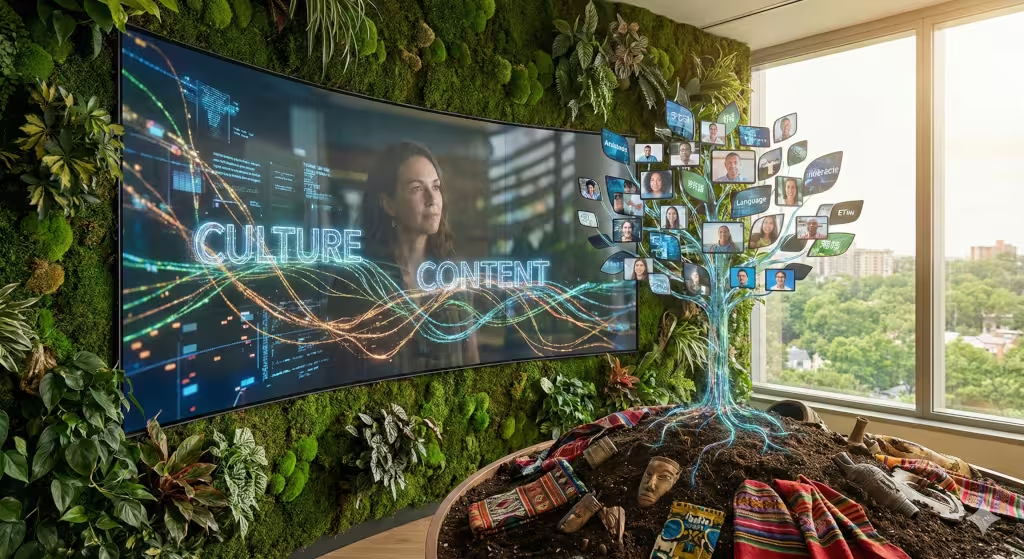
In the digital world of 2026, the internet is more like a vast forest than a simple library. As an expert at Silphium Design LLC, I often tell my clients that a website is a living thing. Just like a plant needs the right soil to grow, your digital presence needs the right cultural ground to thrive. Creating culturally sensitive web content is no longer a choice you can skip. It is the core of how we build connections today. We have moved past the days when you could just translate words from one language to another. Today, we focus on cultural immersion. This means your content must feel like it belongs to the person reading it.
Search engines have changed too. We now use Generative Engine Optimization or GEO. AI models now look for how well your content fits the local intent and feelings of a specific group of people. If your site feels like an outsider, the AI will know.
My background in biology taught me that every organism adapts to its environment. Websites must do the same. By making culturally sensitive web content, you are adapting your digital brand to a specific human environment. This creates a sense of peace and trust. In this guide, we will look at how to create culturally sensitive web content that satisfies both the people who read it and the machines that rank it.
Table of Contents
Foundational Research: Understanding the Soil
Before you plant a seed, you must test the soil. In web design, the soil is the culture of your audience. You cannot begin to make culturally sensitive web content if you do not understand the deep values of the people you want to reach. You must look at more than just where people live or how old they are. You need to look at their cultural psychographics. This is a big word for the way people think and feel based on their heritage.
When you learn how to create culturally sensitive web content, you should use tools like Hofstede’s Cultural Dimensions Theory. This theory helps you see if a culture values the group over the individual. It helps you see if they like clear rules or if they are okay with a bit of mystery. These things change how you should write. Using culturally sensitive web content means you use cultural competence to guide your research.
People often ask about the difference between cultural awareness and cultural sensitivity. Cultural awareness is just knowing that there are differences between people. Cultural sensitivity is taking action to respect those differences. If you want to rank high in search, your culturally sensitive web content must show that you have done the work. You need to use the right sociolinguistics. This means you understand how social factors like class or region change the way people talk. When you use culturally sensitive web content, you are telling your audience that you see them and respect their world.+1
Visual Language and Biophilic Design Ethics
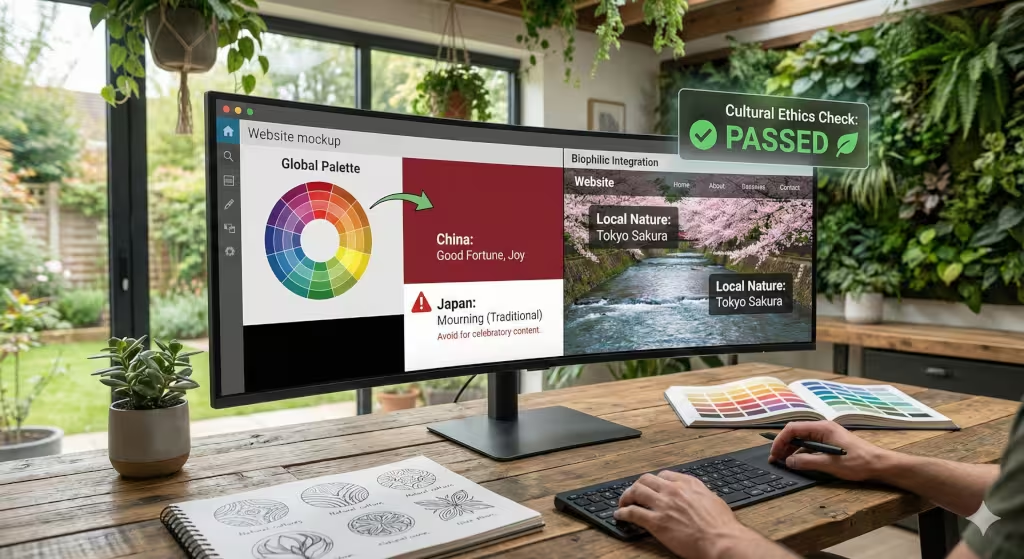
Visuals speak faster than words. In biophilic design, we use nature to make people feel good. But nature means different things to different people. When you make culturally sensitive web content, you must think about color. In some places, the color red means luck and money. In other places, red might mean danger or anger. If you use the wrong color, your culturally sensitive web content will push people away. You want your design to feel natural and safe.+2
Imagery is also a big part of culturally sensitive web content. You should not just use “stock” photos of people from different places. That can look fake. Authentic culturally sensitive web content uses real images from the local community. It shows people in their real environments.
My work at Silphium Design LLC focuses on using local plants and landscapes in web backgrounds. This is a biophilic trick. If a person from Vermont sees a maple tree, they feel at home. If a person from the desert sees a cactus, they feel at home. By using local nature in your culturally sensitive web content, you ground the user in their own reality. This builds deep trust.
You must also be careful about symbols. Some shapes or patterns might be sacred to certain groups. Using them as a background for a sale could be very rude. Always check your visuals when you develop culturally sensitive web content. It is better to be simple and respectful than to be flashy and offensive. The goal is to create a digital space that feels like a natural extension of the user’s world.
Linguistic Nuance and Inclusive Writing

Words are the most powerful tool for culturally sensitive web content. However, words are also very tricky. You cannot just use a machine to translate your site. Machine translations often miss the soul of the message. To make truly culturally sensitive web content, you need human-in-the-loop editing. This means a real person who knows the culture checks the text. They look for idioms and slang that a machine might get wrong.
Inclusive language is another key part of culturally sensitive web content. This means writing in a way that does not leave anyone out. You should avoid terms that might be biased. When you practice how to create culturally sensitive web content, you should think about transcreation. This is the act of taking a message in one language and recreating it in another language while keeping the same tone and intent. It is more than translation; it is an art form.
A common question is how to write for a global audience. The answer is to use Global English. This is a version of English that uses simple words and clear sentences. But for your specific regional pages, you must use culturally sensitive web content that matches the local dialect. This helps with localized SEO. When you use culturally sensitive web content correctly, you speak to the heart of the reader. You make them feel like you are a neighbor, not a stranger from across the sea.
Technical Optimization for 2026
The back end of your website must also support your culturally sensitive web content. Search engines need clues to know which version of your site to show to which person. One of the most important tools is the hreflang tag. This tag tells the search engine the language and the region of the page. Without this, your culturally sensitive web content might not reach the right people. It is like planting a tropical flower in the snow; it just won’t work.
You should also use Schema markup. This is a special code that helps AI understand what your site is about. You can use it to show that your brand has expertise in certain cultural topics. This is vital for your culturally sensitive web content to perform well in GEO. If the AI sees that you are a trusted source for a specific region, it will show your site more often.
As a computer scientist, I know that technical details are the roots of the site. If the roots are strong, the culturally sensitive web content on the surface will bloom. Make sure your site loads fast in all regions. Some places might have slower internet. Your culturally sensitive web content should be light enough to load quickly anywhere. This shows respect for the user’s time and resources. Technical excellence is a form of cultural sensitivity.
Avoiding the Digital Invasive Species
In biology, an invasive species is something that comes into a new place and causes harm. In the digital world, bad content can do the same. When you create culturally sensitive web content, you must avoid stereotypes. A stereotype is a simple and often wrong idea about a group of people. If you use these in your culturally sensitive web content, you will lose your audience fast. It makes your brand look lazy and mean.+1
Cultural appropriation is another big risk. This happens when you take something from a culture without understanding it or giving credit. When you design culturally sensitive web content, you must be careful not to use sacred symbols as mere decorations. This is where your research comes in. You need to know the history of the symbols and words you use.
Always check the W3C Web Accessibility Initiative rules. These rules help make the web fair for everyone, including people with disabilities. Making your site easy to use for everyone is a major part of culturally sensitive web content. It ensures that your “digital forest” is open to all visitors. Avoiding these pitfalls keeps your culturally sensitive web content healthy and strong. It prevents you from making mistakes that could hurt your brand’s reputation for years.
Common Questions
Many people wonder what some good examples of culturally sensitive web content look like. Think about a big brand like Airbnb. They change their photos and their descriptions based on where the user is. If you are in Tokyo, the site looks and feels like Tokyo. This is perfect culturally sensitive web content. It does not feel like a big company from California is telling you what to do. It feels like a local service.
Another question is why cultural sensitivity is so important in marketing. From my view, it is all about cognitive friction. This is when something feels “off” or hard to understand. When you use culturally sensitive web content, you remove that friction. The user can browse and buy without feeling confused. It is like walking on a smooth path in a park versus walking through thick bushes. Culturally sensitive web content makes the journey easy for the user.
Why do search engines care about culturally sensitive web content? Because search engines want to give the best answer to the user. If a user in Brazil searches for a product, they want an answer that fits their culture and language. If you provide culturally sensitive web content, you are giving the search engine exactly what it wants. This leads to higher rankings and more traffic. It is a win for everyone involved.
Future-Proofing with Empathy
As we look toward the future of the internet, empathy will be our most important tool. Creating culturally sensitive web content is not a “one and done” task. It is a process of learning and growing. Cultures change, and your website must change with them. Think of your culturally sensitive web content as a garden that needs regular pruning. You should always be looking for ways to make your content more inclusive and more respectful.
The technology we use will keep changing. We will have new AI and new ways to search. But the human need for respect and connection will stay the same. By focusing on culturally sensitive web content, you are building a brand that can survive any change. You are making a space where people feel safe and valued. This is the heart of biophilic design. It is about creating environments that support life and human spirit.
In closing, remember that your culturally sensitive web content is your voice in the world. Use it to build bridges. Use it to show that you care about the diverse people who use the internet. When you put in the effort to create culturally sensitive web content, you are not just doing SEO. You are making the digital world a better place for everyone.
Best Keywords and Traffic Trends
In the world of biophilic design and web content, we must watch the data. Right now, more people are searching for inclusive design than ever before. This is why culturally sensitive web content is such a strong keyword. People want to know how to do this right. They are looking for ways to reach global markets without making mistakes. If you use culturally sensitive web content in your writing, you are meeting a huge demand.
The traffic for culturally sensitive web content is growing in sectors like travel, health, and finance. In these areas, trust is everything. People will not trust a site that does not speak their language or understand their customs. By providing culturally sensitive web content, you can capture this traffic. You can turn visitors into loyal customers. It is all about being relevant to the person on the other side of the screen.
Monitoring these trends is a big part of my job at Silphium Design LLC. I see how culturally sensitive web content changes the way people interact with brands. It leads to longer time spent on the site and more shares on social media. People love to share things that make them feel understood. That is the power of good culturally sensitive web content. It creates a ripple effect that goes far beyond a single search result.
The Role of Local SEO in Cultural Sensitivity
Local SEO is not just about putting your city name on your homepage. It is about being a part of the local culture. Your culturally sensitive web content should reflect local events, holidays, and weather. If it is winter in Australia, do not show your Australian users photos of summer beaches just because it is summer in the United States. This is a simple but powerful way to use culturally sensitive web content.
When you focus on local SEO, you are showing the user that you are present in their world. You are not just a ghost in the machine. Your culturally sensitive web content should use local landmarks or famous local people if it makes sense. This makes your brand feel real. It makes your culturally sensitive web content feel like it has a physical home.
Search engines love this kind of detail. They want to see that your culturally sensitive web content is highly relevant to a specific place. This helps you show up in local map results and local news feeds. It is a key part of how to create culturally sensitive web content that wins. By being a local expert, you build authority that global competitors cannot easily match.
Strategies for Content Pruning and Adaptation
Just like a tree needs to be pruned to stay healthy, your website needs to be updated. What was considered culturally sensitive web content five years ago might be outdated now. You should audit your site once a year to check your culturally sensitive web content. Look for any language that feels old or any images that no longer fit the culture.
This process of adaptation is very important. It shows your audience that you are paying attention. It shows that your culturally sensitive web content is modern and fresh. When you prune your content, you make room for new growth. You can add new sections of culturally sensitive web content that address current trends or new cultural movements.
At Silphium Design LLC, we help our clients with this lifecycle. We look at how their culturally sensitive web content is performing and find ways to make it better. We use data to see which parts of the site people like the most. Often, it is the parts that are the most culturally sensitive web content. People gravitate toward what feels natural and kind.
Final Thoughts on Cultural Design
The journey of creating culturally sensitive web content is a rewarding one. It challenges you to think outside of your own experience. It forces you to learn about the beautiful variety of human life. This makes you a better designer and a better writer. Your culturally sensitive web content will be a reflection of your own growth and empathy.
I hope this guide helps you understand how to create culturally sensitive web content that truly makes a difference. Remember to keep your eyes on the human element. Technology is just the tool. The heart of the web is the people who use it. By honoring them with culturally sensitive web content, you are ensuring your own success in the digital forest of 2026.
Thank you for taking the time to learn about this vital topic. If you focus on culturally sensitive web content, your site will not just be a collection of pages. It will be a thriving ecosystem that welcomes the world. Let your culturally sensitive web content be the light that guides your users home.
As we move forward, let us remember that the internet is a shared space. Every piece of culturally sensitive web content we create is a chance to make that space more inclusive. It is a chance to show that we value diversity and respect. That is the true power of culturally sensitive web content. It is more than just marketing; it is a way to build a better world, one click at a time.
When you are ready to start, take a deep breath and look at your audience with fresh eyes. See their beauty and their unique traditions. Then, start writing your culturally sensitive web content with a heart full of respect. The results will be worth the effort. Your brand will grow, your traffic will increase, and most importantly, you will connect with people in a way that truly matters. This is the essence of my work, and it can be the essence of yours too.
Culturally sensitive web content is the future of the web. It is the bridge between technology and humanity. By mastering the art of culturally sensitive web content, you are positioning yourself at the forefront of the digital age. You are becoming a leader in a world that values connection over everything else. So, go forth and create the best culturally sensitive web content you can. The world is waiting to hear your voice in a way they can finally understand and enjoy.
In my years of experience, I have seen many trends come and go. But the need for culturally sensitive web content has only grown stronger. It is the one thing that never goes out of style. As long as there are people from different backgrounds using the web, there will be a need for culturally sensitive web content. It is the foundation of a truly global internet. By investing in culturally sensitive web content today, you are building a legacy for tomorrow.
Thank you for joining me on this exploration. I look forward to seeing the amazing culturally sensitive web content you will create. Remember that every small step toward being more sensitive is a step in the right direction. Your efforts to provide culturally sensitive web content will not go unnoticed. They will be felt by every user who visits your site and feels, for the first time, that they truly belong there.