
We often think of the internet as a cloud. We imagine it is light, airy, and floats above the earth without touching it. But as a biologist and a computer scientist, I can tell you that this is a myth. The internet is not a cloud. It is a massive physical machine. It lives in giant buildings called data centers. It travels through thick cables under the ocean. It burns electricity every single second.
When we design websites today, we usually make them look the same. A website for a coffee shop in Seattle looks just like a website for a coffee shop in Berlin. This “placelessness” creates a disconnect. It separates us from where we actually live. Worse, these generic sites often use heavy code and huge images that waste energy. This contributes to climate change.
The solution is something I call sustainable place-based websites.
This concept combines two big ideas. The first is sustainability, which means using less energy and causing less harm. The second is “place-based” design, which means the website reflects the local land, culture, and biology of its owner. Just as a plant creates a flower that fits its specific environment, sustainable place-based websites should fit their digital and physical environment.
In this article, I will walk you through ten specific criteria for building these sites. We will look at how to lower your carbon footprint. We will look at how to honor your local area. By the end, you will see that sustainable place-based websites are not just a trend. They are the future of a healthy internet.
Table of Contents
Criterion 1: Bioregional Color Palettes & Typography
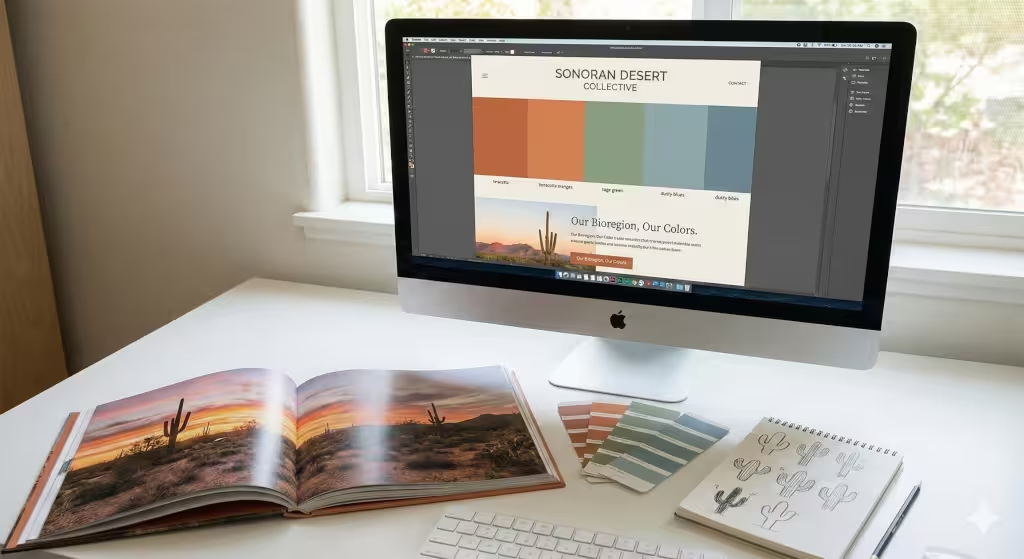
When you look at sustainable place-based websites, the first thing you notice is the color. Most modern websites use the same bright, neon blues and stark whites. These colors do not exist commonly in nature. They are artificial. What you need to use is a natural palette.
A place-based approach does something different. It looks at the “bioregion.” A bioregion is an area defined by its soil, water, plants, and animals, not by human borders. If you are designing a site for a business in Arizona, the colors should come from the red rocks and the sagebrush. If the site is for a company in Vermont, the colors might be the deep green of pine needles and the gray of granite.
This is not just about looking pretty. It is about grounding the user. When a user sees colors that match their physical world, they feel more at home.
We also have to think about typography, or fonts. Did you know that font files can be very heavy? If a website has to load five different font styles, it uses more data. More data means more electricity. Sustainable websites often use standard system fonts or very lightweight custom fonts.
Some designers are now creating fonts based on local history. They look at the handwriting in old town records or the letters on local street signs. They turn these into digital fonts. This keeps the local culture alive. By using colors from the land and fonts from the culture, sustainable place-based websites create a unique identity that low-energy templates cannot match.
Criterion 2: Hyper-Local Green Hosting (The “Digital Food Mile”)
You probably know about “food miles.” This is the idea that buying an apple grown five miles away is better for the planet than buying an apple flown in from another continent. The same logic applies to the internet. We need to think about “digital miles.”
When you visit a website, data has to travel from a server to your computer. If you are in Boston and the website is hosted on a server in Australia, that data has to travel a very long way. It goes through switches, routers, and undersea cables. Every step of that journey burns energy. If you are using a CDN, such as Cloudflare, you are using less energy to deliver your website.
Sustainable place-based websites solve this by using hyper-local hosting. This means if your main customers are in New York, you should use a server located in or near New York. This reduces the distance the data travels. It makes the site load faster, which is good for Google. It also reduces the carbon footprint of every click.
There are now hosting companies that run entirely on renewable energy. For example, a site called Organic Basics created a low-impact version of their store. It only loads when renewable energy is available on the grid. This is a perfect example of how sustainable place-based websites interact with the physical reality of the power grid. By choosing a green host near your users, you are building the digital equivalent of a local farm stand.
Criterion 3: Regenerative Content Strategy
Most websites are “extractive.” They try to take things from the user. They want your attention, your money, or your data. They use clickbait headlines to trick you. This is like strip-mining the human mind. It leaves the user feeling tired and used.
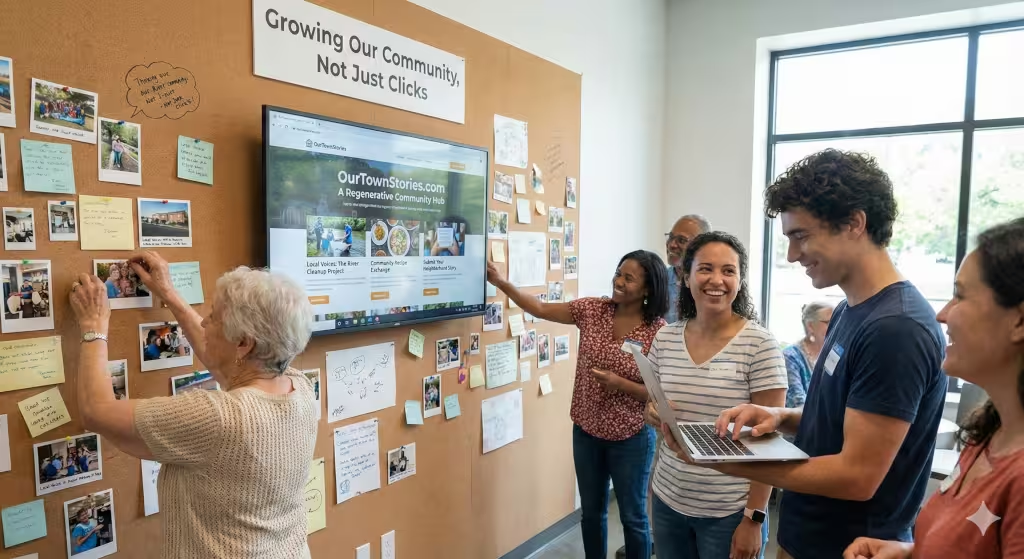
Sustainable place-based websites use a “regenerative” strategy. In biology, a regenerative system is one that improves the ecosystem it lives in. A tree drops leaves that turn into soil, which helps other plants grow. A website can do the same thing for a community.
How does this work? It starts with the content. Instead of generic articles written by AI, these sites feature stories from local people. They highlight local problems and offer local solutions. A great example of this is the Front Porch Forum in Vermont. It is a simple platform, but it connects neighbors to neighbors. It builds trust. It strengthens the community bond.
Regenerative content also means being useful. It does not waste the reader’s time. It answers questions directly. It provides value without asking for anything in return. When we build sustainable websites, we treat the user’s attention as a precious resource. We do not want to pollute their mind with spam. We want to nourish them with helpful, relevant information that makes their local life better.
Criterion 4: Low-Carbon Asset Optimization
Images and videos are the heaviest parts of the internet. A single high-definition photo can be larger than the entire code of the website. Loading these heavy images takes a lot of energy. On a mobile phone with a bad connection, it also takes a long time.
Sustainable place-based websites treat data like a limited resource. In nature, nothing is wasted. An animal does not use more energy than it needs to catch its prey. A website should not use more data than it needs to tell its story.
One technique we use is called “dithering.” This is an old school method from the early days of computers. It reduces the number of colors in an image. Instead of millions of colors, you might use only eight. This makes the file size tiny. It also gives the images a cool, retro style that looks very artistic.
We also use modern file formats like WebP or .avif, which this blog uses. This format squeezes images down to be very small without making them look bad. We also use “lazy loading.” This means the images on the bottom of the page do not load until you scroll down to them. If you never scroll down, those images never load. This saves energy.
By optimizing assets, sustainable websites can load instantly. This is crucial for users in rural areas who might have slow internet. It ensures that everyone, regardless of their connection speed, can access the information. This is a form of digital equality.
Criterion 5: Topography-Inspired User Experience (UX)
User Experience, or UX, is how a person moves through a website. Usually, designers talk about “funnels.” They want to push the user down a narrow path to make them buy something. This is a very industrial way of thinking. It treats people like products on a conveyor belt.
Sustainable place-based websites look to nature for a better way. We call this “biomimicry.” Biomimicry means copying the designs of biology.
Think about how you walk through a forest. You follow a trail. The trail might wind around a big tree. It might go up a hill to give you a view. It feels natural and exploratory. We can design websites the same way. Instead of forcing the user, we guide them. We use navigation that feels like a landscape.
For example, a site called Metvibee uses designs that feel like a city map or a natural organism. The menu structures might branch out like a tree. This makes the user feel more engaged. It encourages them to explore the content at their own pace.
When we align the digital movement with physical movement, the brain relaxes. It is less stressful. Sustainable websites should feel like a walk in a local park, not a run through a shopping mall. This approach respects the human mind and its natural desire to wander and discover.
Criterion 6: Seasonal and Circadian Adaptability
Nature has rhythms. The sun comes up, and the sun goes down. We have summer, fall, winter, and spring. Humans have evolved to live with these rhythms. Our bodies release hormones based on light cycles.
However, the internet is usually “always on.” It is always bright, always loud, and always the same. This can disrupt our sleep and our mood. Sustainable place-based websites try to fix this by adapting to time.
The most common way to do this is “Dark Mode.” But we can go deeper. A smart website can detect the user’s local time. If it is evening where the user is, the website can automatically switch to a darker, warmer color palette. This mimics the setting sun. It reduces the amount of blue light hitting the user’s eyes. Blue light wakes you up, so reducing it at night helps you sleep.
We can also adapt to seasons. In the winter, the website might use cooler tones or show images of snow if that matches the local climate. In the summer, it might be brighter.
This makes the website feel alive. It is not a static poster; it is a living entity that responds to the world around it. By syncing with the user’s biological clock, sustainable place-based websites become healthier tools for us to use. They stop fighting our biology and start supporting it.
Criterion 7: Vernacular Typography and Language
Language is a huge part of “place.” The way people speak in Boston is different from how they speak in Texas or London. There are local slang words, idioms, and ways of phrasing things. Standard corporate websites scrub all of this away. They use “business speak” that sounds robotic.
Sustainable place-based websites embrace the “vernacular.” Vernacular means the common language spoken by ordinary people in a specific region. When it relates to the natural world, it is called vernacular biophilia.
If you are building a website for a community in New Orleans, the text should sound like New Orleans. It should use the rhythm and warmth of that culture. This makes the site feel authentic. It tells the user, “We are from here. We understand you.”
This also applies to the visual language of text. We mentioned fonts earlier, but let’s look deeper. Local sign painters and artists often have a specific style. A website can digitize these styles.
Furthermore, we must think about accessibility. Sustainable place-based websites must be readable by everyone in that place. This includes the elderly who might need larger text. It includes people who speak other languages that are common in that area. If a town has a large population of Spanish speakers, the sustainable choice is to offer the site in Spanish. Inclusion is a key part of social sustainability.
Criterion 8: The “Right to Repair” Codebase
There is a movement in the physical world called “Right to Repair.”16 It means you should be able to fix your own tractor or phone. You shouldn’t have to throw it away and buy a new one just because a small part broke.
The same problem happens with websites. Many sites are built on complicated, proprietary platforms. When the platform updates, the site breaks. Or the code is so messy that only the original expensive agency can fix it. Eventually, the owner has to delete the site and build a new one. This is digital waste.
Sustainable place-based websites use clean, open-source code. We often use tools like HTML and CSS that have been around for decades. This code is durable. It lasts a long time.
We also believe in modular design. This means building the site in small blocks. If one block breaks, you fix that block. You don’t have to tear down the whole house. This makes the website easier to maintain for local developers. You don’t need to hire a wizard from Silicon Valley to fix a typo. A local student learning to code could do it.
By making the code simple and repairable, we extend the lifespan of the website. A site that lasts ten years is much more sustainable than one that is rebuilt every two years. Sustainable websites are built to last, just like a well-made stone wall.
Criterion 9: Data Minimalism and Privacy
Every time a website tracks you, it uses energy. Tracking pixels, analytics scripts, and advertising bots all run in the background. They eat up your battery life and your data plan. They also send your personal information to giant servers in unknown locations.
This is an environmental issue and a privacy issue. Sustainable place-based websites practice “data minimalism.” This means we only collect the data we absolutely need.
If a user is just reading an article, we do not need to know their age, gender, or shopping habits. We do not need to follow them around the internet. By removing these tracking scripts, the website becomes much lighter. It loads faster. It uses less electricity.
It also builds trust. When a user visits a site that respects their privacy, they feel safer. They know they are not being spied on. This is a return to the old way of doing business, where a shopkeeper knew you, but didn’t follow you home.
Social sustainability relies on respect. Sustainable place-based websites show respect by leaving the user alone. They provide a service without demanding a digital payment of personal data. This creates a cleaner, quieter, and more honest internet.
Criterion 10: Real-World Integration (Phygital Design)
The final criterion might sound strange coming from a web designer. The goal of a sustainable website should be to get the user off the website.
We spend too much time on screens. This leads to “nature deficit disorder.” We lose touch with the physical world. Sustainable place-based websites act as a bridge. They connect the digital world to the physical world. We call this “Phygital” design.
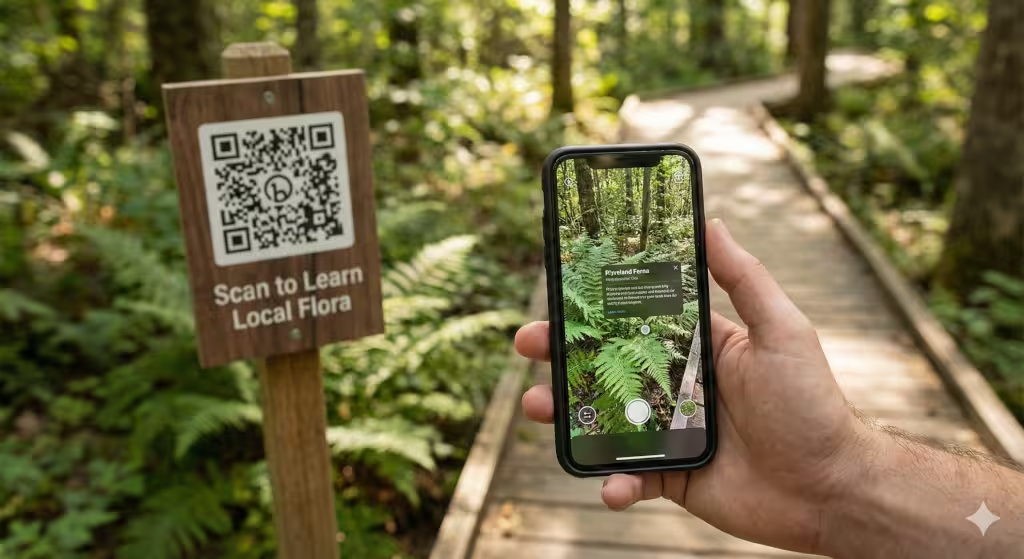
How does this work? Imagine a nature preserve website. Instead of just showing photos of trails, it could provide a map that you print out. It could have QR codes on real trees in the forest. When you scan the code, the website tells you the name of the tree and its history.
The website becomes a tool to enhance the real world, not replace it. It encourages people to go outside. It might organize local clean-up events. It might suggest local hiking spots.
By pushing people back into their local environment, Sustainable place-based websites help people fall in love with their place. When people love their place, they take care of it. They protect the environment. In this way, the website becomes an active agent of conservation. It uses the power of the internet to heal the earth.
Conclusion: Cultivating Your Digital Garden
We have covered a lot of ground. We looked at how sustainable place-based websites use local colors and green energy. We discussed how they respect user privacy and adapt to the seasons. We explored how they can guide us back to the physical world.
Designing this way takes effort. It is harder than just buying a cheap template. But the results are worth it. When you build a website that honors its place, you create something special. You create a digital space that feels real. You reduce your impact on the planet.
The internet does not have to be a wasteland of energy consumption. It can be a garden. It can be a diverse ecosystem of unique, local sites that support their communities.
If you are a business owner, a designer, or just someone who loves the web, I challenge you to look at your own digital presence. Ask yourself: Does this site know where it lives? Is it wasting energy? Is it giving back to the community?
By adopting the criteria of sustainable place-based websites, we can build an internet that is not just smart, but wise. We can build a web that supports life. Let us start planting these digital seeds today.