
Most people spend their days looking at screens. We look at phones while we eat. We look at computers while we work. This constant screen time causes something called digital fatigue. It makes our brains feel tired and stressed. It also makes us feel far away from the real world.
As an expert in biophilic design, I see this as a big problem. We are built to be part of the natural world, not stuck behind glass. The solution to this problem is learning how to create engaging nature stories for digital platforms. When we use nature stories in our websites and apps, we help people feel better.
Research from the WELL Building Institute shows that seeing natural patterns can lower stress by thirty-five percent. This is why nature stories are so important for the future of the internet. We are not just making content. We are building a digital bridge back to the wild world we miss.
Table of Contents
The Biological Mandate for Digital Storytelling
The human brain has not changed much in thousands of years. Our ancestors lived outside. They watched the sky and listened to the trees. Today, many people live in boxes and look at pixels. This shift has created a gap in our mental health. When we talk about nature stories, we are talking about a way to fix that gap. Nature stories act like a restoration tool for the mind. They give the eyes a place to rest. They give the heart a reason to slow down.
Many brands think that nature stories are just about pretty pictures. That is not true. Engaging nature stories for digital platforms require a deep understanding of biology. We must understand how a human eye tracks a moving leaf or how a human ear reacts to a stream.
When we put these things into a website, we are using biophilic design. This design style uses our love of life to make digital spaces feel safe. By using nature stories, we make the internet feel less like a machine and more like a garden. This is a big deal for people who want to stand out in a crowded market.
Why Nature Stories Matter for Our Brains
The human brain is wired to notice things in the wild. We notice the rustle of grass because it might be an animal. We notice the color of fruit because it tells us if it is safe to eat. When we use nature stories online, we are using these old brain paths. This is why nature stories feel so good to read. They do not feel like work. They feel like a natural part of our day.
When a website is full of ads and flashing lights, our brain goes into high alert. This is very tiring. Nature stories do the opposite. They allow the brain to enter a state called soft fascination. This is a type of focus that does not take much effort. It allows the brain to recharge. This is why nature stories are so helpful for people who work on computers all day. They provide a tiny mental vacation.+1
If you are a business owner, using nature stories can help your customers remember you. People remember how you make them feel. If your website uses nature stories to make them feel calm, they will have a positive view of your company. This is much better than trying to yell at them with big red text. Nature stories use a gentle touch to make a big impact.
The Multisensory Narrative: Moving Beyond Visuals
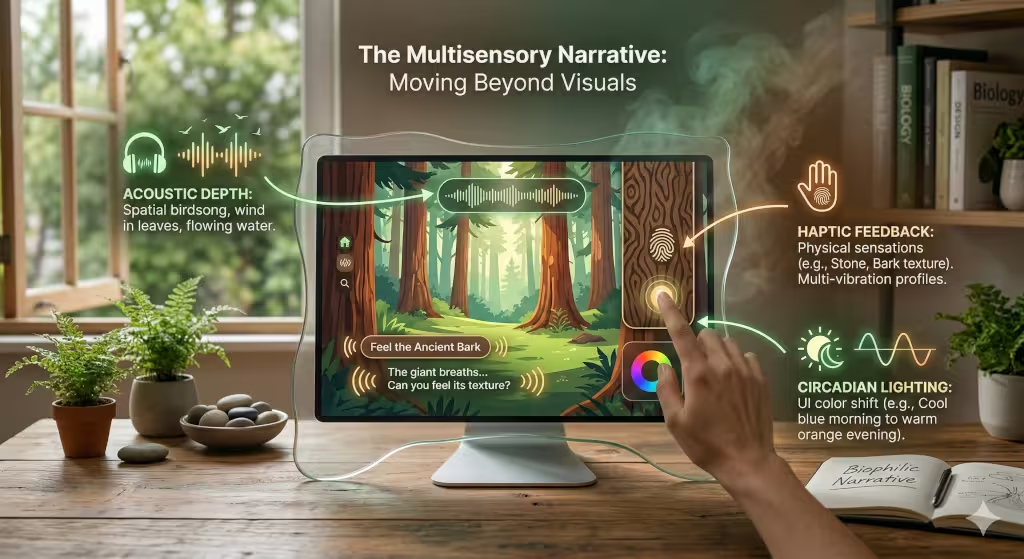
A good story is not just something you see. It is something you feel. To make nature stories work online, we have to think about all the senses. We call this a multisensory narrative. Most websites are very flat. They are just text and still images. But nature is never flat. Nature is full of sounds and textures. If you want to use nature stories to pull people in, you have to add these layers.
Think about auditory anchors. These are sounds that ground a person. You can use the sound of wind or birds in the background of a page. But you must be careful. The user should always have a way to turn the sound off. If the sound is too loud, it becomes noise. If the sound is soft and natural, it becomes part of the nature stories you are telling. This helps reduce the stress of being online.
You can also think about how a site feels. On a smartphone, we use haptic feedback. This is the little vibration you feel when you touch the screen. Imagine a nature story about a stone. When the user touches an image of the stone, the phone could give a solid, heavy vibration. If the story is about a leaf, the vibration could be light and quick. These small touches make nature stories feel real. They help the brain believe it is interacting with something living.
Another part of this is the light on the screen. The sun changes color throughout the day. In the morning, it is blue and bright. In the evening, it is orange and soft. We call this a circadian rhythm. Digital platforms can do the same thing. A website can change its colors based on the time of day where the user lives. This makes the nature stories on the site feel like they are part of the real world. It makes the user feel more connected to the earth even while they are looking at a screen.
Structuring the Nature Narrative for Engagement
Every good story needs a structure. When you are writing nature stories, you can use the patterns of the wild. One way to do this is with the curiosity gap. This means you start with a question. You show a small piece of a plant or an animal. You make the reader want to see more. This drives them to scroll down the page. They are looking for the answer to the nature stories you have started.
There is a simple six point plan you can use for these stories. First, you start with a hook. This should be a sensory detail. Maybe it is the smell of rain or the bright color of a flower, such as the Silphium flower in my logo. Second, you show a conflict. In nature stories, conflict might be a storm or a long winter.
Third, you show the first step of the journey. This is where a seed starts to grow or a bird starts to fly. Fourth, you show the milestones. These are the small wins along the way. Fifth, you reach a resolution. This is where things go back to a balance. The forest is quiet again, or the flower has bloomed. Finally, you give a call to action. You invite the reader to do something. Maybe you ask them to go for a walk or to help protect a local park.
When you follow this path, your nature stories become very powerful. They follow the same rhythm as life itself. You can also use things like fractals. Fractals are patterns that repeat over and over. You see them in snowflakes and tree branches. Human brains love fractals. Using fractal patterns in the layout of your nature stories makes people feel calm. It makes the digital platform feel like a natural space.
Building the Foundation of Nature Stories
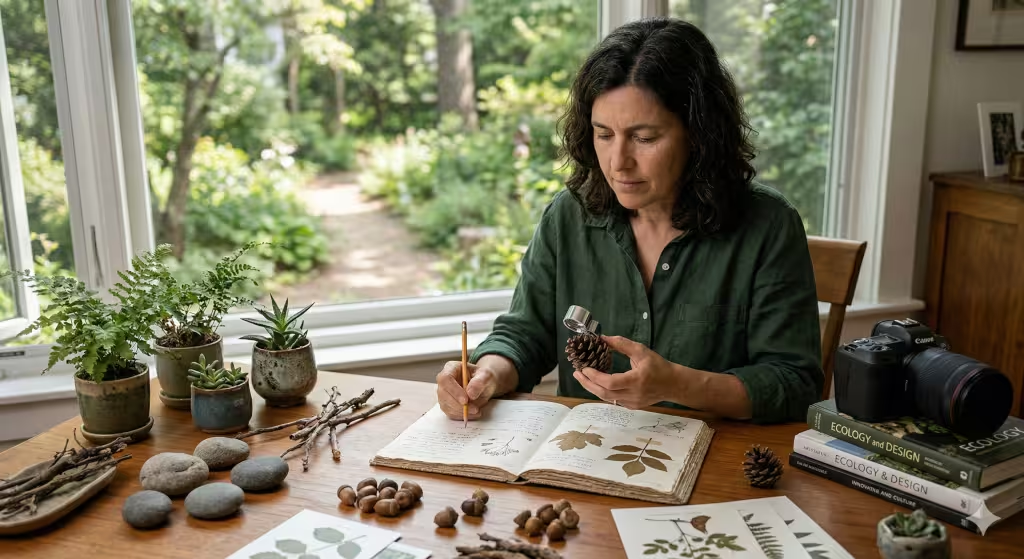
To start telling stories, you first need to look at the world around you. You do not need to be a scientist to tell good nature stories. You just need to be a good observer. Look at how a spider builds a web. Look at how the light hits the leaves in the morning. These small details are the building blocks of great stories.
When you put these details into your digital platform, you are creating a sense of place. Many websites feel like they could be anywhere. They have no soul. But nature stories give a site a unique personality. They make it feel like a real location that someone can visit. This is especially important for local SEO. If you tell nature stories about the plants and animals in your specific city, you will connect with local people. They will see that you care about the same things they do.
You can also use stories to explain hard ideas. Nature is full of metaphors. A growing business is like a growing tree. A new project is like a seed. A team working together is like a beehive. Using these nature stories makes your message easier to understand. It takes a technical or boring topic and makes it feel alive. This is one of the best ways to keep people interested in what you have to say.
Biophilic UI: The Canvas for Your Story
The user interface or UI is the canvas where your stories live. Most websites use straight lines and sharp corners. But there are no straight lines in a forest. To tell better nature stories, we should use organic shapes. This means using curves and waves. Think about how a river flows or how a hill looks. Your website buttons and sections should look like that.
You can also use light and shadow. In a forest, light comes through the leaves in patches. This is called dappled sunlight. You can use CSS and gradients to make your website look like it has dappled light. This adds depth to your nature stories. It makes the page feel like it has three dimensions. It invites the user to step into the story rather than just looking at it.
Sustainability is also a part of this design. Nature stories should not hurt the planet. Big files and heavy videos use a lot of energy. This creates a high carbon footprint. Instead of using huge photos, you can use vector art or simple animations. This keeps the site fast and green. It shows that your brand cares about the nature stories it is telling. It makes the message of the story match the way the site works.
Using Color in Your Stories
Color is a very powerful tool in digital design. In nature stories, color tells its own tale. Think about the colors of a desert. You have warm tans, deep reds, and soft greens. These colors tell a story of heat and survival. Now think about the colors of the ocean. You have deep blues, bright cyrs, and white foam. These colors tell a story of depth and mystery.
When you are designing your digital platform, choose a color palette that fits the nature stories you want to tell. Do not just pick colors because they look cool. Pick them because they help tell the story. For example, if you are telling nature stories about a spring garden, use bright and cheerful colors. If you are telling nature stories about an old forest, use deep and rich tones.
The way colors interact also matters. In nature, you often see complementary colors. You might see a bright red berry against a deep green leaf. This contrast makes the berry pop out. You can use this same trick in your nature stories online. Use a pop of color to draw the eye to the most important part of the story. This helps guide the reader through the page in a natural way.
How to Research Your Stories
Good nature stories are based on truth. Even if you are writing for a digital platform, you should do your homework. You can find great nature stories in many places. You can go to a library and read about local plants. You can go for a walk and take photos. You can even talk to people who work outside, like gardeners or park rangers.
When you research, look for the unusual things. Everyone knows that birds fly south for the winter. But not everyone knows how they find their way. That is a great hook for nature stories. Look for the tiny details that most people miss. These are the things that make your nature stories stand out. They show that you have put time and care into your work.
You can also use data in your nature stories. Tell people how old a tree is or how far a bee flies in a day. Numbers can be very interesting when they are part of a larger story. They give your nature stories a sense of scale. They help the reader understand just how amazing the natural world really is.
Common Questions Answered About Nature Stories
Many people ask how to make nature stories go viral. The secret is to use awe. Awe is that feeling you get when you see something huge or beautiful, like the Grand Canyon. If you can capture a moment of awe in a short video, people will share it. High quality clips of animals or stars work very well. People want to feel that connection to something bigger than themselves.
Another common question is about the best platforms for nature stories. The truth is that you should use many platforms. A website is a great home base, but you can also use social media or even AI chatbots. You can even use augmented reality or AR. Imagine someone pointing their phone at a tree and seeing one of your nature stories pop up on the screen. This makes the story part of their physical environment.
People also ask how to use nature stories for SEO. SEO is how search engines find your content. To do this well, you need to use specific words. These are called entities. You should talk about things like biology, ecology, and specific plant names. Search engines are getting smarter. They look for topics, not just single words. When you write deep and helpful nature stories, the search engines will see you as an expert. This helps more people find your work.
Connecting Nature Stories to Your Brand

If you are using nature stories for a business, you need to make sure they connect to what you do. You do not want your nature stories to feel like they were just tacked on. They should be a part of your brand’s DNA. Think about your company’s values. How do they align with the natural world?
If your company values growth, tell stories about forests. If your company values speed, tell nature stories about the wind or fast animals. This makes your brand feel more cohesive. It shows that your nature stories are not just a trick. They are a reflection of who you are as a company.
You can also involve your customers in your nature stories. Ask them to share their own photos of nature. Ask them for their favorite stories. This creates a community around your brand. It turns your digital platform into a shared space where people can connect over their love of the wild.
Metrics of Success: Beyond the Click
How do you know if your nature stories are working? You have to look at more than just clicks. You should look at how people feel. One way to do this is with heatmaps. A heatmap shows where people move their mouse on a page. If your nature stories are working, people will move in a calm way. They will stay on the page longer. They will read the whole thing instead of jumping around.
We also look at something called cognitive load. This is a fancy way of saying how hard the brain has to work. Good nature stories should lower the cognitive load. They should make the user feel relaxed. You can test this by asking users how they feel after using your site. If they feel more focused and less tired, your biophilic design is a success.
There is also a clear return on investment or ROI. People who are calm are more likely to trust a brand. They are more likely to buy a product or sign up for a newsletter. Nature stories build a bridge of trust. They show that you value the user’s well-being. This creates a long term bond that is much stronger than a simple ad.
The Future of Digital Ecosystems
The internet is changing. We are moving away from noisy and messy pages. We are moving toward spaces that feel more human. Nature stories are a big part of this change. As a designer, my goal is to make the digital world feel like a part of the natural world. We have a responsibility to create spaces that help people heal.
Storytelling is one of the oldest things humans do. We have always told nature stories around a fire. Now, we tell them on screens. The tools have changed, but the need is the same. We need to feel connected to the earth. We need to remember that we are part of a huge and beautiful system. By learning how to create engaging nature stories for digital platforms, we are doing more than just marketing. We are helping people breathe a little easier in a digital age.
Every time you write nature stories, think about the person on the other side of the screen. Think about their tired eyes and their busy mind. Give them a moment of peace. Give them a story that reminds them of the woods or the ocean. When we do this, we make the internet a better place for everyone. The future of design is not about more tech. It is about more nature.
Final Thoughts on Nature Stories
Learning how to create engaging nature stories for digital platforms is a journey. It takes time and practice. But the rewards are huge. You will create a website that people love to visit. You will build a brand that stands out from the crowd. Most importantly, you will help people connect with the natural world.
Remember to keep your nature stories simple and honest. Use all the senses to tell your tale. Follow the patterns of nature in your design. If you do these things, your nature stories will be a success. You will find that the more you share your love of nature, the more people will want to listen.
The world needs more nature stories. We need to be reminded of the beauty and the wonder that is all around us. As a designer or a writer, you have the power to share that wonder. Use it well. Tell nature stories that inspire, heal, and connect. The future of the digital world depends on it.
Nature stories are the heart of a healthy internet. They are the seeds of a better future. Let us plant them today and watch them grow. Every story you tell is a step toward a more biophilic world. Thank you for joining me on this mission to bring more nature stories into our digital lives.
I hope this guide has given you the tools you need to start telling your own nature stories. Remember that the best stories are the ones that come from the heart. Go outside, look around, and find the nature stories that are waiting to be told. The world is full of them. All you have to do is look.
When we share nature stories, we share a piece of ourselves. We share our hope and our love for the planet. This is the most engaging content there is. It is timeless, it is beautiful, and it is necessary. Let your nature stories be a light for others in the digital dark. Happy storytelling!