
Table of Contents
The Epistemological Divide in Modern Green Design
When you open a web browser today, you will notice a common pattern across many corporate homepages. Companies that want to look friendly to the environment often paste a simple green leaf next to their company name, choose an earthy shade of green, and use a background that looks like recycled brown paper. This visual veneer has become the standard look for modern websites. Many businesses believe that picking these colors and pictures gives them an eco-friendly look. However, this is merely surface decoration. It changes the appearance of a website without changing how the website works, how it treats user attention, or how it uses energy.
A decorative eco aesthetic is not the same thing as a comprehensive brand strategy. While a decorative look only changes surface graphics, a genuine brand strategy based on natural principles looks at the relationship between human biology, computer code, and human attention. Human beings evolved outdoors over millions of years, surrounded by complex living systems. When a modern company builds its brand strategy around living systems, it does not just show pictures of plants. Instead, it respects the human nervous system, makes reading easy, and builds software that saves energy.
The divide between superficial green decor and an authentic brand strategy is deep. On one side, you have surface decoration that uses nature as an advertising costume. On the other side, you have an evidence-based brand strategy that uses natural rules to guide website speed, layout, and visual flow. When a company relies on decorative green graphics, it treats nature like an ornament. When a company adopts a biophilic brand strategy, it treats living principles as the foundation for user engagement, trust, and digital health.
Every company needs to recognize that a modern brand strategy cannot rely on cosmetic shortcuts. When an online brand strategy relies only on decorative tricks, customers quickly spot the shallowness. They realize the company is using green paint rather than solving user problems. A mature brand strategy treats the user with respect by creating digital spaces that soothe tired eyes, reduce mental strain, and deliver clear answers quickly.
Deconstructing Decorative Eco Aesthetics: Why Superficial Nature Fails
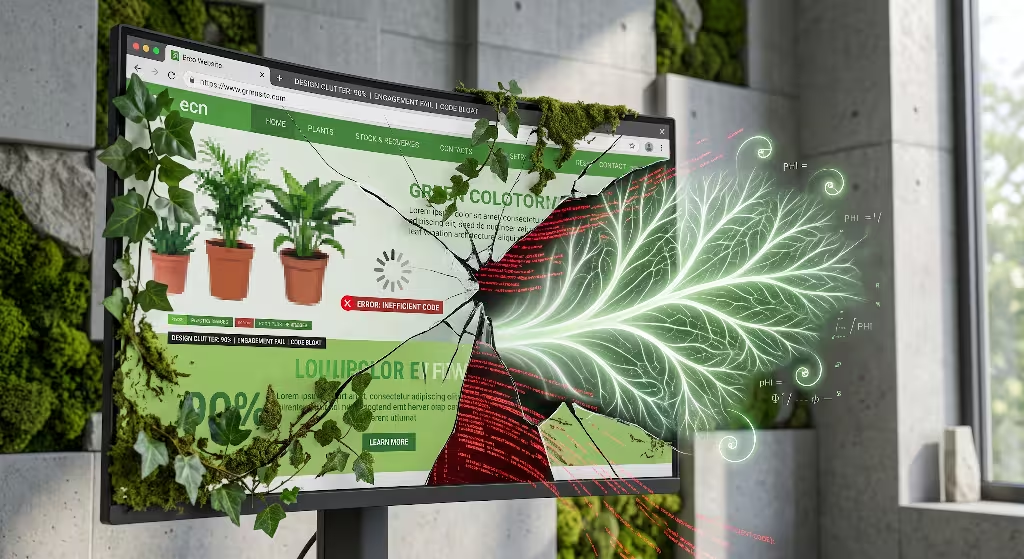
Decorative green design fails because it treats nature as a paint job instead of a working system. In the digital world, designers often grab a standard color code like olive green or sage, slap it onto a box, and call the work finished. This decorative approach assumes that users will feel calm just because they see a leaf icon. In reality, human brains are far more perceptive than that. When your brand strategy relies on surface decorations, your website creates visual boredom rather than genuine peace.
+-----------------------------------------------------------+
|               DECORATIVE ECO AESTHETICS                   |
|  * Surface-level green tinting                            |
|  * Generic stock photos of leaves                         |
|  * High server weight and heavy battery drain             |
|  * Artificial clutter disguised as "natural"              |
+-----------------------------------------------------------+
                            VS
+-----------------------------------------------------------+
|                BIOPHILIC BRAND STRATEGY                   |
|  * Systems-level alignment with human biology             |
|  * Proportional layouts based on natural geometry         |
|  * Low-carbon, high-speed website performance             |
|  * Stress reduction through natural pacing and flow       |
+-----------------------------------------------------------+
The Anatomy of Green Clichés
The modern internet is filled with repetitive green visual clichés. You see the exact same stock photos of small green sprouts held in muddy hands, the same background pictures of dewy fern leaves, and the same pale tan textures meant to look like cardboard. These elements are pasted over the exact same rigid grid layouts that every other company uses.
These visual clichés fail because they lack local relevance and biological purpose. A real forest is not just a collection of green shapes; it is an organized, living habitat where every sound, shadow, and curve serves a functional goal. When your brand strategy substitutes real purpose with stock photography, your website looks indistinguishable from thousands of competitors. You lose the distinct voice that makes a brand strategy memorable.
The Psychological Backfire
When people see shallow green symbols on a slow, cluttered website, their defense mechanisms go up. Modern internet users have developed strong radar for empty marketing claims. If a website looks like a rainforest but takes ten seconds to load, bombards the visitor with popups, and hides vital facts behind vague text, visitors recognize the deceit immediately.
This superficial approach causes mental fatigue. When a company uses low-contrast green text on a brown background, it strains the user’s eyes, making the content hard to read. Instead of calming the visitor, this visual clutter raises frustration. A good brand strategy seeks to eliminate frustration by organizing thoughts cleanly. When visual decor gets in the way of reading, the brand strategy loses its strength, driving potential clients straight into the arms of competitors.
Defining Biophilic Brand Strategy: Evolutionary Biology Meets Systems Architecture

To build a reliable brand strategy, you have to look past short-term design fads and study human biology. Biophilia is a concept popularized by biologist Edward O. Wilson. It describes the innate, genetic tendency of human beings to seek connections with nature and other living things. Humans spent almost all of their history living outdoors under open skies, reading horizons, listening to running water, and navigating diverse landscapes. Our eyes, ears, and brains evolved to process that specific type of visual information.
       [ Human Evolutionary Biology ]
                     │
                     ▼
        [ Biophilia Hypothesis ]
                     │
                     ▼
  [ Biophilic Digital Brand Strategy ]
   ├── Natural Analogues (Geometry & Rhythm)
   ├── Space Architecture (Prospect & Refuge)
   └── Clean Engineering (Low Carbon & Fast Load)
When you translate these biological truths into a modern brand strategy, you do not just drop pictures of trees onto a screen. Instead, you design digital interfaces that match how the human brain naturally processes shapes, light, and movement. A sound brand strategy understands that a visitor’s brain feels at home when digital information matches natural patterns. By bringing biological principles into your online presence, your brand strategy helps users think more clearly and retain information longer.
Natural Analogues and Computational Biomimicry
Natural analogues are shapes, patterns, and visual rhythms that remind us of nature without directly copying a photograph. In nature, you rarely see completely sharp ninety-degree corners. Instead, you see branching rivers, the gentle curves of river stones, and shells that grow according to mathematical ratios.
A strong brand strategy uses computational biomimicry by borrowing structural rules from the natural world. For example, the spacing between your headers, paragraphs, and images can follow natural growth ratios like the golden ratio or Fibonacci sequences. When a website organizes its layout using these organic balance points, the page feels comfortable to read. A successful brand strategy avoids mechanical, boxy layouts and uses soft, organic proportions that let the human eye travel across the screen without strain.
Nature of the Digital Space: Spatial Psychology
In natural environments, humans always look for two essential safety features: prospect and refuge. Prospect means having an open, clear view of the area ahead so you can spot opportunities or danger. Refuge means having a secure, sheltered spot behind you where you can rest without worrying about surprises.
+-------------------------------------------------------------+
| PROSPECT: Clear, macroscopic view of topics and navigation  |
+-------------------------------------------------------------+
|                                                             |
|   +-----------------------------------------------------+   |
|   | REFUGE: Clean, distraction-free reading sanctuary   |   |
|   | (Generous margins, quiet rhythm, high legibility)   |   |
|   +-----------------------------------------------------+   |
|                                                             |
+-------------------------------------------------------------+
You can build these spatial conditions directly into your brand strategy through deliberate website layout:
- Prospect in Navigation: Give users wide, clear menus and visible navigation trails so they always know where they are, where they have been, and where they can go next.
- Refuge in Reading Areas: Create quiet, spacious zones on the page where text is set inside generous margins, free from screaming banner ads or blinking buttons.
- Mystery and Discovery: Organize your content so readers want to scroll deeper to reveal the next step of the story, mimicking the experience of walking down a curving path in a park.
When your brand strategy incorporates prospect and refuge, you give visitors a feeling of control and safety. This calm feeling makes them stay on your site longer, read your articles, and trust your recommendations.
Structural Comparison: Biophilic Brand Strategy vs Decorative Eco Aesthetics
To evaluate how these two methods differ in real-world application, we must look at how each one handles core elements like layout, user experience, site code, and identity. A decorative aesthetic adds external decorations, while an authentic brand strategy rebuilds the entire digital experience from the ground up.
| Evaluation Dimension | Decorative Eco Aesthetics | Biophilic Brand Strategy |
| Visual Construction | Uses leaf icons, paper textures, and pastel green backgrounds. | Uses natural mathematical proportions, fractal patterns, and organic layout curves. |
| Underlying Mechanism | Relies on marketing buzzwords and surface-level decoration. | Built on evolutionary biology, user comfort, and cognitive science. |
| Impact on User Brain | Clutters the screen with low-contrast colors and causes eye strain. | Lowers stress, clears mental fatigue, and makes information simple to read. |
| Code and Performance | Often runs on heavy, bloated code covered with large image files. | Uses lean, clean code that loads fast and cuts energy use. |
| Handling of Space | Packs content into rigid, boxy templates with decorative borders. | Uses natural spatial balance with open views and calm reading spaces. |
| User Trust | Feels superficial and risks triggering consumer skepticism. | Builds lasting authority through honest, functional, and reliable design. |
| Search Engine Value | Offers little technical value and often slows down page load times. | Improves core web metrics, keeps visitors on the page, and earns natural links. |
The False Promise of Decorative Eco Aesthetics
When an executive team decides it wants to show off its environmental values, it often chooses the easiest path. It tells designers to change the company colors to forest green and add pictures of rainforests to the hero banner. This choice feels quick and cheap, but it lacks structural weight.
A brand strategy cannot rely on cosmetic shortcuts. When your design relies solely on decorative green styling, you risk misleading your audience. If your company claims to care about balance, but your website drains smartphone batteries with heavy scripts and uncompressed videos, your digital footprint contradicts your message. A superficial brand strategy hurts your credibility because your actual behavior does not match your visual claims.
The Long-Term Strength of Biophilic Brand Strategy
An authentic biophilic brand strategy looks at the whole picture. Instead of asking how to make a page look green, it asks how to make a page feel natural and run efficiently. It connects the visual layout directly to technical performance, human attention spans, and environmental responsibility.
       DECORATIVE PATH                   BIOPHILIC PATH
   [ Superficial Green Skin ]        [ Evolutionary Foundations ]
              │                                   │
              ▼                                   ▼
   [ Heavy Code & Clutter ]          [ Clean, High-Speed Code ]
              │                                   │
              ▼                                   ▼
   [ Visual Strain & Bounce ]        [ Cognitive Rest & Dwell ]
              │                                   │
              ▼                                   ▼
      [ Damaged Trust ]               [ Enduring Brand Equity ]
When you use this biological foundation for your brand strategy, you build digital assets that stand the test of time. Your pages do not look like a temporary fashion trend. Instead, they feel balanced, helpful, and natural to every visitor who stops by. Over months and years, this reliable experience turns casual visitors into loyal advocates, giving your brand strategy real staying power in a crowded market.
Translating Biophilia into Interface and Technical Architecture
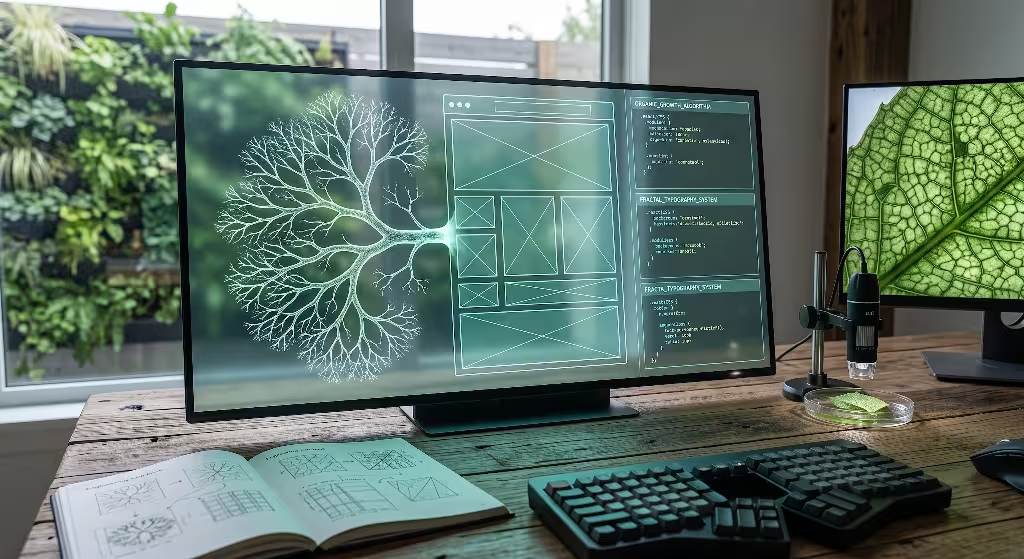
Transforming an abstract idea into practical software requires concrete engineering steps. If a brand strategy is going to work on the web, it must be written into clean style sheets, balanced typography, and responsive code. We must look at the specific technical tools that turn a general concept into an effective, everyday digital reality.
Fractal Geometry and Typographic Rhythm
Fractals are complex geometric patterns that repeat at different scales. You can see them in fern leaves, tree branches, broccoli heads, and coastlines. Research in visual science shows that looking at patterns with a natural fractal ratio can lower stress levels in the human nervous system. When the brain sees these proportions, it relaxes because it easily recognizes the pattern.
Fibonacci Scale applied to UI Typography:
-------------------------------------------------------------
16px  (Body Copy)       : The quick brown fox jumps...
24px  (Sub-heading)     : Natural Architecture
40px  (Section Title)   : Digital Biophilia
64px  (Main Page Title) : Brand Strategy Foundations
-------------------------------------------------------------
You can weave this natural geometry into your brand strategy by using proportional scales across your site:
- Typographic Scales: Set your body copy, subheadings, and section titles using the Fibonacci sequence (such as 16px, 24px, 40px, and 64px) rather than picking numbers at random. This creates a natural harmony between different sizes of text.
- Harmonic Spacing: Set your margins, column widths, and line spacing using identical mathematical steps. The layout will feel steady and balanced to the reader, much like the branches of an oak tree.
- Visual Micro-Breaks: Place simple, naturally repeating shapes in the background of your site to give the visitor’s eyes a restful place to pause while reading long articles.
When you use natural proportions to structure your text, your brand strategy ensures that long articles are easy to read. Visitors can absorb complex technical details without feeling overwhelmed by dense blocks of text.
Kinetic Motion Design as Natural Phenomena
On many websites, buttons and menus pop open with sharp, unnatural jerks. They snap into view instantly or bounce in ways that look mechanical. These harsh animations pull user focus away from reading and cause visual fatigue over time.
A mature brand strategy uses motion design inspired by the physics of the physical world. In nature, objects have mass, momentum, and friction:
- Fluid Transitions: When a menu opens, let it slide into view with gentle acceleration and deceleration, similar to the way a leaf floats down through still air.
- Momentum Scrolling: Give page interactions a sense of weight so elements glide to a smooth stop rather than halting with a jarring snap.
- Subtle Hover Reactions: When a user hovers over a button, let the color change gently, like sunlight shifting across grass when a cloud moves overhead.
By grounding your animations in real-world physics, your brand strategy makes digital interactions feel familiar and predictable. Users feel comfortable navigating your pages because elements move in ways their brains already understand.
The Ecological Tech Stack: True Systemic Biophilia
You cannot claim to have a nature-aligned brand strategy if your website requires massive amounts of electrical power to load. Every time a server sends megabytes of unnecessary code, tracking scripts, and heavy video files across the web, it consumes electricity in data centers. True biophilia requires ecological responsibility in your engineering choices.
TRADITIONAL BLOATED WEBSITE          CLEAN BIOPHILIC ARCHITECTURE
┌───────────────────────────┐        ┌───────────────────────────┐
│ Large uncompressed photos │        │ Lean, modern vector SVGs  │
│ 25 tracking and ad tags   │        │ Zero unnecessary scripts  │
│ Bulky CMS server strain   │        │ Static edge distribution  │
│ 4.5 MB page download      │        │ Under 400 KB page weight  │
└───────────────────────────┘        └───────────────────────────┘
   Heavy Carbon Footprint               Minimal Energy Footprint
To align your code with your brand strategy, focus on these lean development practices:
- Static Site Architecture: Pre-render pages so your web servers do not have to run heavy database queries every time a visitor clicks a link.
- Asset Optimization: Convert your images to modern file formats and use lightweight vector drawings instead of heavy raster graphics wherever possible.
- Code Pruning: Delete old, unused plugins, minimize external libraries, and keep your overall page weight small. A page that weighs under 500 kilobytes loads fast and uses very little battery power.
Building a lightweight website proves that your brand strategy is genuine. You protect both the visitor’s time and the planet’s resources by serving information quickly and cleanly.
Search Engine Optimization and Search Landscape Synergies
Search engines want to give people fast, clear, and trustworthy answers. When your brand strategy focuses on human needs and clean code, it matches what search engine algorithms look for. Biophilic web architecture naturally improves user experience metrics, helping your content earn top positions in organic search results.
       [ Biophilic Brand Strategy ]
                     │
         ┌───────────┴───────────┐
         ▼                       ▼
  [ Fast Load Times ]    [ Calm UX & Clear Flow ]
         │                       │
         ▼                       ▼
  [ High Core Web Vitals] [ Long Dwell, Low Bounce ]
         │                       │
         └───────────┬───────────┘
                     ▼
       [ Higher Search Engine Rank ]
Core Web Vitals and User Experience
Search engines check how fast a page appears on screen, how quickly it reacts when clicked, and whether the layout shifts around while loading. A brand strategy focused on clean engineering scores well on these tests:
- Fast Content Display: Because a biophilic site avoids bloated scripts and massive files, the main text and pictures appear almost immediately.
- Stable Layouts: Setting up your pages with balanced natural proportions prevents elements from jumping around while loading, giving visitors a reliable reading experience.
- Immediate Interactivity: When you strip away heavy background scripts, the browser can respond right away when a user clicks a menu or link.
A strong brand strategy turns technical performance into an organic search advantage. By respecting the user’s time, your website meets the quality guidelines search engines reward.
Dwell Time and Cognitive Ergonomics
When a reader lands on a website that is cluttered with bright flashing banners and poorly organized text, they usually click the back button right away. That quick exit signals to search engines that the page was unhelpful or frustrating.
A brand strategy that uses natural spatial flow encourages visitors to stay. When text is set in comfortable reading columns with calm background contrast, people can focus without eye strain. They read your points, click through to related guides, and spend several minutes learning on your domain. This increased reading time tells search engines that your content is valuable, which helps your pages climb higher in search results over time.
Frequently Asked Questions about Brand Strategy
What is the core difference between biophilic design and eco-friendly aesthetics?
The primary difference lies between surface decoration and structural function. An eco-friendly aesthetic is a visual style that uses green colors, kraft paper textures, and pictures of plants to make a brand look environmentally conscious. It only changes surface visuals.
In contrast, biophilic design is a comprehensive method that brings biological principles into layout structure, typography, user flow, and technical performance. While decorative styling simply paints green graphics over a regular website, biophilic design creates an interface that reduces stress, respects human attention spans, and runs on lean, energy-efficient code.
What are the main pillars of biophilic design in digital branding?
Biophilic design for digital platforms rests on three main pillars:
- Natural Analogues: Using shapes, patterns, and proportions inspired by nature, including fluid grid layouts, organic curves, and mathematical spacing systems like the Fibonacci sequence.
- Nature of the Space: Designing clear, comfortable digital environments that offer both wide-open views for easy navigation and quiet, distraction-free spaces for focused reading.
- Ecological Engineering: Building digital products with clean, lightweight code that loads fast, avoids unnecessary server requests, and reduces energy consumption.
How does a biophilic brand strategy prevent digital greenwashing?
A biophilic brand strategy stops greenwashing by making sure a company’s real-world digital actions match its visual claims. Greenwashing happens when a business uses environmental symbols to hide bad practices or heavy waste.
When you adopt a biophilic brand strategy, you hold your digital presence to measurable standards. You do not just display a green leaf; you cut your server energy consumption, remove intrusive tracking scripts, and treat the visitor’s attention with honesty and respect. By aligning your website’s performance with environmental responsibility, your company earns trust through real results rather than empty slogans.
Can biophilic web design improve organic search engine rankings?
Yes, biophilic design directly supports organic search engine rankings by improving technical performance and user engagement. Search engines prioritize websites that load quickly, remain stable while rendering, and answer queries cleanly.
Because biophilic design relies on lean code and optimized media, it earns high marks on technical speed evaluations. Furthermore, because biophilic layouts reduce eye strain and make reading easy, visitors stay on your site longer and visit multiple pages. These positive user signals demonstrate to search engines that your site provides a high-quality experience, helping your content secure higher organic visibility.
The Strategic Path Forward
Building a successful digital brand strategy requires stepping away from shallow design trends and committing to structural quality. The practice of covering a slow, cluttered website with green colors and plant graphics is no longer enough to persuade savvy readers. Modern audiences expect clarity, speed, and real integrity from the organizations they support online.
By adopting a biophilic brand strategy, your company aligns its online presence with the deep biological needs of its audience. You build digital spaces that feel comfortable, function smoothly, and respect the natural world through clean, efficient code. This comprehensive brand strategy does not rely on short-lived fads or marketing gimmicks. Instead, it creates an enduring digital experience that reduces stress for your visitors, improves your search engine performance, and builds genuine trust that lasts.
To see where your organization stands today, review your current digital footprint against this five-point evaluation:
+-------------------------------------------------------------+
|              THE FIVE-POINT BIOPHILIC AUDIT                 |
+-------------------------------------------------------------+
| [ ] 1. Do page layouts use natural, proportional spacing    |
|        instead of rigid, boxy grids?                        |
|                                                             |
| [ ] 2. Are animations modeled on real-world physics         |
|        rather than sudden, mechanical movements?            |
|                                                             |
| [ ] 3. Does the interface offer open navigation views       |
|        alongside quiet, distraction-free reading zones?     |
|                                                             |
| [ ] 4. Is the underlying codebase lean and optimized to     |
|        minimize server energy use and load times?           |
|                                                             |
| [ ] 5. Does the design communicate environmental values     |
|        through performance rather than decorative leaves?   |
+-------------------------------------------------------------+
When your digital assets satisfy every point on this list, your brand strategy moves beyond superficial styling. You create a calm, reliable, and effective home on the web that serves both your audience and your long-term business goals.