
Table of Contents
When we build websites, we consume electricity, power servers, and shape human focus. By using modern sustainability practices in web architecture, we can build digital spaces that respect human focus and lower environmental costs.
When we combine biophilic design with digital performance, we create websites that feel natural and load fast. This guide breaks down how digital sustainability practices transform place-based websites into efficient engines for local business and environmental stewardship.
Conceptual Framework
A. Defining Digital Regionalism and Place-Based Web Design
Place-based web design means making a website fit a specific physical location, community, or ecosystem. Most websites today use generic templates. These global templates look the same whether you open them in Boston, Austin, or Seattle. They load heavy video backgrounds, auto-playing scripts, and massive image sliders that waste energy and slow down devices.
Digital regionalism changes this approach. It uses digital sustainability practices to ground a website in its local geography. A place-based website uses local visual patterns, regional colors, and lightweight code to represent a real place. When you apply sustainability practices to web design, you remove excess digital noise. You replace global bloat with clear, local content that loads fast on every device.
These sustainability practices help web designers treat digital real estate like physical architecture. A building in Vermont should be built differently than a building in Arizona. In the same way, a website built for a local community should reflect its unique environment. When developers implement sustainability practices, they use smaller code files and clean graphic assets. This makes the website fit its physical location while consuming far less electricity.
By adopting sustainability practices, place-based websites offer a clear alternative to generic web templates. Users get a sense of place as soon as the page opens. They do not have to fight through pop-up ads, heavy video headers, or tracking scripts. Applying sustainability practices ensures that the website honors both the local ecosystem and the user who lives within it.
       [ Generic Global Template ]                [ Place-Based Web Architecture ]
 ---------------------------------------    -------------------------------------------
 - Heavy auto-play videos                  - Clean vector patterns & local visual accents
 - Bloated 3rd-party tracking scripts      - Lightweight, privacy-first code base
 - High carbon output (~2.0g CO2/view)     - Ultra-low carbon output (<0.10g CO2/view)
 - Disconnected from physical location     - Tailored to regional geography & community
B. The Intersection of Digital Sustainability and Spatial Design
Digital sustainability means reducing the energy and resource consumption of digital products. Every time someone visits a web page, servers process data, networks transmit bytes, and phones or computers render pixels. All of these actions use electricity. Most of the global electric grid still relies on fossil fuels. Because of this, sending heavy data across the internet creates carbon emissions.
Spatial design focuses on how humans move through and experience physical space. When we bring spatial design into the digital world, we look at how users navigate a website. By integrating sustainability practices into spatial web design, we make digital movement effortless. We cut out wasteful code paths and simplify user journeys.
The connection between digital sustainability practices and spatial design relies on efficiency. When you build a website using biophilic principles, you match the visual layout to natural patterns. Nature does not waste energy, and sustainable websites should not waste energy either. Using proven sustainability practices reduces page weight from several megabytes down to a few hundred kilobytes.
+-----------------------------------------------------------------------------------+
|                        THE DIGITAL SUSTAINABILITY CYCLE                           |
|                                                                                   |
|    [ Clean, Optimized Code ] ---> [ Fast Page Render ] ---> [ Low Energy Used ]   |
|            ^                                                        |             |
|            |                                                        v             |
|    [ Higher Search Rank ]  <--- [ Reduced Bounce Rate ] <--- [ Great Local UX ]   |
+-----------------------------------------------------------------------------------+
This alignment creates a powerful feedback loop. Applying sustainability practices lowers the energy needed per page view. At the same time, it improves user cognition by removing screen clutter. Users process information faster and feel less digital fatigue. By combining spatial awareness with sustainability practices, we build web applications that respect human attention and lower carbon emissions.
Technical and Environmental Performance Metrics
A. Carbon Footprint Reduction via Code and Asset Efficiency
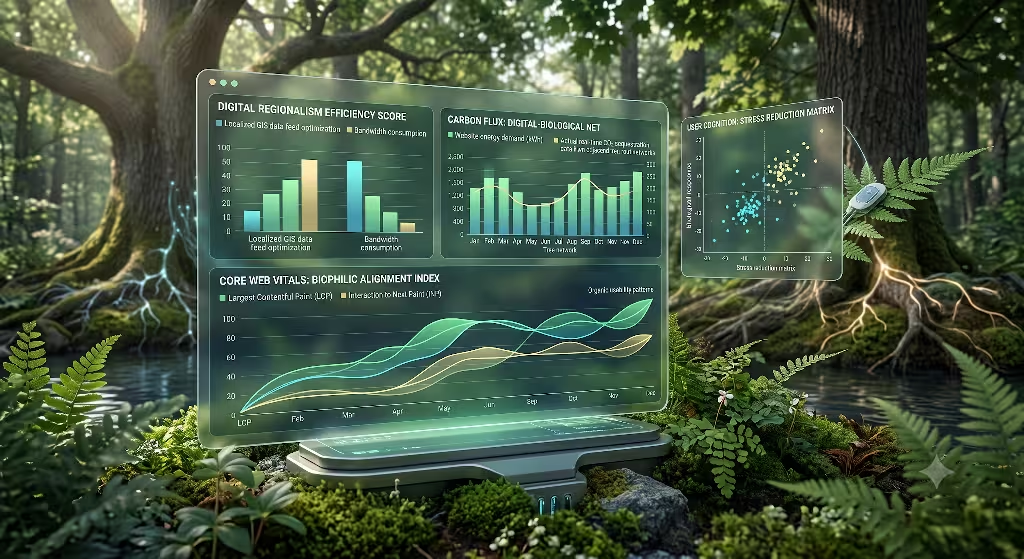
The average web page today transfers over two megabytes of data. Loading a typical web page creates between 0.5 and 2.0 grams of carbon dioxide. If a website gets one hundred thousand visitors a month, it can generate hundreds of kilograms of carbon every year. Implementing sustainability practices lowers this environmental footprint dramatically.
Average Web Page vs. Optimized Place-Based Page Carbon Footprint
----------------------------------------------------------------
Average Web Page:    [████████████████████] 1.50g CO2 / view
Optimized Page:      [█] 0.08g CO2 / view
One of the most effective sustainability practices is asset optimization. Large, uncompressed JPEG or PNG images account for most of the data sent across the web. By converting image assets to modern formats like WebP or AVIF, developers cut file sizes by up to 80% without losing visual quality. Modern sustainability practices also encourage using CSS patterns, inline SVG graphics, or native HTML shapes instead of heavy photo backgrounds.
HTML
<!-- Example of lightweight, clean HTML markup for place-based assets -->
<picture>
  <source srcset="assets/regional-landscape.avif" type="image/avif">
  <source srcset="assets/regional-landscape.webp" type="image/webp">
  <img src="assets/regional-landscape.jpg"
       alt="Bioregional flora landscape in late summer"
       loading="lazy"
       decoding="async"
       width="800"
       height="450">
</picture>
Code efficiency is another major focus of sustainability practices. Web developers often load entire JavaScript libraries just to use one simple feature. Applying sustainability practices means writing clean, custom JavaScript or using standard HTML and CSS whenever possible. Eliminating unused code reduces server processing time and network transfer demands.
CSS
/* Using lightweight CSS custom properties for biophilic themes */
:root {
  --color-granite: #373b3e;
  --color-moss: #4a5d4e;
  --color-clay: #b86b4b;
  --font-native: system-ui, -apple-system, sans-serif;
}

body {
  background-color: #fbfbf9;
  color: var(--color-granite);
  font-family: var(--font-native);
  line-height: 1.6;
}
When web developers follow these sustainability practices, a page can drop from emitting 1.5 grams of carbon per view down to less than 0.1 grams. Across hundreds of thousands of page views, these sustainability practices prevent real environmental pollution.
B. Optimization of Core Web Vitals (CWV)
Google measures website user experience using Core Web Vitals. These metrics track how fast a page loads, how quickly it reacts to user input, and how stable the layout remains as it loads. Adopting web sustainability practices directly improves all three Core Web Vitals metrics.
+-----------------------------------------------------------------------------------+
|                            CORE WEB VITALS BENCHMARKS                             |
|                                                                                   |
|   Metric                             Good          Needs Work       Poor          |
|   -----------------------------------------------------------------------------   |
|   Largest Contentful Paint (LCP)     <= 2.5s       2.5s - 4.0s      > 4.0s        |
|   Interaction to Next Paint (INP)    <= 200ms      200ms - 500ms    > 500ms       |
|   Cumulative Layout Shift (CLS)      <= 0.10       0.10 - 0.25      > 0.25        |
+-----------------------------------------------------------------------------------+
Largest Contentful Paint (LCP)
LCP measures how long it takes for the largest image or text block to render on screen. Heavy hero images and bloated font files slow down LCP. Through sustainability practices like image compression, preloading key fonts, and caching assets, LCP drops well below the target limit of 2.5 seconds.
Interaction to Next Paint (INP)
INP measures how quickly a page responds when a user clicks a button, taps a menu, or types in a form. Heavy JavaScript execution freezes the browser main thread, causing slow responses. Following technical sustainability practices means stripping away non-essential scripts, third-party trackers, and large frameworks. This keeps INP under 200 milliseconds, giving users an immediate, smooth response.
Cumulative Layout Shift (CLS)
CLS tracks whether elements on the page move around unexpectedly while loading. Layout shifts happen when images or embedded widgets do not have fixed width and height dimensions in the HTML. Key sustainability practices require defining explicit aspect ratios for all media elements. This prevents shifting, stabilizes the visual layout, and saves the device from having to redraw the screen multiple times.
When developers implement sustainability practices to optimize Core Web Vitals, they reduce screen redraws and CPU activity. This lowers device battery drain while providing a smooth digital experience.
C. Server-Level Efficiency and Edge Computing
Where and how a website is hosted plays a major role in its environmental footprint. Sustainable web design requires selecting green web hosting providers powered by 100% renewable energy, such as wind, solar, or hydroelectric power.
+-----------------------------------------------------------------------------------+
|                         HOSTING INFRASTRUCTURE EFFICIENCY                         |
|                                                                                   |
|  Traditional Hosting:  [ Data Center ] ========= (Long Distance) ========> [ User ]
|                        (Fossil Fuel Power Grid)                              |
|                                                                              |
|  Edge Green Hosting:   [ Green Data Node ] ==> (Short Local Route) ========> [ User ]
|                        (100% Renewable Energy)                               |
+-----------------------------------------------------------------------------------+
Using local server nodes, often called edge computing, is another pillar of modern sustainability practices. Instead of sending data across thousands of miles from a centralized data center, edge computing stores web content on local servers closer to the user. This cuts down the physical distance data must travel across network cables.
Edge computing combined with sustainability practices yields several technical advantages:
- Reduced Network Latency: Data travels shorter distances, making the page load faster for local residents.
- Lower Data Center Load: Efficient caching strategies reduce total compute demands on primary servers.
- Intelligent Dynamic Caching: Static elements like regional CSS styles, biophilic vector graphics, and HTML pages are cached locally at the edge.
- Lower Grid Emissions: Hosting on renewable energy networks reduces overall greenhouse gas output per server rack.
By aligning web hosting choices with sustainability practices, place-based businesses ensure their digital operations match their environmental values.
Cognitive and UX Benefits: Biophilic and Bioregional Resonance

A. Grounding User Interfaces in Physical Landscapes
Biophilic web design uses visual patterns inspired by nature to create relaxing digital environments. Standard web design often uses harsh neon colors, flashing banners, and intrusive pop-ups. These elements create cognitive overload and drive visitors away. Implementing biophilic sustainability practices creates a calmer, more intuitive digital space.
+-----------------------------------------------------------------------------------+
|                        BIOPHILIC VISUAL LAYOUT PATTERNS                           |
|                                                                                   |
|   +---------------------------------------------------------------------------+   |
|   | Header: Soft Organic Palette (Forest Greens, Slate Grays, Warm Earth)     |   |
|   +---------------------------------------------------------------------------+   |
|   | Navigation: Clean, clear layout with ample natural white space            |   |
|   +---------------------------------------------------------------------------+   |
|   | Content Area: Natural contrast ratios, system fonts, clear visual flow    |   |
|   |                                                                           |   |
|   |   [ Local Image Asset ]    [ Text Block: Short, direct sentences ]         |   |
|   |   (Optimized WebP/AVIF)    (High readability, no layout shift)          |   |
|   +---------------------------------------------------------------------------+   |
+-----------------------------------------------------------------------------------+
Place-based websites benefit greatly from local color palettes derived from regional geography. For example, a website for a company in the Pacific Northwest might use deep forest greens, mist grays, and ocean blues. A website for a business in the Southwest might use terracotta reds, sand golds, and sage greens.
Using regional color schemes alongside sustainability practices grounds the digital experience in real geography. Designers can also use soft curves, subtle texture patterns, and generous white space. These natural choices reduce eye strain and help users absorb content with less effort.
Crucially, biophilic design and sustainability practices share the same core goal: removing unnecessary waste. A lightweight visual layout uses fewer background graphic renders, smaller image files, and less CPU power. By using sustainability practices to simplify web layouts, we create digital spaces that feel tranquil, natural, and highly responsive.
B. Authentic Brand Trust vs. Digital Greenwashing
Consumers today can easily spot greenwashing. Greenwashing occurs when a company claims to be environmentally friendly but uses wasteful practices in reality. Many organizations display eco-friendly badges on their homepages while running heavy, energy-draining websites that generate high carbon emissions.
Authentic sustainability practices give companies a verifiable way to demonstrate environmental leadership. Rather than making vague claims, a place-based business can point to its measured web performance. A lightweight, green-hosted website serves as transparent proof of eco-friendly commitments.
Greenwashing vs. Authentic Digital Sustainability
----------------------------------------------------------------------------------
Greenwashing Approach:        Displays green badges on a bloated 5MB web page.
Authentic Practice:           Runs a lean 300KB site on 100% renewable servers.
Applying sustainability practices builds deep brand trust in several ways:
- Transparent Carbon Metrics: Sharing public website carbon scores using open tools like the Website Carbon Calculator shows true accountability.
- User-First Privacy Standards: Removing intrusive third-party tracking scripts protects user data privacy while reducing network data traffic.
- Universal Accessibility: Building accessible, lightweight sites ensures people on slow mobile networks or older devices can still access local services easily.
When place-based organizations use authentic sustainability practices, they turn their website into a functional extension of their brand values. Customers appreciate fast page loads, clear privacy standards, and low environmental impact.
Economic, Business, and Search Engine Optimization (SEO) Impact
A. Enhanced Localized Search Performance
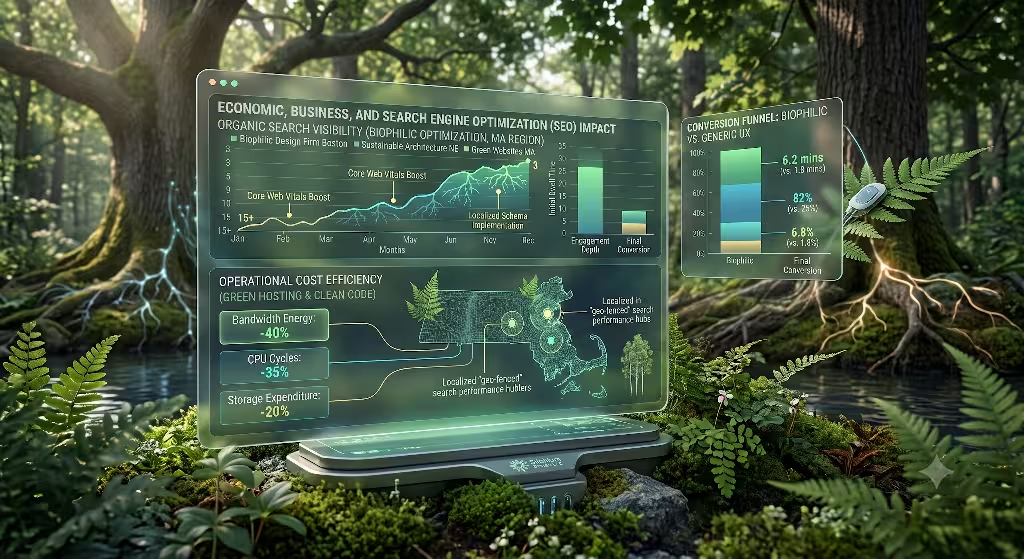
Search engines like Google aim to deliver fast, relevant results to users. They reward websites that load quickly, offer clean mobile experiences, and provide clear structured data. Adopting sustainability practices directly boosts local SEO performance by improving these exact signals.
+-----------------------------------------------------------------------------------+
|                        LOCAL SEO & SUSTAINABILITY SYNERGY                         |
|                                                                                   |
|  [ Sustainability Practices ]  ===>  Lower Page Weight & Faster Speed             |
|                                      |                                            |
|                                      v                                            |
|  [ Higher Local Search Rank ]  <===  Lower Bounce Rates & Better Engagement       |
|                                      |                                            |
|                                      v                                            |
|  [ Clean Geo Schema Markup ]   ===>  Better Crawl Efficiency & Local Relevance    |
+-----------------------------------------------------------------------------------+
When search engine crawlers scan a website, they operate under a crawl budget. Bloated websites with redundant pages, slow server responses, and broken code waste this crawl budget. By applying sustainability practices, web developers streamline the site structure. Clean code allows search bots to crawl and index pages faster using less server energy.
Place-based websites also rely heavily on geographic Schema.org markup. Integrating local schema code helps search engines understand the exact physical location and service area of a business. Combining precise structured data with sustainability practices ensures that your pages rank higher for local searches.
JSON
{
  "@context": "https://schema.org",
  "@type": "LocalBusiness",
  "name": "Silphium Design LLC",
  "description": "Biophilic web design and digital sustainability practices.",
  "address": {
    "@type": "PostalAddress",
    "streetAddress": "100 Newbury Street",
    "addressLocality": "Boston",
    "addressRegion": "MA",
    "postalCode": "02116",
    "addressCountry": "US"
  },
  "geo": {
    "@type": "GeoCoordinates",
    "latitude": 42.3512,
    "longitude": -71.0754
  },
  "url": "https://www.silphiumdesign.com"
}
By maintaining clean markup and fast load times through sustainability practices, local businesses secure better visibility in local search results.
B. Conversion Rate Optimization (CRO)
Website speed directly influences whether visitors stay on a page or leave. Studies show that every extra second of page load time increases bounce rates and reduces conversion rates. Applying sustainability practices provides a clear competitive edge by keeping page load times sub-second.
Page Load Time vs. User Conversion Rates
----------------------------------------------------------------------------------
0.5 Seconds:  [████████████████████] High Conversion Rate (~5.0%)
2.0 Seconds:  [████████████] Medium Conversion Rate (~2.5%)
4.0+ Seconds: [████] Low Conversion Rate (<1.0%)
For place-based websites, mobile users are often on the go, accessing pages over variable cellular networks. A bloated website full of heavy scripts may fail to load entirely in areas with weak cell coverage. By using sustainability practices to trim page payloads, place-based businesses ensure their sites load reliably everywhere.
Key CRO benefits driven by sustainability practices include:
- Lower Bounce Rates: Fast-loading pages keep visitors engaged from the moment they click.
- Higher Form Completion Rates: Streamlined forms with minimal script overhead reduce user friction.
- Improved Mobile Sales: Lightweight, responsive layouts make mobile browsing effortless.
- Stronger Local Engagement: Fast access to location details, business hours, and service menus drives real-world visits.
By linking user experience directly with sustainability practices, businesses turn passive web traffic into active local customers.
C. Reduction in Operational and Hosting Overhead
Building a clean, lightweight website provides direct financial savings. Web hosting companies charge based on data transfer, bandwidth usage, and storage space. Bloated websites require high-tier server plans to handle heavy data traffic. Adopting sustainability practices lowers these operational expenditures significantly.
+-----------------------------------------------------------------------------------+
|                        OPERATIONAL COST REDUCTION MODEL                           |
|                                                                                   |
|   Traditional Web Hosting Costs:                                                  |
|   High Data Bandwidth + Heavy Storage + Frequent Redesigns = $$$ High Overhead    |
|                                                                                   |
|   Sustainable Web Operations:                                                     |
|   Low Data Bandwidth + Modular Codebase + Extended Lifespan = $ Low Overhead     |
+-----------------------------------------------------------------------------------+
By trimming image file sizes, using efficient code, and clearing out old media files, businesses cut their bandwidth demands. Lower bandwidth usage allows place-based companies to host their sites on cost-effective green plans without sacrificing performance.
Furthermore, sustainability practices extend the lifespan of a website. Modular, clean code built on web standards is easier to maintain and update over time. Instead of spending money on expensive redesigns every two years, companies can continuously refine their modular design system. Embracing sustainability practices saves money, cuts digital waste, and delivers long-term technical value.
Commonly Asked Questions about Sustainability Practices
Addressing common search queries helps clarify the core technical and strategic aspects of digital sustainability practices.
Q1: What is a place-based website?
A place-based website is a digital interface built specifically around the physical, cultural, and environmental characteristics of a specific geographic area. Unlike generic global templates, a place-based website incorporates local geographic context, regional aesthetics, and community focus.
When built using sustainability practices, a place-based website uses lean code, green hosting, and biophilic design elements to serve its local target audience cleanly and efficiently without wasting digital energy.
Q2: What are the primary benefits of sustainability practices in place-based websites?
The primary benefits of sustainability practices in place-based websites include:
- Sub-Second Load Speeds: Dramatically faster performance by trimming page weight.
- Lower Environmental Impact: Measurable reductions in energy consumption and carbon emissions.
- Higher Local Search Rankings: Improved Core Web Vitals and clean schema structure boost local search visibility.
- Reduced Hosting Costs: Lower bandwidth usage cuts ongoing operational expenses.
- Improved User Trust: Transparent green practices build authentic customer loyalty.
Q3: How does sustainable web design lower a website’s carbon footprint?
Sustainable web design lowers a website’s carbon footprint by minimizing the electricity consumed across data centers, transmission networks, and end-user devices. By implementing key sustainability practices—such as compressing media assets, eliminating unused JavaScript, using browser caching, and choosing hosting providers powered by 100% renewable energy—web developers directly cut data transfer payloads. Less data transferred means less power consumed, leading directly to reduced carbon emissions per page view.
+-----------------------------------------------------------------------------------+
|                        CARBON REDUCTION PIPELINE                                  |
|                                                                                   |
|  [ Clean Code & Compressed Media ]                                                |
|               |                                                                   |
|               v                                                                   |
|  [ Reduced Data Transfer (Kilobytes) ]                                            |
|               |                                                                   |
|               v                                                                   |
|  [ Lower Energy Consumption (kWh) ]                                               |
|               |                                                                   |
|               v                                                                   |
|  [ Reduced Carbon Dioxide Emissions (CO2) ]                                       |
+-----------------------------------------------------------------------------------+
Q4: How do green web practices improve local SEO performance?
Green web practices improve local SEO by aligning directly with search engine ranking criteria. Search engines prioritize fast, reliable, mobile-friendly websites that offer an exceptional user experience.
When you apply sustainability practices, you speed up page render times, lower bounce rates, and improve Core Web Vitals. Furthermore, using clean geographic schema markup helps search engines index local business details quickly, driving higher organic visibility in regional search results.
Strategic Implementation Roadmap
Moving from traditional web design to sustainable web architecture requires a step-by-step implementation process. Following these structured phases ensures that your sustainability practices deliver lasting results.
+-----------------------------------------------------------------------------------+
|                       IMPLEMENTATION ROADMAP PHASES                               |
|                                                                                   |
|     +-------------------+    +-------------------+    +-------------------+       |
|     |   1. AUDIT PHASE  | -> | 2. EXECUTION PHASE| -> |3. MAINTENANCE     |       |
|     |                   |    |                   |    |   PHASE           |       |
|     | - Carbon Baseline |    | - Code Cleanup    |    | - Speed Budgets   |       |
|     | - Speed Audits    |    | - Green Hosting   |    | - Regular Audits  |       |
|     | - Asset Review    |    | - Asset Compression|   | - Sustainable Ops |       |
|     +-------------------+    +-------------------+    +-------------------+       |
+-----------------------------------------------------------------------------------+
A. Audit Phase
The audit phase establishes a clear baseline for your current web performance and environmental impact.
+-----------------------------------------------------------------------------------+
|                            AUDIT PHASE CHECKLIST                                  |
|                                                                                   |
|  [ ] Measure carbon emissions per page view using Website Carbon Calculator        |
|  [ ] Test Core Web Vitals (LCP, INP, CLS) using Google PageSpeed Insights          |
|  [ ] Review overall page payload size and asset weight                            |
|  [ ] Identify heavy JavaScript files, tracking scripts, and auto-play videos      |
|  [ ] Check current web hosting provider for renewable energy certification        |
+-----------------------------------------------------------------------------------+
- Measure Baseline Carbon Emissions: Use tools like Lemwatch or Website Carbon Calculator to estimate current CO2 output per page view.
- Evaluate Core Web Vitals: Run speed audits via Google PageSpeed Insights and Lighthouse to record LCP, INP, and CLS scores.
- Audit Data Payloads: Review media files, font packages, and third-party scripts to find bloated assets that can be optimized or removed.
Setting clear metrics during the audit phase makes it easy to track performance gains as you apply sustainability practices.
B. Execution Phase
The execution phase applies technical sustainability practices directly to your codebase and server infrastructure.
+-----------------------------------------------------------------------------------+
|                          EXECUTION PHASE CHECKLIST                                |
|                                                                                   |
|  [ ] Migrate hosting to a verified 100% renewable energy green host               |
|  [ ] Convert all JPEG/PNG image assets to AVIF or WebP modern formats             |
|  [ ] Remove redundant JavaScript libraries, heavy plugins, and tracking scripts   |
|  [ ] Implement biophilic layout patterns with native CSS and SVG shapes           |
|  [ ] Add localized Schema.org geographic structured data                          |
+-----------------------------------------------------------------------------------+
- Migrate to Green Hosting: Transfer hosting services to a provider powered by renewable energy, verified by the Green Web Foundation.
- Refactor Codebase: Remove unnecessary frameworks, minify CSS and JavaScript files, and adopt native HTML standards.
- Optimize Visual Assets: Convert images to modern formats (AVIF/WebP), apply explicit aspect ratios, and enable lazy loading for off-screen media.
- Integrate Localized Schema: Add accurate local business structured data to help search crawlers map your physical location.
Applying these sustainability practices during development builds a fast, resilient web application.
C. Maintenance Phase
Websites often grow heavier over time as new content, images, and marketing scripts are added. The maintenance phase ensures that your sustainability practices remain effective over the long run.
+-----------------------------------------------------------------------------------+
|                          MAINTENANCE PHASE CHECKLIST                              |
|                                                                                   |
|  [ ] Enforce a strict 500KB total page weight performance budget                  |
|  [ ] Run quarterly automated web carbon and performance audits                    |
|  [ ] Clear out unused media files, old draft pages, and outdated plugins          |
|  [ ] Review edge server caching rules to maintain fast local delivery             |
+-----------------------------------------------------------------------------------+
- Establish Performance Budgets: Set strict limits on page weight (e.g., maximum total payload of 500KB per page).
- Schedule Regular Audits: Run quarterly carbon and speed checks to catch performance degradation early.
- Clear Out Digital Waste: Delete unused media uploads, draft pages, and deprecated scripts regularly.
Maintaining strict performance controls protects your site’s speed, search ranking, and low environmental impact.
Implementation Context
At Silphium Design LLC, we believe web architecture should work in harmony with the natural environment. Adopting sustainability practices is not just about cutting file sizes; it is about building digital infrastructure that respects human attention, conserves natural resources, and honors physical geography.
By integrating biophilic visual principles, clean code standards, and green hosting solutions, place-based businesses can create websites that load fast, rank high in search results, and deliver lasting community value. Embracing these sustainability practices guarantees that your digital presence reflects the care and stewardship you bring to your physical landscape.