
As a biologist and a web designer, I have spent my life watching how living things use energy. In nature, nothing is wasted. A leaf only turns toward the sun when there is light to catch. A flower only opens when the temperature is just right.
For too long, the internet has done the opposite. It has been a 24-hour machine that never sleeps and never checks the weather. But the year 2026 has changed everything. We have seen a massive rise in AI agents that use huge amounts of power. We have also seen the global energy grid struggle to keep up. Because of this, we are moving away from just making websites fast. We are now making them smart enough to know where their power comes from.
This is why we use carbon-aware design patterns. These design patterns allow a website to breathe with the planet. They help us sync our digital work with the sun and the wind. By the end of this guide, you will see how these design patterns can save the planet while making your website better than ever.
Table of Contents
The Shift From Efficiency to Awareness
In the past, web design was mostly about being fast. We wanted pages to load quickly so people would stay on the site. This was called being energy efficient. It is like driving a car that uses less gas. That is good, but it is not enough anymore.
In 2026, we focus on being carbon aware. This means our design patterns do not just look at how much power we use. They look at when and where we use it. If the sun is shining in California, it is a great time to run a big data task there. If it is a dark and still night in Boston, we should wait. Carbon-aware design patterns help a website make these choices.
This shift is a big deal for our industry. It means we are treating the internet like a part of the woods or the ocean. We are no longer ignoring the physical world. Instead, we are using new design patterns to make sure our digital life does not hurt our physical life.
The Impact of AI on Digital Energy
We cannot talk about the web in 2026 without talking about AI. Almost every site now uses some kind of AI agent to help users. These agents are great for making things easy, but they are very thirsty for power. Every time an AI thinks, it uses electricity in a data center. If we use old design patterns, these AI tools will keep running even when the power grid is using dirty coal.
That is why we must use specific design patterns to control them. These design patterns tell the AI when to work hard and when to rest. For example, an AI might wait to organize a large database until the local power grid is full of wind energy. Without these design patterns, the internet would quickly become one of the biggest polluters on Earth. At Silphium Design, we believe that being smart with AI means being smart with the grid.
Defining Carbon-Aware Design Patterns
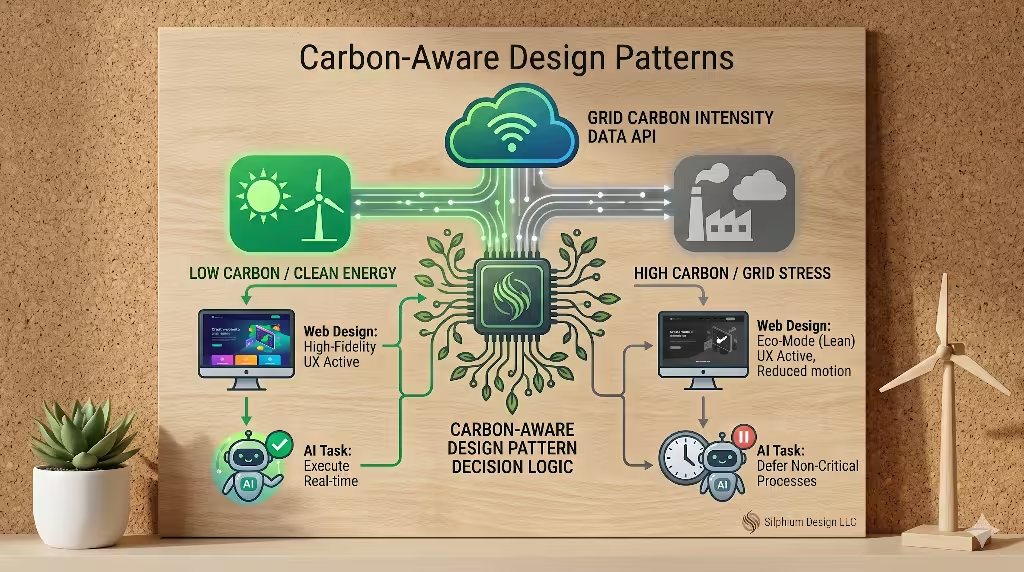
So, what exactly are carbon-aware design patterns? Put simply, they are rules for how a website behaves based on the state of the power grid. Imagine a website that changes its look based on how clean the air is. When there is plenty of solar power, the site might show high-quality videos and bright colors. When the grid is stressed and using fossil fuels, those same design patterns tell the site to switch to a simpler look. It might show black and white images or just text.
This is a very powerful idea. These design patterns are not just about code. They are about a new way of thinking. They ensure that the internet can grow without making the climate crisis worse. By using these design patterns, we create a web that is in harmony with the Earth.
The Technical Framework: Energy Efficient vs Carbon Aware
To understand how to build these sites, we need to look at the framework behind them. Being energy efficient means using the least amount of electricity possible. This is a core part of many design patterns we have used for years. It involves things like making images smaller and cleaning up messy code.
However, being carbon aware is different. It is about the quality of the energy. Not all electricity is the same. Some comes from a wind turbine, which is very clean. Some comes from a coal plant, which is very dirty. Carbon-aware design patterns use data from the power grid to make decisions. They use something called an API to check the carbon intensity of the grid in real time. If the carbon intensity is high, the design patterns trigger a “low carbon mode.” This framework is the backbone of the modern web. It allows us to build design patterns that are responsive to the actual environment.
Grid Intensity Metrics and APIs
In 2026, we have amazing tools to track energy. We use special software that tells us exactly how much carbon is being produced by the power grid every minute. This data is the fuel for our carbon-aware design patterns. When we build a site, we connect it to a grid intensity API. This API gives the site a score. A low score means the power is clean. A high score means the power is dirty. Our design patterns then use this score to change how the site works.
For instance, if the score is too high, the design patterns might stop a large file from downloading. This is a very technical way to stay green, but it is also very simple to use once you have the right design patterns in place. It is like having a weather station for your website.
Design Pattern 1: Dynamic Asset Scaling
One of the most important carbon-aware design patterns is dynamic asset scaling. This sounds fancy, but it is actually quite simple. It means the website changes the size and quality of its files based on the grid. Most websites are full of heavy images and videos. These take a lot of energy to send across the world. With these design patterns, the site checks the grid first. If the grid is green, the user sees a beautiful, high-resolution photo. If the grid is dirty, the design patterns swap that photo for a smaller, lower-quality version.
Sometimes, the design patterns might even replace the photo with a simple drawing or a text description. This saves a huge amount of energy. The best part is that users usually do not mind. They understand that the site is trying to be helpful to the planet. These design patterns are a win for everyone.
Design Pattern 2: Circadian Dark Mode
Another great example of these design patterns is circadian dark mode. We know that bright screens use more power, especially on mobile phones with OLED screens. Dark mode is a set of design patterns that uses darker colors to save battery life. In 2026, we have taken this further. Circadian dark mode design patterns change the site’s colors based on the time of day and the grid status. When the sun goes down and power becomes more expensive or dirtier, the site automatically switches to dark mode.
This mimics the natural rhythm of the day. It is a biophilic approach because it follows the patterns of nature. These design patterns also help users sleep better because they reduce blue light at night. It is a perfect example of how green design patterns can improve human health and planetary health at the same time.
Design Pattern 3: Agentic Deferral
As I mentioned before, AI is a big power user. Agentic deferral is a set of design patterns made just for AI agents. When you ask an AI to do a big task, like writing a long report or analyzing data, it does not always have to happen right away. These design patterns allow the AI to say, “I will do this in two hours when the wind picks up.” This is called deferring the task.
By using these design patterns, we can shift the heavy lifting of the internet to times when energy is clean. This prevents us from having to turn on extra coal plants just to power our AI tools. These design patterns are becoming the standard for any company that cares about its carbon footprint. It is a smart way to manage the massive growth of technology.
The Biophilic Connection: Digital Mimicry of Natural Cycles
At Silphium Design, we love biophilic design. This means we take inspiration from nature to build better things. Nature has the best design patterns in the universe. Think about a tree in winter. It does not try to grow new leaves when it is freezing. It saves its energy and waits for spring. We can use these same design patterns for our websites. A carbon-aware website is like a living thing. It has periods of high activity and periods of rest.
By following these natural design patterns, we make the digital world feel more human and less robotic. We are moving away from the “always on” culture of the early 2000s. We are moving toward a web that respects the cycles of life. These design patterns make our sites feel more grounded and peaceful.
The Hidden Cost of Data Centers
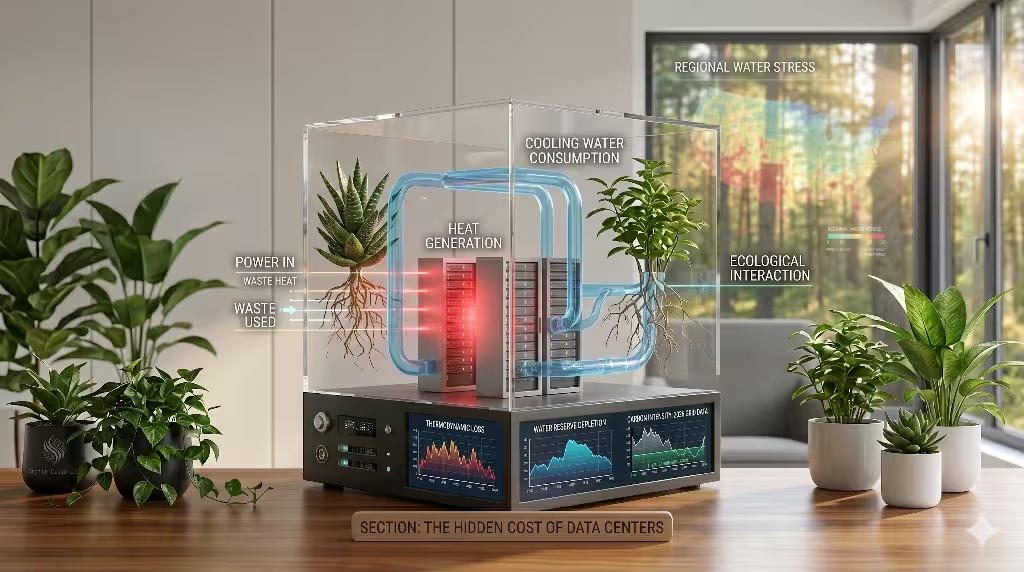
When we use the internet, we often forget that it lives in real buildings. These buildings are called data centers. They are full of thousands of computers that get very hot. To keep them from melting, they need a lot of cooling. Most of the time, this cooling uses a lot of water and electricity.
By using carbon-aware design patterns, we can reduce the heat these centers produce. When our design patterns tell a site to use less power, the data center does not have to work as hard. This saves water and keeps local ecosystems healthy. Every time you use smart design patterns, you are helping to protect the water and air near these giant computer warehouses. It is a direct link between your screen and the natural world.
SEO and Performance: The Green Ranking Signal
You might be wondering if these design patterns help with search engine optimization, or SEO. The answer is a big yes. In 2026, search engines like Google really care about speed and efficiency. Because carbon-aware design patterns make sites lighter, those sites load much faster. Fast sites get higher rankings.
Also, search engines are starting to look at a site’s carbon score. They want to show users websites that are responsible. By using these design patterns, you are making your site more attractive to search engines. You are also improving your Core Web Vitals, which are the scores Google uses to judge how good your site feels to a user. Sustainable design patterns are not just good for the earth; they are good for business. They help more people find your site and stay there once they arrive.
Why Greener Sites Rank Better
The reason greener sites rank better is simple. Google wants to give users a great experience. A site that is bloated with heavy code and giant images is a bad experience. It is slow and uses up the user’s data plan.
On the other hand, a site built with carbon-aware design patterns is lean and mean. It respects the user’s time and resources. Search engines recognize this quality. When you use smart design patterns, you are showing that you care about the details. This builds trust with your visitors and with the search engines. In the competitive world of 2026, these design patterns give you a major edge over companies that are still using old, heavy ways of building websites.
What is the difference between energy efficient and carbon aware?
This is a question people ask all the time. As we discussed, energy efficiency is about using less total power. Imagine a light bulb that uses 10 watts instead of 60 watts. That is efficient. Carbon awareness is about when you turn that light bulb on. If you only turn it on when your solar panels are making power, you are being carbon aware. In web design, we use design patterns for both. We want our sites to be small so they use less power (efficiency).
But we also want them to change their behavior based on the grid (awareness). Both are important, but in 2026, carbon-aware design patterns are the new frontier. They allow us to be truly sustainable in a world where energy comes from many different sources.
How does carbon-aware design affect website performance?
Many people worry that using these design patterns will make their site look bad or work slowly. The opposite is actually true. When a site goes into “low carbon mode,” it becomes very fast. By removing heavy videos and scripts, the site loads almost instantly. This is great for performance. The design patterns are designed to make sure the site still looks good, even when it is simple.
This is often called “eco-brutalism” or “functional aesthetics.” It is a style that values honesty and clarity over flashy animations. Users in 2026 actually prefer this. They like sites that are easy to read and quick to use. These design patterns prove that you do not need a lot of digital “noise” to have a high-performing website.
What tools can measure carbon aware implementation?
There are many great tools available now to help you. You can use websites like Ecograder or the Website Carbon Calculator to see how much CO2 your site makes. For more advanced needs, there are APIs that track the grid intensity in real time. These tools help you see if your design patterns are actually working. You can run a test and see exactly how much energy you saved by switching to a low-carbon layout.
At Silphium Design, we use these metrics to prove to our clients that our design patterns are making a real difference. It is not just about feeling good; it is about having the data to show that your website is part of the solution.
Implementation Roadmap: Step 1 – The Audit
If you want to use these design patterns, the first step is an audit. You need to know how heavy your site is right now. We look at the total file size of every page. We also look at how many “requests” the site makes to the server. Each request uses energy.
Our goal is to use design patterns that keep the page weight under 1 megabyte. This is a tough goal, but it is very important. During the audit, we also check to see if the site is using a green hosting provider. A green host uses renewable energy to power its servers. This is the foundation for all the other design patterns we will use.
Step 2: Integrating a Grid Intensity API
Once the site is lean, we connect it to the grid. This is the technical part where we add the “awareness” to the site. We choose a reliable API that provides carbon data for the areas where our servers are located. We then write code that listens to this API. This code acts like a switch for our design patterns. If the API says the carbon intensity is too high, the switch turns on the “green mode.”
This is a very exciting step because it is when the website truly comes to life. It starts to interact with the real world in a way it never could before. This is the heart of carbon-aware design patterns.
Step 3: Establishing Conditional Logic
The final step is to decide exactly what changes when the grid is dirty. We create a set of rules, or conditional logic. For example: “If carbon intensity is over 300g per kWh, do not load the hero video.” Or, “If intensity is high, use system fonts instead of custom web fonts.”
These rules make up the design patterns that the user will see. We test these rules to make sure the site is still easy to use. We want the transition between modes to be smooth. The user should not feel like they are losing anything. Instead, they should feel like they are part of a special, planet-friendly experience. These design patterns are the final touch that makes a website a leader in 2026.
The Role of System Fonts in Design Patterns
One simple but powerful trick in our design patterns is using system fonts. Usually, a website has to download special font files to look a certain way. These files can be quite large. System fonts are fonts that are already on your computer or phone, like Arial or Times New Roman. By using these in our design patterns, we eliminate the need for an extra download. This saves energy and makes the page load faster. In 2026, many of the most beautiful sites use system fonts in creative ways. It is a great example of how being smart with your design patterns can lead to a cleaner, more professional look.
Dithered Imagery: A New Aesthetic
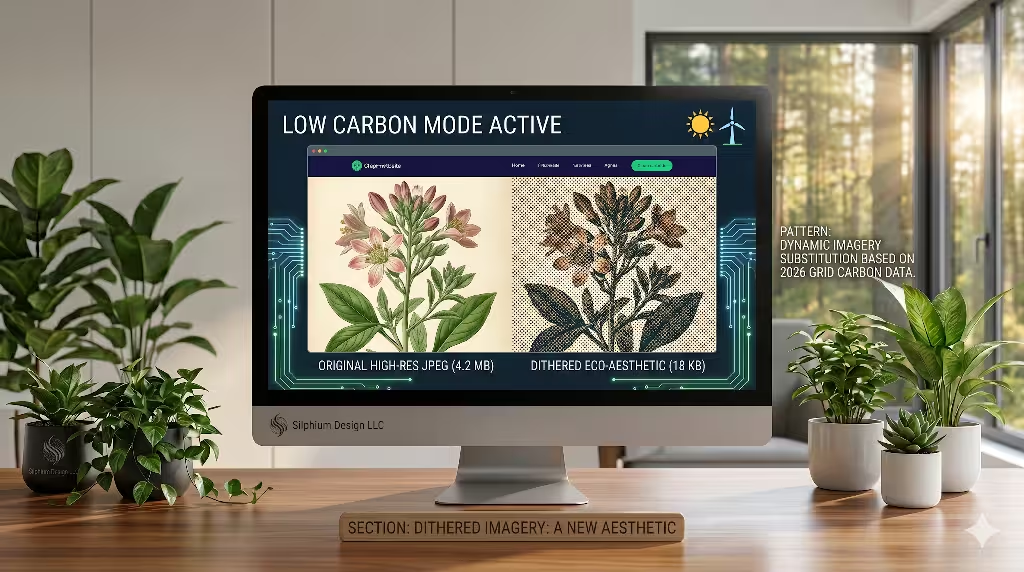
To make small images look good, we use a technique called dithering. This is an old way of making images that uses small dots to create colors and shades. In our modern design patterns, we use it to make very small files look like intentional art. Instead of a blurry, low-quality photo, the user sees a stylish, artistic version of the image. This is a key part of the “eco-brutalism” look. It shows that you can have a very light website that still has a lot of personality. These design patterns are all about being creative with the tools we have.
Unbleached Neutrals and OLED Efficiency
When we design the colors for our sites, we often choose “unbleached neutrals.” These are warm, off-white colors that look like recycled paper. They are much easier on the eyes than bright, glowing white. They also save energy on many types of screens. Our design patterns use these colors to create a sense of calm and comfort. Combined with a smart dark mode, these design patterns make a website feel like a natural part of the user’s day. It is another way we use biophilic design to bridge the gap between technology and the environment.
The Future of the Architect and Designer
As we look ahead, the role of the web designer is changing. We are no longer just making pretty pictures. We are now resource managers. We have to think about the grid, the water, and the air. This requires a lot of competence and creativity. Our design patterns are the tools we use to build this new world. At Silphium Design, we are proud to be at the forefront of this movement. We believe that the best design patterns are the ones that protect our home. By teaching others how to use these design patterns, we can create an internet that lasts for generations to come.
Why Digital Trust Matters
In 2026, users are very smart. They know when a company is just “greenwashing” and when they are actually doing the work. Using carbon-aware design patterns is a way to build real trust. When a user sees that your site is responding to the power grid, they know you are serious about your values. This digital trust is very valuable. It makes people more likely to buy from you and recommend you to others. Your design patterns are a reflection of your brand. If your design patterns are honest and efficient, people will see your company as honest and efficient too.
Collaborative Design for a Better Web
Building a green web is not something we can do alone. We need everyone to use these design patterns. We need developers, designers, and business owners to work together. The Web Sustainability Guidelines (WSG) are a great place to start. They provide a roadmap for how to use design patterns to create a more ethical and resilient internet. By following these guidelines, we can make sure our work is “regenerative.” This means it does not just do “less harm,” but actually helps the world thrive. This is the ultimate goal of all our design patterns.
The Materiality of Data
Data is not invisible. It takes up space in the real world. It uses real minerals and real energy. When we use sloppy design patterns, we are wasting these precious resources. We should treat data like a physical material, like wood or stone. We should use only what we need and use it well. This way of thinking is at the heart of our design patterns. It reminds us that every click and every scroll has a cost. By being mindful of the materiality of data, we can create a web that is both beautiful and sustainable.
The Ethics of Deceptive Design Patterns
In the past, some sites used “deceptive” design patterns to trick people into clicking things or buying things they didn’t want. This is not only mean, but it also wastes a lot of energy. Each of those unwanted clicks uses power. In 2026, we have moved away from these bad design patterns. We now focus on “honest” design patterns. These are design patterns that help the user find what they need as quickly as possible. This is better for the user and much better for the planet. Ethical design patterns are a core part of being a carbon-aware company.
Scaling These Patterns for Big Business
Large companies have a huge impact on the environment. If a site with millions of visitors uses carbon-aware design patterns, the savings are massive. We are seeing more and more big brands adopt these design patterns. They realize that it is the only way to meet their climate goals. It also saves them a lot of money on hosting and data costs. These design patterns are scalable, meaning they work just as well for a small blog as they do for a giant online store. No matter the size of your business, you can make a difference with the right design patterns.
Continuous Improvement and Auditing
The web is always changing. This means we have to keep checking our design patterns to make sure they are still working. We recommend doing a carbon audit every few months. This helps you find new ways to improve your design patterns. Maybe there is a new image format that is even smaller. Or maybe the power grid has changed and you need to update your rules. By staying curious and always looking for ways to improve, you can keep your site at the cutting edge of sustainability. This is how we maintain excellence at Silphium Design.
The Regenerative Web
We have covered a lot of ground today. From the technical details of APIs to the artistic beauty of unbleached colors, we have seen how carbon-aware design patterns are shaping the world of 2026. These design patterns are more than just a trend. They are a necessary part of our future. By building websites that are aware of their impact, we are creating a digital world that can live in harmony with the natural world. This is what we call a regenerative web. It is a web that supports life instead of draining it.
Thank you for joining me on this journey. I hope you feel inspired to use these design patterns in your own work. Whether you are building a new site from scratch or updating an old one, every little bit helps. Remember, the internet is not a separate place. It is here, in our world, using our resources. Let us treat it with the respect it deserves. By using smart design patterns, we can build a future that is bright, fast, and green.
At Silphium Design LLC, we are always here to help you navigate this new landscape. We believe that innovation and competence can solve any problem. Let us work together to make the web a force for good. Our design patterns are the first step toward a better tomorrow.