
Table of Contents
Traditional plant commerce treats living organisms like hardware store fasteners. Most online stores list their seeds in basic alphabetical lists, simple botanical family trees, or generic garden categories. This structure is a legacy system inherited from print mail-order booklets. In print, paper space was limited, so simple alphabetical sorting made mechanical sense. Online, that outdated setup creates serious problems for buyers, restoration teams, and digital systems alike.
Building a modern seed catalog taxonomy requires us to step away from this old habit. A seed catalog taxonomy built on flat lists fails to capture how plants actually grow and function in nature.
The Reductionist Trap
The reductionist trap happens when a store treats complex living things as solitary items. Standard websites sort seeds under labels like Asteraceae or Fabaceae, or under vague store tags such as pollinator friendly, deer resistant, or full sun. While these labels are true on paper, they isolate species from their biological context.
In a basic seed catalog taxonomy, a buyer sees little bluestem (Schizachyrium scoparium) as an isolated grass. Next to it, they might see butterfly milkweed (Asclepias tuberosa) as an isolated flower. The site treats them as separate products on a digital shelf.
In nature, these plants do not live in isolation. They form tightly woven living systems. When your seed catalog taxonomy breaks those relationships apart, customers miss the biological reality. They end up purchasing plants that do not belong together, which leads to weak growth, dying plants, and disappointed gardeners. A proper seed catalog taxonomy should reflect natural relationships rather than isolated product bins.
Traditional Structure:
[All Seeds] -> [Wildflowers] -> [Asclepias tuberosa] (Isolated)

Community Structure:
[Tallgrass Prairie] -> [Dry-Mesic Matrix] -> [Asclepias tuberosa + Schizachyrium scoparium] (Symbiotic)
The Cognitive Gap in Landscape Design
Modern gardeners, landscape architects, and conservationists no longer buy seeds just for individual flower colors. They want to restore native habitats, plant resilient meadow gardens, and build living plant communities. Yet when they open a typical web store, they run into a major cognitive gap.
The buyer must hold the entire ecological design in their head. They have to jump across twenty different browser tabs to figure out which grass supports which wildflower, or which ground cover grows under an oak tree.
When a seed catalog taxonomy forces users to assemble these puzzle pieces manually, bounce rates jump and shopping carts get abandoned. A buyer might want to seed a dry oak savanna, but if your seed catalog taxonomy scatters those savanna species across twelve generic subcategories, finding them becomes frustrating work.
A thoughtful seed catalog taxonomy removes this mental friction. It organizes species according to where and how they grow together in the real world.
The Shift to Phytosociology
Phytosociology is the branch of science that studies plant communities: how different plant species associate, assemble, and interact across a shared landscape. Moving to an ecological seed catalog taxonomy means adopting these phytosociological principles for website architecture.
Plants in the wild sort themselves based on climate, soil chemistry, moisture levels, and disturbance patterns like fire or seasonal flooding. Over centuries, stable plant associations take shape.
When you base your seed catalog taxonomy on phytosociology, your digital categories start matching real-world ecosystems. Instead of forcing customers to browse generic lists like “Perennial Seeds,” your seed catalog taxonomy presents them with recognizable habitats like “Midwest Mesic Tallgrass Prairie” or “Appalachian Oak-Hickory Forest Floor.”
This shift transforms your store from a simple parts bin into an educational design tool.
The Dual Benefit
Adopting a community-based seed catalog taxonomy provides two major benefits. First, it improves the shopping experience. Customers discover companion plants naturally, make fewer planting mistakes, and purchase diverse mixes that thrive. This directly increases average order value and customer loyalty.
Second, an ecological seed catalog taxonomy creates strong search engine optimization advantages. Search engines no longer rely on simple keyword matching; they map real-world entities and the relationships between them.
When your seed catalog taxonomy groups species by natural community associations, search engines recognize your site as an authoritative topical resource. A seed catalog taxonomy organized around true plant communities captures specific search queries like “seeds for wet mesic prairie” or “pine barrens understory seed mix.” It bridges the gap between biological accuracy and digital performance.
Taxonomic Frameworks: Choosing an Ecological Classification Engine
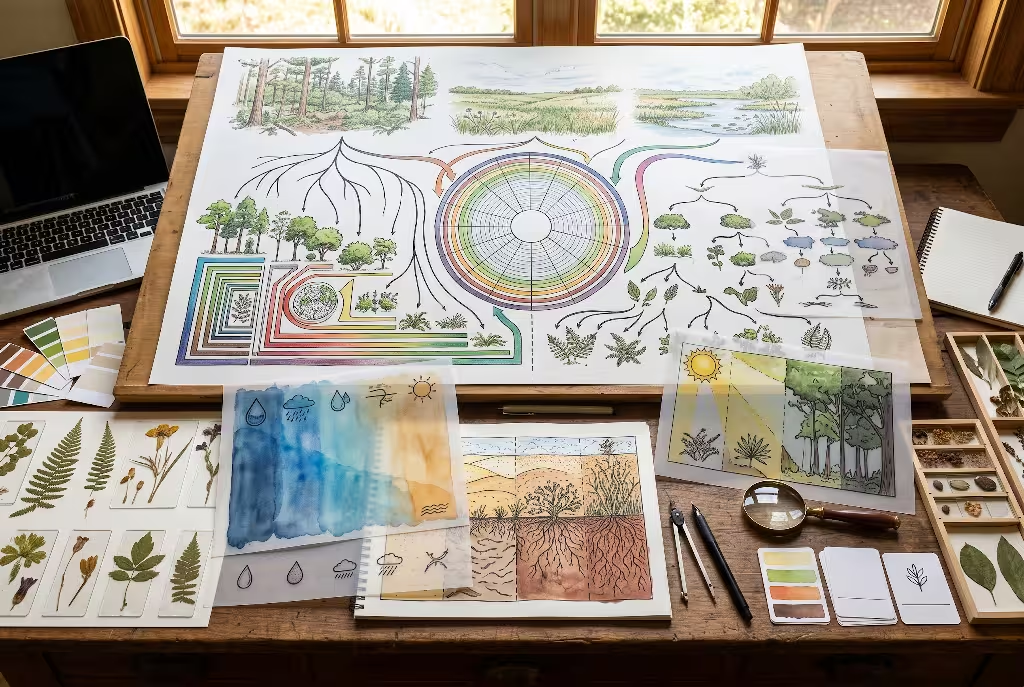
To construct a reliable seed catalog taxonomy, you need a solid scientific framework. You should not invent plant communities from scratch. Ecologists and government agencies have already spent decades mapping and naming natural vegetation types. Using an established system ensures your seed catalog taxonomy remains consistent, credible, and scalable.
Evaluating Classification Systems for Web Ontologies
Three primary classification systems can serve as the structural backbone for a web-based seed catalog taxonomy.
The U.S. National Vegetation Classification (USNVC)
The USNVC is the gold standard for classifying native plant communities in North America. It uses an eight-level hierarchy ranging from broad continental biomes down to local plant associations:
- Class
- Subclass
- Formation
- Division
- Macrogroup
- Group
- Alliance
- Association
The USNVC provides a standardized vocabulary that integrates cleanly into a digital seed catalog taxonomy. It uses clear diagnostic species to define each tier, making it ideal for relational database systems.
The Braun-Blanquet Phytosociological Method
Widely used across Europe and in international vegetation science, the Braun-Blanquet approach classifies communities by their complete floristic composition. It groups plants into classes, orders, alliances, and associations based on character species and companion species.
While thorough, its strict Latin naming conventions can feel intimidating to casual home gardeners. However, its core logic remains valuable for structuring a specialized, science-focused seed catalog taxonomy.
NatureServe Terrestrial Ecological Systems
NatureServe provides practical, mid-scale ecological descriptions that combine vegetation types with regional soils, landscape positions, and disturbance patterns.
Because NatureServe descriptions focus on real-world management and restoration, they translate well into user-friendly categories within an e-commerce seed catalog taxonomy.
| Framework | Best Used For | Complexity Level | Fit for Seed Catalog Taxonomy |
| USNVC | North American native plants, government projects | High | Excellent for deep relational databases |
| Braun-Blanquet | European sites, strict academic floras | Very High | Strong for research, complex for consumer UI |
| NatureServe | Practical restoration, regional habitat mapping | Medium | Best balance of science and customer usability |
Selecting the Operative Tier for E-Commerce
While the USNVC provides eight complete levels, using all eight in an online store would overwhelm customers. Clicking through eight nested menus just to find a seed packet creates poor user experience.
For an effective seed catalog taxonomy, the sweet spot lies at the Group and Alliance levels.
Broadest:   Class (Woodland)
                   |
Operative:  Group (Great Lakes Oak-Pine Forest)
                   |
Operative:  Alliance (Pinus strobus - Quercus rubra Alliance)
                   |
Deepest:    Association (Specific local plant mix)
The Group tier offers recognizable, plain-language habitat names like “Eastern North American Temperate Forest” or “Great Plains Mesic Prairie.” The Alliance tier narrows that down to dominant plant pairings, such as the Andropogon gerardii – Sorghastrum nutans Grassland Alliance.
By anchoring your seed catalog taxonomy at these two middle tiers, you maintain ecological precision without creating an overly complicated navigation menu.
Biogeographic Normalization
A species that belongs to a community in one region might fail completely in another. For instance, little bluestem grows from Maine to Texas, but a seed lot harvested in Texas will rarely survive a harsh winter in Maine. A complete seed catalog taxonomy must account for regional seed origin, also known as provenance.
To handle this, integrate the Environmental Protection Agency (EPA) Ecoregions into your seed catalog taxonomy. The EPA divides North America into Level I, II, III, and IV ecoregions based on geology, soils, vegetation, and climate.
By tagging every seed in your database with both its plant community and its Level III or IV Ecoregion, your seed catalog taxonomy ensures buyers purchase seeds suited to their local soils and climate.
Information Architecture: Designing the Relational Database and Facet Hierarchy
Transitioning to an ecological model requires updating your website’s database. A standard e-commerce site uses simple parent-child product trees. An ecological seed catalog taxonomy requires a flexible relational database that can handle multi-directional connections between species, habitats, and environmental conditions.
Tree vs. Graph vs. Polyhierarchy
In standard retail, a product lives on a single branch of a tree: Apparel > Mens > Shirts. A simple tree like this fails for an ecological seed catalog taxonomy because many native plants live in more than one habitat.
Consider common boneset (Eupatorium perfoliatum). It thrives in calcareous fens, wet-mesic prairies, and open floodplain marshes. If your seed catalog taxonomy uses a strict tree, you would either have to duplicate the product across three categories or force it into only one, hiding it from the others.
Strict Tree (Inflexible):
[Catalog]
   └── [Wet Prairie]
          └── Eupatorium perfoliatum (Hidden from other habitats)

Polyhierarchy / Graph (Recommended):
[Wet Prairie]       ──┐
[Calcareous Fen]    ──┼──> [Eupatorium perfoliatum] (Single canonical item)
[Floodplain Marsh]  ──┘
A modern seed catalog taxonomy uses a polyhierarchy or graph-based system. In this model, individual species exist as independent, unique records. The plant community categories act as dynamic views that pull relevant species from the database.
This allows Eupatorium perfoliatum to appear naturally within the fen category, the wet prairie category, and the floodplain category, all while pointing back to one single product record.
Core Entity Relationship Schema
A well-structured relational seed catalog taxonomy relies on clean data relationships. You can build this in headless commerce platforms, custom relational database tables, or flexible content management systems like WordPress:
- Species Entity: Scientific name, authority, common names, stratification codes, seed count per ounce, legal status, and life cycle.
- Plant Community Entity: Community name, USNVC code, regional description, diagnostic indicator species, and successional stage.
- Ecoregion Entity: EPA Level III/IV code, regional boundary data, frost date ranges, and average rainfall.
- Environmental Attribute Entity: Moisture regimes, light levels, pH tolerance range, and soil textures.
Within this seed catalog taxonomy, a many-to-many relationship links Species to Plant Communities. A species can belong to several communities, and every community contains many species.
This structural clarity keeps your catalog organized, accurate, and easy to maintain.
Defining Synusiae and Structural Functional Layers
In ecological gardening and restoration, plants are organized into vertical and functional layers called synusiae. A strong seed catalog taxonomy should reflect these functional tiers:
1. The Canopy and Emergent Layer
These are the tallest structural elements. In a woodland, they are overstory oaks and maples. In a tallgrass prairie, they are towering structural forbs like compass plant (Silphium laciniatum) and prairie dock (Silphium terebinthinaceum).
2. The Seasonal Theme Layer
These mid-height forbs and grasses provide seasonal color, structure, and nectar. Examples include purple coneflower (Echinacea purpurea) and wild bergamot (Monarda fistulosa).
3. The Ground Cover or Green Mulch Layer
This is the dense matrix of low-growing plants that carpets the soil surface. It includes sedges (Carex), fine fescues, and creeping forbs. This layer suppresses weeds, locks in soil moisture, and cools the ground.
4. Disturbance Specialists and Fillers
These are fast-germinating annuals and biennials, like black-eyed Susan (Rudbeckia hirta). They stabilize bare soil during the first growing season while long-lived perennials establish their root systems.
+-------------------------------------------------------+
|  EMERGENT LAYER: Silphium laciniatum (6-8 ft)         |
+-------------------------------------------------------+
|  THEME LAYER: Monarda fistulosa, Echinacea (3-4 ft)  |
+-------------------------------------------------------+
|  GROUND COVER LAYER: Carex pensylvanica (6-12 in)     |
+=======================================================+
|  DISTURBANCE FILLER: Rudbeckia hirta (Fast pioneer)   |
+-------------------------------------------------------+
When your seed catalog taxonomy incorporates these structural layers as filterable facets, customers can select complementary plants across all four tiers, ensuring a well-balanced planting.
Edaphic and Environmental Facet Modifiers
Beyond habitat types and plant layers, an effective seed catalog taxonomy must provide precise filtering for local growing conditions:
- Hydrologic Gradients: Xeric (very dry), Dry-Mesic, Mesic (average garden moisture), Wet-Mesic, and Hydric (saturated soils or standing water).
- Solar Regimes: Full Sun (greater than 6 hours direct light), Partial Shade (filtered light), and Closed Canopy (deep woodland shade).
- Edaphic (Soil) Profiles: Acidic sand, rich loam, heavy clay, limestone/calcareous soils, and ultramafic soils.
By structuring these environmental attributes as facets within your seed catalog taxonomy, customers can easily find matches for their specific site conditions, such as “Mesic, Full Sun, Clay Soil in a Tallgrass Prairie Alliance.”
UX/UI and Biophilic Interaction Design Patterns

A well-structured backend database needs an intuitive frontend interface. Biophilic design in user experience focuses on connecting users with natural systems through natural visual patterns, clear relationships, and low-friction interactions. Applying these design principles to your seed catalog taxonomy transforms browsing into an engaging and educational experience.
Community-First Navigation Flows
Traditional navigation menus present users with endless drop-down lists of botanical names. A biophilic seed catalog taxonomy replaces these overwhelming lists with visual, habitat-based entry points.
On the home page or catalog landing hub, present users with clear community cards: “Tallgrass Prairie,” “Oak Savanna,” “Eastern Hardwood Woodland,” or “Coastal Pine Barrens.”
[ Browse by Natural Habitat ]
 ┌───────────────────┐  ┌───────────────────┐  ┌───────────────────┐
 │ Tallgrass Prairie │  │    Oak Savanna    │  │ Hardwood Woodland │
 │ Sun: Open         │  │ Sun: Partial      │  │ Sun: Filtered     │
 │ Soil: Deep Mesic  │  │ Soil: Sandy Loam  │  │ Soil: Leaf Duff   │
 └───────────────────┘  └───────────────────┘  └───────────────────┘
When a user clicks on “Tallgrass Prairie,” they enter a dedicated habitat portal. The page introduces the ecosystem, shows its native range, and provides an interactive moisture slider:
[ Xeric / Sand ] <=======[ Mesic / Loam ]=======> [ Hydric / Sedge ]
Moving the slider updates the species list in real time. This interactive approach helps users understand plant adaptations naturally, making the shopping experience both educational and straightforward.
The Dynamic Community Assembly Product Detail Page
The Product Detail Page (PDP) is where most e-commerce sites lose the ecological context. A typical PDP displays a single photo, a price tag, and an “Add to Cart” button.
In an ecological seed catalog taxonomy, the PDP highlights the plant’s relationships with other species. When a customer views butterfly milkweed (Asclepias tuberosa), the page should show:
- The Natural Plant Community: “Found in: Dry-Mesic Sand Prairies and Barrens.”
- Associated Grasses and Matrix Sedges: Displaying companions like little bluestem and Pennsylvania sedge (Carex pensylvanica).
- Co-Occurring Forbs: Pairing suggestions like flowering spurge (Euphorbia corollata) and sky blue aster (Symphyotrichum oolentangiense).
- An Interactive Mix Calculator: A tool that lets buyers build a balanced plant matrix directly on the page:
[ Community Assembly Calculator ]
Select Area: 500 sq ft
- Matrix Grasses (40%): Little Bluestem [Add 2 oz]
- Theme Forbs (40%): Butterfly Milkweed + Blue Aster [Add 1 oz]
- Ground Cover (20%): Path Rush [Add 0.5 oz]
[ Add Complete Plant Matrix to Cart ]
Connecting products through your seed catalog taxonomy simplifies plant selection, prevents planting errors, and increases average order size.
Biophilic Design Cues
Biophilic design principles can also guide the visual styling of your seed catalog taxonomy. Using natural visual cues helps reinforce the ecological themes:
- Adaptive Color Palettes: Let your site colors adapt gently to the habitat being viewed. A prairie section might feature warm prairie dropseed golds and soft sky blues, while a woodland section uses moss greens and rich soil browns.
- Natural Spatial Proportions: Avoid rigid, boxy layouts. Use generous whitespace, clear visual hierarchies, and organic section transitions that reflect natural landscapes.
- Readable Field-Key Typography: Present technical botanical data with clean, highly legible typefaces. Use clear monospaced tables for seed stratification codes, pure live seed (PLS) metrics, and germination notes, making scientific details easy to scan.
Technical SEO Architecture and Semantic Web Implementation
Search engines favor websites that demonstrate clear topical authority and well-organized content. By structuring your seed catalog taxonomy around plant communities, you create a natural semantic hierarchy that search engine crawlers can easily parse and understand.
URL Structure and Hierarchy
Your URL structure should reflect your ecological hierarchy. Keep paths clean, logical, and descriptive:
https://example.com/catalog/prairie/tallgrass-mesic/
https://example.com/catalog/prairie/tallgrass-mesic/asclepias-sullivantii/
This clear structure helps search engines understand the relationship between general habitats, specific plant associations, and individual species.
If a plant belongs to multiple communities within your seed catalog taxonomy, avoid creating duplicate URLs. Establish a single canonical URL for the species:
Canonical: https://example.com/species/asclepias-sullivantii/
Community pages can then link directly to this primary canonical URL, maintaining consistent link authority without duplicate content issues.
Canonicalization Protocols
When your seed catalog taxonomy allows users to browse via different paths, multiple URLs can point to the same product. For example:
https://example.com/habitat/wet-prairie/carex-stricta/
https://example.com/habitat/sedgement-meadow/carex-stricta/
If left unmanaged, search engines may treat these as duplicate pages, diluting your search rankings.
To resolve this within your seed catalog taxonomy, set the rel="canonical" tag on all habitat-specific product views to point back to the permanent base species URL ([https://example.com/species/carex-stricta/](https://example.com/species/carex-stricta/)).
This preserves user-friendly browsing paths while keeping your search indexing clean and focused.
Faceted Navigation Indexation Strategy
Faceted navigation allows users to filter by attributes like soil, light, and moisture. However, letting search bots crawl every filter combination can generate thousands of nearly identical pages, causing index bloat.
Manage your seed catalog taxonomy facets with a focused indexation rule:
- Index High-Value Landing Pages: Index major plant communities, alliances, and high-volume habitat keywords (e.g.,
/catalog/wet-mesic-prairie-seeds/). - Noindex Minor Filter Combinations: Apply
noindex, followtags or use URL parameter handling in Google Search Console for dynamic, multi-filter combinations (e.g.,?moisture=wet&soil=clay&light=part-sun&bloom=july).
This strategy directs search engine crawlers toward your most valuable, authoritative landing pages while keeping your index clean.
Crawled & Indexed:
/catalog/tallgrass-prairie/             --> High search volume, primary hub
/catalog/tallgrass-prairie/wet-mesic/   --> High search intent, secondary hub

Blocked from Indexing:
/catalog/tallgrass-prairie/?soil=clay&season=fall&sort=price
Semantic Schema.org Integration
Using Schema.org microdata helps search engines understand the exact botanical entities on your pages. In an advanced seed catalog taxonomy, combine Product, Taxon, and ItemPage schemas in your page markup:
JSON
{
  "@context": "https://schema.org",
  "@graph": [
    {
      "@type": "Product",
      "name": "Butterfly Milkweed Seed",
      "sku": "ASC-TUB-01",
      "offers": {
        "@type": "Offer",
        "price": "4.50",
        "priceCurrency": "USD",
        "availability": "https://schema.org/InStock"
      }
    },
    {
      "@type": "Taxon",
      "name": "Asclepias tuberosa",
      "taxonRank": "https://schema.org/Species",
      "sameAs": "https://www.wikidata.org/wiki/Q160568",
      "additionalType": "http://services.natureserve.org/element/ELEMENT_GLOBAL.2.158525"
    }
  ]
}
By adding sameAs links to trusted sources like Wikidata and NatureServe within your seed catalog taxonomy, you provide clear, verifiable signals to search engine knowledge graphs.
Step-by-Step Implementation Blueprint
Migrating an existing store to an ecological seed catalog taxonomy requires a systematic, step-by-step approach. Follow this practical five-step process to transition your store smoothly.
Phase 1: Audit & Nomenclature
  └── Standardize names, verify authority (IPNI / POWO)
Phase 2: Database Configuration
  └── Set up custom taxonomies, entities, and attributes
Phase 3: Trait Tagging (ETL)
  └── Map species to USNVC groups, habitats, and layers
Phase 4: Internal Linking Engine
  └── Connect companion plants, habitat hubs, and species
Phase 5: Technical SEO Audit
  └── Validate redirects, canonicals, schema, and page speeds
Step 1: Audit and Inventory Normalization
Begin by auditing your complete seed inventory. Botanical names change over time as genetic research refines plant classifications. For example, many asters were moved from Aster to Symphyotrichum.
- Standardize all scientific names against recognized databases like Plants of the World Online (POWO) or the Integrated Taxonomic Information System (ITIS).
- Note current seed lots, collection origins, and county-level provenance for every item in your seed catalog taxonomy.
Step 2: Taxonomy Schema Configuration
Next, configure your database to support plant communities alongside traditional botanical families.
- In platforms like WooCommerce, Magento, or Shopify, create custom taxonomies for Plant Community, USNVC Alliance, Structural Layer, and Hydrology.
- Ensure these custom taxonomies support many-to-many relationships, allowing individual species to link with multiple communities.
Step 3: Automated Plant Trait Tagging
Manually tagging hundreds of seed varieties takes significant time. You can accelerate this step by using reliable botanical data sources.
- Export your standardized plant list to a spreadsheet or CSV file.
- Cross-reference your species against datasets like the USDA PLANTS Database, the Lady Bird Johnson Wildflower Center, or regional floras to gather plant traits (such as moisture preferences, light needs, and native habitats).
- Map each species to its primary USNVC group and functional layer, then import the enriched data back into your seed catalog taxonomy.
Step 4: Internal Cross-Linking Logic
Internal links help search engines and customers navigate between related plants and habitats.
- Write simple display templates that automatically list companion species at the bottom of each product page.
- Add breadcrumb links that guide users through the ecological hierarchy:
Home > Prairie Communities > Mesic Tallgrass Prairie > Asclepias sullivantii. - Link related habitat guides and articles directly to their corresponding community catalog pages.
Step 5: Pre-Launch Crawl Testing
Before launching your updated seed catalog taxonomy, test the entire site architecture using a crawler like Screaming Frog.
- Check that all canonical tags point to the correct primary product URLs.
- Verify that breadcrumb Schema.org structured data parses without errors.
- Confirm that noindex tags are active on deep faceted filter combinations, preventing duplicate indexing while keeping your main habitat pages accessible.
Frequently Asked Questions about Seed Catalogs
Addressing common questions directly within your content helps capture featured snippets and provides quick clarity for readers.
What is the difference between plant taxonomy and plant community classification?
Plant taxonomy classifies individual plant species based on their genetic lineages and physical characteristics, organizing them into ranks like family, genus, and species.
Plant community classification, on the other hand, groups recurring assemblages of multiple plant species that live together in a shared environment and interact ecologically.
While plant taxonomy tells you what an individual plant is, plant community classification tells you where and with whom it lives.
How do you classify seeds for ecological restoration?
Seeds for ecological restoration are classified using three main criteria:
- Genetic Provenance: The specific ecoregion or geographical origin where the seed was harvested.
- Ecological Role: The plant’s functional layer in the habitat, such as a structural matrix grass, a pollinator theme forb, or a fast-growing pioneer species.
- Germination Requirements: The seed’s physiological dormancy needs, such as cold-moist stratification or scarification.
This approach ensures the seed mix aligns with the specific habitat conditions of the planting site.
Can a single plant species belong to more than one plant community in a catalog?
Yes, many native plants grow across several ecological communities.
In a digital seed catalog taxonomy, this is managed using a polyhierarchical database structure.
The species has one primary product record and one canonical URL, but it can be displayed across multiple plant community category pages (such as both a prairie page and an oak savanna page) without creating duplicate content issues.
What are the 8 levels of plant community classification?
The U.S. National Vegetation Classification (USNVC) defines eight standard levels:
- Class: Broad vegetation structure determined by global climate (e.g., Woodland).
- Subclass: Structural distinctions driven by moisture or temperature (e.g., Deciduous Woodland).
- Formation: Growth forms adapted to regional conditions (e.g., Cold-Temperate Woodland).
- Division: Continental-scale variations in floristic composition (e.g., Eastern North American Forest).
- Macrogroup: Regional sub-continental vegetation types (e.g., Northern Hardwood Forest).
- Group: Distinct combinations of plant communities shaped by regional climate and landscape position (e.g., Great Lakes Hardwood Forest).
- Alliance: Groups of plant associations sharing dominant diagnostic species (e.g., Sugar Maple – Basswood Forest Alliance).
- Association: The most specific tier, defined by a consistent, local combination of species.
How does organizing a seed catalog by habitat improve customer planting success?
Organizing a seed catalog taxonomy by habitat groups plants that share the same light, moisture, and soil preferences.
This helps buyers choose species that naturally grow well together, avoiding the common mistake of pairing wetland plants with dry-soil plants.
It also encourages planting a balanced mix of deep-rooted grasses, companion forbs, and ground covers, creating more resilient and sustainable gardens.
Case Study: Refactoring a Native Prairie and Woodland Catalog

To see the practical impact of this approach, consider a real-world redesign of a regional seed company that transitioned from an alphabetical catalog to an ecological seed catalog taxonomy.
Redesign Metrics:
[Average Cart Breadth]  ───> Up 42% (Multi-layer mixes)
[Organic Non-Brand Clicks] ───> Up 68% (Targeted habitat keywords)
[Index Bloat Cleaned]   ───> 12,000 messy URLs reduced to 420 focused pages
Baseline State
The company offered an inventory of 600 native grass, wildflower, and sedge species. Their original website used a basic e-commerce layout:
- Seeds were sorted into four broad categories: “Wildflowers,” “Grasses,” “Woodland Plants,” and “Pre-made Seed Mixes.”
- Within each category, products were listed alphabetically by common name.
- Customers frequently purchased mismatched species, such as swamp milkweed (Asclepias incarnata) alongside butterfly milkweed (Asclepias tuberosa), leading to customer complaints when plants failed.
- The website experienced high bounce rates (over 64%) and received little organic search traffic outside of direct brand searches.
The Refactored Architecture
The catalog was restructured around a phytosociological seed catalog taxonomy:
- Reorganized Categories: The store was restructured into three regional ecosystems: Oak Savanna, Mesic Tallgrass Prairie, and Calcareous Sedge Meadow.
- Functional Strata Facets: Within each ecosystem, species were tagged by functional layer: Matrix Grass, Theme Forb, Ground Cover Sedge, and Pioneer Disturbance Filler.
- Educational Habitat Hubs: Each ecosystem received a detailed landing page explaining its native range, soil moisture gradient, and natural companion pairings.
- Clean Canonical URLs: Product URLs were consolidated to single canonical addresses, with habitat filter paths managed cleanly using parameterized views and proper
noindexrules.
The Quantitative Outcome
Over an eighteen-month period following the launch of the updated seed catalog taxonomy, the business recorded significant performance gains:
- 42% Increase in Average Cart Breadth: Instead of buying three solitary wildflower packets, customers routinely purchased balanced sets including matrix grasses, filler annuals, and companion forbs.
- 68% Growth in Non-Brand Organic Traffic: The website ranked on page one for targeted habitat searches like “seeds for sedge meadow restoration” and “oak savanna understory plants.”
- 55% Drop in Customer Support Inquiries: Grouping plants by natural community answered basic site-matching questions upfront, saving time for both staff and customers.
- Resolved Index Bloat: The streamlined seed catalog taxonomy consolidated roughly 12,000 confusing, auto-generated filter URLs down to 420 authoritative, cleanly indexed pages.
Measurement, Performance Benchmarks, and Ecological SEO Health
After launching your updated seed catalog taxonomy, monitor your site’s ongoing performance. Tracking a balance of search metrics, user behavior, and catalog maintenance ensures long-term success.
Organic Search Footprint
Monitor your search performance using Google Search Console and analytics tools. Look for growth across specific ecological search patterns:
- Habitat-Specific Queries: Track impressions and clicks for searches that include terms like “plant community,” “native alliance,” “matrix planting,” and specific habitat types (e.g., “pine barrens native seeds”).
- Botanical Authority Queries: Watch rankings for scientific binomials paired with ecological attributes, such as “Carex sprengelii habitat companions.”
- Featured Snippets: Keep an eye on direct answers and definition boxes in search results, particularly for questions about companion planting and regional soil adaptations.
Primary Search Keywords to Monitor:
- "seeds for [habitat type]"
- "[species name] companion plants"
- "native plant community seed catalog"
- "how to restore [ecosystem name] from seed"
Behavioral UX Signals
A successful seed catalog taxonomy should help users explore and find plants more intuitively. Track these key engagement signals:
- Pages per Session: An ecological layout naturally encourages users to explore related companion plants and habitat tiers.
- Habitat Page Conversion Rates: Compare how well habitat landing pages turn visitors into buyers compared to old, generic product category lists.
- Cart Layer Diversity: Track whether orders contain a healthy mix of functional layers (grasses, theme forbs, and ground covers) rather than single species.
Catalog Maintenance Protocols
Seed inventory naturally changes from season to season. Poorly managed out-of-stock items can break your taxonomy and hurt search rankings. Follow these practical maintenance habits:
- Keep Out-of-Stock URLs Active: When a seed is temporarily unavailable, keep its product page live. Display a clear “Out of Stock for Season” notice and offer links to ecologically compatible companion species or alternatives.
- Protect Category Integrity: Never delete a plant community category just because a few species are out of stock. If a category is missing a functional layer, note which species will return after the next seed harvest.
- Review Botanical Classifications Regularly: Periodically review your species list against current databases like POWO to catch nomenclature updates, keeping your seed catalog taxonomy scientifically accurate year after year.
Building for the Long Term
Rethinking your website around an ecological framework does more than improve search rankings. It aligns your digital tools with the living systems they represent.
A flat alphabetical catalog treats plants like interchangeable manufactured items. An ecological seed catalog taxonomy respects the complex relationships that native plants rely on to survive. By organizing seeds around natural plant communities, you make it easier for customers to choose the right plants, design healthier gardens, and achieve lasting planting success.
Traditional Store Model:
Isolated Products ──> Confused Customers ──> Mismatched Plantings ──> High Plant Failure

Community Taxonomy Model:
Ecological Associations ──> Educated Customers ──> Balanced Matrices ──> Thriving Landscapes
At the same time, this approach builds a robust, scalable digital foundation. A structured seed catalog taxonomy eliminates duplicate content issues, organizes complex product attributes, and establishes genuine topical authority with search engines.
Whether you manage an established regional seed company, run an ecological nursery, or are designing a native plant platform from the ground up, organizing your seed catalog taxonomy around natural plant communities creates a more resilient store, a better customer experience, and healthier plantings in the ground.