
At Silphium Design LLC, we don’t just build websites; we cultivate digital habitats. My background in biology and web design allows me to see the internet as an extension of the natural world. When we talk about solar-powered web hosting branding, we are discussing the very “root system” of your online presence. If the energy fueling your site is toxic, the brand “plant” cannot truly flourish.
The following is a comprehensive examination of how the sun can power your digital identity.
Table of Contents
The Symbiosis of Energy and Identity
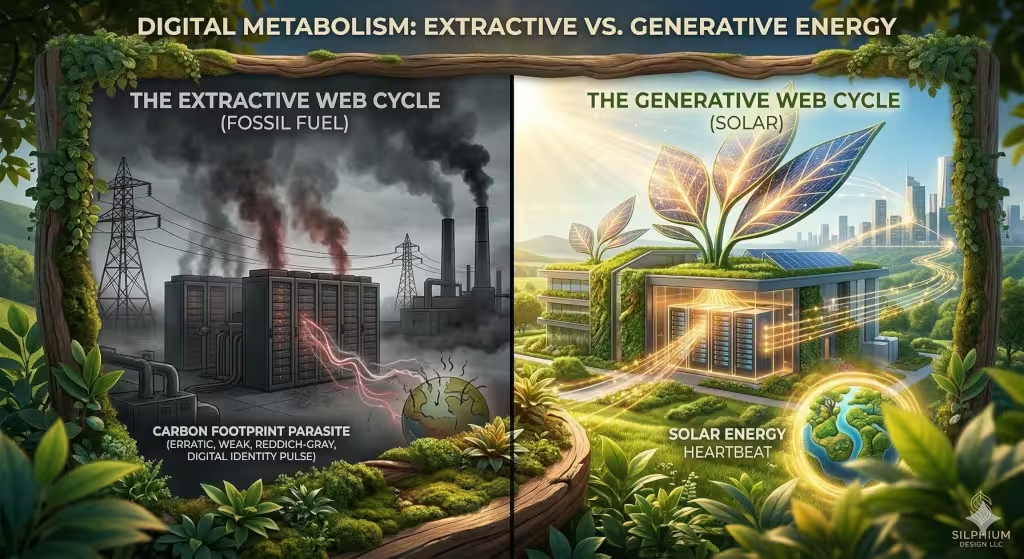
To understand the solar-powered web hosting branding landscape, one must first understand that a digital identity is not a static image; it is a metabolic process. In my work at Silphium Design LLC, I tell my clients that a website “breathes” electricity. If that breath is drawn from a coal-fired plant, the brand is effectively a parasite on the environment. However, when a brand chooses a sun powered path, it enters a symbiotic relationship with the planet.
In biology, symbiosis describes two different organisms living in a close physical association, typically to the advantage of both. When your brand identity is fused with solar energy, you are creating a partnership between your corporate goals and the earth’s natural rhythms.
The Digital Metabolism of Solar Energy
Every byte of data moved across the internet requires a physical pulse of power. When you commit to solar power, you are making a technical choice that reflects a biological truth: all life depends on the sun. By using the sun’s energy to push your data through the cables of the world, you are aligning your brand’s “metabolism” with the cleanest energy source available.
This isn’t just about being “green” to look good. It is about the deep logic of how a brand exists. If your website is the face of your company, the solar energy behind it is the heartbeat. People can sense when a brand is healthy from the inside out. Using power from the sun ensures that your digital presence isn’t contributing to the heat and pollution that harms the very customers you are trying to reach.
Solar Power as a Brand Anchor
In the chaotic world of the internet, a brand needs an anchor. Solar energy provides a stable, moral foundation. When a customer visits a site and sees it is powered by the sun, they aren’t just reading a fact; they are experiencing a value system. The environmental credential acts as a silent spokesperson for your ethics. It tells the visitor that you are willing to invest in the future, even when it might be easier to use cheaper, dirtier power.
This creates a psychological bond. We are biophilic creatures by nature, meaning we are drawn to things that support life. The sun is the ultimate symbol of life. By anchoring your branding in solar energy, you tap into a deep, ancient trust that humans have with the light. You move from being a “seller of goods” to a “steward of resources.”
The Generative Web vs. the Extractive Web
For a long time, the internet has been “extractive.” It takes energy, it takes attention, and it leaves a carbon footprint behind. As a scientist and designer, I advocate for a “generative” web. A generative website, supported by renewable energy, actually gives back more than it takes.
How does this work? When a data center uses solar power, it often produces extra energy that goes back into the local power grid. This means your website’s existence is actually helping to clean up the local electricity supply for regular people. Your brand becomes a source of light, both literally and figuratively. This is the highest form of symbiosis, where the brand grows, the user learns, and the planet heals all at the same time through the power of the sun.
Solar Identity in 2026
We are living in an era where consumers are highly educated about climate change. They look for the solar story in everything they buy. If your web hosting is powered by the sun, your branding becomes future-proof. You aren’t just following a trend; you are leading a movement.
In my view, the symbiosis of energy and identity is the most important design challenge of our time. By choosing solar power, you are ensuring that your brand is not just a ghost in the machine, but a living, breathing part of a healthy world. When the sun goes up, your brand’s potential goes up with it. It is a beautiful, logical, and highly effective way to build a business that lasts.
How Solar Hosting Works
You might wonder how a website can run on the sun, especially at night. It starts with something called photovoltaic data centers. These are buildings filled with servers that have large solar panels on the roof or in nearby fields. These panels catch sunlight and turn it into electricity.
To keep the website running when it is cloudy or dark, these centers use large batteries. These are often called Energy Storage Systems (ESS). Think of it like a water tank that fills up when it rains so you have water during a dry week. The solar energy is stored in these batteries so your website never goes offline.
There are two main ways a brand can claim to use solar power. The first is through Renewable Energy Credits (RECs). This is like a certificate that says you paid for green energy to be put onto the power grid somewhere else. The second, and better way, is Direct On-site Power. This means the solar panels are plugged directly into the computers holding your website. This is the gold standard for solar-powered web hosting branding because it is direct and honest.
We also look at something called Power Usage Effectiveness, or PUE. This is a math formula that tells us how efficient a data center is. A low PUE means the center is not wasting energy on things like extra cooling or old wiring. Efficiency is the first step in being a solar leader.
Visualizing the Sun: Biophilic Design Cues
If your servers run on solar energy, your design should reflect that same warmth and vitality. We call this “Visualizing the Sun.” It is the art of using biophilic cues, signals that remind our brains of nature, to bridge the gap between a cold screen and the living world.
The Solar Palette: Designing with Light
Color is the most immediate way to signal a connection to solar energy. In traditional web design, colors are often chosen based on static brand guides. But in a biophilic, solar-powered web hosting branding strategy, we use a dynamic palette. This means the colors on the site can shift slightly to mimic the movement of the sun throughout the day.
In the early morning, the website might feature soft pinks and pale ambers, reflecting the “Golden Hour.” As the sun reaches its peak, the UI transitions into crisp, high-contrast whites and bright sky blues. This isn’t just a gimmick; it aligns with our human circadian rhythms. When a user sees colors that match the light outside their window, their brain recognizes a “solar harmony.” It reduces eye strain and creates a sense of peace. This use of solar-inspired tones makes the brand feel alive and responsive.
Carbon-Aware UI: A Responsive Heartbeat
One of the most innovative ways to visualize solar power is through Carbon-Aware User Interfaces (UI). This is a technical design choice where the website actually “knows” how much solar energy is available at the data center. If the sun is shining brightly and the solar panels are producing a surplus of energy, the website “blossoms.” It might show high-definition videos or complex 3D animations because the energy is abundant and clean.
However, if it is a cloudy day or late at night, a solar-aware site will lean down. It might replace a heavy video with a simple, beautiful illustration or switch to a “dark mode” that uses less screen power. This teaches the user about the limits of natural systems. It turns the solar-powered web hosting branding into a conversation about conservation. When a brand is brave enough to say, “We are using less power right now because the sun is resting,” it builds an incredible amount of trust and authenticity.
Organic Motion and the Flow of Photons
In a typical digital environment, things move in straight lines and jerky steps. This feels mechanical and “un-solar.” To truly visualize the sun, we use organic motion. Think about how a leaf flutters in the wind or how sunlight ripples on the surface of water. We apply these “easing” functions to our website animations.
When a user scrolls down a solar-powered site, the elements should enter the screen with a fluid, liquid grace. This mimics the flow of solar energy itself, photons traveling through space to bring life to earth. By avoiding stiff, robotic movements, we reduce the “digital stress” that many people feel when using the internet. Instead, the solar branding creates a soothing environment. It feels less like a machine and more like a garden.
Texture and the “Sun-Drenched” Aesthetic
Finally, we use digital textures to ground the solar experience. Instead of perfectly flat, plastic-looking buttons, we might use subtle gradients that look like light hitting a textured surface, such as stone or wood. This reminds the visitor that the solar energy powering the site is a physical force acting on the physical world.
By combining these biophilic cues, circadian colors, carbon-aware logic, organic motion, and natural textures, we create a complete solar identity. Your website stops being a series of code blocks and becomes a digital organism that thrives under the sun. It is a powerful way to make your commitment to solar energy visible, felt, and remembered by every visitor.
Branding through Trust and Transparency
Trust is the “mycelium” of the digital world; it is the hidden network that connects a brand to its audience. When we engage in solar-powered branding, we are making a bold claim. In a world full of “greenwashing,” where companies pretend to care about the planet just to sell products, transparency is the only way to prove your commitment is real.
To build true trust, your brand must move beyond simple slogans. You must show the “data of the sun” to your users in a way that is clear, honest, and easy to understand.
The “Powered by Sun” Badge: Placement and Psychology
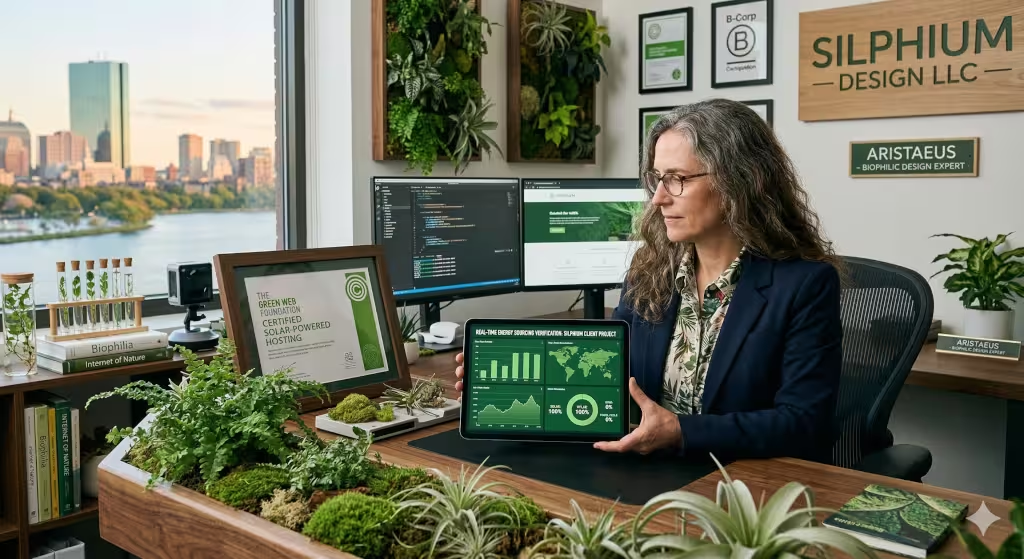
A badge is more than a small picture in the corner of a screen; it is a seal of quality. When we place a “Powered by Solar” badge on a website, we don’t hide it at the very bottom where no one looks. Instead, we use the “F-Pattern” of eye-tracking. Humans tend to scan a screen in the shape of a capital letter F. By placing your environmental credentials in the top left or along the main navigation bar, you tell the visitor’s brain right away: “This brand is different. This brand is fueled by the sun.” For instance, the Silphium Design website has a “Green Web Foundation” badge, showing that the website is powered by renewable energy.
This placement creates an immediate positive feeling. It acts as a “biophilic handshake.” Before the user even reads your first paragraph, they know that the energy moving the pixels on their screen is clean. This reduces the subconscious “climate guilt” many people feel when spending hours online. When your solar branding is front and center, it builds a foundation of honesty that carries through the rest of the customer’s journey.
Real-Time Energy Dashboards: The “Live” Connection
The most powerful tool for trust is live data. Imagine a small, beautifully designed box on your homepage that says: “Right now, this session is 100% powered by the solar array in Vermont.” We can connect your website to the API of your solar-powered data center. This allows the website to show a live feed of how much energy the sun is providing at that exact moment.
When a user sees the numbers moving, the solar power becomes real to them. It is no longer a vague “green” promise; it is a physical reality. This level of transparency is rare. It shows that you have nothing to hide and that you are proud of your solar infrastructure. This “live heartbeat” of energy makes your brand feel more human and more connected to the actual weather and world outside.
Third-Party Verification and Certifications
In my experience as a scientist, I know that peer review is essential. For your branding to be bulletproof, you need outside experts to vouch for you. We look for certifications like the Green Web Foundation, which keeps a global directory of websites that run on renewable energy.
By linking your solar badge directly to your official certificate, you give the user a way to “check your work.” We also highlight B-Corp status or LEED certification for the buildings where your servers live. These are not just acronyms; they are shields against skepticism. When you provide a clear path for the user to verify your solar claims, you move from “selling” to “leading.” You aren’t just telling them you use solar power; you are inviting them to see the proof for themselves.
Transparency as a Competitive Advantage
In 2026, transparency is a rare commodity. Most companies hide their energy bills and their carbon footprints. By being open about your solar journey, even including the challenges, like how you handle energy storage on cloudy days, you create a “vulnerability” that is actually a strength.
People don’t expect perfection, but they do expect honesty. When you explain the logic behind your branding, you educate your customers. You turn them into partners in your mission. This deep level of trust is what creates lifelong brand advocates. They don’t just buy your product; they believe in your “solar story” because you have been transparent every step of the way.
The SEO Edge: Why Google Loves Solar Efficiency
Many people don’t realize that being green helps you show up higher in Google search results. Google cares about “Core Web Vitals.” This is a fancy way of saying they want websites to load fast and be easy to use. Because solar-focused websites are built to be efficient, they are often much faster than regular websites.
When a site is lean and doesn’t waste energy, it is easier for Google’s computers to read it. This is called “Green Crawling.” If Google spends less energy indexing your site, it rewards you. In 2026, search engines are starting to look at ESG data. ESG stands for Environmental, Social, and Governance. Using solar power is a huge “plus” in the environmental category.
By using solar power, you aren’t just helping the earth; you are speaking Google’s favorite language: efficiency. A fast, solar-powered site will almost always beat a slow, coal-powered site in search rankings over time.
Questions about Solar Websites
People often have questions when they hear about solar websites. One common question is: “Does solar hosting cause downtime?” The answer is no. Because of the battery systems and the way the power grid works, your site stays up 99.9% of the time. The solar panels charge the batteries, and the batteries keep the lights on.
Another question is: “Is green hosting more expensive?” It might cost a few dollars more a month, but the “Return on Investment” is much higher. Customers in 2026 prefer to buy from brands that care. The loyalty you gain from using solar power is worth much more than the small cost of the hosting.
Finally, people ask: “How do I prove my website is solar powered?” You can use tools like the Green Web Foundation. They have a database that checks the IP address of your website to see if the host uses renewable energy. Providing a link to this proof on your site ends all doubt.
Case Studies: Biophilic Web Design in Action
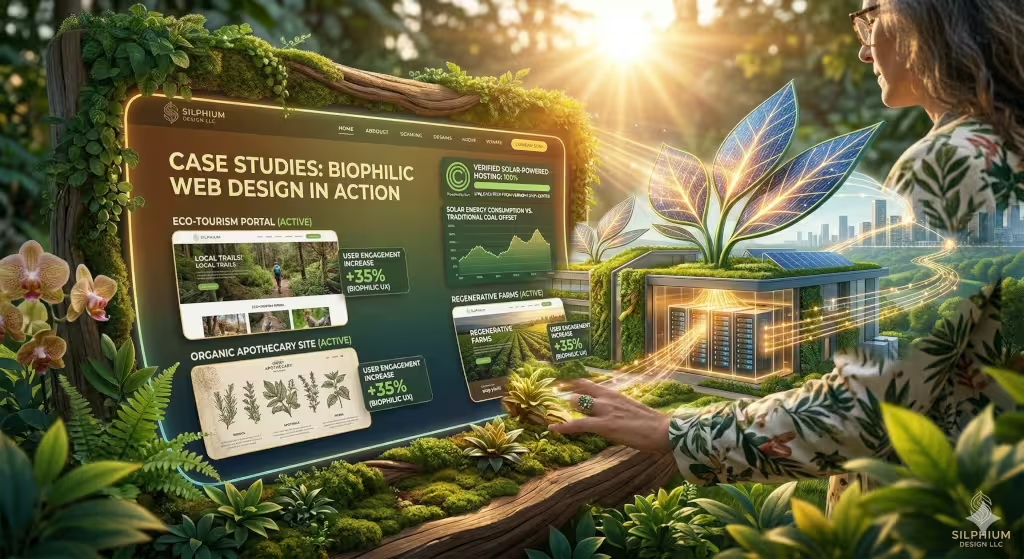
Let’s look at how real companies use these ideas. A company that makes solar panels should have a website that feels like the sun. They use biophilic design by including pictures of plants and using natural light in their photos. Their website is also hosted on a solar server, which completes the story.
We also see this with eco-tourism brands. A hotel in the forest shouldn’t have a website that looks like a cold city. They use earthy tones and solar-powered hosting to show they respect the land they are on. When the website feels like the destination, people are more likely to book a trip. These brands see lower “bounce rates,” which means people stay on the site longer because they feel comfortable.
Future-Proofing the Digital Ecosystem
The internet is growing every day. If we keep using old, dirty energy, we will run into big problems. Solar-powered web hosting branding is the “root system” for a healthy future. By starting now, you are making sure your brand is ready for a world that values the environment.
As we move deeper into 2026, we will see more “Regenerative UX.” This is a way of designing that actually makes the user feel better and more connected to nature. It all starts with the sun. When you power your brand with solar energy, you are choosing life. You are choosing a path that is sustainable, profitable, and beautiful.