
Table of Contents
The Evolutionary Basis of Organic Connection
The digital world is currently facing a silent crisis. Every day, people spend hours staring at flat, glowing screens. Most websites are built on rigid grids, sharp boxes, and flashing ads. This setup demands what scientists call directed attention. Your brain must work hard to ignore distractions and focus on a single task. Over time, this constant effort drains our mental energy. It causes digital fatigue, high bounce rates, and short attention spans.
In lifestyle marketing, where brands try to connect with how people want to live, this sterile approach is failing. When a user feels tired and overwhelmed by a website, they do not buy things. They do not sign up for newsletters. They simply click away.
Fortunately, there is a powerful solution to this problem. The solution is nature-inspired design. As a biologist and web designer, I look at this issue through the lens of evolutionary adaptation. Human beings did not evolve to live in sterile, concrete boxes. We did not evolve to look at bright, flat rectangles. For thousands of years, our brains and visual systems developed in natural settings. Our eyes are trained to track the soft movement of leaves, the gentle curve of a river, and the natural shift of sunlight.
When we bring these natural patterns into the digital space, we align with human biology. This is where nature-inspired design shines. It is not just about making a website look pretty. It is about working with our evolutionary history. By using organic shapes, natural colors, and soft movements, we can lower the mental strain on our visitors.
This brings us to the main thesis of this article. The role of nature-inspired design in lifestyle marketing is a biological necessity, not just a passing trend. When brands build digital spaces using these natural principles, they bypass conscious doubt. They create a deep, physiological sense of trust.
True nature-inspired design goes far deeper than pasting a few photos of trees on a homepage. It requires us to build websites using the structural rules of nature. We must integrate natural geometry, soft visual rhythms, and organic motion into our code. In doing so, we turn a stressful digital experience into a relaxing retreat. This shift is highly beneficial for both the user and the brand.
What is Nature-Inspired Design in Branding?
To understand the role of nature-inspired design in lifestyle marketing, we must first define what it actually means. Many people confuse nature-inspired design with greenwashing. Greenwashing is when a company uses superficial green colors or photos of leaves to make itself look eco-friendly, even if its actions are not.
True nature-inspired design is different. It is the practice of using the actual patterns, systems, and structures of the natural world to solve human design problems. In branding and web design, we call this biophilic digital design. Biophilia is the built-in human desire to connect with nature.
When we apply nature-inspired design to a brand, we look at several key vectors:
Biomorphic Forms and Patterns
Nature rarely uses perfect, sharp 90-degree angles. If you look at a leaf, a shell, or a mountain range, you will see soft curves and repeating patterns. In mathematics, these repeating patterns are called fractals. A fractal is a shape that looks similar whether you look at it up close or from far away. Examples include the branching of a tree or the spirals of a seashell.
Our brains can process these shapes with very little effort. When we use biomorphic forms in web design, we replace harsh rectangular boxes with organic curves. We might use fluid section dividers that look like gentle hills. We can arrange content in a spiraling layout that mirrors a pinecone. This makes the website feel alive and inviting.
The Atmospheric Spectrum
Color is one of the quickest ways to affect human emotion. Standard web design often uses highly saturated, artificial colors to grab attention. However, these bright colors can cause eye strain and mental fatigue.
Under a nature-inspired design approach, we use colors found in real habitats. This is called the atmospheric spectrum. Instead of using pure, harsh black for text, we might use a deep charcoal or a rich forest green. Instead of a blinding white background, we might use a soft sand or warm clay tone. These colors feel grounded and familiar to the human eye. They create a calm digital environment where users want to linger.
Biomimetic UX Flow
Biomimicry means copying life. In web design, this means making the website behave like the physical world. For example, when a user scrolls down a page, the movement should not be rigid and mechanical. It should mimic natural physics. We can write CSS and JavaScript code that gives the scroll a sense of gravity and gentle friction.
When a user hovers over a button, the button should not just flash a new color. It should transition smoothly, like a leaf bending under a drop of rain. These small, thoughtful details make the digital experience feel physical and real. It makes the technology feel like a natural extension of our world, rather than a cold barrier.
How Does Nature-Inspired Design Affect Consumer Behavior?
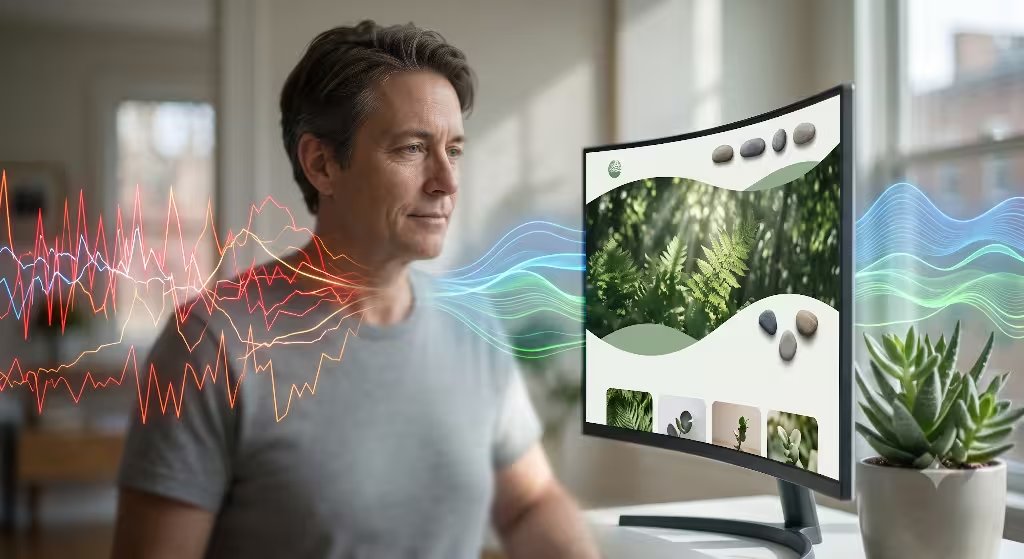
To appreciate why nature-inspired design is so effective, we must look at how it changes consumer behavior. This is not just a theory. It is backed by decades of environmental psychology and brain science.
Attention Restoration Theory
One of the most important concepts in this field is Attention Restoration Theory, or ART. This theory was developed by psychologists Stephen and Rachel Kaplan. It explains that humans have two types of attention:
- Directed Attention: This is the focused attention we use to read small text, write code, or navigate busy streets. It requires a lot of mental effort. When we use it for too long without a break, our brains get tired. We become easily distracted, irritable, and stressed.
- Involuntary Attention (Soft Fascination): This is the effortless attention triggered by pleasing, natural environments. When you watch clouds drift across the sky or look at water rippling in a pond, your brain is resting. You do not have to force yourself to pay attention. It happens naturally.
Most websites demand intense directed attention. They are filled with pop-up boxes, auto-playing videos, and flashing discount banners. This creates high mental fatigue.
By contrast, a website built with nature-inspired design utilizes soft fascination. It gives the user’s brain a chance to rest. When a user visits a biophilic website, their heart rate slows down and their mental fatigue decreases. Because they feel calm and comfortable, they are much more open to the brand’s message. They are no longer rushing to find the exit.
Reducing Cognitive Friction
In web design, cognitive friction is anything that makes a user think too hard. If a website is confusing or visually chaotic, the user has to spend valuable mental energy to find what they want.
A nature-inspired design reduces this friction by using natural spatial layouts. Humans have an evolutionary instinct to seek out two specific types of spaces:
- Prospect: This is a clear, open view that allows us to see what lies ahead. In web design, we create prospect by using generous white space and clean, open layouts. It gives the user a sense of freedom and control.
- Refuge: This is a safe, protected place where we can rest without being seen. In web design, we create refuge by using clear, contained sections and quiet, focused content blocks. It gives the user a sense of safety and privacy.
When a website balances prospect and refuge, it feels instinctively right. The user knows exactly where to look and where to go. They do not feel lost or overwhelmed. This sense of ease directly translates into higher brand trust and increased sales.
| Design Philosophy | Cognitive Load (ART) | Visual Trust | Bounce Rate Impact |
| Rigid Grid (Standard) | High (Constant directed attention required) | Neutral (Perceived as a corporate utility) | Baseline |
| Aesthetic Only (Superficial) | Medium (Conflicting messages of artificial nature) | Low (Stale stock photos look disingenuous) | Minor reduction |
| Deep Biophilic (Integrated) | Low (Invokes effortless soft fascination) | High (Perceived as authentic and sustainable) | Significant reduction |
This table shows how deep nature-inspired design outperforms standard design in every key metric. By focusing on the biological needs of the user, we can create a much more successful digital experience.
Why Are Lifestyle Brands Using Biophilic Elements?
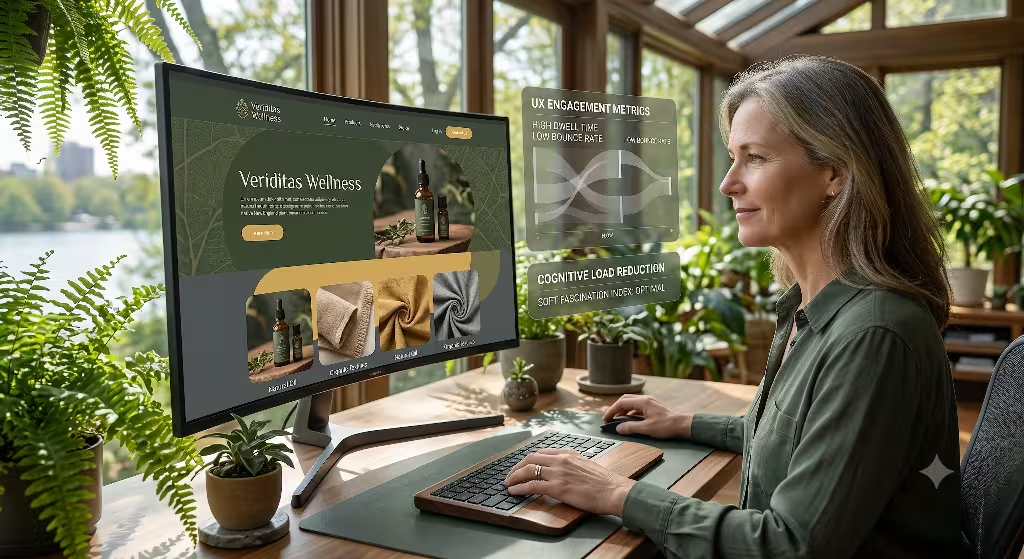
Lifestyle marketing is all about selling an ideal way of living. It is not just about the features of a product. It is about how the product makes the user feel. Today, consumers are changing. They are tired of the fast-paced, high-stress modern lifestyle. They are actively seeking wellness, balance, and a closer connection to the earth.
As a result, successful lifestyle brands are shifting their marketing to match these desires. This is why we see such a massive increase in the use of biophilic elements.
The Rise of Value-Driven Consumption
Modern buyers want to support brands that share their values. They care about environmental health, mental wellness, and ethical production. If a brand claims to be sustainable, but its website looks like a cold, industrial machine, there is a disconnect. This disconnect is called cognitive dissonance. It happens when a brand’s words do not match its visual actions.
By using nature-inspired design, a lifestyle brand can instantly show its commitment to these values. Before the user reads a single word of copy, the soft earth tones, organic shapes, and calm movements send a clear message: We care about balance. We care about well-being. We care about the earth. This visual proof creates immediate harmony in the mind of the buyer.
Case Studies in Biophilic Branding
Let us look at some real-world examples of how nature-inspired design is used in lifestyle marketing:
- Luxury Wellness Brands: High-end skincare and wellness companies often use nature-inspired design on their websites. They use soft, flowing lines that mimic water. They choose color palettes based on soothing clays and natural minerals. They avoid loud, flashing “Buy Now” buttons. Instead, they use quiet, minimalist buttons that fade in gently. This calm approach mirrors the relaxing experience of a high-end spa. It justifies their premium pricing.
- Boutique Eco-Tourism: Travel brands that offer natural retreats use nature-inspired design to start the vacation early. Their websites use video backgrounds of rustling leaves or rolling waves. The text is arranged in open, breezy layouts. By making the website feel like a physical breath of fresh air, they make the visitor crave the actual trip.
- Sustainable Home Goods: Brands selling organic bedding or handcrafted furniture use nature-inspired design to highlight the raw materials of their products. They use rich textures, subtle wood-grain background patterns, and earthy color schemes. This emphasizes the natural quality of their goods, making them feel warm, durable, and highly desirable.
These brands understand that nature-inspired design is not a gimmick. It is a highly strategic business tool. It helps them build a loyal community of customers who feel deeply connected to their mission.
How Can a Brand Implement Nature-Inspired Design on Their Website?
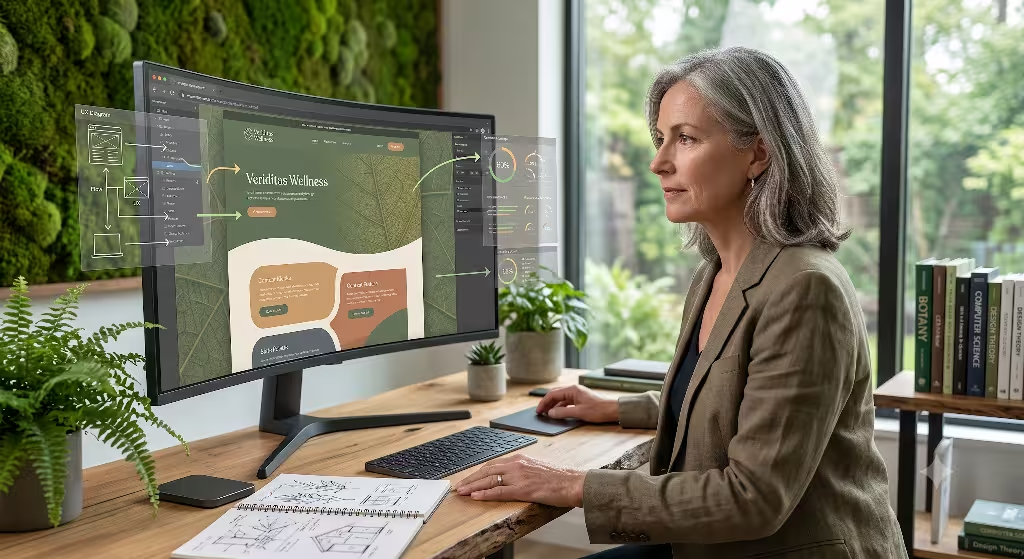
Now that we understand the power of nature-inspired design, let us discuss how to actually build it. To create a successful biophilic website, you must follow a structured pipeline. This ensures your site is both beautiful and functional.
1. Establish the Biophilic Narrative & Palette: Phase 1.
Define the specific ecosystem that aligns with your brand identity (e.g., alpine, arid, coastal). Generate an organic color palette utilizing low-saturation, grounded tones.
2. Architect Biomorphic UX Flows: Phase 2.
Replace rigid CSS box containers with subtle biomorphic curves and CSS-based soft shadows. Map your site navigation to mimic the natural instinct of exploration, using balanced negative space.
3. Apply Performance-Optimized Media Assets: Phase 3.
Source custom, non-stock photography capturing real, naturally lit scenes. Compress assets using WebP or AVIF formats to prevent image-heavy load times from triggering Core Web Vitals penalties.
4. Deploy Micro-Interactions & Fluid Motion: Phase 4.
Implement lightweight SVG or CSS animations that mimic natural, physics-based movements (e.g., a slow-drifting cloud hero transition or a leafy hover state with natural dampening physics).
Let us explore these phases in greater detail to see how they apply to a real web design project:
Phase 1: Establish the Biophilic Narrative and Palette
Before you write any code, you must decide on the story you want to tell. Nature is incredibly diverse. A design inspired by a misty evergreen forest will feel very different from a design inspired by a sun-drenched desert.
Choose a specific ecosystem that matches your brand identity:
- Alpine Ecosystem: This is perfect for outdoor gear or adventure brands. It uses deep forest greens, cool slate grays, and crisp snowy whites. The layout should feel grand, open, and majestic.
- Coastal Ecosystem: This works wonderfully for organic beauty or lifestyle brands. It uses soft ocean blues, sandy beiges, and warm sunlight yellows. The movements should be slow and rhythmic, like the tides.
- Arid Ecosystem: This fits modern design firms or architectural brands. It features rich terracotta oranges, warm dusty roses, and deep sage greens. The structure should feel grounded, warm, and highly textured.
Once you choose your ecosystem, create a color palette based on real natural elements. Use digital eyedropper tools to pull colors directly from high-quality photos of your chosen habitat. This ensures the colors have the natural harmony our eyes expect.
Phase 2: Architect Biomorphic UX Flows
Next, it is time to build the structure of the site. In standard web design, everything is contained in sharp, rectangular boxes. In nature-inspired design, we break these rigid boundaries.
- Use Biomorphic Curves: Use CSS border-radius properties to soften the corners of your image containers, card layouts, and buttons. Instead of straight lines to separate sections, use gentle waves or asymmetrical curves.
- Incorporate Natural Shadows: In the physical world, shadows are soft and diffused. They tell our eyes how close or far away an object is. In your website’s CSS, avoid harsh, dark box shadows. Instead, use layered, transparent shadows that mimic how sunlight casts a soft glow on a flat surface.
- Balance Negative Space: Do not crowd your pages with too much information. Think of your website like a natural landscape. A forest needs open clearings to let the light in. Give your text and images plenty of breathing room. This allows the user’s eyes to travel smoothly from one element to the next without feeling rushed.
Phase 3: Apply Performance-Optimized Media Assets
The imagery on your website must feel authentic. Many brands make the mistake of using generic stock photos. Users can easily spot a staged stock photo. It breaks their immersion and hurts brand trust.
- Source Real Photography: Invest in custom photography that captures genuine moments in natural light. Show real people interacting with your products in natural settings.
- Highlight Natural Textures: Use close-up shots of natural textures, like the grain of wood, the weave of organic linen, or the roughness of stone. You can use these textures as subtle backgrounds to add depth to your pages.
- Optimize for Speed: High-quality images can be very large. If your pages take too long to load, your search engine rankings will drop. Always compress your images. Use modern formats like WebP or AVIF. These formats provide beautiful, crisp images at a fraction of the file size of older formats like JPEG.
Phase 4: Deploy Micro-Interactions and Fluid Motion
Motion is a powerful way to bring nature-inspired design to life. However, the movement must feel organic, not mechanical.
- Use CSS Transitions: When a user hovers over a menu link or clicks a button, use slow, easing transitions. Avoid sudden transitions that feel like flicking a harsh light switch.
- Physics-Based Animations: Use animation libraries that let you apply real-world physics to your web elements. For example, if a menu slides out, let it bounce slightly at the end, as if it has physical weight and momentum.
- Subtle Background Movement: You can use lightweight, looping SVG animations in the background. A very slow, gentle movement of leaf outlines or water ripples can make your website feel alive. The key word here is subtle. If the movement is too fast, it will distract the user and increase their cognitive load, defeating the entire purpose of biophilic design.
Web Performance vs. Natural Visuals
As a computer scientist, I know that web design is always a balance between beauty and performance. This is especially true for nature-inspired design. If we are not careful, adding rich textures, organic shapes, and fluid movements can make our code incredibly heavy. A slow website is a major problem. It frustrates users and leads to a high bounce rate. It also hurts your SEO, as search engines like Google penalize slow-loading pages.
To make nature-inspired design succeed, we must use smart, modern coding practices. We must build beautiful, organic websites that still load in a fraction of a second.
Avoid the Bloat Trap
The “bloat trap” occurs when a designer tries to create a nature-inspired design by loading massive, uncompressed images or heavy JavaScript animation libraries. This slows down the site’s load speed, ruinous for user experience and SEO.
Here is how we solve this problem using clean, efficient engineering:
- Use Inline SVGs for Organic Shapes: Instead of using heavy PNG or JPEG images for your organic background curves, use Scalable Vector Graphics, or SVGs. SVGs are built using mathematical code rather than pixels. They are incredibly lightweight, meaning they load almost instantly. Best of all, they look perfectly sharp on every screen size, from a small phone to a massive desktop monitor.
- Leverage Modern CSS for Shadows and Gradients: You do not need to use images to create soft, natural lighting effects. Modern CSS is highly advanced. You can write simple lines of code to create complex, multi-layered gradients and ultra-soft shadows. Because this is done directly by the user’s browser, it does not add any weight to your page load.
- Implement Smart Lazy-Loading: If your website features a beautiful video background of a natural scene, do not load it all at once. Use lazy-loading to ensure the video only loads after the rest of the page is ready. This keeps the initial page load incredibly fast. You can also use a lightweight, static image placeholder that displays while the video loads in the background.
Semantic SEO and Natural Structure
Search engines use automated bots to crawl and understand your website. These bots cannot “see” your beautiful nature-inspired design in the way a human does. They read the underlying code.
To ensure your biophilic website ranks highly in search results, you must combine your visual design with a strong, semantic HTML structure:
- Keep Your Header Hierarchy Clean: Use your H1, H2, and H3 tags in a logical, orderly fashion. This makes your site easy for both search bots and screen readers to navigate. It mirrors the clean, organized structure we see in natural systems.
- Write Descriptive Alt Text: Every natural image on your website should have descriptive alt text. This is a short written description of what is in the image. It helps visually impaired users understand your site, and it tells search engines exactly what your images represent.
- Create Meaningful Internal Links: Connect your pages in a natural, logical web. Do not force users down a rigid, single-file path. Allow them to explore your site naturally, just like walking along a trail in a forest. This keeps users on your site longer, which signals to search engines that your content is highly valuable.
The Brand That Breathes Together with Its Audience
The digital landscape is changing. The days of high-stress, loud, and flashing web design are coming to an end. Users are actively looking for digital spaces that offer peace, clarity, and a sense of calm. They want to connect with brands that understand their need for wellness and balance.
This is why nature-inspired design is the future of lifestyle marketing. By bringing the beauty, geometry, and systems of the natural world onto our screens, we can create websites that do more than just sell. We can create websites that heal. We can lower cognitive load, reduce stress, and build a deep, biological foundation of trust with our audience.
For lifestyle brands, this approach is a powerful way to stand out in a crowded market. It shows your values in a way that words alone never could. It turns your website into a digital sanctuary where visitors want to spend their time.
As designers, developers, and brand leaders, we have a unique opportunity. We can continue to build sterile, stressful digital grids. Or, we can choose to build a web that breathes. We can choose to design in harmony with human biology. When we embrace nature-inspired design, we create a digital world that is not only highly effective for business, but genuinely beautiful and restorative for the human spirit.