
Table of Contents
Today, the world of social media is shifting away from big corporate feeds. If you want to grow a business online today, you need to understand how to communicate within a focused marketing niche.
In this complete guide, we will look at real case studies that show how brands find true success on Mastodon. We will break down how open networks work, answer the top search questions about Fediverse strategy, and give you an actionable blueprint for your business.
Marketing Beyond the Algorithm
The Shift to Decentralization
For over fifteen years, mainstream social platforms built their empires on centralized algorithms. Networks like X (formerly Twitter), Facebook, and Instagram rely on secret sorting codes designed to keep users scrolling. For brands, this meant paying for ad spots or fighting an uphill battle against constantly changing algorithms.
Today, millions of active internet users are choosing decentralized networks instead. Mastodon leads this movement as part of the Fediverse, an interconnected web of independently owned servers that use an open protocol called ActivityPub.
On Mastodon, there is no master algorithm deciding who sees your content. Posts display in simple time order. Users have full control over their feeds. Because of this design, standard broad market strategies fail. To get attention, a brand must locate and participate in a clear marketing niche. People use Mastodon to escape pushy ad feeds, which means your message must deliver real utility to the specific marketing niche you choose to enter.
The Basic Paradox of Fediverse Marketing
Marketers who arrive on Mastodon often hit a wall immediately. On legacy platforms, social media teams rely on algorithmic push tactics. They buy sponsored spots, run targeted pop-up ads, and rely on heavy repetition to get views.
Mastodon works on a community pull model. You cannot buy your way onto a timeline. You cannot pay a server admin to boost your post to millions of stranger feeds. This creates a paradox for traditional marketers: how do you market your company on a network designed to block traditional advertising?
The answer lies in mastering community relationships within your targeted marketing niche. Instead of broadcasting generic promotional messages to a mass audience, you must earn attention by sharing deep knowledge, answering technical questions, and hosting discussions inside your chosen marketing niche. When you offer real utility, users voluntarily share your posts across the network.
Thesis Statement
Success on Mastodon is not built on viral reach or mass advertising budgets. Success is achieved by finding your dedicated marketing niche, following server social norms, and delivering consistent, high-value content that solves real problems.
Understanding Niche Architecture in the Fediverse
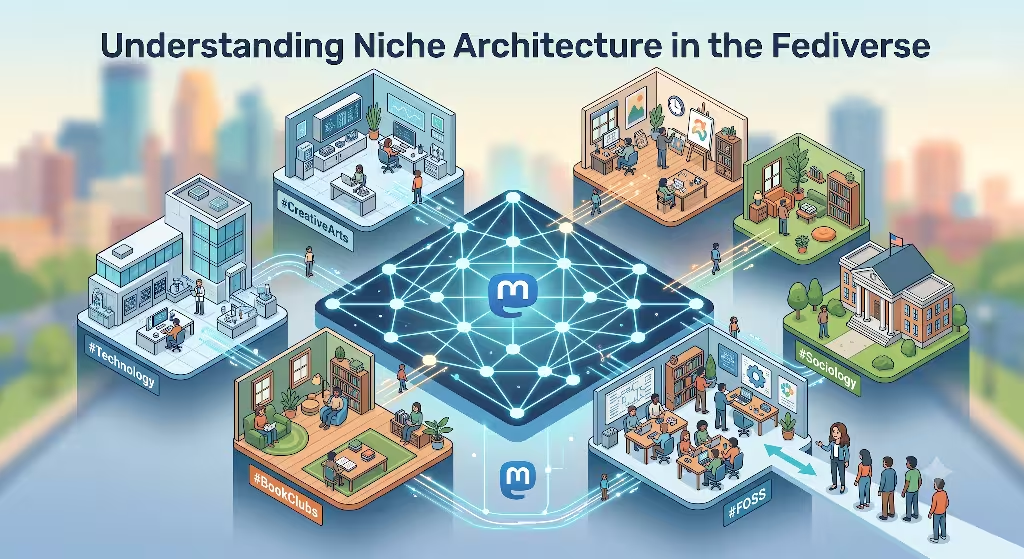
Instances vs. Feed Aggregation
To build a winning campaign, you must first understand the technology powering Mastodon. Mastodon is not a single website like LinkedIn or X. It is a network of thousands of individual websites called instances or servers.
Think of instances like email providers. If you open an account on Gmail, you can still send emails to someone on Yahoo or Outlook. Mastodon works the same way. An account hosted on techhub.social can talk directly to an account on mastodon.social or a custom server hosted by Silphium Design LLC.
+-----------------------------------------------------------------------+
|                         THE FEDIVERSE NETWORK                         |
|                                                                       |
|  [ Server A: techhub.social ] <---ActivityPub---> [ Server B: climate.social ]
|             |                                            |            |
|       ( User Profile )                             ( User Profile )   |
|             |                                            |            |
+-------------|--------------------------------------------|------------+
              v                                            v
     [ Local Timeline ]                           [ Local Timeline ]
              \                                            /
               +-----> [ Federated Timeline ] <-----------+
Inside Mastodon, users view three distinct timelines:
- Home Timeline: Shows posts only from accounts the user follows directly.
- Local Timeline: Shows posts from everyone who holds an account on that specific server.
- Federated Timeline: Shows posts from accounts across the wider network that members of your local server follow.
When you post within a specialized marketing niche, your choice of home server matters immensely. Joining a server focused on your topic puts your business right on the local timeline of people who care about your trade.
Sociology of Mastodon Communities
Because individual server administrators run each instance, every server has its own culture, goals, and safety policies. This design makes Mastodon a collection of tight digital neighborhoods.
In mainstream social networks, corporate platforms treat users like data points for advertisers. On Mastodon, instance rules are written by human moderators who prioritize privacy, civil discussion, and user control.
If a brand joins a specialized server and starts spamming low-quality product links, the local server admin can block that brand instantly. Understanding this social dynamic is critical for your marketing niche. When your business acts like an active, respectful participant in a specialized marketing niche, community members view your brand as a trusted peer rather than an annoying advertiser.
Identifying High-Value Marketing Niche Servers
Before creating your corporate profile, you must research where your ideal customer hangs out. Finding the right marketing niche space requires reviewing server directories and search tools.
| Discovery Tool | Primary Purpose | Ideal Use Case |
| joinmastodon.org | Official server directory | Finding large, broad servers with clear moderation rules |
| fediverse.info | Hashtag directory | Finding users and instances by specific interest areas |
| FediDB | Network analytics database | Finding active servers by total user size and uptime |
| FediDirectory | Curated topic lists | Locating hand-picked accounts within your marketing niche |
When evaluating an instance for your brand, review the server rules page carefully. Look for clear guidelines regarding commercial accounts. Some instances allow commercial profiles as long as posts are informative. Other instances forbid commercial accounts entirely. Choosing a server that welcomes business activity within your marketing niche protects your profile from being suspended.
An Examination of Case Studies: Mastodon Marketing Niche Success

Let us examine real case studies of organizations that entered the Fediverse, engaged their ideal audience, and saw strong return on investment.
+-------------------------------------------------------------------------+
|                    CASE STUDIES AT A GLANCE                             |
+------------------------------------+------------------------------------+
| Organization                       | Target Marketing Niche             |
+------------------------------------+------------------------------------+
| 1. Chocolatey Software             | Open-Source & Enterprise Tech      |
| 2. Internet Archive & EFF          | Digital Rights & Public Advocacy   |
| 3. Construction Equipment Guide    | Industrial B2B Publishing          |
+------------------------------------+------------------------------------+
Case Study 1: Open-Source & Enterprise Tech – Chocolatey Software
Chocolatey Software creates popular package management tools for Windows. Their customer base consists of systems administrators, software engineers, and IT directors. This audience is very technical and avoids standard social ads.
Strategy
Chocolatey recognized early that their primary developer user base was leaving legacy social networks for Mastodon. Rather than creating a generic sales push, Chocolatey created an official presence focused entirely on technical utility. They positioned their account to serve the open-source marketing niche.
Execution
Chocolatey integrated automated RSS feeds to announce software releases, security patches, and technical setup guides. Crucially, they did not drop links and leave. A dedicated team member regularly monitored replies, answered user troubleshooting queries directly on Mastodon, and engaged with open-source tech topics.
+--------------------------------------------------------------------------+
|                 CHOCOLATEY SOFTWARE MARKETING FLOW                       |
|                                                                          |
|  [ Tech Articles & Patch Notes ]                                         |
|                 |                                                        |
|                 v                                                        |
|  [ Mastodon Profile Post ] ---> ( Active Developer Engagement )         |
|                 |                                                        |
|                 v                                                        |
|  [ Direct Referral Traffic ] ---> [ Technical Docs & Conversion ]       |
+--------------------------------------------------------------------------+
Key Success Metrics
- Traffic Quality: Web traffic coming from Mastodon produced a longer average session duration compared to traffic from X or LinkedIn.
- Community Trust: By resolving user issues directly in public replies, Chocolatey earned strong sentiment across the technical marketing niche.
- Direct Conversions: High click-through rates on release notes led to increased downloads of enterprise trial software.
Key Takeaway for Your Brand
If you operate in a technical marketing niche, offer real support and technical value. Developers and technical buyers appreciate quick, honest interaction over fancy marketing slogans.
Case Study 2: Non-Profit & Public Advocacy – Internet Archive & EFF
The Internet Archive and the Electronic Frontier Foundation (EFF) are non-profit digital rights organizations. They rely on donations, public education campaigns, and member support to execute their missions.
Strategy
Both organizations identified the digital rights marketing niche on Mastodon as a high-value community. Mastodon users naturally value privacy, open data standards, and digital rights. This alignment made the Fediverse a perfect home for public advocacy outreach.
Execution
Instead of posting generic call-to-action banners, EFF and Internet Archive publish clear explanations of court cases, privacy threats, and digital archiving milestones.
- They use strategic hashtags to join ongoing privacy discussions.
- They format all images with complete alternative text (alt-text) to serve visually impaired users.
- They participate actively in discussions hosted by other privacy researchers.
Key Insight: In a values-driven marketing niche, accessibility and open engagement act as your strongest social proof.
Key Success Metrics
- High Engagement Ratio: Posts published by EFF on Mastodon frequently get higher boost ratios per thousand followers than their posts on traditional channels.
- Sustained Funding Drive: Campaigns focused on digital privacy generate sustained referral traffic to donation pages.
- Media Amplification: Tech journalists who active on Mastodon regularly citeEFF posts as source material for national news articles.
Key Takeaway for Your Brand
When your brand values match the values of your marketing niche, organic engagement follows naturally. Authentic participation creates long-term brand loyalty.
Case Study 3: Specialized B2B Publishing – Construction Equipment Guide
Construction Equipment Guide is a major publishing outlet that shares news, equipment listings, and auction updates for the heavy construction market.
Strategy
It is a common myth that Mastodon is only useful for computer programmers. Construction Equipment Guide proved that traditional B2B trade publishing can build a massive audience in an industrial marketing niche.
Execution
The publication consistently posts industry updates, machinery safety reports, and trade news to their Mastodon account.
+--------------------------------------------------------------------------+
|            CONSTRUCTION EQUIPMENT GUIDE CONTENT STRATEGY                 |
+--------------------------------------------------------------------------+
| 1. High-Value Industry Reporting (Daily News & Safety Updates)          |
| 2. Direct Syndication to Niche Construction Audiences                    |
| 3. High-Ratio Content Sharing across Open ActivityPub Networks           |
+--------------------------------------------------------------------------+
They avoid link-bait titles. Instead, they write clear summaries in the post body, giving readers full context before inviting them to click through to read the full trade report.
Key Success Metrics
- Subscriber Growth: Built an active Mastodon audience of over 250,000 followers within their business segment.
- Consistent Site Traffic: Steady stream of high-intent readers visiting equipment auction pages daily.
- Zero Ad Spend: Reached a quarter-million industry readers organically without paying for ad reach.
Key Takeaway for Your Brand
Every trade sector has a marketing niche. If you deliver clear, concise news and educational reporting, trade professionals will follow your account regardless of your industry.
Frequently Asked Questions about Mastodon Marketing Niches
When business leaders study social strategy, they ask specific technical and tactical questions. Here are clear answers to the most common search queries regarding marketing on Mastodon.
Can you run paid ads on Mastodon?
No, you cannot run traditional paid ads on Mastodon. The core ActivityPub software does not contain an advertising module, nor does it track user behavior to serve targeted pop-ups.
However, brands can invest resources into alternative paid models to support their marketing niche:
- Instance Sponsorship: Many independent server administrators accept financial support through services like Patreon or Open Collective. Sponsoring a popular server within your marketing niche keeps the server running and gets your logo listed on the server about page.
- Brand Server Hosting: You can spend your marketing budget on hosting your own custom Mastodon instance (e.g.,
social.yourcompany.com). Operating your own server gives your business total control over your profile while letting you federate freely with the rest of the network.
How do you measure ROI on Mastodon without likes or feed algorithms?
Traditional social platforms rely heavily on visible likes and view counts to show engagement. Mastodon uses direct replies, boosts (shares), and bookmarking.
To measure true return on investment (ROI) within your marketing niche, focus on these metrics:
+--------------------------------------------------------------------------+
|                      MEASURING MASTODON MARKETING ROI                     |
+-------------------------+------------------------------------------------+
| Traditional Vanity Metric| Mastodon Conversion Metric                     |
+-------------------------+------------------------------------------------+
| Algorithmic Impressions | UTM-Tracked Website Link Clicks                |
| Generic Likes           | Direct Replies & Depth of Conversation         |
| Total Follower Count    | Boost Ratio (Shares to Community Timelines)    |
| Paid Ad Reach           | Direct Sales Conversions & Lead Submissions    |
+-------------------------+------------------------------------------------+
- UTM Link Tracking: Append custom UTM parameters to all links shared on Mastodon. This allows your web analytics tools to track direct visits, form conversions, and sales generated by your marketing niche campaigns.
- Boost Ratios: Track how often your posts are boosted relative to your follower count. A boost shares your message directly to another user’s local timeline, making it the primary organic growth metric on the network.
- Qualitative Reply Sentiment: Analyze the depth of user replies. Detailed responses from decision-makers in your marketing niche are far more valuable than hundreds of passive likes.
Can you automate Mastodon posts without getting flagged or banned?
Yes, you can automate post publishing on Mastodon, but you must do so carefully. Mastodon features robust, open APIs that make connecting scheduling tools simple. However, community moderation rules are strict regarding spam.
To safely automate content within your marketing niche, follow these operational safety guidelines:
+--------------------------------------------------------------------------+
|                  AUTOMATION RULES FOR BRAND PROFILES                     |
+--------------------------------------------------------------------------+
| [DO] Use standard API scheduling tools (e.g., Buffer, Sprout Social)      |
| [DO] Add readable alt-text to all automated image uploads                |
| [DO] Apply the 80/20 rule (80% value/education, 20% promotion)           |
| [DON'T] Post automated buy-now links multiple times per day              |
| [DON'T] Leave automated accounts unmonitored for user replies            |
+--------------------------------------------------------------------------+
- Flag Automated Accounts: If your profile posts automated updates like blog feeds or security alerts, check the bot account setting in your profile preferences. This transparent tag builds trust with users.
- Maintain Human Oversight: Never leave an automated profile completely unmonitored. When a user comments on an automated post, a real team member should jump in to answer promptly.
What are the main rules of netiquette for brands on Mastodon?
Netiquette refers to network etiquette. Because Mastodon was built by user communities, proper etiquette is mandatory for any brand entering a marketing niche.
- Use CamelCase for Hashtags: Write multi-word hashtags with capital letters at the start of each word (e.g.,
#MarketingNicheinstead of#marketingniche). This allows screen-reader software to pronounce each word correctly for visually impaired users. - Write Complete Alt-Text: Always write clear descriptive alt-text for every image, chart, or infographic you publish. Skipping alt-text is seen as disrespectful by Fediverse users.
- Use Content Warnings (CWs) Properly: If your post touches on controversial subjects, broad politics, or long texts that take up screen space, place the post behind a Content Warning drop-down box.
- Avoid Aggressive Sales Speeches: Write posts that explain solutions. Share educational tips that benefit your marketing niche instead of shouting sales slogans.
A Framework for High-Converting Content
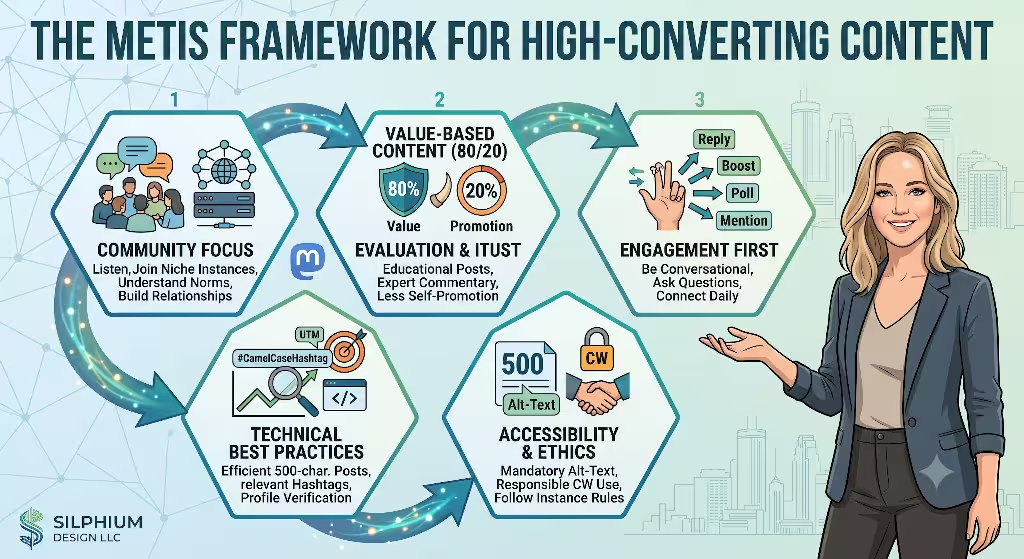
Below is a structured method for executing campaign work across the Fediverse. The Metis Framework focuses on building authentic relationships that convert readers into customers.
+--------------------------------------------------------------------------+
|                        THE METIS FRAMEWORK MODEL                         |
+--------------------------------------------------------------------------+
|                                                                          |
|       +----------------------------------------------------------+       |
|       |                     THE 80/20 RULE                       |       |
|       |  80% Industry Education  |  20% Product Conversion      |       |
|       +----------------------------------------------------------+       |
|                                     |                                    |
|                                     v                                    |
|       +----------------------------------------------------------+       |
|       |               ACCESSIBILITY INTEGRATION                  |       |
|       |  Complete Alt-Text       |  CamelCase Hashtags          |       |
|       +----------------------------------------------------------+       |
|                                     |                                    |
|                                     v                                    |
|       +----------------------------------------------------------+       |
|       |                 CONVERSATIONAL SEEDING                   |       |
|       |  Interactive Polls       |  Direct Q&A Sessions          |       |
|       +----------------------------------------------------------+       |
|                                                                          |
+--------------------------------------------------------------------------+
The 80/20 Rule for Fediverse Content
To retain audience trust in your marketing niche, your publishing schedule must deliver consistent value. We recommend split content creation using an 80/20 balance:
- 80% Educational & Community Value: Share original research, deep industry tips, answers to common questions, and links to helpful resources created by third parties in your marketing niche.
- 20% Direct Business Promotion: Invite readers to view case studies, register for upcoming webinars, try product demonstrations, or buy services from your company.
By maintaining this ratio, your audience will accept your promotional posts because your account consistently delivers high value daily.
Accessibility as Brand Reputation
On standard social networks, corporate brands view accessibility features like alt-text as an optional extra. On Mastodon, accessibility is a core social norm.
Failing to add alt-text to an image post will lead users to call out your brand publicly, damaging your standing in your marketing niche. Conversely, consistently writing detailed alt-text positions your company as professional, thoughtful, and inclusive.
Pro Tip: Treat alt-text writing as a core part of your copywriting strategy. Describe the data in your charts clearly so every user gets full value from your post.
Conversational Seeding
You cannot drop links onto Mastodon and expect massive sales traffic. You must cultivate active discussions. Conversational seeding is the practice of ending informative posts with open questions that encourage audience participation.
Here are three effective techniques to seed conversation in your marketing niche:
- Interactive Native Polls: Run simple two-question or four-question polls regarding common challenges facing your marketing niche. Use the results to write your next blog post.
- Open Ask Me Anything (AMA) Threads: Have your technical leaders host live chat sessions on specific industry topics.
- Value-First Discussion Starters: Share a complex problem facing your trade and invite peers in your marketing niche to share how their teams solve it.
Step-by-Step Implementation Checklist for Brands
If you are ready to launch a high-performing campaign in your target marketing niche, follow this practical checklist.
+--------------------------------------------------------------------------+
|                  BRAND IMPLEMENTATION CHECKLIST                          |
+--------------------------------------------------------------------------+
| [ ] Step 1: Research and Select Your Target Server                       |
| [ ] Step 2: Establish Domain Verification (rel="me")                      |
| [ ] Step 3: Complete Profile Branding & Clear Bio                        |
| [ ] Step 4: Conduct Keyword & Hashtag Mapping                            |
| [ ] Step 5: Establish Account Etiquette Rules                            |
| [ ] Step 6: Deploy Privacy-Focused UTM Analytics                         |
| [ ] Step 7: Launch Your Initial Value Content Campaign                   |
| [ ] Step 8: Execute Daily Community Conversations                        |
| [ ] Step 9: Monitor Referral Traffic & Goal Conversions                  |
| [ ] Step 10: Refine Strategy Based on Niche Data                         |
+--------------------------------------------------------------------------+
Step 1: Research and Select Your Target Server
Analyze active instances using directory tools. Decide whether your company should register an account on an established tech server or host its own instance (e.g., social.yourbrand.com) to serve your marketing niche.
Step 2: Establish Domain Verification (rel="me")
Mastodon does not use paid blue checkmarks for account identity. Instead, it uses open link verification. Add a small HTML tag containing rel="me" on your official website linking to your Mastodon profile. Mastodon will automatically highlight your website link in bright green on your profile, proving to your marketing niche that your account is authentic.
+--------------------------------------------------------------------------+
|                    DOMAIN VERIFICATION PROCESS                           |
|                                                                          |
|  [ Your Brand Website ] <--- Add rel="me" HTML Link ---> [ Mastodon Bio ]
|                                                                 |        |
|                                                                 v        |
|                                                   [ Green Verified Badge ]
+--------------------------------------------------------------------------+
Step 3: Complete Profile Branding & Clear Bio
Upload a crisp avatar logo and header banner image. Write a clear bio explaining who your company is, what value you share, and which marketing niche you serve. If your account relies on automated feeds, state that clearly in your profile summary.
Step 4: Conduct Keyword & Hashtag Mapping
Because Mastodon does not use full text indexing across all server lines by default, hashtags serve as the primary discovery mechanism. Build a dictionary of 15 to 20 primary hashtags relevant to your marketing niche. Always format them using CamelCase.
Step 5: Establish Account Etiquette Rules
Train your social media team on Fediverse social norms. Create strict guidelines for writing mandatory image alt-text, using Content Warnings, and maintaining an encouraging tone during public interactions within your marketing niche.
Step 6: Deploy Privacy-Focused UTM Analytics
Configure your web analytics package (such as Matomo, Plausible, or Google Analytics) with clear UTM tag conventions. Track traffic coming from Mastodon separately to measure visitor behavior within your marketing niche.
Step 7: Launch Your Initial Value Content Campaign
Begin publishing informative educational posts. Share helpful tips, technical guides, and industry news summaries that address common issues within your marketing niche. Apply the 80/20 rule from day one.
Step 8: Execute Daily Community Conversations
Spend 15 minutes each day reviewing local and federated timelines. Boost excellent posts published by other thought leaders in your marketing niche. Reply to questions where your company has practical expertise.
Step 9: Monitor Referral Traffic & Goal Conversions
Review web analytics monthly. Check metrics like time on site, bounce rate, and lead sign-ups generated by visitors coming from your marketing niche posts.
Step 10: Refine Strategy Based on Niche Data
Adjust your content schedule based on real performance data. Double down on topics that spark active boost threads and deep conversations within your targeted marketing niche.
Conclusion & Actionable Takeaways
Building a successful business strategy on Mastodon requires an intentional mindset shift. On standard corporate platforms, advertising budgets can buy short-term visibility. On decentralized networks, long-term business growth is earned by delivering genuine value to a specific marketing niche.
By reviewing real case studies, we see that organizations across diverse industries, from technical software companies like Chocolatey to major publishers like Construction Equipment Guide, can build dedicated audiences without relying on feed algorithms.
When you honor local server culture, implement complete accessibility features, and participate in honest conversations, your brand becomes a respected authority within your marketing niche.
Success in the Fediverse comes down to consistency, technical competence, and authentic human connection. Define your core marketing niche, configure your verified profile, and begin sharing knowledge that moves your industry forward.