
Table of Contents
Visual search engines have changed the way people find ideas online. Every day, millions of users scroll through digital boards to look for calm spaces, plant ideas, organic architecture, and calming digital interfaces. When we create content that connects with our innate love for living systems, we tap into a biological response. To build pins that get clicked and saved, you need to understand how human biology interacts with computer algorithms. This article examines every element that goes into an effective biophilic pinterest pin so you can build traffic that lasts for years.
The Intersection of Biophilia and Visual Search Algorithms
Defining the Medium: Visual Discovery Over Social Networks
Pinterest is not a regular social network. On most social platforms, users look at what their friends did yesterday. The feed moves fast, and posts disappear within hours. Pinterest operates as a visual search engine and an information database. Users come to the platform with intent. They want to plan a garden, redesign a home office, discover a color scheme, or locate blueprints for an eco-friendly house.
Because Pinterest functions as an indexing system, your content acts like an evergreen web page. A biophilic pinterest pin created today does not vanish tomorrow. It gets cataloged, sorted, and delivered to users weeks, months, or even years down the road. Treating Pinterest as an image-first search engine means every image file, pixel ratio, and text string must serve a clear search goal. When you post an image, you are indexing visual data into a system built to match visual queries with precise graphic solutions.
The Biophilic Resonance: Tapping Into Evolutionary Psychology
The biophilia hypothesis states that human beings have an innate, biological need to connect with nature and other living systems. For thousands of generations, human survival depended on reading natural patterns, noticing seasonal shifts, spotting clean water, and finding shelter beneath plant canopies. Modern life places people inside closed, artificial boxes, surrounded by sharp angles, harsh concrete, and flat screens. This disconnect creates mental fatigue, stress, and eye strain.
When a user scrolls through a noisy, bright feed, their brain processes dozens of artificial advertisements. Suddenly, an image appears featuring soft moss, natural wood grains, curving plant leaves, and gentle sunlight. The user’s eye stops immediately. This is not just a personal taste. It is an evolutionary reflex known as involuntary attention or soft fascination. The brain recognizes natural fractals and soft green tones as safe, restorative environments. A biophilic pinterest pin succeeds because it delivers relief from visual noise, inviting the user to pause, breathe, and click.
Target Audience Alignment: Connecting With High-Intent Communities
To make an impact, you must understand who looks for natural imagery. The audience for natural design spreads across several dedicated niches:
- Sustainable living advocates seeking low-waste, earth-conscious spaces.
- Remote workers looking to build restorative, low-stress home offices that clear mental fatigue.
- Interior decorators, landscape designers, and architects seeking organic building concepts.
- Digital designers and web developers interested in earth-toned interfaces and organic user experiences.
- Wellness seekers who value calm daily routines, daylighting, and indoor air-purifying plants.
When you design a biophilic pinterest pin, identify which group you are speaking to. A remote worker wants practical advice on where to place a potted fern near a monitor. An architect wants clean line drawings of rammed-earth walls. Tailoring your natural themes to these practical problems ensures that your viewers will save your image to their project boards.
Aspect Ratio, Visual Framing, and Geometric Proportions
The 2:3 Vertical Canvas: Claiming Feed Space
Pinterest displays content in vertical columns. If you post a horizontal image, it looks tiny on a mobile screen. It takes up very little vertical space, so users scroll past it before their eyes register the details. Square images perform slightly better, but they still leave valuable room unclaimed.
The standard aspect ratio for any successful pin is 2:3, typically built at 1000 by 1500 pixels. This vertical size ensures that your biophilic pinterest pin fills the mobile screen as users scroll. It gives you adequate space to display a stunning natural photograph, add clear text, and include branding without overcrowding the layout. Uploading files at this size prevents the platform from cropping your edges or compressing your image into an unreadable blur.
Biomorphic Composition: Working With the Golden Ratio
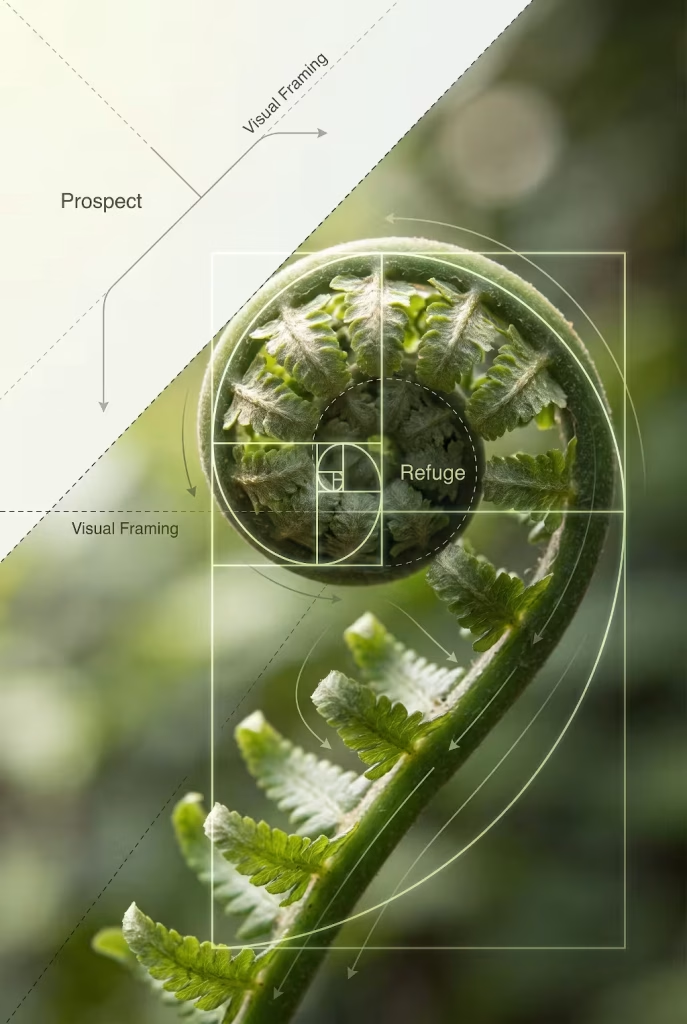
Nature rarely uses rigid square grids or harsh right angles. Instead, living organisms grow using mathematical proportions that maximize strength and light exposure. The most famous of these is the Golden Ratio, an organic mathematical relationship of approximately 1 to 1.618. We see this ratio in the spiral of a nautilus shell, the arrangement of sunflower seeds, the unfurling of a fern frond, and the branching of river deltas.
+-----------------------------------+
|  [ Golden Spiral / Leaf Sweep ]   |
|        . - ~ ~ ~ - .              |
|    . '               ' .          |
|   /    Natural Focal    \         |
|  |     Point / Subject   |        |
|   \                     /         |
|     ' .             . '           |
|         ' - ~ ~ ~ -'              |
|  [ Organic Typographic Layer ]    |
|  Clear Heading Text Balanced Here |
|  [ Subtle Brand / URL Anchor ]    |
+-----------------------------------+
When composing your pin, avoid placing subjects dead center in a stiff box. Use organic curves to lead the eye. Frame your photograph so that the curve of a plant stem or the slope of a stone wall guides the viewer from the top corner down through your text block. These fluid paths mimic the way eyes scan natural landscapes. By mirroring natural growth rules, your biophilic pinterest pin feels balanced and comfortable to view.
Negative Space: Balancing Prospect and Refuge
In habitat theory, human beings love spaces that offer both prospect and refuge. Prospect means having an open view of your surroundings to spot resources or changes. Refuge means having a safe, enclosed place where you feel protected. You can apply this architectural principle directly to digital graphic design.
In graphic layouts, prospect equals open, clean negative space. Refuge equals your solid, anchored blocks of text and focal images. Do not pack every square millimeter of your graphic with photos, arrows, badges, and icons. Crowded graphics cause visual friction and stress. Leave open areas of soft, neutral color around your focal subject. This negative space gives the viewer’s eye a place to rest. A balanced biophilic pinterest pin provides a sense of calm shelter surrounded by open clarity.
Color Science and Atmospheric Lighting Dynamics
Earth-Grounded Palettes: Avoiding Neon Fatigue
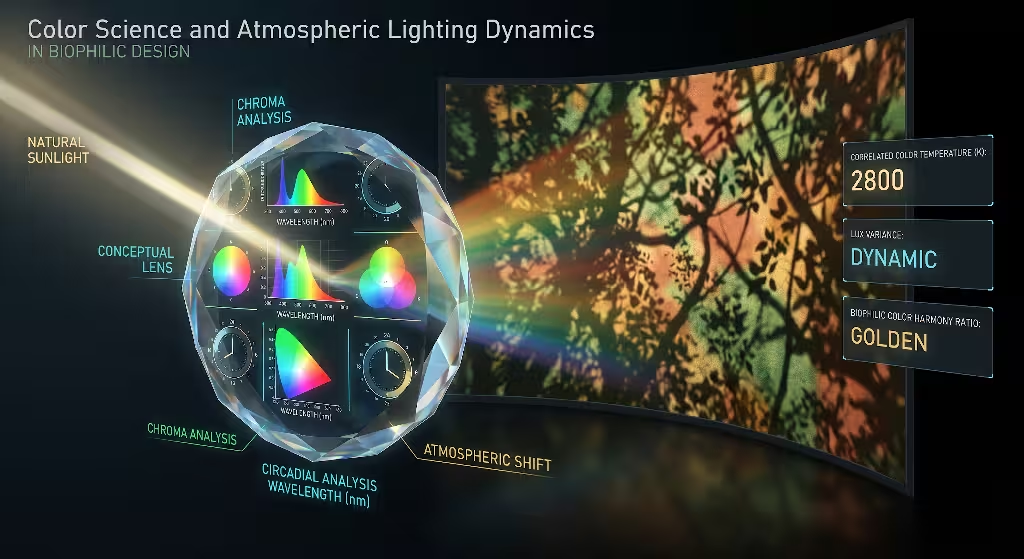
Modern advertising uses aggressive, saturated neon colors to fight for attention. Electric blues, searing magenta tones, and bright yellows trigger a high-stress alert signal in the human brain. While this tactic may gain a momentary glance, it often causes rapid eye fatigue and annoys the viewer.
Natural palettes create the opposite effect. They invite the user to linger. When developing graphics, select colors directly from living landscapes:
- Forest Canopy Greens: Deep moss, sage, pine needle, and young olive tones that lower stress levels.
- Warm Earth Pigments: Terra cotta, raw umber, warm clay, and sandstone that convey warmth and stability.
- Soft Atmospheric Tones: Lichen gray, river stone slate, misty morning fog, and muted sky blue.
- Restful Highlights: Warm alabaster, oat straw, and unbleached linen instead of harsh pure white.
Using these balanced, low-saturation tones ensures your biophilic pinterest pin looks natural and organic. Earthy palettes feel authentic and grounded, creating trust before the user even reads your headline.
Circadian Lighting: Diffuse and Dappled Light Patterns
Lighting sets the emotional tone of your visual asset. Fluorescent overhead office lighting feels clinical, sterile, and cold. If your pin features an image shot under flat, artificial white light, it fails to spark a warm emotional connection.
Focus on imagery that captures dynamic natural daylight. The best performing natural photography uses dappled light filtering through tree leaves, or warm morning sun streaming through a window. Dappled light creates soft shadows and natural patterns that instantly signal outdoor tranquility to the brain. Warm side lighting creates depth, highlights organic contours, and makes rooms look inviting. An effective biophilic pinterest pin relies on daylight that follows natural circadian rhythms, making the viewer feel awake and refreshed.
Tactile Textures: Emphasizing Material Reality
Humans interact with the natural world through touch. We know the feel of rough tree bark, cool river stones, smooth polished wood, and woven grass baskets. In a flat digital medium, you must suggest touch through high-definition visual texture.
Choose images where the surface details are sharp and clear. Let the viewer see the delicate veins running through an indoor fig leaf, the rough pores of unsealed limestone, or the distinct grain lines of white oak furniture. High-detail textures create a rich sensory experience that flat, glossy surfaces cannot match. When your biophilic pinterest pin highlights tangible materials, it feels real, grounded, and valuable.
Algorithmic Optimization: Pinterest Lens, Cloud Vision, and Visual Semantics
Computer Vision: How Pinterest “Sees” Your Pins
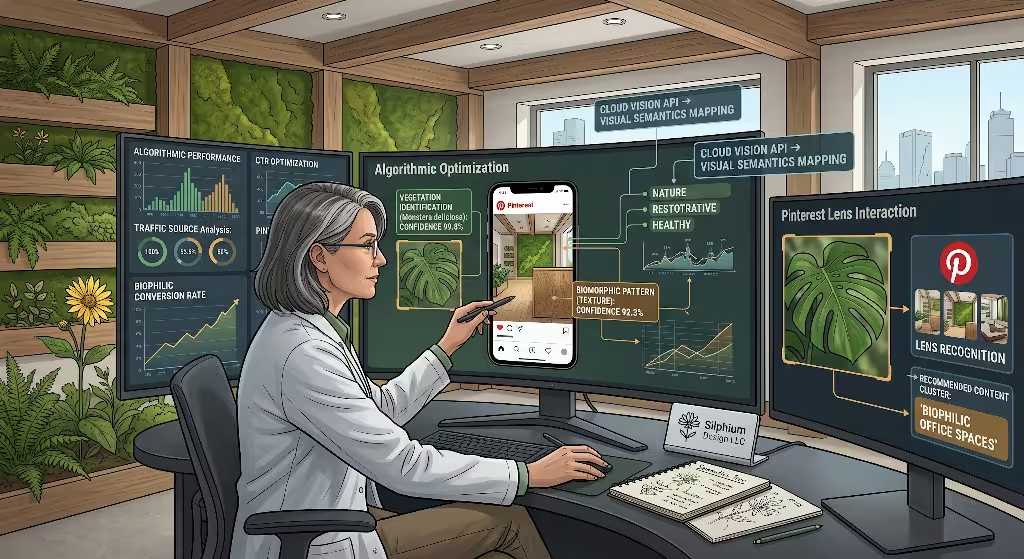
Search engines no longer rely solely on text labels to know what an image contains. Pinterest uses advanced computer vision models, including its Pinterest Lens technology, to analyze every uploaded graphic. The system reads the image pixels directly, identifying objects, shapes, colors, and layout structures.
When you upload a biophilic pinterest pin, the machine vision scanner processes the image and creates a list of recognized objects:
[Uploaded Pin Image]
        │
        ▼
[Pinterest Cloud Vision Engine]
        │
        ├─ Detected Object: Houseplant (Ficus lyrata)
        ├─ Detected Material: Natural Timber / Hardwood
        ├─ Detected Palette: Sage Green, Warm Ochre, Off-White
        └─ Extracted Text: "How to Build an Indoor Plant Sanctuary"
        │
        ▼
[Visual Entity Graph Mapping]
Matches: "Biophilic Interior" + "Sustainable Home" + "Plant Care"
If your image depicts live plants, natural hardwood, and natural stone, the algorithm labels it with high-confidence natural tags. It then displays your content to people who search for botanical decor, indoor gardens, or organic design. If your image is blurry, cluttered, or full of synthetic shapes, the algorithm gets confused. It might miscategorize your asset or suppress it entirely. Clear, sharp natural subjects help the visual crawler categorize your content accurately.
Legible Typographic Scrims: Protecting Readability
Many pins fail because the creator places thin text directly over a busy photo. If you put white letters over a photograph of a tangled fern, the text becomes impossible to read. If users cannot read your headline in less than two seconds, they will not tap on it. Furthermore, computer vision tools struggle to extract words from chaotic backgrounds.
To solve this, use an organic typographic scrim. A scrim is a semi-transparent colored backing, a soft curved card, or a gentle gradient that sits behind your text. Use an earth-toned background, such as a pale oat or dark moss block with seventy percent opacity, and place high-contrast text inside it.
Follow standard contrast rules so that people with vision impairments can read your message easily. When you protect your typography with clean backing shapes, both human readers and search engine crawlers can read your biophilic pinterest pin without friction.
+----------------------------------------+
|  [ Photographic Layer: Leaf Canopy ]   |
|                                        |
|  +----------------------------------+  |
|  | [ Soft Scrim / Semi-Opaque Card ]|  |
|  |                                  |  |
|  |   CLEAN, BOLD HEADLINE HERE      |  |
|  |   High-contrast, easy to read    |  |
|  +----------------------------------+  |
|                                        |
|  [ Detailed Texture: Oak Floor ]       |
+----------------------------------------+
Typography Choices: Pairing Grounded Serifs With Clean Sans-Serifs
Fonts carry emotional meaning and structural weight. For natural topics, your font choices should reflect organic shapes or clean modern craft. Avoid overused, curly script fonts that look messy on small screens. Avoid cold, rigid mechanical fonts that look like tech manuals.
Pair a grounded serif font with a clean, humanist sans-serif font. Grounded serifs have sturdy bases and gentle curves that evoke classic books, botanical journals, and traditional stonework. Humanist sans-serif fonts feature slight variations in stroke width that echo hand-drawn lettering. Use the sturdy serif for your main hook word, and use the clean sans-serif for your supporting subtitle. This typography pairing gives your biophilic pinterest pin an authoritative, calm appearance.
On-Page Pin SEO and Keyword Architecture
Writing Direct, High-Intent Pin Titles
Your title provides the first clear text signal to the ranking system. Pinterest allows up to one hundred characters in the title field, though the first forty characters do the heavy lifting on mobile displays. Do not write vague, poetic phrases like “Green Dreams” or “Living Peace.” Users do not type those phrases into search bars.
Place your primary search phrases directly at the beginning of your title. Use clear, search-friendly titles such as:
- “Biophilic Home Office Setup: Natural Light and Indoor Plants”
- “10 Steps to Create a Restful, Nature-Inspired Living Room”
- “Organic Kitchen Design Ideas Using Natural Oak and Stone”
Front-loading your main query tells the search crawler what your pin provides. A direct title helps your biophilic pinterest pin appear in search auto-complete suggestions when users look for natural inspiration.
Pin Description Anatomy: Semantic Clustering
Your pin description gives you up to five hundred characters to explain your idea. The first two sentences are the most important, as they appear beneath the image when a user taps for a close-up view. Use this space to provide helpful context rather than keyword stuffing.
[Sentence 1: Direct Hook + Primary Keyword]
"Learn how to transform your workspace with an effective biophilic pinterest pin layout that features natural desk plants and daylighting."

[Sentence 2: Secondary Context + Semantic Nodes]
"Discover how organic textures, non-toxic wood materials, and air-purifying greenery reduce fatigue and support daily focus."

[Sentence 3: Clear Value Proposition]
"Download our free checklist covering indoor light levels, sustainable furniture picks, and low-maintenance foliage."

[Sentence 4: Action-Oriented Call to Action]
"Click through to read our complete step-by-step room planning guide."
Write full, natural sentences that incorporate related search terms like sustainable materials, indirect nature, circadian lighting, and indoor plant arrangements. This practice, known as semantic clustering, helps search systems understand the breadth of your subject. A well-written description ensures your biophilic pinterest pin ranks for several related search terms at once.
Board Taxonomy: Establishing Contextual Authority
Search engines do not evaluate pins in isolation. They evaluate the boards where pins are saved. If you save an image about green home design onto a generic board titled “My Stuff” or “Random Ideas,” you dilute its semantic strength. The search crawler cannot tell what the pin is truly about.
Create focused boards with descriptive names. Instead of naming a board “Green Homes,” name it “Biophilic Architecture and Interior Living.” Fill out the board description using complete sentences packed with relevant design terminology. When you save a new biophilic pinterest pin to a relevant board, you place it inside a clear topical neighborhood. The surrounding pins reinforce your topic, giving your content greater authority.
Rich Pins, Destination Cohesion, and Technical UX
Rich Pin Configuration and Schema Markup
A standard pin only holds the image, title, and description you write during upload. A Rich Pin pulls live data directly from your verified website using structured code called Open Graph tags and Schema metadata. There are article pins, recipe pins, and product pins.
HTML
<!-- Example Open Graph Metadata for an Article Pin -->
<meta property="og:type" content="article" />
<meta property="og:site_name" content="Natural Living Architecture" />
<meta property="og:title" content="How to Design a Restful Biophilic Workspace" />
<meta property="og:description" content="Discover actionable ways to bring nature into your home office with plants, timber, and soft daylighting." />
<meta property="og:url" content="https://example.com/biophilic-workspace-guide" />
When you activate Rich Pins, Pinterest displays your site icon, your verified domain name, and an updated article headline alongside the image. If you update the post title on your site, the pin updates automatically on Pinterest. This validation tells the platform that you are a verified publisher, not a spam account. Pins from verified websites get prioritized in search results. Setting up Rich Pins gives your biophilic pinterest pin professional credibility and protects your brand across the platform.
Destination Page Continuity: The Landing Experience
The journey does not stop when someone taps your pin. The primary goal of your visual asset is to send engaged readers to your website. If your pin promises “A Guide to Selecting Low-Light Ferns,” the landing page must immediately display low-light ferns.
If a user clicks an earthy, serene graphic and lands on a page with bright neon banners, loud pop-up ads, and slow-loading videos, they will hit the back button. This sudden exit is called a bounce. Pinterest monitors how long people stay on your website after clicking an image. If visitors return to the app within three seconds, the ranking system assumes your pin was low quality or misleading. It will stop showing your asset to new users. Ensure the colors, fonts, and message on your website match your biophilic pinterest pin so visitors stay and read your content.
[User Taps Pin on Pinterest]
        │
        ▼ (Smooth Visual Bridge)
[Landing Page Header]
Matches: Same Earth Tones + Same Serif Typography
        │
        ▼ (Immediate Content Delivery)
[Opening Paragraph Answers Pin Promise]
User stays, reads, and explores your website
        │
        ▼
[Positive Signal Sent to Pinterest]
Pin authority increases; rankings rise in visual feeds
Technical Web Health: Speed and Mobile Usability
Over eighty percent of Pinterest users browse using mobile phones. That means your landing page must load rapidly over cellular connections. If your webpage takes more than three seconds to load, half of your visitors will leave before seeing your first paragraph.
Optimize your website by compressing image files, using clean code, and removing heavy scripts. Use responsive styling so your text adjusts smoothly to fit any phone screen. Keep your layouts stable so buttons do not shift around as the page loads. When your site runs fast and smooth, it supports your biophilic pinterest pin campaigns by keeping readers engaged.
Common Questions about Biophilic Pinterest Pins
What are the main elements of biophilic design in visual media?
Biophilic design brings human beings closer to nature through deliberate spatial and environmental choices. In visual media, this philosophy relies on three distinct frameworks:
- Direct Experience of Nature: This includes actual living elements within the frame, such as potted plants, indoor trees, living moss walls, water features, fresh air movement, and real sunlight.
- Indirect Experience of Nature: These are representations of nature. They include photographs of landscapes, natural patterns, wood grain textures, raw clay, stone surfaces, and natural color schemes.
- Spatial and Geometrical Experience: This involves how a space is laid out. It includes clear views across a room (prospect), safe nooks for reading or working (refuge), dynamic paths that curve out of sight (mystery), and natural shapes that avoid rigid grids.
When you create graphics, including at least two of these frameworks makes your biophilic pinterest pin feel complete and authentic.
How do you optimize pins for the Pinterest algorithm?
Optimizing for the visual search system requires a balanced combination of technical setup and smart graphic design:
- Use the Correct Aspect Ratio: Always post vertical graphics using a 2:3 ratio (1000 by 1500 pixels).
- Write Clear, Keyword-Rich Titles: Put your main search phrase in the first forty characters of your title.
- Add Contextual Descriptions: Write complete sentences that describe the value of your resource using related search terms.
- Maintain Visual Clarity: Choose sharp photos with clean lighting so machine vision models can identify the objects easily.
- Organize Into Specific Boards: Save your graphics to boards that have focused titles and detailed descriptions.
- Keep Up Consistent Publishing: Share fresh, original images regularly rather than posting twenty images in one day and disappearing for a month.
Following these practices ensures your biophilic pinterest pin earns high visibility across visual feeds.
Why is biophilic design trending on Pinterest?
The growing interest in natural living stems from modern lifestyles. Many people spend their workdays staring at computer monitors under artificial lighting in crowded urban apartments. This lifestyle creates mental fatigue, stress, and eye strain.
People use visual search engines to find ways to make their everyday spaces feel calmer. They want home offices that help them focus, bedrooms that promote restful sleep, and living rooms filled with air-purifying greenery. Natural design offers a solution. It lets people bring the restorative power of nature into their homes. As more individuals look for wellness, sustainable architecture, and mindful living, graphics centered on natural themes continue to grow in popularity.
How can digital designers incorporate biophilia into graphics?
You do not need to be an architect to use natural principles. Digital designers and web developers can bring natural concepts into everyday graphics through simple techniques:
- Adopt Seasonal Color Palettes: Use colors pulled from natural cycles, shifting between summer greens, autumn rusts, and winter earth tones.
- Use Organic, Curving Shapes: Replace hard square containers with soft rounded corners, flowing borders, and leaf-inspired silhouettes.
- Incorporate Natural Textures: Add subtle paper, stone, or linen backgrounds behind your text cards to break up flat digital surfaces.
- Work With Asymmetric Balance: Create layouts that balance large subjects with small accents, mimicking the natural asymmetry seen in trees and rivers.
Applying these methods gives your biophilic pinterest pin an organic feel that stands out against harsh, artificial graphics.
Engagement Mechanics: The Architecture of Saves and Repins
The Balance Between Aspiration and Practical Utility
A successful pin balances two basic human desires: aspiration and utility. Aspiration is the dream; utility is the tool.
+------------------------------------+
|                                    |
|       ASPIRATION (The Dream)       |
|    Gorgeous, Sunlit Living Room    |
|       Full of Lush Greenery        |
|                                    |
|------------------------------------|
|                                    |
|        UTILITY (The Tool)          |
|    "5 Low-Light Plants Anyone      |
|         Can Keep Alive"            |
|                                    |
+------------------------------------+
An image that only offers aspiration (like a multi-million-dollar luxury conservatory) will get viewed, but users may not save it because it feels out of reach. An image that only offers utility (like a plain spreadsheet list of plant names) often gets ignored because it lacks visual charm.
The most successful pins combine both elements. The top two-thirds of your canvas displays an inspiring, beautiful natural room. The bottom third features a clean text overlay offering a practical solution, such as “5 Easy Plants for Low-Light Bedrooms.” The aspiration catches the viewer’s attention, and the utility earns the save. This balance turns an ordinary image into a high-performing biophilic pinterest pin.
Instructional Infographics and Step-by-Step Panels
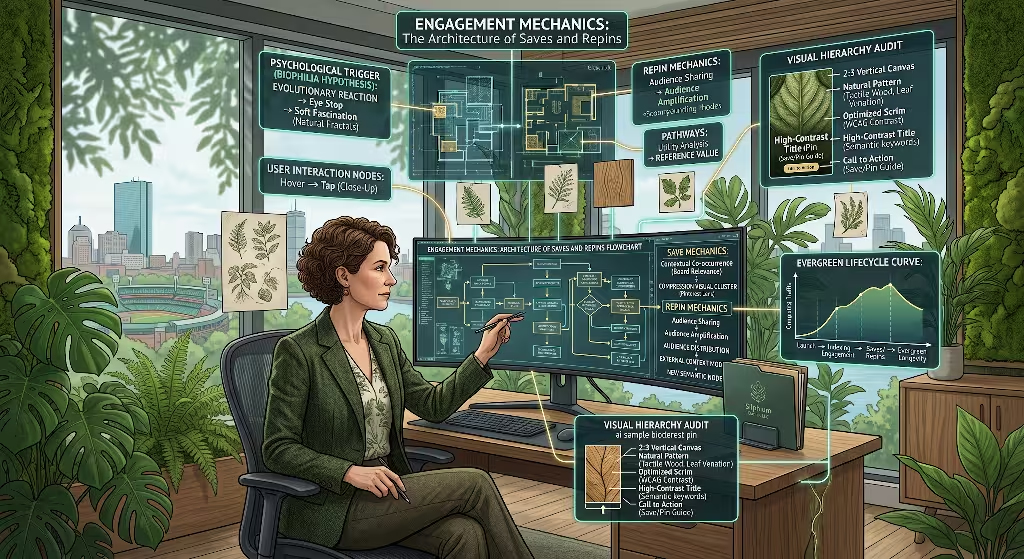
Saves represent the strongest signal on Pinterest. When a user saves your pin to a private or public board, they tell the algorithm that your content has long-term reference value. The best format for generating saves is the instructional pin or mini-infographic.
Break down complex natural design projects into simple, visual steps:
- A visual guide comparing different soil mixtures for indoor tropical plants.
- A vertical graphic showing where to place plants, desk lamps, and monitors to reduce screen glare.
- A visual palette card showing how to match sage wall paint with natural oak furniture and linen drapes.
When users encounter helpful reference guides, they save them so they can return to them during weekend projects. Creating educational resources ensures your biophilic pinterest pin collects saves that fuel its ranking for months.
+----------------------------------------+
|  [ Panel 1: Top Shelf Setup ]          |
|  Trailing Pothos for indirect light    |
|----------------------------------------|
|  [ Panel 2: Desk Level Setup ]         |
|  Snake Plant for low air flow zones    |
|----------------------------------------|
|  [ Panel 3: Floor Corner Setup ]       |
|  Cast Iron Plant for low-light corners |
|----------------------------------------|
|  [ Actionable Summary Footer ]         |
|  "Save this guide for your home setup" |
+----------------------------------------+
Purposeful Calls to Action
Do not assume viewers know what to do next. While your main goal might be driving traffic to a website, asking users to “Click Here” can sometimes feel pushy on a relaxed discovery platform. Instead, frame your calls to action around collecting, planning, and learning.
Use subtle, helpful prompts:
- “Save this guide to your natural home board for weekend inspiration.”
- “Tap through to view our complete list of non-toxic indoor plants.”
- “Explore our full botanical design guide to build your own sanctuary.”
These gentle prompts match the user’s planning mindset. Guiding your readers with clear steps helps your biophilic pinterest pin turn casual viewers into dedicated site visitors.
Analytics and Iterative Measurement
Key Performance Indicators for Visual Discovery
To improve your results, you must evaluate the right metrics. Vanity metrics like total impressions can be misleading. A pin can earn thousands of impressions simply because it briefly appeared on screen while someone scrolled quickly past it.
Focus your attention on meaningful engagement signals:
| Metric | What It Measures | Why It Matters |
| Pin Clicks (Close-Ups) | A user tapped your pin to view it in detail. | Confirms your image stopped the scroll and sparked interest. |
| Saves (Repins) | A user saved your pin to one of their boards. | Signals high practical value and extends your content’s reach. |
| Outbound Clicks | A user tapped the destination link to visit your site. | Confirms your headline and promise drove real traffic. |
| Outbound Click Rate | Outbound clicks divided by total impressions. | Measures how well your design turns casual views into site visits. |
Review these numbers every two to four weeks. If a pin earns high impressions but low clicks, your headline may need to be clearer. If it earns high close-ups but few outbound visits, your text overlay may not give readers a compelling reason to visit your website. Studying these metrics helps you refine every future biophilic pinterest pin you launch.
A/B Split Testing: Isolating Design Variables
Graphic design should never rely on guesswork. Professional creators test their ideas systematically to learn what works best with their audience. You can run simple tests on Pinterest without spending money on ads.
Create two distinct images that point to the exact same article URL. Keep the title, description, and link identical, but change one visual element:
[Test A: Broad Room Prospect]             [Test B: Close-up Tactile Texture]
+-------------------------------+         +-------------------------------+
| Wide shot of an open,         |         | Close-up of lush fern leaves  |
| sunlit living room with oak   |   vs.   | sitting on a textured, rough  |
| furniture and hanging plants  |         | wooden desk surface           |
+-------------------------------+         +-------------------------------+
       │                                         │
       └──────────────[ Same Destination URL ]───┘
Track both pins over thirty days. If Test A earns more saves while Test B drives more outbound traffic, you gain valuable insight into how your audience behaves. You learn whether your community prefers wide room layouts or close-up plant details. Testing your images turns your biophilic pinterest pin workflow into a reliable system.
The Lifecycle of an Evergreen Pin
The Extended Timeline of Visual Discovery
On chronological social media apps, content performance resembles a steep spike followed by an immediate drop. A post reaches its peak within two hours and disappears by the next morning. Pinterest works on an entirely different timeline.
Typical Social Media Post Reach Over Time:
Impact
  |   /\
  |  /  \
  | /    \__________________
  +-------------------------> Days
  Day 1  Day 2   Day 3

Pinterest Pin Reach Over Time (The Compound Curve):
Impact
  |             . - - ~ ~ ~
  |         . '
  |     . '
  |  . '
  +-------------------------> Months
  Month 1  Month 3   Month 6   Month 12+
When you publish a new pin, it undergoes an initial review period. The computer vision engine scans the image, extracts the text, and displays it to a test group of users. If those users interact with it, the pin gets indexed for relevant search terms. Over the next three to six months, more people discover, save, and repin it. Each repin shares your image to new boards, introducing it to fresh audiences. An optimized biophilic pinterest pin can generate steady referral visits to your website for two years or more.
Ten-Point Pre-Publication Quality Audit
Before publishing your next pin, review this quick quality checklist. Ensuring every step is complete will help your pin achieve the best possible reach and performance:
- Aspect Ratio Check: Is the graphic a vertical 2:3 canvas, preferably 1000 by 1500 pixels?
- Subject Focus: Does the photo clearly show real living elements, natural textures, or daylighting?
- Palette Harmony: Are the colors grounded in natural earth, wood, and plant tones rather than jarring neons?
- Scrim Layer: Does your text sit on a clean, high-contrast backing so it reads easily on mobile screens?
- Font Balance: Did you pair an organic, sturdy serif header with a clean, readable sans-serif subtitle?
- Title Clarity: Does your title feature your primary search phrase in the first forty characters?
- Semantic Description: Did you write complete sentences describing the practical value of your post using related natural design terms?
- Board Selection: Are you pinning directly to a specific, themed board with an optimized description?
- Rich Pin Setup: Is your website configured with Open Graph code so your verified author details appear with the image?
- Landing Page Consistency: Does your destination webpage load quickly, match the pin’s color theme, and immediately answer the promise made in your pin headline?
Applying these steps allows you to build an effective visual marketing strategy. By respecting human biology and understanding how search algorithms process images, you can create a biophilic pinterest pin that stands out, earns saves, and brings steady visitors to your website.