Table of Contents
Executive Hook and the High-Stakes Digital Front Door
When a person considers giving a gift of fifty thousand dollars, a hundred thousand dollars, or even a million dollars, they do not act on impulse. They do not click a quick button on a noisy screen. Instead, they look for signs of lasting stability, careful financial management, and deep competence. Major donors want to know that an organization will guard their family legacy for generations to come.
For conservation groups, this evaluation almost always starts on a screen. Long before a donor meets an executive director or walks across a newly protected meadow, that donor explores the website.
The digital front door is where major gift conversions for land trusts either begin to take root or quietly wither away. If a website looks outdated, cluttered, or cold, high-capacity supporters move on without saying a word. They simply assume the organization lacks the institutional maturity to manage complex conservation easements or multi-million dollar capital campaigns.
Securing major gift conversions for land trusts requires an environment that reflects the beauty, permanence, and calm of the natural world. By understanding how the human brain responds to visual cues, conservation teams and native plant partners can build websites that inspire lasting confidence.
The Problem of the Sterile Canvas
Most non-profit organizations build their websites using generic, corporate templates. These off-the-shelf layouts were originally designed to sell software, household goods, or insurance policies. They feature sharp rectangular boxes, cold white backgrounds, harsh black borders, and stock photographs of random people shaking hands.
For a land trust or a native plant nursery, this kind of sterile canvas creates a silent barrier to genuine connection. When a website looks like a commercial bank or a mass-market retail store, it creates cognitive dissonance for people who love the natural world.
Supporters who care about open space, wild rivers, and native habitats expect to feel connected to the earth. When they arrive on a stark, clinical web page, their intuition tells them that something is wrong. This friction hurts major gift conversions for land trusts because wealthy donors rely heavily on subconscious feelings of authenticity. If a land conservancy presents itself through an artificial, cookie-cutter website, donors wonder if its field stewardship is just as careless.
Sterile templates fail to communicate the enduring care needed to preserve ancient forests or restore native grasslands. To achieve consistent major gift conversions for land trusts, conservation organizations must abandon generic corporate layouts and choose a digital design language that mirrors the living land.
The Stakes of the First 50 Milliseconds
Human biology operates on evolutionary timelines, not technological ones. When a visitor lands on a website, their subconscious brain evaluates the screen in less than fifty milliseconds. That is a tiny fraction of a single heartbeat. In that instant, visual processing happens long before the conscious mind can read a headline, evaluate a mission statement, or review an annual financial report. This split-second reaction is rooted in survival instincts. The brain quickly decides whether a visual space is safe, balanced, and orderly, or chaotic, deceptive, and stressful.
If a digital environment feels stressful or artificial, the nervous system enters a state of mild alert. For high-capacity philanthropists, this instant visual reaction dictates whether they view a non-profit as a fleeting, temporary effort or an enduring institution. Strong major gift conversions for land trusts depend directly on winning this fifty-millisecond window.
When your web design uses harmonious visual patterns, natural colors, and clear spatial balance, the visitor feels immediate comfort. Their subconscious mind associates that visual peace with institutional permanence and trustworthy leadership. Without this immediate aesthetic connection, an organization will struggle to achieve major gift conversions for land trusts, regardless of how strong its printed brochures or grant proposals might be.
The Advantage of Using Biophilic Web Architecture
Biophilia is the innate, evolutionary human tendency to seek connections with nature and other living things. Pioneered by biologists and psychologists, biophilic theory shows that humans thrive physically and mentally when surrounded by natural patterns, living greenery, natural sunlight, and organic textures. Biophilic design has reshaped modern architecture, hospital construction, and school design by bringing nature indoors to reduce stress, speed up healing, and sharpen human focus.
The biophilic web architecture thesis applies these proven architectural principles directly to digital user experience and website development. By aligning screen design with human evolutionary biology, we can transform an ordinary digital page into an authentic place of refuge.
When a website incorporates natural spatial relationships, organic curves, and soothing earth tones, it directly lowers digital fatigue. This biological alignment creates a powerful sense of psychological safety. As a result, biophilic web architecture dramatically accelerates major gift conversions for land trusts. It bridges the gap between digital code and biological human nature, turning casual site visitors into committed, long-term conservation benefactors.
The Neurobiology of Trust and Environmental Psychology
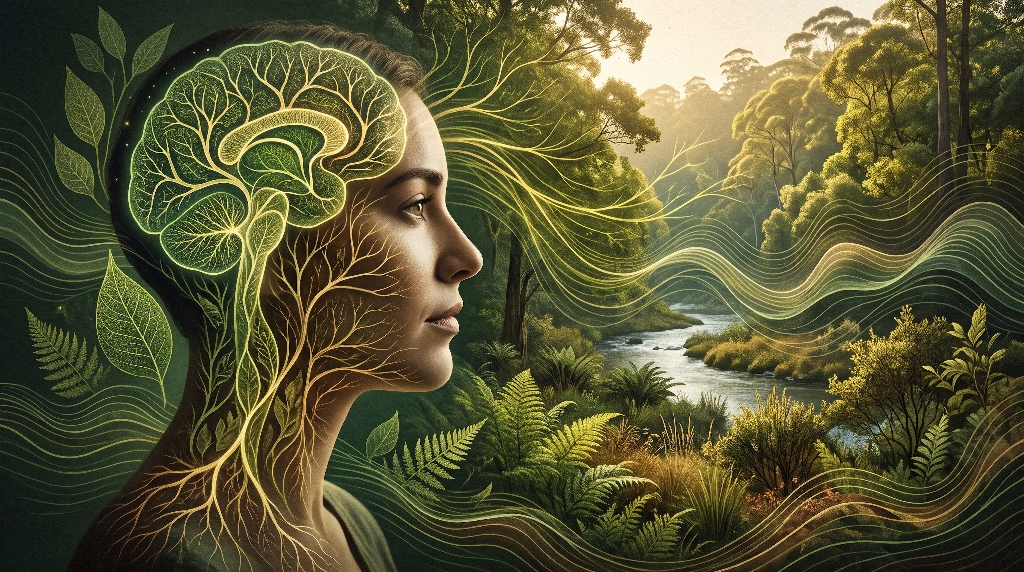
Trust is not merely an intellectual agreement; it is a physiological state. When a donor feels anxious, guarded, or cognitively overwhelmed, their brain cannot easily step into a generous, forward-looking mindset. Environmental psychology reveals that human beings assess trust through their physical surroundings. If an environment feels healthy and nourishing, people relax their defenses and think about the future. By bringing the lessons of neurobiology and environmental psychology into digital design, conservation groups can craft websites that invite deep, meaningful engagement.
Digital platforms that ignore these biological realities end up wearing down their visitors. Crowded sidebars, flashing banners, and aggressive pop-up forms trigger small bursts of mental stress. This cognitive friction discourages serious major gift conversions for land trusts. When we build digital spaces that respect human biology, we create an online sanctuary where complex conservation projects can be understood and supported.
Attention Restoration Theory in Digital Environments
In the late twentieth century, psychologists Rachel and Stephen Kaplan developed Attention Restoration Theory. Their research proved that modern life forces humans to use directed attention, which requires deliberate mental effort to ignore distractions and focus on tasks. Over hours of work, directed attention causes mental fatigue, irritability, and poor decision-making. The Kaplans discovered that spending time in natural settings restores mental energy through soft fascination. Soft fascination occurs when a person observes clouds drifting, leaves rustling in the wind, or sunlight filtering through a canopy. These gentle, natural movements hold attention effortlessly, giving the brain time to rest and recharge.
+---------------------------------------------------------+
|                DIRECTED ATTENTION FATIGUE               |
|  (Cluttered sidebars, harsh popups, high screen glare)  |
+---------------------------------------------------------+
                            │
                            ▼
+---------------------------------------------------------+
|                    SOFT FASCINATION                     |
|    (Calm natural spacing, botanical rhythm, balance)    |
+---------------------------------------------------------+
                            │
                            ▼
+---------------------------------------------------------+
|                  COGNITIVE RESTORATION                  |
|    (Lower cortisol, emotional openness, deep focus)     |
+---------------------------------------------------------+
                            │
                            ▼
+---------------------------------------------------------+
|        MAJOR GIFT CONVERSIONS FOR LAND TRUSTS           |
|      (High-trust investment in conservation future)     |
+---------------------------------------------------------+
When web designers apply Attention Restoration Theory to conservation platforms, they replace screen clutter with generous whitespace, gentle pacing, and organic visual rhythms. Instead of bombarding donors with competing calls to action, the website invites the user into a calm, focused reading experience. This deliberate digital restoration keeps high-capacity supporters on the page longer. Because their mental fatigue is lowered, donors can comfortably absorb detailed conservation goals and financial plans. This thoughtful, restorative atmosphere is essential for driving major gift conversions for land trusts.
Fractal Geometry and Visual Comfort
Fractals are repeating, self-similar geometric patterns found everywhere in the natural world. You can see them in the branching limbs of an oak tree, the veining of a milkweed leaf, the structure of a river delta, and the jagged outline of mountain ridges. Decades of research in visual physics and neuroscience show that the human eye and brain are hardwired to process a specific range of fractal patterns with minimal effort. Scientists refer to this ease of processing as visual fluency. When people look at natural fractals with a statistical dimension near 1.3 to 1.5, their brain waves show increased alpha activity, which signals deep relaxation and alert calm.
Most web interfaces rely strictly on rigid grids and sharp, unnatural rectangles that lack any fractal balance. This forces the visual cortex to work harder, generating subtle visual fatigue. By introducing natural fractal geometry into page layouts, section breaks, and background illustrations, a website taps directly into innate human visual fluency. The visual field becomes immediately soothing. Visitors feel an unforced sense of comfort that makes them want to explore further. Using fractal geometry to create visual comfort directly supports major gift conversions for land trusts. It removes the subconscious visual friction that prevents high-net-worth individuals from staying engaged with an organization long enough to make transformational gifts.
Color Psychology and Biomorphic Form
Color choices carry powerful biological and psychological associations. Many commercial websites rely on high-saturation synthetic colors, like electric blues and neon oranges, to shock users into clicking buttons. While aggressive colors might trigger quick impulses for cheap retail products, they backfire completely when you are asking someone to donate a parcel of family land or contribute to an endowment fund. High-capacity donors view synthetic, screaming colors as cheap and manipulative.
Biophilic web design uses organic color palettes drawn directly from local ecosystems. Rich forest greens, warm bark browns, soft stone grays, and the muted golds of late-season prairie grasses communicate quiet confidence and deep permanence. When paired with biomorphic forms, such as gently curved borders, flowing divider lines, and organic card shapes, the digital page begins to feel like a natural extension of the landscape itself. These harmonious forms signal dignity, maturity, and safety. A visual environment built on biomorphic beauty provides the exact emotional foundation required for successful major gift conversions for land trusts.
Addressing the Native Plant Nursery Dilemma: From Transactional Vendor to Conservation Partner
The broader conservation movement does not operate in isolation. Land trusts protect the acreage, but the actual ecological restoration of that land depends heavily on commercial native plant nurseries. These specialized growers produce the genetically appropriate ecotypes of native grasses, wildflowers, shrubs, and canopy trees needed to heal damaged watersheds and restore degraded soils. Yet, despite their vital role, native plant nurseries face intense business challenges that threaten their long-term survival.
Many native nurseries are caught in exhausting cycles of low-margin wholesale orders and seasonal retail rushes. They are frequently treated as simple roadside dirt vendors rather than specialized botanical institutions. By upgrading their digital architecture to professional biophilic standards, native plant nurseries can escape this trap and build profitable, lasting partnerships with regional land conservancies.
The Retail-Commodity Trap
A primary frustration for native plant nursery owners is the retail-commodity trap. Most commercial nurseries run on thin financial margins, battling unpredictable weather, volatile fuel costs, and labor shortages. When they build an online store using standard retail e-commerce software, they accidentally reinforce the idea that their plants are interchangeable commodities. Their websites look identical to mass-market garden centers that sell non-native, chemically treated ornamentals.
When a native nursery looks like an ordinary backyard plant shop, retail shoppers complain about prices. Customers do not understand why a slow-grown, deep-rooted native perennial costs more than a container plant pumped with synthetic fertilizers at a big-box store. The nursery owner gets trapped spending endless hours answering basic retail questions, packing small retail orders, and managing retail walk-ins during a brief spring rush.
This commodity perception hurts their ability to attract large institutional contracts. When land trusts look for partners to carry out large restoration easements, they bypass amateur-looking websites. Fixing this digital gap elevates the nursery brand, while helping conservancies demonstrate the professional supply chain needed for major gift conversions for land trusts.
The Credibility Gap with Institutional Donors
Major philanthropists who fund conservation land acquisitions do not write checks blindly. They frequently have backgrounds in business, law, or engineering, and they care deeply about operational excellence. When a land trust announces a multi-million dollar campaign to acquire and restore an upland prairie or river corridor, these donors look at the implementation plan. They want to know: Who is growing the seed? Where are the plants coming from? Are the restoration partners scientifically rigorous and capable of scaling?
+-------------------------------------------------------------+
|                THE RESTORATION WEAK LINK                    |
|    Land trust secures major easement, but partners with     |
|   nursery possessing outdated, unscientific web presence    |
+-------------------------------------------------------------+
                              │
                              ▼
+-------------------------------------------------------------+
|                   DONOR CREDIBILITY GAP                     |
|  Sophisticated benefactors question operational integrity,  |
|      ecotype provenance, and long-term project survival     |
+-------------------------------------------------------------+
                              │
                              ▼
+-------------------------------------------------------------+
|                  STALLED CONSERVATION GIFTS                 |
|       Hesitation directly suppresses long-term goals for    |
|             major gift conversions for land trusts          |
+-------------------------------------------------------------+
If the partner native plant nursery has a disorganized website with broken links, missing botanical names, and blurry photos, an immediate credibility gap opens up. The donor begins to doubt whether the restoration project will succeed. They worry that their money will be wasted on dying plantings or incorrect species. An unpolished nursery website acts as a weak link in the entire conservation story. To maintain the momentum required for major gift conversions for land trusts, every public touchpoint of the conservation team must reflect scientific authority and deep professional care.
The Collaborative Conservation Synergy
When a native plant nursery upgrades its digital presence with professional, biophilic architecture, it stops looking like a roadside plant stand and begins looking like an ecological laboratory. By presenting clear seed-provenance tracking, regional ecotype data, and deep taxonomic detail, the nursery establishes itself as an essential conservation partner. This transformation unlocks powerful collaborative synergies between nurseries and local land trusts.
Instead of fighting for tiny retail sales, the nursery can secure multi-year contract-growing agreements directly with regional land trusts, municipal parks departments, and conservation authorities. The land trust can proudly feature the nursery on its project landing pages, showing donors the exact nursery beds where their restoration plants are being cultivated. This transparent, institutional partnership provides tangible proof of competence. Showing a living, well-organized supply chain gives donors immense confidence, directly boosting major gift conversions for land trusts while securing steady, predictable revenue for native plant growers.
Structural Architecture: Implementing Biophilic UI/UX on Stewardship Platforms
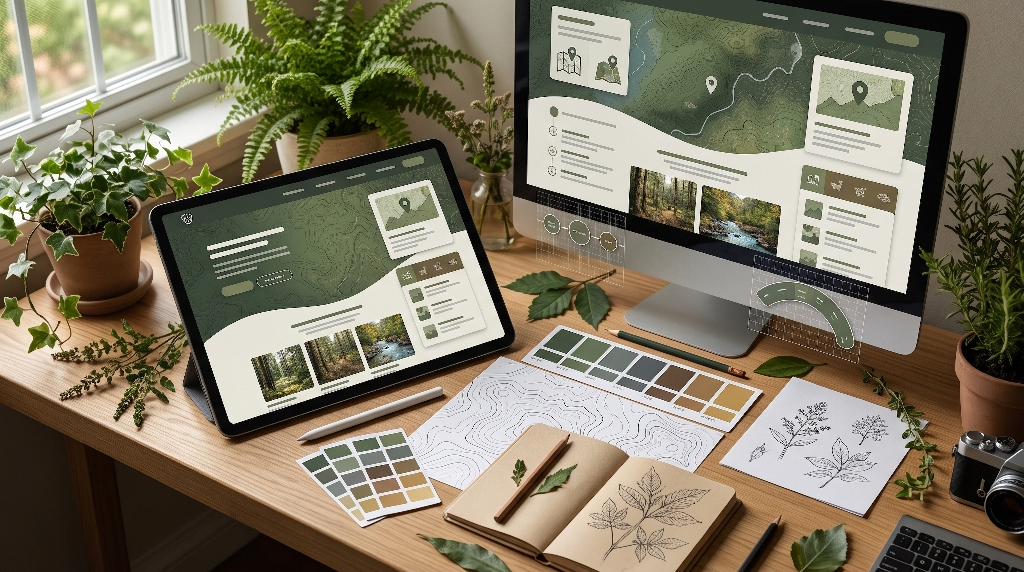
Translating biophilic principles into a functioning website requires more than adding a picture of a tree to the header. It demands a deliberate rethink of user interface (UI) and user experience (UX) architecture. Every layout choice, image selection, font pairing, and spatial transition must work together to create an intuitive, dignified, and calming experience.
For organizations that depend on high-value community support, digital craftsmanship is an indicator of institutional integrity. When a website feels well-constructed, stable, and responsive, users intuitively trust the people behind it. Below are the three core structural pillars for implementing biophilic design on modern conservation and nursery platforms.
Visual Connection with Nature
The most direct way to bring biophilic design to a screen is through an authentic visual connection with nature. Too many non-profit sites rely on generic stock photos that look artificial and disconnected from the local community. Donors can spot a staged stock photo instantly, and it immediately erodes trust.
Websites that successfully inspire major gift conversions for land trusts use custom, text-free botanical photography and sweeping landscape imagery that show real local acreage. Rather than using low-resolution snapshots, the imagery should highlight the genuine biodiversity of the region:
- Macro Botanical Portraits: Clear, detailed images of native species like butterfly weed (Asclepias tuberosa), showy goldenrod (Solidago speciosa), or New England aster (Symphyotrichum novae-angliae) showing complex floral structures and pollinator associations.
- Landscape Panorama: Expansive views of protected watersheds, ridgelines, and forest canopies that capture seasonal morning mist, golden afternoon light, and natural horizon lines.
- Restoration in Action: High-quality photographs of boots-on-the-ground work, from seed collection and seedling propagation to volunteer planting days and trail construction.
These visual elements should be woven into the layout with ample breathing room. By giving large photographs space to breathe, the design allows visitors to pause and absorb the visual richness of the land. This immersive connection to place sets the stage for major gift conversions for land trusts by reminding donors what is truly at stake.
Materiality and Visual Weight
The digital world often feels flat, weightless, and disposable. Websites come and go, text changes with a click, and screens can feel completely disconnected from physical reality. In contrast, land conservation is entirely about physical permanence: bedrock, living soil, ancient trees, clean water, and legal deeds that last forever. When a conservation website feels paper-thin and flimsy, it contradicts the very concept of permanent protection.
Biophilic UI/UX introduces a sense of digital materiality and visual weight through subtle, thoughtful styling:
- Earthy Texture and Depth: Soft background tones that suggest the texture of handmade rag paper, smooth river stone, or untreated linen, avoiding pure, blinding digital white (#FFFFFF).
- Thoughtful Typography: High-character serif typefaces for headers that evoke traditional botanical field guides, historical land charters, and literary heritage, paired with clean, readable sans-serif fonts for body copy.
- Damped Micro-Interactions: Gentle, natural transitions when hovering over links or scrolling through stories, mimicking the smooth motion of water currents or swaying prairie grasses rather than abrupt, snappy digital jumps.
+-------------------------------------------------------------+
|             THE THREE PILLARS OF BIOPHILIC UI/UX            |
+-----------------------------+-------------------------------+
| Natural Visual Connections  | Authentic, high-detail local  |
|                             | imagery; regional botany      |
+-----------------------------+-------------------------------+
| Digital Materiality         | Subtle textures, balanced     |
|                             | fonts, natural physics        |
+-----------------------------+-------------------------------+
| Prospect & Refuge Hierarchy | Safe reading spaces balanced  |
|                             | with broad project horizons   |
+-----------------------------+-------------------------------+
When a website has visual weight, visitors take its content more seriously. Major donors are making decisions that involve estate planning, tax implications, and multi-generational commitments. A platform that feels grounded and permanent gives these donors the confidence they need to complete major gift conversions for land trusts.
Prospect and Refuge in Spatial Hierarchy
In environmental psychology, the concept of prospect and refuge explains why humans feel most secure in spaces where they have an open, unimpeded view across their surroundings (prospect) while remaining sheltered and protected from behind (refuge). In traditional architecture, this looks like a comfortable armchair set beside a fireplace with a large bay window overlooking a sweeping valley. In digital design, we can create this exact same balance of open exploration and safe reflection through clear spatial hierarchy.
+-------------------------------------------------------------+
|                   PROSPECT (The Broad View)                 |
|   Expansive landscape views, interactive maps, trail systems|
+-------------------------------------------------------------+
                              │
                              ▼
+-------------------------------------------------------------+
|                   REFUGE (The Sheltered Nook)               |
|  Distraction-free reading, secure forms, endowment details  |
+-------------------------------------------------------------+
                              │
                              ▼
+-------------------------------------------------------------+
|            DEEP ENGAGEMENT & DONOR COMMITMENT               |
|      Leads directly to major gift conversions for land trusts|
+-------------------------------------------------------------+
The prospect elements of a conservation website are the broad, panoramic features: interactive maps of protected preserves, expansive project galleries, and forward-looking strategic plans. These give the donor an inspiring view of what the organization hopes to accomplish across the entire region. The refuge elements are quiet, distraction-free reading environments where the donor can review complex information without annoying sidebars, pop-up chat boxes, or jumping animations. When a donor wants to read about conservation easement tax benefits, charitable gift annuities, or native plant propagation contracts, they need a clean, calm space that feels safe and private. Balancing prospect and refuge reduces visual anxiety, making high-stakes major gift conversions for land trusts feel natural, secure, and unhurried.
The Major Gift Conversion Funnel: The Mechanics of Giving
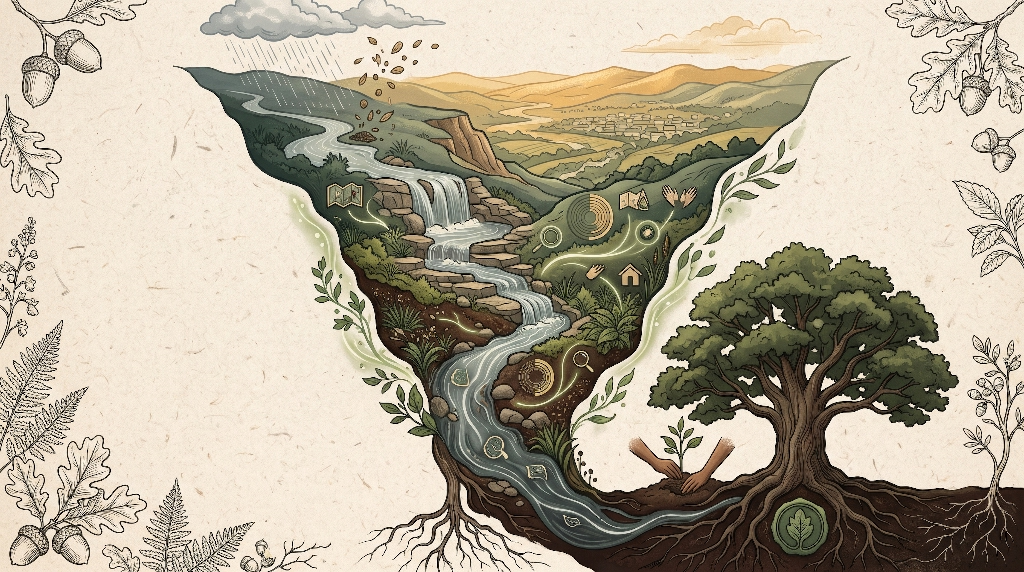
Securing a five-figure or six-figure contribution is completely different from collecting a ten-dollar monthly membership. Small donations are often driven by quick emotional appeals or urgent social media campaigns. In contrast, major gifts are carefully planned philanthropic investments. They often involve family discussions, consultations with accountants, estate planning attorneys, and board reviews.
Because the stakes are so high, the digital funnel for major gifts must be designed with extreme care. The goal of the website is rarely to collect a fifty-thousand-dollar credit card payment on the spot. Instead, its job is to validate the organization’s competence, answer critical technical questions, and open a direct, high-trust conversation between the donor and leadership. Understanding this distinction is the key to unlocking consistent major gift conversions for land trusts.
The Psychology of the Major Gift Pipeline
Major donors view their giving as an investment in a better future. When they review a land trust, they look for the same indicators of health they would seek in a commercial business venture: fiscal discipline, clear strategy, risk management, and long-term vision. They do not want to see their money swallowed by administrative chaos or wasted on poorly maintained land.
The digital journey of a major donor follows a distinct psychological path:
- Initial Validation: The donor visits the site to verify the organization’s reputation, leadership credentials, and community footprint.
- Deep Due Diligence: The donor reviews financial audits, Form 990 tax filings, land accreditation standards, and strategic preservation priorities.
- Operational Assessment: The donor investigates the organization’s capacity to maintain conserved properties, monitor easements, and partner with reputable suppliers like native plant nurseries.
- Personal Connection: The donor seeks a direct, confidential way to contact the executive director or development director to discuss legacy intentions.
If a website fails at any of these stages, the donor quietly walks away. Stale news sections, missing financial documents, or poorly structured pages create doubt. By designing an intuitive, transparent pipeline that anticipates these questions, a conservation group builds an unshakeable foundation for major gift conversions for land trusts.
Interactive Living Dashboards
Static, dry PDF files are where vital conservation data goes to be forgotten. While land trusts have historically uploaded eighty-page annual reports as downloadable documents, modern donors rarely have the time or patience to scroll through massive PDF files on mobile devices. Donors want to see active, living progress.
Replacing static documents with interactive living dashboards brings conservation work to life on screen. A modern biophilic dashboard can showcase:
- Conserved Acreage Counters: Dynamic, beautifully styled metrics showing total protected acres, newly established wildlife corridors, and linear miles of safeguarded riverbanks.
- Native Habitat Metrics: Real-time counters showing the number of native trees planted, acres of prairie reseeded, and documented returns of sensitive bird and insect species.
- Species Inventories: Searchable botanical guides created in partnership with regional native plant nurseries, detailing the exact species being restored across different public preserves.
- Preserve Access Maps: Clean, mobile-friendly trail maps showing parking areas, accessible boardwalks, and public preserve guidelines.
+-------------------------------------------------------------+
|             LIVING CONSERVATION DASHBOARD                   |
+-----------------------------+-------------------------------+
| Total Protected Acreage     | 14,250 Acres (Across 12 Parks)|
+-----------------------------+-------------------------------+
| Native Restorations         | 420 Acres Active Prairie      |
+-----------------------------+-------------------------------+
| Planted Ecotype Canopy      | 38,500 Native Hardwoods       |
+-----------------------------+-------------------------------+
| Nursery Propagation Source  | Regional Botanical Partners   |
+-----------------------------+-------------------------------+
Interactive dashboards make stewardship tangible. When a donor sees exactly how dollars turn into protected river corridors and thriving native plant communities, their sense of ownership deepens. This clear, data-driven transparency acts as a powerful catalyst for major gift conversions for land trusts.
Streamlining High-Capacity Donor Inquiries
One of the most common mistakes on non-profit websites is forcing all visitors through the same generic contact form. A dropdown menu asking the user to choose between “General Question” and “Website Feedback” feels impersonal and cold to someone considering a gift of family real estate. High-capacity donors expect discretion, respect, and direct access.
To maximize major gift conversions for land trusts, organizations need dedicated, dignified inquiry pathways for planned giving and major contributions:
- Direct Executive Access: Provide the full name, portrait, direct phone extension, and personal email address of the development director or executive director.
- White-Glove Inquiries: Create dedicated inquiry forms specifically tailored for planned giving, land donations, and corporate partnerships, asking thoughtful questions about the donor’s conservation goals.
- Private Scheduling Tools: Integrate simple, privacy-focused scheduling tools that allow a donor to book an introductory coffee, a phone call, or a private preserve tour with leadership in two clicks.
- Downloadable Legacy Guides: Offer beautifully formatted, clean digital guides covering bequest language, charitable remainder trusts, and easement stewardship endowments without forcing users through aggressive sales gates.
Removing digital friction from high-level conversations directly accelerates major gift conversions for land trusts. When the pathway from digital exploration to personal conversation is smooth, dignified, and welcoming, major donors feel valued from the very first click.
Case Analysis: Template Fatigue vs. Biophilic Stewardship Interface
To clearly understand the real-world impact of these design choices, let us examine two hypothetical conservation platforms operating in the same regional watershed. Both organizations have dedicated staff, passionate volunteers, and ambitious land-saving goals. However, their digital approaches could not be more different.
By comparing a standard, template-driven site with a custom, biophilic interface, we can see exactly how digital aesthetics and user experience directly influence donor behavior, community partnerships, and fundraising success.
Comparative Study of Stewardship Interfaces
Consider two regional conservancies working in adjacent counties:
Valley Land Conservancy (Site A): Valley Land Conservancy built its website five years ago using a popular, low-cost non-profit template. The header features a generic stock photograph of snow-capped mountains, even though the conservancy protects rolling eastern hardwood hills. The colors are bright corporate blue and stark white. Every page is crowded with dense paragraphs of text, broken up by dozens of bright red donation buttons. The site hosts its native plant sale through an awkward third-party online store that lists plants without photos or botanical descriptions. To find financial reports or planned giving information, donors must dig through a confusing maze of submenus to download heavy PDF files.
Ridge & River Land Trust (Site B): Ridge & River Land Trust invested in a custom biophilic web architecture crafted by specialists. The color palette is drawn directly from the local watershed, featuring deep river greens, slate grays, and warm oak tones. The header features crisp, high-resolution photography of their actual flagship preserve taken during peak morning light. Sections flow naturally, separated by gentle organic contours and generous white space.
+-------------------------------------------------------------+
|               VALLEY LAND CONSERVANCY (SITE A)              |
|  Generic stock photos, corporate grid, cluttered sidebars,  |
|  dense text, buried PDFs, and disconnected nursery store    |
|             Result: Suppressed Donor Confidence             |
+-------------------------------------------------------------+
                              vs.
+-------------------------------------------------------------+
|             RIDGE & RIVER LAND TRUST (SITE B)               |
|  Authentic local landscapes, biophilic rhythm, restful space|
|  integrated native plant taxonomy, transparent living data  |
|             Result: Thriving Philanthropic Engine           |
+-------------------------------------------------------------+
Ridge & River Land Trust also partnered with a premier local native plant nursery, building a seamless digital botanical catalog into their website. Visitors can explore native trees and pollinators, see how those species restore local watersheds, and order plants directly for home or commercial projects. Planned giving has its own quiet, elegant section with direct contact information for the leadership team.
The difference in visitor perception is immediate. While Site A looks like a struggling, disorganized non-profit asking for handouts, Site B looks like an enduring institution shaping the future of the region. This elevated presence creates a dramatic advantage in securing major gift conversions for land trusts.
Analyzing Critical Conversion Metrics
When we look beneath the surface at user behavior metrics, the true business value of biophilic web architecture becomes undeniable. Well-designed digital spaces fundamentally alter how people interact with an organization online.
| Digital Metric | Valley Land Conservancy (Site A) | Ridge & River Land Trust (Site B) | Impact on Major Giving |
| Average Time on Page (Planned Giving) | 48 Seconds | 4 Minutes, 12 Seconds | Donors thoroughly read complex legal and tax details. |
| Bounce Rate on Preservation Pages | 68% | 27% | Visitors stay engaged rather than leaving immediately. |
| Easement Inquiries per Year | 2 Inquiries | 14 Inquiries | Far more landowners initiate conservation discussions. |
| Nursery Commercial Inquiries | Stagnant Retail Only | 8 Major Restoration Contracts | Nursery secures steady, high-margin growing agreements. |
| Major Gifts ($25k+) Initiated Online | 1 Gift | 9 Gifts | Massive lift in major gift conversions for land trusts. |
As these comparative metrics illustrate, biophilic design is not an optional aesthetic luxury. It is a high-performing digital engine that directly drives major gift conversions for land trusts. By creating an online environment that reduces cognitive fatigue and demonstrates operational excellence, Ridge & River Land Trust built a self-sustaining community of high-capacity benefactors and thriving agricultural partners.
Strategic Implementation and Call to Action
Transforming an organization’s digital presence requires deliberate planning, clear priorities, and experienced guidance. For both land trusts and native plant nurseries, continuing to rely on outdated, fragmented websites carries a steep financial and reputational cost. High-capacity donors and large commercial buyers have plenty of worthy causes competing for their attention. If your digital presence fails to inspire confidence within seconds, those valuable resources flow to other regional institutions.
Modernizing your platform is an investment in your organization’s future capacity. By following a structured roadmap, conservation leaders can systematically eliminate digital friction, elevate regional botanical partners, and build a lasting foundation for philanthropic growth.
Auditing Your Current Digital Footprint
Before undertaking a digital redesign, conservation directors and nursery managers should conduct a thorough, honest audit of their existing website. Gathering your board, development team, and key staff to walk through the user journey will immediately uncover hidden roadblocks to donor trust.
Use this practical diagnostic checklist during your internal review:
- [ ] First-Impression Authenticity: Does your homepage feature real, high-resolution photography of your local landscapes and restoration projects, or does it rely on generic stock images?
- [ ] Visual Calm and Whitespace: Is your content easy to read and uncluttered, or is the screen crowded with competing pop-ups, colored badges, and flashing forms?
- [ ] Color Harmony: Does your website palette reflect the organic, calming tones of your local ecosystem, or does it look like a synthetic commercial product?
- [ ] Scientific Integrity: If you feature native plants or restoration work, are species accurately labeled with accepted botanical Latin names and regional ecotype data?
- [ ] Dignified Major Donor Pathways: Can a high-capacity donor easily find contact information for your executive director and access planned giving materials within two clicks?
- [ ] Mobile Usability: Does the website load quickly and display gracefully on smartphones and tablets, allowing donors to read reports easily in the field?
+-------------------------------------------------------------+
|                FOUR-STAGE MODERNIZATION ROADMAP             |
+-------------------------------------------------------------+
| Stage 1: Digital & Botanical Audit                          |
| Review visual assets, taxonomy, and donor pathways          |
+-------------------------------------------------------------+
                              │
                              ▼
+-------------------------------------------------------------+
| Stage 2: Biophilic UI/UX Architecture                       |
| Establish organic palettes, typography, and visual refuge   |
+-------------------------------------------------------------+
                              │
                              ▼
+-------------------------------------------------------------+
| Stage 3: Interactive Restoration Integration                |
| Build living dashboards and native nursery databases        |
+-------------------------------------------------------------+
                              │
                              ▼
+-------------------------------------------------------------+
| Stage 4: High-Trust Donor Funnels                           |
| Launch streamlined major gift and planned giving access     |
+-------------------------------------------------------------+
If your current site falls short in several of these areas, you are quietly leaking potential support. Addressing these gaps is the single most effective way to remove barriers and unlock consistent major gift conversions for land trusts.
The Real Cost of Digital Complacency
It is easy for non-profit boards and small business owners to delay website upgrades. When budgets are tight, leaders often say, “Our website is good enough,” or “People know us for our field work, not our web design.” This mindset represents a dangerous misunderstanding of modern donor behavior.
Digital complacency carries immense hidden costs:
- Lost Estate Gifts: The most tragic loss is the planned gift that never happens. Wealthy landowners research regional charities privately before meeting with estate planners. If your website looks neglected, they direct their family land or testamentary bequests to universities or healthcare systems instead.
- Eroded Nursery Margins: Native plant nurseries that neglect their digital presence remain trapped selling small retail plants for modest profits. They miss out on multi-year contract-growing opportunities with state agencies and regional land trusts.
- Weakened Community Standing: As younger generations of family landowners inherit acreage, their expectations for digital communication are high. An obsolete website signals an organization that is falling behind the times.
Waiting to fix your digital foundation only makes future fundraising harder. Every season that passes without a professional, biophilic platform represents missed opportunities for major gift conversions for land trusts and lost revenue for local native growers.
The Silphium Design Advantage
Building a digital platform that seamlessly combines environmental psychology, rigorous botanical taxonomy, and conversion-focused web architecture requires a very specialized set of skills. Standard commercial web agencies do not understand the legal complexities of conservation easements, nor do they know the biological difference between a regional native ecotype and an invasive cultivar.
Silphium Design was founded specifically to solve this challenge. As a specialized web design firm, Silphium Design bridges the gap between deep botanical literacy, biophilic UI/UX architecture, and donor conversion pipelines. By uniting clean computer science, environmental psychology, and privacy-first analytics, the team creates digital ecosystems that honor the living earth.
Whether you lead an established land trust seeking to accelerate major gift conversions for land trusts, or you run a commercial native plant nursery ready to break out of the retail commodity trap, your work deserves an online home built with the same care you bring to the soil. Visit Silphium Design
today to schedule a comprehensive digital audit, explore custom biophilic design frameworks, and build a lasting digital foundation that turns community trust into transformational conservation investments.