
Table of Contents
Native plants are not standard consumer goods. When a customer visits an online store to buy shoes, shirts, or packaged pantry snacks, the user interface follows a predictable pattern. You look at a photograph, select a size or color, add the item to a cart, and enter a shipping address. The transaction is simple, static, and disconnected from the natural world.
A digital native seed bank operates under a completely different set of ecological and computational laws. In this specialized field, every product is a living organism with specific genetic traits, regional adaptations, and environmental needs. When a grower purchases a packet of seeds, they are not merely buying a static object. They are purchasing a biological timeline that depends on soil temperature, moisture levels, geographic boundaries, and precise stratification schedules.
When an online seed bank treats native seeds like ordinary retail products, the customer experience quickly falls apart. Gardeners end up purchasing species that cannot survive in their local soil. Restoration managers struggle to calculate the actual seed counts needed for multi-acre habitat projects. E-commerce bounce rates climb because the website layout feels sterile, confusing, and divorced from the living landscapes it represents.
Building an effective online seed bank requires a blend of biophilic design, intuitive spatial filtering, robust database architecture, and precise botanical data. Biophilic web design brings natural patterns, organic proportions, and calming visual structures into digital spaces. When paired with smart search tools and clear agricultural data, this approach transforms a confusing technical catalog into an educational, high-converting digital storefront.
By applying modern user experience best practices, an online seed bank can bridge the gap between complex ecological science and everyday online shopping. The following ten criteria lay out the blueprint for designing, building, and optimizing a world-class digital seed bank that educates users, scales biodiversity, and drives sustainable commercial growth.
+-------------------------------------------------------------------------+
|                  NATIVE SEED BANK E-COMMERCE UX MATRIX                  |
+-------------------------------------------------------------------------+
|  ECOREGIONAL TAXONOMY   | Dual-layer spatial search (EPA Levels III/IV) |
|  BIOPHILIC INTERFACE    | Fibonacci spacing, organic radii, soft tones  |
|  BOTANICAL SEARCH       | Typo-tolerant dual Latin/Common indexing      |
|  PROPAGATION PDP        | Stratification codes, root charts, bloom maps |
|  PLS CALCULATORS        | Dynamic Pure Live Seed and area converters    |
|  SEASONAL LOGISTICS     | Local frost alerts and dynamic sowing windows |
|  DUAL CHECKOUT FLOWS    | Split tracks for retail packets vs bulk B2B   |
|  LEGAL COMPLIANCE       | Real-time quarantine and agricultural checks  |
|  STRUCTURED DATA        | BioChemEntity and Product schema integration  |
|  POST-PURCHASE SUPPORT  | Dynamic stratification reminders and field UI |
+-------------------------------------------------------------------------+
Ecoregional Geo-Filtering and Spatial Taxonomy
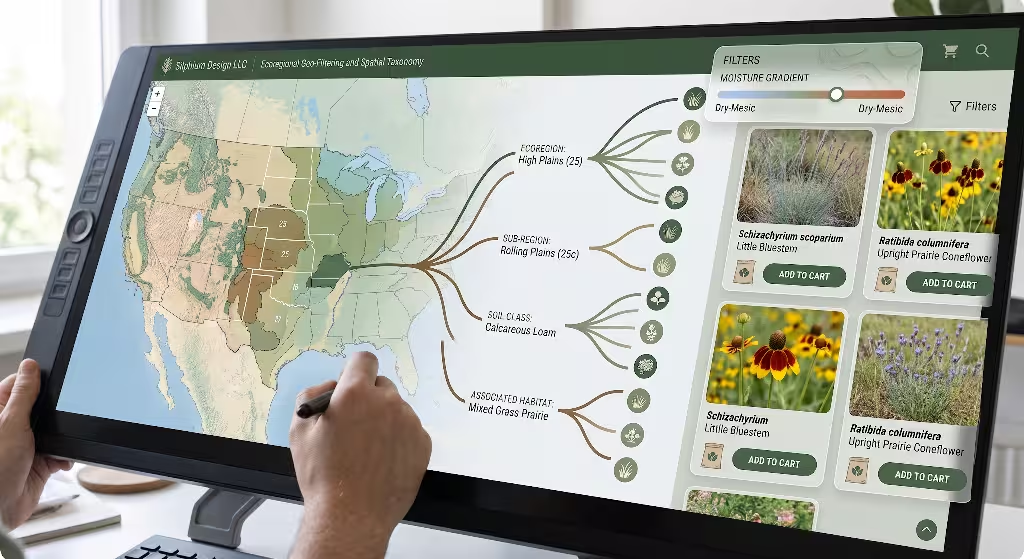
Standard e-commerce platforms organize products by simple consumer categories like clothing size, brand name, or price range. For a native seed bank, these conventional categories fail to provide the critical information growers need. A plant species does not care about state lines or postal delivery zones. Instead, native plants evolve in response to specific ecological regions defined by geology, rainfall, temperature swings, and soil composition.
When a customer lands on a native seed bank, the primary question they need answered is whether a specific seed will thrive in their exact soil and climate. If a customer in the high desert of New Mexico accidentally buys a swamp milkweed adapted to the humid Atlantic coast, the planting will fail. This failure hurts the customer, damages the reputation of the seed bank, and wastes valuable seed stock.
To solve this problem, a modern seed bank must implement an ecoregional spatial taxonomy. The foundation of this system relies on the Level III and Level IV Ecoregions established by the Environmental Protection Agency (EPA), paired with the Plant Hardiness Zones mapped by the United States Department of Agriculture (USDA).
[ User Lands on Storefront ]
             |
             v
[ Automatic Browser Geolocation / IP Lookup ]
             |
             +---> Reads Coordinates & Assigns EPA Ecoregion Code
             |
             v
[ Ecoregional Filter Applied to Catalog ]
             |
             v
[ Faceted Soil Moisture & Sunlight Overlay ]
             |
             v
[ Fully Compatible Seed List Displayed ]
When a visitor arrives at the seed bank, the website can request permission to detect their broad geographic location through their browser or IP address. The interface then automatically tags the catalog with seeds native to their specific ecoregion. Because automated location tools are not always perfect, the seed bank must always display a clear, friendly location selector at the top of the page. This selector allows visitors to enter a zip code, select their state, or manually choose their specific ecoregion from an interactive map.
Beyond regional geography, an effective seed bank catalog requires multi-attribute faceted filtering based on micro-site conditions:
- Soil Moisture Gradient: Filters must categorize plants across distinct hydrological steps, including xeric (very dry), mesic-xeric (moderately dry), mesic (average moisture), wet-mesic (moist), and hydric (standing water or wetland).
- Sunlight Exposure: Options must clearly define full sun (greater than six hours of direct light), partial shade (three to six hours of light), and full shade (less than three hours of direct light).
- Soil Texture Matrix: Filters should allow users to sort seeds by sand, sandy loam, rich loam, heavy clay, and limestone or calcareous soils.
- Plant Height and Life Cycle: Facets should clearly separate annuals, biennials, and long-lived perennials, along with mature plant heights.
When an online seed bank presents these ecological facets in clean, accessible menus, shoppers no longer feel overwhelmed by thousands of botanical options. Instead, they can quickly narrow down the seed bank catalog to the exact ten or twelve species guaranteed to thrive in their specific backyard, roadside ditch, or corporate rain garden.
Biophilic UI Framework and Cognitive Ergonomics
Human beings have an innate connection to the natural world, a concept known as biophilia. When people spend time in natural settings, their stress levels drop, their focus sharpens, and their cognitive fatigue decreases. Biophilic design brings these calming visual and spatial elements into the built environment. Applying these same principles to web design transforms an online seed bank from a cold, mechanical database into an inviting, restorative digital environment.
Many e-commerce websites overwhelm the human visual system. They use harsh fluorescent colors, aggressive popup banners, crowded text, and sharp right angles. For a customer researching complex botanical requirements, this high-friction design causes eye strain and cognitive overload. A biophilic seed bank uses visual cues inspired by natural habitats to create a smooth, comfortable shopping experience.
+-------------------------------------------------------------+
|               FIBONACCI SPACING MATRIX (UI)                 |
+-------------------------------------------------------------+
|  Base Margin:        8px                                    |
|  Card Padding:       13px                                   |
|  Element Gap:        21px                                   |
|  Section Spacing:    34px                                   |
|  Container Margin:   55px                                   |
+-------------------------------------------------------------+
To create a biophilic layout, web designers start with organic geometry. In nature, sharp ninety-degree corners rarely exist. Instead, natural forms feature soft curves, rounded river stones, and smooth cellular outlines. A well-designed seed bank uses organic corner radii on product cards, buttons, and image containers, typically between 12 and 20 pixels.
Layout spacing should follow the Fibonacci sequence (such as 8, 13, 21, 34, and 55 pixels). This mathematical ratio mirrors the natural growth spirals found in sunflower seed heads, pinecones, and snail shells. When an online seed bank arranges its visual elements using these natural proportions, the page feels visually balanced and effortless to scan.
The color palette of a native seed bank should draw directly from natural soil, stone, and plant layers:
- Background Surfaces: Avoid pure, blinding white (
#FFFFFF). Instead, use warm, mineral-inspired neutrals like unbleached linen, soft oat, and weathered limestone (#F9F8F6or#F4F1EA). - Structural Text and Elements: Avoid harsh pure black (
#000000). Use deep forest canopy tones, rich peat moss, or dark slate (#2D3A2For#1E2420). - Call-to-Action Accents: Buttons and interactive highlights should use vibrant natural colors found in native blooms and soils, such as goldenrod amber (
#D49B24), terracotta clay (#B85C38), or ripe elderberry (#5E3A5A).
All color combinations on the seed bank website must meet accessibility standards, providing a contrast ratio of at least 4.5 to 1 against their backgrounds. Micro-interactions should feel organic and calm. When a shopper hovers over a seed packet, the card can elevate gently with a soft, diffused shadow that mimics natural daylight. Page loaders can feature a minimal sprouting leaf animation rather than an anxiety-inducing spinning circle. This mindful visual rhythm builds deep trust with the user and reinforces the ecological mission of the seed bank.
Dual-Layer Botanical Nomenclature and Fuzzy Search
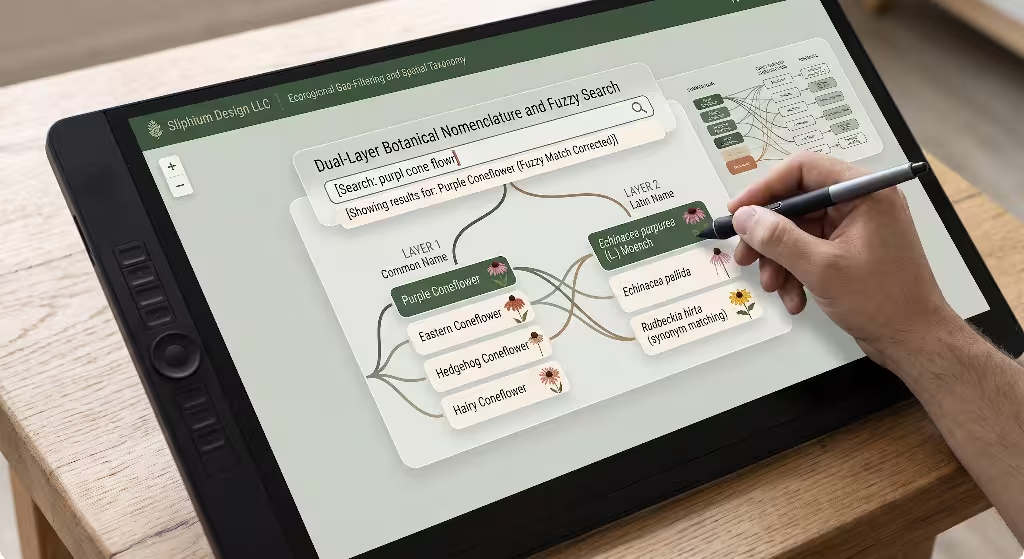
One of the greatest user experience hurdles on a native seed bank website is plant naming. Plant taxonomy is divided into two distinct languages: common colloquial names and scientific Latin binomials.
A beginner gardener looking to support bees might search an online seed bank for “purple coneflower” or “black-eyed Susan.” A professional landscape architect or restoration ecologist working on a government contract will never search by those terms. They will search exclusively for Echinacea purpurea or Rudbeckia hirta. To make matters more complicated, common names vary wildly across regions. A plant known as “butterfly weed” in one county might be called “chigger flower” or “orange milkweed” just two hundred miles away.
If a customer types a common name into a basic search bar and gets zero results because the database only stores Latin names, the seed bank loses a sale. Similarly, if a scientist types Asclepias tuberosa and the search engine fails to recognize the genus, the seed bank appears unprofessional.
User Query: "purpl coneflower" (Typo detected)
                     |
                     v
+---------------------------------------------------------------+
|         FUZZY SEARCH ENGINE & BOTANICAL PARSER                |
+---------------------------------------------------------------+
| 1. Corrects typo to "purple coneflower"                       |
| 2. Maps common name to Latin taxon: Echinacea purpurea        |
| 3. Scans synonyms: Eastern Purple Coneflower, Snakeroot       |
| 4. Cross-checks localized ecoregion inventory                 |
+---------------------------------------------------------------+
                     |
                     v
Result: Echinacea purpurea (Eastern Purple Coneflower) [In Stock]
A high-performing seed bank must implement a dual-layer search engine with deep typo tolerance. This system indexes every species by its current Latin botanical name, historical botanical synonyms, and all documented regional common names.
The search engine should utilize fuzzy matching algorithms, such as Levenshtein distance calculations, set to a tolerance of at least two character variations. If a user misspells a Latin name by typing “Asklepias” instead of Asclepias, or “Echinacia” instead of Echinacea, the seed bank search bar should instantly recognize the intended taxon and display the correct species without showing an error page.
As the user types into the search box, an instant auto-suggest dropdown should appear, displaying three key pieces of information for every match:
- The primary Latin name in clear italics (for example, Liatris spicata).
- The most widely accepted common name in standard text (for example, Dense Blazing Star).
- A small, clear tag indicating whether the species is a true wild ecotype, an adjacent regional native, or an ornamental cultivar (nativar).
By presenting both naming systems side by side in the search interface, the seed bank educates beginner gardeners while providing professional contractors with the exact botanical accuracy they require.
The Propagation-Focused Product Detail Page (PDP)
On a typical e-commerce website, a product page needs only a few photos, a short description, a price, and an “Add to Cart” button. On a native seed bank website, a basic layout like that leaves customers confused and unprepared. Native plant seeds are biologically dormant when they arrive in the mail. If a gardener simply scatters them across warm, dry soil in July, the vast majority of those seeds will never sprout.
Every product detail page on an online seed bank must function as both a sales portal and an educational growing guide. The goal of the page is to give the customer complete confidence that they can successfully break the seed dormancy and grow the plant to maturity.
+-------------------------------------------------------------------+
|                  PROPAGATION DETAIL INTERFACE                     |
+-------------------------------------------------------------------+
|  [ SPECIES PHOTO ]       Echinacea purpurea                       |
|                          Eastern Purple Coneflower                |
|  Stratification Code:    Code C(30) - Cold Moist Stratification   |
|  Dormancy Requirement:   Requires 30 days cold moist storage      |
|  Planting Depth:         1/8 inch (Needs light to germinate)      |
|  Germination Code:       Easy / 10 to 20 days after treatment     |
|                                                                   |
|  +-------------------------------------------------------------+  |
|  | SOWING INSTRUCTIONS ACCORDION                               |  |
|  | Method A: Outdoor Winter Sowing (Recommended for beginners) |  |
|  | Method B: Refrigerator Stratification in damp sand or paper |  |
|  +-------------------------------------------------------------+  |
|                                                                   |
|  ECOLOGICAL MATRIX                                                |
|  Host Plant For:         Silvery Checkerspot Butterfly            |
|  Root Structure:         Fibrous root system with taproot         |
|  Bloom Period:           June to August (Mid-Summer)              |
+-------------------------------------------------------------------+
The top of the product page must clearly display the stratification requirements using standardized botanical codes alongside plain-language explanations:
- Code A (No Treatment Required): Seeds will germinate upon planting in warm, moist soil.
- Code B (Hot Water Treatment): Seeds have a hard outer coat that requires soaking in hot water before planting.
- Code C (Cold Moist Stratification): Seeds must experience a specific period of cold, damp conditions (such as 30, 60, or 90 days) to break their natural winter dormancy.
- Code D (Surface Sowing): Seeds are tiny and require sunlight to trigger germination, meaning they must not be buried deeply in the soil.
Below these clear badges, the seed bank should provide an expandable instructions module. This section should explain the two primary sowing methods in simple, step-by-step terms: natural outdoor winter sowing in seed flats, and artificial refrigerator stratification using damp sand or paper towels.
In addition to propagation steps, every seed bank product page should include an ecological value matrix. This module highlights the wildlife benefits of the plant, including which native caterpillars use it as a host plant, which native bees visit its flowers, and its bloom timing across the seasons.
A simple horizontal bloom chart showing active flowering months helps customers design gardens that provide continuous nectar from early April through late October. Showing the root system type (such as deep taproots, spreading rhizomes, or fibrous networks) helps buyers pick the right species for slope stabilization, rain gardens, or container planting.
Pure Live Seed (PLS) and Square-Footage Calculators
One of the biggest differences between buying garden vegetable seeds and purchasing native seeds is the concept of seed purity and viability. In the native seed industry, raw bulk seed harvest contains a natural mixture of viable seeds, empty chaff, stems, and unpollinated florets.
Because of this natural variation, professional restoration projects do not calculate seed volume using raw bulk weight. Instead, they buy seeds based on Pure Live Seed (PLS).
          (% Purity) x (% Germination Rate)
PLS %  =  ---------------------------------
                         100
To illustrate how this works, consider a bulk seed batch with a seed purity rating of 90 percent and an official laboratory germination rate of 80 percent. When you multiply 90 by 80 and divide by 100, the result is an overall PLS rating of 72 percent. This calculation means that in a ten-pound bag of raw seed mix, there are exactly 7.2 pounds of clean, viable seeds capable of growing into mature plants.
If an online seed bank fails to explain this concept clearly, customers will face significant confusion when comparing prices across different websites. A customer might see a five-pound bag of prairie grass seed for fifty dollars on one site and think it is a bargain, without realizing that the low price is due to a low PLS rating of only 35 percent. A quality seed bank displays the tested PLS percentage directly alongside the bulk weight on every product listing.
+--------------------------------------------------------------------+
|               INTERACTIVE SEED COVERAGE CALCULATOR                 |
+--------------------------------------------------------------------+
|  Step 1: Enter Project Size                                        |
|  [  5,000  ] Square Feet   OR   [   --   ] Acres                   |
|                                                                    |
|  Step 2: Choose Planting Density Goal                              |
|  ( ) Light Cover (Pollinator Garden / 20 seeds per sq ft)         |
|  (o) Medium Density (Erosion Control / 40 seeds per sq ft)         |
|  ( ) High Density (Weed Suppression / 60 seeds per sq ft)          |
|                                                                    |
|  ----------------------------------------------------------------  |
|  RECOMMENDED SEED ORDER:                                           |
|  Total Pure Live Seed Needed:  3.25 lbs PLS                        |
|  Bulk Mix Weight to Order:     4.10 lbs Bulk                       |
|  [ Add Exact Calculated Amount to Cart ]                           |
+--------------------------------------------------------------------+
To make this data useful for everyday gardeners and professional contractors alike, the seed bank website should feature an interactive square-footage calculator directly on product and category pages.
The customer simply types in the length and width of their planting area, or enters their total acreage. They then select their intended planting density, ranging from light wildflower coverage to dense turf replacement.
The seed bank calculator automatically runs the PLS formula in the background and tells the user exactly how many ounces or pounds of seed they need to order. This interactive tool eliminates guesswork, prevents expensive over-ordering, and ensures the planting project establishes thick, healthy vegetation.
Seasonal Logistics and Dynamic Sowing Alerts
Unlike purchasing tools, hardware, or books, buying living seeds is strictly tied to the calendar. The success of a native seed planting often depends entirely on when the seed enters the ground.
In cold northern climates, many native wildflower species must be sown outdoors in late autumn or early winter. This process, known as dormant fall seeding, allows the seeds to rest under natural snow cover and absorb the winter moisture needed to wake up when spring temperatures warm the soil.
If a customer in Wisconsin orders cold-dormant seeds in late May and immediately sows them into hot, dry summer soil, those seeds will sit dormant for almost an entire year, or simply rot in the ground. When the seeds fail to sprout, the customer assumes the seed bank sold them dead inventory.
[ Visitor Browses Seed Catalog in October ]
                    |
                    v
[ System Checks User's First Fall Frost Date ]
                    |
                    v
+------------------------------------------------------------------+
|           DYNAMIC SEASONAL BANNER AT TOP OF CATALOG              |
| "Fall Dormant Seeding Window Open: Plant before ground freezes"   |
+------------------------------------------------------------------+
                    |
                    v
[ Product Page: Displays "Ideal For Fall Sowing" Badge ]
A sophisticated native seed bank uses dynamic seasonal alerts based on regional climate data. By connecting the customer’s detected location with localized frost date tables, the seed bank interface can display timely, helpful banners across the catalog.
In the autumn, the website can display a friendly notice: “Your local fall dormant seeding window is open. Sowing these species before the first hard freeze will give you strong spring emergence.” In the late spring, the seed bank can display gentle warnings on species that require sixty days of cold stratification: “Notice: This species requires two months of cold moist chilling before it can sprout. Plan for refrigerator stratification, or purchase our pre-stratified stock for immediate planting.”
Providing pre-stratified seed stock is a major competitive advantage for an online seed bank. Pre-stratified seeds have already completed their cold treatment in temperature-controlled warehouse coolers. When the seed bank marks these items with clear “Ready to Sow” inventory tags, spring gardeners can plant them immediately and enjoy blooms in their very first season.
Dual-Checkout Flows (Restoration B2B vs. Retail B2C)
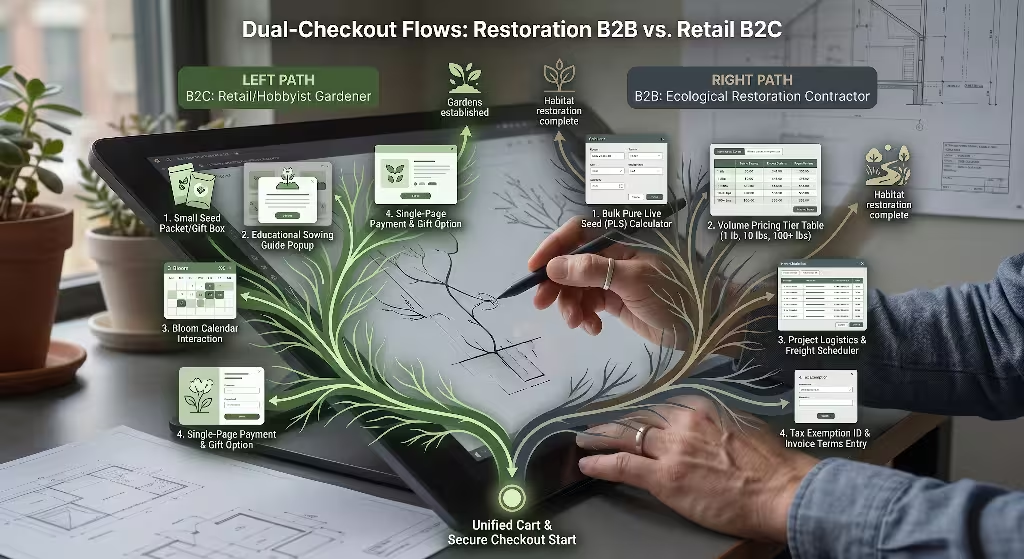
A native seed bank serves two distinct customer groups with completely different purchasing behaviors and technical requirements. Designing a single, rigid checkout path creates friction for both groups.
The first group consists of retail home gardeners and backyard wildlife enthusiasts. These customers purchase small paper seed packets, usually containing one to five grams of seed. They want simple sowing instructions, colorful plant photos, inspirational garden collections, and smooth mobile payment options like Apple Pay or credit cards.
The second group consists of professional land managers, restoration contractors, landscape architects, and municipal government departments. These business-to-business (B2B) buyers purchase seeds in massive volumes, often ordering hundreds of pounds of custom prairie mixes. They require detailed lot numbers, formal quotes, seed testing certificates, split shipping to multiple field locations, and invoice payment terms.
+--------------------------------------------------------------------+
|               DUAL CHECKOUT USER EXPERIENCE PATHWAY                |
+--------------------------------------------------------------------+
|                                                                    |
|  [ RETAIL GARDENER PATHWAY ]        [ B2B RESTORATION PATHWAY ]    |
|  * Packet-based quantities          * Bulk weight pricing tiers    |
|  * Step-by-step growing guides      * CSV seed list bulk upload    |
|  * Mobile one-touch checkout        * Tax-exempt document portal   |
|  * Gift packaging & bonus guides    * Custom mix balance builder   |
|  * Standard ground shipping         * Freight & split-job logistics|
|                                                                    |
+--------------------------------------------------------------------+
To serve both audiences smoothly, the seed bank must implement an adaptable checkout system. The website can provide a clear toggle or dedicated portal for commercial accounts.
When a professional contractor logs into their account, the seed bank interface switches to an efficient commercial workspace. The contractor can upload a spreadsheet of botanical species and desired weights directly into the cart, rather than searching for fifty different plants one by one.
The commercial checkout flow should automatically calculate tiered volume discounts based on total order weight (such as price breaks at 1 pound, 5 pounds, 25 pounds, and 100 pounds). The system must also include a secure portal for uploading state sales tax exemption certificates and entering municipal purchase order numbers.
By separating these workflows while sharing a unified inventory database, the seed bank provides an easy, friendly experience for backyard gardeners while meeting the rigorous commercial demands of multi-acre restoration projects.
Real-Time Agricultural Restrictions and Quarantine Barriers
Shipping live plant material is subject to strict state and federal agricultural laws. To prevent the accidental spread of invasive pests, fungal diseases, and noxious weeds, state departments of agriculture enforce strict quarantine borders.
For example, states like California, Oregon, and Washington have strict import regulations on certain plant genera, including agricultural grasses and members of specific plant families. Other states prohibit shipping specific native species that could cross-pollinate with commercial agricultural crops or carry regional plant viruses.
If an online seed bank allows a customer to purchase a restricted species, packages the order, and attempts to ship it across a quarantine border, agricultural inspectors will intercept and destroy the package. The customer is left without their seeds, the seed bank loses money, and the business risks heavy fines from agricultural regulators.
Customer Enters Shipping Zip Code: 95814 (Sacramento, CA)
                          |
                          v
+-------------------------------------------------------------------+
|               REAL-TIME QUARANTINE VALIDATION ENGINE              |
+-------------------------------------------------------------------+
| Check item: Ribes aureum (Golden Currant)                         |
| State Rule: CA Department of Food and Agriculture Quarantine 104   |
| Status: Direct interstate consumer shipment restricted            |
+-------------------------------------------------------------------+
                          |
                          v
[ FRIENDLY CART NOTIFICATION DISPLAYED ]
"Due to California state agricultural protections, Golden Currant
cannot be shipped to your address. Would you like to substitute this
with California Wild Rose (Rosa californica), which is fully compliant?"
An online seed bank must integrate real-time agricultural validation into its cart and checkout interface. The website should evaluate shipping zip codes the moment they are entered, before payment processing begins.
If a cart contains a species restricted in the destination state, the interface must handle the situation with clear, friendly communication. Instead of displaying a harsh, confusing error code, the seed bank should explain the environmental reason for the restriction.
The notification should state: “To protect local ecosystems and farm crops, state agricultural regulations prevent shipping this species to your location.” Right below the message, the seed bank should offer one-click compliant alternatives: “Here are three similar pollinator plants native to your region that are approved for immediate shipping.” This thoughtful approach keeps the seed bank legally compliant while maintaining a supportive relationship with the customer.
Structured Data and Semantic SEO Engine
Search engines rely on structured data to understand the exact context of web pages. For a native seed bank, adding specialized Schema.org structured markup to the website code is critical for organic search visibility.
When a standard online store marks up a product, it uses basic schema fields like name, image, price, and availability. For a native seed bank, search engines need to understand botanical relationships, taxonomic hierarchies, and regional adaptations.
+-------------------------------------------------------------------+
|                 STRUCTURED BOTANICAL SCHEMA GRAPH                 |
+-------------------------------------------------------------------+
|  Schema Type: Product                                             |
|  name: "Butterfly Weed Seed Packet"                               |
|  sku: "ASC-TUB-01"                                                |
|                                                                   |
|  Nested BioChemEntity / Taxon Schema:                             |
|  scientificName: "Asclepias tuberosa"                             |
|  taxonRank: "Species"                                             |
|  parentTaxon: "Asclepias"                                         |
|  taxonomicRange: "Eastern and Central North America"              |
|                                                                   |
|  Additional Custom Properties:                                    |
|  ecoregionCompatibility: "EPA Level III: 45, 51, 52, 64"          |
|  coldStratificationRequirement: "30 Days Cold Moist"              |
|  soilMoisturePreference: "Xeric to Dry-Mesic"                     |
|  larvalHostTarget: "Danaus plexippus (Monarch Butterfly)"         |
+-------------------------------------------------------------------+
A well-optimized seed bank combines Product, Offer, and BioChemEntity (or Taxon) structured data on every product page. This markup tells search engine crawlers that the page is not just an item for sale, but a verified biological entity with specific ecological roles.
By structuring botanical data this way, the seed bank earns rich search snippets in Google results. When people search for native seeds, the search results can display star ratings, in-stock status, stratification codes, and native ranges directly on the search results page.
Furthermore, an online seed bank should incorporate FAQPage and HowTo structured data blocks on educational category pages. When potential customers search common questions like “How do I cold stratify native seeds?” or “When should I sow milkweed seeds in the fall?”, the seed bank can capture prominent placement in Google’s People Also Ask modules and featured snippets.
           +---------------------------------------------+
           |  Google Search: "How to cold stratify seeds" |
           +---------------------------------------------+
                                  |
                                  v
+-------------------------------------------------------------------+
| FEATURED RICH SNIPPET (Powered by Seed Bank HowTo Schema)         |
| 1. Mix seeds with damp sand or a moist paper towel.               |
| 2. Place in a sealed bag and label with the date.                 |
| 3. Store in your refrigerator (34 to 38 degrees F) for 30 days.   |
| 4. Plant directly into prepared garden soil in early spring.      |
|                                                                   |
| Source: Native Seed Bank Propagation Guide                        |
+-------------------------------------------------------------------+
This semantic search engine optimization drives highly qualified, organic traffic directly to the seed bank without relying on expensive paid advertising campaigns.
Post-Purchase UX and Germination Tracking
On a typical retail website, the customer journey ends when the package is delivered to the front door. On an online seed bank, delivery is simply the beginning of the biological journey.
Native seeds take weeks, months, or an entire winter season to wake up and sprout. During this extended waiting period, gardeners often feel anxious. They worry that they planted the seeds too deep, kept them too wet, or failed to chill them long enough. If a seed bank goes silent after delivery, customers feel abandoned when questions arise.
[ Customer Receives Seed Order in November ]
                      |
                      v
[ QR Code on Physical Packet Scanned via Smartphone ]
                      |
                      v
[ Personalized Digital Seed Tracker Dashboard Opens ]
                      |
                      v
+--------------------------------------------------------------------+
|               POST-PURCHASE INTERACTIVE TIMELINE                   |
+--------------------------------------------------------------------+
|  Day 1 (Nov 15):   Seeds sown outdoors for natural winter chilling |
|  Day 45 (Dec 30):  Mid-winter snow moisture check reminder sent    |
|  Day 90 (Feb 15):  Early thaw alert and seedbed prep guide sent    |
|  Day 120 (Mar 15): First sprout emergence window opens             |
|                                                                    |
|  [ Seedling Photo Identification Portal: Match your sprout ]       |
+--------------------------------------------------------------------+
A world-class seed bank extends its digital user experience well into the growing season through automated post-purchase communication and interactive digital tools.
Every physical seed packet should feature a clean, weather-resistant QR code. When the customer scans the code with their smartphone in the garden, it opens a mobile-friendly digital field guide for that exact species. This page reminds them of the proper planting depth, sunlight needs, and expected germination timelines.
The seed bank can also offer customers an opt-in germination tracking service through email or SMS. If a customer buys seeds requiring sixty days of cold stratification, the system sends friendly, helpful milestone messages:
- Day 1: Confirmation of sowing and checklist for winter storage.
- Day 30: Midpoint check-in with tips on maintaining consistent moisture.
- Day 60: Alert that the cold stratification period is complete and seeds are ready for spring soil.
- Day 75: Visual seedling identification guide showing photographs of the very first cotyledon leaves.
The seedling identification guide is especially valuable. When native seeds first sprout, their tiny baby leaves look very different from mature plants, and they often look identical to common garden weeds.
By providing a clear visual library of young sprouts, the seed bank saves gardeners from accidentally weeding out their valuable native seedlings. This supportive post-purchase experience turns beginner gardeners into confident, lifelong ecological stewards who return to the seed bank season after season.
+-----------------------------------------------------------------------+
|                 SEED BANK FEATURE IMPACT COMPARISON                   |
+-----------------------------------------------------------------------+
| Feature Area            | Typical E-Commerce Store | Biophilic Seed Bank  |
+-------------------------+--------------------------+------------------+
| Geographic Sorting      | State / Zip Code only    | EPA Ecoregions   |
| Search Engine           | Exact text match only    | Fuzzy Latin/Common|
| Product Page            | Basic photo and price    | Dormancy codes   |
| Quantity Selection      | Fixed packet sizes only  | PLS Calculators  |
| Seasonal Support        | None                     | Frost sync alerts|
| Compliance Checks       | Manual post-order cancel | Real-time cart UI|
| Customer Support Life   | Ends at package delivery | Extends to bloom |
+-------------------------+--------------------------+------------------+
Cultivating Digital and Ecological Growth
Designing an e-commerce platform for a native seed bank requires a deep respect for both ecological science and human cognition. By stepping away from generic, sterile retail layouts and embracing the living principles of biophilic design, a seed bank creates an online atmosphere that reduces visual stress and encourages meaningful learning.
When an online seed bank integrates EPA ecoregional filtering, dual-layer botanical search, interactive Pure Live Seed calculators, dynamic seasonal sowing alerts, and comprehensive seedling identification tools, it solves the real biological problems that growers face every day.
These user experience best practices remove confusion, reduce costly ordering mistakes, and ensure that every seed packet sold has the best possible chance of growing into a thriving, resilient plant.
In an era of rapid biodiversity loss and changing climate patterns, the work of a regional native seed bank is more vital than ever. By combining clear spatial data, thoughtful visual ergonomics, and dedicated customer support from checkout to bloom, an online seed bank becomes far more than a simple web store. It becomes a thriving educational hub and an indispensable engine for ecological restoration, empowering communities everywhere to heal their local landscapes one native seed at a time.