
The Botanical Subconscious: An Introduction to Floral Surrealism
When we look at a flower, our brains feel a sense of peace. This is because humans have a built-in love for nature. Scientists call this biophilia. It is the reason we put plants in our offices and go for walks in the woods. However, there is a special type of art that plays with this feeling. This art is known as floral surrealism. In this style, artists take the real parts of plants and mix them with things from their dreams. This creates a bridge between biological accuracy and creative distortion.
As a design expert, I look at floral surrealism as a way to capture the mind. When an artist uses floral surrealism, they are taking something we trust, like a rose, and changing it. Maybe the petals are made of glass. Maybe the stem is a human arm. This creates a feeling called the uncanny valley. It is a place where something looks almost real but feels a little bit strange. This mix of the real and the imagined is what makes floral surrealism: combining real and imagined plant life in art so powerful. It grabs your attention because your brain wants to solve the puzzle of what it is seeing.
In this article, we will look at how surrealism using flowers works. We will explore how it grew from old science drawings into a modern art form. We will also talk about how this style helps people feel better through biophilic design. By the end, you will see why floral surrealism is more than just a pretty picture. It is a tool for innovation and a way to connect with the deeper parts of our own thoughts.
Table of Contents
Historical Lineage: From Scientific Illustration to the Dreamscape
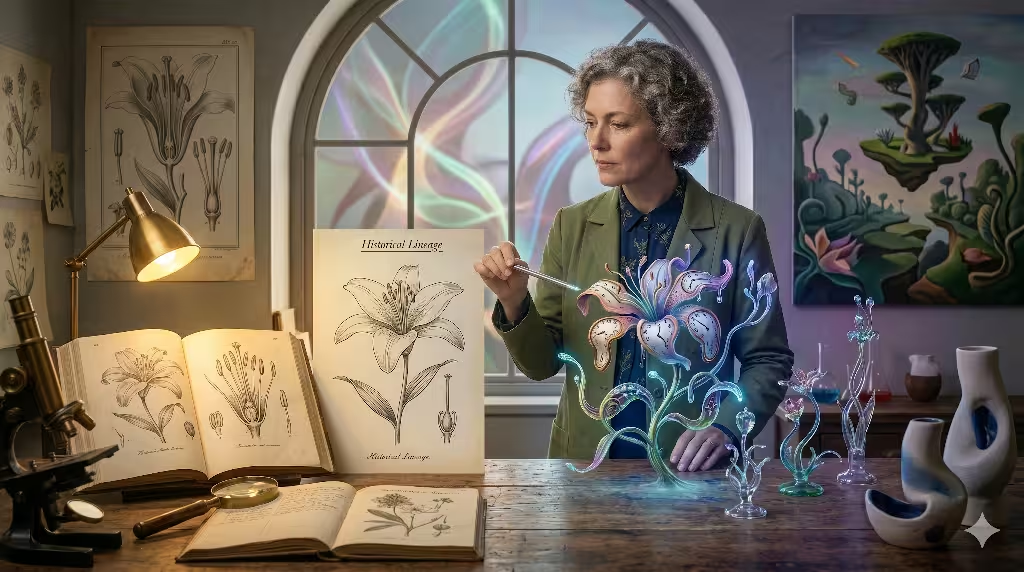
Long ago, artists who drew plants were like scientists. They used botanical illustration to show every tiny detail of a leaf or a seed. Their goal was to be 100 percent real. They wanted to help people identify plants in the wild. This focus on the real world is the foundation of floral surrealism. Without knowing how a real plant looks, you cannot make a good surreal version of it.
In the early 20th century, everything changed. A group of artists called surrealists began to explore the dream world. Artists like Salvador Dalí and René Magritte were leaders in this move. They did not want to just draw what they saw. They wanted to draw what they felt or what they saw in their sleep. This led to the birth of floral surrealism as we know it. Salvador Dalí once created a series of prints where flowers turned into musical instruments or strange creatures. He used floral surrealism to show that nature is not just a collection of facts. Nature is also full of magic and mystery.
This transition from scientific drawing to floral surrealism was influenced by the ideas of André Breton. He was the man who wrote the rules for surrealism. He believed that the subconscious mind was the most important source of art. When you apply this to plants, you get floral surrealism. It is a way to see the plant world through the lens of a dream. This history shows us that floral surrealism is a very old way of thinking that still feels new today.
The Mechanics of Hybridity: How to Merge the Real with the Imagined
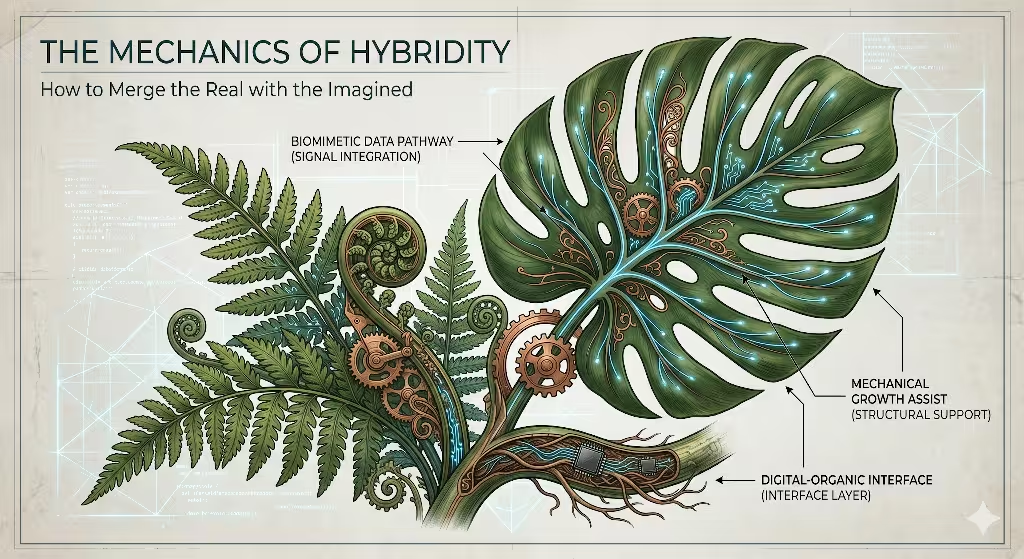
To create great floral imitation, you must understand how a plant is built. You have to know about the stamen, which holds the pollen. You have to know about the pistil and the xylem. These are the real parts of the plant. In floral surrealism, the artist takes these parts and changes them. This is called morphological blending. It means taking the shape of one thing and mixing it with another.
One way to do this is to change the scale. Imagine a tiny daisy that is suddenly the size of a skyscraper. Another way is through juxtaposition. This is a fancy word for putting two things together that do not belong. For example, in floral surrealism, you might see a lily where the center is a glowing light bulb. This mix of the biological and the mechanical is a very common theme.
Artists also use textures to make it more look convincing. Even if the flower is “fake,” it should look like it has a real texture. If a leaf is supposed to be made of velvet, the artist uses surrealism techniques to make it look soft. This attention to detail makes the imagined parts feel more real. By using floral surrealism to blend real plant anatomy with weird shapes, artists can create something that has never been seen before.
What is Floral Surrealism?
When people ask what this style is, the answer is simple. Floral surrealism is a genre of art that uses real plant shapes to show things that are impossible. It is the art of the “what if.” What if trees could walk? What if roses could cry? By using this art form, artists can tell stories that regular photos cannot. It is a way to use the beauty of nature to talk about deep human feelings.
In the world of design, floral surrealism is very useful. It is used in websites and posters to make a brand look creative. Because it uses plants, it still feels natural. But because it is surreal, it feels modern and high tech. This balance is why so many people are drawn to floral surrealism today. It is a way to be both grounded in nature and excited about the future.
How do Artists Combine Real and Imagined Plants?
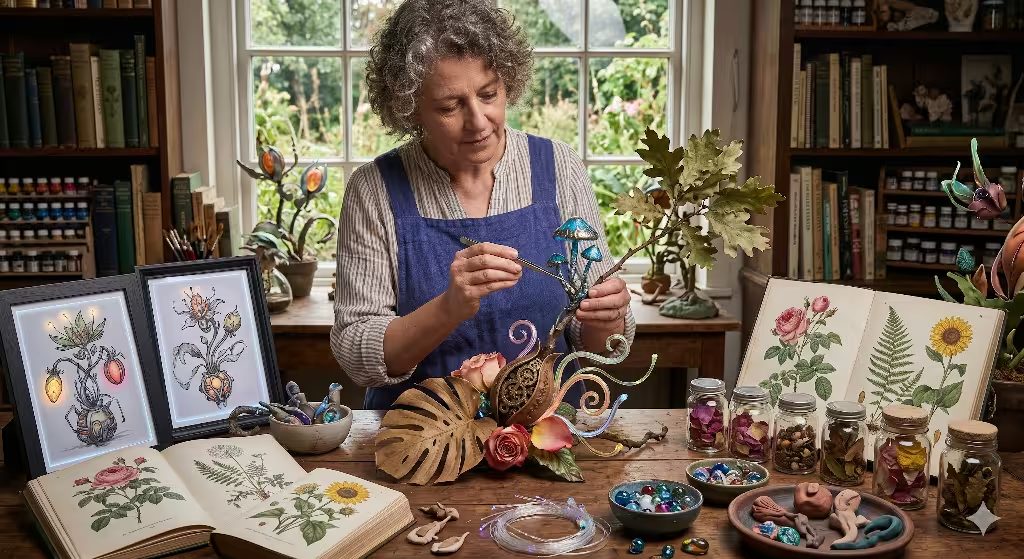
Artists use several tricks to make floral surrealism work. The first is to start with a real reference. Most artists spend a lot of time looking at real flowers. They study the way a petal curls or the way a stem bends. Then, they use their imagination to add the “weird” parts.
Another trick is to use colors that do not exist in nature. You might see a blue sunflower or a neon purple fern. This helps the viewer understand that they are looking at floral surrealism and not a regular photo. The goal is to keep enough of the real plant so the viewer knows what it is, but change enough so it feels like a dream. This delicate balance is the secret to a successful masterpiece.
Which Surrealist Artists Used Flowers in Their Art?
The most famous artist to use floral surrealism was Salvador Dalí. His work often featured melting flowers or plants with human eyes. You may also remember his work with the melting clocks. Another artist is Maria Luneva, who uses floral surrealism in her digital art. She creates images where flowers grow out of everyday objects like shoes or phones.
In the past, artists like Dorothea Tanning also used floral surrealism to explore themes of growth and change. These artists show us that floral surrealism is a wide field. Some use it to be scary, while others use it to be beautiful. No matter the mood, this form of surrealism remains a favorite tool for artists who want to push the boundaries of what is possible.
What is the Symbolism of Flowers in Surrealism?
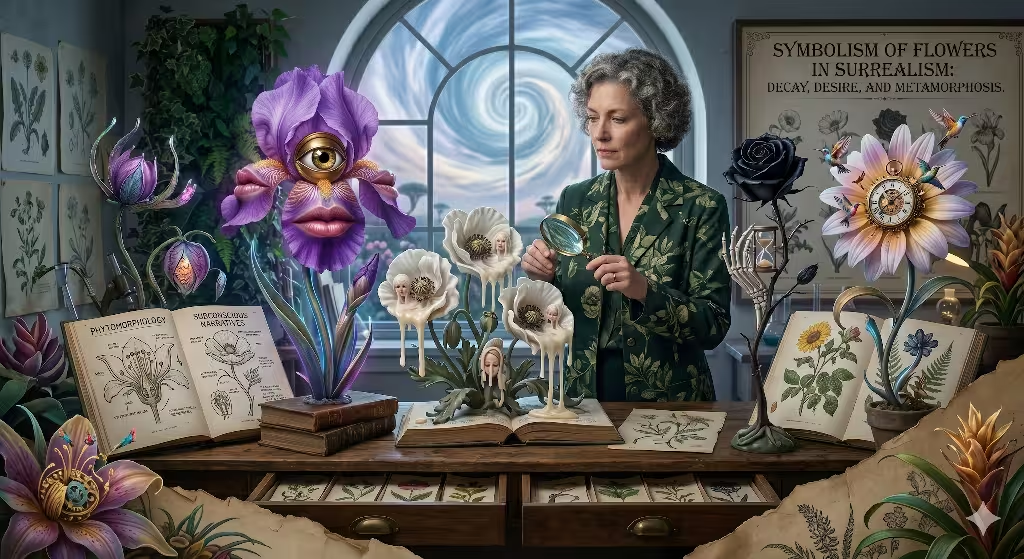
Flowers have always had meanings. A red rose means love, and a white lily often means peace. In floral surrealism, these meanings get much deeper. A flower in floral surrealism might represent the fragility of the human mind. If a flower is shown breaking like glass, it might mean that beauty is temporary.
Many artists use floral surrealism to talk about the cycle of life and death. You might see a plant that is both blooming and rotting at the same time. This is a key part of the genre. It shows us that nature is always changing. By using floral surrealism, artists can explore these big ideas in a way that is easy for our eyes to enjoy.
Contemporary Titans and Digital Evolution
Today, floral surrealism is changing because of technology. We have digital tools that allow us to create and imagine more easily than ever before. Artists like Vladimir Kush use a style called metaphorical realism, which is a close cousin to floral surrealism. He creates paintings where butterflies are also flowers. This is a classic example of how floral surrealism can be used to show the connection between different parts of nature.
Digital art has taken floral surrealism to a new level. Now, we can use 3D modeling to produce creations that look like a real photo. This is very popular in the world of search engine optimization and website design. Brands want to look unique, so they use floral surrealism to stand out. When someone searches for natural website design, they are often looking for the unique look that surrealism provides.
We are also seeing AI start to play a role in floral surrealism. Artificial intelligence can take thousands of photos of plants and mix them together. This creates new forms of art and design that a human might never think of. As a design expert, I find this very exciting. It means that floral surrealism will keep growing and changing as our tools get better. Essentially with this form of surrealism and the power of AI you can think up anything.
Biophilic Value: Why This Matters for Design and SEO
You might wonder why a design expert cares so much about floral surrealism. The reason is simple. People love looking at plants. When you use floral surrealism on a website, it makes the user stay longer. This is good for SEO because search engines like it when people spend time on a page. Using surrealism is a smart way to keep people engaged.
There is also a health benefit to floral surrealism. Even though the plants are not real, our brains still respond to the organic shapes. This is part of biophilic design. Looking at the natural patterns can help lower a person’s heart rate. It can reduce stress. In a world where we spend all day looking at screens, surrealism provides a much needed break for our eyes.
At Silphium Design LLC, we use floral surrealism to fight digital fatigue. When a website looks too much like a computer, people get tired of it. But when a website uses this form of art, it feels alive. It feels like a garden. This is why monitoring the best keywords in floral surrealism is so important. We want to know what people are looking for so we can give them the best biophilic experience possible.
Concepts Related to Floral Surrealism
To really understand floral surrealism, you have to look at the words related to it. Words like phantasmagorical botany and organic abstraction are very important. Phantasmagorical botany is a fancy way to say “dream like plants.” Organic abstraction means taking the shapes of nature and making them simpler or weirder. Both of these ideas are part of the world of floral surrealism.
Another important term is biological verisimilitude. This means making something look like it is truly alive. In floral surrealism, this is the goal. You want the viewer to believe, just for a second, that the flower they are seeing could actually exist. This is also related to phytomorphology, which is the study of the physical form of plants. Artists who study this are better at creating floral surrealism because they know the “rules” of nature before they break them.
Finally, we have the idea of a digital herbarium. A herbarium is a collection of dried plants used for study. A digital herbarium using floral surrealism is a collection of imagined plants. This is a great way to think about a gallery of surrealist art. It is a collection of the mind’s own nature. By using all these related words, we can see how big the topic really is.
The Future of the Imagined Garden
The world of floral surrealism is just beginning to bloom. As we move further into the digital age, our need for nature will only grow. Using plants gives us a way to keep nature with us, even when we are online. It allows us to imagine a world where the laws of biology are just a suggestion and allows us to create new worlds based on nature.
Whether it is in a painting by Dalí or a modern website design, this form of art will continue to capture our hearts. It reminds us that we are part of nature, but we also have the power to create. Surrealism is the perfect blend of the world we live in and the world we dream about. By using floral surrealism, we can make the internet a more beautiful and natural place for everyone.
These digital gardens are not just a trend. It is a way of seeing. It is a way to recognize that there is beauty in the strange. As we continue to explore these forms of art, we will find new ways to connect with each other and with the planet. The garden of the mind is infinite, and floral surrealism is the key to unlocking its gates.
Why SEO Experts Track Floral Surrealism
In my work, I have to watch the trends. Floral surrealism is a keyword that is growing in popularity. People are tired of the same old stock photos. They want something different. They want surrealism. By tracking the most traffic in floral surrealism, we can stay ahead of the curve.
We also look at local SEO for artists and designers who specialize in floral surrealism. By helping them get found, we are spreading the beauty of biophilic design. Surrealism is a great example of how art and science can work together. It uses the facts of biology and the power of search engines to bring something wonderful to the world.
In Conclusion
The study of floral surrealism is a journey. It starts with a single flower and ends in a world of endless possibilities. As we have seen, floral surrealism touches everything from history to health. It is a powerful force in the art world and the digital world. So, the next time you see a flower that looks a little bit too perfect or a little bit too strange, remember floral surrealism. It is the art of the dream, rooted in the earth.
This form of art is a bridge. On one side, we have the hard facts of botany. We have the cells, the water, and the sun. On the other side, we have the human spirit. We have our hopes, our fears, and our dreams. Floral surrealism is where these two sides meet. It is a place where a leaf can be a wing and a root can be a memory. This is why surrealism will always be important. It is the visual language of our connection to life itself.
As a design expert at Silphium Design LLC, I will continue to champion floral surrealism. I believe it is the key to a more beautiful and functional internet. By using surrealism, we can create spaces that are not just places to find information, but places to find inspiration. Floral surrealism is the future of biophilic design, and I am excited to see where it takes us next.
The impact of this form of surrealism on the human brain is a field that is still being studied. We know that fractal patterns found in floral surrealism, similar to biophilic design, can lower cortisol levels. Cortisol is the hormone that makes us feel stressed. By surrounding ourselves with floral surrealism, we are essentially giving our brains a mini vacation. This is why I always recommend floral surrealism for high stress environments like hospitals or busy offices.
In the world of art, floral surrealism is a way to speak without words. It uses the universal language of plants to tell complex stories. Every petal has a purpose. Every strange color choice in has a meaning. It is a deep and rich field that offers something for everyone. Whether you are a scientist, an artist, or just someone who likes flowers, floral surrealism has a place for you.
In conclusion, floral surrealism: combining real and imagined plant life in art is a vital part of modern design. It helps us feel better, it makes websites look amazing, and it keeps us curious. If you are a designer or an artist, I encourage you to explore the world of floral surrealism. You might just find that your best ideas come from the garden of your own imagination.