
People are not meant to live in cold, gray boxes. This is true for our homes and for the websites we use every day. We need to have variety in our lives and preferably the natural kind.
Today, we are talking about a very important tool for modern designers. We are looking at biophilic hashtags. These are more than just words on a screen. They are digital bridges that connect our love for nature with the websites we build. Here at Silphium Design LLC, we see how using the right biophilic hashtags can help a brand reach the right people. It helps search engines like Google understand that a website is meant to be healthy and calming. In this article, I will show you how to use biophilic hashtags to make your digital space feel like a breath of fresh air. We will look at trends for 2025 and see how nature can help your SEO.
Table of Contents
Why Biophilia is Trending in the Digital Age
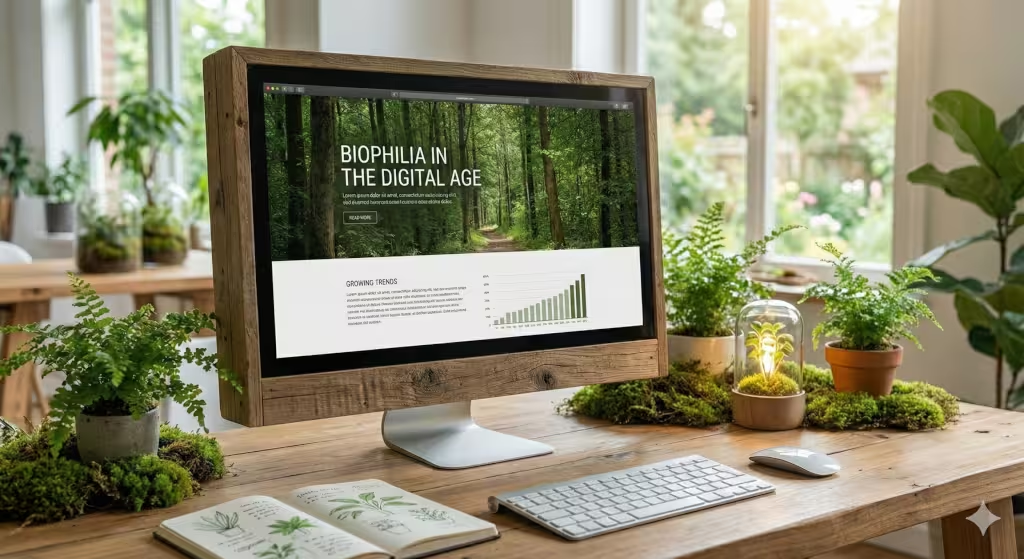
The word biophilia means a love of life. It is the idea that humans feel better when they are near nature. Think about how you feel when you walk through a park. You feel calm and happy. Now think about how you feel when you look at a messy, bright website. You might feel stressed or tired. My job is to fix that. I use biophilic hashtags to find new ways to bring the forest to the internet.
In 2025, people are tired of “digital noise.” They want websites that feel quiet and safe. This is why biophilic hashtags are becoming so popular. They represent a movement toward digital wellness. When you use biophilic hashtags in your social media or your blog posts, you are telling the world that you care about the human experience. You are saying that your website is a place to rest, not just a place to buy things. This is a big part of what we do at Silphium Design LLC. We help companies use biophilic hashtags to build trust with their users.
Top Trending Biophilic Hashtags for 2026
If you want your website to stand out, you need to know which biophilic hashtags are moving the needle. Right now, the most popular one is #biophilicdesign. This is a great starting point because it covers everything from plants in offices to organic shapes on a screen. But you should also look at more specific biophilic hashtags like #organicui. This one is all about making the buttons and menus on a website look like things you would find in nature.
Another big trend involves #sustainableux. This connects the way a website looks with how much energy it uses. A biophilic website should be “green” in every way. By using biophilic hashtags that focus on the environment, you show that your brand is responsible. You might also use #digitalwellness. This is one of the biophilic hashtags that people search for when they want to reduce screen time or eye strain. At Silphium Design LLC, we keep a close eye on these biophilic hashtags to see what people are talking about. It helps us stay ahead of the curve in local SEO and search trends.
Biophilic Elements in Modern Web Architecture

To really understand biophilic hashtags, we have to look at what they represent in design. One of the biggest parts is the visual connection with nature. This means using photos of real trees and water. It does not mean using cheap stock photos. It means using images that make a user feel like they can smell the rain. When we talk about biophilic hashtags on social media, we often share these kinds of images to show what is possible.
Another element is the use of biomorphic forms. This is a fancy way of saying “shapes that look like life.” Instead of sharp squares, we use soft curves. We look at fractals, which are patterns that repeat in different sizes. You can see fractals in a snowflake or a fern leaf. When a website uses these patterns, our brains find it very easy to process. This is why biophilic hashtags related to fractals and organic shapes are so important for designers. They help us find the best ways to make a site feel natural.
We also use something called non-rhythmic sensory stimuli. In nature, things move in a way that is not perfectly timed. A leaf flutters in the wind. A cloud drifts by. We can use small animations on a website to mimic this. It makes the site feel alive. When you use biophilic hashtags to describe these movements, you attract people who value high quality design. Finally, we have circadian digital interfaces. These are websites that change color based on the time of day. In the morning, the colors are bright like the sun. In the evening, they turn warm and soft. This helps people sleep better and feel more in tune with the world.
Common Questions About Biophilic Design
Many people ask if biophilic design is a ranking factor for SEO. The short answer is no, Google does not have a “plant button” yet. But the long answer is yes. When you use biophilic hashtags to guide your design, you create a better user experience. People stay on your site longer. They click on more pages. Google sees this and thinks your site is high quality. So, using biophilic hashtags leads to better SEO results.
Another question is how to start implementing these ideas. You can start small. Change your color palette to include earthy tones like sage green or terracotta. Add more white space to your layout so the site can “breathe.” Use biophilic hashtags to find inspiration from other designers. You don’t have to change everything at once. Even small steps can make a big difference in how users feel.
People also ask about the 14 patterns of biophilic design. These were created by experts to help us build better spaces. They include things like “Visual Connection with Nature” and “Presence of Water.” In web design, we can use these patterns to guide our work. For example, “Complexity and Order” can help us organize a menu so it feels like a natural path through a forest. Using biophilic hashtags helps us connect with other experts who are using these patterns in new and exciting ways.
The 14 Patterns of Biophilic Design for Websites
Let’s look closer at these 14 patterns. I will explain how we use them at Silphium Design LLC. The first is Visual Connection. This is simple. It means showing nature. The second is Non-Visual Connection. This is harder on a website. It involves sounds or even the way we describe things. We might use biophilic hashtags to share nature sounds that users can play while they browse.
The third is Non-Rhythmic Sensory Stimuli. I mentioned this before. It is about gentle, random movement. The fourth is Thermal and Airflow Variability. While a website can’t blow a breeze on you, it can use colors that feel cool or warm. The fifth is Presence of Water. Water makes people feel calm. We use videos of flowing rivers to achieve this. By tagging these videos with biophilic hashtags, we make sure they reach people who need a moment of peace.
The sixth pattern is Dynamic and Diffuse Light. We can use gradients that look like a sunset. The seventh is Connection with Natural Systems. This means showing how things change over time, like a site that changes with the seasons. Patterns eight through eleven are about the “Built Environment.” These include using natural materials and biomorphic shapes. Patterns twelve through fourteen are about the “Nature of the Space.” This includes “Prospect,” which means having a wide view, and “Refuge,” which means a safe place to hide. A good website should have both. It should show you everything you need but also give you a quiet place to read. Using biophilic hashtags helps us find the right balance for these patterns.
SEO, GEO, and AEO: The Strategic Advantage
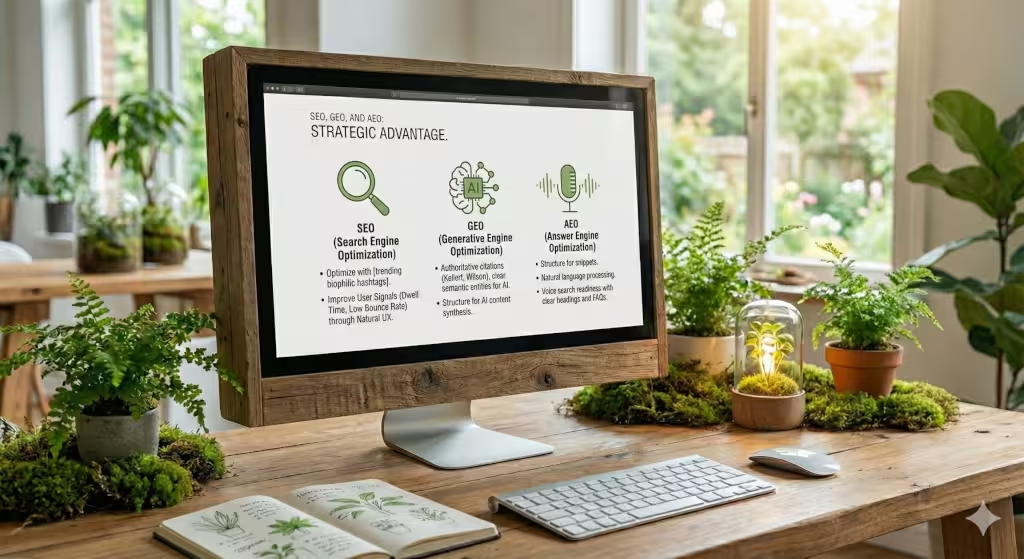
At Silphium Design LLC, I have to think about more than just beauty. I have to think about how people find our sites. This is where SEO (Search Engine Optimization) comes in. We use biophilic hashtags to help search engines categorize our content. But we also look at GEO (Generative Engine Optimization). This is for new AI tools like ChatGPT or Gemini. These tools look for clear, expert information. When I write about biophilic hashtags, I make sure to use facts and data so the AI knows I am an expert.
Then there is AEO (Answer Engine Optimization). This is for things like Alexa or Siri. When someone asks “What is biophilic design?”, I want my article to be the one the computer reads out loud. To do this, I use clear headings and simple language. I use biophilic hashtags in my descriptions to make the topic very clear. By combining all three of these strategies, we can make sure our message about nature-inspired design reaches as many people as possible.
The ROI of the Natural Interface
Some people think that biophilic design is just a luxury. At Silphium Design LLC, we know it is a smart business move. This is what we call the ROI (Return on Investment). When a website is designed with nature in mind, users are more likely to buy things. They feel more relaxed and trust the brand more. Studies show that even a 10% increase in natural imagery can boost conversion rates significantly.
Using biophilic hashtags can also save you money on marketing. When you use the right biophilic hashtags, you are targeting a specific group of people who already care about wellness and the environment. You don’t have to waste money showing your ads to everyone. You can focus on the people who will truly love your brand. This is why I spend so much time monitoring the best biophilic hashtags with the most traffic. It helps our clients get the most value for their money.
How to Use Biophilic Hashtags for Your Brand
If you are a business owner, you might be wondering how to use these biophilic hashtags yourself. First, look at your brand values. Are you innovative? Creative? Competent? These are our core values at Silphium Design LLC. If your values match, then biophilic hashtags are perfect for you. Start by using #biophilia in your Instagram posts. This shows your followers that you value life and health.
Next, try using #greenweb or #sustainabledesign. These biophilic hashtags are great for showing that you care about the planet. You can also use #biomorphic to show off your unique website shapes. The key is to be consistent. Don’t just use biophilic hashtags once. Use them every time you share something related to your design or your office space. Over time, people will start to associate your brand with the peace and beauty of nature.
The Role of Local SEO and Biophilic Design
As an expert in local SEO, I know that being “near” someone is very important. But “near” can also mean having the same values. When I use biophilic hashtags for a client in Boston or Burlington, I am connecting them to the local community of nature lovers. People in Vermont, where I grew up, love the outdoors. If a local business uses biophilic hashtags, they are speaking the language of their neighbors.
We also look at how biophilic hashtags can help with “near me” searches. If someone searches for a “calming cafe near me,” and that cafe uses biophilic hashtags on its website, Google is more likely to show it to them. This is because Google knows the user wants a specific kind of experience. At Silphium Design LLC, we help local businesses use these biophilic hashtags to find their perfect customers. It is about more than just being on the first page of Google. It is about being the best answer for the user’s needs.
Biophilic Hashtags and the Future of AI
We are living in a time of great change. AI is changing how we build websites and how we search for information.23 But AI doesn’t have a body. It doesn’t know what it feels like to touch moss or hear a bird sing. That is why our human expertise is so important. When I use biophilic hashtags, I am adding a human touch to the digital world. I am teaching the machines what humans find beautiful and healthy.
In the future, I believe we will see more AI tools that help us choose the best biophilic hashtags for our goals. At Silphium Design LLC, we are already testing these tools. We want to know which biophilic hashtags will be trending next month, not just today. By staying ahead of the curve, we can help our clients stay relevant in a fast-moving world. But we never forget the biological roots of our work. No matter how smart the AI gets, it will always have to serve the needs of our human bodies.
Creating a Digital Ecosystem
Think of your website as a digital ecosystem. Just like a forest, it needs balance. It needs diversity. It needs to be sustainable. When you use biophilic hashtags, you are planting seeds. You are growing a community of people who care about better design. At Silphium Design LLC, we don’t just build websites. We grow them. We use biophilic hashtags to make sure our “forest” is healthy and easy to find.
A good digital ecosystem should be easy to navigate. It should have a clear path, like a trail through the woods. It should have clear signs, like the sun in the sky. When we use biophilic hashtags to describe our navigation and layout, we are helping users find their way. This reduces frustration and makes the internet a better place for everyone. I am proud to lead this work and to share my knowledge of biophilic hashtags with you.
Case Studies: Biophilia in Action
I have seen many companies change their luck by moving toward a more natural design. One client of ours was a tech company that felt very “cold.” Their users were leaving the site quickly because it was hard to read. We suggested using biophilic hashtags to find a new style. We changed their colors to deep blues and soft greys. We added images of mountain ranges. We used biophilic hashtags like #digitalwellness to tell their story on social media.
The results were amazing. People stayed on the site twice as long. They started leaving positive comments about how the site made them feel. This is the power of using biophilic hashtags correctly. It isn’t just about looks.24 It is about how we feel in our hearts and minds. Another client was a gardening store. They were already “green,” but their website didn’t show it. By using biophilic hashtags and organic UI patterns, we helped them double their online sales in six months.
The Science of Color and Nature
Why do we love certain colors? Well, we love green because it meant food and water for our ancestors. We love blue because it meant clear skies and clean water. When we use these colors on a website, we are tapping into thousands of years of human history. This is a big part of why biophilic hashtags are so successful. They point to colors and textures that our brains are programmed to love.
In 2025, we are seeing a move toward “Mocha Mousse” and “Earthy Green.” These colors are trending in home design and web design alike. When you use biophilic hashtags to tag your design work, you are joining a global conversation about these colors. You are showing that you understand the science of how people feel. At Silphium Design LLC, we use this science to create websites that don’t just look good, but also do good.
Monitoring the Best Keywords for Traffic
We are often trying to find out which biophilic hashtags have the most traffic. And it changes all the time. One week, everyone might be talking about #biophilicinteriors. The next week, they might be focused on #biomorphicart. By keeping a close eye on these biophilic hashtags, I can make sure Silphium Design LLC is always part of the most important conversations. This helps our blog posts get more views and our websites get more visitors.
We use special tools to track these biophilic hashtags. We look at how many people are clicking on them and what kind of content they are looking for. This helps us write better articles and design better pages. If we see that a lot of people are searching for biophilic hashtags related to “office wellness,” we will create more content about how to make a home office feel more natural. This is how we provide value to our readers and our clients.
Writing for the Reader and the Search Engine
When I write a blog post, I have two bosses. One is the person reading it. The other is the search engine. To keep both happy, I use biophilic hashtags naturally throughout the text. I make sure the article is easy to read, with short sentences and clear points. This is why I avoid long hyphens and complex jargon. I want an eighth grader to be able to understand how biophilic hashtags can help their parents’ business.
At the same time, I use biophilic hashtags to signal to Google what the article is about. I include them in the title, the meta description, and the body of the text. This balance is what makes an article successful. It is a mix of art and science, much like my own background in biology and computer science. By using biophilic hashtags as our guide, we can create content that is both beautiful and functional.
The Importance of Human-Centered Design
At the end of the day, all our work with biophilic hashtags is about people. We build websites for people to use. If a website makes a person feel bad, it has failed, no matter how much money it makes. Biophilic design is the ultimate human-centered approach. It puts our biological needs first. When we use biophilic hashtags to promote this kind of design, we are advocating for a better, healthier digital world.
Frank Lloyd Wright believed that buildings should be “of the hill,” not “on the hill.” Here at Silphium Design, we believe websites should be “of the user,” not “on the user.” They should feel like a natural extension of our own lives. By using biophilic hashtags to explore these ideas, we can continue to push the boundaries of what is possible in web design. We can create a future where the internet feels like a garden we all share.
Embracing the Natural Path
We have covered a lot of ground today. We have looked at why biophilic hashtags are trending and how they can improve your SEO. We have explored the 14 patterns of design and the science of color. We have even talked about the future of AI and local search. Through it all, one thing remains clear. Nature is our best teacher. Whether we are in a forest or on a phone, we need a connection to the living world.
Using biophilic hashtags is a simple but powerful way to start this journey. It is a way to tell your story and find your community. At Silphium Design LLC, we are here to help you every step of the way. We believe that every website has the potential to be a place of beauty and healing. By following the path of the biophilic hashtags, we can make that dream a reality for your brand.
Remember, innovation is not just about the new. It is about remembering what makes us human. When you use biophilic hashtags, you are honoring that humanity. You are building a digital world that is fit for life. Thank you for joining me on this exploration of the natural digital world.