
A New Way for Computers to Work with Humans
At Silphium Design LLC, we think about technology differently. We do not just look at code or pixels. We look at biology. We look at how people have lived for thousands of years. In 2026, we are seeing a big change. For a long time, people had to learn how to talk to computers. We had to learn how to use a mouse. We had to learn how to type on a keyboard. This is changing now. We are moving into a time of biological and digital coexistence. This means technology is starting to act more like the natural world.
We call this a natural user interface. This kind of technology does not ask you to learn new tricks. Instead, it learns how you move and speak. It is like having a conversation with a friend or walking through a garden. You do not have to think about what button to push. You just act. This is what we call invisible tech. It is there to help you, but you do not see it as a separate tool. It becomes part of your life. In the past, we gave the computer commands. Now, the computer looks at what we want to do. We call this intent-based flow. It is the core of every modern natural user interface we build today.
As someone who studied botany and ecology, I see the internet as an ecosystem. A natural user interface should feel like a living thing. It should be easy to use and beautiful to look at.
In this article, we will look at where technology is going. We will see how a natural user interface helps us connect with the world around us. We will explore the trends that are making our digital lives feel more human.
Table of Contents
Spatial Computing and the End of the Screen
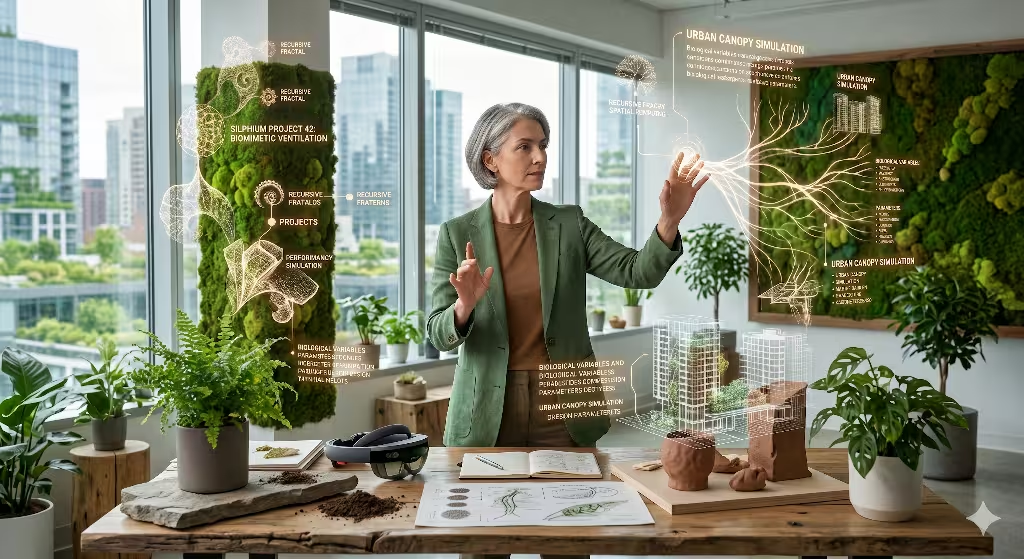
In 2026, the flat screen is starting to go away. We used to be stuck looking at a glass rectangle. Now, with a natural user interface, the whole room can be your screen. This is called spatial computing. It means that digital things can float right in front of you. You might be sitting in your living room and see a digital plant growing in the corner. Or you might see your emails floating like leaves on a desk. This is a much more natural user interface than what we had before.
We use something called liquid glass to make this look real. Liquid glass makes digital items look like they are made of water or smooth stone. They reflect the light in your room. If you turn on a lamp, the digital buttons on your natural user interface will show a little shine. This helps your brain believe that the digital items are really there. It reduces the stress on your mind. When things look like they belong in the real world, your brain does not have to work as hard.
Another important part of this is spatial anchors. Imagine you are working on a project in your kitchen. You place a digital timer on your fridge. Even if you leave the room and come back later, that timer stays right there on the fridge. Your natural user interface remembers where things go in the real world. This is how we move technology off of our phones and into our lives. It makes the computer a partner in your physical space. A natural user interface that uses spatial anchors feels stable and safe. It feels like a real part of your home.
Biophilic Design: Bringing Nature to Your Screen
As an expert in biophilic design, I believe that nature is the best teacher. Biophilic design means bringing the outdoors inside. We do this with buildings, such as the Frank Lloyd Wright houses, and now we do it with websites. A natural user interface should use patterns that we see in the woods or by the sea. One of these patterns is called a fractal. Fractals are shapes that repeat themselves at different sizes. You can see them in tree branches or snowflakes.
When a natural user interface uses fractal patterns, people feel calmer. Our eyes are used to seeing these shapes in nature. If a website menu opens up like a blooming flower, it feels right to us. This is called fractal fluency. It helps people find what they need 35% faster. It also helps the brain rest while it works. We call this cognitive restoration. A natural user interface that uses nature’s shapes is much better for your mental health.
We also use circadian responsive design. This means the colors on your natural user interface change based on the time of day. In the morning, the screen might have soft yellow light like the sunrise. In the evening, it turns into a warm orange or deep blue. This helps your body stay on its natural schedule. It helps you sleep better at night.
At Silphium Design LLC, we think every natural user interface should care about the person’s biological clock. We also use organic geometry. Instead of hard squares and sharp corners, we use soft curves. These curves look like cells or river rocks. They make the digital world feel friendly and soft.
Many Ways to Talk: Voice, Eyes, and Touch
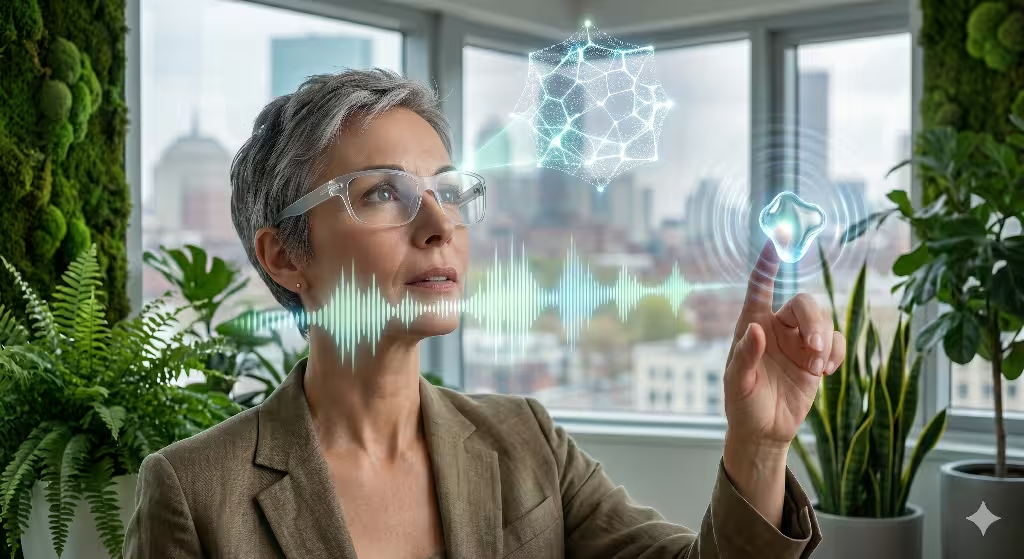
A natural user interface is not just about looking at things. It is about how we interact. In the past, we only used our fingers to click. Now, a natural user interface uses your voice, your eyes, and your touch all at once. This is called multimodal fluidity. It means you can do things in the way that feels best at that moment. You might look at a digital lamp and say, “Turn that on.” The computer sees where your eyes are looking and hears your voice. It knows exactly what you want.
We also use eye tracking. This is very important for a natural user interface in 2026. The computer knows exactly what part of the screen you are reading. If you look at a word for a long time, the natural user interface might show you a definition. It anticipates your needs. This makes everything feel very smooth. It is much faster than typing or clicking.
Haptics are another big part of this. Haptics are things you can feel. In 2026, we have technology that can make you feel things in the air. If you touch a digital button, you might feel a little buzz on your fingertip, even if there is no screen there. This is called haptic echoes. It makes a natural user interface feel solid. It gives you a sense of “resistance” just like real objects have. This keeps you from making mistakes. It tells your brain that you have successfully finished an action. Using all of these senses together makes for the best natural user interface possible.
AI that Builds the Web for You
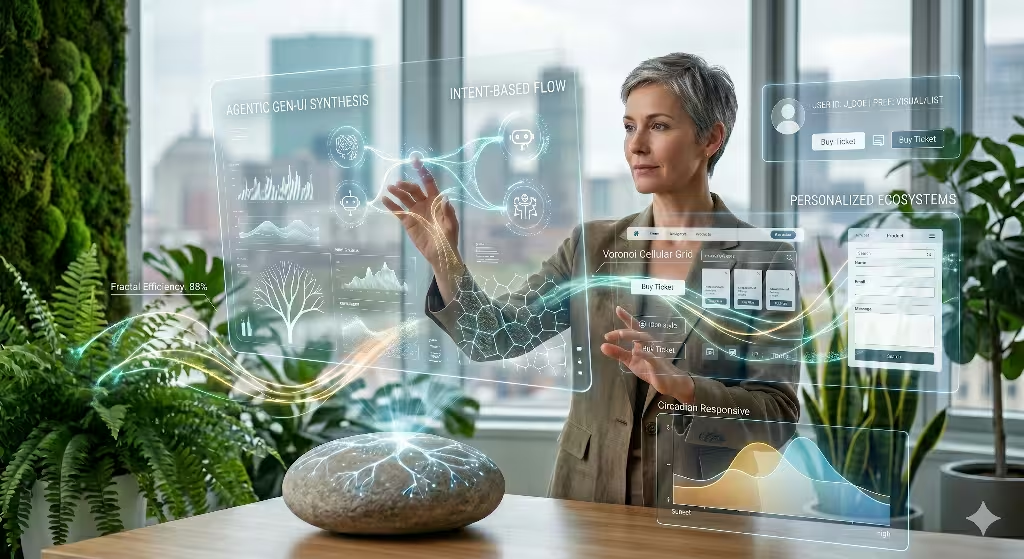
The next big step for a natural user interface is something we call Agentic Generative UI. This sounds like a big name, but it is actually very simple. It means the computer builds the interface as you need it. In the old days, every person saw the same website. In 2026, your natural user interface is made just for you. If you like to look at pictures, the AI will make the pictures bigger. If you like to read text, it will make the words easier to see.
This is a jump from a static design to a living design. The interface does not even exist until you start using it. The AI looks at your “intent.” It tries to guess what you are trying to do. If you are trying to buy a plane ticket, the natural user interface will only show you the things you need for that task. It hides everything else so you do not get confused. This is the ultimate goal of a natural user interface. It gets out of your way and lets you finish your work.
These systems are also hyper personalized. Every person has a different way of thinking. Some people think in lists. Some people think in maps. Your natural user interface learns your style. It grows and changes with you, like a garden. If you use it every day, it gets better at helping you. This creates a deep bond between the person and the technology. At Silphium Design LLC, we believe this is the most innovative way to build websites today. A natural user interface should be as unique as the person using it.
Frequently Asked Questions about Natural User Interfaces
Many people have questions about how a natural user interface works. One of the most common questions is: “What is the difference between a GUI and a NUI?” A GUI is a Graphical User Interface. This is what we used for the last thirty years. It uses icons, windows, and a mouse. A natural user interface (NUI) is different. It uses human movements like speaking and waving. A GUI makes you learn the computer’s language. A natural user interface learns your language.
Another question is: “What is biophilic design in web development?” This is my favorite topic. It is about using the rules of nature to build digital spaces. We use colors from the earth, like clay and moss. We use textures that look like wood or stone. We use natural user interface patterns that mimic how water flows or how plants grow. This makes the internet feel less like a machine and more like a park. It is better for our eyes and our stress levels.
A question often asked is: “How does liquid animation help?” Liquid animation is a type of motion used in a natural user interface. It makes things move in a smooth, flowing way. In nature, nothing moves in a perfectly straight line with a sudden stop. Things accelerate and slow down gently. When a natural user interface uses liquid motion, it feels predictable and calm. It prevents people from feeling dizzy when using spatial computing headsets.
Finally, people ask: “Is spatial computing the same as AR?” They are related, but spatial computing is more advanced. AR usually just puts a picture on top of the real world. Spatial computing allows the digital items to interact with the real world. A natural user interface in spatial computing understands that a table is a solid object. It knows that the floor is below you. It makes the digital and physical worlds blend together perfectly.
Why This Matters for Your Business
If you own a business, you might wonder why you need a natural user interface. The answer is simple. People want things that are easy and fast. If your website feels like a chore to use, people will leave. A natural user interface makes your customers feel comfortable. It makes them feel like you care about their well-being. This builds trust.
In 2026, we also have to think about “Machine Experience” or MX. This is like SEO, but for AI agents. Many people now use AI to browse the web for them. Your website needs to be built so these AI agents can understand it easily. A natural user interface that is built with clean, biological logic is easier for AI to read. It helps your site show up when someone asks their AI assistant for help.
We also care about sustainability. A natural user interface that is designed well uses less power. It does not waste energy on flashy animations that do not matter. By using biophilic principles, we can make websites that are “lean.” This means they load faster and use less electricity. This is good for the planet and good for your budget. In 2026, many companies have rules about being “green.” A biophilic natural user interface helps you meet those goals.
Lastly, a natural user interface is the best way to help everyone. This is called accessibility. Some people cannot use a mouse or a keyboard. But almost everyone can use their voice or their eyes. By building a natural user interface, you make sure that everyone can use your products. It is the right thing to do, and it is also good for business. You can reach more customers when your design is inclusive.
Technology Should Feel Like a Walk in the Woods
As we look toward the future, the goal is clear. We want technology to disappear. We want to stop thinking about “using a computer” and start thinking about just living our lives. A natural user interface is the key to this future. It takes the best parts of our human nature and mixes them with the power of digital tools. At Silphium Design LLC, we are proud to be part of this change.
The future of the natural user interface is not about more screens. It is about fewer screens. It is about interfaces that react to our moods and our needs. It is about digital spaces that feel as refreshing as a morning walk in Vermont. When we design with biology in mind, everyone wins. We create a world where technology supports us instead of distracting us.
The natural user interface is more than just a trend. it is a return to who we are as humans. We were not born to click buttons. We were born to move, speak, and interact with the world. By 2030, the best natural user interface will be one that you do not even notice. It will be as natural as breathing. We invite you to join us on this journey as we continue to innovate and create.
Comparison of Interface Types in 2026
| Feature | Old GUI (2010s-2020s) | New Natural User Interface (2026+) |
| Primary Input | Mouse and Keyboard | Voice, Gaze, and Gestures |
| Visual Style | Flat Grids and Squares | Organic Shapes and Liquid Glass |
| Context | Static (Same for all) | Adaptive (Changes for you) |
| Location | On a Desktop or Phone | Floating in 3D Spatial Rooms |
| Feedback | Visual Clicks and Sounds | Mid-air Haptics and Feeling |
| Mental Load | High (User must learn) | Low (Interface learns user) |
“The most natural user interface is the one that follows the laws of nature. If it feels like a tree or a river, your brain already knows how to use it.”
— Silphium Design LLC
We hope this article helps you understand why the natural user interface is so important for our future. It is a very exciting time to be a designer. We are finally building tools that respect our bodies and our minds. If we continue to use a natural user interface in everything we do, the digital world will become a much better place for everyone.
A natural user interface is the bridge between our physical bodies and the vast world of information. It allows us to keep our heads up and look at the world, rather than looking down at our palms. This change will make us more present in our lives. It will make us more connected to the people around us. That is the real power of a natural user interface. It is not just about cool tech. It is about being more human.
As we move forward, remember that a natural user interface is always evolving. Just like a forest, it is never truly finished. It is always growing, changing, and finding new ways to thrive. That is the beauty of design. We are always learning. We are always finding new ways to make a natural user interface that feels like home.
Thank you for reading about the future of the natural user interface. At Silphium Design LLC, we will keep working to bring the spirit of nature into the heart of the internet. Whether you are a business owner or just someone who loves tech, the natural user interface will change your life for the better. It is time to step into the future of a natural user interface.