
At Silphium Design LLC, as has been often stated in this blog, we look at the internet the same way we look at a forest. A forest is a system where nothing is wasted. Every leaf that falls becomes food for the soil. We try to bring that same balance to the digital world.
Many people think that the internet is just a cloud that does not touch the earth. This is a mistake. The internet is made of huge buildings filled with computers that run all day and night. These computers need a lot of electricity. Most of that electricity still comes from burning coal or gas. Because of this, the web has a big impact on our planet. When we talk about implementing sustainability in web design, we are talking about making the internet work more like a healthy forest. We want to create websites that are beautiful and useful but do not harm the world.
This means we have to look at how much energy a website uses every time someone clicks a link. It means we have to think about the code, the images, and the servers. This article will show you the main problems we face and how we can solve them using ideas from nature.
Table of Contents
The Invisible Impact: Why Digital Sustainability is Often Ignored
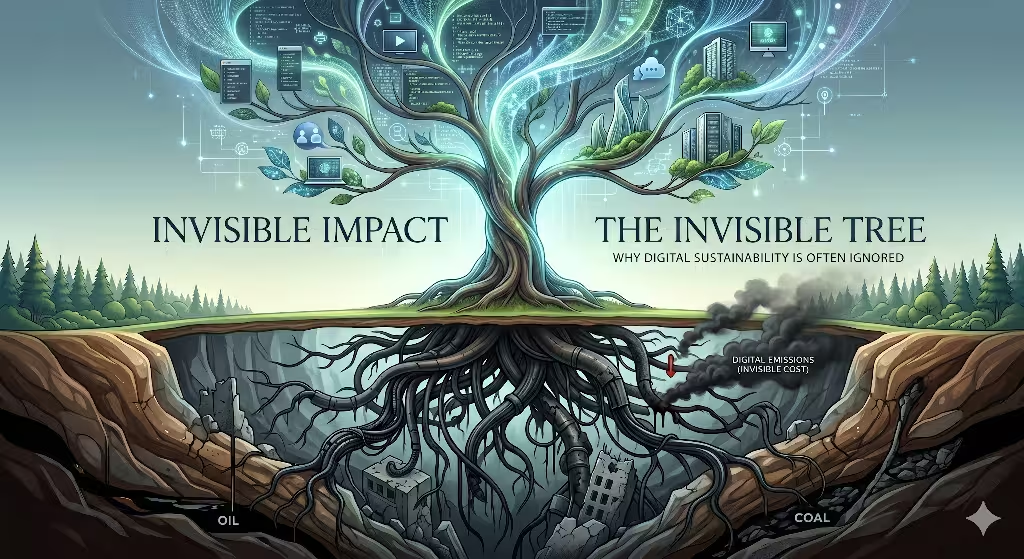
The first big problem with implementing sustainability in web design is that we cannot see the waste. When you walk through a city and see trash on the ground, you know there is a pollution problem. But when you browse a website that is heavy and slow, you do not see the carbon being puffed into the sky in a place distant from you. Every single byte of data that travels from a server to your phone uses energy.
If a website has a lot of big videos and messy code, it uses more energy. Right now, the internet creates more pollution than all the airplanes in the world. This is a shocking fact that many people do not know, but are becoming more aware of in the news.
Most people ignore this because the internet feels light and clean. We use words like “cloud” or “streaming” that make us think of air and water. But the cloud is actually made of heavy metal machines that get very hot. These machines need huge cooling systems to keep from melting. This is why implementing sustainability in web design is so important. We have to stop thinking of the web as something that is separate from nature.
How does web design affect the environment? This is a question that is asked by some clients. It comes down to three things: the server where the site lives, the network that carries the data, and the device you are holding. If a designer makes a site that is five megabytes instead of one megabyte, that site uses five times more energy every time someone looks at it. If a million people look at that site, the waste adds up very fast. By implementing sustainability in web design, we can cut that waste by a huge amount.
Technical Hurdle 1: The Weight of Modern Aesthetics
In the world of design, we often think that more is better. We want high definition videos that play automatically. We want fancy animations and big, colorful photos. These things look great, but they are very heavy. This creates a conflict when implementing sustainability in web design. A site that is full of heavy files is like a car that is carrying too much weight. It needs more fuel to move.
In 2026, we have screens that can show amazing detail. This makes designers want to use the biggest files possible. But these files make the site slow. Slow sites are bad for the planet and bad for business. If a site takes too long to load, people will leave. This is why we need to change how we think about beauty. We can use things like dithered images. Dithering is a way to make an image look good using fewer colors and less data. It has a cool, grainy look that reminds me of old botanical drawings. This is a great way of implementing sustainability in web design while keeping a unique style.
Can a sustainable website be visually appealing? The answer is yes. We call this “Eco-Brutalism” or “Low-Tech Design.” It uses simple fonts and smart layouts to create a strong look. It does not need big videos to be impressive. When we focus on implementing sustainability in web design, we find new ways to be creative. We use nature as a guide. In nature, a tree does not grow a leaf that it does not need. Every part of the tree has a job. Web design should be the same way.
Technical Hurdle 2: The Standardization and Measurement Deficit
Another challenge is that it is hard to measure how “green” a website really is. If you buy a fridge, it has a sticker that tells you how much energy it uses. Websites do not have that yet. Implementing sustainability in web design is hard when you do not have clear rules. There are many different ways to measure data. Some people look at the server energy. Others look at the user’s phone battery. It is a very messy system right now.
The W3C is a group that makes rules for the internet. They have started to create Web Sustainability Guidelines. This is a good step for implementing sustainability in web design. It gives us a map to follow. But many old websites were built without these rules. Changing an old, heavy site into a green one is like trying to turn a gas truck into an electric car. It takes a lot of work and knowledge.
How do I measure a website’s carbon footprint? You can use tools that scan your site and tell you how much CO2 is produced per page view. At Silphium Design, we use these tools to help our clients understand their impact. We show them that by implementing sustainability in web design, they can actually save money. A lighter site means you pay less for hosting and your site loads faster for everyone. For instance, on our own website, we have a green web foundation badge.
The Economic Friction: Perceived Cost vs. Actual ROI
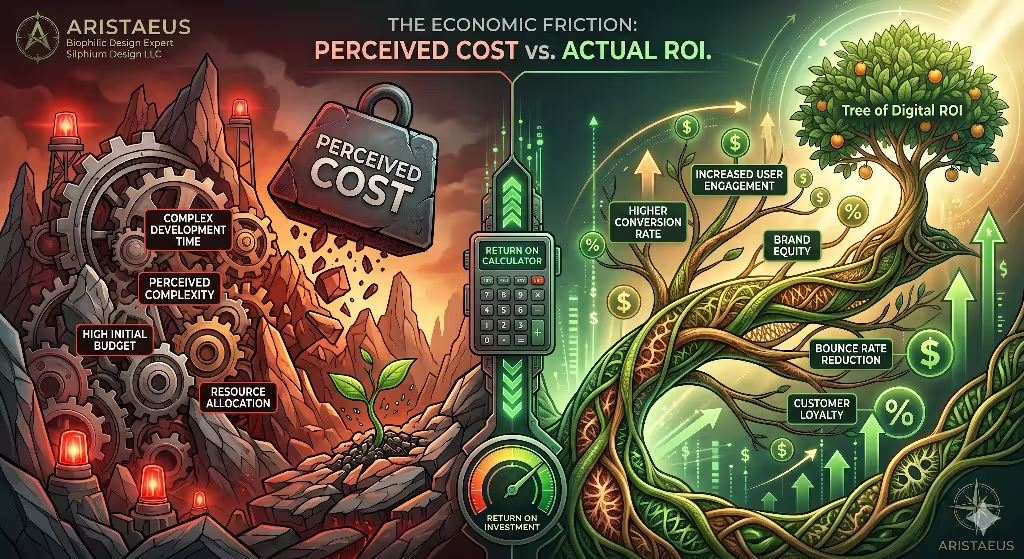
Many business owners are afraid that being green will cost too much money. They think that implementing sustainability in web design is a luxury. They worry that they will have to spend more on developers to write clean code. This is what we call the “Green Premium” myth. In reality, a sustainable site is often cheaper over time.
When you focus on implementing sustainability in web design, you are building a site that is efficient. Efficient sites are easier to maintain. They work better on old phones, which means you can reach more people. This is very important for local SEO and search rankings. Google likes sites that load fast. If your site is green and fast, you will show up higher in search results. This is a great reason for implementing sustainability in web design that helps the bottom line.
What are the major barriers to sustainable web design? The biggest barrier is a lack of knowledge. Many designers do not know how to write “green” code. Many clients do not know that their website is polluting the air. We need to teach people that implementing sustainability in web design is not just a trend. It is a necessary part of doing business in a world that is getting hotter.
Biophilic Solutions to Sustainability Barriers
This is where my background in biology comes in. Biophilic design means bringing nature into the things we build. We can do this with websites too. Nature has spent millions of years learning how to be efficient. We can use those lessons when implementing sustainability in web design. For example, we can use fractal patterns. Fractals are shapes that repeat themselves at different sizes, like the branches of a tree or the veins in a leaf.
Computers are very good at drawing fractals with very little code. Instead of using a giant photo of a forest, we can use a small piece of code to draw a pattern that feels like a forest. This is a brilliant way of implementing sustainability in web design. It creates a feeling of nature without the heavy data cost.
Another idea is the Carbon-Aware UI. This is a special kind of design that changes based on the energy grid. If you are in a place where the sun is shining and the wind is blowing, the website might show you big photos. But if the grid is using a lot of coal, the website will switch to a “Lite” mode. It will show simple text and no videos. This is a very smart way of implementing sustainability in web design. it helps the user feel connected to the environment around them.
Strategic Implementation: Navigating the 2026 Landscape
As we move through 2026, implementing sustainability in web design is becoming more common. We have better tools now. One of the best things you can do is choose a green host. A green host is a company that runs its servers on 100 percent renewable energy. Some companies even use 24/7 carbon-free energy. This means they track every hour of power to make sure it comes from a clean source like wind or solar.
We also have to think about the life of a website. Just like a garden, a website needs to be pruned. We should remove old pages and images that no longer serve a purpose. When we are implementing sustainability in web design, we are taking care of the digital soil. We want the site to be healthy for years, not just for a few months.
Why is digital sustainability important? It is important because the digital world and the physical world are actually the same world. We cannot have a healthy internet on a dying planet. By implementing sustainability in web design, we are doing our part to protect the birds, the trees, and the air. We are making sure that the future of the internet is as bright and green as a meadow in the spring.
Summary of Challenges and Actionable Solutions
Implementing sustainability in web design can feel like a big job. To make it easier, I have put together a simple table. This shows the common problems and the steps you can take to fix them.
| Challenge Area | Barrier | Implementation Solution |
| Visuals | Huge images make the site slow and heavy | Use dithered images and simple patterns from nature |
| Code | Messy code uses more energy to process | Write clean, simple code and use “Vanilla” JavaScript |
| Energy | Servers run on coal and gas electricity | Switch to a host that uses 100 percent renewable energy |
| UX | Videos that play automatically waste data | Let users choose when they want to watch a video |
| SEO | Search engines might not find slow sites | Focus on speed to help your rankings and the planet |
The Future of Green Web Design
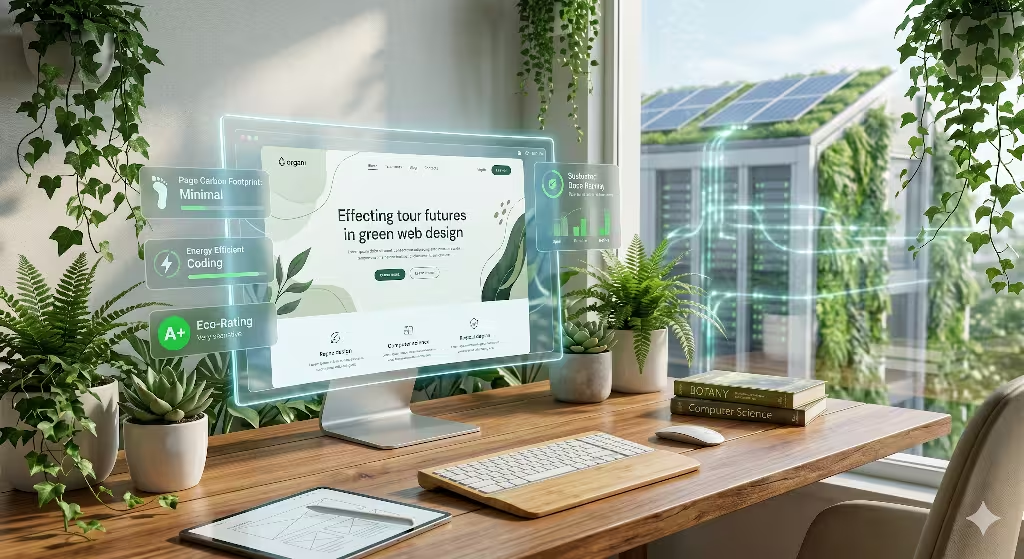
The road to implementing sustainability in web design is full of challenges. We have to fight against old habits and the desire for more “stuff” on our screens. But as someone who loves biology and web design, I see this as an exciting puzzle. We have the chance to rebuild the internet. We can make it a place that respects the earth.
When I am botanizing in the woods near my home in Pennsylvania, I see how every plant works together. There is no waste. The sun provides energy, and the plants use exactly what they need to grow. That is the goal of implementing sustainability in web design. We want to build a digital ecosystem that is just as perfect.
If you are a business owner or a designer, start small. Look at your home page. Is there a big video that does not need to be there? Could you use a smaller font? Every small change helps. Implementing sustainability in web design is a journey. It starts with one choice to be better.
In my work at Silphium Design LLC, I will keep pushing for these changes. I believe that biophilic design is the key. By bringing the logic of nature to our screens, we can solve the problems of digital waste. Implementing sustainability in web design is more than just a technical task. It is a way to show that we care about our home. We want to leave a world behind that is still full of life and color.
The Carbon Cost of Data Centers
To really understand why implementing sustainability in web design matters, we have to look at the data centers. These are the hearts of the internet. They are huge warehouses that hold thousands of computers. These computers stay on 24 hours a day. They generate a lot of heat. If they get too hot, they break.
Most data centers use a lot of water to stay cool. In places where water is scarce, this is a big problem for the local community. This is another reason for implementing sustainability in web design. If we make our websites lighter, the computers in the data center do not have to work as hard. They stay cooler. This saves both energy and water, which is a win-win.
When we talk about implementing sustainability in web design, we are thinking about these buildings. We are trying to reduce the “load” we put on them. Think of it like turning off the lights when you leave a room. Making a small image instead of a big one is like turning off a digital light. It might seem small, but when everyone does it, the impact is huge.
How to Talk to Clients About Green Design
Many clients at Silphium Design LLC want a “fast” site, but they do not know that fast also means green. When I talk about implementing sustainability in web design, I focus on performance. I tell them that a green site is a better site for their customers.
People have short attention spans. If a site takes three seconds to load, half the people will leave. By implementing sustainability in web design, we make the site load in one second. This makes the client happy because they get more customers. It makes me happy because we are saving energy. It is a win for everyone.
I also explain that implementing sustainability in web design is good for their brand. In 2026, people care about the environment more than ever. They want to buy from companies that are responsible. Having a “Low Carbon” badge on a website is a great way to show that a company cares. It builds trust with the user.
The Role of SEO in a Sustainable Web
Search Engine Optimization (SEO) is a big part of my work. It might seem strange, but SEO and implementing sustainability in web design go hand in hand. Google has a set of rules called Core Web Vitals. These rules measure how fast a page loads and how stable it is.
If you are implementing sustainability in web design, you are already following these rules. You are making your images small. You are using clean code. You are making sure the site works well on mobile phones. All of these things help you rank higher on Google. This means that being green is actually a secret weapon for SEO.
When we look for the best keywords in biophilic design, we see that people are searching for “natural websites” and “eco friendly web design.” By implementing sustainability in web design, we are answering those searches. We are providing what the market wants. It is a perfect example of how technology and nature can work together for a common goal.
Designing for Accessibility and Sustainability
Another thing to consider when implementing sustainability in web design is accessibility. A sustainable site is usually a very accessible site. Accessible means that people with disabilities, such as those who are blind or have trouble using a mouse, can still use the site.
When you are implementing sustainability in web design, you tend to use simple HTML. This is the basic language of the web. Simple HTML is very easy for screen readers to understand. Screen readers are tools that read the text on a screen out loud for people who cannot see. So, by making your site green, you are also making it more inclusive.
We should also think about people who have slow internet connections. In many parts of the world, data is very expensive. If we ignore implementing sustainability in web design, we are making sites that are too expensive for some people to use. A green site is a fair site. It allows everyone to join the conversation, no matter where they live or how much money they have.
The Technicals of Green Hosting
If you are serious about implementing sustainability in web design, you must look at your hosting. Your host is where your website lives. If your host uses coal power, your website is powered by coal. It does not matter how clean your code is.
A good host will have a “Green Certificate.” This shows they buy renewable energy. Some hosts go even further. they use “immersed cooling.” This is where they put the computers in a special liquid that takes the heat away much faster than air. This is a very cool technology that helps with implementing sustainability in web design.
We should have that same mindset for our websites. Every time we choose a host, we are voting for the kind of world we want to live in. Choose a host that supports implementing sustainability in web design and you are voting for a cleaner future.
Pruning the Digital Garden: Content Strategy
A big challenge in implementing sustainability in web design is “content bloat.” This happens when a company puts too much stuff on their site. They have hundreds of old blog posts, thousands of photos, and videos from ten years ago. All of this data just sits there, using energy.
We need to treat our websites like a garden. In my garden in Titusville, PA, I have to prune the rhododendrons so they can grow fuller. In web design, we have to prune the content. By implementing sustainability in web design, we are saying that quality is more important than quantity. One great, helpful article is better than ten useless ones.
This also helps with SEO. Search engines like sites that are organized and fresh. If you remove old, bad content, your good content will shine brighter. This is a key part of implementing sustainability in web design. It keeps the site lean and powerful. It makes the user experience much better because they can find what they need without digging through trash.
The Path Forward
Implementing sustainability in web design is one of the most important tasks of our time. It is a way for us to use our skills in technology to protect the natural world. It is not always easy. We face challenges with high-res images, complex code, and the cost of change. But the rewards are worth it.
By implementing sustainability in web design, we create a faster, fairer, and more beautiful internet. We use the lessons of biophilic design to build digital spaces that feel like home. We prove that we can be innovative and creative without being wasteful.
As I look out my window at the trees in Titusville, I am reminded that growth does not have to be loud or messy. A tree grows quietly and efficiently. We should aim for that same quiet strength in our work. Implementing sustainability in web design is our chance to grow a better digital future. Let us start today. Every byte we save is a gift to the planet.
At Silphium Design LLC, we are committed to this mission. We will keep researching the latest trends in SEO and biophilic design. We will keep finding new ways of implementing sustainability in web design. And most of all, we will keep sharing what we learn. Because a forest is only strong when all the trees are healthy. The internet is only strong when we all work together to keep it green.