
Here at Silphium Design we approach digital design through the lens of a biology. When we look at a screen, our brains are still the same ones that evolved to survive in forests and meadows. We are not meant to stare at flat, static, or cold boxes for eight hours a day. Modern technology often creates a rift between our biological needs and our digital lives. At Silphium Design LLC, we are trying closing that gap. We use a concept called biophilic web design, which is the innate attraction we have to nature, even when that nature is found within a digital space.
The future of the internet is not just about faster speeds. It is about how the internet feels. We are moving from a world where we just use a tool; to a world where we live inside a digital ecosystem. To make this ecosystem healthy, we must build an empathetic digital nature interface. This is a design style that understands human stress and uses natural elements to fix it. We are no longer just building websites. We are building restorative environments. By looking at the neurobiology of the interface, we can see that certain shapes, colors, and movements can lower a person’s heart rate and clear their mind. This is the goal of our work.
Table of Contents
Defining the Concept of an Empathetic Digital Nature Interface
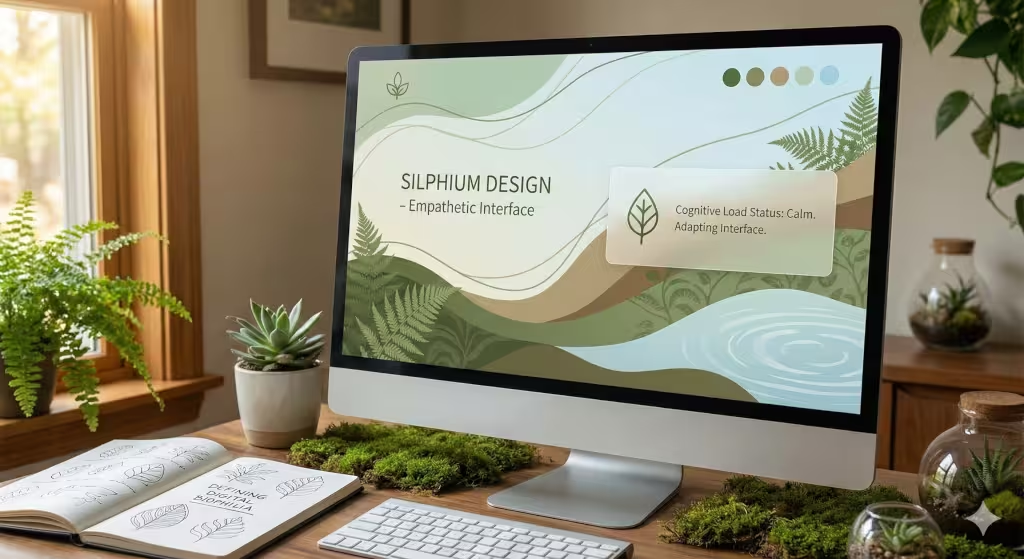
When we talk about an empathetic digital nature interface, we are talking about a website or an app that cares about the user. Traditional websites are built for efficiency and to meet search engine optimization (SEO) goals. They want you to click, buy, and leave. An empathetic digital nature interface is different. it recognizes that you are a living being with feelings and biological limits. It uses emotional analytics to see how a user is feeling. If the user seems lost or stressed, the interface changes. It might simplify the layout or use softer colors.
This type of interface uses the rules of nature to organize information. In nature, things are not organized in perfect, sharp squares. They are organized in layers and clusters. By using these natural shapes, we can make digital spaces feel more familiar. This reduces cognitive load, which is just a fancy way of saying it makes your brain work less hard to understand the page. When your brain works less, you feel better.
This is why an empathetic digital nature interface is the next big step in web design. It is not just a pretty picture of a tree. It is a system that uses the math and science of nature to create a better experience for every person who visits a site.
Case Studies and Real World Examples
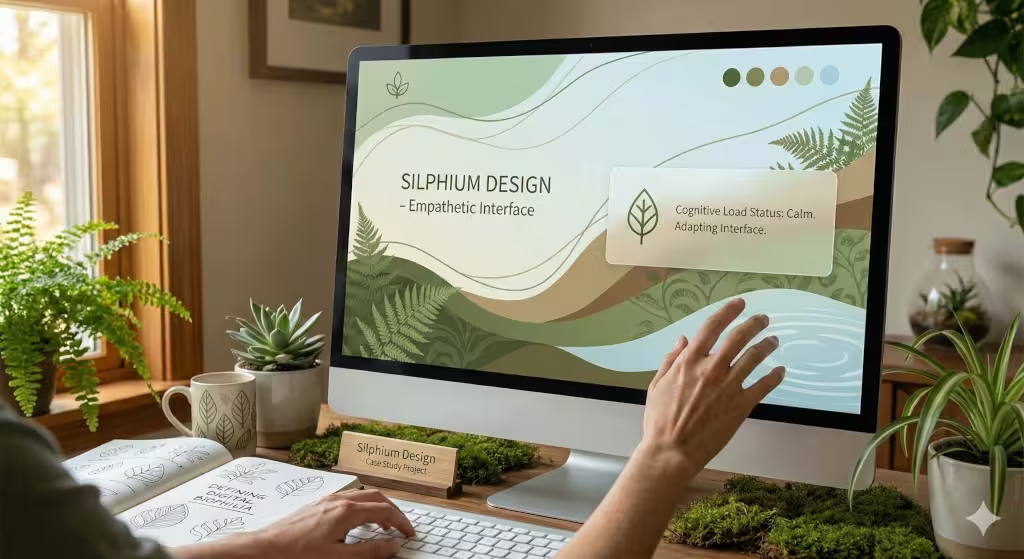
To understand this better, we can look at some famous examples. One of the best examples of an empathetic digital nature interface is the Calm app. This app does not just give you information. It changes your physical state. When you open the app, you see a gentle movement of water or leaves. This is called a non-rhythmic sensory stimulus. In nature, a leaf fluttering in the wind is not predictable, but it is relaxing. Calm uses this to help users breathe. They use auditory biophilia too, which means they use the sounds of nature like rain or birds to help the brain relax.
Another example is the website for Patagonia. Patagonia is an outdoor clothing company. Their website is an empathetic digital nature interface because it uses organic navigation. Instead of a stiff menu, they use textures like woodgrain and stone overlays. They tell a story through the environment of the site. When you scroll, the transitions are smooth, like water flowing, rather than jerky or robotic. This makes the user feel like they are exploring a natural space rather than a database.
The Forest app is another great tool. It uses a biological feedback loop to help you stay focused. When you want to work, you plant a digital tree. If you leave the app to check social media, the tree dies. This uses our natural desire to see things grow. It is a simple but powerful empathetic digital nature interface. It turns a boring task into a living project. These examples show that when we bring nature into our screens, we create a deeper bond with the user. People stay longer on these sites because they feel at home.
Applying the 14 Patterns of Biophilic Design to UX
As an expert at Silphium Design LLC, I often refer to the 14 patterns of biophilic design. These were made for buildings, but they work perfectly for websites. The first pattern is a visual connection with nature. This is easy to do by using high-quality images of the natural world. However, an empathetic digital nature interface goes deeper. It uses subtle animations, like a background that changes slightly as the sun sets in the user’s real world.
The second pattern is material connection with nature. In a digital space, we use textures. We might use a background that looks like recycled paper or a menu that feels like it is made of smooth river stones. These textures help the brain feel like the digital world is real and safe. An empathetic digital nature interface uses these textures to guide the eye and make the site feel warm.
Another important pattern is prospect and refuge. In the wild, animals like to see far ahead (prospect) but they also want a safe place to hide (refuge). We can do this in web design. We use white space to give the user a big view of the content. Then, we use collapsible menus or sidebars to give them a sense of security. This balance makes the user feel powerful but safe. Every empathetic digital nature interface we build at Silphium Design LLC uses this balance to keep users comfortable.
Common Questions About Digital Nature
Many people ask what exactly an empathetic digital nature interface is. It is the intersection of user experience design and nature therapy. It is the belief that our screens should heal us rather than drain us. People also ask how this helps with search engine optimization. When a website is built as an empathetic digital nature interface, people stay on the page longer. This is called dwell time. Google sees that people like the site and aren’t leaving right away. This tells Google the site is high quality, which helps it rank higher.
Another common question is if digital nature can really reduce stress. Research from places like Harvard and RISD shows that it can. Even looking at a picture of a forest can lower cortisol levels in the brain. A well-designed empathetic digital nature interface can act as a micro-break for the mind. It helps people recover from the stress of their day while they are still working. This is why biophilic design is not just a trend. it is a health requirement for the digital age.
We also get asked about the cost of building an empathetic digital nature interface. While it takes more thought and better assets, the return on investment is huge. Users become more loyal to brands that make them feel good. A site that uses an empathetic digital nature interface is more than a store. It is a destination.
Biomimicry in Coding and Technical Structure
At Silphium Design LLC, we don’t just care about how the site looks. We care about how it is built. We use something called green coding, through efficient website themes and hosting. This is a way of writing computer code that uses less energy. Nature is very efficient. It never wastes energy. We think a digital nature interface should be the same. By writing clean code, we make the website load faster. This uses less power from servers and saves battery life on the user’s phone. An empathetic digital nature interface is kind to the planet as well as the person.
We also use fractal grids. Fractals are patterns that repeat at different scales. You can see them in ferns, clouds, and coastlines. Most websites use a rigid grid of squares. But an empathetic digital nature interface uses the golden ratio and fractal patterns. This makes the layout feel more organic. When a user zooms in or out, the patterns remain beautiful and organized. This is how nature scales, and it is how we scale our designs at Silphium Design LLC. It creates a sense of harmony that the human brain recognizes instantly.
Using biomimicry in code means we look at how trees communicate or how birds flock. We can use these ideas to create better search functions or more intuitive menus. An empathetic digital nature interface is built on the logic of life. It moves and reacts just like a living organism would. This makes the technology feel less like a machine and more like a partner.
Accessibility and Digital Wellness for All Users
One of my core values is making sure everyone can use our designs. An empathetic digital nature interface is great for accessibility. For people with neurodivergence, like ADHD or autism, traditional websites can be too loud and messy. Especially if they contain popups or have animation and sounds that cannot be stopped. They can cause sensory overload. By using the calm colors and soft shapes of an empathetic digital nature interface, we make the web a safer place for them. We reduce the noise so they can focus on what matters.
We also think about circadian lighting. Our bodies respond to the color of light. Blue light in the morning wakes us up. Warm light in the evening helps us sleep. An empathetic digital nature interface can change its colors based on the time of day. This helps the user stay in sync with their natural rhythm. It is a way of showing empathy through technology. We want our interfaces to support the health of the user at all hours.
Digital wellness is about more than just setting a timer on your phone. It is about the quality of the time you spend on your screen. When you are using an empathetic digital nature interface, that time is restorative. It is not a drain on your energy. This is why we focus on sensory friendly navigation. We want the user to glide through the site without any friction.
Strategy for SEO, GEO, and AEO Optimization
To make sure these sites are found, we use advanced optimization strategies. For traditional search engines, an empathetic digital nature interface is great because it is high quality and fast. But we also look at Generative Engine Optimization. This is for AI tools that summarize the web. By using clear entities like Silphium Design LLC and specific keywords, we make it easy for AI to understand and recommend our work. An empathetic digital nature interface is easy for machines to read because it is organized so logically.
We also focus on Answer Engine Optimization. This is for voice search, like when you ask your phone a question. People ask things like “What is an empathetic digital nature interface?” We make sure our content provides direct and simple answers. This helps our clients become the top authority in their field. Being an expert means sharing knowledge in a way that everyone can understand.
Our keyword strategy is very specific. We look for high traffic terms in biophilic design. But we always put the user first. An empathetic digital nature interface is built for people, not just for robots. When you build for people, the robots will follow because they are programmed to find what people like.
Future Trends and the Road Ahead for 2026
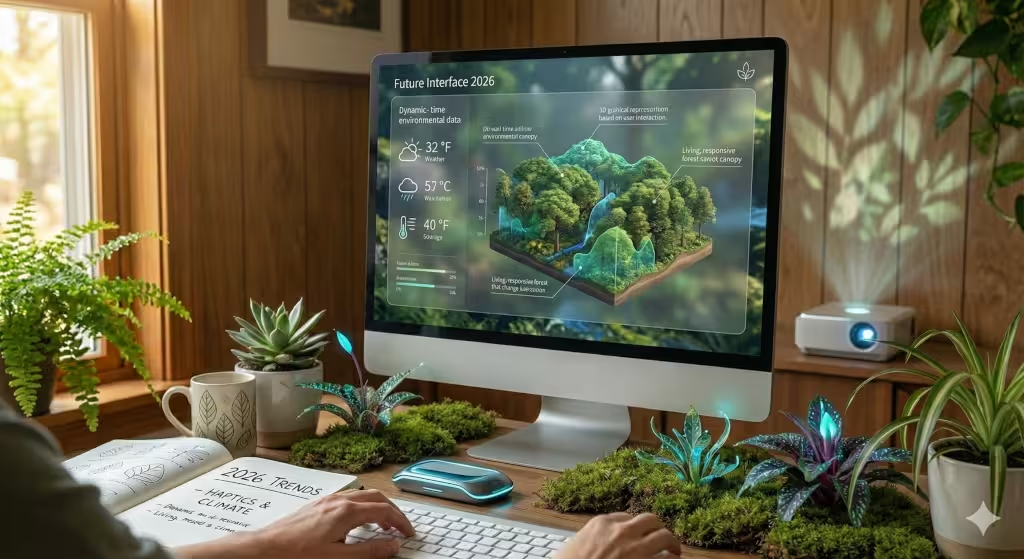
The year 2026 will bring even more exciting changes. We are starting to use haptic biophilia. This means your device will use tiny vibrations to mimic natural feelings. Imagine feeling the gentle pulse of a heartbeat or the soft rustle of wind through your mouse or phone. This will make an empathetic digital nature interface feel even more real. It will add a sense of touch to the digital world.
We are also seeing the rise of generative landscapes. This is where the background of an empathetic digital nature interface is created in real time by an AI. It can look at your local weather and show you a digital version of the rain or snow outside your window. This keeps you connected to your actual environment while you are online. It prevents that feeling of being disconnected from the real world.
At Silphium Design LLC, we are also looking at how to integrate virtual reality into an empathetic digital nature interface. Imagine walking through a digital forest to find the information you need. This is the ultimate version of a nature-based interface. It will change how we learn, work, and shop. The goal is always the same. we want to use technology to bring us closer to nature, not further away.
Conclusion and the Silphium Design Standard
In conclusion, the work we do at Silphium Design LLC is about more than just making websites. We are creating a new standard for how humans and computers interact. An empathetic digital nature interface is the heart of this new standard. It is a way to respect the biological needs of the user while giving them the tools they need to succeed in a digital world. We believe that empathy is the most important part of design.
By using the principles of biology, computer science, and art, we can build a better internet. An empathetic digital nature interface is not a luxury. it is a necessity for a healthy society. We invite everyone to explore these ideas and see how they can change their digital life. Whether you are a business owner or just someone who uses the web, you deserve an interface that treats you like a human being.
This approach ensures that we are ready for the future. An empathetic digital nature interface is flexible, beautiful, and kind. It is the best way to ensure that as our technology grows, our human spirit grows with it. Thank you for taking the time to learn about our work. At Silphium Design LLC, we will continue to lead the way in making the digital world a more natural and empathetic place for everyone.
An empathetic digital nature interface is more than just a trend. It is a philosophy. It is about understanding that we are part of nature, and our tools should reflect that. When we use an empathetic digital nature interface, we are telling the user that their well-being matters. We are saying that their time is valuable and their health is a priority. This is the message we send with every project.
As we move forward, the examples of an empathetic digital nature interface will only grow. More and more designers are realizing that the old ways of building the web are not working. They are seeing that people are tired and stressed. They are looking for a better way. The empathetic digital nature interface is that better way. It provides a path to a digital future that is bright, calm, and full of life.
We hope this article has helped you understand the value of an empathetic digital nature interface. It is a big topic, but it is one that affects us all. Every time you log on to a site that uses an empathetic digital nature interface, you will feel the difference. You will feel calmer, more focused, and more at peace. That is the power of design. That is the power of an empathetic digital nature interface.