
Table of Contents
Every botanical garden director knows the exact week the analytics cliff arrives. Autumn leaves finish falling, the final cords of holiday light displays get packed into storage boxes in early January, and website traffic drops overnight. Across public gardens, organic search traffic regularly falls by 40% to 60% during the cold months. Ticket revenue stalls at the gate, newsletter click rates flatten, and social media engagement slows to a crawl. Most leaders accept this annual winter slump as an unavoidable cost of doing business in a seasonal climate.
That quiet winter slump period is not caused by a lack of public interest in nature. It happens because most botanical garden websites are built exclusively around peak spring and summer blooms. When a local resident visits a garden homepage in mid-January and sees a bright banner of July perennial borders or sun-drenched rose arches, an immediate mental disconnect occurs.
Psychologists call this cognitive dissonance. The website promises a summer experience that does not exist outside, signaling to the visitor that the garden is effectively closed until April. That mismatch drives people away from the site and keeps potential visitors on their couches.
Botanical gardens do not have to surrender five months of the year to the winter slump. By replacing rigid retail marketing schedules with phenology-based content calendars, supported by thoughtful biophilic web design, your institution can transform winter dormancy into a vibrant season of growth. Aligning your digital presence with real-time biological rhythms turns quiet months into a high-converting engine for ecological storytelling, local search visibility, and year-round member retention.
Diagnosing the Off-Season Digital Slump (Why Traditional Garden Marketing Fails in Winter)

To fix an off-season drop in attendance and online traffic, you first have to look closely at why standard marketing playbooks break down after December. Most digital strategies used by cultural attractions borrow heavily from retail and tourism models. Those models rely on big product launches, flashy summer promotions, and holiday ticket rushes. When applied to a living museum of plants, traditional marketing creates structural friction that deepens the winter slump rather than solving it.
The “Peak Bloom” Trap in Web Architecture
Walk through the digital front door of almost any public garden in February, and you will spot the peak bloom trap right away. The website navigation highlights summer wedding rentals, spring plant sales, and warm-weather tram tours. The main hero image shows tulips in full sun or water lilies floating on a July pond. Meanwhile, the real landscape outside is grey, brown, silver, and quiet.
This visual mismatch creates immediate friction for local users who want to know what is happening on the grounds today. When visitors land on a page that ignores the current season, bounce rates climb because the site feels outdated or irrelevant. Worse yet, static summer imagery trains your community to view your garden as a fair-weather venue rather than a living, changing ecosystem worth visiting in every month. Breaking out of the winter slump requires a web architecture that reflects the living collection as it actually looks right now.
Revenue, Membership, and Donor Bottlenecks
The digital slowdown in January and February quickly creates real financial bottlenecks across the entire organization. Membership renewals often dip right after the December holidays, when household budgets tighten and families pause non-essential spending. At the same time, development teams face severe donor fatigue following aggressive year-end giving campaigns.
To fight the winter slump, many gardens pour money into expensive paid social media ads or rely entirely on high-overhead winter light festivals to bring people through the gates. While holiday light shows generate short-term ticket spikes, they require massive labor, electrical infrastructure, and equipment rentals that eat into profit margins. Once the lights come down, the garden is left with no lasting digital asset to sustain traffic. Compounding organic search traffic through seasonal content builds an owned audience that brings visitors back month after month without endless ad spending.
Content Burnout Among Small Communications Teams
Behind every stalled website sits an exhausted communications team. Most botanical gardens operate with lean marketing departments where one or two people manage social media, email newsletters, press releases, and website updates. During spring and summer, content creation feels effortless because volunteers, visitors, and staff flood internal folders with photos of blooming orchids, monarch butterflies, and lush vegetable beds.
When November arrives and the vibrant flowers disappear, those same staff members hit a creative wall. Forced to follow a standard corporate content calendar, they scramble to invent artificial promotional hooks just to fill empty newsletter slots. Writing another generic post urging people to “bundle up and take a walk” feels repetitive to the writer and uninspiring to the reader. This creative exhaustion is a primary driver of the winter slump, turning off-season marketing into a chore instead of an opportunity to share deep botanical knowledge.
What Is a Phenology-Based Content Calendar?
The cure for off-season marketing fatigue is already growing inside your garden beds. Instead of forcing your communications team to invent artificial campaigns, you can let the living collection write your editorial schedule. That shift starts with a simple scientific concept called phenology.
Translating Ecological Rhythms into Digital Operations
Phenology is the study of nature’s calendar. Scientists use phenology to track recurring biological events in plants and animals and see how those events respond to shifts in temperature, rainfall, and daylight. Every bud swell, seed drop, bird migration, and sap rise is a phenological milestone.
A phenology-based content calendar replaces arbitrary four-quarter corporate schedules with the true micro-seasons of your local ecosystem. Instead of treating November through March as one long, empty stretch of winter, a phenological editorial plan divides those months into distinct biological chapters. You shift your storytelling focus to seed dispersal in late autumn, deep dormancy and woody structure in mid-winter, subnivean life thriving beneath the snowpack, vascular sap flow during February thaws, and early ephemeral emergence in March. When your editorial calendar tracks real plant biology, you never run out of timely stories, and your audience learns to look forward to each subtle shift in the landscape, effectively erasing the winter slump.
The Biophilic UX Connection
Phenological content works best when the website itself supports the story. In architectural and digital design, biophilic design is the practice of connecting people with the natural world through the spaces they inhabit. One of the core pillars of biophilic design is a principle known as Connection with Natural Systems. This principle teaches that human beings feel calmer, more focused, and more engaged when their surroundings mirror healthy, natural cycles of growth, rest, and renewal.
Applying this principle to websites is called biophilic UX, or biophilic user experience. When a botanical garden updates its digital visuals, pacing, and featured stories to match outdoor weather and plant cycles, the website feels alive and trustworthy. Readers do not experience the jarring shock of summer photos on a freezing morning. Instead, the screen validates what they see and feel outside their own windows. That harmony lowers mental friction, increases time spent on your site, and builds deep institutional trust during the height of the winter slump.
The 4-Phase Winter Phenology Framework for Botanical Garden Websites
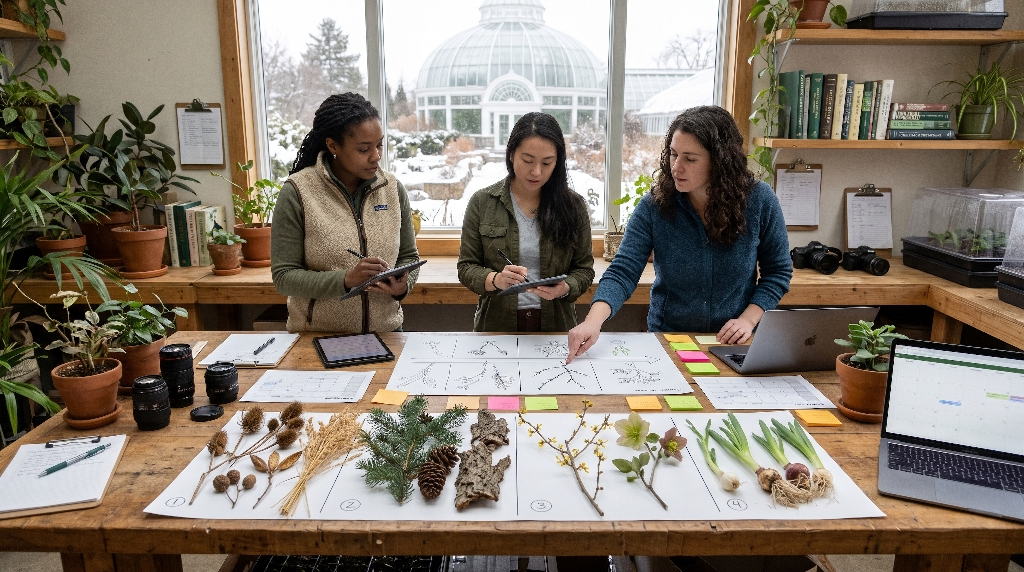
Building a phenology-based editorial strategy does not require guessing what will happen in your beds next week. Horticulturalists and curators already observe these patterns every year. By organizing the off-season into four clear biological phases, your communications team can plan ahead, batch photography, and publish authoritative content that pulls readers out of the winter slump.
Phase 1: Late Fall and Early Winter (Structural Beauty and Seed Ecology)
As frost blackens tender annuals and deciduous trees drop their leaves, the garden reveals its underlying architectural bones. Seed heads on purple coneflowers, black-eyed Susans, and native asters stand like dark sculptures against pale skies. Persistent fruiting shrubs, such as bright red winterberry holly (Ilex verticillata) and beautyberry, provide vital high-fat food sources for overwintering songbirds. Tall ornamental grasses catch low-angled sunlight, turning golden and bronze across open meadows. Beneath the soil and inside hollow perennial stems, native bees, butterfly chrysalises, and beneficial beetles settle in for the cold.
Your digital strategy during Phase 1 should celebrate this quiet ecological work. Publish interactive “Winter Structure” trail guides that direct visitors to your best seed-head displays and berry-laden shrubs. Write clear, engaging conservation blog posts explaining why your horticultural staff leaves dried perennials standing all winter instead of cutting them down in October. When homeowners understand that messy winter beds save native pollinators, they view your garden as a conservation leader rather than an unmaintained park. This educational approach turns late-autumn curiosity into steady website traffic right when the winter slump usually begins.
Phase 2: Mid-Winter Deep Dormancy (Bark, Conifers, and Behind-the-Scenes Science)
January brings deep dormancy to outdoor collections, making it the hardest month for traditional garden marketing. Yet stripped of summer foliage, woody plants display remarkable textures and colors that go unnoticed in July. Paperbark maple (Acer griseum) sheds curling ribbons of cinnamon-colored bark. River birch (Betula nigra) reveals salmon and cream layers, while red twig dogwood stems glow crimson against white snow. Evergreens and conifers step forward as the structural anchors of the landscape, showing off needles in shades of silver-blue, deep emerald, and bronze. Meanwhile, inside heated buildings, botany teams press herbarium specimens, clean wild-collected seeds, and propagate rare cuttings in greenhouses.
During Phase 2, shift your website toward macro details and indoor science. Create high-resolution photo galleries highlighting peeling bark patterns and conifer needle structures, inviting photographers and winter hikers to spot them on your trails. Publish short, personal field notes from plant curators and greenhouse managers showing how staff care for rare species while outdoor beds sleep. If your garden has a glasshouse or indoor conservatory, spotlight tropical collections, citrus trees, and winter orchids as a warm refuge for local families. Giving residents a concrete reason to visit indoors or examine bark textures outdoors keeps engagement strong through the coldest stretch of the winter slump.
Phase 3: Late Winter and the Thaw (Witch Hazels, Hellebores, and Sap Flow)
Long before spring officially arrives on the calendar, subtle biological shifts begin across the garden in February. Increasing day length triggers internal plant clocks. Winter-blooming witch hazels (Hamamelis) unfurl fragrant, ribbon-like yellow, orange, and copper petals that curl up during freezing nights and open again on sunny afternoons. Nodding white snowdrops (Galanthus) push straight through frozen crust, followed closely by tough, evergreen hellebores. Inside sugar maples, birches, and walnuts, freeze-thaw temperature swings build pressure that sends sweet sap flowing up through vascular tissues.
Phase 3 is tailor-made for real-time digital storytelling that builds anticipation. Launch a live “What Is Emerging Now” trail log on your homepage, updated weekly with smartphone photos from your horticultural staff. Pair those updates with simple, downloadable phenology checklists that invite visitors to record the first witch hazel scent or snowdrop cluster they spot during a weekend walk. People love witnessing the earliest signs of life after months of cold. Documenting these tiny biological victories turns your website into a daily weather vane for spring, pulling local readers out of their winter slump weeks before competitors start advertising.
Phase 4: Pre-Spring Awakening (Ephemerals and Member Pre-Access)
March marks the transition from dormancy to rapid biological awakening. In damp woodland corners and along stream banks, eastern skunk cabbage (Symplocarpus foetidus) performs one of nature’s most fascinating tricks. Through a process called thermogenesis, the plant generates its own internal metabolic heat, warming its hooded flower up to 60 degrees Fahrenheit and melting circles through late snow. Nearby vernal pools fill with snowmelt, drawing spotted salamanders and wood frogs out of underground burrows to breed. Across sunny slopes, early crocus, winter aconite, and reticulated iris shoots pierce the warming earth.
Your digital focus in Phase 4 should pivot from quiet observation to urgent, time-sensitive invitation. Early spring ephemerals bloom briefly before overhead tree canopies leaf out and shade the forest floor. Use automated “First Bloom” email alerts to notify subscribers the exact day skunk cabbage emerges or woodland trilliums begin to unfurl. Pair these alerts with early-bird registration for spring pruning workshops, native plant sales, and member-only morning preview walks. Rewarding your winter readers with insider access converts seasonal curiosity into immediate ticket sales and membership upgrades, leaving the winter slump far behind.
Technical and Biophilic Web Features That Power Off-Season Engagement
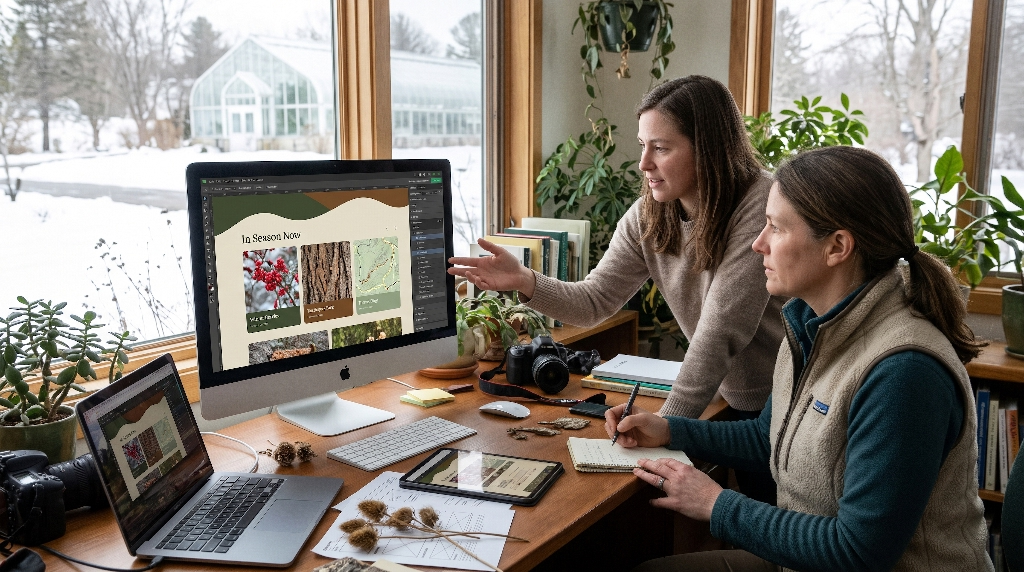
A brilliant phenology-based content calendar will fall flat if your website technology makes updating pages slow or painful. Many botanical gardens still rely on rigid, outdated content management systems built years ago. To keep off-season traffic growing without exhausting your staff, your website needs specific technical and visual features designed for living collections.
Dynamic “In Season Now” WordPress Taxonomies
Too many botanical gardens bury their seasonal plant highlights inside static PDF files or clunky monthly blog archives. PDFs are terrible for mobile visitors walking your trails, difficult for search engines to index, and frustrating for busy staff to edit. Every time a bloom fades early due to a warm spell, someone has to open design software, export a new file, and re-upload it to the server.
A modern WordPress architecture solves this problem using custom post types and structured taxonomies. Instead of static documents, your plant profiles and trail highlights live as dynamic database entries tagged by phenophase, garden zone, light level, and sensory traits like peeling bark, winter fragrance, or evergreen foliage.
When witch hazels start blooming in February, a staff member simply checks a box labeled “In Season Now” in the WordPress dashboard. That single click automatically updates your homepage showcase, interactive trail map, and mobile visitor guide in seconds. Making seasonal updates effortless ensures your site stays fresh all winter long, preventing the stale content that fuels the winter slump.
Season-Adaptive Visual Systems (Biophilic UI)
Great biophilic web design goes beyond placing leaf icons in your footer. It shapes how a page feels to read on a dark winter afternoon. During short January days, visitors often browse websites in dimly lit living rooms or on bright phone screens outdoors against snowy glare. Harsh, glaring white backgrounds paired with thin, low-contrast grey text strain the eyes and drive readers away.
Season-adaptive visual systems subtly tune your website interface to support comfortable winter reading and emotional calm. Using generous negative space allows photography of delicate seed heads and snow-dusted conifers to breathe without visual clutter. Pairing crisp, high-contrast typography with warm earth-toned accents, such as deep spruce green, soft lichen sage, warm birch cream, and rich bark brown, creates an inviting digital sanctuary. These subtle biophilic UI choices echo the natural beauty of the dormant landscape, encouraging visitors to slow down, read deeper, and shake off the mental fog of the winter slump.
Capturing High-Intent Local SEO in Low-Competition Months
Search engine optimization is one of the highest-return investments a botanical garden can make during the off-season. While zoos, amusement parks, and outdoor concert venues slash their marketing budgets and go quiet between November and March, local families are still searching Google for weekend activities, peaceful walks, and educational outings.
Publishing consistent phenological content allows your website to capture high-intent local search traffic with very little competition. When your blog features detailed, helpful articles answering real seasonal questions, search engines reward your domain with top rankings. Think about the exact phrases local residents type into search bars during cold weather:
- “Best winter nature walks near [City]”
- “When do witch hazels bloom in [Region]”
- “Indoor botanical conservatory open in winter near me”
- “How to identify trees by bark in winter”
- “Winter birding spots in [County]”
Each phenology-driven article acts as a permanent digital net that catches local searchers year after year. Unlike paid ads that vanish the moment your budget runs out, organic search visibility compounds over time, creating a reliable buffer against the winter slump every single year.
Turning Off-Season Readers into Year-Round Members and Donors
Traffic alone does not pay horticulturalists or fund plant conservation programs. Every piece of phenological content on your website needs a clear, respectful path that turns casual winter readers into committed subscribers, members, and donors. The secret is matching your ask to the visitor’s seasonal mindset rather than pushing aggressive sales banners.
Mapping Micro-Seasons to Low-Friction Conversion Funnels
Someone reading an article about winterberry holly or skunk cabbage thermogenesis is rarely ready to buy a major annual sponsorship on their first visit. However, they are eager to deepen their connection to local nature. By mapping each winter micro-season to a low-friction conversion step, you can capture their contact information and build a lasting relationship.
Place contextual, helpful calls to action right inside your seasonal stories. At the end of a January post on tree bark textures, offer a free, printable Winter Bark Identification Guide in exchange for an email address. Inside a February update on early snowdrops, invite readers to subscribe to bi-weekly Phenology Field Notes delivered straight to their inbox. Once a reader joins your email list for real-time nature updates, you can nurture them naturally toward spring workshop signups, plant sale previews, and general admission tickets. Gentle, value-first funnels convert curious browsers into loyal supporters even in the middle of the winter slump.
Reframing Memberships Around a 52-Week Biological Story
Many botanical gardens unintentionally hurt their winter retention by selling memberships purely through admission math. Promotional copy often says, “Visit twice and your membership pays for itself.” While that message works well in May, it backfires in December. When prospective members think they will not visit until spring, they delay joining until April, starving your organization of crucial Q1 cash flow.
Phenological storytelling lets you reframe membership around a 52-week biological narrative. Instead of selling cheap tickets, invite your community to become year-round stewards of a living sanctuary. Show them what their membership dues protect during quiet months: heated propagation houses safeguarding endangered native orchids, seed banks preserving regional biodiversity, and dedicated staff maintaining peaceful winter trails for community mental health. Position winter gift memberships and year-end donations as direct support for living plant conservation. When supporters view membership as an ongoing partnership with nature’s full annual cycle, renewals stabilize and your institution outgrows the winter slump.
Cultivating a Living Digital Ecosystem with Silphium Design
Transforming a static, summer-focused website into a living phenological platform requires more than a fresh coat of paint. It demands a thoughtful blend of botanical understanding, user experience design, and clean web engineering. Unfortunately, most botanical institutions struggle to find digital partners who understand how living collections actually work.
Why Generalist Web Agencies Fail Botanical Institutions
When a botanical garden hires a standard corporate web agency, the resulting site almost always treats living plant collections like static online store inventory. Generalist designers build rigid page templates designed for products that never change. They rarely account for seasonal shifts, plant taxonomy hierarchies, or the daily workflow of busy horticultural and communications teams.
Within six months of launch, garden staff find themselves trapped. Updating a seasonal bloom list requires filing support tickets or wrestling with clunky page builders. Meanwhile, bloated code slows down mobile load times for visitors standing out on the trails. Left without tools to reflect real-time ecological change, the website quickly freezes in peak-bloom mode, locking the garden right back into the same old winter slump.
The Silphium Design Architecture
At Silphium Design, we build websites differently because our roots run deep into ecology, conservation, and biophilic design. Our team specializes in creating custom WordPress platforms tailored specifically for botanical gardens, arboreta, nature centers, and environmental conservation organizations. We understand that a botanical garden website should behave like a healthy ecosystem: adaptable, resilient, fast, and deeply connected to the living world.
Our architecture combines calm, nature-inspired biophilic UX with practical technical foundations that empower your internal team:
- Custom Botanical Taxonomies: Intuitive WordPress structures that let staff tag plants, trail logs, and articles by phenophase, season, and garden zone in seconds.
- High-Speed Core Web Vitals: Lightweight, clean code engineered to load rapidly on mobile networks even in remote corners of your grounds.
- Accessible, Calm Interfaces: High-contrast typography, clear navigation, and season-adaptive palettes designed for visitors of all ages and abilities.
- Search-First Content Architecture: Built-in local SEO structures that help your phenological stories rank for regional nature queries year-round.
By aligning your web technology with natural cycles, we help your staff spend less time fighting broken templates and more time sharing the living wonders of your collection.
Next Steps: Schedule a Seasonal UX and Content Architecture Audit
You do not have to accept empty January analytics or stressful off-season marketing scrambles as permanent fixtures of your calendar. Your living collection is already telling a rich, fascinating story every week of the year. Your website simply needs the structure and biophilic design required to share that story with your community.
If your institution is ready to turn off-season dormancy into year-round engagement, member growth, and local search authority, we invite you to connect with our team. Visit Silphium Design today to schedule a Seasonal UX and Content Architecture Audit. Together, we can evaluate your current off-season digital performance, uncover hidden local search opportunities, and build a living, phenology-ready website that leaves the winter slump behind for good.