
Table of Contents
Visual search engines have fundamentally changed how botanical retail stores attract local customers and online buyers. For modern plant shops, platforms like Pinterest are no longer simple digital pinboards where people collect pretty pictures. Instead, Pinterest operates as a massive visual discovery engine that connects human inspiration directly to commerce. When plant shops understand how to build content that aligns with both computer vision and human psychology, their marketing efforts yield compounded organic reach that lasts for months rather than disappearing in twenty-four hours.
The Mechanics of Pinterest Visual Search Graph
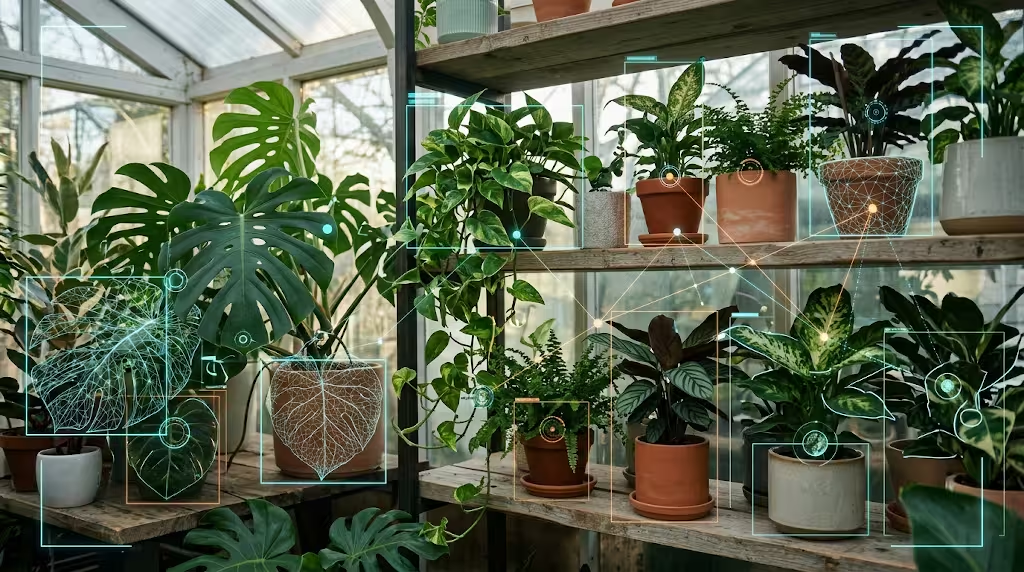
Understanding the underlying engine behind Pinterest is the first step toward building an effective visual marketing strategy. Many plant shops approach Pinterest as if it were an algorithmic social network like Instagram or TikTok. However, the technical infrastructure operates much more like Google Image Search combined with a personalized recommendation system.
Platform Architecture and Evolution
In previous years, Pinterest introduced Idea Pins as a distinct multi-page format that allowed creators to share step-by-step tutorials, recipes, and guides without forcing users to leave the app. Over time, the engineering team at Pinterest recognized that segregating Idea Pins from standard video and image pins created friction for merchants. Consequently, the platform unified these formats into a single, cohesive pin structure.
This evolution is great news for independent plant shops. The updated system keeps the multi-page storytelling format, video playback, and dynamic product tagging that made Idea Pins so effective, while restoring direct outbound links on every frame. When plant shops post multi-page guides today, each individual page can send targeted referral traffic directly to specific product listings, care sheets, or local workshop registration pages.
The technical backbone of this discovery graph relies on deep learning models and computer vision. When plant shops upload high-resolution images or video clips, Pinterest does not simply read the title and description text. Its neural networks scan the pixel data using object detection, edge recognition, and color extraction. The platform identifies the physical objects within the frame, such as a terracotta pot, a split-leaf philodendron, or a pruning tool. It then cross-references those visual components against its visual entity database. This means that plant shops that display clear, well-lit botanical specimens are naturally categorized and indexed for users searching for those exact plants.
The Botanical Retail Advantage on Pinterest
Few industries possess a natural visual advantage as strong as the one held by plant shops. Plants possess organic geometry, rhythmic fractal patterns, and rich textures that instantly capture human visual attention. In environmental psychology and biophilic design, this response is well documented: human beings have an innate connection to nature, and viewing natural foliage lowers stress and increases visual engagement.
On a commercial level, Pinterest users visit the platform with an active planner mindset. They are not merely scrolling to kill time; they are designing their living rooms, planning home offices, looking for weekend DIY projects, or diagnosing houseplant ailments. This puts plant shops in front of consumers right when those shoppers are ready to make a purchase. When local plant shops showcase their inventory through helpful visual guides, they turn passive inspiration into qualified foot traffic and online sales.
Ten High-Converting Pinterest Pin Concepts for Plant Boutiques
To turn everyday casual browsers into paying customers, plant shops must create content that solves real problems while showing off the health and beauty of their inventory. The following ten concepts provide complete blueprints for building educational, visually striking multi-page pins.
1. The Step-by-Step Soil Amendment Masterclass
Most beginner houseplant owners purchase mass-market potting soil from big box stores, only to wonder why their tropical foliage rots within two months. This knowledge gap creates an incredible educational opportunity for specialized plant shops. By demonstrating the physical science of aerated soil mixes, plant shops can position themselves as local authorities while selling high-margin potting amendments.
- Frame 1 (Hook): Begin with a tight, high-definition video of a root-bound houseplant being slipped out of its plastic nursery container. Use a clean text overlay that reads: “Stop using regular potting soil for your tropical plants.” This immediately arrests the viewer’s scroll and challenges a common habit.
- Frame 2 (The Problem): Show a close-up of dense, wet, muddy soil suffocating fine root hairs. Explain in brief text that indoor roots need oxygen just as much as they need moisture.
- Frame 3 (The Ingredients): Lay out five clear glass bowls containing custom substrate ingredients: chunky orchid bark, coarse perlite, horticultural charcoal, coco coir, and worm castings. Label each bowl clearly so viewers can see the differences in particle size and texture.
- Frame 4 (The Ratio): Film hands blending these ingredients together in a clean tray. Use simple visual ratios, such as two parts bark, two parts coir, and one part perlite, so the viewer can follow along at home without needing complex measuring tools.
- Frame 5 (The Water Test): Pour water through the newly blended mix in a clear plastic pot to show how rapidly it drains while retaining proper porosity.
- Frame 6 (Call to Action): Display bagged versions of this custom blend available on your shelves. Plant shops can tag their proprietary soil mix directly on this frame so customers can purchase it with a single tap.
2. The Biophilic Room Diagnostic and Plant Matching Guide
Lighting remains the single biggest challenge for indoor gardeners. Many customers walk into plant shops with an aesthetic vision for a specific corner of their home, but they have no idea whether that spot receives sufficient light. Creating an environmental matching guide establishes your shop as a thoughtful design partner.
- Frame 1 (Hook): Display a split screen showing a bright, sunny window sill alongside a dim corner bookshelf. Use the overlay: “Match your room light to the right plant every single time.”
- Frame 2 (South and West Light): Feature sun-loving selections. Film a sunlit room filled with succulents, cacti, and citrus trees. Add a text tip explaining that these spaces receive intense, direct rays for several hours each day.
- Frame 3 (East Light): Transition to a soft, morning-lit exposure. Highlight plants that thrive in gentle morning sun, such as delicate ferns, hoyas, and variegated monsteras.
- Frame 4 (North Light and Low-Light Corners): Address the hardest spaces to green. Show healthy specimens of snake plants, cast iron plants, and ZZ plants sitting comfortably in ambient shade. Explain that low light means slower water consumption.
- Frame 5 (Design Rule): Explain how layering different plant heights, using tall floor planters, mid-level stands, and cascading trailing vines, creates a balanced, forest-like atmosphere in any room.
- Frame 6 (Call to Action): Invite pinners to bring photos of their rooms into local plant shops or message the shop online for personalized styling advice.
3. Identifying and Treating Common Houseplant Pathogens
When houseplant collectors find webbing on their leaves or sticky residue on their furniture, they experience immediate anxiety. Plant shops that provide clear, panic-free diagnostic content capture high-intent search traffic from owners searching for immediate solutions.
- Frame 1 (Hook): Show a macro zoom of common leaf damage, such as fine yellow speckling on a palm leaf. Overlay: “Are your leaves turning yellow? Check for these tiny pests right now.”
- Frame 2 (Spider Mites): Display extreme close-up footage of tiny webs underneath leaf joints. Provide a quick list of symptoms: pale speckles, dull leaf surfaces, and dry, dusty webbing.
- Frame 3 (Mealybugs): Show the telltale white, cotton-like fluff nestled in leaf axils. Demonstrate how to dip a cotton swab in rubbing alcohol and dab a mealybug directly to dissolve its waxy protective coat.
- Frame 4 (Fungus Gnats): Show the surface of wet potting mix with sticky yellow traps. Explain that gnats breed in damp topsoil and suggest letting the top two inches dry completely between waterings.
- Frame 5 (Treatment Routine): Walk through a three-step treatment sequence: isolate the plant, wash the foliage gently under a lukewarm shower, and spray thoroughly with insecticidal soap or neem oil.
- Frame 6 (Call to Action): Direct viewers to safe pest control kits, neem sprays, and yellow sticky cards available at local plant shops.
4. Zero-Waste Propagation and Water Rooting Displays
Propagation is pure visual magic, making it one of the most shared content types on visual platforms. For plant shops, propagation pins showcase healthy mother plants while highlighting beautiful glass vessels, rooting powders, and propagation stations.
- Frame 1 (Hook): Show a healthy glass tube filled with crystal-clear water and a thick web of white roots emerging from a single vine cutting. Text overlay: “How to root plant cuttings in plain water without losing them to rot.”
- Frame 2 (Finding the Node): Zoom in on a vining philodendron stem. Clearly point out the difference between a leaf petiole and an actual growth node. Explain that new roots only form at the node.
- Frame 3 (The Clean Cut): Use sharp, clean floral shears to make a clean cut just below the node. Remind viewers to wipe their tools with alcohol before cutting to avoid spreading disease.
- Frame 4 (The Water Setup): Place the cutting into a wall-mounted glass vial or an amber glass bottle. Remind viewers to keep the foliage out of the water while keeping the node fully submerged.
- Frame 5 (Root Progress): Show a quick sequence showing root emergence at day seven, day fourteen, and day thirty. Explain that cuttings are ready for potting mix once roots are two inches long with visible secondary roots branching off.
- Frame 6 (Call to Action): Feature your shop’s propagation stations, ceramic rooting vessels, and liquid rooting hormones with direct product shopping tags.
5. Rare Plant Unboxing and Acclimation Protocol
Plant collectors love rare, unusual, and highly variegated specimens. Independent plant shops can build serious excitement around their weekly restocks by pulling back the curtain on how they unbox, inspect, and acclimate rare botanical arrivals.
- Frame 1 (Hook): Feature a taped nursery shipping box being sliced open with an overlay: “Unboxing rare collector plants at our nursery this week.”
- Frame 2 (First Look): Pull back layers of protective paper or insulation to reveal rare tropical specimens, such as an anthurium with velvet leaves or a rare variegated monstera.
- Frame 3 (Inspection Process): Show a specialist gently checking the undersides of the leaves and looking at root systems wrapped in sphagnum moss. This demonstrates the quality standards that separate dedicated plant shops from impersonal warehouse sellers.
- Frame 4 (Acclimation Dome): Place the new plants into a high-humidity greenhouse cabinet or under a clear humidity dome. Explain that shipped plants suffer transit stress and need higher humidity and moderate light for seven days before facing dry indoor air.
- Frame 5 (Soil Transition): Explain when and how the plant will be shifted into its permanent soil mix once its roots stabilize.
- Frame 6 (Call to Action): Inform viewers of the exact drop date and time when these rare specimens will be available on the shop floor or online store.
6. The 5-Minute Repotting Masterclass: When, Why, and How
Repotting is a necessary maintenance task that often makes plant owners nervous. Customers regularly visit plant shops asking whether their plants are ready for a new container. A straightforward repotting guide builds customer confidence and drives container sales.
- Frame 1 (Hook): Show roots growing out of the drainage holes of a plastic pot. Text overlay: “Three signs your houseplant desperately needs a bigger pot.”
- Frame 2 (Diagnostic Signs): Demonstrate the symptoms of a root-bound plant: roots circling the bottom of the pot, water running straight through without soaking in, and stunted growth during the spring season.
- Frame 3 (Choosing the Right Container): Hold up two pots to show size comparison. Emphasize the golden rule taught by good plant shops: only increase pot diameter by one to two inches. Explain that choosing an oversized pot leaves cold, soggy soil around the roots, which causes root rot.
- Frame 4 (Loosening the Roots): Gently massage the compacted root ball on camera. Show how to loosen tight roots without tearing major taproots or snapping healthy root tips.
- Frame 5 (Potting and Settling): Add a base layer of fresh potting mix, center the root ball, fill around the edges, and gently tap the pot against a table to remove air pockets without packing the soil too tightly.
- Frame 6 (Call to Action): Showcase the pottery collections, saucers, and repotting mats available at local plant shops.
7. Indoor Plant Styling for Architectural Cohesion
Plants are living design elements that bring warmth, texture, and organic forms into interior spaces. By presenting plants through the lens of architectural design, plant shops can attract interior designers, home decorators, and design-minded homeowners.
- Frame 1 (Hook): Display a minimalist room before and after adding architectural plants. Text overlay: “Transform a cold, sterile living room using living biophilic design.”
- Frame 2 (Focal Points): Position a tall, structural plant, such as a large fiddle-leaf fig or an olive tree, in an empty corner. Explain how vertical greenery anchors high ceilings and softens sharp wall corners.
- Frame 3 (Textural Contrast): Show a grouping of three plants with contrasting leaf shapes: a broad, smooth rubber tree leaf paired with a delicate, fine-textured fern and a trailing string-of-hearts.
- Frame 4 (Pot and Furniture Harmony): Pair warm terracotta pots with cool industrial concrete surfaces, or matte black ceramic planters with warm mid-century walnut shelving.
- Frame 5 (Trailing Elements): Show trailing pothos vines cascading off high floating shelves to draw the viewer’s eye upward and add natural movement to static walls.
- Frame 6 (Call to Action): Highlight complete styling packages, decorative ceramic planters, and plant stands available through local plant shops.
8. Pet-Safe Houseplant Playbook
Pet safety is a major consideration for millions of pet owners. Many animal lovers avoid keeping indoor greenery because they worry about toxic foliage. Plant shops that actively educate pet owners on safe, non-toxic selections build immense goodwill and attract dedicated buyers.
- Frame 1 (Hook): Feature a cute dog or cat sitting peacefully next to a lush green plant. Overlay: “Beautiful indoor plants that are 100 percent safe for your cats and dogs.”
- Frame 2 (Peperomia Family): Highlight several varieties of peperomia, showing their thick, succulent-like leaves and compact growth habits. Note that they are completely non-toxic and easy to grow.
- Frame 3 (Calathea and Maranta): Feature the dramatic painted foliage of prayer plants and rattlesnake plants. Explain that even with their bold, colorful leaf patterns, they pose zero chemical risk to curious pets.
- Frame 4 (Pilea and Hoyas): Display pilea peperomioides with its circular coin-shaped leaves alongside waxy, blooming hoya vines. Both provide unique visual interest while remaining pet-safe.
- Frame 5 (Strategic Placement): Show how plant shops recommend using wall planters and ceiling hooks for mildly toxic favorites like monsteras, keeping them safely out of reach of pets.
- Frame 6 (Call to Action): Direct shoppers to your website’s curated pet-safe collection or invite them to look for the green paw-print tags placed throughout local plant shops.
9. Seasonal Care Shifts: Spring Growth vs. Winter Dormancy
Plant care routines should never remain static throughout the year. Light angles shift, daylight hours change, and indoor heating dries out the air. Plant shops that publish seasonal care guides help customers keep their plants thriving across every season.
- Frame 1 (Hook): Show frost on a window pane next to a houseplant. Text overlay: “How your houseplant routine must change when winter heating kicks on.”
- Frame 2 (Watering Adjustments): Explain that as daylight hours decrease, plant metabolism slows down. Demonstrate checking soil moisture deep in the pot with a wooden chopstick before adding water.
- Frame 3 (Combatting Dry Indoor Air): Show how forced-air heating drops indoor humidity down to desert levels. Demonstrate using grouping techniques, pebble trays, and room humidifiers to protect delicate leaf margins from turning brown.
- Frame 4 (Drafts and Vents): Point out common danger zones in homes, such as plants placed directly over heating vents or right next to drafty exterior doors.
- Frame 5 (Spring Awakening): Provide a teaser slide for the spring season: when to resume balanced liquid fertilizer and when to increase watering as new growth tips appear.
- Frame 6 (Call to Action): Tag humidifiers, hygrometers, and organic plant foods stocked by local plant shops.
10. Local Nursery Virtual Walkthrough and Weekly New Arrivals
Behind-the-scenes content gives plant shops personality and charm. A kinetic, beautifully filmed walkthrough of your physical retail floor builds familiarity and makes viewers want to visit your physical storefront in person.
- Frame 1 (Hook): Begin with a smooth camera glide through your shop’s front door into a lush, sun-dappled greenhouse space. Overlay: “Take a relaxing 30-second virtual stroll through our greenhouse.”
- Frame 2 (The Aroid Bench): Pan slowly across a bench packed with healthy monsteras, philodendrons, and pothos, with sunlight catching gentle mist in the air.
- Frame 3 (Cacti and Succulents): Cut to a warm, brightly lit wooden table displaying geometric succulents, terracotta pots, and desert specimens.
- Frame 4 (The Pottery Wall): Show organized shelves of handmade ceramic planters arranged by color gradient, from earthy clays to deep emerald glazes.
- Frame 5 (Staff at Work): Show a friendly staff member repotting a plant at the potting bench or hand-watering a hanging basket with a brass watering can.
- Frame 6 (Call to Action): Display store hours, weekend workshop schedules, and parking directions, inviting local pinners to visit their neighborhood plant shops this weekend.
Production Standards and Algorithmic Optimization
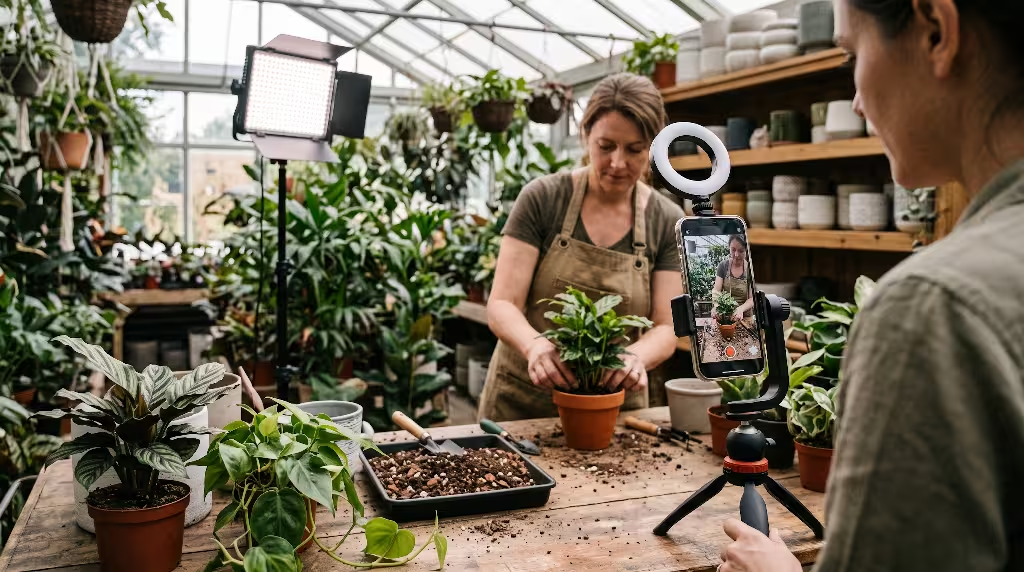
Creating compelling visual content requires attention to technical production details. Even the most helpful plant care tutorial will struggle to gain traction if the video quality is poor, the lighting is dim, or the framing ignores platform specifications. Plant shops must adhere to clear technical standards to maximize organic reach.
Visual Quality and Lighting Setup
Plants are organic subjects that require accurate color representation. Yellow, dim, or flickering indoor lighting makes foliage appear sick, which turns viewers away. Plant shops should film near large east-facing or north-facing windows to capture bright, indirect daylight. If natural light is limited, invest in a 5000K daylight-balanced LED video light. This color temperature reproduces the true green tones of chlorophyll without adding artificial yellow or blue casts.
Keep camera lenses clean. Greenhouse humidity and dust from potting soil quickly create a hazy film on smartphone lenses. Wipe the lens with a microfiber cloth before filming every clip to keep edges crisp and details sharp.
Framing and Safe Zones
Always record in vertical 9:16 format at 1080 by 1920 pixels. Horizontal or square videos leave black bars on mobile screens, wasting valuable display space. Keep key visual elements, products, and text overlays within the central safe zone of the screen. The top ten percent of the screen is often covered by platform search bars, while the bottom twenty percent holds profile icons, titles, and engagement buttons. Placing text overlays too close to the edges makes them difficult or impossible to read.
Pacing, Length, and Audio
Keep individual video clips snappy and energetic. Each slide in a multi-page pin should run between three and five seconds. If a video slide drags on for fifteen seconds without visual movement, viewers will swipe away, sending a negative retention signal to the algorithm.
Use rhythmic transitions between frames. Show the problem, present the action, and reveal the result with clean cuts. When selecting background audio, choose calm, ambient, or upbeat acoustic tracks from the platform’s commercial audio library. Many users browse with sound turned off, so always use high-contrast text overlays to convey essential instructions clearly without audio.
Pinterest Search Engine Optimization and Technical Taxonomy

Search engine optimization on Pinterest combines traditional keyword indexing with automated computer vision. For plant shops, ranking high in search results requires aligning text elements, visual cues, and board structures into an organized taxonomy.
Plant Shop Board Architecture
|
|-- Level 1: Core Category Board (e.g., Indoor Houseplant Care)
|    |
|    |-- Level 2: Section (e.g., Soil Mixes and Repotting)
|    |    |-- Target Pins: Chunky Aroid Soil Recipes, Repotting Guides
|    |
|    |-- Level 2: Section (e.g., Pest Identification and Control)
|         |-- Target Pins: Spider Mite Treatments, Gnat Trapping
|
|-- Level 1: Lifestyle and Design Board (e.g., Biophilic Interior Styling)
     |
     |-- Level 2: Section (e.g., Low-Light Spaces)
     |-- Level 2: Section (e.g., Pet-Safe Plant Styling)
Optical Character Recognition (OCR) Optimization
Pinterest’s search crawlers use optical character recognition to read the text placed directly on your images and video frames. When plant shops include text overlays like “How to Mix Chunky Soil” or “Best Low-Light Houseplants,” the search engine reads those words directly from the image file and indexes the pin for those search terms.
To help the OCR system read your pins easily:
- Use clean, bold sans-serif typefaces.
- Ensure strong color contrast, such as dark green or black text over a pale cream background, or white text over a dark green leaf.
- Avoid overly scripty, cursive fonts that can confuse machine vision text readers.
Pin Titles and Descriptions
Your pin title is one of the strongest text relevance signals on the platform. Place your primary keywords directly within the first forty characters of the title, where they are immediately visible to users browsing search results.
Write descriptive, natural pin descriptions between one hundred and two hundred words. Avoid strings of disconnected keywords, which look like spam to both algorithms and human readers. Instead, write helpful summary paragraphs that weave in natural related phrases, such as tropical plant soil, indoor gardening tips, drainage amendments, and local plant shops.
Board Structures and Hierarchy
Where you save your pins matters just as much as how you tag them. Pinterest evaluates the context of the entire board to understand the subject matter of a new pin. Plant shops should never save all their pins to a single, catch-all board named “Our Shop” or “Plant Stuff.”
Instead, build a logical board hierarchy:
- Create broad parent boards for major categories, such as Indoor Plant Care, Biophilic Home Decor, and Houseplant Propagation.
- Within those boards, set up clear sections, such as Low-Light Plants, Pet-Friendly Greenery, and Aroid Care.
- Save your new pins directly to the most specific, relevant board section first. This gives the search engine an immediate thematic anchor for indexing.
Commonly Asked Questions about Idea Pins and Plant Shops
To capture broader search traffic from search engines like Google, which regularly indexes high-ranking Pinterest pins, your content strategy should answer common questions that shoppers type into search bars every day.
How do plant shops use Pinterest for marketing?
Plant shops use Pinterest as an evergreen visual discovery and e-commerce acquisition funnel. Unlike fast-moving social feeds where content disappears after twenty-four hours, pins continue to surface in search results for months and even years after publication.
Plant shops use this platform to share step-by-step care guides, plant styling lookbooks, and propagation tutorials that attract customers who are actively planning home improvement projects. Retailers monetize this attention by tagging specific products directly on the pins, allowing users to buy plants, specialty soils, decorative pottery, and tools directly through their online stores or visit their physical retail locations.
Are Idea Pins still called Idea Pins on Pinterest?
Pinterest recently updated its pin creation tools by merging Idea Pins and standard video pins into a single, unified pin format. While the distinct name “Idea Pin” has been phased out across the user interface, the underlying multi-page storytelling format remains fully active.
Creators and businesses can still publish multi-slide, vertical video and photo sequences that guide users through complete tutorials. The biggest advantage of this update for plant shops is that every single slide can now feature a direct outbound web link, making it easier than ever to send interested readers straight to product pages, booking links, and local store directions.
What type of plant content gets the highest engagement on Pinterest?
The most saved, clicked, and shared content on Pinterest focuses on practical problem-solving, aesthetic inspiration, and step-by-step transformations. Content types that consistently deliver strong performance for plant shops include:
- Custom soil and amendment recipes that show clear ingredient ratios.
- Curated lists of plants for specific living conditions, such as pet-safe varieties, drought-tolerant species, and low-light foliage.
- Clear visual pest diagnostic guides that show magnified leaf damage and provide actionable treatment routines.
- Aesthetic room styling guides and plant shelf styling pins that demonstrate how to arrange greenery attractively within modern interior spaces.
- High-definition propagation timelapses showing healthy root growth in water vessels.
How do I tag products on my plant shop Pinterest Pins?
To tag products on pins, plant shops need an active Pinterest Business account linked to a claimed domain or an uploaded product catalog. Once your business account is verified, you can tag items using these steps:
- Open the pin creation tool on desktop or mobile and upload your vertical video or photo assets.
- Select the Tag Products icon from the editing menu.
- Search for the specific item from your linked retail catalog, or paste the direct product URL from your online shop.
- Position the visual shopping sticker directly over the featured plant, decorative ceramic pot, or bottle of fertilizer on the screen.
- Save the pin to your most relevant category board. Viewers can now tap the sticker to view current pricing and purchase the item instantly.
The Omnichannel Bridge: Connecting Pinterest to Web UX
Bringing traffic from Pinterest to your website is only half the battle. If a user clicks on a beautiful pin featuring a rare philodendron and lands on a slow, generic website with confusing navigation, they will bounce immediately. Independent plant shops must build an intentional bridge between their visual discovery pins and their website user experience.
Pinterest Referral to Customer Journey
|
|-- Step 1: User discovers visual pin on Pinterest (e.g., Chunky Soil Recipe)
|
|-- Step 2: Clicks direct product tag or outbound link
|
|-- Step 3: Lands on a mobile-friendly, biophilic landing page
|    |-- Instant visual continuity (matching fonts, photos, palettes)
|    |-- Fast load time under two seconds
|
|-- Step 4: Engagement fork
     |-- Direct Purchase: Adds pre-mixed soil to digital cart
     |-- Local Visit: Views store map and hours for weekend pickup
     |-- Lead Capture: Downloads free 1-page plant care guide via email
Biophilic Web Design Continuity
Biophilic design is the practice of connecting people to nature through intentional design choices in built and digital environments. When visitors arrive at your website from a plant-focused Pinterest pin, the visual aesthetic of the page should feel like an organic continuation of that experience.
Plant shops should adopt warm, earthy color palettes inspired by nature, including soft moss greens, warm terracotta tones, deep bark browns, and soft stone neutrals. Avoid harsh, blinding neon accents and cold, sterile grey grids.
Use clean typography paired with high-resolution photography that highlights natural leaf venation and organic textures. When the transition from the pin to the website feels harmonious, visitors feel calm and confident, which increases time-on-page and conversion rates.
Mobile Page Speed and Technical Performance
Over eighty percent of Pinterest browsing happens on mobile devices. If your plant shop website takes longer than three seconds to load over a mobile cellular connection, more than half of those potential customers will leave before seeing your products.
Optimize your digital storefront by compressing all plant photography into modern web formats like WebP. Avoid heavy, uncompressed background videos on mobile landing pages. Streamline your checkout process by offering one-touch mobile payment options like Apple Pay, Google Pay, and Shop Pay, allowing customers to complete orders without manually entering credit card numbers on small phone screens.
Capturing Email Leads and Local Foot Traffic
Not every person who clicks a pin is ready to purchase a fiddle-leaf fig immediately. Dedicated plant shops turn one-time visitors into long-term community members by offering helpful, downloadable resources in exchange for email signups.
Create simple, one-page PDF care cheat sheets, such as a “Beginner Houseplant Survival Chart” or a “Non-Toxic Pet-Safe Plant Directory.” Place a clean signup box on your popular blog posts and product pages. Once these visitors join your mailing list, your plant shop can nurture them with weekly care tips, news about greenhouse restocks, and invitations to upcoming weekend potting workshops.
For brick-and-mortar plant shops, include your physical address, operating hours, and parking tips clearly in the website header and footer. Embed an interactive map on your contact page so local customers can easily tap for driving directions from their phones.
Measurement Framework and Algorithmic Feedback Loops
A successful visual marketing strategy requires continuous testing, analysis, and refinement. Plant shops must review their analytics data regularly to understand which topics drive real business results and which ones fall flat.
| Core Metric | What It Measures | Strategic Meaning for Plant Shops |
| Impressions | Total times your pin appeared on screens | Indicates keyword relevance, search volume, and visual appeal in feeds. |
| Saves (Repins) | Times users saved your pin to their personal boards | Reflects high educational or aspirational value; signals strong algorithmic authority. |
| Outbound Clicks | Direct visits to your plant shop website | Measures conversion intent and shopping interest; validates clear calls to action. |
| Pin Clicks | Taps to view the pin in close-up detail | Shows strong visual interest and effective thumbnail imagery. |
Analyzing the Save-to-Click Ratio
Different metrics tell different stories about user intent. A pin with thousands of saves but very few outbound clicks usually means the content was helpful or inspiring, but lacked a clear reason for the viewer to visit your website. For example, a simple graphic showing five pet-safe plants might get thousands of saves because users keep it as a quick reference, but if the pin doesn’t mention where to buy those plants, it won’t drive retail traffic.
Conversely, pins with high click-through rates usually feature active problem-solving or exclusive inventory. When plant shops post about diagnosing root rot or unboxing rare tropical species, viewers click through because they need immediate answers or want to claim a rare plant before it sells out. Review these ratios monthly to maintain a healthy balance between brand-building educational pins and direct sales drivers.
Audience Affinity and Content Iteration
Within Pinterest Analytics, examine the Audience Insights dashboard to see what other categories and topics your followers care about. Many plant shops discover that their audience is also interested in home decor, landscape architecture, organic gardening, and sustainable living.
Use this audience data to plan future content batches. If you notice a high affinity for interior design, produce more pins focusing on architectural plant styling and ceramic pottery pairings. If your audience leans toward DIY projects, double down on soil mixing tutorials, terrarium building sequences, and propagation guides.
By treating Pinterest as an educational, visual search engine rather than a passive social feed, independent plant shops can build an enduring marketing system. High-quality imagery, clear text overlays, structured board hierarchies, and thoughtful website integration work together to establish authority, attract passionate plant lovers, and steadily grow both online orders and local nursery foot traffic.