
In this guide, I will show you how to apply eco-psychology principles to UX/UI design. We will look at how human biology responds to digital environments, how to reduce mental fatigue, and how to build software that respects both human cognitive limits and planet resources.
Table of Contents
Executive Summary / Quick Takeaways
Digital interfaces today are facing a major user experience crisis. Most modern software relies on aggressive visual cues, persistent notifications, and high contrast layouts. These features trigger mental overload and strain our working memory. By bringing eco-psychology principles into digital product design, we can fix these issues.
Here are the main takeaways from this framework:
- The Main Problem: Modern web design uses intrusive notifications, dark patterns, and bright visual contrasts. These elements cause directed attention fatigue and raise user stress levels.
- The Solution: Designers can use eco-psychology principles to ground digital interfaces in human evolutionary biology. Using concepts like Attention Restoration Theory and natural layout patterns creates calming digital spaces.
- The Measurable Result: Applying eco-psychology principles leads to lower bounce rates, better task completion times, stronger user trust, and smaller digital carbon footprints.
- The Environmental Impact: Streamlined interfaces built with eco-psychology principles require less server processing power. This directly reduces energy use and carbon emissions.
The Cognitive Crisis of Modern Interfaces
Human beings spent thousands of years evolving in natural environments. Our visual and nervous systems are optimized for soft lighting, organic shapes, and predictable spatial depth. In contrast, modern web design has developed over just a few decades. In that short time, it has built an environment that runs counter to our natural biology.
When we use software today, we interact with bright pixels, sudden pop-up boxes, and flashing banners. These elements fight for our visual attention. When product teams learn how to apply eco-psychology principles to UX/UI design, they can reverse this strain. Applying eco-psychology principles allows us to create digital spaces that work with human biology instead of fighting it.
1.1 The Urbanization of the Screen
The modern computer screen resembles a crowded city street. It is packed with bright signs, loud noises, and constant movement. In urban environments, our brains must filter out massive amounts of background noise to stay safe and focused. This process requires active mental effort.
The same strain occurs when users navigate typical websites. High saturation colors, high contrast buttons, and auto-playing videos force the brain into a state of high alert. This digital environment causes the visual cortex to work continuously. Over time, this constant stimulation leads to mental exhaustion, higher bounce rates, and user frustration.
When web designers learn how to apply eco-psychology principles to UX/UI design, they treat screen space like a natural environment. Instead of overwhelming the user with competing visual triggers, they structure content to allow natural visual scanning. Using eco-psychology principles helps convert digital noise into visual harmony.
1.2 Defining Digital Eco-Psychology
Digital eco-psychology is the study of how digital environments affect human psychology and biological systems. It brings together computer science, human-computer interaction, and environmental psychology.
The primary goal of digital eco-psychology is to understand how software influences mental health and cognitive load. By understanding these connections, designers can build tools that support human well-being. Knowing how to apply eco-psychology principles to UX/UI design gives software engineers a clear methodology for building healthier applications.
Applying eco-psychology principles means treating the user screen as an ecosystem. Every element on a webpage, from font choices to layout spacing, affects the digital climate. When these elements are placed in balance, the interface feels intuitive and effortless to use.
1.3 Traditional UX Psychology vs. Eco-Psychological UX
Traditional UX psychology focuses on user behavior, conversion metrics, and task completion speed. It relies on trigger patterns, gamification, and habit loops to keep users engaged. While these tools can increase short term metrics, they often rely on user stress and anxiety to drive action.
Eco-psychological UX takes a broader, healthier approach. It balances business goals with human mental health. The table below highlights the differences between these two methodologies:
| Design Dimension | Traditional UX Psychology | Eco-Psychological UX |
| Primary Goal | Maximize time on page and conversions | Minimize cognitive effort and restore attention |
| Visual Strategy | High contrast and attention grabbing alerts | Natural color palettes and ambient status indicators |
| Layout Geometry | Rigid rectangular grids and sharp edges | Organic visual rhythms and biomorphic curves |
| User Engagement | Driven by urgency, FOMO, and notifications | Driven by clear value, user agency, and calm interaction |
| Environmental Impact | High asset loads and heavy server usage | Lean code bases, fast loads, and energy efficient pages |
Learning how to apply eco-psychology principles to UX/UI design lets product teams move past aggressive tactics. By using eco-psychology principles, brands build lasting trust while maintaining strong conversion rates.
Main Psychological Frameworks for Interface Design
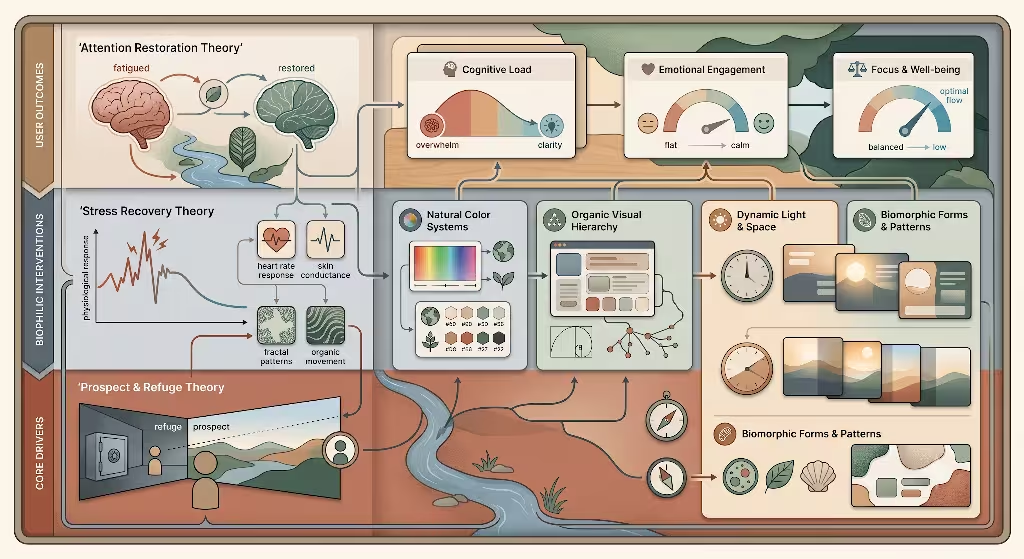
To understand how to apply eco-psychology principles to UX/UI design, we must look at the psychological science behind human perception. Four major frameworks explain how human biology interacts with visual environments.
+-----------------------------------------------------------------------+
|                 CORE ECO-PSYCHOLOGY FRAMEWORKS                        |
+-----------------------------------------------------------------------+
|  1. Attention Restoration Theory (ART)                                |
|     -> Uses "soft fascination" to recover from mental fatigue.       |
|                                                                       |
|  2. Stress Recovery Theory (SRT)                                      |
|     -> Reduces nervous system strain using natural visual triggers.   |
|                                                                       |
|  3. Prospect and Refuge Theory                                        |
|     -> Balances clear views (navigation) with safe focus areas.       |
|                                                                       |
|  4. Biophilia Hypothesis                                              |
|     -> Uses natural curves, shapes, and rhythms to lower stress.      |
+-----------------------------------------------------------------------+
Attention Restoration Theory (ART)
Developed by Stephen and Rachel Kaplan, ART explains how natural environments help the human mind recover from mental fatigue. The brain uses two types of attention: directed attention and involuntary attention.
Directed attention requires active mental energy. We use it when reading code, analyzing spreadsheets, or balancing a budget. Extended use of directed attention leads to fatigue, higher error rates, and irritability.
Involuntary attention occurs effortlessly. It is triggered by natural movements like swaying trees, moving clouds, or rippling water. The Kaplans call this phenomenon “soft fascination.” Soft fascination gives the brain’s directed attention mechanisms time to rest and recover.
When team members learn how to apply eco-psychology principles to UX/UI design, they bring soft fascination into web applications. Using quiet ambient screens, smooth subtle transitions, and soft visual backgrounds helps users maintain focus without running out of mental energy. Implementing eco-psychology principles preserves human focus during long digital tasks.
Stress Recovery Theory (SRT)
Formulated by Roger Ulrich, SRT focuses on our automatic emotional and physiological responses to visual stimuli. Ulrich proved that viewing natural scenes quickly lowers blood pressure, reduces heart rate, and decreases muscle tension.
In digital interfaces, harsh visual jumps, bright red warning icons, and unexpected pop-ups trigger mild stress responses. Over time, these micro-stress events accumulate, making users feel tired and anxious.
Knowing how to apply eco-psychology principles to UX/UI design allows developers to eliminate unnecessary stress triggers. By incorporating eco-psychology principles like soft tones, gentle status updates, and harmonious visual rhythms, screens can actively lower stress during daily work.
Prospect and Refuge Theory
Jay Appleton created Prospect and Refuge Theory to explain human spatial preferences. Historically, humans preferred landscapes that offered two things: a clear, elevated view of potential opportunities (prospect) and a safe, sheltered place to hide from danger (refuge).
In UX/UI design, prospect maps directly to clear navigation systems and visible search paths. Users want to see where they are, where they can go, and what choices are available. Refuge maps to clean, uncluttered content zones where users can focus on a single task without distraction.
When product designers understand how to apply eco-psychology principles to UX/UI design, they balance prospect and refuge across every page layout. Using eco-psychology principles ensures dashboards offer clear high-level overviews alongside simple, dedicated workspaces.
The Biophilia Hypothesis
Popularized by Edward O. Wilson, the Biophilia Hypothesis states that humans possess an innate biological need to connect with nature and other living systems. We are genetically tuned to respond to organic shapes, natural textures, and living geometries.
In digital design, biophilia does not mean pasting stock photos of leaves onto every web page. It means understanding the deep mathematical patterns found across natural ecosystems. Applying eco-psychology principles involves using these natural patterns in visual hierarchies, UI iconography, and layout math.
Step-by-Step – Applying Eco-Psychology Principles to UX/UI Design
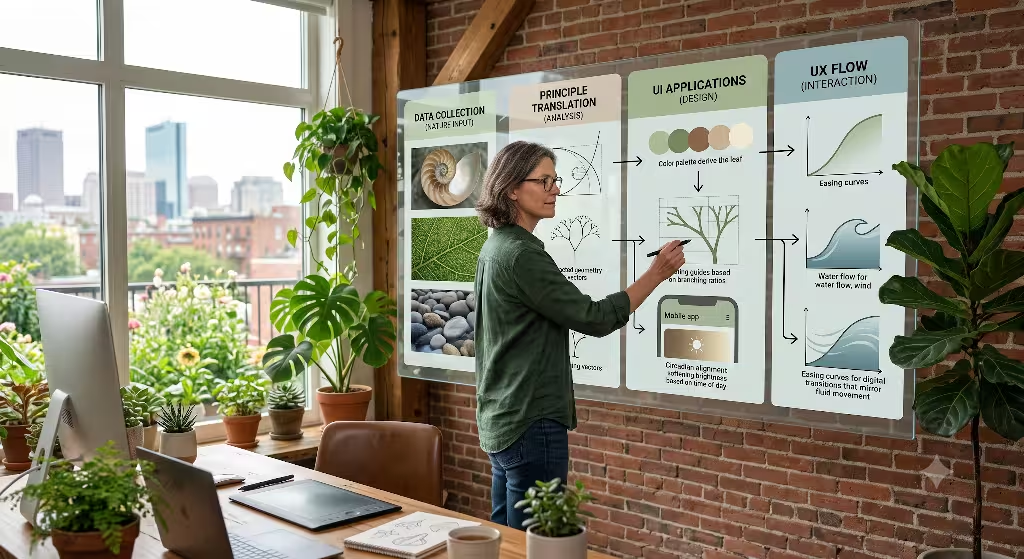
Applying these scientific theories into daily design workflows requires a systematic, step-by-step approach. Here is how software design teams can implement these concepts directly into their product component libraries.
+-----------------------------------------------------------------------+
|             STEP-BY-STEP IMPLEMENTATION ROADMAP                       |
+-----------------------------------------------------------------------+
|  Step 1: Visual Ergonomics & Color Systems                            |
|          -> Switch to low-strain earth tones and circadian palettes.  |
|                                                                       |
|  Step 2: Spatial Layout & Algorithmic Geometry                        |
|          -> Implement Golden Ratio grids and soft organic edges.      |
|                                                                       |
|  Step 3: Micro-Interactions & Motion Physics                          |
|          -> Apply real-world motion easing curves to UI elements.     |
+-----------------------------------------------------------------------+
3.1 Visual Ergonomics & Color Systems
Color choice directly affects human eye strain and nervous system arousal. Pure black #000000 set against pure white #FFFFFF creates intense visual contrast that strains the eye muscles during long reading sessions.
When learning how to apply eco-psychology principles to UX/UI design, start by shifting your color tokens toward natural, low-strain palettes:
- Replace pure white backgrounds with warm neutrals like slate, soft cream, or light pebble tones.
- Replace pure black text with deep charcoal, deep forest green, or midnight blue hues.
- Use earth-grounded accent colors like sage green, terracotta, warm oak, and ocean blue for interactive buttons and links.
Using eco-psychology principles also means adapting color palettes to match circadian rhythms. Interfaces can automatically soften background brightness and reduce blue light exposure as the user’s local day transitions into evening.
3.2 Spatial Layout and Algorithmic Geometry (Natural Analogues)
Nature rarely uses perfect ninety degree corners or rigid, uniform grids. Organic structures, from sea shells to sunflower seeds, grow according to logarithmic mathematical sequences like the Fibonacci series and the Golden Ratio ($\phi \approx 1.618$).
+-----------------------------------------------------------------------+
|  FIBONACCI SPACING SCALE IN UI DESIGN                                 |
+-----------------------------------------------------------------------+
|  Base Unit: 8px                                                       |
|  Scale Steps: 8px | 13px | 21px | 34px | 55px | 89px | 144px           |
|                                                                       |
|  Example Layout:                                                      |
|  +--------------------------------+---------------------------------+ |
|  | Main Content Area              | Sidebar Panel                   | |
|  | Width: 61.8%                   | Width: 38.2%                    | |
|  | Padding: 34px                  | Padding: 21px                   | |
|  +--------------------------------+---------------------------------+ |
+-----------------------------------------------------------------------+
When considering how to apply eco-psychology principles to UX/UI design, layout geometry plays a vital role. You can bring organic structure to your digital layouts by:
- Building layout grids using golden ratio proportions for column widths and margin padding.
- Rounding sharp UI box corners with soft border radii (such as 8px to 16px) to reduce subconscious threat responses in the visual processing centers of the brain.
- Organizing content elements into natural visual hierarchies that allow the eye to glide smoothly across the screen.
Applying eco-psychology principles to page structures creates an immediate sense of order and balance that feels familiar to human perception.
3.3 Micro-Interactions and Motion Physics
In the physical world, objects never move at a constant, linear speed or stop instantaneously. They accelerate, experience friction, and ease smoothly to a rest position. Linear digital animations feel mechanical, unnatural, and jarring.
Understanding how to apply eco-psychology principles to UX/UI design requires using physics-based animation curves. Follow these implementation guidelines:
- Use ease-out and spring easing curves for modal windows, dropdowns, and slide-in panels to mirror natural inertia.
- Set animation speeds between 200ms and 400ms. Speeds under 100ms feel harsh, while speeds over 500ms feel slow and sluggish.
- Replace sudden, pop-up modal alerts with gentle ambient status messages that slide in silently from the screen edge.
By applying eco-psychology principles to motion design, micro-interactions feel smooth, predictable, and calm.
Digital Sustainability & The Eco-Systemic Impact of UX
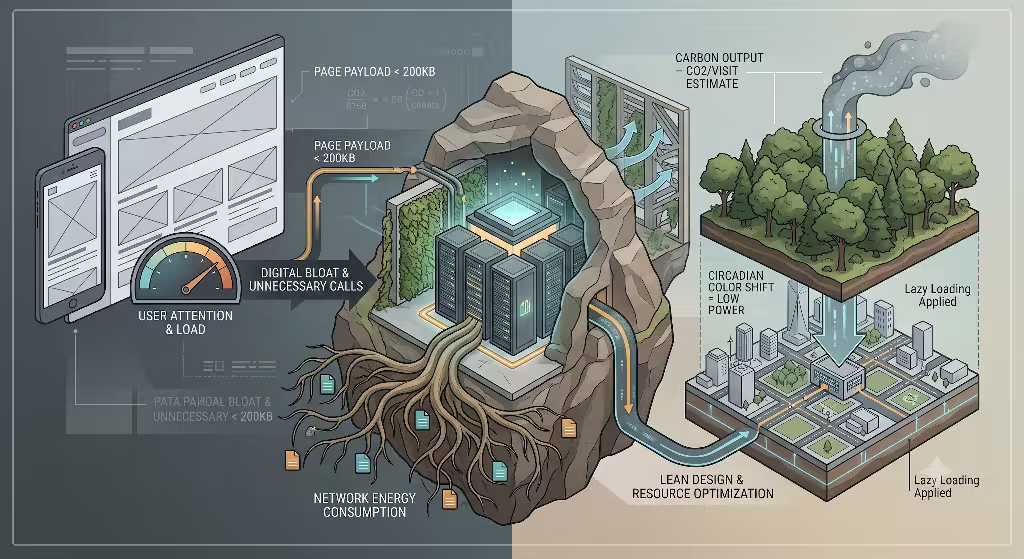
Eco-psychology connects human mental health directly to the health of our planetary ecosystems. Digital products do not exist in a vacuum. Every byte of data transferred across the internet requires electrical energy to run servers, data centers, and user devices.
When engineers master how to apply eco-psychology principles to UX/UI design, they build applications that protect user focus while actively reducing energy consumption.
4.1 Code Ecology & Carbon Efficiency
Heavy web pages packed with uncompressed images, autoplaying video clips, and bloated tracking scripts require massive computational energy. The average web page transfer size has grown significantly over the past decade, driving up carbon emissions per page view.
+-----------------------------------------------------------------------+
|                     DIGITAL CARBON REDUCTION                          |
+-----------------------------------------------------------------------+
|  Standard Web Page: ~2.5 MB Payload  -->  ~1.30g CO2 per page view    |
|  Sustainable UI:    ~0.4 MB Payload  -->  ~0.15g CO2 per page view    |
|                                                                       |
|  Result: 88% reduction in digital carbon emissions per session!      |
+-----------------------------------------------------------------------+
Knowing how to apply eco-psychology principles to UX/UI design requires treating code efficiency as a core user experience metric. Software engineering teams should:
- Compress all site imagery using modern lightweight image formats like WebP or AVIF.
- Implement lazy loading so media assets load only when scrolled into the user’s viewport.
- Remove unused JavaScript libraries, frameworks, and third party tracking scripts.
Applying eco-psychology principles to code development leads to fast-loading pages that respect user bandwidth and minimize carbon footprints.
4.2 Dark Patterns vs. Restorative Design
Dark patterns are user interface designs intentionally built to trick users into taking actions they might not otherwise choose. Common examples include hidden auto-renew subscriptions, fake countdown timers, and difficult cancellation flows.
Dark patterns rely on creating anxiety, confusion, and fear of missing out. These tactics directly violate eco-psychology principles. Restorative design replaces these harmful patterns with complete operational transparency:
- Provide clear, single-click opt-out mechanisms for newsletter signups and recurring plans.
- State pricing structures upfront without hiding fees until the final checkout screen.
- Give users full control over their data, notification schedules, and account preferences.
Learning how to apply eco-psychology principles to UX/UI design requires choosing user respect over short term manipulation.
4.3 Dark Mode & Pixel Energy Efficiency
On modern OLED and AMOLED screens, displaying bright white pixels requires powering every light sub-pixel at maximum brightness. Displaying dark or black pixels requires little to no power, as those individual screen pixels turn off completely.
When teams understand how to apply eco-psychology principles to UX/UI design, they treat dark mode as both an ergonomic feature and an energy saving tool. Designing dark mode options using natural dark tones, like deep forest slate or charcoal, protects user vision in low-light environments while saving device battery life.
Answering Key Industry Questions about Eco-Psychology Principles
As biophilic web design continues to gain adoption across product teams, several key questions frequently arise regarding implementation, costs, and business returns.
Q1: What is eco-psychology in digital product design?
Eco-psychology in digital product design is the practice of building software interfaces using principles from human evolutionary biology and environmental psychology. It focuses on reducing user mental fatigue, creating calm visual structures, and minimizing the environmental energy footprint of web applications.
Q2: How does biophilic design reduce user cognitive load?
Biophilic design reduces user cognitive load by organizing visual information to match human natural processing preferences. By using natural color ranges, biomorphic shapes, and fractal layouts, the visual processing centers in the human brain require less working memory to interpret the screen. This allows users to complete tasks with less effort and lower fatigue.
Q3: What are examples of biophilic UI components?
Examples of biophilic UI components include:
- Color systems built on warm neutrals, sage greens, slate greys, and earth tones instead of high contrast primary colors.
- Progress bars designed with soft, fluid fill animations that mirror organic motion.
- Dashboard layouts organized using golden ratio grid structures for balanced visual spacing.
- Iconography libraries built with soft, rounded contours rather than sharp, angular corners.
Q4: Does sustainable UX design improve user retention and conversions?
Yes, sustainable UX design directly improves user retention and conversions. Interfaces built using eco-psychology principles reduce user stress and frustration. When users feel calm, supported, and respected, they stay on websites longer, complete checkout processes without distraction, and develop stronger long-term brand loyalty.
Measurement, Testing, & Optimization Metrics
To successfully integrate eco-psychology principles into engineering workflows, product teams must measure performance using clear, objective standards. We evaluate interface health using both quantitative metrics and qualitative feedback.
+-----------------------------------------------------------------------+
|                    RESTORTATIVE UX METRICS DASHBOARD                  |
+-----------------------------------------------------------------------+
|  QUANTITATIVE METRICS                 QUALITATIVE METRICS             |
|  - Task Completion Rate (%)           - Subjective Fatigue Scores     |
|  - Page Weight / Payload (kB)         - User Trust Ratings            |
|  - Carbon Footprint (g CO2/view)      - Visual Clarity Feedback       |
|  - Time to First Contentful Paint     - System Usability Scale (SUS)  |
+-----------------------------------------------------------------------+
Quantitative Metrics
- Page Payload and Energy Efficiency: Measure total page weight in kilobytes. Aim to keep core landing page loads under 500kB to maintain fast load times and lower carbon output.
- Task Completion Speed without Error: Track how quickly users complete key tasks. Fast completion rates without high error rates indicate that the interface layout is clear and easy to navigate.
- Bounce Rates and Session Length: Monitor user engagement. Stable, long session times paired with low bounce rates show that users feel comfortable within the digital environment.
Qualitative Metrics
- Post-Session Mental Fatigue Surveys: Ask users to rate their perceived level of eye strain and mental tiredness after completing tasks within your software.
- System Usability Scale (SUS) Testing: Use standard SUS testing protocols to measure ease of use, clarity, and overall user confidence.
- Visual Preference Assessment: Conduct eye-tracking studies to ensure user visual paths flow smoothly across layout grids without erratic visual jumps.
Implementation Guidance for Product Teams
Bringing eco-psychology principles into digital product design is no longer just a creative design trend. It is a necessary evolution in how we build software for human beings. By understanding how our brains process visual information, we can build digital spaces that respect human focus, reduce daily stress, and lower carbon emissions.
Here is a practical, step-by-step implementation roadmap for software product teams:
+-----------------------------------------------------------------------+
|                  PRODUCT TEAM IMPLEMENTATION ROADMAP                  |
+-----------------------------------------------------------------------+
| Phase 1: Interface Audit                                              |
| -> Identify high-stress UI elements, dark patterns, and heavy assets. |
|                                                                       |
| Phase 2: Design System Integration                                    |
| -> Build biophilic color tokens, rounded icon sets, and organic grids. |
|                                                                       |
| Phase 3: Technical Optimization                                       |
| -> Compress media, streamline code, and measure carbon per page view. |
|                                                                       |
| Phase 4: Continuous User Testing                                      |
| -> Track cognitive fatigue, SUS scores, and core conversion paths.    |
+-----------------------------------------------------------------------+
By following this step-by-step roadmap, engineering teams can create software that serves business goals while supporting human mental health and environmental sustainability. At Silphium Design LLC, we continue to research, test, and implement these biophilic principles across all our web projects, proving that the future of digital design is quiet, restorative, and deeply connected to nature.