Table of Contents
The Digital-Natural Paradox in Storytelling for Nature Connection
For decades, digital devices have separated people from the outdoor world. Glow from glass screens often replaces sunlight, while notification rings replace the songs of wild birds. This creates what scientists call a digital paradox. The very tools we use to learn about Earth can keep us stuck indoors. Today, a new movement in web architecture is changing this balance. Modern designers use digital storytelling to rebuild an authentic nature connection for users across the world.
At Silphium Design LLC, we study how living web interfaces restore balance to human attention. The modern internet does not need to feel like a concrete box. Web browsers can work like digital ecosystems that change with the weather, reflect local sunlight, and react to natural cycles. By combining computer science with biology, we build websites that reduce mental fatigue. The goal is to build digital tools that spark real curiosity about plants, animals, and local ecosystems.
This shifts web design from static pages to interactive storytelling. Technologies like WebGL graphics, ambient light sensors, and live sound synthesis allow websites to breathe. An effective website does not try to replace a walk in the woods. Instead, it uses digital design to build a deep nature connection that encourages people to step outside and explore. Combining sound engineering, biological science, and clean software development creates a whole new way to experience information online.
+-------------------------------------------------------------------+
|                   The Digital-Natural Paradox                     |
+-------------------------------------------------------------------+
| Traditional Web Design           | Biophilic Digital Storytelling |
| ----------------------           | ------------------------------ |
| Rigid, static layouts            | Organic, fluid layouts         |
| Artificial fluorescent colors    | Dynamic natural color palettes |
| High cognitive fatigue           | Attention restoration (ART)    |
| Distracts from outdoors          | Encourages nature connection   |
+-------------------------------------------------------------------+
Understanding this design approach requires looking at how human brains process natural information. Research shows that natural patterns, flowing shapes, and soft sounds reduce stress hormones in the body. When digital interfaces use these patterns, screen time becomes far less exhausting. A well-crafted digital narrative respects human attention while honoring the biological world.
Circadian & Environmental-Responsive Interface Design
One of the most important trends in web development is environment-aware design. Most websites look the exact same whether you view them at noon in Texas or at midnight in Vermont. Circadian web design changes that by linking the look of a website to the solar schedule of the user. When the sun rises in the user’s city, the screen shows soft morning light. When the sun sets, the screen automatically shifts to warm sunset tones.
This dynamic shift relies on simple browser code that requests user location and local solar time. The website calculates the exact angle of the sun in the sky. It then smoothly updates contrast levels, visual color temperatures, and dark modes. Matching the screen color to local solar light helps maintain a healthy nature connection throughout the workday.
       [ Local Solar Time API ]
                  |
                  v
       +--------------------+
       | Calculate Sun Angle|
       +--------------------+
                  |
        +---------+---------+
        |                   |
        v                   v
  [ Daytime Mode ]    [ Nighttime Mode ]
  - Cool light        - Warm amber tones
  - High contrast     - Low blue light
  - Active energy     - Restful visuals
This responsiveness extends beyond simple sunlight levels. Advanced systems connect directly to weather databases. If rain falls outside the user’s house, subtle rain patterns can flow across the top margin of the layout. If the wind blows hard, graphic elements can sway gently across the page. This live link reminds users of the real weather taking place outside their walls.
Building a nature connection through circadian interfaces also protects eyes from fatigue. High blue light late at night disrupts sleep cycles by suppressing melatonin production. By reducing blue light as night falls, biophilic websites support human circadian health. Digital storytelling becomes a living reflection of natural outdoor cycles rather than an artificial light source.
Spatial Mapping & Geospatial Narrative Flows
Flat text blocks fail to capture the true depth of real places. A major trend in digital narrative design is spatial scrollytelling. This technique ties story elements directly to interactive maps and geographical data. Instead of scrolling through endless paragraphs, users travel across digital landscapes that show elevation, soil types, and local wildlife habitats.
Spatial mapping uses open source Geographic Information Systems data to make stories interactive. As a reader scrolls down the page, the digital map zooms into a specific forest, river valley, or mountain range. Layering satellite imagery with vector lines reveals hidden ecological details. A story about oak trees can show where those trees grow across local counties, connecting abstract concepts to real terrain.
User Scrolls Page ---> Map Pans to Location ---> Context Data Loads
      |                         |                        |
      v                         v                        v
Text Chapter 1            Coordinates (Lat/Long)   Soil & Plant Data
Text Chapter 2            Elevation Layers         Local Habitat Map
This approach builds a nature connection by helping readers understand where environmental events take place. When users see how rivers link distant towns, they gain a spatial understanding of watersheds. Interactive maps give readers direct agency. They can pan across the terrain, zoom into their own neighborhoods, and explore natural boundaries.
Spatial maps also highlight how land changes over time. Sliders let users compare historic forest cover from a hundred years ago with present-day aerial photographs. Seeing habitat changes over time creates strong emotional responses. Spatial narrative frameworks turn abstract environmental stories into clear visual experiences grounded in real geographic points.
Generative Acoustics & Bio-Acoustic Soundscapes
Visual design is only half of the digital storytelling puzzle. Sound plays a massive role in how humans experience their surroundings. Many modern websites now use procedural soundscapes powered by web audio engines. Instead of playing short MP3 sound clips on a loop, generative acoustics create continuous ambient sounds that never repeat.
Bio-acoustic soundscapes use real recordings of birdsong, moving water, rustling leaves, and wind across meadow grasses. Software code mixes these individual sounds based on mathematical algorithms. The result sounds like a real forest edge, where bird calls occur naturally rather than repeating on an annoying loop.
Hearing natural sound patterns lowers heart rates and settles active nervous systems. This acoustic layer deepens nature connection for people working inside noisy urban environments. When audio matches visual story elements, readers absorb information more effectively.
Audio systems must always respect user control. Sound should never play automatically without permission. Websites should present sound options as soft, ambient additions that users choose to enable. Offering controls for individual sound layers like wind speed or rain intensity lets users customize their acoustic environment for optimal focus.
Biomorphic Micro-Interactions & Organic Physics

Standard web pages rely on rigid boxes, straight lines, and mechanical animations. Buttons snap into place, pop-up boxes drop straight down, and loading indicators spin in perfect geometric circles. Biomorphic design replaces these rigid mechanics with natural motion based on real-world physics.
Micro-interactions are the small visual feedback loops that happen when users click buttons, scroll pages, or hover over links. Biomorphic physics makes these movements mimic organic growth and liquid dynamics. For example, a drop-down menu can expand like a opening flower petal. Hovering over a button can cause it to ripple like calm pond water.
Rigid Mechanical Physics      vs.      Biomorphic Organic Physics
------------------------               ---------------------------
Instant linear drops                   Fluid spring momentum
Geometric rigid shapes                 Curved fractal paths
Abrupt start-stop motions              Soft deceleration curves
Unnatural digital feel                 Tactile biological feel
These smooth movements rely on spring physics code instead of linear timing curves. In nature, objects do not start and stop instantly. Branches bend before returning to their original position, and water drops slow down as they pool together. Replicating these physical behaviors makes web interfaces feel responsive, tactile, and living.
Using organic shapes like leaf veins, river deltas, and coastlines builds visual rhythm. These complex patterns lower cognitive stress. When users navigate through organic paths, digital interactions feel smoother and far less harsh on the eyes.
Community-Sourced Participatory Eco-Narratives for Nature Connection
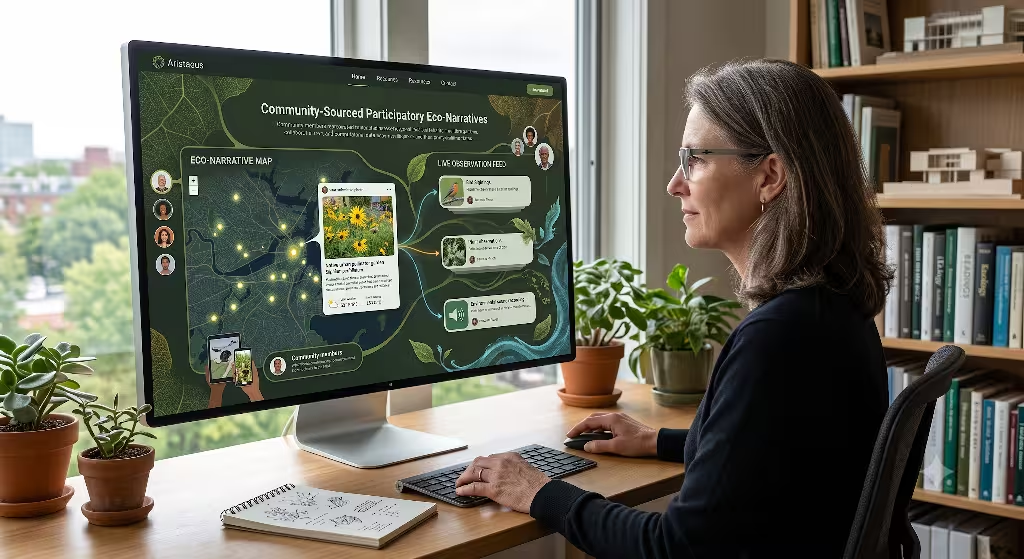
Digital storytelling expands beyond single authors writing for passive readers. A major trend is participatory eco-storytelling, where local communities contribute real-world observations directly into living online stories. Citizen scientists share sound recordings, plant photos, and local bird sightings to help build evolving digital maps.
These community platforms combine database technology with user submission tools. A blog post about local wildflowers can feature live photo updates submitted by nearby gardeners. As readers post images from surrounding trails, the article updates automatically. This shared effort creates a living record of seasonal shifts and local ecological health.
       [ Local Citizen Science Submissions ]
     (Photos, Audio Clips, Species Sighting)
                       |
                       v
       +-------------------------------+
       | Live Community Eco-Database   |
       +-------------------------------+
                       |
                       v
       +-------------------------------+
       | Interactive Story Map & Feed  |
       +-------------------------------+
Participatory storytelling turns readers into active environmental guardians. Tracking local seasonal changes, such as the arrival of migrating butterflies, builds real community engagement. Digital platforms connect people through shared observation, turning solitary screen time into collective action.
Sharing local stories online deepens nature connection across entire neighborhoods. When people see neighbor posts about local wildlife, they start watching for those species in their own backyards. Digital spaces become community hubs that inspire offline environmental care.
Can Digital Storytelling Genuinely Build a Nature Connection?
A common question is whether a computer screen can truly build a nature connection, or if it simply distracts people from the real world. Critics argue that looking at pictures of trees keeps people sitting indoors. However, cognitive psychology and environmental science show that well-designed digital media can actively spur real-world outdoor engagement.
Stephen and Rachel Kaplan developed Attention Restoration Theory to explain how human brains recover from mental fatigue. Urban settings and crowded digital screens demand heavy direct focus. This constant focus wears down brain energy, causing irritability and mental burnout. Nature offers soft fascination, like watching clouds drift or leaves move in the breeze. Soft fascination lets the brain rest and rebuild focus.
+-------------------------------------------------------------------+
|                  Attention Restoration Comparison                 |
+-------------------------------------------------------------------+
| Directed Attention (Fatiguing)   | Soft Fascination (Restorative) |
| ------------------------------   | ------------------------------ |
| Pop-up ads & blinking alerts     | Gently swaying plant graphics  |
| Wall-to-wall textual walls       | Natural spatial navigation     |
| Constant rapid task switching    | Calming ambient soundscapes    |
| High mental stress & fatigue     | Restores focus & lowers stress |
+-------------------------------------------------------------------+
Digital storytelling using biophilic design creates a similar soft fascination effect on screens. Webpages with organic movement, natural color tones, and ambient soundscapes help reduce mental stress. Rather than trapping users in endless dopamine loops, biophilic websites satisfy digital tasks quickly while soothing the mind.
| Design Element | Psychological Mechanism | Outcome for User |
| Natural Fractal Paths | Reduces EEG stress brainwaves | Lower anxiety, calmer focus |
| Ambient Outdoor Sound | Lowers sympathetic nervous activity | Reduced heart rate, steady breathing |
| Local Season Tracking | Connects screen visuals to outside world | Greater desire to go outdoors |
Building a nature connection digitally works best as a bridge rather than a final destination. Highlighting local ecology, seasonal changes, and native plant life inspires users to step outside. Digital storytelling provides the context, maps, and species knowledge that make outdoor exploration far more rewarding.
What Are the Primary Elements of Eco-Digital Storytelling?
Eco-digital storytelling combines environmental science, interactive web software, and digital narrative structures. To build an effective platform, developers focus on core pillars that turn standard articles into immersive experiences.
+-------------------------------------------------------------------+
|               Pillars of Eco-Digital Storytelling                 |
+-------------------------------------------------------------------+
|  1. Geographic Grounding  --> Maps, local elevation & soil data   |
|  2. Dynamic Environmental --> Live weather & solar time updates   |
|  3. Multi-Sensory Media   --> Bio-acoustics & organic animation   |
|  4. Clear Ecological Call --> Citizen science & local habitat preservation |
+-------------------------------------------------------------------+
1. Geographic Grounding
Stories must link directly to real geographic places using maps, coordinates, and local environmental data. Grounding narratives in real land helps readers understand that environmental stories happen in real places, including their own local communities.
2. Dynamic Environmental Context
Pages should react directly to real-world weather, seasonal shifts, and daylight cycles. Incorporating live conditions reminds users that the digital interface is tied directly to the living planet outside.
3. Multi-Sensory Media Layers
Combining clear text with generative soundscapes, biomorphic movement, and clean visual layouts engages multiple senses. Multi-sensory storytelling improves comprehension while reducing overall mental strain.
4. Clear Ecological Calls to Action
Every eco-digital narrative should guide readers toward meaningful real-world actions. Providing clear steps for habitat restoration, native gardening, or local conservation helps turn digital interest into real ecological benefits.
             [ Eco-Digital Storytelling Loop ]
                            |
                            v
               +--------------------------+
               | Geographic & Local Data  |
               +--------------------------+
                            |
                            v
               +--------------------------+
               | Multi-Sensory Digital UI |
               +--------------------------+
                            |
                            v
               +--------------------------+
               | Real-World Conservation  |
               +--------------------------+
Integrating these elements builds a strong framework for environmental engagement. Readers gain deep insights into complex biological systems while enjoying a restful digital experience.
How Do You Incorporate Biophilic Design into Web Design Without Degrading Site Speed?
A major technical challenge in biophilic web design is maintaining fast page speeds. High-resolution imagery, complex audio files, and heavy interactive animations can easily slow down a website. Slow websites frustrate users, waste mobile data, and burn extra power in data centers. Maintaining a low-carbon footprint requires careful asset optimization.
Heavy Unoptimized Site                 Optimized Low-Carbon Site
----------------------                 -------------------------
- Uncompressed raw 4K photos           - Vector SVG fractal lines
- Large looping MP3 audio files        - Synthesized Web Audio API
- Unused JavaScript frameworks         - Vanilla CSS transitions
- High power use (3.5g CO2/view)       - Minimal power (<0.2g CO2/view)
Fast biophilic design relies on smart code instead of heavy media files. Using scalable vector graphics (SVG) to render organic patterns creates crisp visual elements with tiny file sizes. SVGs scale perfectly to any screen width without adding megabytes of data.
HTML
<!-- Lightweight SVG organic pattern path example -->
<svg viewBox="0 0 100 100" class="organic-divider">
  <path d="M0,50 Q25,30 50,50 T100,50" stroke="#3A5A40" fill="none" />
</svg>
Audio files should also be kept lightweight. Instead of loading long audio files, developers use the native browser Web Audio API to create ambient sound procedurally. Sound synthesis code produces gentle wind or water sounds using tiny text scripts, saving massive amounts of bandwidth.
| Optimization Strategy | Traditional Approach | Biophilic Low-Carbon Approach | Bandwidth Savings |
| Visual Dividers | Large PNG/JPEG images | SVG vector paths | 95% reduction |
| Ambient Sounds | 10MB MP3 audio files | Web Audio API synthesis | 99% reduction |
| Color Transitions | JavaScript frame loops | CSS native variables | 80% reduction |
| Layout Motion | Heavy canvas engines | Native browser animations | 85% reduction |
Lazy loading non-critical page assets ensures pages load instantly. Images and interactive maps load only as the user scrolls down to them. Fast loading speeds deliver rich environmental content without wasting user data or battery life.
DOM Performance & Resource Budgeting
Maintaining high performance across living interfaces requires strict data budgets. Every kilobyte added to a page increases processing load on user hardware. Biophilic design should protect both human attention and computational energy.
Developers set strict budgets to keep entire page loads under 1.5 megabytes. Keeping scripts light allows websites to run smoothly even on older mobile devices or slow cellular connections in rural areas.
+-------------------------------------------------------------------+
|               1.5 MB Total Resource Budget Allocation             |
+-------------------------------------------------------------------+
| HTML & Core CSS Structures   [  100 KB  ]                         |
| Lightweight Web Fonts        [  150 KB  ]                         |
| Optimized SVG & WebP Media   [  800 KB  ]                         |
| Scrollytelling JavaScript    [  300 KB  ]                         |
| Web Audio Synthesizer        [  150 KB  ]                         |
+-------------------------------------------------------------------+
Reducing Document Object Model complexity keeps page rendering fast. Simplifying HTML layouts allows browser engines to process visual updates smoothly at 60 frames per second. Smooth animations make organic movements feel natural rather than choppy.
Efficient code reduces energy consumption in data centers and on user devices. Lower power consumption directly lowers carbon emissions from electricity generation. Designing fast, efficient websites matches the ecological values behind biophilic storytelling.
Accessibility Requirements for Biophilic Digital Design
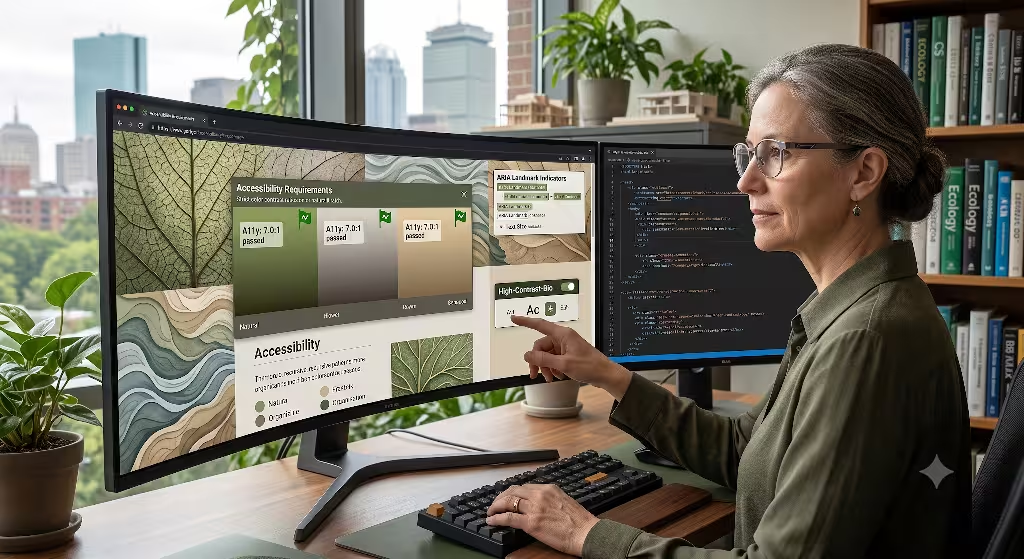
Biophilic web design must be accessible to everyone, including people with visual, hearing, motor, or cognitive disabilities. Following Web Content Accessibility Guidelines (WCAG 2.2) ensures environmental digital stories reach all users equaly.
+-------------------------------------------------------------------+
|                  Core Accessibility Standards                     |
+-------------------------------------------------------------------+
| Text Contrast Ratios         --> Minimum 4.5:1 for standard text  |
| Reduced Motion Modes         --> Respects system motion settings  |
| Audio Transcripts            --> Text alternatives for all sound  |
| Keyboard Navigation          --> Full functionality without mouse |
+-------------------------------------------------------------------+
Dynamic color schemes that shift with local solar time must maintain clear text contrast. Text must keep a minimum 4.5 to 1 contrast ratio against background colors at all times. Automated scripts test contrast levels in real time as background colors shift from light morning tones to darker evening shades.
CSS
/* Respect user preference for reduced motion */
@media (prefers-reduced-motion: reduce) {
  .organic-sway, .biomorphic-wave {
    animation: none !important;
    transition: none !important;
  }
}
Users who experience motion sickness from animated movement must be able to turn animations off. Web code checks system preferences for reduced motion options. When enabled, organic page animations freeze into clean static layouts automatically.
Audio streams require complete text alternatives. Bio-acoustic soundscapes must feature text descriptions explaining the sound layers for deaf or hard-of-hearing users. Captioning and descriptive text ensure every reader can enjoy the storytelling experience.
Semantic HTML Structure for Search Optimization
Search engines use automated bots to scan and index web content. Building clear HTML structures helps search algorithms understand environmental content easily. Semantic tags give clear meaning to every section of a webpage.
<article>
  <header>
    <h1>Title of Environmental Story</h1>
  </header>

  <section aria-label="Circadian Overview">
    <h2>Section Heading</h2>
    <p>Content paragraph text...</p>
  </section>

  <aside aria-label="Interactive Map">
    <!-- Map widget container -->
  </aside>
</article>
Using correct header hierarchies lets search crawlers index content relationships accurately. Main section headers guide bots through core themes like spatial mapping, acoustic soundscapes, and biophilic design patterns.
| Semantic Tag | Structural Purpose | SEO Benefit |
<article> | Encloses main standalone story | Signals primary topic content to index |
<section> | Defines distinct thematic chapters | Improves passage ranking for specific queries |
<figure> | Contains images, charts, or maps | Links visual assets directly to descriptive captions |
<aside> | Holds related local environmental data | Establishes topical authority and context |
Adding schema structured data gives search engines rich contextual information. Structured data marks up author details, publishing organizations, geographic coordinates, and topic summaries. Clear code structure boosts search rankings, helping users find high-quality environmental content.
Strategic Takeaways for Biophilic Web Design
Moving from standard web design to biophilic digital storytelling requires rethinking how web pages interact with users. Web design should move beyond static layouts toward environment-aware digital experiences. Combining biological principles with modern web technologies builds tools that inform, relax, and inspire.
+-------------------------------------------------------------------+
|                   Biophilic Design Roadmap                        |
+-------------------------------------------------------------------+
|  Step 1: Replace rigid layouts with organic, fluid paths          |
|  Step 2: Add circadian color modes linked to local solar time     |
|  Step 3: Integrate procedural ambient audio using Web Audio API   |
|  Step 4: Keep page sizes under 1.5MB for low carbon footprint     |
|  Step 5: Inspire real-world exploration and local outdoor action  |
+-------------------------------------------------------------------+
Biophilic interfaces demonstrate that technological progress does not have to distance us from the biological world. Intelligent digital tools can build a meaningful nature connection while providing fast access to modern information. Designing with respect for human attention and ecological health creates digital spaces that truly serve people.
Authentic storytelling connects readers to the land right outside their windows. As more organizations adopt biophilic design principles, the web will become a greener, more restorative environment. The future of digital design lies in honoring our biological roots while building innovative, sustainable digital experiences.