
To understand how we can protect our world, we must first understand how to talk about it. As a scientist who has spent years studying both biology and web design, I have learned that nature and technology are not enemies. They are actually partners.
At Silphium Design LLC, we use a special method called biophilic design to build websites. This means we use the patterns of nature to help people connect with digital information. The most important task we face today is communicating local environmental issues to people in a way that makes them want to help. When we build a website, we are not just putting pictures on a screen. We are building a bridge between a person and the trees, water, and air in their own neighborhood, in other words the environment.
This article will show you the best web design strategies for making that bridge strong and effective.
Table of Contents
Biophilic Design Patterns for Environmental Persuasion
When we talk about communicating local environmental issues, we have to think about how the human brain works. Humans have lived in nature for thousands of years. Our brains are hardwired to feel calm and focused when we see natural patterns. This is what we call biophilia. In web design, we use these patterns to keep people on the page longer. If a person feels calm, they are more likely to read about hard topics like pollution or climate change.
One of the best patterns is called fractal fluency. Fractals are patterns that repeat themselves at different sizes. You can see them in the way a tree branch looks like a tiny version of the whole tree. On a website, we use these repeating patterns in the layout. This makes the site feel organized and natural. When a site feels natural, communicating local environmental issues becomes much easier because the reader does not feel stressed by a messy screen.
Another pattern is using nature in the space. This means putting real elements of the local environment into the design. We do not just use any green color. We look at the specific plants and rocks in the local area. If we are communicating local environmental issues in a desert town, we use the dusty reds and pale greens of that desert. This tells the reader that the website is about their home. It makes the information feel real and close by.
We also use non-rhythmic sensory stimuli. In the real world, a leaf might twitch in the wind or a bird might chirp. These are small, unexpected movements. On a website, we can use very small animations that happen every now and then. This keeps the brain interested. It helps in communicating local environmental issues because it keeps the reader from getting bored. When the screen feels alive, the message about the environment feels more urgent.
Technical Sustainability and the Green Tech Stack
A website about the environment should not hurt the environment. This is a big part of communicating local environmental issues effectively. Every time a person loads a website, it uses electricity. This electricity often comes from power plants that create carbon. If a website is heavy and slow, it uses more energy. To be good at communicating local environmental issues, we must make our websites lean and fast.
We use something called a green tech stack. This means we choose tools and code that are efficient. We use modern image types like WebP or avif, which this website, uses. These images look great but have very small file sizes. Small files mean the computer does not have to work as hard. This is a silent way of communicating local environmental issues. It shows that the organization cares about its own carbon footprint.
We also look for green web hosting. Some companies run their data centers using wind or solar power. When we build a site for communicating local environmental issues, we make sure it sits on a server that is powered by clean energy. This is a very important part of the story. If a reader finds out that a site about saving trees is actually using dirty energy, they might not trust the message.
Clean code is another strategy. We write code that is simple and direct. We avoid extra scripts that the user does not need. This makes the site load fast on phones. Many people who are interested in communicating local environmental issues are out in nature. They might be at a park or a river. They need the site to work even if their internet signal is weak. A fast site is a helpful site.
Data Visualization: Making the Local Visible
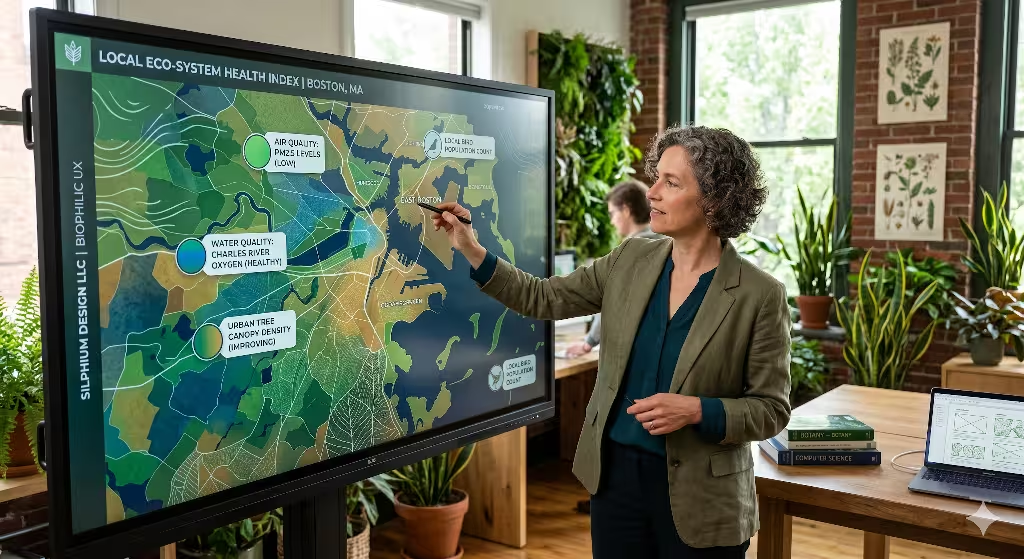
Numbers can be boring. If you just tell someone that the river is 10 percent more polluted, they might not care. But if you show them a map of the river turning from blue to brown, they will understand immediately. This is why data visualization is key for communicating local environmental issues. We want to turn data into a story that anyone can read. This is to say that an image can often be inspiring than a graph.
Hyper-local mapping is one of our best tools. We use maps that let people zoom in on their own street. They can see exactly how a local issue affects their house. When people see that communicating local environmental issues is about their own backyard, they take action. They are no longer looking at a global problem. They are looking at a local solution.
We also use temporal storytelling. This is a fancy way of saying we show how things change over time. We can use a slider tool on the website. On one side, the user sees how the forest looked twenty years ago. As they slide the bar, they see how it looks now. This visual change is a powerful way of communicating local environmental issues. It shows the impact of human choices without using too many words.
Personalization is another great strategy. We can build a tool where a user enters their zip code. The website then gives them a list of the most important environmental facts for that specific area. Communicating local environmental issues this way makes the reader feel special. It shows that the website is not just a generic page. It is a tool built specifically for them and their community.
Local SEO and Community Search Strategies
Even the best website is useless if no one can find it. This is where search engine optimization, or SEO, comes in. To be successful at communicating local environmental issues, we have to make sure the site shows up when people search for help. We focus on local SEO because we want to reach the people who live near the problem.
We use specific keywords that people in the community might type. Instead of just “pollution,” we might use “water quality in Boston.” This is a key part of communicating local environmental issues to the right audience. We also use things called schema markups. This is a bit of code that tells search engines exactly what the site is about. It helps the site show up in local news feeds and map searches.
Link building is also vital. We reach out to local schools, libraries, and government offices. We ask them to link to our site. When a trusted local group links to a site, it tells the search engine that the site is a leader in communicating local environmental issues. This makes the site rank higher. It also builds a network of local people who are all working toward the same goal.
We also focus on mobile search. Most local searches happen on a phone while someone is on the move. We make sure our strategies for communicating local environmental issues work perfectly on a small screen. We use large buttons and clear text. If someone is standing by a polluted creek and wants to report it, our site needs to be the first thing they find and the easiest thing to use.
How Can Web Design Help Green Initiatives Succeed?
People question how a website can actually help a green project. The answer is by removing friction. Friction is anything that makes it hard for a user to do something. If a website is hard to use, people will give up. When we focus on communicating local environmental issues, our goal is to make it as easy as possible for someone to help.
Good web design uses clear calls to action. These are buttons like “Join the Cleanup” or “Donate Now.” We make these buttons stand out by using colors from nature that catch the eye. By communicating local environmental issues clearly, we guide the user from learning to doing. A successful green initiative needs people to take action, and the website is the tool that makes that happen.
We also use social proof. This means showing that other people are already helping. We might have a counter that shows how many trees have been planted. Or we might show photos of local neighbors working together. This is a strong way of communicating local environmental issues because it makes the reader feel like they are part of a winning team. Humans like to join groups that are doing good work.
Elements of an Effective Environmental Campaign Website
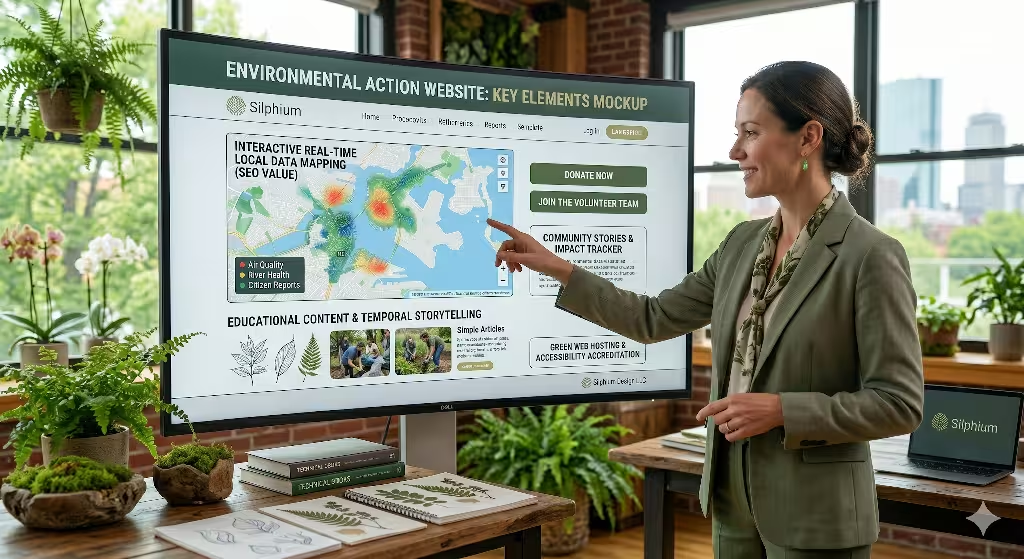
An effective site needs to be more than just pretty. It needs to be a source of truth. When we are communicating local environmental issues, we must use facts that are easy to check. We include links to scientific studies but explain them in simple language. This builds trust with the reader. Trust is the most important thing for any campaign.
Accessibility is another key element. This means making sure people with disabilities can use the site. We use high-contrast colors for people who have trouble seeing. We make sure the site works with screen readers for the blind. Communicating local environmental issues should be for everyone in the community. If we leave people out, our message is not as strong as it could be.
We also need to make sure the site is easy to share. We put social media buttons in places where people can find them easily. If someone reads something important about communicating local environmental issues, they should be able to send it to their friends with one click. This helps the message grow and reach more people without spending money on ads.
Raising Environmental Awareness Locally Through Websites
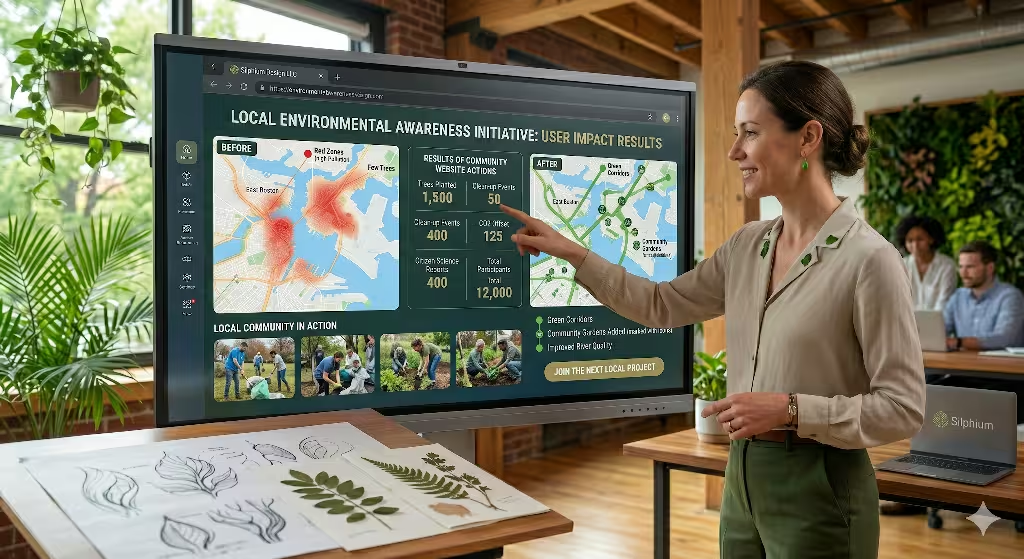
Websites can raise awareness by telling local stories. We don’t just talk about the whole planet. We talk about the specific park down the street. Communicating local environmental issues works best when it feels personal. We use photos of local landmarks and interviews with local leaders. This makes the issue feel like it belongs to the community.
We also use educational sections. We might have a page that teaches kids how to identify local birds. Or a page that shows gardeners which plants are best for the local soil. By providing value, we bring people to the site. Once they are there, we can start communicating local environmental issues to them. It is a way of building a relationship before asking for help.
Interactive features are also great for awareness. We can have quizzes or games about local nature. These are fun ways of communicating local environmental issues to younger people. If a child learns about the local river through a game, they might grow up to be someone who protects it. A website can be a teacher that is available twenty-four hours a day.
Case Study: Silphium Design’s Biophilic Framework
At Silphium Design LLC, we have a specific way of doing things, which means we believe buildings (i.e. Frank Lloyd Wright’s organic architecture) and websites should fit into their environment. When we work on communicating local environmental issues, we start by looking at the land itself. We ask what the colors and shapes of the local are and incorporate them in the website.
For instance, consider a group that wanted to save a local wetland. They didn’t just build a standard site. They used a layout that flowed like water. They used sounds of the wetland that played softly in the background. This was a direct way of communicating local environmental issues through the senses. People felt like they were at the wetland even when they were sitting in their office.
The result was a huge increase in local support. Because the site was built for communicating local environmental issues in a biophilic way, people stayed on the site five times longer than usual. They signed up for the newsletter and came to the meetings. This shows that the way we design a site is just as important as the words we write.
Silphium Design did a website for a landscape designer who specalized in the native plants of the area. To highlight the native plants of the area, backgrounds of leaves and flowers were utilized. Along with the backgrounds, information on the host insects species was provided. Here we were able to provide information on the business, plus educate users on the local flora and fauna.
Future Strategies for Communicating Local Environmental Issues
The world of web design is always changing. In the future, communicating local environmental issues will involve even more technology. We might use augmented reality, where people can hold up their phones and see what a street would look like with more trees. This would be a very exciting way of communicating local environmental issues because it shows a better future.
We will also see more use of artificial intelligence. AI can help us understand data faster. It can help in communicating local environmental issues by creating personalized reports for thousands of people at once. But no matter how much technology we use, we must always stay connected to nature. The core of biophilic design will never change because the human heart will always love the natural world.
As we move forward, our goals for communicating local environmental issues will remain the same. We want to make the digital world feel like the physical world. We want to use every tool we have to protect our local ecosystems. By using biophilic design, clean code, and local SEO, we can make sure the message of nature is heard loud and clear.
The Power of Visual Hierarchy in Environmental Messaging
When communicating local environmental issues, we have to decide what the user sees first. This is called visual hierarchy. We use size, color, and placement to lead the eye. The most important fact about communicating local environmental issues should always be the biggest and brightest thing on the page. If the water is unsafe to drink, that should be the first thing anyone sees.
We use white space, or “breathing room,” to make the site feel calm. In nature, there is often a lot of open space. On a website for communicating local environmental issues, white space helps the brain process the information. If a page is too crowded, people feel overwhelmed. They might close the page because they feel stressed. We want them to feel empowered, not scared.
Typography is also part of this. We choose fonts that are easy to read. We avoid fonts that look too much like machines. Instead, we pick fonts that have soft curves and look more organic. This subtle choice helps in communicating local environmental issues because it makes the site feel more human and less like a cold computer program.
Engaging the Community through Interactive Design
Community engagement is the goal of communicating local environmental issues. We want people to talk to each other. We can add forums or comment sections where neighbors can share tips. This turns the website from a one-way message into a two-way conversation. When people talk to each other, they are more likely to stay involved in communicating local environmental issues.
We can also include “citizen science” tools. This is where people can upload their own photos of birds or plants they see. This is a wonderful way of communicating local environmental issues. It turns the local community into a team of researchers. The website becomes a place where everyone contributes their own knowledge to help the environment.
Live streams are another great tool. We can have a camera on a local bird nest or a river bank. People love to watch nature in real time. This is a very effective way of communicating local environmental issues because it creates an emotional bond. Once a person has watched a local eagle raise its chicks, they will care much more about protecting the eagle’s habitat.
Best Keywords for Communicating Local Environmental Issues
Finding the right words is a science. When we are communicating local environmental issues, we look at what people are actually searching for. We use tools to find keywords with high traffic. This ensures that our efforts in communicating local environmental issues are not wasted. We want to be where the people are.
Some of the best keywords are “how to help,” “local environmental groups,” and “protecting my neighborhood.” These are action-oriented words. By using them in the text, we help the site show up for people who are ready to work. Communicating local environmental issues is about more than just giving facts. It is about building a movement.
We also look for “long-tail” keywords. These are longer phrases like “best plants for attracting bees in Vermont.” These are very specific. While fewer people might search for them, the people who do are very interested. Communicating local environmental issues through these specific phrases helps us reach a very dedicated audience.
The Role of Trust and Authority in Web Design
People will only listen to communicating local environmental issues if they trust the source. This is why professional design is so important. If a site looks messy or broken, people will think the information is also bad. At Silphium Design LLC, we make sure every site for communicating local environmental issues looks professional and clean.
We use author bios and credentials to show that the people writing the content are experts. If a Ph.D. in biology is communicating local environmental issues, the reader is more likely to believe them. We also include a clear “About Us” page. This tells the story of why the organization exists. People want to know the “why” behind the message.
Security is also part of trust. We make sure the site is safe and has an SSL certificate. This is the little lock icon in the browser bar. If a site is not secure, people will be afraid to stay on it. In communicating local environmental issues, we must protect the user just as much as we protect the planet.
Designing for Different Ages in the Community
A local community has people of all ages. When communicating local environmental issues, we have to think about everyone from kids to seniors. We use different design strategies for each group. For kids, we use bright colors and games. For adults, we use data and clear action steps.
Seniors might need larger text and very simple navigation. We make sure our site for communicating local environmental issues is easy for them to use. They often have a lot of history and knowledge about the local land. By communicating local environmental issues to them, we can learn from their experience.
Creating a multi-generational site is a challenge but it is worth it. It brings the whole community together. When everyone is involved in communicating local environmental issues, the community becomes stronger. The website acts as a town square where all ages can meet and learn about nature.
Monitoring Trends in Search and Natural Design
The way people search is always changing. Today, many people use voice search. They might ask their phone, “What are the environmental issues in my town?” We make sure our strategies for communicating local environmental issues include these voice-friendly phrases. We write in a way that sounds like a natural conversation.
We also watch trends in natural design. New studies come out all the time about how nature affects the brain. We use this new science to improve how we are communicating local environmental issues. If a new color palette is found to be even more calming, we start using it. We are always learning and growing.
Staying at the top of SEO trends is a full-time job. We look at how search engines change their algorithms. We make sure that communicating local environmental issues remains easy for people to find. We are always adjusting our strategies to stay ahead of the curve. This ensures that the message of nature is never lost.
The Path Forward for Our Planet and Our Sites
Communicating local environmental issues is one of the most important jobs of our time. As a web design expert, I believe that we have a duty to use our skills for the good of the earth. By combining biology and computer science, we can create websites that do more than just show information. We can create digital homes that inspire people to protect their real homes.
Using biophilic design, green tech, and local SEO are not just choices. They are essential parts of a successful strategy for communicating local environmental issues. We must make sure our websites are fast, beautiful, and easy for everyone to use. When we do this, we turn the internet into a powerful force for ecological change.
The future of our local environments depends on how well we talk about them. If we can master the art of communicating local environmental issues through smart web design, we can change the world. We can help people see the beauty in their own backyard and give them the tools to save it. At Silphium Design LLC, this is our mission and our passion.
In every pixel and every line of code, we are communicating local environmental issues. We are telling the story of the land. We are inviting people to join us in a journey of discovery and protection. Together, we can make the digital world a reflection of the natural beauty we all love.
Since I have a background in both biology and web design, I find that these two worlds have much to teach each other. When you look at your own local area, what is the one environmental issue that you feel most people do not understand because it is too complex?