
When we look at websites at Silphium Design we do not just see code, and we do not just see graphics. We see an ecosystem. A great website should feel as natural, healthy, and honest as a walk through a deep forest. Today, we are going to explore a vital concept that holds these digital ecosystems together. That concept is digital integrity.
When we build for the web, we must design with a deep sense of responsibility. True ethical design means creating spaces that respect the human being on the other side of the screen. In this comprehensive guide, we will break down how digital integrity acts as the foundation for ethical web design. We will look at everything from user interfaces to backend privacy code. We will also look at how natural systems can teach us to build better, cleaner websites. Let us dive into the core components that make up a truly honest website.
Table of Contents
Architectural Definition: What is Digital Integrity in Ethical Web Design?
To understand ethical web design, we must first establish a clear definition of digital integrity. Think of a physical house. If the foundation is weak, the house will eventually tilt and crack. The same rule applies to online systems. In our work, digital integrity means that a website works exactly the way it promises to work. It means there is a total alignment between what a website says it does and what its code actually does behind the scenes. This is not just about following basic privacy laws. Lawful compliance is just a starting line, but digital integrity is the ultimate goal.
When a company has digital integrity, it designs its systems to protect and honor the user. Many websites suffer from a problem called system drift. System drift happens when a web team adds new features too quickly without thinking about the ethical cost. Over time, the website starts to trick or track users in ways the original team never intended. To stop this drift, digital integrity must be part of the blueprint from day one. It means your engineering choices must match your moral promises.
True digital integrity requires us to think about the user as a guest in our digital home. If you invite someone into your home, you do not secretly watch them through hidden holes in the wall. You do not trick them into buying things they did not ask for. Web developers who practice digital integrity ensure that every script, every database, and every layout is honest. This honest approach creates a clear, predictable environment. When a system has digital integrity, users can feel it. They know they can look around without being trapped or lied to. This standard elevates web design from simple business utility to a higher form of digital architecture.
Radical Transparency and the Elimination of Dark Patterns
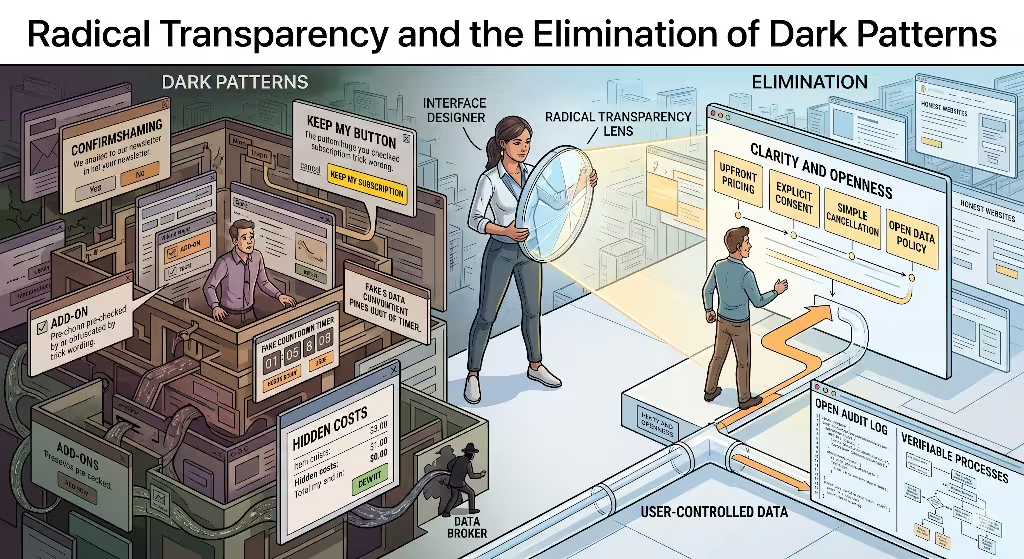
An honest website must be totally transparent with its layout. Sadly, many modern websites use tricks called dark patterns. A dark pattern is a sneaky user interface design that tricks people into doing things they did not mean to do. For example, a site might make a buy button huge and bright, while the cancel button is tiny, grey, and hidden at the bottom of the page. This is a direct violation of digital integrity. When a site uses these tricks, it breaks the bond of trust with the visitor. All buttons should be equally visible, regardless of the purpose.
To maintain digital integrity, we must practice radical transparency. This means we eliminate all sneaky design tactics. If a user wants to cancel a subscription, the process should be just as easy as signing up. We call this a balanced choice architecture. If a sign-up button takes one click, the cancel button should take one click too. When you build with digital integrity, you do not use pre-checked boxes that opt users into email spam. You let users make active, clear choices.
Eliminating dark patterns also means being clear about pricing and stock numbers. Have you ever seen a countdown timer on a website that says you only have two minutes left to buy a shirt? If that timer is fake, the site lacks digital integrity. Honest design means showing real numbers and real conditions. When we design with digital integrity, we build paths that let users move freely. We do not use misdirection or guilt-tripping language like, No thanks, I hate saving money, to make users click options. We treat the audience with respect, which strengthens the digital integrity of the entire platform.
Data Sovereignty and Zero-Trust Privacy Infrastructure

The backend data systems of a website are just as important as the visual layout. True digital integrity requires us to respect data sovereignty. This means recognizing that a user owns their personal data. Their name, email, and browsing habits do not belong to the website owner. They belong to the individual. Therefore, web engineers must build systems based on digital integrity to protect that ownership. We do this by using a method called data minimization.
Data minimization means you only collect the absolute minimum amount of information needed to complete a task. If a user is signing up for a simple text newsletter, you do not need their home address or phone number. Collecting extra data just because you can is a failure of digital integrity. A clean system only asks for what it requires right now. This keeps the database small, safe, and efficient, which reflects a high level of digital integrity.
Furthermore, a secure site uses a zero-trust model for its data infrastructure. In a zero-trust system, the code assumes that every request could be a security threat until it is verified. We use strong encryption tools like TLS and SSL to safely transmit data across the web. We also build clear control panels where users can view, export, or delete their data whenever they want. Giving the user a simple delete button is a prime example of digital integrity in action. It proves that you respect their data sovereignty and are not trying to hoard their personal life for profit.
Digital Inclusivity and Accessibility Frameworks (WCAG 2.2 Alignment)
A website cannot have digital integrity if it excludes people with disabilities. Inclusivity is a major pillar of ethical web design. When we build a site, we must make sure it can be used by everyone. This includes people who are blind, deaf, or have trouble using a standard mouse. To guide our work, we follow the Web Content Accessibility Guidelines, which are also known as WCAG 2.2. Aligning our code with these rules is a direct reflection of digital integrity.
To achieve digital integrity in accessibility, we must write clean, programmatic code. This means using proper HTML tags so that screen readers can read the page out loud to a blind user. If you use an image, you must write an explicit description of that image in the alt text attribute. Skipping these small coding steps reduces the digital integrity of your website. It creates a digital wall that shuts out millions of users who rely on assistive technology.
We also have to think about visual design and color contrast. If your text color is too close to your background color, people with low vision will not be able to read it. Maintaining digital integrity means choosing text colors that stand out boldly against the background. It also means designing for cognitive inclusion. We should avoid chaotic animations, sudden flashing lights, or confusing layouts that can cause stress or seizures. By keeping the interface calm, orderly, and accessible, we uphold the digital integrity of our web space.
Digital Biophilia: Eco-Friendly Web Engineering and Sustainability
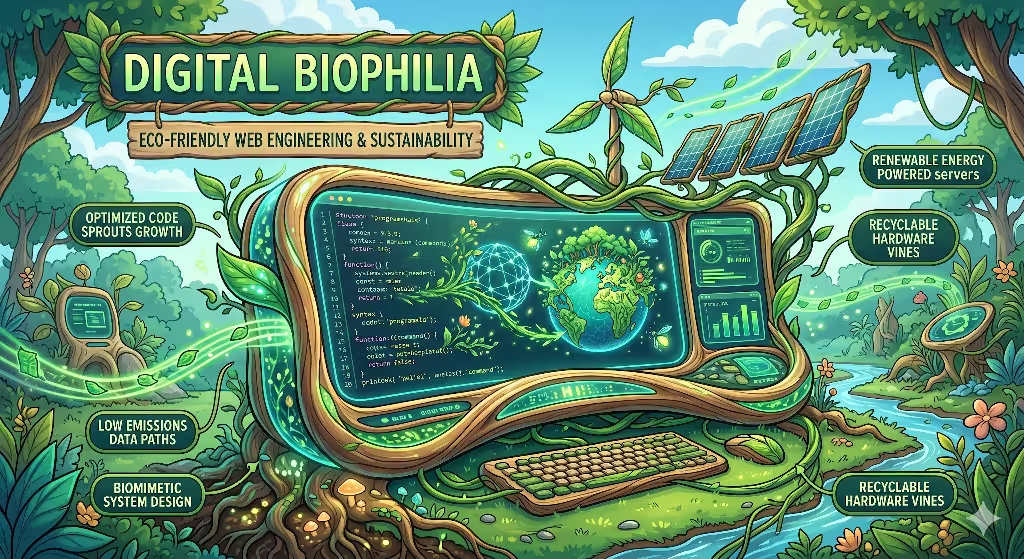
As someone who loves biology and gardening, I always look at how our digital choices affect the physical earth. Many people think the internet is weightless, but it is not. Every webpage we load requires energy from massive data centers. These data centers burn electricity and create a real carbon footprint. This is where digital biophilia comes in. Digital biophilia is the practice of connecting our digital designs to natural principles. It teaches us that a sustainable website is a website with digital integrity.
To bring digital integrity to our eco-friendly engineering, we have to optimize our code to use less energy. When a webpage has massive, unoptimized image files or messy code scripts, it forces the user’s computer to work harder. This burns more electricity. By focusing on digital integrity, we shrink our file sizes. We use clean minification tools to compress our code files. We also use a technique called lazy loading, which means an image only loads when the user scrolls down to see it.
These sustainable adjustments do more than just help the planet. They also boost the performance of the website. A lighter webpage loads much faster on mobile phones and desktop computers. Fast loading times directly improve your site’s Core Web Vitals, which are performance scores that search engines use to rank pages. Therefore, practicing digital integrity through eco-friendly engineering gives you a massive advantage in search rankings. It proves that clean, natural efficiency is good for the environment and good for business.
Algorithmic Accountability and Behavioral Guardrails
Modern websites often use complex math equations called algorithms to suggest content or products to users. For example, a social site might use an algorithm to show you posts it thinks you will like. While this can be helpful, it also carries huge ethical risks. If an algorithm is designed purely to keep you hooked on a screen for hours, it lacks digital integrity. It is acting like a digital trap rather than a helpful tool.
Web designers who value digital integrity must practice algorithmic accountability. This means we must check our recommendation systems to ensure they are fair and unbiased. We must make sure our algorithms are not accidentally promoting hate speech, false information, or harmful content just to get more clicks. Introducing behavioral guardrails into your code is a great way to maintain digital integrity. These guardrails stop the system from exploiting human psychology for cheap attention.
Another big part of digital integrity in algorithms is user awareness. A website should always tell a user when an algorithm is choosing what they see. If a list of articles is sorted by an AI engine, put a small note at the top explaining that choice. Even better, give the user a simple button to turn off the algorithm. Let them sort the page by date or alphabet instead. Giving control back to the human user is a wonderful expression of digital integrity. It shows that your technology serves the person, instead of using the person to feed the machine.
Information Admissibility, Verifiability, and Content Legitimacy
We live in an era with a lot of digital noise and misinformation. Because of this, verifying the facts on a website is crucial for building trust. Content legitimacy is a vital element of digital integrity. If a website publishes articles with false facts or stolen information, its digital integrity drops to zero. Every piece of text, every image, and every data chart must be verified and honest.
To show true digital integrity in your content, you should always include clear publication metadata. This means listing the exact name of the author, their professional background, and the date the article was written. If you update the article later with new facts, show the revision date clearly at the top. This level of openness shows a strong commitment to digital integrity. It tells the reader that you are proud of your information and are willing to stand behind its accuracy.
We must also be incredibly honest about how our content makes money. If an article contains affiliate links that pay you a commission, you must state that fact clearly before the link appears. Hiding a paid advertisement inside a regular blog post is a major violation of digital integrity. If content is sponsored by a brand, label it as sponsored content right at the beginning. By keeping your monetization separate from your information, you preserve the digital integrity of your brand. You prove to your audience that your voice cannot be bought secretly.
Frequently Asked Questions about Digital Integrity
To truly understand this topic, it helps to look at the common questions people search for online. By answering these direct questions, we can expand our understanding of digital integrity. Let us look at four major questions that often appear in Google search results regarding ethical web design.
What are the core principles of ethical web design?
The core principles of ethical web design are transparency, accessibility, user privacy, and sustainability. These principles work together to create digital integrity across a whole website. Transparency ensures that you never trick your users with sneaky text or hidden costs. Accessibility ensures that every person can use your site, regardless of their physical abilities. User privacy protects personal data from being stolen or sold. Finally, sustainability keeps the website fast and light to save planet energy. When a web team masters all four principles, they achieve a high standard of digital integrity.
How does digital integrity influence user retention?
When a website operates with high digital integrity, it forms a deep psychological bond with its audience. People enjoy visiting places where they feel safe and respected. If a user knows that your website will never track them secretly, change prices suddenly, or hide the exit buttons, they will come back again and again. This loyalty directly boosts user retention. On the other side, websites that lack digital integrity might get a quick sale through a sneaky trick, but they lose that customer forever. Honest systems win the long-term game because digital integrity builds multi-year relationships.
What is an example of an integrity failure in modern websites?
A very common example of an integrity failure is a predatory cookie consent banner. We see these banners on almost every website today. A site with poor digital integrity will make the Accept All Cookies button bright green and huge. But if you want to reject the cookies, they make you click through five different hidden menus and uncheck fifty tiny boxes. This intentionally exhausts the user until they give up. This behavior is a massive failure of digital integrity. It turns a privacy tool into a deceptive roadblock designed to steal user data through fatigue.
Is ethical design bad for conversions?
Many business owners worry that removing dark patterns will hurt their sales conversions. This is a common myth, but it is completely wrong. While deceptive tricks can cause a small, temporary spike in sales, they hurt your business over time through product returns, customer complaints, and bad reviews. Designing with digital integrity actually improves high-quality conversions. It attracts customers who genuinely want your product. These customers have a much higher lifetime value because they trust your brand. Therefore, digital integrity is not an obstacle to business growth. It is a catalyst for sustainable, long-term profit.
The Integrity Dividend: Linking Ethics to Quantifiable Performance
Investing in digital integrity brings a massive return on investment. We call this financial reward the integrity dividend. Some web agencies treat ethics like a boring chore that costs extra time and money. But at Silphium Design LLC, we know that digital integrity is a powerful business tool. It creates real, measurable advantages that can make a company much more profitable over time.
First, let us look at the legal benefits of digital integrity. Governments around the world are passing strict privacy and accessibility laws. If your website lacks digital integrity, you risk getting hit with massive fines or lawsuits. Building a site with built-in accessibility and data minimization shields your company from these legal hazards. It saves you thousands of dollars in legal fees and protects your brand from public shame, which directly enhances your corporate security.
Second, digital integrity gives you a massive search engine optimization boost. Modern search engines are smart. Google uses guidelines called E-E-A-T, which stands for Experience, Expertise, Authoritativeness, and Trustworthiness. When your website focuses on digital integrity by providing clear author details, fast loading speeds, and secure data paths, search engines notice. They reward your honest engineering by ranking your pages higher in search results. This drives organic traffic to your business without forcing you to spend money on expensive ads.
The Technical Integrity Audit and Continuous Monitoring
Achieving digital integrity is not a one-time project. You cannot just build an ethical website and walk away forever. A website is a living digital space that changes as you add new blog posts, products, and plugins. To keep your standards high, you must establish a continuous technical audit pipeline. This ensures that your system maintains its digital integrity as it grows over time.
A good audit pipeline starts with clear key performance indicators for your web development team. You should set specific target scores for page performance, data safety, and accessibility compliance. For instance, you can use automated tools like Google Lighthouse or axe-core to test your code every single week. If a new update slows down the site or breaks an accessibility link, your automated tools will catch it instantly. This lets you fix the error before a user ever experiences it, keeping your digital integrity intact.
Finally, you should set up an ethics review board within your design process. Before a new layout or feature goes live, ask three simple questions. Does this feature respect user choices? Does this code minimize data collection? Does this layout maintain our visual clarity? By asking these questions during the wireframing phase, you stop ethical mistakes before they are ever coded. This constant vigilance ensures that your platform always embodies the true spirit of digital integrity.
Summary of Digital Integrity Metrics
To help your team monitor these concepts, use this quick reference table to track the technical benchmarks of an honest digital space.
| Core Pillar | Technical Metric | Target Goal for Digital Integrity |
| User Privacy | Data Retention Period | Delete user logs automatically after 30 days |
| Accessibility | WCAG 2.2 Score | Achieve full Level AA compliance across all pages |
| Sustainability | Page Transfer Size | Keep total page weight under 1.5 megabytes |
| Transparency | Cancellation Steps | Matching paths: 1-click buy equals 1-click cancel |
| Performance | Largest Contentful Paint | Load core visual assets in less than 2.5 seconds |
By keeping these measurable targets in mind, your organization can turn the abstract idea of ethics into a real, functional software engineering standard. Digital integrity is the ultimate tool for building an internet that feels as healthy, balanced, and sustainable as the physical world around us.