
The Bio-Digital Convergence
Here at Silphium Design, we view the digital screen differently than most. A website is not just a collection of code and pixels. It is an ecosystem. At Silphium Design LLC, we focus on biophilic design. This means we bring the patterns of nature into the digital world. One of the most powerful tools we use is liquid motion. In the natural world, we see liquid motion in the way a river flows or the way a drop of rain creates ripples on a pond. When we bring these effects into a website, we are not just adding a cool effect. We are using fluid dynamics to talk to the human brain.
Humans have evolved for millions of years to track movement in nature. Our eyes are very good at following things that move like water. This is why liquid motion is such a great storytelling tool.
In this article, I will show you how liquid motion creates a living digital environment. We will look at real world examples where the effects of water makes a website feel more human and more connected to the earth. By the end, you will see how liquid motion helps people stay on your site longer and feel better while they are there. We are moving away from stiff, boring grids. We are moving toward a web that breathes and flows.
Table of Contents
The Science of Non-Rhythmic Sensory Stimuli
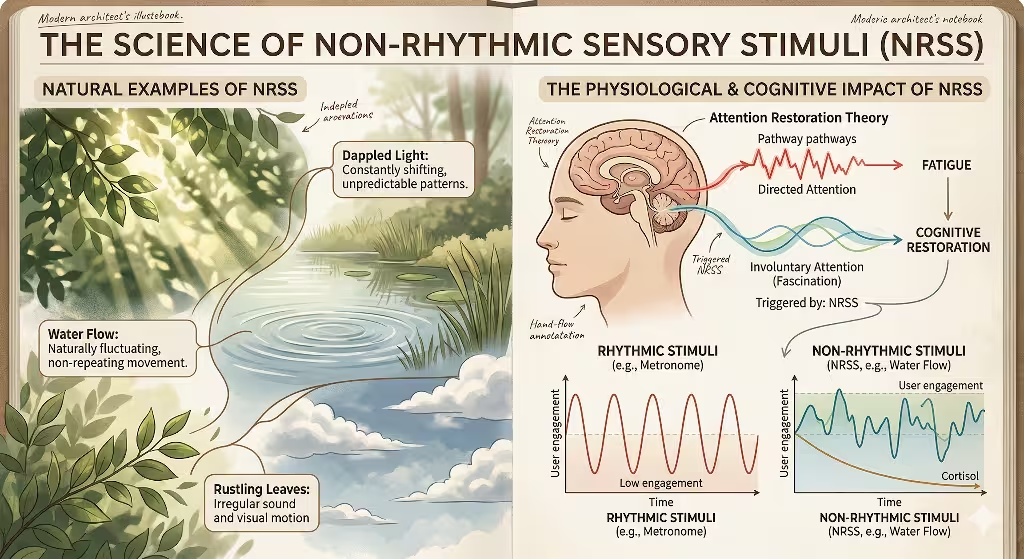
Non-rhythmic sensory stimuli sounds like a complex term, but it is actually quite simple. It refers to movements in nature that are not perfectly predictable but follow a pattern. Think of the way leaves move in a light breeze. Think of the way waves hit the shore. These movements are not robotic. They are fluid. When we use water effects on a website, we are using these same natural patterns.
Scientists have found that looking at these types of natural movements can lower stress. Specifically, it lowers a hormone in your body called cortisol. When a user visits a website that uses liquid motion, their brain feels a sense of relief. The smooth movement of liquid motion is much easier for the brain to look at than a screen that jumps from one thing to another. In the world of design, we call this reducing the cognitive load. This means the brain does not have to work as hard to understand what is happening.
When the brain is relaxed, it is more open to a story. This is why liquid motion is so important for digital storytelling. If you want someone to trust your brand, you should make them feel comfortable. Using liquid motion creates a sense of organic flow. It tells the user that your brand is natural and safe. This link between the motion of water a and brand trust is a key part of modern neuromarketing. We are using the physics of the natural world to make a better digital experience.
What is Liquid Motion Design?
People often wonder what exactly liquid motion design is. It is a specific style of web design. It uses computer code to mimic how liquids act in real life. We use things like viscosity, which is how thick a liquid is. We use surface tension, which is what makes a drop of water stay in a ball shape. We also use ripples and waves. Most of the time, this is done using something called WebGL or GLSL shaders. These are technical tools that let a website draw complex movements very quickly.
It is important to know that liquid motion is not just a video playing in the background. A video is the same every time you watch it. Real liquid motion is interactive. It reacts to what the user does. If you move your mouse, the liquid motion should ripple where your cursor is. If you scroll down the page, the liquid motion should flow with you. This makes the user feel like they are part of the story. They are not just watching a screen. They are interacting with a digital environment that feels alive because of the liquid motion.
Case Study 1: The Norwegian Salvation Army
One of the best examples of liquid motion used for storytelling is a project for the Norwegian Salvation Army. They wanted to tell a story called Julie’s Story. It was about a person’s life and the struggles they faced. Instead of just showing text and pictures, they used liquid motion to create a river of time. As you scroll down the page, the motion guides you from one part of her life to the next.
We call this scrollytelling. It means the story moves forward based on how the user scrolls. In this case, the liquid motion acted like a guide. The fluid transitions made the story feel like one continuous thought. It did not feel like clicking through different pages. We used a tool called GSAP ScrollTrigger to make sure the liquid motion stayed perfectly in sync with the user.
From a biophilic view, the liquid motion of the river was a powerful metaphor. Water is a symbol of life and change. By using motion to show the passage of time, the designers made the user feel the emotion of the story. The liquid motion helped the user stay focused on Julie’s journey. It was a beautiful use of technology to share a very human message. This case study proves that liquid motion can turn a simple website into a deep emotional experience.
Case Study 2: OHZI Interactive and WebGL Fluidity
OHZI Interactive is a digital agency that wanted to show off what they could do. They built a website that is a masterclass in liquid motion. When you arrive on their site, you see colors that move like ink in water. This is a very high level of liquid motion. It uses WebGL to make sure the movement is smooth. Even though the motion effects are very complex, the site runs very fast.
The key to this site is the interactive ripple. When you move your mouse over the screen, the liquid motion reacts instantly. It feels like you are dipping your finger into a glowing pool of water. This creates a sense of play and discovery. In biophilic design, play is very important. It keeps the human brain engaged and curious.
Because of the motion, people stay on the OHZI site for a long time. They want to see how the liquid motion will react to their next move. This is great for SEO because it increases something called dwell time. When Google sees that people are spending a lot of time on a site with liquid motion, it thinks the site is high quality. This helps the site rank better in search results. The motion is not just pretty. It is a smart business tool.
Case Study 3: Waabi and AI-Driven Organic Movement
Waabi is a company that works with artificial intelligence for self driving trucks. Usually, AI companies look very cold and technical. They use sharp lines and lots of gray colors. But Waabi wanted to look different. They wanted to look like a living brand. They used liquid motion to create a background that feels like it is breathing.
This liquid motion was created using something called Perlin noise. This is a type of math that creates random but smooth patterns. It is the same math used to create clouds or mountain ranges in video games. The liquid motion on the Waabi site moves in slow, gentle waves. It makes the technology feel more natural and less scary.
By using liquid motion, Waabi can explain complex ideas in a simple way. The fluid movement acts as a visual metaphor for how information flows through an AI brain. It takes something very hard to understand and makes it feel digestible. This is the power of liquid motion in storytelling. It can bridge the gap between high tech concepts and the natural world we live in. It is a perfect example of biophilic design in the year 2026.
Case Study 3: Strawbridge Pools and Spas
The Strawbridge Pools and Spas website was created by Silphium Design in 2025. When you first arrive at the site, you hear a person splashing into the pool water and the water of the pool ripples. This produces a water motion effect that gives the feeling of being at the side of a pool and is more than just a flat website.
Throughout the site are various elements related to pools and water. Image boxes are rounded to mimic water droplets. Pool liners and skirts are used for backgrounds in the website.
How Does Liquid Motion Improve Storytelling?
People often ask how liquid motion actually makes a story better. The main reason is that it creates a flow state. A flow state is when a person is so focused on what they are doing that they lose track of time. Traditional websites often break this flow. When you click a link and wait for a new page to load, it is like a jolt to the brain. It pulls you out of the story.
Liquid motion removes that friction. Instead of a hard cut, you get a fluid transition. One idea flows into the next using liquid motion. This keeps the user immersed in the narrative. They don’t have to stop and think about the website itself. They can just focus on the story being told.
Liquid motion also helps with emotional resonance. This means it helps the user feel what the story is about. For example, we can use liquid motion to morph one shape into another. We can change a leaf into a circuit board using a liquid motion transition. This shows that nature and technology are connected without using any words. It is a visual way of telling a story that goes straight to the heart. Liquid motion makes the digital world feel as connected as the real world.
The Technical Implementation of Fluid Physics
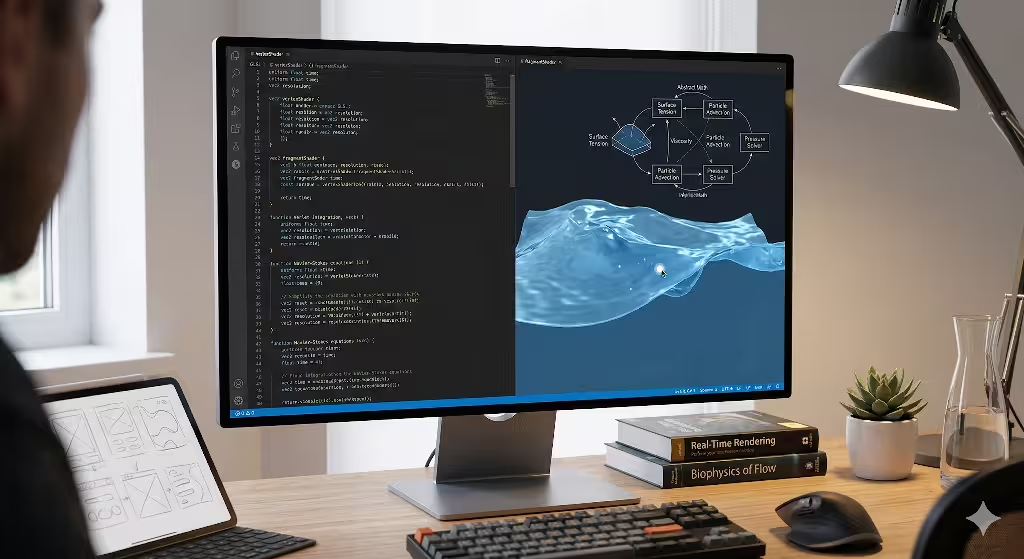
When we talk about the technical side of liquid motion, we have to look at physics. We have look at the math behind the movement. To make liquid motion look real, we use equations. We use sine waves to create the basic up and down motion of water. A sine wave is a smooth, repeating curve. In math, we write this as f(x) = sin(x). This simple formula is the start of all liquid motion.
But real liquid motion is more than just one wave. It is many waves hitting each other. We use code to calculate how these waves interact. This is called interference. When two waves meet, they can become bigger or cancel each other out. Our computers do these calculations thousands of times every second to create the liquid motion you see on your screen.
We also have to think about performance. If a website with liquid motion is too slow, people will leave. At Silphium Design, we use a technique called lazy loading. This means the computer only starts working on the liquid motion when it is needed. We also make sure our liquid motion follows accessibility rules. Some people get dizzy from too much movement. We write code that detects if a user has a “Reduce Motion” setting on their computer. If they do, we simplify the liquid motion so it is still beautiful but more comfortable for them.
SEO and Biophilic Metrics: Why it Matters for Traffic
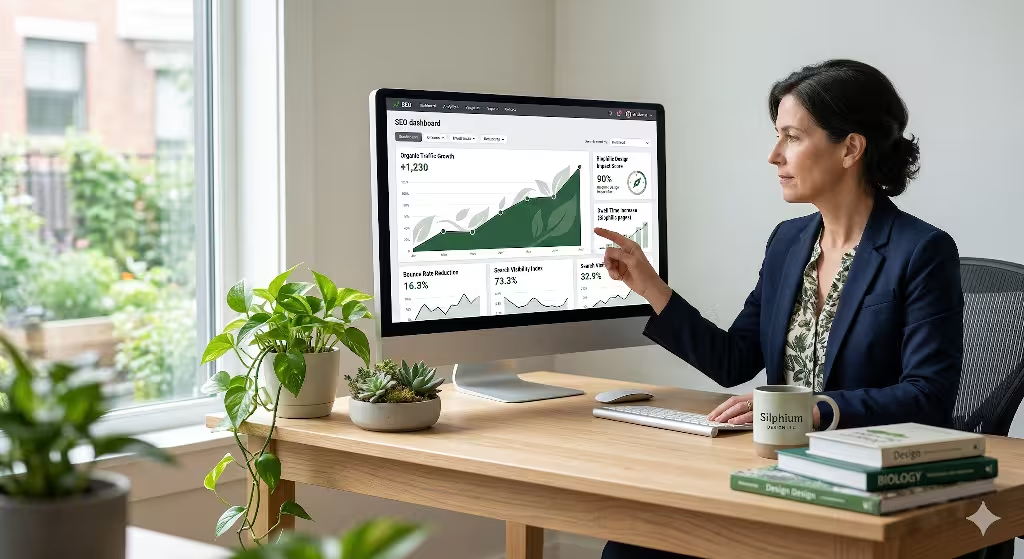
You might wonder why a design expert cares about SEO. The truth is that liquid motion and SEO go hand in hand. In 2026, search engines like Google are very smart. They don’t just look at keywords. They look at how users behave. One of the biggest factors is dwell time. This is how long a person stays on your page. As I mentioned before, liquid motion is great at keeping people on a page. The more they play with these motion effects, the better your SEO will be.
We also look at search intent. More and more people are searching for “immersive” experiences. They want websites that feel like more than just a digital flyer. By using liquid motion, you are meeting this search intent. You are giving the user the high quality experience they are looking for.
There is also a special group of keywords related to biophilic design. Terms like “Fluid UX” and “Organic UI” are getting a lot of traffic. People are tired of the cold, metal feel of the internet. They want something natural. Liquid motion is the answer to that desire. When you optimize your site for liquid motion, you are also optimizing it for the future of the web. You are showing that you understand what users really want.
The Future of Aqueous Interfaces
Using the motion of water is not a fad. It is the future of how we interact with the internet. As humans, we are made mostly of water. It makes sense that we would want our digital tools to move like water too. Liquid motion is the bridge between our biological past and our digital future. It takes the lessons I learned in biology and applies them to the code I write as a computer scientist.
In this article, we have seen how liquid motion can reduce stress and build trust. We have seen how it can guide a user through a story like a river. We have seen how it can make an AI company feel human. Liquid motion is a powerful tool for any brand that wants to stand out in 2026.
At Silphium Design, my vision is simple. I want the internet to feel as restorative as a walk in the woods. I want users to feel refreshed when they visit a website, not tired. Liquid motion is a huge part of making that happen. I encourage all designers to look at the physics of a stream before they start their next project. Look at how a drop of water moves. Then, try to bring that motion into your work. The results will be more than just a pretty site. You will create a digital experience that truly flows.
If you are ready to bring liquid motion into your digital storytelling, we are here to help. The world is moving fast, but with the right design, we can make it move with grace. Let’s make the web a more fluid and natural place for everyone.