
Nature is never still. It breathes, it grows, and it changes with the sun and the moon. Most websites today are like plastic plants. They look the same every single day. At Silphium Design, we believe your digital space should reflect the real world. This is where the idea of changing website visuals seasonally comes into play. It is not just about making a site look pretty. It is about biology, psychology, and how search engines see your work. When we talk about the SEO impact of this strategy, we are looking at how a site stays fresh for both people and computer programs.
Table of Contents
The Biological Basis for Seasonal Dynamism
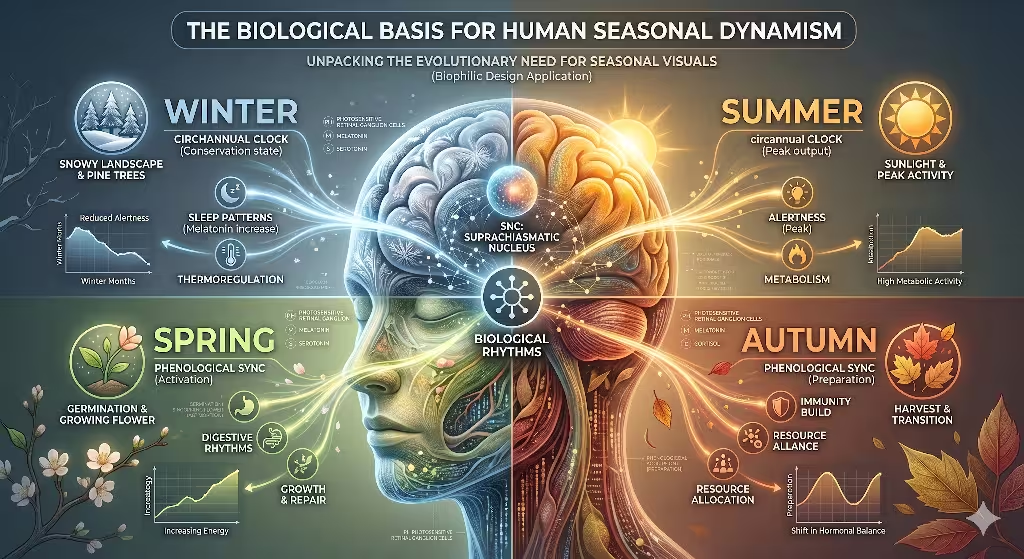
To understand why changing website visuals seasonally is a requirement for high-level digital performance, we must first analyze the biological hardware of the human user. As a biologist and web designer, I view the interface between a human and a screen as a biological connection. Humans did not evolve in a static environment. We evolved in a world defined by the tilt of the Earth’s axis, which creates the seasons. This constant change is hardwired into our DNA.
Evolutionary Psychology and Survival Instincts
From a survival standpoint, our ancestors survived by being highly tuned to environmental shifts. Detecting the transition from the lush greens of summer to the browns and oranges of autumn was a signal for resource management. This is known as environmental monitoring. Our brains are naturally designed to scan for these changes. When a user arrives at a website that reflects the current season, it triggers a sense of “correctness” in the brain. It signals that the information is current and the environment is safe and active.
By changing website visuals seasonally, you are tapping into this ancient survival mechanism. A static website that looks the same in December as it did in July creates a subtle form of cognitive dissonance. The brain notices the mismatch between the digital world and the physical world. This mismatch can lead to a subconscious feeling of unease. In technical design terms, we want to eliminate this friction. We want the digital experience to feel like a natural extension of the user’s physical reality.
The Role of Circannual Rhythms
Most people know about circadian rhythms, which control our sleep and wake cycles based on daily light. However, humans also have circannual rhythms. These are internal biological clocks that track the passing of the year. These rhythms affect everything from our metabolism to our mood and energy levels. For example, during the winter months, when days are shorter and light is less intense, our bodies naturally move toward a state of conservation.
When you are changing website visuals seasonally, you are aligning your design with these internal clocks. Using softer, cooler lighting effects and more subdued color palettes in the winter respects the user’s biological state. Conversely, using high-energy, vibrant colors in the spring and summer mirrors the natural increase in metabolic activity and alertness that humans experience during those times. This alignment reduces the effort the brain has to make to process the information on the screen.
Sensory Adaptation and Digital Stagnation
In biology, sensory adaptation occurs when a stimulus remains constant for too long, and the brain stops noticing it. This is why you stop smelling the perfume you put on after a few minutes. The same thing happens with website design. If a website never changes, the user’s brain eventually tunes out the visual elements. The site becomes “background noise.”
Changing website visuals seasonally prevents this sensory adaptation. By introducing new textures, imagery, and color shifts every few months, you provide a “novelty signal” to the user’s brain. This signal re-engages the user’s attention. It forces the brain to look at the site with fresh eyes. From a technical SEO perspective, this increased engagement leads to better metrics, as users are more likely to interact with new and interesting visual cues.
The Non-Visual System of the Eye
Recent research in biology has identified a group of cells in the human eye called photosensitive retinal ganglion cells. These cells do not help us “see” in the traditional sense. Instead, they send signals directly to the part of the brain that regulates our internal clock. These cells are highly sensitive to the color and intensity of light.
When we focus on changing website visuals seasonally, we are directly communicating with this non-visual system. By adjusting the dominant wavelengths of light reflected by your website’s design, shifting toward blue-rich light in the summer and warmer, red-rich light in the winter, you are helping the user’s brain stay in sync with the natural world. This is biophilic design at its most technical level. It is not about aesthetics; it is about biological synchronization.
By changing website visuals seasonally, we move away from a “one-size-fits-all” approach and move toward a dynamic, human-centric model of the internet. This biological foundation is what makes the strategy so effective. It works because it follows the rules of the human body, which have been refined over millions of years of evolution.
The Psychological Anchor: Biophilic Response and UX Metrics
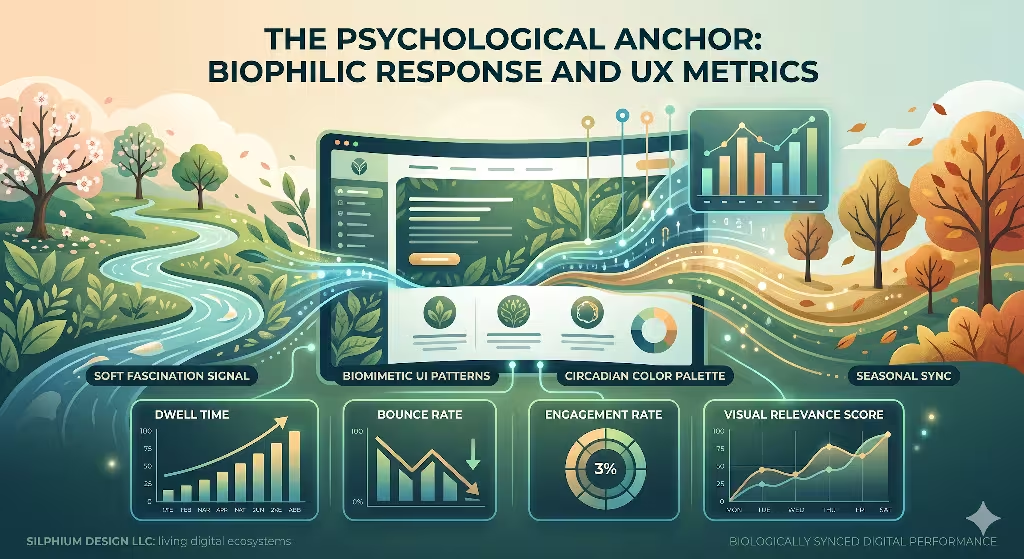
Our brains process color and light before they even read a single word on a page. This is why the colors you choose are so important. In the world of biophilic design, we look at how certain colors reduce digital fatigue. If you use the same bright, high-energy colors all year, your users might get tired. Changing website visuals seasonally allows you to shift the mood. In the winter, you might use cool blues and soft greys. These colors are calming. They match the lower light levels of the season. In the spring, you can move toward soft greens and yellows to represent new growth.
When you focus on changing website visuals seasonally, you are directly affecting how long people stay on your site. We call this dwell time. If a user feels comfortable and “at home” on your page because it matches their current environment, they are less likely to leave quickly. This reduces your bounce rate. A lower bounce rate is a huge win for SEO. It tells Google that people like what they see. They are staying to look around.
We also use something called biomimicry in our designs. This means we copy patterns found in nature. Nature does not use perfectly straight lines or flat colors. It uses textures and gradients. Changing website visuals seasonally means you can update these textures. You might use the crisp patterns of frost in December and the soft textures of moss in May. This keeps the user interested. It provides what we call soft fascination. This is a state where the brain is engaged but not stressed. It is the perfect state for someone to learn about your business or buy your products.
Direct SEO Impacts: Crawl Frequency and CTR
Now let’s talk about the hard numbers. Search engines use programs called crawlers or bots to look at your site. These bots look for changes. If you are constantly changing website visuals seasonally, you are giving the bots a reason to come back more often. Every time you update an image file or change a header, it is a tiny flag that says “Look at me!” Frequent crawling can lead to your new content being indexed faster. This is a major benefit for your search rankings.
Click-through rate, or CTR, is another big factor. Think about a search results page. If your meta description and title tag mention seasonal updates, people are more likely to click. People want to see what is new right now. Changing website visuals seasonally helps you align with what people are searching for at that exact moment. If someone is looking for home building tips in the spring, they are looking for different things than they would in the fall. If your visuals match those spring needs, you win the click.
There is also a strong link to conversion rate optimization. Trust is the biggest factor in getting someone to buy something or sign up for a newsletter. A site that updates its look regularly looks professional. It looks like someone is behind the scenes working hard. Changing website visuals seasonally builds that trust. It shows you are paying attention to the details. When users trust you, they are much more likely to follow your calls to action.
Technical Execution and Implementation Constraints
While the ideas behind biophilic design are beautiful, the execution must be technical and precise. You cannot just throw big images on a site and hope for the best. Large files slow down your site. Speed is a massive part of SEO. When changing website visuals seasonally, we use modern file formats like WebP or AVIF. These formats allow for high-quality images that have very small file sizes. This ensures that your site stays fast. We always monitor Core Web Vitals to make sure the user experience is smooth.
One of the most important rules is the same-URL principle. You do not want to create a brand new page every time the seasons change. That would split your SEO power. Instead, you keep the same URL but update the assets on that page. When changing website visuals seasonally, you replace the old image files with new ones while keeping the file names and alt text relevant to your keywords. This keeps all the “link juice” you have built up over time on one page.
We also use schema markup. This is a special code that helps search engines understand what is on your page. If you have a seasonal product or a seasonal image, you can use schema to tell Google exactly what it is. This can help your images show up in Google Image Search, which is a great way to get more traffic. Finally, we never forget about ADA compliance. Even when changing website visuals seasonally, your site must be easy to use for everyone. This means keeping good contrast levels so that text is easy to read against your new background colors.
Strategic Clarifications for Changing Website Visuals Seasonally
Many people have questions about how these changes affect their rankings. A common question is: Does changing website design affect SEO? The answer is yes, but it depends on how you do it. If you change your site and make it slower or harder to navigate, your rankings will drop. But if you focus on changing website visuals seasonally in a way that improves the user experience, your rankings can go up. It is all about the quality of the change.
Another question is: How often should I update my website visuals? In my expert opinion, four times a year is the sweet spot. Aligning your updates with the start of spring, summer, fall, and winter works best. This follows the natural cycle that humans already expect. Changing website visuals seasonally once a quarter is enough to keep things fresh without making it too much work for your team.
Does changing images on a page affect SEO? Yes, it does. Images have data attached to them, like file names and alt text. When you are changing website visuals seasonally, you have a chance to refresh those keywords. Google also looks at the “freshness” of the media on a page. New, high-quality images tell Google that the page is being maintained. This is a positive signal for your search authority.
Can changing a website theme hurt SEO? It can if the theme is poorly coded. Some themes have a lot of “bloat” that slows down the site. When changing website visuals seasonally, you should try to keep your core theme the same and only change the visual layers. This prevents you from breaking the structure of your site. At Silphium Design, we focus on clean code that allows for visual flexibility without the risk of losing search rankings.
The Strategic Roadmap: Planning for 2026 and Beyond
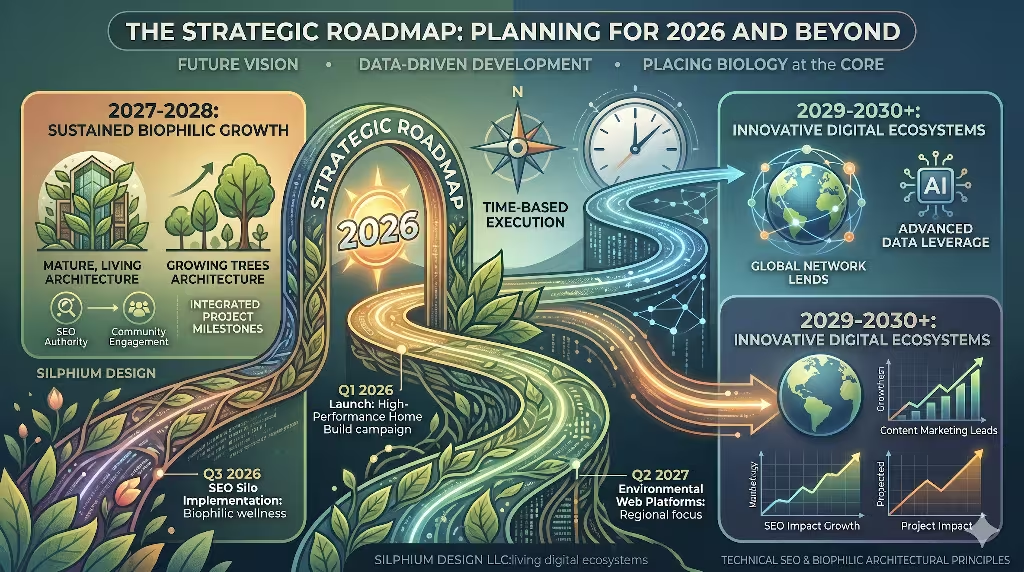
Success in the digital world requires a plan. You cannot wait until the first day of winter to start changing website visuals seasonally. You need to be ahead of the curve. Search engines take time to index new content. We recommend planning your visual updates at least six to eight weeks in advance. If you want to rank for winter keywords, your winter visuals should be ready to go in late October.
We also use data-driven design. We look at Google Search Console to see what people are looking for. Are they searching for “energy efficient windows for winter” or “summer landscaping ideas”? This data tells us what visuals to prioritize. When changing website visuals seasonally, we make sure the images match the high-traffic keywords for that specific time of year. This is how you stay relevant in a crowded market.
I often think about the equation of engagement. Your engagement score is found by looking at how relevant your visuals are and how fresh your content is, then dividing that by how hard the user has to work to understand the page. Changing website visuals seasonally keeps your relevance and freshness high. By using biophilic principles, we keep the work for the user low. This leads to the best possible results for your business and your SEO goals.
Synthesizing Biology and Bitrate
In the end, the internet is for people. We sometimes get so caught up in code and keywords that we forget we are designing for human beings. Changing website visuals seasonally is a way to bridge the gap between the cold world of computers and the warm, living world of nature. It is about using our knowledge of biology to create better digital tools. When we respect the natural rhythms of life, our users reward us with their time and their trust.
The SEO impact of this strategy is clear. By changing website visuals seasonally, you keep your site active, you improve your user metrics, and you signal to search engines that you are a leader in your field. It takes work, and it takes a deep understanding of both design and technical SEO. But the results are worth it. A site that changes with the seasons is a site that feels real. It is a site that grows.
As we look toward the future, the websites that stand out will be the ones that feel the most human. We must move away from the static, unchanging pages of the past. Start thinking about your site as a living thing. Start changing website visuals seasonally and see how your audience reacts. You will likely find that they appreciate the effort. They will stay longer, click more, and come back more often. That is the power of biophilic design. It is the power of nature, working for you in the digital age. At Silphium Design LLC, this is our mission. We hope you will join us in making the internet a more natural and beautiful place for everyone.
Changing website visuals seasonally is not just a trend. It is a fundamental shift in how we think about web design. It moves us away from seeing a website as a static brochure and toward seeing it as a dynamic environment. When you embrace the cycle of the seasons, you align your business with the oldest and most successful system in existence: nature itself. This alignment is the key to long-term success in SEO and in building a brand that people truly care about. Keep your visuals fresh, keep your colors in tune with the world outside, and keep your technical execution flawless. When you do these things, changing website visuals seasonally becomes your most powerful tool for growth.