
At Silphium Design LLC, we often find myself at the intersection of biological systems and digital architecture. When we consider the digital landscape of 2026, we are no longer just building tools; we are cultivating environments. The transition from industrial, rigid interfaces to those that mirror the organic world is not merely a trend, it is a biological imperative.
The most effective digital products are those that respect the human animal. By understanding the psychological impact of nature metaphors in web apps, we can create spaces that do more than just function. We can create spaces that heal, restore, and engage on a level that purely mechanical designs never could.
Table of Contents
Cognitive Load and the Natural Path
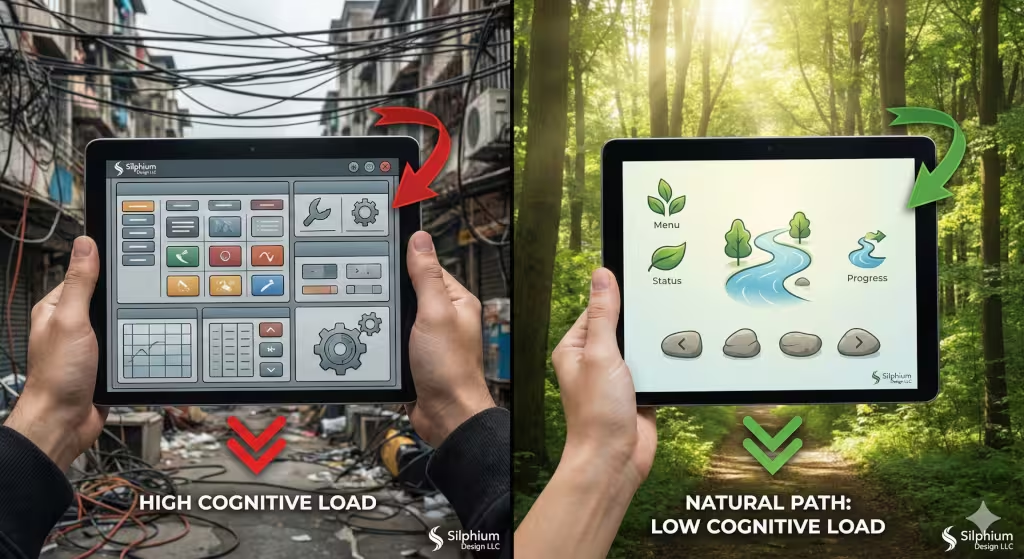
At Silphium Design, we look at cognitive load as the “mental gravity” of a web app. Just as it takes more physical energy to hike up a steep, rocky mountain than to walk along a flat meadow path, it takes more mental energy to navigate a cluttered, mechanical website than one filled with nature metaphors. My goal as a biophilic design expert is to level those digital mountains. I want to turn every user interaction into a walk through a familiar forest. To do this, we must understand how nature metaphors act as a universal language for the human brain.
The Science of Mental Effort
To understand why nature metaphors are so effective, we first have to look at how the brain processes new information. Every time you open a new app, your brain asks a series of rapid-fire questions: Where am I? What does this button do? How do I get back to the start? If the app is designed like a complex machine with no reference to the real world, the brain has to build a brand-new map from scratch. This burns a lot of “fuel” in the form of glucose and oxygen.
However, when we use nature metaphors, we are giving the brain a map it already owns. Humans have lived in nature for millions of years, but we have only lived with screens for a few decades. Our brains are hard-wired to recognize the “flow” of water, the “growth” of a plant, or the “layering” of the earth. When a web app uses these nature metaphors, the brain doesn’t have to work nearly as hard. It recognizes the pattern instantly. This reduction in mental effort is what we call lowering the cognitive load.
Nature Metaphors as Digital Signposts
Imagine you are lost in a deep forest. If you see a clear, beaten path, you follow it because you know it leads somewhere. In web design, we use nature metaphors to create these digital paths. A “breadcrumb” trail is a classic example of a nature metaphor that tells a user exactly where they have been and how to get home. It’s a simple concept borrowed from folk tales and the natural world, and it works because it is intuitive.
At Silphium Design, we take this further. We might design a checkout process that feels like a “stream.” Each step flows naturally into the next, moving downward with a sense of gravity and momentum. We avoid “dams” or “roadblocks” that stop the user’s progress. By using nature metaphors like the flow of water, we guide the user toward the “ocean”—which, in this case, is the completed purchase. This makes the experience feel inevitable and easy rather than forced or mechanical.
The Power of Familiarity
The reason nature metaphors are so successful in reducing cognitive load is because they are “pre-loaded” in our minds. When you see a folder icon on a computer, that is a physical metaphor. But nature metaphors go even deeper. They tap into our basic senses. For example, a “cloud” is a nature metaphor for storage that feels light, vast, and always above us. Even though your data is actually sitting in a hot, heavy server in a building somewhere, the nature metaphor of a cloud makes it feel accessible and weightless.
When we use nature metaphors, we are using the “mental shortcuts” that nature gave us. If a web app uses a “nesting” metaphor for folders, it feels more protective and organized than just a list of files. If a social media app uses the nature metaphor of a “wall” or a “field,” it creates a sense of space. These nature metaphors help us feel like we are in a place we understand, which lowers our anxiety and helps us focus on the task at hand.
Visual Hierarchy and Natural Patterns
In nature, things that are important are usually easy to see. A bright red berry stands out against green leaves. A tall tree towers over the grass. We use these nature metaphors of “size” and “contrast” to create a visual hierarchy in our web apps. By mimicking the way nature organizes information, we tell the user’s eyes exactly where to look first.
For instance, we might use “organic shapes” instead of rigid boxes. In the real world, there are very few perfect squares. Most things have soft, rounded edges—like leaves, stones, and clouds. Using these nature metaphors for buttons and containers makes the interface feel “softer” to the eye. This reduces “visual noise,” which is another form of cognitive load. When the screen looks more like a natural landscape and less like a blueprint, the brain can relax and process information more efficiently.
Using Nature Metaphors to Teach Users
One of the hardest parts of web design is teaching a user how to use a new tool. This is where nature metaphors really shine. Instead of a long manual, we can use “growth” metaphors. As a user completes more tasks, their profile “grows” from a small seed to a leafy plant. This nature metaphor tells the user they are making progress without using a single word. It feels rewarding because we instinctively understand that growth is a good thing.
We also use “weather” as a nature metaphor for status updates. A “sunny” icon might mean the system is running perfectly, while a “stormy” icon suggests there is an error that needs attention. These nature metaphors are universal. You don’t need to speak a specific language to understand what they mean. This makes your web app accessible to more people across the globe, which is a key part of modern SEO and global design.
The “Frictionless” Forest
In design, “friction” is anything that slows the user down. A confusing menu is friction. A slow-loading page is friction. By applying nature metaphors, we can smooth out these rough spots. Think of a polished river stone. It has been shaped by the water over years until it has no sharp edges. We try to “polish” our web apps using nature metaphors so there is nothing for the user’s mind to get snagged on.
When we talk about the “natural path” in web design, we are talking about the path of least resistance. Water always finds the easiest way down a hill. Users always find the easiest way to finish a task. If we design our apps with nature metaphors that match these natural human tendencies, we create a “frictionless” experience. The user finishes their task and feels energized rather than exhausted. This is the ultimate goal of biophilic design at Silphium Design.
Attention Restoration Theory (ART) in Digital Spaces
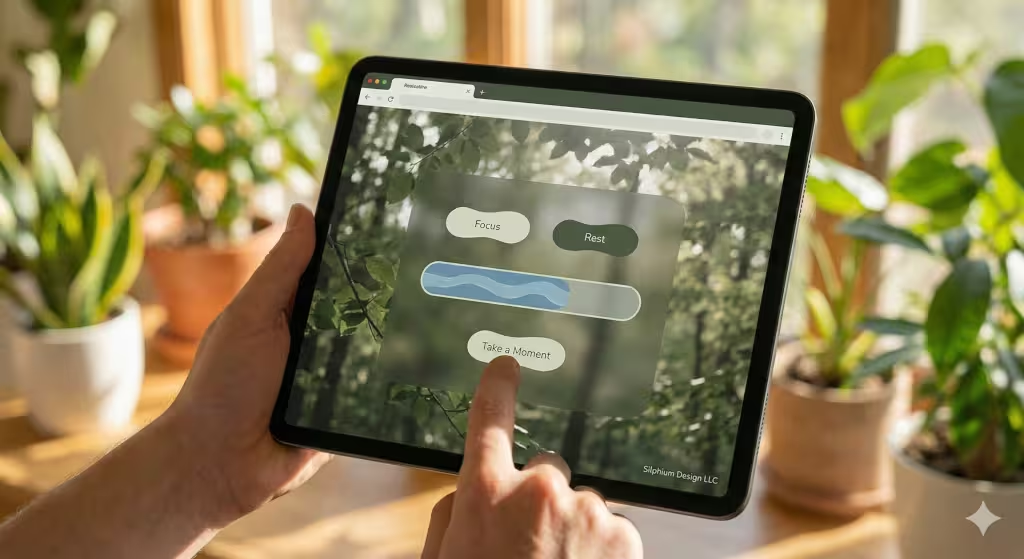
Have you ever felt “fried” after a long day of staring at a computer screen? That feeling is called directed attention fatigue. Our brains have two types of attention. The first is directed attention, which we use for hard tasks like math or writing. This type of attention is like a muscle; it gets tired. The second is involuntary attention, which happens when something interesting catches our eye without effort, like a flickering flame or a swaying leaf.
Attention Restoration Theory, or ART, tells us that we can rest our tired directed attention by engaging our involuntary attention. This is why a walk in the park feels so good. In web design, we can use nature metaphors to create “soft fascination.” Instead of harsh, flashing pop-ups, we can use gentle animations that mimic the movement of clouds. Instead of sharp, square buttons, we can use organic shapes that look like smooth river stones. These nature metaphors allow the user’s brain to take “micro-breaks” while they work, preventing burnout and keeping them engaged longer. At Silphium Design, we focus on building these restorative moments into every page.
Do Digital Nature Simulations Actually Work?
A common question, is whether a screen can really provide the same benefits as the “real” outdoors. While nothing beats a hike in the mountains, recent studies in 2026 have shown that digital nature metaphors are incredibly effective. Research proves that viewing high-quality nature metaphors on a screen can lower cortisol levels, the hormone that causes stress, and lower heart rates.
People often ask: “Can a website really make me feel less stressed?” The answer is yes, if it is designed with the right nature metaphors. When a web app uses the colors of a forest or the sounds of a gentle rain, it triggers the same relaxation response in the brain as the real thing. It might not be quite as powerful as being outside, but in a world where we spend most of our time indoors, these digital nature metaphors are a vital “vitamin” for our mental health. They turn a stressful work tool into a calm, supportive environment.
Can Web Design Improve Mental Health?
Another frequent inquiry involves the broader impact of design on our well-being. Can nature metaphors actually help people with anxiety or depression? The science says they can. Digital spaces that feel cold and mechanical can make users feel isolated and stressed. However, web apps that embrace nature metaphors create a sense of connection and peace.
By using nature metaphors, designers can create a sense of “place” in a digital world that often feels placeless. When an app feels like a garden or a sunny meadow, it provides a safe, predictable space for the user. This is especially important for apps related to health or finance, where stress levels are already high. Using nature metaphors in these contexts isn’t just about making things look pretty; it’s about being responsible designers who care about the user’s emotional state.
What are the Best Nature Metaphors for UX?
People often want specific examples of nature metaphors they can use. The “best” metaphor depends on what the app does. For example, a social media app might use the metaphor of a “root system” to show how people are connected. A data storage app might use the metaphor of a “seed” growing into a “tree” to represent how files are organized and saved.
Some of the most effective nature metaphors include “flow” for navigation, “growth” for progress bars, and “ecosystems” for a group of connected apps. These nature metaphors are powerful because they tell a story. They help the user understand not just what a button does, but how it fits into the bigger picture. When we use nature metaphors correctly, the interface stops being a barrier and starts being a bridge between the user and their data.
Physiological Impact and Stress Recovery Theory (SRT)
Stress Recovery Theory, or SRT, is closely related to the ideas we’ve discussed. It suggests that humans have a built-in positive response to natural environments because they were “safe” places for our ancestors. When we see a wide-open landscape or a source of water, our bodies relax. We can bring this physiological response into web design through nature metaphors.
At Silphium Design, we use nature metaphors to trigger this relaxation. We might use “fractal” patterns, patterns that repeat themselves at different scales, like the branches of a tree or the veins in a leaf. Our brains are hard-wired to find these patterns beautiful and calming. By incorporating these nature metaphors into the background of a web app, we can actually help the user’s nervous system calm down. It’s a way of using computer science to speak the language of human biology.
From Functional to Relational: Specific Entities
In the past, web design was purely functional. You clicked a link, and a page opened. Today, we are moving toward “relational” design. This means we are building a relationship between the user and the app. Nature metaphors are the key to this shift. Instead of a sterile machine, the app becomes a companion.
We look at entities like “biomimicry,” the practice of looking at nature to solve human problems. For instance, we might look at how a flower opens and use that as a metaphor for how a menu unfolds on a screen. We also use “neumorphism,” which uses soft shadows to make digital buttons look like they are part of a physical, natural surface. These nature metaphors make the digital world feel more tangible and real. They help users feel like they are interacting with something living, which builds trust and loyalty.
Future Trends: The Generative Nature UI
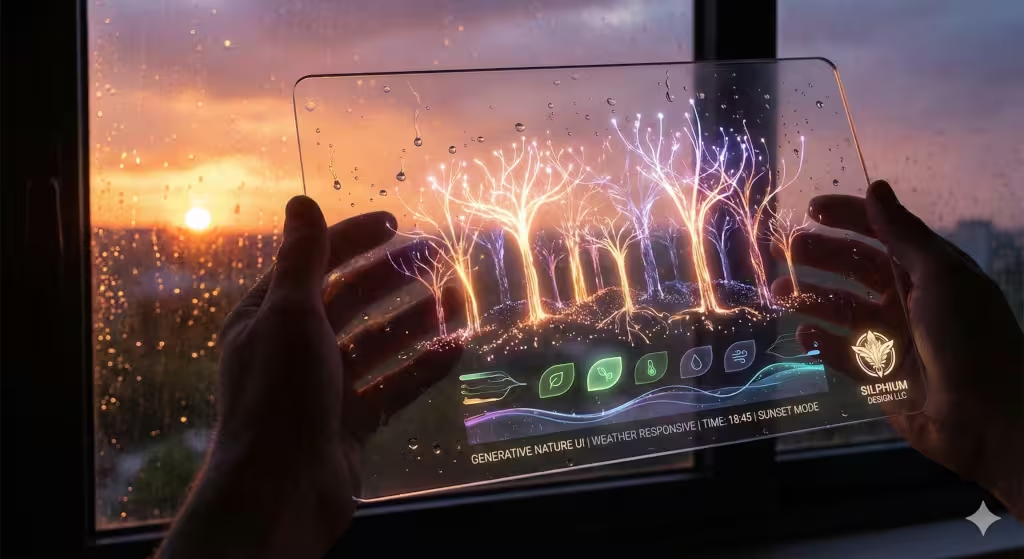
Looking ahead to the rest of 2026 and beyond, the future of nature metaphors is generative. This means using artificial intelligence to create interfaces that change and grow based on the user’s environment. Imagine a web app that uses nature metaphors to reflect the time of day at your location. If it’s sunset where you are, the app’s colors shift to warm oranges and purples. If it’s raining, you might see subtle “raindrop” animations on the buttons.
These dynamic nature metaphors make the digital experience feel less like a static box and more like a living thing. This is the ultimate expression of biophilic design. It’s about making sure our technology doesn’t pull us away from nature, but instead, uses nature metaphors to bring us closer to it. At Silphium Design, we are at the forefront of this movement, ensuring that every website we build is a healthy ecosystem for the user.
The Silphium Design Philosophy
The psychological impact of nature metaphors in web apps is profound and far-reaching. By moving away from the “machine” and toward the “organism,” we create digital experiences that are more efficient, more beautiful, and more human. Whether it’s through reducing cognitive load, restoring attention, or lowering stress levels, nature metaphors are the most powerful tool in a designer’s kit.
As we continue to navigate the digital world of 2026, let us remember that we are biological beings first. Our tools should reflect that. At Silphium Design, our mission is to plant the seeds of nature metaphors in every corner of the internet, creating a digital forest that is welcoming to all. We believe that by honoring our connection to the natural world, we can build a better, healthier, and more productive digital future for everyone.