
Table of Contents
The Fusion of Carbon and Silicon
At Silphium Design LLC, we look at the internet through a very specific lens. The mix of science, design, and code has led us to a powerful realization: the digital world is about to undergo a massive transformation. We are moving toward a future where our screens will no longer feel like flat, cold pieces of glass. Instead, they will act like living, breathing ecosystems.
The main idea behind this shift is the biophilia hypothesis. This scientific theory, popularized by biologist E.O. Wilson, states that human beings have an innate, evolutionary need to connect with nature. For thousands of years, our brains and bodies evolved in response to forests, rivers, weather patterns, and open skies. Today, however, we spend the vast majority of our waking hours looking at artificial pixels on digital devices. This disconnect causes deep mental fatigue and stress. The solution is not to get rid of our technology, but to reshape it entirely. By the year 2030, web development will combine natural laws with advanced computation. This new path is what we call biophilic web design with AI.
Our main prediction for the year 2030 is that websites will stop using rigid, mechanical layouts. Instead, they will become responsive, self-assembling digital habitats that use smart computer programs to mimic nature. This means a website will not look the same every time you open it. It will change its shapes, its colors, and its movements based on what your body and mind need at that exact moment. By combining artificial intelligence with biological rules, we can build digital spaces that actually lower your stress levels and help you focus. This is the true goal of biophilic web design with AI. It is about taking the core lessons of nature and turning them into digital code.
When you think about the internet today, it often feels like a series of digital boxes. You have boxes for text, boxes for images, and boxes for buttons. This structure is easy for computers to build, but it is not natural for the human brain to process.
At Silphium Design LLC, we are using new technology to tear down those artificial boxes. We believe that biophilic web design with AI will allow us to create websites that grow, change, and adapt just like a real forest. The future of online technology is not about moving further away from the natural world. It is about using our most advanced software to bring the essence of the natural world right onto our screens.
Historical Baseline vs. The 2030 Paradigm Shift
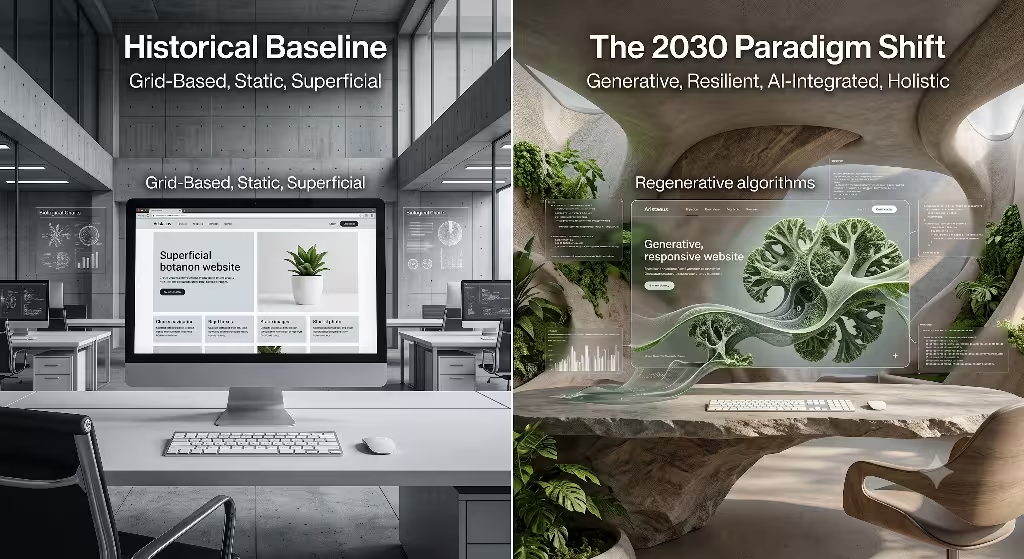
To understand where we are going, we have to look at where we are right now. In the current era of digital development, nature-inspired design is mostly flat and static. Designers call this the first wave of digital biophilia. When a company wants to make a website feel natural today, they usually add a few muted green or brown colors. They might include a static graphic of a leaf or a slow video background of water moving in a loop.
While these choices are better than using harsh neon lights and sharp angles, they are still very simple. They do not truly understand how nature works. They are just painting a digital picture of nature on top of a normal, rigid website grid.
By the year 2030, we predict a massive shift toward autonomous biophilia. This means websites will use real-time, smart computer programs to build layouts that adapt to your personal surroundings and physical state. Instead of loading a fixed template, an intelligence engine will study data from your local environment and change the page layout instantly. This type of biophilic web design with AI creates a living digital habitat. The website will know if it is raining outside your window, if the sun is setting, or if you are feeling tired after a long day of work. It will change its entire visual style to help your brain rest and recover.
This future system relies on automated systems that read safe data paths. For example, if you allow a website to connect to your smart watch or local weather application, the interface can adjust its settings. If your heart rate is high, the system might smooth out its layout and use more relaxing patterns. If it is early morning, the page will look bright and full of energy to match your natural waking rhythm. This level of active adjustment is only possible through biophilic web design with AI, which treats the internet as a space that lives and breathes alongside the user.
To help visualize this massive change, we can compare how we build websites now versus how we will build them in 2030. This matrix highlights the key differences across four major design metrics.
| Architectural Metric | Static Biophilic Design (Current) | AI-Driven Biophilic Design (2030 Prediction) |
| Geometry | Fixed organic curves & fluid layouts | Procedural fractal generation via real-time math |
| Motion | Looped CSS transitions (predictable) | Stochastic, non-rhythmic sensory stimuli |
| Circadian Sync | Manual CSS variables or time-of-day toggles | Localized telemetry & automated chronobiological dimming |
| Compute Impact | Heavy unoptimized video assets | Lightweight, client-side neural rendering |
As this comparison shows, the future of biophilic web design with AI is all about moving from fixed elements to smart, living elements. We are leaving behind the old days of heavy, slow video loops that clog up your browser. Instead, we are entering an era where small, powerful computer models build beautiful natural patterns directly on your device. This approach makes the internet much more personal, engaging, and relaxing to use.
Generative Mathematical Architecture: Fractality in UI
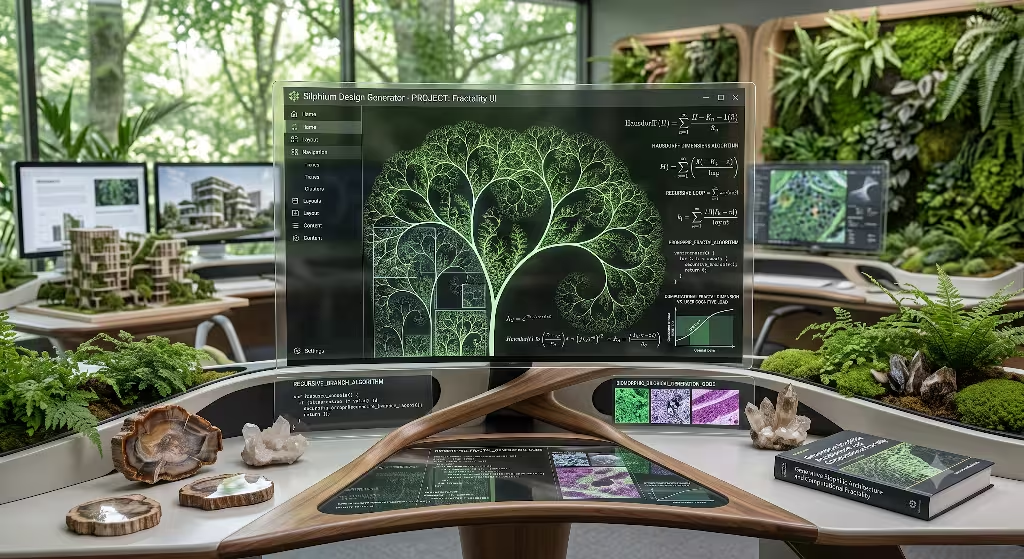
Nature might look random at first glance, but it is actually built on deeply organized mathematical rules. One of the most important concepts is the fractal. A fractal is a natural pattern that repeats itself at different scales. If you look at a fern leaf, a single small leaf looks just like a miniature version of the whole branch. You see the same repeating patterns in river systems, mountain ranges, snowflakes, and tree limbs. The human brain is incredibly good at recognizing these shapes. In fact, our eyes can process fractal shapes with almost zero effort. This is why looking at a forest feels relaxing, while looking at a complex city grid can make you feel tired.
By 2030, biophilic web design with AI will use these mathematical rules to create website grids on the fly. Instead of using standard column layouts, smart algorithms will generate shapes that repeat across the page in a natural way. This means your navigation menu, your content blocks, and your image galleries will all flow together using the same math that shapes a tree. This mathematical approach to biophilic web design with AI allows us to tap into what scientists call the mathematics of calm. We can use precise calculations to build digital layouts that feel instantly familiar and safe to the human eye.
To measure this visual balance, scientists use a tool called the Hausdorff-Besicovitch dimension. This mathematical formula looks like this:
D = \log N /log(1/r)
In this equation, “D” is the visual dimension or complexity score. The letter “N” stands for the number of self-similar internal structures you can see inside the shape. The letter “r” represents the scale factor, which shows how much smaller those structures get as they repeat. When we apply this math to web interfaces, we can calculate exactly how busy or distracting a page layout is. Studies in neuro-aesthetics show that the human brain feels most comfortable when the complexity score D is between 1.3 and 1.5. If the number is too low, the page looks boring and industrial. If the number is too high, the page looks messy and chaotic.
With biophilic web design with AI, a website can monitor its own visual complexity in real time. If a page has a lot of text and data, the smart system will automatically adjust the background shapes and spacing to keep the total “D”: score in that perfect sweet spot between 1.3 and 1.5. This prevents your eyes from getting tired when you are reading a long article or buying a product online. The interface moves away from harsh, square corners and shifts toward organic structures. These layouts can grow and reshape themselves based on cell-based growth systems, making the website feel like a natural extension of the physical world.
Dynamic Chronobiology & Interface Adaptation
Human beings are biological creatures governed by a internal clock. This internal clock is called our circadian rhythm, and it controls when we feel awake, energized, or tired throughout a twenty-four-hour day. For millions of years, this rhythm was set by the natural movement of the sun. When the sun came up, the light was bright and blue, telling our bodies to wake up. When the sun went down, the light turned warm and red, signaling our brains to produce melatonin so we could sleep. Today, our bright digital screens disrupt this natural cycle, keeping us awake and causing long-term sleep issues.
By 2030, advanced biophilic web design with AI will fix this problem by syncing your screen directly with your body’s natural rhythms. Web platforms will use real-time data from local environment sensors and wearable devices to see how your body is doing. If a user is browsing a website late at night, the platform will notice the time and location. The system will then use biophilic web design with AI to gently adjust the interface. It will automatically lower the brightness, remove harsh blue light frequencies, and introduce warm, glowing earth tones that match the natural evening sky.
This process goes far beyond the basic dark mode settings we use on our phones today. A smart biophilic web design with AI system will look at your local weather and atmospheric conditions too. If it is a grey, cloudy, rainy afternoon in your city, the website might increase its visual contrast and introduce soft, warm light effects to cheer you up and reduce eye strain. If you are working in a bright, sunlit room, the page will shift its colors to stay clearly readable without requiring you to turn your screen brightness all the way up. The interface behaves like a window, reflecting the natural world outside.
Sound is another major part of this dynamic adaptation. When you walk through a forest, you do not hear a single track playing on a loop. You hear a complex mix of sounds that change based on the wind, the animals, and your own movement. In the future, biophilic web design with AI will include generative sound systems that create natural audio tracks on the spot. As you scroll down a page, the website might generate soft pink noise mixed with the sound of wind moving through grass or water washing over small stones. The audio will change its speed and volume based on how fast you read, creating a highly personal and deeply calming sensory experience.
Non-Rhythmic Sensory Stimuli: Engineering the “Flutter”
Think about what happens when you look at a tree on a windy day. The leaves flutter and bounce in the breeze. This movement is not mechanical or perfectly predictable. It has an organic rhythm that is full of tiny, random changes. Scientists call this a non-rhythmic sensory stimulus. Our human brains are highly trained to notice these types of movements. When we see a leaf flutter, our subconscious mind feels safe because it recognizes a healthy, natural environment. On the other hand, if something moves in a perfectly repeating loop, like a flashing digital sign or a spinning loading icon, our brains get annoyed. We quickly realize it is a machine, and that mechanical repetition causes subconscious stress.
Most animations on the internet today are completely mechanical. They use fixed loops that repeat the exact same movement over and over again. This causes a subtle build-up of mental fatigue, which makes people want to leave a website quickly. By 2030, biophilic web design with AI will replace these stiff animations with organic, natural movements. We will use smart algorithms to build a feeling of natural life into everyday web features. This means a button will not just change color when you point at it. It might ripple softly like water, or settle into place with the gentle weight of a smooth river stone.
This design method is often called engineering the flutter. By using biophilic web design with AI, we can write small code packages that inject true natural randomness into every part of a website. When you move your mouse across a navigation menu, the links might sway gently, imitating the way underwater plants move when a fish swims past them. Because these movements are handled by a smart assistant, they never repeat in the exact same pattern. Every single interaction is unique, organic, and surprisingly alive.
This organic approach has a massive impact on user comfort. When we test these natural, randomized movements at Silphium Design LLC, we see a significant drop in digital fatigue. Users do not get that tired, burnt-out feeling that usually comes from staring at a screen for a few hours. By using biophilic web design with AI to mimic the natural rhythms of the physical world, we can lower user stress levels and keep people engaged for longer periods. The internet stops feeling like a demanding machine and starts feeling like a peaceful path through nature.
The Carbon Paradox: Sustainable Compute vs. Algorithmic Biophilia
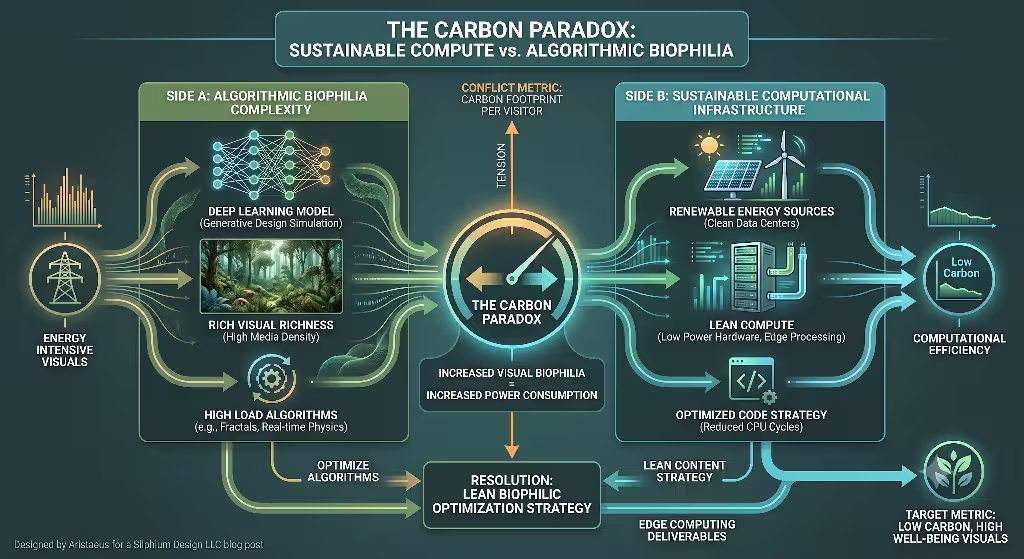
As we look forward to the future of the internet, we have to talk about a major problem facing our industry. This problem is known as the carbon paradox. On one hand, biophilic design is all about loving nature and protecting our physical environment. On the other hand, running advanced artificial intelligence models requires an enormous amount of electricity. Massive data centers burn through megawatts of power every day to process smart algorithms, which creates a huge carbon footprint. This creates a clear conflict: how can we claim to build natural, eco-friendly digital habitats if the technology behind them is actually harming the real planet?
By the year 2030, this conflict will force us to change how we build and host digital platforms. We cannot rely on heavy, bloated code that runs on distant, dirty power grids. The solution lies in combining biophilic web design with AI with extreme optimization. Instead of sending every tiny request to a giant, power-hungry server, websites will use small, highly efficient neural networks that run directly on your own local device. This is called client-side edge computing. It allows the website to adapt and change its layout using only a fraction of the energy required by older systems.
At Silphium Design LLC, we believe that clean, efficient code is a fundamental requirement for any natural design project. A website cannot truly be biophilic if it wastes energy and slows down your computer. In the future, designers will use smart assistants to run deep code audits. These automated tools will scan files, remove extra clutter, and write incredibly clean scripts that use very little processing power. By using biophilic web design with AI to streamline our underlying technology, we can build beautiful, natural interfaces that load instantly and conserve battery life.
+-------------------------------------------------------+
|             THE 2030 GREEN COMPUTING ARCHITECTURE      |
+-------------------------------------------------------+
|                                                       |
|  [User Device / Edge Network]                         |
|  Runs lightweight, local AI models                    |
|  Uses minimal battery and power                       |
|                           |                           |
|                           v                           |
|  [Green Web Hosting Server]                           |
|  Powered entirely by renewable energy                 |
|  Sends only raw data, no heavy visual assets          |
|                           |                           |
|                           v                           |
|  [Result: Sustainable Biophilic Web Design with AI]   |
|  A low-carbon, nature-aligned user experience         |
|                                                       |
+-------------------------------------------------------+
As this flow shows, true digital sustainability requires us to rethink our entire development setup. We must host our files on green servers that run entirely on solar, wind, or water power. This ensures that when a user interacts with a dynamic, nature-aligned interface, they are not contributing to environmental damage. By making sure our code is lean and our servers are clean, biophilic web design with AI can achieve its ultimate goal: protecting both the digital user and the physical planet at the exact same time.
Search Engine Optimization & Semantic Ecosystems in 2030
Search engine optimization, or SEO, is also going through a massive evolution. In the early days of the internet, ranking high on search engines was all about keyword stuffing. If you wrote the same phrase over and over again on a page, a basic search engine would assume your site was highly relevant. Today, search algorithms are much smarter, and by 2030, they will act like fully developed semantic ecosystems. This means search engines will no longer just read individual words. They will look at the entire context, the structural quality, and the overall user experience of a website to determine where it should rank.
In this future environment, search platforms will actively scan for what we call ecosystem quality metrics. They will evaluate how well a website supports human health and processing speed. Because biophilic web design with AI naturally lowers stress and reduces mental fatigue, users will want to spend more time exploring these pages. This increases a metric known as dwell time, which shows search engines that your content is valuable and comfortable to read. A site built with biophilic web design with AI will naturally achieve better search visibility because it prioritizes the well-being of the human visitor.
Another major shift will occur in local search networks. Smart discovery tools will connect website design choices with the actual geographic location of the user or business. This creates a local search nexus where web palettes change based on regional nature trends. For example, if you run a business in Arizona, a smart biophilic web design with AI system might style your site with warm terracotta tones, desert sage greens, and soft sand textures. If your business is located in New England, the site will automatically shift toward deep ocean blues, granite greys, and coastal forest greens. This local connection helps build immediate trust with local searchers.
Ecosystem Quality Rule: By 2030, search engine visibility will be directly tied to human comfort. Web systems that cause high eye strain and cognitive fatigue will be penalized by ranking algorithms, while adaptive, nature-aligned spaces will rise to the top of search results.
Ultimately, using biophilic web design with AI is one of the best ways to prepare your digital presence for the future of search. When you design a website that respects human biology, you are building an online space that modern search tools love to recommend. You are moving away from cold, artificial tricks and moving toward a meaningful, health-focused approach to digital discovery.
Frequently Asked Questions about Biophilic Web Design with AI
To help clarify how these ideas work in practice, let us look at some of the most common questions people ask online about this changing field.
What is digital biophilic web design?
Digital biophilic web design is a method of building websites that uses colors, shapes, patterns, and movements inspired by the natural world. Instead of using rigid box layouts and harsh colors, it uses organic elements like river stone shapes, soft earth tones, and gentle animations that mimic water or wind. The core goal is to make digital screens feel more like natural environments, which helps lower user stress and makes websites much more relaxing to use.
How will AI affect user experience (UX) design by 2030?
By the year 2030, artificial intelligence will transform user experience design from a static process into a live, generative process. Instead of creating a fixed website layout that looks identical for everyone, designers will use smart programs to build interfaces that change in real time. The website will look at your local time, weather, and stress levels to rearrange its pages and colors, creating a highly personalized digital experience that prevents mental fatigue.
Can AI systems generate mathematically accurate natural patterns for UIs?
Yes, modern smart systems are incredibly good at using math to build natural patterns on the fly. By using advanced algorithms, a website can calculate complex fractal structures, fluid water dynamics, and growth hierarchies based on the Fibonacci sequence. This allows the system to build organic background shapes and navigation menus that match the exact mathematical logic found in real trees, shells, and plants.
Does a nature-inspired website reduce cognitive fatigue or lower cortisol?
Yes, empirical scientific research shows that looking at nature-inspired shapes and patterns has a direct, positive effect on the human body. When a website incorporates biophilic web design with AI to display organic textures, soft color transitions, and non-repeating movements, it lowers the user’s heart rate and drops digital cortisol levels. This actively reduces eye strain, prevents mental burnout, and helps people stay focused without feeling stressed.
Implementing Prospect and Refuge in Digital Spaces
To build a truly successful natural interface, we must look at architectural theories that have been used in the physical world for decades. One of the most famous frameworks was developed by a design expert named Stephen Kellert. He identified several key elements that make a physical space feel safe and comfortable for human beings. Two of the most important concepts are known as prospect and refuge. These terms come from our deep evolutionary past when humans lived out in the wild. To survive, our ancestors needed a clear view of the landscape to spot food or danger (prospect), but they also needed a safe, enclosed space to rest and hide from predators (refuge).
By 2030, successful biophilic web design with AI will translate these physical concepts directly into digital layouts. When a user lands on a website, the top of the page should act as a space of prospect. This means the hero section and main navigation area should feel open, vast, and completely uncluttered. It should give the visitor a clear, high-level view of the entire website architecture, just like looking out over a beautiful valley from the top of a mountain. This open view reduces initial anxiety and helps users understand exactly where they want to go next.
+-------------------------------------------------------+
|             PROSPECT ZONE (The Open Vista)             |
|  - Open, clean hero section with wide visual space   |
|  - Clear overview of site architecture and menus     |
|  - Gives the user a feeling of control and safety     |
+-------------------------------------------------------+
|                                                       |
|             REFUGE ZONE (The Safe Nest)               |
|  - Enclosed, high-contrast text and reading areas     |
|  - Minimalist checkout and data input forms           |
|  - Low distraction, protects user from visual noise   |
+-------------------------------------------------------+
As the user moves deeper into the site to read an article or buy a product, the interface must shift to provide a space of refuge. This means the content reading areas and checkout forms should feel cozy, enclosed, and highly protected. A smart biophilic web design with AI platform will achieve this by dimming out distracting background elements, tightening the visual margins, and using soft, warm background tones to frame the text. This creates a quiet digital nest where the user can focus on a single task without being overwhelmed by pop-up ads or flashing notifications.
Balancing these two zones is the secret to building high-converting, deeply relaxing web properties. By using biophilic web design with AI to automatically shift between wide-open vistas and safe data nests, we respect the evolutionary needs of the human mind. Users feel powerful and in control when they are exploring, and they feel safe and focused when they are completing a task. This spatial balance is a core pillar of modern digital design.
The Evolutionary Imperative
The internet is currently standing at a major crossroads. For the past few decades, we have built digital spaces that treat human beings like cold, analytical machines. We have forced our eyes to stare at flat boxes, harsh lights, and flashing loops that run against our natural biology. This approach has led to a massive wave of screen fatigue, attention issues, and digital stress. We cannot keep moving down this mechanical path. The digital world must adapt to human biology, or it will continue to cause widespread mental burnout.
By the year 2030, the widespread adoption of biophilic web design with AI will completely redefine how we interact with technology. We will no longer view the web browser as a flat billboard for static advertisements. Instead, we will treat it as a living, breathing sanctuary that helps us think, create, and connect. By combining the ancient mathematical laws of nature with the hyper-efficient power of modern computer algorithms, we can build a faster, cleaner, and deeply restorative online world. This shift is not just a temporary graphic design trend; it is a fundamental evolutionary requirement for our digital survival.
At Silphium Design LLC, we are fully committed to leading this movement. We believe that every digital developer has a responsibility to act as a digital ecologist. We must stop building cold digital cages and start cultivating healthy online ecosystems. By using biophilic web design with AI to optimize our layouts, clean up our underlying code, and sync our systems with the natural rhythms of our planet, we can build a better future. Let us move forward together and turn the internet into a living space where both human minds and natural principles can truly thrive.
For an expansive breakdown of how these principles are applied practically to digital products and conversions, see this helpful Web Design Trends Video Guide. This video provides useful context on how modern creators combine fresh visual layouts with extreme performance optimization to build highly effective websites.