
Table of Contents
The Digital Biophilia Hypothesis in Web Architecture
Many environmental websites struggle to keep people reading. When a person visits a website about the planet, they often see a lot of text, hard data, and complex charts. This heavy layout can feel crowded. It can make a user want to leave the page quickly. Web developers are now changing how they build these sites. They are shifting away from packed, blocky text layouts.
Instead, they are using digital biophilia. Digital biophilia is a big phrase that means using natural elements in web design. It means bringing the outside world into our computer screens. The primary tool for this design shift is the use of nature imagery. Web owners want to know how this affects their numbers. They look closely at a metric called time-on-site. Time-on-site is also called session duration. This metric tells you exactly how many minutes or seconds a person stays on a web page.
Time-on-site is not just a fancy number to show off. It is a vital tool that tells us how hard a brain is working to understand a page. It shows us if a visitor likes the brand. It shows us if they are actually reading the message on environmental platforms.
Using high quality nature imagery does more than just make a page look pretty. It changes how the brain works. Humans have an ancient connection to the natural world. This connection is built into our bodies and brains. When a web developer places real nature imagery on a screen, they are using ancient human survival traits. This type of web design reduces the effort the brain needs to read a page. It lowers immediate mental frustration. It captures attention easily without forcing the brain to work too hard. As a result, this smart choice keeps users on the page much longer. By using strategic nature imagery, a web designer can lengthen session times across the entire website.
The concept of digital biophilia connects human biology to web code. For thousands of years, humans lived outdoors surrounded by trees, water, and wildlife. Today, we spend hours looking at glowing glass boxes. This shift creates a mismatch for our brains. When a user opens a webpage that features clear nature imagery, the brain feels a sense of relief. The screen stops feeling like a cold machine. It begins to feel like a living space.
This biological comfort plays a huge role in web metrics. If a website makes a user feel calm, that user will not click the back button. They will stay to read the articles, view the maps, and look at the projects. This is the main reason why nature imagery increases time-on-site in environmental websites so effectively. It satisfies a deep human need for green spaces, even when we are sitting at a desk.
Every environmental platform needs to share urgent stories. These stories might be about climate change, saving forests, or protecting clean water. However, if the text is too dense, people look away. High fidelity nature imagery acts as a visual bridge. It breaks up the technical paragraphs. It gives the eyes a place to rest. When the eyes rest on beautiful nature imagery, the mind recharges. This allows the visitor to keep reading more deeply. Instead of bouncing away after thirty seconds, they stay for several minutes. This deep engagement is exactly what environmental groups need to build an audience.
The Neuro-Cognitive Mechanics: Why Nature Imagery Captures Attention

To understand why nature imagery increases time-on-site in environmental websites, we must look at how the human brain processes visual information. There is a famous scientific idea called Attention Restoration Theory. This theory explains that human attention is a limited resource. When you spend hours looking at text, typing code, or reading charts, your brain uses directed attention.
Directed attention takes a lot of hard work. It forces your brain to block out distractions. Over time, this hard work causes mental fatigue. This means your brain gets tired, stressed, and easily annoyed. Typical web layouts are filled with bright banners, pop-up boxes, and blocks of text. These elements cause high mental fatigue. They make visitors want to escape the website.
This is where nature imagery changes the game. Pictures of forests, oceans, and green fields do not require directed attention. Instead, nature imagery triggers what scientists call soft fascination. Soft fascination is a type of involuntary attention. It happens easily and requires zero effort from your brain.
When you look at high quality nature imagery, your eyes move naturally across the organic shapes. Your mind can wander and rest. This soft fascination allows your brain to recover from mental fatigue. While your brain is resting on the nature imagery, it builds back its energy. This means the user can stay on the environmental website longer without feeling drained. The nature imagery acts like a quick mental vacation right in the middle of a reading session.
Scientists can actually measure this effect using specialized brain machines. They use electroencephalography, which people call EEG tests, to track brain waves. When people look at standard web graphics or plain text, their brains show high stress patterns. But when scientists show users authentic nature imagery, the brain waves change instantly. The EEG data shows a major drop in parietal alpha power.
This drop in alpha power is a clear signal that the brain is deeply engaged at a subconscious level. It means the person is looking closely at the picture, but they are not feeling stressed or overworked. The brain is relaxed yet totally focused. This exact mental state is perfect for web browsing. It keeps the user comfortable, which directly prevents them from leaving the site.
There is also an interesting rule called the complexity aesthetic paradox. This rule explains how our eyes view shapes. Our brains are wired to love organic geometry. These are the shapes found in trees, clouds, shells, and riverbeds. Scientists use eye tracking cameras to see where people look on a screen. They also use facial expression tools to measure human emotions.
The data shows that users experience high engagement with natural patterns before they even realize it. Within a fraction of a second, the human eye locks onto the curves and layers of nature imagery. The brain decides it likes the look of the site before the person even reads a single word. This instant positive reaction keeps the user from hitting the back button during the first few critical seconds of a visit.
By placing nature imagery in the background or alongside text, web designers create a smooth user flow. The brain jumps from a block of hard text to a calming picture of a mountain valley. It rests for a moment, absorbs the nature imagery, and then goes back to reading the next paragraph. This rhythm prevents screen fatigue. It allows a person to read a three thousand word article without getting a headache. This is a primary reason why nature imagery increases time-on-site in environmental websites. It matches the natural way our brains want to process the world around us.
Frequently Asked Questions about Nature Imagery
When people search the internet for tips on web development, they often ask specific questions about user habits.
A. How does biophilic design affect user behavior on websites?
Biophilic web design changes how a person moves their mouse and reads a page. On a standard website, users are usually in a hurry. They form a habit called skimming. They read in an F-shaped pattern, looking only at headlines and skipping the main details. They want to grab a fact and run away. This behavior leads to a very low time-on-site metric.
When you introduce biophilic design and rich nature imagery, user behavior shifts completely. The visitor stops rushing. The presence of nature imagery changes their mindset from a fast search to a calm exploration. Instead of skimming the surface, they begin to scroll down carefully. They interact with buttons, look at galleries, and click on internal links.
This shift in habit has a huge impact on conversion rates. A conversion happens when a visitor does what the website wants them to do. For an environmental site, this might mean signing up for a newsletter, joining a local volunteer group, or donating money to save a habitat. When a user is stressed by a messy layout, they do not want to fill out a long form. They feel overwhelmed and leave.
But when peaceful nature imagery lowers their mental stress, they become much more patient. They feel aligned with the website’s goals. They view the platform as a safe, trustworthy space. Because they are relaxed, they stay in the conversion funnel longer. They gladly spend the time needed to fill out forms and support the cause. The nature imagery creates an emotional bond that turns random visitors into active supporters.
B. Does looking at pictures of nature reduce digital stress and fatigue?
Yes, looking at pictures of nature has a fast, measurable effect on digital stress. There is a well known framework called Stress Recovery Theory. This theory proves that visual contact with natural environments helps humans recover from stress quickly. It drops our heart rate and lowers our blood pressure. This biology applies directly to the digital world. When a person sits in front of a monitor for hours, their body enters a mild state of physical stress. Their muscles tense up, and their eyes strain.
When an environmental platform displays authentic nature imagery, it taps into this physical recovery system. The visual patterns in the nature imagery signal the human nervous system to relax. It activates the parasympathetic nervous system, which is the part of your body responsible for resting and calming down. This physiological shift keeps users from abandoning the page due to physical discomfort.
Mental fatigue is also tracked by looking at frontal theta waves in the brain. When a web page is confusing or ugly, theta power shows that the brain is working too hard to find information. This causes screen fatigue, which makes a user close the tab immediately. High quality nature imagery requires very little mental sorting.
The brain knows exactly what a tree or an ocean looks like. It does not have to spend energy analyzing the shapes. This lack of friction neutralizes mental exhaustion. It keeps the user feeling fresh and clear headed. By reducing both physical stress and mental fatigue, nature imagery ensures that users feel good while browsing, which naturally boosts the time they spend on the platform.
C. What elements make an environmental website highly engaging?
To make an environmental website truly engaging, you must look beyond basic stock photos. Many websites use generic pictures of a green leaf or a plastic recycling bin. These generic assets do not capture deep attention. True engagement requires specific design choices that work together with high quality nature imagery.
First, the website must use high mystery landscapes. These are pictures that show a path disappearing into a forest, or a mist rolling over a river. These images make the human brain curious. The eye wants to follow the path. This curiosity makes the user scroll down the page to see what comes next.
Second, the site should feature organic geometry and natural textures. Instead of using sharp, perfectly square boxes, the layout can use soft curves and flowing lines. The backgrounds can mirror the textures of rough wood, smooth stone, or soft sand.
Third, dynamic lighting and natural color systems are vital. The website should use colors pulled directly from the earth, like deep moss greens, ocean blues, and warm soil browns. The lighting in the imagery should feel real and alive, not bright and artificial. When these design choices surround authentic nature imagery, they create a unified ecosystem on the screen. The user feels like they are exploring a real landscape, which makes the digital space incredibly engaging and hard to leave.
The Mechanics of “Mystery” and “Extent” to Drive Session Depth
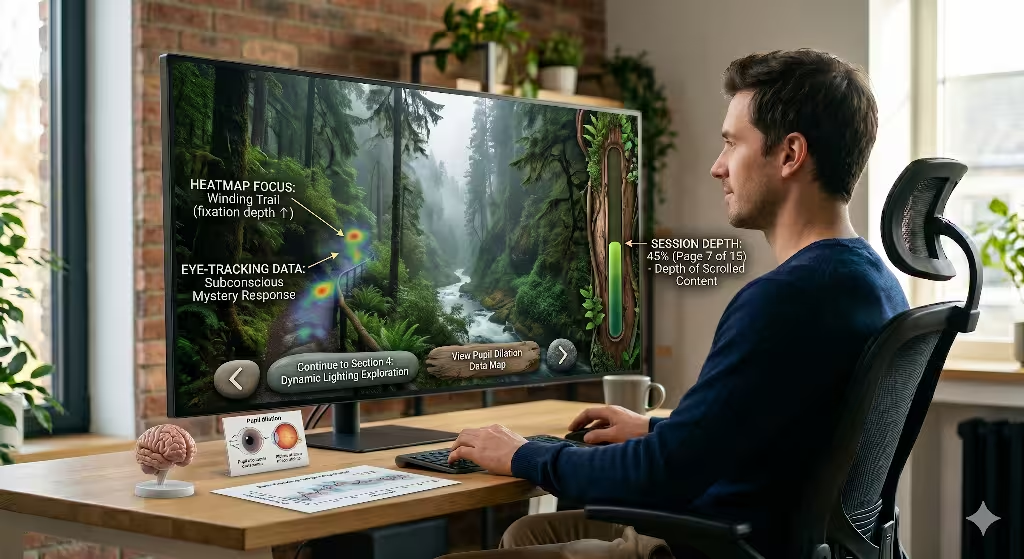
To fully grasp why nature imagery increases time-on-site in environmental websites, we must look at two specific design concepts: mystery and extent. These two factors turn a simple image into a powerful tool that hooks the viewer’s mind.
Let us start with the power of mystery in visual assets. In environmental web design, mystery does not mean a scary puzzle. It means a visual hint that there is more to see if you keep looking. Examples of this include a winding trail through a valley, a river bending around a mountain, or a thick forest canopy with light peeking through the leaves. When a user sees this kind of nature imagery, it triggers an ancient exploratory instinct.
Scientists use oculometric studies to see how eyes behave when looking at mystery in nature imagery. Oculometric simply means measuring eye movements, including pupil size and where the eye stops to rest. The data from these studies is clear. High mystery nature imagery causes the human pupil to widen. It also causes a higher number of fixations, which means the eye stops to look at more individual spots within the picture.
The viewer spends a long time scanning the image, trying to see what is hidden around the bend. On a webpage, this means the user stays glued to the screen. They do not look away to check their phone or open a new tab. Their eyes are busy exploring the natural scene embedded in the layout.
The second concept is called extent. Extent means creating a digital space that feels wide, deep, and completely whole. A website with good extent does not feel like a collection of random pages. It feels like an entire virtual world. When a visitor arrives at an environmental platform that uses cohesive nature imagery across every single page, they experience a feeling of being conceptually away. This means they forget about their noisy office or their long to do list for a moment. They feel like they have stepped into a quiet park.
To achieve great extent, the nature imagery must match from the top header down to the footer. If the homepage features a deep pine forest, the inner pages should feature matching elements, like close up photos of pine needles, wooden textures, and earth-toned borders. This structural teamwork makes the website feel like a single, solid environment.
The user feels safe and comfortable inside this digital ecosystem. They do not want to leave it quickly because it offers a peaceful escape from the chaotic design of the rest of the internet. This sense of peace is a direct driver of session depth. It encourages the user to read multiple articles, look at long photo galleries, and spend many minutes exploring the platform.
When you combine mystery and extent through smart nature imagery, you create a powerful cycle. The mystery in the nature imagery makes the user scroll down out of curiosity. The extent of the design makes them feel comfortable enough to stay. Together, these mechanics explain exactly why nature imagery increases time-on-site in environmental websites. They turn passive web browsing into an active journey of discovery.
Technical Implementation Matrix for Developers and SEOs
Understanding the psychology of nature imagery is only the first step. A web developer must also know how to apply these ideas to the actual code and layout of a website. To help search engine optimization specialists and designers work together, we can use a structural breakdown. This matrix shows how specific choices in nature imagery connect directly to user brain functions and critical search engine metrics.
UI Asset and Metric Alignment Matrix
| Visual Attribute | Neuro-Cognitive Mechanism | Direct UX Impact | Target SEO Metric |
| High-Mystery Nature Assets | Activates voluntary and involuntary exploratory mechanics | Maximizes visual interaction and internal link exploration. | Pages per Session ↑ |
| Organic Textures and Asset Clarity | Minimizes cognitive processing friction | Retains users during the critical first 3-second bounce window. | Bounce Rate ↓ |
| Soft Fascination Landscapes | Restores directed-attention fatigue | Prolongs deep reading of environmental text assets. | Time-on-Site / Session Duration ↑ |
Let us break down each row of this matrix to see how it works in the real world. The first row covers high mystery nature assets. When you use an image of a path fading into the woods, you are activating the user’s natural urge to explore. This has a direct impact on the user experience. The visitor does not just stare at the top of the page. Their eyes track downward, which makes them scroll past the fold.
As they scroll, they see buttons and internal links to other articles. Because their curiosity is awake, they click those links. This causes a major rise in your pages per session metric. Instead of looking at one page and leaving, they view three, four, or five pages. Search engines notice this behavior. It tells the search algorithms that your site has highly valuable content.
The second row looks at organic textures and asset clarity. When a website loads, the human brain judges it in less than a second. If the site uses clean, beautiful nature imagery with organic textures, it minimizes cognitive processing friction. This means the brain does not have to struggle to understand a messy or confusing layout. The direct user impact happens during the first three seconds of the visit. This is the critical window where most people decide to stay or bounce. A bounce happens when someone visits a page and leaves immediately without clicking anything else.
By using clear, high quality nature imagery right at the top of the page, you capture the user’s trust instantly. They feel comfortable, so they stay to see what the site is about. This causes a major drop in your bounce rate, which is a massive win for your search engine rankings.
The third row highlights soft fascination landscapes. These are wide, open pictures of calm natural scenes, like a quiet lake at sunrise or a field of wildflowers. These images rest the brain and restore it from directed attention fatigue. When a user reads a long, technical article about environmental science, their brain gets tired. If you place a soft fascination landscape next to the text, the user can pause, look at the picture, and let their mind rest for a few seconds.
This quick break recharges their mental energy. They can then continue reading the article without feeling overwhelmed. This directly prolongs their deep reading session. It keeps them on the page for minutes instead of seconds, which causes a huge jump in your time-on-site metric. This clear alignment shows why nature imagery increases time-on-site in environmental websites while helping your technical SEO goals.
Maximizing Core Web Vitals While Serving High-Fidelity Biophilic Imagery
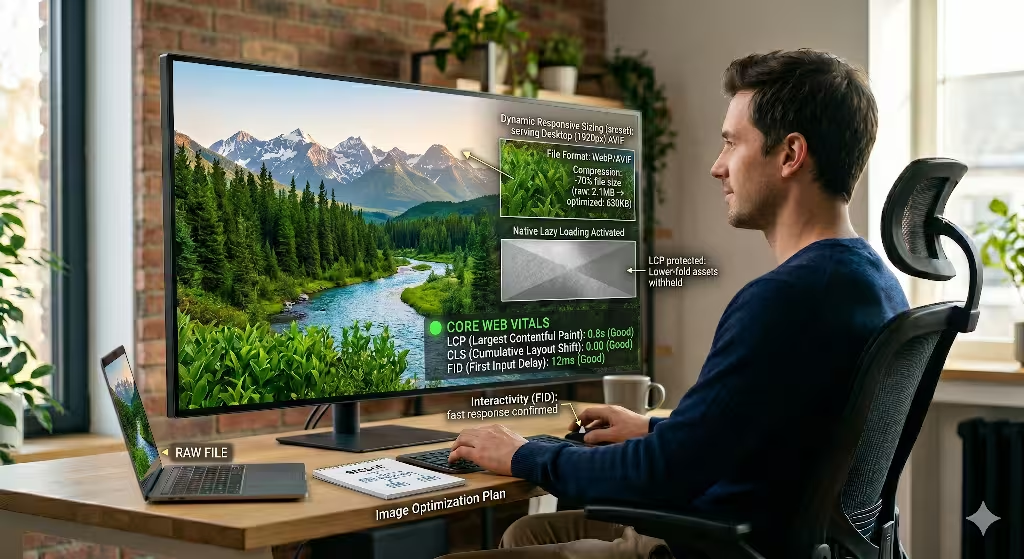
While nature imagery is an incredible tool for keeping users on your site, it comes with a major technical challenge. High quality pictures of forests, mountains, and rivers contain a lot of visual detail. They have millions of colors, sharp lines, and intricate patterns. This means the file sizes for these images can be very large. If a web developer simply uploads raw, heavy nature imagery to an environmental platform, the website will slow down. A slow website destroys the user experience. It also hurts your search engine rankings.
Search engines use a set of speed metrics called Core Web Vitals to judge how well a webpage performs. If your site takes too long to load its beautiful nature imagery, users will get frustrated and click away before they even see the design. This creates a performance dilemma. You need high fidelity nature imagery to increase time-on-site, but you cannot let those images ruin your page speed.
To solve this problem, developers must follow strict optimization workflows. The goal is to keep the organic detail of the nature imagery while making the file size as small as possible. The first step in this workflow is using next-generation image formats. Traditional formats like JPEG or PNG are not efficient enough for highly detailed nature imagery. Instead, developers should convert all visual assets into modern formats like WebP or AVIF.
These modern formats use advanced compression algorithms. They can shrink an image file size by up to seventy percent compared to an old JPEG, without losing any of the sharp details or vibrant colors. This ensures that your background landscapes and forest scenes look stunningly crisp while loading almost instantly.
The second step is implementing dynamic responsive sizing. It is a mistake to serve the exact same large image file to a person on a desktop computer and a person on a mobile phone. A phone has a much smaller screen and often uses a slower internet connection. To fix this, developers use a special piece of HTML code called the srcset attribute. This code allows the website to hold multiple sizes of the same nature imagery file.
When a user visits the page, the website checks their screen size and automatically delivers the perfect image match. A mobile user gets a small, lightweight version of the image, while a desktop user gets the full resolution file. This keeping page loading speeds fast across all devices.
HTML
<!-- Example of responsive image implementation for biophilic imagery -->
<img src="forest-canopy-large.webp"
     srcset="forest-canopy-small.webp 480w,
             forest-canopy-medium.webp 800w,
             forest-canopy-large.webp 1200w"
     sizes="(max-width: 600px) 480px,
            (max-width: 900px) 800px,
            1200px"
     alt="Green forest canopy with sunlight filtering through leaves"
     loading="lazy">
The third step in the workflow is the proper use of native lazy loading. When a user clicks on a webpage, the browser usually tries to download every single image on that page at the same time, even the images hidden way down at the bottom. This slows down the initial load of the page. Lazy loading fixes this by changing how the browser behaves. When you add the lazy loading attribute to your images, the website only loads the pictures that are visible on the user’s screen right away.
The nature imagery located further down the page is held back. It only downloads when the user starts scrolling down toward it. This protects your initial paint metrics, like Largest Contentful Paint, which measures how fast the main content loads. By combining next-gen formats, responsive sizing, and lazy loading, you can display incredible nature imagery without sacrificing a single millisecond of speed.
Biophilia as a Primary SEO Metric
In the world of modern web design, search engine optimization is no longer just about repeating keywords or building links in the background. Search engines have evolved. They now focus heavily on user experience signals. They want to reward websites that provide real, deep value to human beings. When a search engine sees that users consistently spend several minutes on an environmental website, its algorithms understand that the content is excellent. This means that metrics like session duration and time-on-site are directly tied to your search visibility. Integrating nature imagery into your design layout is not just a visual choice. It is a core technical strategy that aligns your platform with the psychological realities of human biology.
When environmental platforms prioritize biophilic principles, they are designing for the human nervous system. They recognize that humans are living creatures who respond deeply to visual cues from the earth. By replacing cold, artificial, text-heavy grids with rich nature imagery, organic shapes, and natural paths of exploration, web designers create an digital space that feels comfortable and refreshing. This biological comfort removes the hidden stress of screen reading. It lowers mental fatigue, sparks natural curiosity, and invites the user to stay.
The final takeaway for web developers, environmental groups, and search marketers is clear. If you want people to read your stories, understand your science, and support your planet, you must build a digital home that welcomes their minds. High quality nature imagery is the key to this transformation. It turns a hurried, stressful search session into an extended, meaningful journey of discovery. By planning your web layouts around authentic nature imagery, you satisfy both the human brain and the search engine algorithm, turning brief clicks into lasting engagement.
References
Al Sayyed, H., & Al-Azhari, W. (2025). Investigating the role of biophilic design to enhance comfort in residential spaces: human physiological response in immersive virtual environment. Frontiers in Virtual Reality, 6, Article 1411425.
Kaplan, S. (1995). The restorative benefits of nature: Toward an integrative framework. Journal of Environmental Psychology, 15(3), 169-182.
Marois, A., Charbonneau, B., Szolosi, A. M., & Watson, J. M. (2021). The differential impact of mystery in nature on attention: An oculometric study. Frontiers in Psychology, 12, Article 759616.
McDonnell, A. S. (2025). Nature images are more visually engaging than urban images: evidence from neural oscillations in the brain. Frontiers in Human Neuroscience, 19.
Peifer, B. M. (2024). Digital Biophilia in Web Interface Design for Accessibility and User Well-Being (Master’s thesis). Lindenwood University.
Ulrich, R. S., Simons, R. F., Losito, B. D., Fiorito, E., Miles, M. A., & Zelson, M. (1991). Stress recovery during exposure to natural and urban environments. Journal of Environmental Psychology, 11(3), 201-230.
Yap, T., Dillon, D., & Chew, P. K. H. (2022). The impact of nature imagery and mystery on attention restoration. J, 5(4), 478-499.
Yun, J. (2026). Evaluating WELL-based AI-generated biophilic façade designs for automated retail environments: A multimodal eye-tracking and facial expression study (Preprint). Preprints.org.