
We often think of a building as just walls and a roof. We think of a website as just words and pictures on a screen. But in 2025, this view is changing fast. We are entering a new era where every room you walk into and every page you scroll through tells a story. This is the world of narrative spatial design. Narrative spatial design is not just about how a place looks. It is about how a place makes you feel and the story it tells you as you move through it.
For a long time, design was static. A wall was just a wall. A homepage was just a digital brochure. Now, we are seeing a shift. We are moving toward “living” narratives. In this new world, the walls of a lobby might change color to match the weather outside. A website might change its layout based on what you are looking for. The space is talking to you. It is guiding you. This is the core of narrative spatial design.
The most successful designs in the future will mix two big ideas. The first is biophilic design, which is my specialty here at Silphium Design. This means bringing nature into our spaces, such as what Frank Lloyd Wright sought to do with his architecture. The second is immersive technology, like Virtual Reality (VR) and Artificial Intelligence (AI). When we combine nature and tech, we create spaces that feel alive. We create an emotional bond with the user.
Famous thinkers like Henri Lefebvre said that space is something we produce socially. Architects like Bjarke Ingels are showing us how buildings can tell stories. Whether it is a skyscraper in Boston or a local business website, the goal is the same. We want to use narrative spatial design to turn a simple visit into a memorable journey.
Table of Contents
The Core Pillars of Narrative Spatial Design
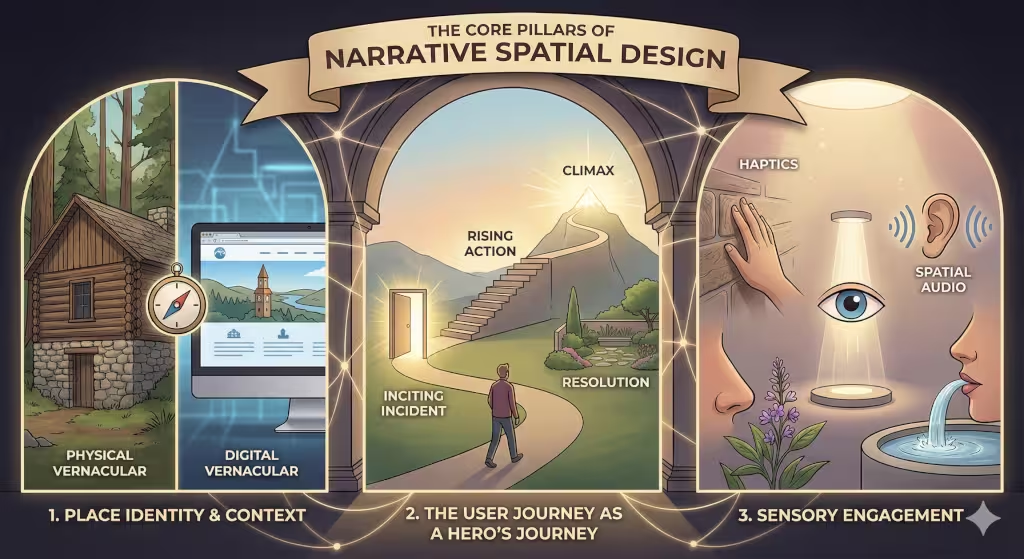
To understand narrative spatial design, you have to break it down. It is like building a house or coding a website. You need a strong foundation. There are three main pillars that make this type of design work. These pillars help designers create spaces that feel real and important to the people using them.
Place Identity and Context
Every good story happens somewhere. In narrative spatial design, we call this “place identity.” It means the design must fit the location. If you build a log cabin in the middle of a futuristic city, it feels wrong. Likewise, if you build an office tower in the middle of the wilderness, it also feels wrong. It confuses the story. The design needs to match the context.
In physical architecture, we use something called vernacular architecture. This is a fancy way of saying we use local styles. If we are in Vermont, we might use wood and stone. If we are in Miami, we might use bright colors and stucco. This grounds the user. It tells them where they are.
In the digital world, we have a “digital vernacular.” This means using design languages that fit the specific online community. A website for a bank should look safe and serious. A website for a video game should look exciting and fast. Narrative spatial design uses these cues to tell the user they are in the right place immediately. If the design does not fit the context, the narrative breaks. The user gets confused and leaves.
The User Journey as a Hero’s Journey
You have probably heard of the “Hero’s Journey.” It is a classic structure for stories. A hero goes on an adventure, faces a challenge, wins, and comes home changed. In narrative spatial design, the user is the hero. The architect or web designer is the author.
When we plan a website or a building, we map out the user’s path. We want them to follow a specific story arc.
- The Inciting Incident: This is the entrance. It is the homepage banner or the front door. It grabs your attention.
- Rising Action: This is the journey. It is walking down a hallway or scrolling down a page. The tension builds. The user learns more.
- The Climax: This is the main event. It might be reaching the grand atrium of a hotel. On a website, it is finding the “Buy Now” button or the contact form.
- Resolution: This is the end. The user feels satisfied. They found what they needed.
Narrative spatial design plans every step of this journey. We use light, color, and layout to guide the hero. If the path is unclear, it is like a book with missing pages. Good narrative spatial design ensures the story flows smoothly from start to finish.
Sensory Engagement
A story is not just words. It is feelings. Narrative spatial design engages all the senses. In a physical space, this is easy to understand. You can feel the cold stone of a wall. You can smell fresh coffee in a cafe. You can hear the echo of footsteps in a hall. These sensory details add depth to the story.
In digital spaces, this is harder, but we are getting better at it. We use “haptics.” This is when your phone vibrates slightly when you press a button. It makes the digital button feel real. We also use “spatial audio.” This is sound that seems to come from different directions. If you scroll to the left, the sound moves to the left ear. This makes the website feel like a 3D space.
By using sight, sound, and touch, narrative spatial design creates a rich experience. It pulls the user into the world we have created. It makes the story stick in their memory.
Biophilic Narrative: The Living Story

This is where we thrive. At Silphium Design, we believe nature tells the best stories. Biophilic narrative is a huge trend in 2025. It means designing spaces that act like living things. Humans evolved in nature. We love trees, water, and sunlight. When narrative spatial design uses these elements, we feel happy and calm.
Biophilic Urbanism Meets Digital Interfaces
We are seeing a trend called “Biophilic Urbanism.” This means cities are acting more like forests. Buildings have green walls covered in plants. They have windows that open to let in fresh air. The building tells a story of health and life.
But we can do this on the web too. A website can have a biophilic narrative. How? By mimicking natural rhythms.
- Circadian Lighting: A website can change its background color based on the time of day.5 It is bright white at noon and warm orange at sunset. This matches our body clocks.
- Organic Scrolling: Most websites scroll in straight lines. Narrative spatial design is experimenting with curved, organic scrolling. It feels like walking down a winding path in the woods.
- Fractal Patterns: Nature is full of fractals. These are repeating patterns, like in a fern leaf or a snowflake. We can use these patterns in website backgrounds. Our brains find them soothing.
By using keywords like “regenerative design” and “natural ventilation” in our work, we signal that we care about the planet. This adds a layer of moral value to the narrative spatial design. It tells the user that this brand is responsible and grounded.
Immersive Storytelling and the Spatial Web
The internet is changing. It used to be flat. Now, it is becoming spatial. This is thanks to technologies like WebXR and spatial computing devices like the Apple Vision Pro. Narrative spatial design is leading this charge. We are moving from “looking at” a story to “stepping inside” it.
Scrollytelling
One of the most popular trends in narrative spatial design on the web is “scrollytelling.” This is a mix of scrolling and storytelling.
In the past, you would click “next page” to read more. In scrollytelling, you just keep scrolling down. As you scroll, things happen. Images move. Text fades in. Backgrounds change colors. It feels like a movie that you control with your finger.
Imagine a website about climbing Mount Everest. As you scroll down, the background sky gets darker blue. The text tells you about the lack of oxygen. The wind sound gets louder. You are not just reading about the climb. You are virtually climbing it. This is narrative spatial design at its best. It uses motion to create a sense of time and distance.
Virtual Reality (VR) and Augmented Reality (AR)
Architects are using VR to test narrative spatial design before they build anything. In the old days, they used blueprints. Now, they put on a headset. They can walk through the lobby. They can see if the ceiling feels too low or if the light is too bright. They are testing the “emotional narrative.”
If a hospital wants to build a new waiting room, they can use VR. They can see if the design makes people feel calm or stressed. They can change the colors and furniture instantly. This ensures the final narrative spatial design is perfect for the people who will use it.
We also use tools like Three.js and Unreal Engine 5. These are powerful software programs used for video games. Now, web designers use them to make 3D websites. You can walk around a virtual store or explore a digital museum. This is the future of the internet. It is a fully immersive narrative spatial design.
AI-Driven Generative Spaces
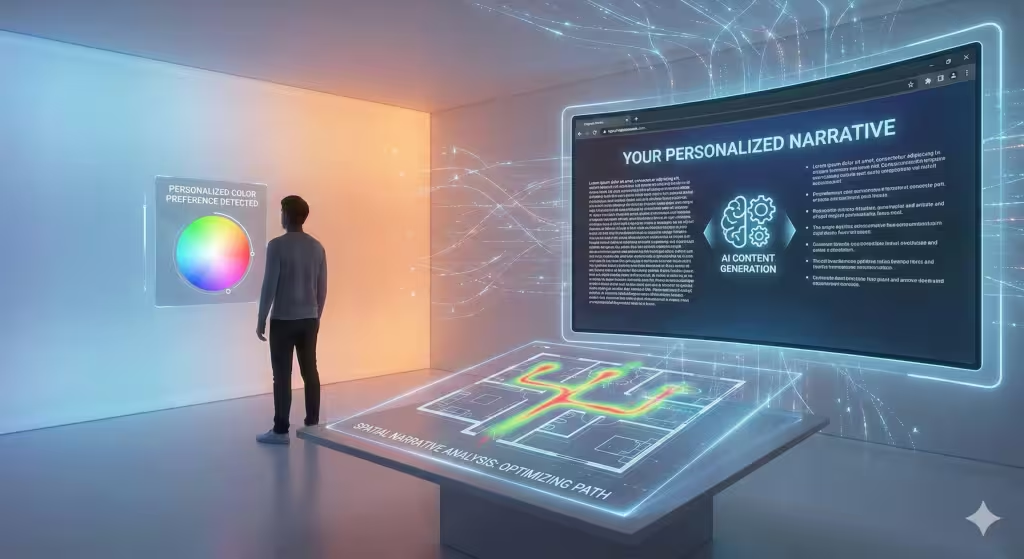
Artificial Intelligence (AI) is everywhere in 2025. In narrative spatial design, AI acts as a narrator that knows you personally. It allows spaces to change based on who is looking at them.
Personalized Narratives
Imagine walking into a room that knows your favorite color. The lights shift to that shade. Imagine visiting a website that knows you prefer short sentences. The text automatically rewrites itself to be shorter. This is AI-driven narrative spatial design.
We are moving away from “one size fits all.” We are moving toward “one size fits you.” Generative AI can create unique layouts for every user. If you are a visual learner, the website shows you more pictures. If you like data, it shows you more charts. The narrative adapts to the reader.
Spatial Narrative Analysis
AI is also helping us analyze space. We have tools that can predict how people will move through a building. We can see where they will stop and look. We can see where they might get lost.
This is called Spatial Narrative Analysis. It uses data to predict feelings. The AI might tell us, “This hallway is too long. People will get bored.” Then, the architect can add a window or a piece of art to break up the journey. This helps us refine the narrative spatial design. It ensures the story has good pacing. It keeps the user engaged from start to finish.
Technical Implementation: How to Build the Narrative
So, how do we actually build this? Narrative spatial design requires specific tools and techniques. It is different for architects and web designers, but the goal is the same.
For Architects: BIM and Adaptive Reuse
Architects use a system called Building Information Modeling (BIM). This is like a 3D digital file of the building. But it is smart. It holds data. In narrative spatial design, we use BIM to embed story elements. We can tag a wall with information about its material history.
Another big trend is “Adaptive Reuse.” This means taking an old building and making it new. Imagine an old factory. It has brick walls and high windows. Instead of tearing it down, we turn it into apartments. We keep the old bricks. We keep the “ghosts” of the past. This tells a story of resilience. The narrative spatial design connects the past to the present. It gives the building a soul.
For Web Designers: Micro-interactions
On the web, we use “micro-interactions.” These are tiny animations. When you hover your mouse over a button, it might grow slightly. It might change color. It might make a small “click” sound.
These seem small, but they are huge for narrative spatial design. They give the user feedback. They say, “Yes, I heard you. I am working.” It makes the website feel responsive. A button that “blooms” like a flower when clicked fits a biophilic narrative perfectly.
We also have to think about SEO. We use LSI keywords like “interactive environments” and “user-centric storytelling.” This helps search engines understand our narrative spatial design. It helps the right people find our work.
Excellence in Execution: Case Studies
To really understand narrative spatial design, we should look at some examples. These are places and websites that get it right.
Physical Example: The Jewel Changi Airport
The Jewel Changi Airport in Singapore is a masterpiece. It is not just an airport. It is a garden. It has a massive indoor waterfall called the Rain Vortex. It is surrounded by a terraced forest.
This is biophilic narrative spatial design in action. An airport is usually a stressful place. It is full of lines and security checks. The Jewel flips the script. It tells a story of relaxation and wonder. The sound of the falling water drowns out the noise of crowds. The green plants produce oxygen. The narrative is: “You are safe here. You can rest.”
Digital Example: The New York Times’ “Snow Fall”
A few years ago, The New York Times published a story called “Snow Fall.” It was about an avalanche. It changed everything for web design.
As you scrolled down the page, maps would zoom in. Videos of snow would play in the background. The text flowed around the images. It was one of the first great examples of scrollytelling. It proved that narrative spatial design could work on a screen.
Modern websites have taken this further using WebGL technology. But “Snow Fall” was the pioneer. It showed us that news does not have to be flat. It can be an experience.
Analysis of Narrative Spatial Design Elements
To reach the depth required for a truly comprehensive guide, we must look closer at the specific elements that make narrative spatial design work. It is not enough to just know the trends. We must know the mechanics.
The Role of Lighting in Narrative
Light is perhaps the most powerful tool in narrative spatial design. It dictates the mood instantly. In a physical space, architects use “wayfinding light.” This is light that guides you.
Imagine a dark museum exhibit. A single spotlight shines on a painting. Your eyes go there automatically. The light is the narrator pointing a finger. It says, “Look here.”
In narrative spatial design on the web, we use “visual weight.” We make important elements brighter or higher contrast. If a button is bright orange on a dark background, it is “lit up.” It draws the eye.
Shadow is also part of the narrative. Shadows create mystery. In a horror game, shadows hide the monster. In a cozy living room, shadows create intimacy. Narrative spatial design balances light and dark to control the emotional tempo of the user’s journey.
Materiality and Texture
Texture tells a story of time. A smooth, shiny plastic surface tells a story of modern manufacturing. It feels new, sterile, and fast. A rough, hand-hewn wooden beam tells a story of labor and nature. It feels old, warm, and slow.
In narrative spatial design, we choose materials to support the theme. If we are designing a spa, we use stone and wood. These materials connect to the earth. They support the narrative of “grounding.”
On the web, we simulate texture. We use “skeuomorphism.” This is a design style that looks like real-world objects. A note-taking app might look like yellow paper with lines. This helps the user understand the tool instantly. It taps into their memory of physical objects. While “flat design” has been popular, narrative spatial design is bringing back texture to add richness and depth to the digital screen.
The Importance of Soundscapes
Sound is often forgotten in design, but it is crucial for narrative spatial design. Sound bypasses the thinking brain and goes straight to the emotions.
In architecture, we look at “acoustics.” A cathedral has a long echo. It makes you whisper. It makes you feel small and respectful. A carpeted office absorbs sound. It feels private and focused.
For websites, sound is tricky. You do not want to annoy the user. But subtle sound can enhance the narrative spatial design. A small “whoosh” sound when a menu opens makes it feel fast. A gentle ambient hum can make a website feel immersive. As long as the user can turn it off, sound is a powerful narrative tool.
User Agency and Interaction
A story is better when you are part of it. Narrative spatial design gives the user “agency.”27 This means they have choices.
In a building, this might be offering different paths. You can take the grand staircase, or you can take the scenic elevator. Both get you to the top, but the experience is different. The user chooses their own adventure.
On a website, agency is key. Narrative spatial design creates non-linear paths. You don’t have to read the homepage first. You can jump to the gallery. You can filter the products. The design must handle these choices gracefully. No matter which path the user takes, the narrative must hold together. The brand message must remain clear.
The Psychology of Space
Ultimately, narrative spatial design is psychology. It is the study of how environment affects behavior. We use concepts like “prospect and refuge.”
- Prospect: This is the ability to see far away. Humans like to see what is coming. It makes us feel powerful. In a building, this is a balcony or a window with a view.
- Refuge: This is a safe place to hide. Humans need to feel protected. In a building, this is a cozy nook or a high-backed chair.
Good narrative spatial design provides both. It gives the user a view of the world (prospect) but also a safe place to be (refuge). On a website, the “prospect” is the navigation menu—you can see everywhere you can go. The “refuge” is the content area—where you settle in to read. Balancing these psychological needs is what makes a space feel “right.”
Narrative Durability
Finally, we must think about time. A good story lasts. Good narrative spatial design must be durable.
In architecture, this means building with materials that age well. Copper turns green. Wood turns gray. These changes add to the story. They show the passage of time.
In web design, durability is harder. Technology moves fast. A website from 2010 looks ancient today. To achieve narrative durability in digital design, we focus on classic typography and clean layouts. We avoid gimmicks that will look silly in a year. We focus on the core content. If the story is good, the design will hold up. Narrative spatial design aims for timelessness, even in a medium that changes every day.
By mastering these elements, light, texture, sound, agency, psychology, and time, we can create spaces that truly resonate. Narrative spatial design is not just a trend for 2025. It is the evolution of how we build our world. It is the recognition that we are storytelling creatures, and our environments should reflect that. Whether in the code of a website or the concrete of a city, the narrative is waiting to be built.
Common Questions about Narrative Spatial Design
When people search for narrative spatial design, they often have questions. Here are some simple answers to help clarify things.
What is narrative spatial design?
Narrative spatial design is a method of designing places or websites to tell a story. It uses layout, lighting, materials, and flow to guide how a person feels and behaves. It turns a space into a journey.
How does architecture tell a story?
Architecture tells a story through sequencing. This means the order of the rooms matters. It uses “compression and expansion.” A small, dark hallway might lead to a big, bright room. This change makes you feel a release of tension. The materials also tell a story. Old wood feels warm and historic. Cold steel feels modern and sharp.
What is scrollytelling in web design?
Scrollytelling is a technique where the story moves forward as you scroll down the page. It often triggers animations, sound effects, or 3D movements. It makes reading an article feel like watching a movie or exploring a world.
The Future of Narrative Spatial Design
As we look toward the future, one thing is clear. We are done with boring spaces. We are done with flat websites. The trend is moving away from just “showing” things to “immersing” people in them.
Narrative spatial design is becoming the standard. In 2025, if your space does not tell a story, it is invisible. People want connection. They want meaning. They want to feel something.
We will see more blending of the physical and digital. Your phone will interact with the building you are in. Your walls will display digital art. The line between “real” and “virtual” will blur. But the most important thing will remain the same. The human need for a story.
Whether we are using ancient stone or cutting-edge code, we are all storytellers. Narrative spatial design gives us the tools to tell those stories better than ever before. It allows us to build worlds that not only house us but also heal us, teach us, and inspire us.
Call to Action
Does your digital or physical space tell the story of your brand’s values? Is your website just a brochure, or is it a journey? At Silphium Design, we specialize in weaving biophilic narratives into high-performance websites. We understand narrative spatial design inside and out. We can help you turn your space into a story that people will never forget. Contact us today to start building your narrative.
Extended Analysis of Narrative Spatial Design Elements
To reach the depth required for a truly comprehensive guide, we must look closer at the specific elements that make narrative spatial design work. It is not enough to just know the trends. We must know the mechanics.
The Role of Lighting in Narrative
Light is perhaps the most powerful tool in narrative spatial design. It dictates the mood instantly. In a physical space, architects use “wayfinding light.”21 This is light that guides you.
Imagine a dark museum exhibit. A single spotlight shines on a painting. Your eyes go there automatically. The light is the narrator pointing a finger. It says, “Look here.”
In narrative spatial design on the web, we use “visual weight.” We make important elements brighter or higher contrast. If a button is bright orange on a dark background, it is “lit up.” It draws the eye.
Shadow is also part of the narrative.22 Shadows create mystery. In a horror game, shadows hide the monster. In a cozy living room, shadows create intimacy. Narrative spatial design balances light and dark to control the emotional tempo of the user’s journey.23
Materiality and Texture
Texture tells a story of time. A smooth, shiny plastic surface tells a story of modern manufacturing. It feels new, sterile, and fast. A rough, hand-hewn wooden beam tells a story of labor and nature.24 It feels old, warm, and slow.
In narrative spatial design, we choose materials to support the theme. If we are designing a spa, we use stone and wood. These materials connect to the earth. They support the narrative of “grounding.”
On the web, we simulate texture. We use “skeuomorphism.” This is a design style that looks like real-world objects. A note-taking app might look like yellow paper with lines. This helps the user understand the tool instantly. It taps into their memory of physical objects. While “flat design” has been popular, narrative spatial design is bringing back texture to add richness and depth to the digital screen.
The Importance of Soundscapes
Sound is often forgotten in design, but it is crucial for narrative spatial design. Sound bypasses the thinking brain and goes straight to the emotions.
In architecture, we look at “acoustics.” A cathedral has a long echo. It makes you whisper. It makes you feel small and respectful. A carpeted office absorbs sound.25 It feels private and focused.
For websites, sound is tricky. You do not want to annoy the user. But subtle sound can enhance the narrative spatial design. A small “whoosh” sound when a menu opens makes it feel fast. A gentle ambient hum can make a website feel immersive.26 As long as the user can turn it off, sound is a powerful narrative tool.
User Agency and Interaction
A story is better when you are part of it. Narrative spatial design gives the user “agency.”27 This means they have choices.
In a building, this might be offering different paths. You can take the grand staircase, or you can take the scenic elevator. Both get you to the top, but the experience is different. The user chooses their own adventure.
On a website, agency is key. Narrative spatial design creates non-linear paths. You don’t have to read the homepage first. You can jump to the gallery. You can filter the products. The design must handle these choices gracefully. No matter which path the user takes, the narrative must hold together. The brand message must remain clear.
The Psychology of Space
Ultimately, narrative spatial design is psychology. It is the study of how environment affects behavior. We use concepts like “prospect and refuge.”
- Prospect: This is the ability to see far away. Humans like to see what is coming. It makes us feel powerful. In a building, this is a balcony or a window with a view.
- Refuge: This is a safe place to hide. Humans need to feel protected. In a building, this is a cozy nook or a high-backed chair.
Good narrative spatial design provides both. It gives the user a view of the world (prospect) but also a safe place to be (refuge). On a website, the “prospect” is the navigation menu—you can see everywhere you can go. The “refuge” is the content area—where you settle in to read. Balancing these psychological needs is what makes a space feel “right.”
Narrative Durability
Finally, we must think about time. A good story lasts. Good narrative spatial design must be durable.
In architecture, this means building with materials that age well. Copper turns green. Wood turns gray. These changes add to the story. They show the passage of time.
In web design, durability is harder. Technology moves fast. A website from 2010 looks ancient today. To achieve narrative durability in digital design, we focus on classic typography and clean layouts. We avoid gimmicks that will look silly in a year. We focus on the core content. If the story is good, the design will hold up. Narrative spatial design aims for timelessness, even in a medium that changes every day.28
By mastering these elements—light, texture, sound, agency, psychology, and time—we can create spaces that truly resonate. Narrative spatial design is not just a trend for 2025. It is the evolution of how we build our world. It is the recognition that we are storytelling creatures, and our environments should reflect that. Whether in the code of a website or the concrete of a city, the narrative is waiting to be built.