
The way people buy furniture and home goods online is going through a massive shift. For many years, online shopping looked like a digital catalog. You would look at a small, flat picture of a sofa, read a short list of text bullet points, and hope for the best. This old way of selling items creates a lot of stress for buyers. When people purchase high-ticket items like dining tables, beds, or large sections for a living room, they want to feel confident. They want to know exactly how a piece will look in their real living room.
Today, the world of web design is moving away from those old static grids. We are entering a new era of spatial web environments where users can explore products in full three dimensional space. As a design expert at Silphium Design LLC, my goal is to show you how building immersive online experiences can change everything for your home goods brand. We want to remove the friction that stops customers from hitting the buy button.
To do this right, we have to look closely at the deep connection between web technology and human biology. This is what we call biophilic design. Biophilia is the natural love that human beings have for the natural world and living systems. When we design websites, we can actually mimic the sensory richness of nature. We can use fluid motion, organic shapes, and natural lighting systems inside our code.
When a digital space uses these organic elements, it has a calming effect on the human brain. It lowers stress and reduces decision fatigue. When customers feel calm and engaged, their session duration on a website increases. They spend more time browsing and exploring your products. By combining technical web development with natural design systems, we can create modern e-commerce stores that feel alive. Let us explore how creating these immersive online experiences can satisfy both your human visitors and search engine algorithms.
Table of Contents
What is Immersive Shopping?
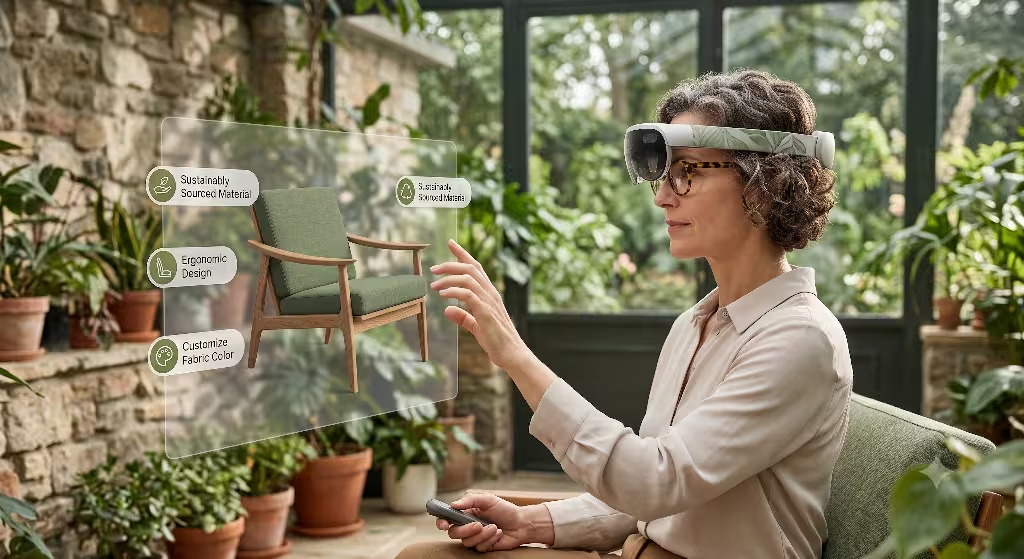
To truly understand this shift, we must ask a basic question: what exactly is immersive shopping? In the past, websites were built strictly as flat documents. Code was used to place text and images into boxes on a screen. This is what we call the standard Document Object Model or DOM structure. Immersive shopping completely breaks out of these flat boxes. It turns a standard web page into a dynamic, interactive environment where a user can feel a sense of space and depth.
Instead of just clicking a button to flip through a few static photos, the user can touch, rotate, and alter the product in real time. These immersive online experiences change the shopper from a passive viewer into an active participant. They are no longer just reading about a product. They are interacting with it just like they would inside a physical retail store showroom.
There are three main building blocks that power these types of immersive online experiences on the modern web. The first is Augmented Reality, which people usually call AR. This tech lets you place a digital item directly into your real world room by using a phone camera. The second is Virtual Reality, or VR, which uses special headsets to drop a user into a completely digital environment. The third is WebGL, which stands for Web Graphics Library. WebGL is a special JavaScript API that allows web browsers to render complex three dimensional graphics without needing any extra plugins.
When you combine these three tools, you get a powerful set of options for your business. You can give your customers deeper insights into the quality, size, and style of your furniture inventory. This new form of interaction is quickly becoming the baseline expectation for online shoppers across the entire globe.
The Core Technologies Powering Digital Home Decor
Building great immersive online experiences requires a strong technical base. You cannot just upload a bigger picture and call it a day. You need to use tools that let the user control their own view. Let us break down how these systems function beneath the surface of a website. WebGL acts as the core engine for most browser-based 3D systems. It allows your computer graphics card to handle the hard work of drawing objects directly on the web page.
This means a customer can use their mouse or thumb to spin a beautiful oak coffee table around in a full circle. They can see the back, the bottom, and the fine details of the wood grain. This level of control is a key part of modern immersive online experiences because it eliminates mystery. When a shopper can inspect every square inch of an item, their trust in your brand goes up.
Another massive piece of the puzzle is the emergence of advanced product configurators. Home decor is rarely a one-size-fits-all market. People want to pick their own fabrics, colors, wood finishes, and sizes. A smart 3D configurator uses rule-based logic to update a product image instantly as the user clicks different options. If a customer changes a sofa from gray linen to green velvet, the screen should show that exact green velvet material with accurate highlights and shadows.
This high level of visual personalization is essential for immersive online experiences. It lets the customer become the designer of their own home goods. It makes the entire shopping process highly engaging, which keeps people on your site for much longer periods of time.
How is augmented reality used in furniture e-commerce?
Augmented reality is a total game changer for the home goods industry. Let us look at how it works in real life. Imagine a customer is sitting in their living room, trying to decide if a new blue armchair will fit in the corner near the window. In the past, they would have to pull out a physical measuring tape, write down the numbers, and try to guess if the style matches their current rug. With web-native augmented reality, that entire process changes.
The customer simply visits your website on their mobile phone and clicks a button that says view in room. The browser asks for permission to open the smartphone camera. Once approved, the customer scans the floor surface for a few seconds. The website then overlays a life-size, photorealistic 3D model of that blue armchair directly onto the camera view.
As you can see in the visual example above, the user can see the exact scale and placement of the furniture in real time. They can walk around the digital chair with their phone, looking at it from the side, the front, or even from above. They can see if the armrests block the walkway or if the color clashes with their wall paint. This is what we call markerless tracking and environmental occlusion.
The software can detect where physical walls and floors are, ensuring the digital item sits perfectly on the ground rather than floating in mid-air. Providing these seamless augmented reality options is a core pillar of high-performing immersive online experiences. It helps remove the visualization gap that causes so many shoppers to abandon their carts out of fear or uncertainty.
How to create virtual tours for home & living brands?
Creating a great virtual tour for a home and living brand is all about capturing realistic space and lighting. You want the user to feel like they are walking through a beautifully designed home, not just clicking through a gallery. To build these immersive online experiences, brands often start with high-fidelity computer-generated imagery or 360-degree photography. If you have a physical showroom, you can use specialized multi-lens cameras to map out the entire layout. This creates a digital twin of your physical store. Users can click on the floor to walk forward, look left or right, and zoom in on specific displays.
If you do not have a physical store, you can build a virtual showroom completely from scratch using 3D rendering software. The secret to making these virtual tours feel real is accurate light rendering, which is often called ray tracing. Ray tracing simulates how light bounces off different surfaces in the physical world. It shows how sunlight streaming through a digital window creates soft reflections on a polished hardwood floor or deep shadows in the tufting of a leather couch.
When your digital spaces look this realistic, they become true immersive online experiences. They draw the user into a beautiful world where they can see how your products fit together as an entire lifestyle, rather than just isolated items in a warehouse.
Injecting Biophilic Design into Immersive User Interfaces
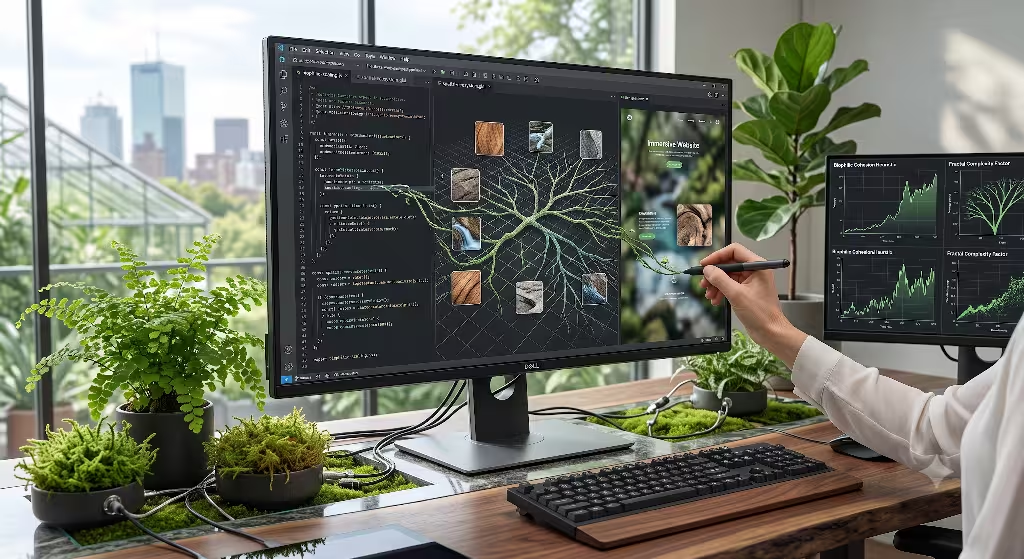
As an expert in biophilic design, I believe that high-tech tools must always be balanced with natural human elements. If a website is too cold, technical, or confusing, users will leave. That is why we must weave biophilic principles directly into our immersive online experiences. We can start by using natural analogues in our user interfaces.
A natural analogue is a design element that reflects an organic form found in the wild. Instead of using sharp, boxy buttons and rigid rectangular cards, we can design buttons with soft, curved edges that look like smooth river stones. We can use color palettes inspired by natural landscapes, such as deep forest greens, warm desert sands, and calming ocean blues. These choices help lower a user’s heart rate and make the digital environment feel safe and welcoming.
We also need to consider how users navigate through our web pages. In nature, nothing moves in a perfectly straight, robotic line. When a leaf falls from a tree or a wave rolls onto a beach, the motion is fluid and governed by the laws of physics. We can bring this organic movement to our websites by using biomimetic navigation. When a user opens a menu or shifts a 3D model, we can use custom CSS and JavaScript easing functions to create natural momentum.
The movement should start slowly, speed up gently, and then coast to a soft stop, just like a physical object sliding across a smooth wooden table. When immersive online experiences use these natural physics, the user interface feels completely intuitive. The technology disappears into the background, allowing the customer to focus purely on the beauty of your home goods.
To better see how these biophilic design choices compare to old, traditional web design choices, let us look at this comparison table:
| Web Design Element | Traditional E-Commerce Style | Biophilic Immersive Style |
| Layout Shapes | Rigid grids, sharp 90-degree corners | Fluid spaces, rounded stone shapes, organic lines |
| Interface Colors | High-contrast neon blues, stark whites | Earth tones, moss greens, clay reds, soft sky blues |
| Menu Animations | Instant harsh snaps, robotic linear slides | Smooth easing curves, natural gravity and momentum |
| Product Display | Flat 2D photos with white backgrounds | 3D models in natural, sunlit room environments |
| Visual Texture | Flat digital color blocks, solid backgrounds | Textures that show natural wood grain, linen, stone |
By shifting your brand toward the biophilic immersive style, you create digital spaces that feel less like a cold software application and more like a peaceful walk through a beautiful physical store. This emotional connection is a massive advantage when trying to win the loyalty of modern online shoppers.
What are Virtual Showrooms?
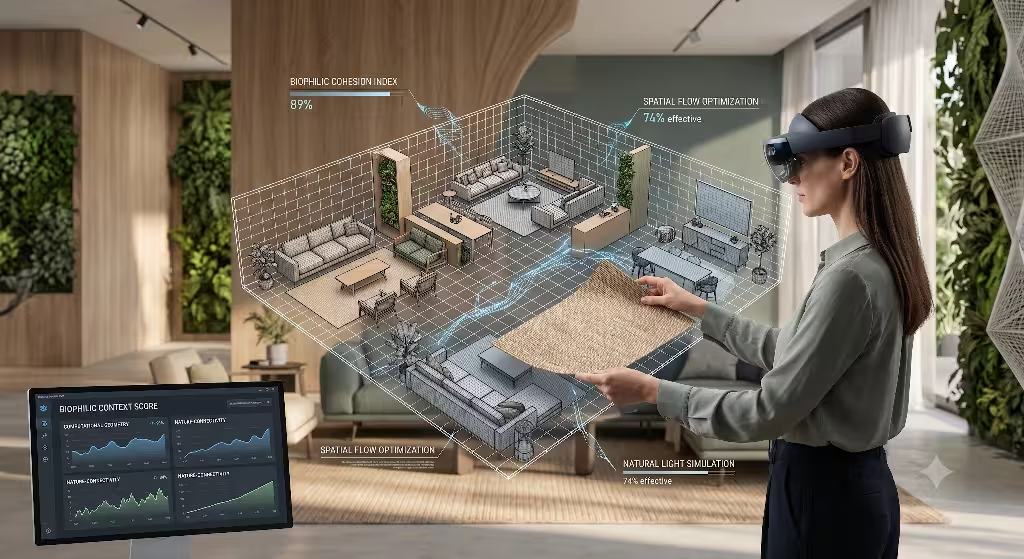
A virtual showroom takes the concept of online shopping to a whole new level. It is important to know the difference between a single AR tool and a complete showroom space. An AR tool lets a user see one piece of furniture inside their own house. A virtual showroom, however, gives full spatial context by creating an entirely simulated room or home.
It is a digital destination that users can enter and explore. They can see how a complete set of furniture looks when styled together by a professional designer. These spaces are crucial parts of high-quality immersive online experiences because they tap into the human desire for inspiration. When people shop for home goods, they are not just buying a piece of wood and foam. They are trying to buy a specific feeling for their personal home.
These digital showrooms also allow brands to build curated ecosystems. In a traditional store, space is limited by physical walls. You can only fit a few room displays on a retail floor. In the digital world, your showroom space is infinite. You can create a sunlit beachside living room, a cozy mountain cabin bedroom, or a sleek modern city apartment. You can simulate beautiful natural daylight cycles, showing how the space looks at sunrise, midday, and dusk.
When users step into these beautifully styled digital ecosystems, they get a clear vision of how multiple items work together. They might come to your site looking for a simple coffee table, but after exploring a virtual showroom, they see how beautifully that table matches a specific rug and sofa. This context naturally boosts your average order value while delivering top-tier immersive online experiences.
Optimizing Heavy Immersive Media for Search Engines
As a computer scientist, I must remind you that beautiful designs mean nothing if your website takes too long to load. High-quality 3D models, 360-degree virtual tours, and augmented reality scripts require a massive amount of data. If your web pages are heavy, they will load slowly. A slow website frustrates users and hurts your search engine rankings. Google penalizes slow sites because they provide a poor user experience. Therefore, a major part of building successful immersive online experiences is technical optimization. We must make sure our heavy media files are as lean and fast as possible so they do not slow down our web performance.
To achieve this, we have to look at modern file compression techniques. For 3D files on the web, the current gold standard format is glTF or GLB. Think of glTF as the JPEG format for 3D models. It compresses the complex polygon data and texture images into a tiny package that can fly across the internet quickly. We can also use a technique called lazy loading.
This means the browser only loads the core text and basic images when a user first lands on the page. The heavy 3D engine and AR scripts only load later, when the user actually clicks the interact button. By setting up our assets this way, we can deliver rich immersive online experiences without sacrificing our initial page speed.
We also must focus heavily on Google’s Core Web Vitals. These are specific metrics that Google uses to score the speed and stability of your web pages. One key metric is Cumulative Layout Shift, which measures how much the elements on a screen jump around while the page is loading. When a heavy 3D canvas element suddenly pops onto a page, it can push the text down and confuse the reader.
To prevent this layout shift, we must lock down our HTML containers with predefined aspect ratios and CSS placeholders. This ensures the browser reserves the exact right amount of space for the 3D viewer before it even loads. Keeping your layout stable is a vital part of professional immersive online experiences. It keeps your interface clean and protects your organic search engine optimization rankings.
Finally, we must make sure search engine crawlers can actually understand our interactive content. Googlebots cannot see a 3D model the way a human eye does. They read code. If you want search engines to reward your site for having high-value 3D assets, you must use structured data schema markup. You can add specific code snippets using JSON-LD format to tell search engines that a page contains a 3DModel. You can specify the file type, the scale, and the exact dimensions of the item. This structural code helps search engines index your assets correctly. It ensures your rich immersive online experiences show up properly in specialized search results, drawing more high-intent organic traffic to your retail website.
The Natural Evolution of E-Commerce
The world of retail is moving fast, and there is no turning back. Static images and simple text lists are no longer enough to win the hearts of modern digital consumers. To stay competitive, home and living brands must invest in building high-performance immersive online experiences. By leveraging the power of WebGL graphics, web-native augmented reality, and customizable 3D models, you can bridge the gap between digital browsing and physical reality. You can give your customers the deep visual confidence they need to purchase large, high-value furniture pieces online without any hesitation.
At the exact same time, we must remember to keep our technology grounded in human nature. By weaving biophilic design principles into our user interfaces, we can create digital spaces that feel smooth, organic, and restorative. We can build virtual showrooms that inspire the soul while using advanced optimization tactics to satisfy search engine algorithms. When you strike this perfect balance between technical mastery and natural beauty, you create unforgettable immersive online experiences that drive sustainable growth for your e-commerce brand. Take a close look at your current product pages today, and start planning your upgrade into the exciting world of spatial web design.