
Table of Contents
When we look at modern social media, we usually see huge corporate platforms. These platforms act like walled gardens. They trap your data inside their own walls and use algorithms, which are automated computer formulas, to control what you see. But there is another way to build the internet. By studying digital ecology in the fediverse, we can understand a completely different type of social network. This new network behaves more like a natural ecosystem than a corporate factory.
As a web designer with a background in biology, I like to look at networks through the lens of nature. A digital ecology is not just a metaphor. It is a real network where many different parts, like servers, software, and human users, interact and adapt together. When we look at digital ecology in the fediverse, we are looking at how thousands of independent servers connect to form a healthy, living digital habitat.
The main idea here is that the fediverse is not just a bunch of random computer programs. Instead, it is a complex social and technical system. It relies on shared rules, mutual support, and open protocols to keep itself balanced. This examination of digital ecology in the fediverse will show you how these pieces fit together. It will explain how decentralized systems grow, protect themselves, and survive without a single company running the show.
Foundations of Information Ecology vs. Platform Capitalism
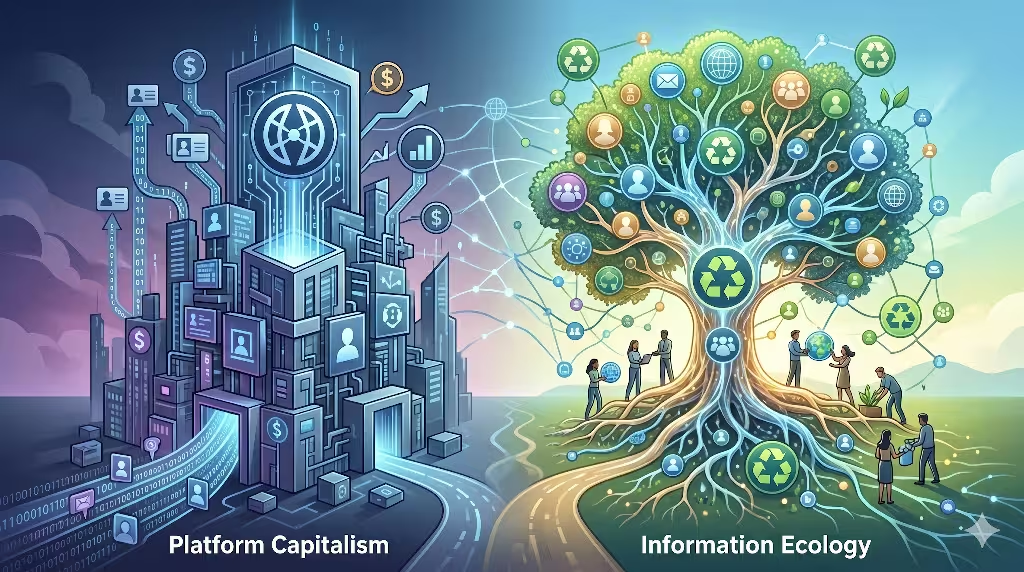
To understand the digital ecology in the fediverse, we have to look at how it differs from platform capitalism. Platform capitalism is the business model used by big tech companies to make money by collecting and controlling your personal information. These big companies build systems designed for constant growth. They want to keep you scrolling forever so they can show you more ads. This model treats human attention like raw material to be mined.
In contrast, information ecology looks at information environments as living spaces. In a true information ecology, we follow three basic principles. The first principle is called part-of-ness. This means that no single server or user exists all by themselves. Every action taken by one server impacts the rest of the web. When we look at digital ecology in the fediverse, this means that data flows across boundaries instead of being locked behind a single login screen.
The second principle is systemic wisdom. This means recognizing that every system has natural limits. A small server run by a volunteer cannot handle millions of users at once, and it should not have to. Digital ecology in the fediverse relies on the idea that many small, healthy communities are better than one giant, unmanageable platform. It values quality conversations over raw user counts.
The third principle is information ecology itself, which treats the network as a value-driven system. Instead of focusing only on speed and profit, it focuses on health, sustainability, and community trust. This is why digital ecology in the fediverse is so important. It gives us a framework to build software that respects human limits and values local communities. It changes our relationship with technology from extraction to stewardship.
The Technical Architecture (The Physical and Digital Environment)
Every natural ecosystem needs a foundational environment, like soil, water, and sunlight. In the digital world, the environment is made of code, protocols, and physical servers. When we explore the technical side of digital ecology in the fediverse, the foundational code is a standard called ActivityPub. Created by the World Wide Web Consortium, ActivityPub acts like the genetic code of the entire network. It provides a common language that different servers use to talk to each other.
Because of this shared language, different types of software can understand each other perfectly. For example, a person on Mastodon, which is a microblogging tool, can follow someone on Pixelfed, which is a photo-sharing tool. This fluid interaction is a core feature of digital ecology in the fediverse. The systems do not care what software you use, as long as the software speaks the ActivityPub language.
In this environment, we can think of individual servers, often called nodes or instances, as distinct biological species. Each server occupies a specific ecological niche. One server might be dedicated to local gardeners in Vermont, while another might be home to computer scientists in Boston. Each server has its own rules, its own culture, and its own target audience. Yet, through digital ecology in the fediverse, these separate communities link together to form a grander web.
This architecture balances data supply with community demands. Instead of relying on a central server farm owned by a single billionaire, the network is spread across thousands of smaller computers worldwide. This physical spread is what makes digital ecology in the fediverse so resilient. If one server breaks down or goes offline, the rest of the network keeps functioning normally. The ecosystem adapts and routes data around the missing piece, just like a forest recovers when a single tree falls.
How Does the Fediverse Work Internally?
Many people ask how the fediverse actually works on the inside. To understand it, we can look at an old technology we all use every day: email. If you use a Gmail account, you can send an email to someone who uses a Yahoo account without any trouble. You do not need to create a Yahoo account just to talk to them. This is exactly how digital ecology in the fediverse functions, but for social media posts instead of emails.
Internally, every user has an inbox and an outbox, which are managed by their home server. When you publish a post, your server looks at your followers list. It checks which servers those followers live on. Then, using the ActivityPub protocol, your server packages your post and ships a copy to the inbox of every follower’s server. This internal delivery mechanism is what creates the digital ecology in the fediverse.
This process eliminates traditional messaging silos. In the corporate web, Twitter users cannot talk to Facebook users without switching apps and creating new profiles. Digital ecology in the fediverse breaks down these artificial barriers. It allows shared interoperability, which means different systems can work together smoothly without losing their unique identities.
To see this in action, let us map out the steps of a typical cross-server interaction. This sequence shows how data moves organically through the digital ecology in the fediverse to connect two users on separate servers.
1. User Publishes a Post: Instance A.
A user writes a post on their home server. The server saves this post to the user’s digital outbox as a standardized piece of data.
2. Server Resolves Followers: Background Processing.
The home server scans the user’s followers list and groups them by their respective external servers to prepare for delivery.
3. Data Sent via ActivityPub: Network Delivery.
The home server uses secure web requests to transmit copies of the post directly to the shared inbox addresses of the target servers.
4. Receiving Server Parses Data: Instance B.
The destination server receives the data packet, verifies its cryptographic signature for safety, and adds it to the local followers’ timelines.
By following these simple steps, the network maintains a constant flow of information. This structured process shows that digital ecology in the fediverse is highly organized on a technical level, even though it has no central command center.
What Is a Digital Ecosystem in This Context?
To truly grasp what a digital ecosystem means here, we must look at the mixture of human behavior and hardware. A digital ecosystem is a complex, ever-changing layout of tools, human cultures, local laws, and shared resources. When we study digital ecology in the fediverse, we see that the ecosystem is not just the software code itself. It is the living relationship between the people who run the servers, the people who write the code, and the users who post content.
This mix is what scholars call a socio-technical fabric. The word socio-technical means a system that combines human social traits with technical tools. In the context of digital ecology in the fediverse, you cannot separate the technical network from the human communities using it. If you change a line of code in the software, you change how people interact. If a community changes its local guidelines, it alters how data flows to other servers.
This leads us to a concept called relational multi-materiality. This is a fancy term for a simple idea: a digital network relies on many physical and non-physical things working together. Digital ecology in the fediverse requires real physical server hardware plugged into electrical grids. It requires human moderation labor, where volunteers spend hours keeping their communities safe. It also requires software code and data storage. All of these separate materials connect to form a single system.
Therefore, when we ask what a digital ecosystem is, we are asking how we can keep all these parts healthy over time. Digital ecology in the fediverse shows us that sustainability requires looking at the whole picture. We must care for the physical servers, protect the mental well-being of human moderators, and write clean, efficient code. If any one of these areas is ignored, the whole ecosystem suffers.
Structural Self-Regulation and Content Moderation
One of the most common questions people ask about decentralized networks is how they handle content moderation. Without a central company like Facebook or Google to hire thousands of content checkers, how do people stop spam, abuse, and illegal material? The answer lies in the built-in self-regulation mechanisms found within the digital ecology in the fediverse.
In a centralized system, moderation happens from the top down. A single corporation sets rules for everyone on earth, which rarely works well because different cultures have different norms. In the digital ecology in the fediverse, moderation happens from the bottom up. Every individual server administrator has total control over what their server accepts from the outside world. If a user on a specific server is being abusive, the admin of that server can warn or ban them.
But what happens if an entire server becomes malicious or starts spreading spam? This is where an evolutionary process called defederation comes into play. Defederation means completely cutting off connections with another server. In the digital ecology in the fediverse, if server A notices that server B is full of unmoderated hate speech or spam, server A can choose to block server B entirely. When many servers do this, the malicious server is isolated.
This isolation acts like an evolutionary exclusion zone. By defederating, the healthy parts of the network protect their own community spaces. The toxic server can still exist on its own, but it loses access to the global flow of information. It is cut off from the network’s data food supply. This method of digital ecology in the fediverse creates safer spaces by design, relying on local, human-scale governance instead of giant, uncaring automated systems.
Environmental and Social Sustainability Footprints
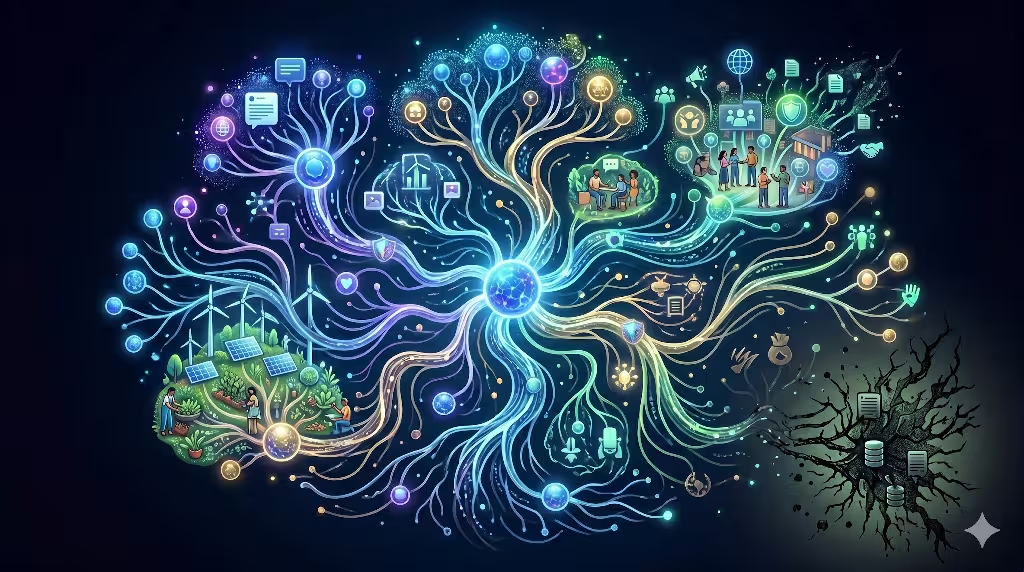
Another crucial aspect to consider is environmental and social sustainability. People often wonder if the fediverse is actually better for our planet and our societies than big corporate networks. When we evaluate digital ecology in the fediverse, the answer is a clear yes, and the reasons come down to how resources are used.
Corporate social media networks need massive, hyper-scale data centers to survive. These giant warehouses of computers consume vast amounts of electricity and water for cooling. They need this immense power because they are constantly tracking your behavior, analyzing your personal data, and running machine learning models to predict what will keep you hooked. The digital ecology in the fediverse avoids this massive energy waste because it does not participate in surveillance capitalism.
Because federated servers do not track your every move or use heavy algorithms to rearrange your timeline, they require much less processing power. A typical Mastodon server can run smoothly on a small, energy-efficient virtual private computer. This lightweight footprint is a core advantage of digital ecology in the fediverse. It means the network can scale up to support millions of people without requiring a massive jump in carbon emissions.
On a social level, this decentralized model creates a much healthier environment for human communication. It removes the corporate incentive to make people angry for clicks. Because there are no corporate ads or engagement algorithms, users can interact at a human pace. Digital ecology in the fediverse helps preserve cultural diversity and local knowledge. It allows smaller communities to run their own spaces without being drowned out by global commercial forces.
Biophilic Principles for Digital Interface Design in the Fediverse
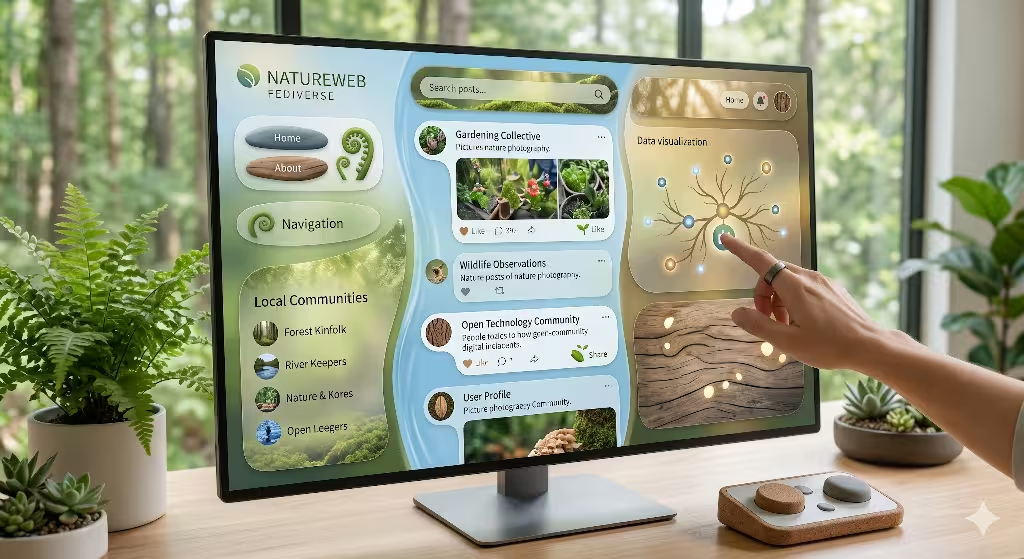
As a designer, I believe our digital tools should match our natural human instincts. This approach is called biophilic design, which means bringing elements of nature into human-made environments. When we apply biophilic design to websites and interfaces within the digital ecology in the fediverse, we can create online spaces that feel calm, orderly, and restorative.
Most corporate social media platforms use anti-biophilic patterns. They use bright red notification badges, infinite scrolling feeds, and flashing alerts designed to trigger stress and anxiety. They want to keep your nervous system off-balance so you stay hooked. In contrast, designing for digital ecology in the fediverse allows us to use organic patterns that respect human psychology.
We can use visual layouts that mimic natural forms. This means organizing data using clear hierarchies, soft natural colors, and progressive disclosure, which means showing information only when a user needs it. By reducing visual clutter in apps that connect to the digital ecology in the fediverse, we can help reduce online stress and mental fatigue. We can design dashboards that show how communities are connected using elegant, branch-like visual trees instead of cold, rigid boxes.
+---------------------------------------------------------+
|                  THE FEDIVERSE ECOSYSTEM                |
|                                                         |
|    [ Local Server Node ] <---> [ Regional Community ]   |
|            |                             |              |
|            v                             v              |
|    ( ActivityPub Core ) <----> ( Global Federated Web ) |
|                                                         |
|   * Organic Growth  * Human Moderation  * No Ad Engines |
+---------------------------------------------------------+
Furthermore, biophilic design means respecting human scale and limits. An infinite scroll feed is unnatural because nothing in the real physical world is infinite. By introducing natural pause points, clear boundaries, and localized timelines, interfaces built for digital ecology in the fediverse can feel like a quiet walk through a park rather than a noisy room full of advertisements. It shifts the focus of design from capturing attention to supporting human well-being.
Frequently Asked Questions about Digital Ecology in the Fediverse
How do I join the fediverse?
To join, you simply choose an application that fits your interests, like Mastodon for text or Pixelfed for photos, and find a local server that matches your values. Once you create an account on that specific server, you can instantly communicate with users across the entire network. You are not locked into one server; your account connects you to the entire digital ecology in the fediverse.
Can a single company buy or shut down the fediverse?
No, a single company cannot buy or shut down the entire network. Because there is no central database or single company headquarters, the network cannot be acquired or closed by a corporate takeover. The digital ecology in the fediverse relies on thousands of separate servers owned by different individuals, schools, and non-profit groups, making it highly resilient against outside pressure.
Is my personal data safer in a decentralized ecology?
Yes, your data is generally much safer. Because the digital ecology in the fediverse does not rely on tracking systems or corporate profiles, your data is not bundled up and sold to advertisers. However, because posts are shared across public servers, you should always be mindful of what you share publicly, just as you would on any other public website.
How do small servers afford to stay online?
Most small servers in the network are funded directly by their own members through small donations or crowdfunding platforms. This funding model keeps the system clean and independent. It ensures that administrators answer directly to their local community members rather than corporate boardrooms, preserving the health of the digital ecology in the fediverse.
The Future of the Federated Socio-Technical Web
When we look toward the future, the survival of the open web depends on how well we understand and care for systems. The digital ecology in the fediverse is not a permanent guarantee. It is a fragile system that requires constant care, support, and active public participation. To keep this network healthy, we must look at it as a precious natural resource that belongs to everyone.
The biggest risk to the digital ecology in the fediverse is commercial colonization. This happens when large corporate entities try to join the network and bend its open protocols to fit their old profit-driven models. If a single corporate server becomes too large, it can upset the balance of the entire ecosystem. To counter this risk, the communities within the digital ecology in the fediverse must remain vigilant and use their power of defederation whenever necessary to protect their local spaces.
Ultimately, the fediverse proves that a democratic, user-controlled internet is completely possible. By looking at digital ecology in the fediverse, we can see a clear path away from corporate control and toward an online world that mirrors the balance of nature. It reminds us that we are not just consumers looking at screens. We are active citizens and caretakers of a vast, shared digital wilderness.
Summary of the Fediverse Systems Model
To help visualize how these different elements interact within the global network, let us look at a simple comparison table. This table breaks down how the digital ecology in the fediverse differs from traditional centralized platform setups across key structural areas.
| Ecological Attribute | Centralized Corporate Platforms | Digital Ecology in the Fediverse |
| Primary System Motive | Profit and attention extraction | Community connection and utility |
| Network Architecture | Concentrated server silos | Distributed open server nodes |
| Core Governing Standard | Private corporate code | Open ActivityPub protocol |
| Moderation Strategy | Top-down automated monitoring | Bottom-up community consensus |
| Resource Footprint | Massive hyper-scale data centers | Lightweight distributed servers |
| User Interface Philosophy | Dopamine loops and infinite scroll | Human-scale biophilic design options |
By looking closely at this comparison, we can see that the choices we make about online architecture have real consequences. Choosing to support digital ecology in the fediverse means choosing a system built for human beings, local autonomy, and long-term balance.