
At Silphium Design LLC, we have analyzed the shifting landscape of digital discovery in 2026. Search has evolved from simple text matching to a complex ecosystem where human nature and machine intelligence must live in harmony.
The following article is designed to bridge that gap using the principles of biophilia, our innate love for nature, to drive modern organic growth.
Table of Contents
The Intersection of Nature and Algorithms
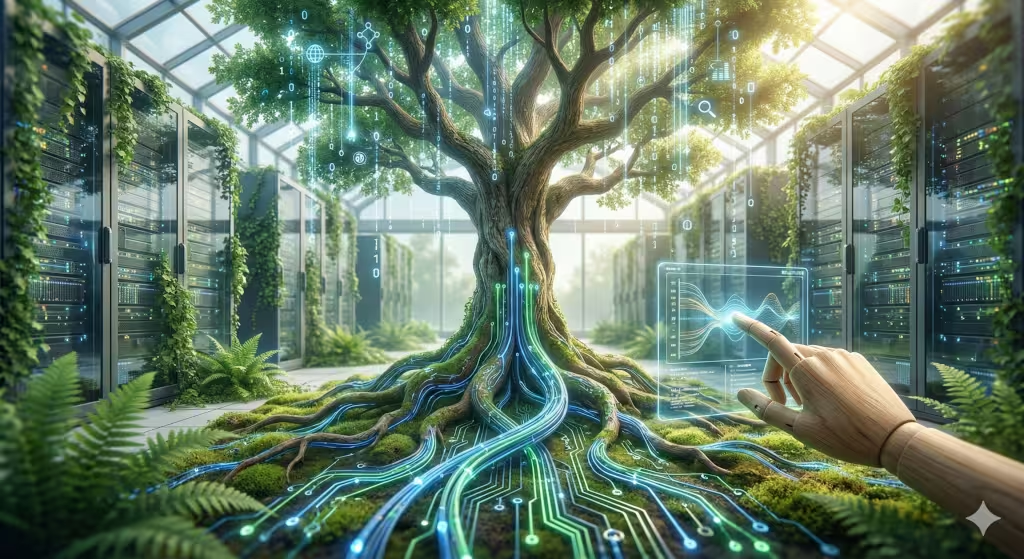
In the fast world of 2026, the way we find information online has changed. For a long time, experts thought about SEO as a way to “trick” a computer into liking a website. But today, the smartest companies are doing something different. They are using biophilic keyword research to grow their reach.
The word “biophilia” means a love of life and the living world. Humans have a natural need to be connected to nature. We like sunlight, plants, and fresh air. This is not just true for our homes or offices; it is also true for how we search the internet. Biophilic keyword research is the practice of finding words and topics that match this natural human need for clarity, wellness, and connection.
Why does this matter in 2026? It matters because search engines like Google and new AI tools are now smart enough to understand how people feel. They do not just look for a word; they look for an ecosystem. An ecosystem is a place where everything works together perfectly, like a forest. If your website feels like a messy, loud city, people will leave. If it feels like a calm, organized park, people will stay. Biophilic keyword research helps you build that digital park.
Our goal is to move away from “keyword matching,” which is old-fashioned. Instead, we want “ecosystem resonance.” This means your content should vibrate on the same frequency as the user’s natural needs. By building a growth engine that mirrors biological systems, you create a website that lasts a long time and grows naturally, just like a tree.
The Semantic Architecture of Biophilic Search
To understand biophilic keyword research, we have to look at how we build the structure of our words. In the past, people just made lists of words. Now, we build “architecture.” This means we organize words based on how humans think and feel. There are three main ways to look at this.
First, we have “Nature in the Space.” These are keywords that talk about direct needs. Imagine someone is looking for a way to make their home office better. They might search for “natural light office layout” or “indoor plants for air quality.” These users have a direct intent. They want to bring nature into their physical world. When you use biophilic keyword research, you find these high-value words that solve a real problem for the user’s well-being.
Second, we have “Natural Analogues.” This is a bit more creative. It involves using words that feel natural even if we are talking about digital things. For example, instead of saying “fast website,” you might talk about “fluid UI design.” Instead of “related links,” you might call it “organic content flow.” These words help the brain feel more relaxed. People are tired of technical jargon. They want things that feel smooth and easy to understand.
Third, we have the “Nature of the Space.” This is about the psychology of how we feel safe. There is a famous idea called “Prospect and Refuge.” This means humans like to be in a place where they can see far away (Prospect) but also feel safe and tucked away (Refuge). In SEO, your website should give users a clear view of the information they need but also make them feel like your brand is a safe place they can trust. Using biophilic keyword research helps you find the words that build this trust.
Entity Mapping & The 14 Patterns of SEO Growth
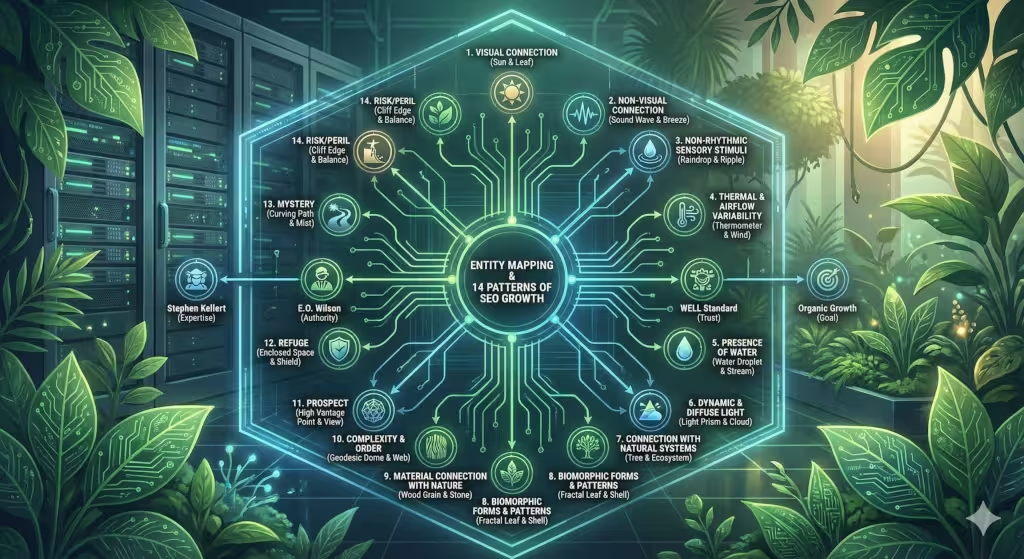
To make a website grow, we use something called entity mapping. In the world of search, an “entity” is a thing or a person that the computer knows is real and unique. For biophilic keyword research, we connect our content to famous people and big ideas in the world of nature and design.
We look at people like Stephen Kellert and E.O. Wilson. These men were pioneers who taught us why humans need nature. We also look at big standards like LEED or the WELL Building Standard. When your website mentions these real-world entities, search engines see you as an expert. This is part of what we call EEAT, which stands for Experience, Expertise, Authoritativeness, and Trustworthiness.
One of the coolest parts of nature is something called a “fractal.” A fractal is a pattern that repeats over and over, like the branches of a tree or the veins in a leaf. We use this idea for our keyword lists. We start with one big topic, like “healthy living,” and then we branch out into smaller and smaller topics. This creates a site structure that feels organized and easy for both humans and computers to follow.
We also focus on the “Material Connection with Nature.” This means we use keywords that talk about being real and authentic. In a world full of fake AI content, people want to know that what they are reading is true and has a human heart. By using biophilic keyword research to find words about sustainability and honesty, you show the search engine that your site is a high-quality resource.
Optimizing for the Generative Era (GEO & AEO)
We are now living in the era of Generative Engine Optimization (GEO) and Answer Engine Optimization (AEO). This sounds complicated, but it is actually quite simple. It means that instead of just showing a list of links, search engines are now answering questions directly. If you ask your phone a question, it gives you an answer.
To win at this, your biophilic keyword research must focus on “The Answer.” We have to design our information so that AI agents can find it and use it. Think of an AI like a bird looking for seeds. If your information is hidden or hard to get to, the bird will go somewhere else. We make our information “easy to eat” by using clear headers and simple sentences.
Answer Engine Optimization is about being the primary source. When someone asks, “How can I improve my mood at work?”, you want the AI to say your brand’s name. To do this, you need to use natural language patterns. This means writing the way people actually talk. We don’t want to sound like a robot. We want to sound like a helpful friend. This conversational nature is a big part of biophilic keyword research because it feels more human.
By focusing on these new types of optimization, you make sure your website stays relevant even as technology changes. You are not just building for today; you are building for the future of how humans and computers talk to each other.
Technical Implementation: From Research to Growth
Now, how do we actually do this? We use tools to help us find the right path. Even though we are focusing on nature, we still use great technology like Google Trends and Ahrefs. These tools let us see what people are searching for right now.
In 2026, we look for “Blue Ocean” keywords. A Blue Ocean is a place where there isn’t much competition. A metaphor for the pelagic space in the ocean. Most people are fighting over the same boring words. But by using biophilic keyword research, we find unique topics that others have missed. We look for words that combine wellness, technology, and nature.
Once we find these words, we create an “Organic Feedback Loop.” In nature, plants take in sunlight and water, and then they drop leaves that turn into food for the soil. Your website should be the same. We look at how people use the site. If they stay a long time (dwell time), it means they like the “nutrients” you are giving them. If they leave quickly, we need to change our keywords.
We also have to think about visual search. Tools like Google Lens allow people to search by taking a picture. If you use biophilic images, pictures of plants, water, and natural light, you are more likely to show up when people search for those things visually. This is a very powerful part of a modern growth plan.
Case Studies: Biophilic Success in the Digital Wild
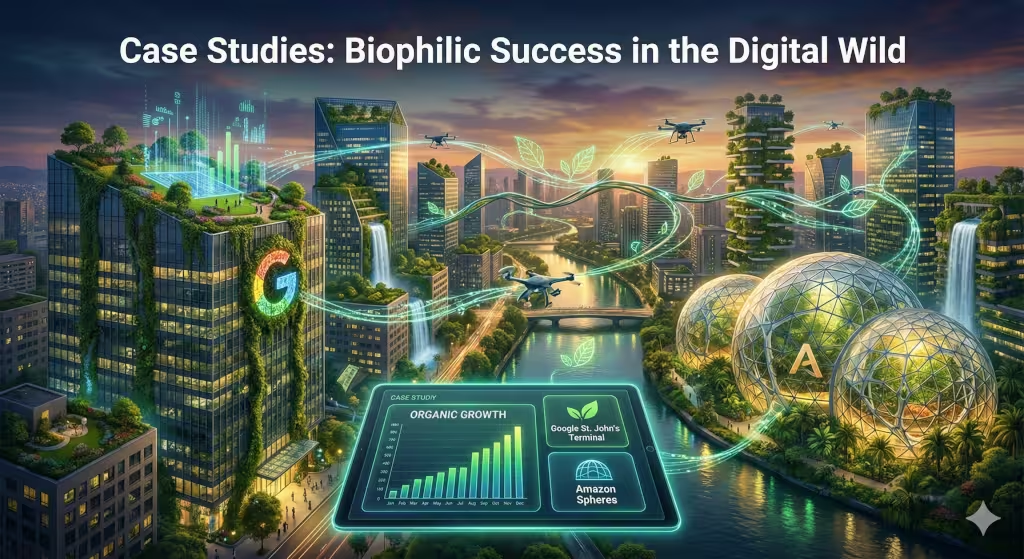
To see how this works in the real world, we can look at some big examples. Google recently built a huge office in New York called St. John’s Terminal. They used tons of biophilic design, like outdoor gardens and lots of windows. Because they are leaders in the physical world of biophilia, their digital authority grows too. People associate their brand with health and innovation.
Another example is the Amazon Spheres in Seattle. These are giant glass domes filled with thousands of plants. This isn’t just a place for employees to sit; it is a giant “entity” in the world of search. When people search for “Amazon,” they often see these beautiful, natural structures. This creates a “branded search volume” that is very strong.
These companies show us that biophilic keyword research is not just about writing blog posts. It is about creating a brand that feels alive. When your digital presence matches the beauty and order of the natural world, users will naturally want to spend more time with you.
Why Biophilic Keyword Research is the Future
As we look toward the rest of 2026 and beyond, the competition for attention will only get harder. There is more content online than ever before. To stand out, you cannot just do what everyone else is doing. You have to appeal to the very thing that makes us human.
Biophilic keyword research is the key to this. It allows you to create content that doesn’t just rank high on a page, but actually helps people feel better. It reduces the “cognitive load,” which is a fancy way of saying it makes the brain work less hard to understand your message. When a user feels relaxed and informed, they are much more likely to buy your product or trust your advice.
In the end, biophilic keyword research is about respect. It is about respecting the user’s time, their health, and their natural way of thinking. By using this strategy, Silphium Design LLC is leading the way in a new kind of SEO, one that is sustainable, organic, and deeply connected to the world around us.
Understanding the 14 Patterns of Biophilic Design in Content
To truly master biophilic keyword research, we should look at the specific patterns that architects use and apply them to our writing. There are 14 of these patterns that were developed by Terrapin Bright Green. While we don’t have to use all of them, using a few can make your content much better.
One pattern is “Visual Connection with Nature.” In a blog post, this means using great photos of the outdoors. Another is “Non-Visual Connection with Nature.” This might mean using descriptive words that make a reader imagine the smell of rain or the sound of wind. When you use biophilic keyword research to find sensory words, you engage the reader’s whole brain.
There is also “Dynamic & Diffuse Light.” In web design, this means using colors and layouts that aren’t too bright or harsh. Your keywords should reflect this by being soft and helpful rather than aggressive. We also have “Biomorphic Forms & Patterns.” This is the idea of using shapes that look like things found in nature. In your writing, this means your sentences should have a natural rhythm. Some should be short. Some should be long. This flow makes it easy for an eighth grader or even a Ph.D. student to enjoy the text.
How to Use Biophilic Keyword Research for Small Businesses
You might think that only big companies like Google or Amazon can use these ideas, but that is not true. Small businesses can benefit even more from biophilic keyword research. If you own a local bakery, you can use keywords about “natural ingredients,” “sun-drenched seating,” or “organic community growth.”
These words help you compete with big chains because they focus on the human experience. People search for things that make them feel good. By using biophilic keyword research, you can find the specific “niche” keywords that your local customers are looking for. You can focus on the “Nature of the Space” by showing that your shop is a safe, cozy place to visit.
This strategy also helps with local SEO. When you talk about local parks, weather, or natural landmarks near your business, you are mapping your business to local entities. Those that are closest to your business. This makes it much easier for people in your town to find you when they search for something nearby.
The Role of Wellness in Search Intent
In 2026, people are more worried about their health and stress than ever before. This is why biophilic keyword research is so powerful. It taps into the “Wellness Search Intent.” When people go online, they are often looking for a way to solve a problem that is making them feel stressed.
If your website uses biophilic keyword research to address these feelings, you become a “restorative” place on the internet. A restorative environment is one that helps someone recover from tiredness or stress. If your content is easy to read and full of natural metaphors, you are helping the reader’s mental health.
Search engines can measure this. They look at how people interact with your site. If users leave your site feeling satisfied and calm, they won’t go back to the search page to click on another link. This tells the search engine that you have the best answer. This is the heart of organic growth. You aren’t forcing people to visit; they are coming to you because you provide what they naturally need.
The Technical Side: LSI and Entities
While we want our writing to feel natural, we still have to be smart about the technical side of biophilic keyword research. This involves using LSI keywords. LSI stands for Latent Semantic Indexing. It is just a big name for words that are usually found together.
For example, if you are talking about a “forest,” you will probably also talk about “trees,” “leaves,” “dirt,” and “birds.” If you don’t mention those things, the search engine might think you aren’t really talking about a forest. When we do biophilic keyword research, we make sure to include all these related words. This helps the computer understand the “context” of our writing.
We also focus on entities. We want to make sure the search engine knows exactly what we are talking about. If we mention “Apple,” do we mean the fruit or the computer company? By using biophilic keyword research, we surround our main topics with clear, natural clues. This makes it impossible for the computer to get confused. This clarity is what leads to high rankings and more traffic.
The Future of Biophilic Keyword Research
Looking ahead, we can see that the internet will only become more integrated into our lives. We will have smart glasses and voice assistants everywhere. In this world, biophilic keyword research will be even more important. When you are just listening to a voice, the words must be simple and natural.
We will also see more “Neuro-SEO.” This is the study of how search results affect the brain. Early studies show that biophilic content, content that uses nature-based words and patterns, makes people more likely to remember what they read. It also makes them more likely to trust the source.
By starting your biophilic keyword research now, you are getting ahead of the curve. You are building a digital ecosystem that will grow and thrive for years to walk. At Silphium Design LLC, we believe that the best way to succeed in a high-tech world is to remember our high-touch roots.
Conclusion: Planting the Seeds of Success
To wrap up, biophilic keyword research is about much more than just finding words. It is about understanding the human soul and how it interacts with the digital world. It is about using the patterns of nature; fractals, flow, and light, to build a better experience for everyone.
When you focus on biophilic keyword research, you are choosing a path of organic growth. You are choosing to build a website that is healthy, strong, and beautiful. This is not just good for your business; it is good for the people who use the internet.
The need for nature is not a trend. It is part of who we are. By aligning your SEO strategy with this deep truth, you ensure that your brand will always have a place in the sun.
Remember to keep your content clear and simple. Use your biophilic keyword research to find the questions people are asking and answer them with kindness and expertise. If you do this, your “digital garden” will grow bigger and better every year.
To Get You Started on Your Journey: Strategic Keyword & Entity Components
To help you implement this, here are the core components you should focus on. These are the building blocks of a great biophilic keyword research plan.
Related LSI Keywords:
- Biomimicry in Marketing: Using nature’s patterns to sell products.
- Sustainable User Experience (UX): Making websites that don’t waste the user’s energy.
- Cognitive Load Reduction: Making things easy to understand.
- Neuro-SEO: Designing for how the brain works.
- Restorative Digital Environments: Websites that make people feel better.
- Topical Authority Clustering: Grouping similar ideas together.
- Eco-centric Search Intent: Finding users who care about the planet.
- Human-Centric Algorithms: Computers that act more like people.
Specific Entities:
- People: Stephen Kellert (the father of biophilic design), Edward O. Wilson (who made biophilia famous), Bill Browning (a leader in green building).
- Concepts: The Biophilia Hypothesis, the 14 Patterns of Biophilic Design, Circadian Rhythm (our internal clock), and Fractal Geometry.
- Organizations: International Living Future Institute (ILFI), US Green Building Council (USGBC), and the WELL Building Standard.
Common Questions about Biophilic Keyword Research
- What is biophilic keyword research? It is finding search terms that relate to human wellness and the natural world.
- How does biophilic design impact SEO rankings? It makes people stay on your site longer and trust you more, which tells Google your site is good.
- Can biophilic content improve organic growth in AI search? Yes, because AI likes clear, natural, and helpful information.
- What are the best tools for semantic keyword mapping in 2026? Tools like Google Trends, Ahrefs, and AI-driven analyzers are best.
By following this guide, you are ready to master biophilic keyword research and take your organic growth to the next level.