The Great Decoupling
Here at Silphium Design we have watched the digital world grow from a small playground into a massive city. Today, we are standing at a very important crossroads. The old way of doing things is hitting a wall, and a new way is starting to shine.
When we talk about decentralized vs centralized social media, we are really talking about who has the power. For the last twenty years, a few big companies have owned the pipes of the internet. They built giant hotels where we all stay for free, but they watch everything we do so they can sell our secrets to people who want to show us ads. This is what we call the centralized model. It is built to keep you inside their walls so they can make as much money as they can from your time.
On the other side, we have the decentralized model. Think of this like a neighborhood where you actually own your own house. You can move your house to a different street if you do not like the neighbors, and you do not lose your friends or your furniture when you move. In 2026, this is not just a dream for tech experts. It is a real way that businesses are starting to work. The main idea is that decentralized vs centralized social media represents a shift from a world where you are the product to a world where you are the owner.
In this article, we will show you how these two ways of doing business work. We will look at why the big platforms are changing and why the new, open networks are growing so fast. My goal is to give you a clear map of the future so you can make the best choices for your business or your personal life. Whether you want more privacy or better ways to reach your fans, understanding decentralized vs centralized social media is the first step.
Table of Contents
The Social Infrastructure Shift: Moving from Apps to Protocols
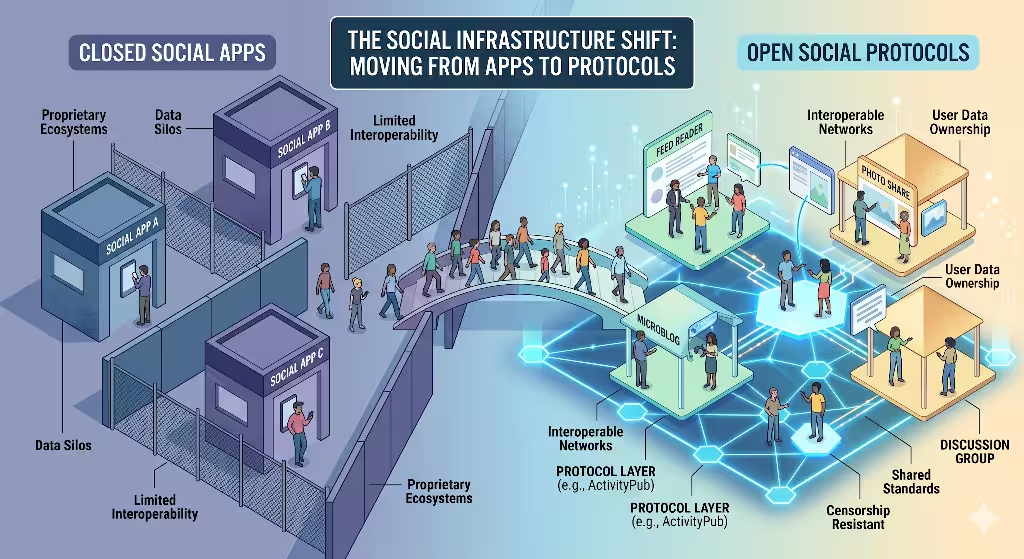
When we talk about the move from apps to protocols, we are talking about the plumbing of the internet. Think about how email works. You might use Gmail, and your friend might use Outlook. Even though you use different companies, you can still send each other messages. This is because email is a protocol. It is a set of rules that everyone agrees on. For a long time, social media did not work this way. Social media was built on apps, which are like private clubs. If you are not a member of the club, you cannot see what is going on inside.
The difference between decentralized vs centralized social media becomes clear when you look at these clubs. In a centralized world, the club owner decides who gets in and what they can say. If the club owner changes the rules, you just have to deal with it. But in 2026, we are moving back to the protocol model. This shift is what experts call the great decoupling. It means we are separating the place where you store your data from the app you use to look at it.
In a decentralized vs centralized social media world, a protocol like ActivityPub acts like the post office. It does not matter which app you use to write your message. As long as the app follows the protocol rules, your message can go anywhere. This is why you see people on Mastodon talking to people on Threads. They are using the same plumbing. This shift is huge because it stops one company from owning your social life. It turns social media into a public utility, like water or electricity, rather than a private product.
The move to protocols also changes how businesses think about their fans. In the past, a brand would spend a lot of money to get followers on a single app. But if that app changed its computer code, the brand might lose the ability to talk to those fans. When we compare decentralized vs centralized social media, the protocol model offers more safety.
If you build your audience on a protocol, you own that list of names. You can take them with you to any app that uses the same rules. This is why so many companies in 2026 are moving their marketing budgets into decentralized vs centralized social media strategies. They want to own their relationships instead of renting them.
Another reason this shift is happening is because people are tired of being watched. Centralized apps need to track you to make money. They need to know what you buy and where you go.
The Centralized Titan: Monetizing the Walled Garden
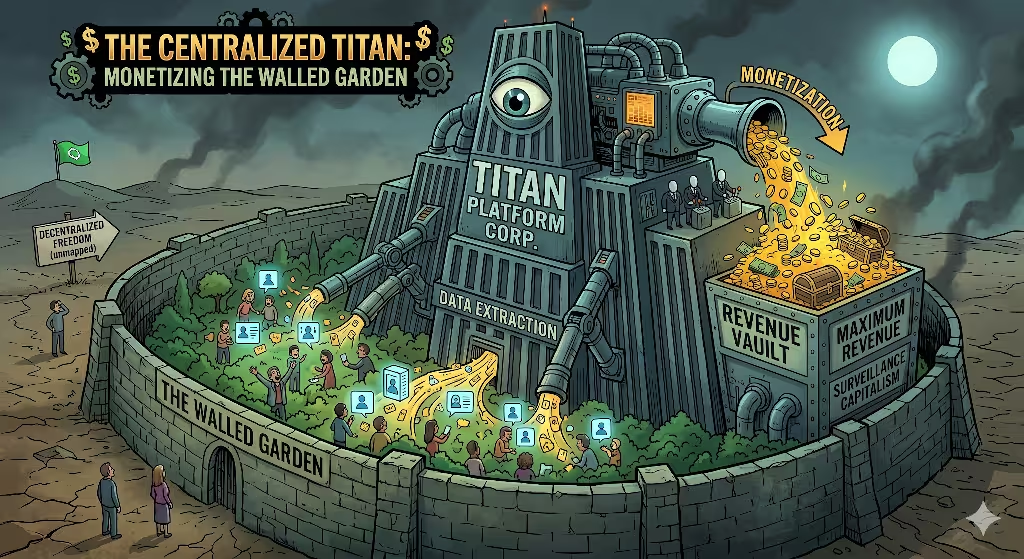
To really understand decentralized vs centralized social media, we have to look at the giant companies that have ruled the web for years. These are the centralized titans. They built beautiful apps that were easy to use, and they gave them away for free. But as we know, nothing is truly free. You paid for those apps with your attention and your personal information. This is the foundation of the centralized business model.
In a centralized system, the goal is to keep you on the app as long as possible. The company uses powerful computers to show you things that trigger your emotions. If they can make you stay for just five more minutes, they can show you two more ads. This is a big part of the decentralized vs centralized social media struggle. The centralized model is designed to be addictive. It is a machine that turns your time into money for stockholders.
The problem with this model is that it eventually leads to something called enshittification. This is a funny word for a sad process. It happens when a platform starts out great for users, then shifts to being great for advertisers, and finally ends up being bad for everyone except the company owners. When we look at decentralized vs centralized social media, we see that centralized platforms always have this risk. Because they own the walled garden, they can do whatever they want to make more money.
In 2026, many users are starting to feel the effects of this decay. They see too many ads and not enough posts from their actual friends. They feel like they are being manipulated by a computer. This is why the conversation about decentralized vs centralized social media has moved from tech blogs to the dinner table. People want a social network that cares about them, not just about profit. They want to be more than just a data point in a giant spreadsheet.
Decentralized Disruptors: The Rise of the Fediverse
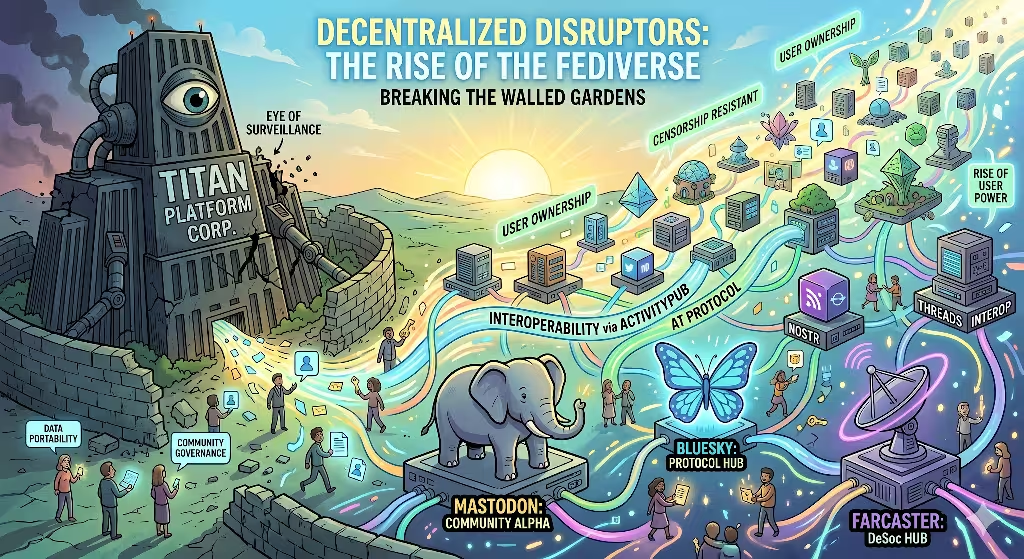
While the titans are struggling with decay, the new disruptors are growing. These are the apps that live in the Fediverse. The Fediverse is a collection of thousands of independent servers that all talk to each other. It is the best real world example of how decentralized vs centralized social media works in practice. On the Fediverse, you are not a product. You are a member of a community.
The business model for these disruptors is very different. Instead of selling your data, many of these servers are run by people who just love a specific topic. Some are supported by small monthly tips from users. Others are run by non-profit groups. When we compare decentralized vs centralized social media, the decentralized side feels much more like the early days of the internet. It is a place for hobbies, deep conversations, and real friendships.
One of the coolest things about the Fediverse is that it is censorship resistant. In a centralized system, if a company does not like what you say, they can delete your account and you disappear. In a decentralized vs centralized social media world, if one server kicks you out, you can just move to another one. You can even start your own server! This gives people a lot more freedom to speak their minds without fear of a giant company shutting them down.
In 2026, the Fediverse is no longer just for experts. Apps like Mastodon and Bluesky have made it very easy for anyone to join. They look and feel like the apps we are used to, but they work on the new protocol rules. This is a major turning point in the decentralized vs centralized social media story. It shows that we can have all the fun of social media without the downsides of the big platforms.
Side-by-Side Comparison: Revenue Streams
Understanding how these systems make money is key to seeing the difference in decentralized vs centralized social media. Centralized systems rely on selling your attention. They collect every bit of info about you, from what you like to where you go, and use it to sell ads. This is why those apps are free to use. You pay with your privacy instead of your money.
Decentralized systems have to be more creative. Because they do not always track you, they cannot always sell targeted ads. Instead, they might use things like small monthly fees or special digital tokens. Some servers are run by volunteers who just want a nice place to hang out. When we look at the money side of decentralized vs centralized social media, we see that the decentralized side is often much more honest about where the money comes from.
| Feature | Centralized Model | Decentralized Model |
| Who Owns Your Data | The Company | You |
| How They Make Money | Targeted Ads | Tips, Tokens, Fees |
| Who Makes the Rules | The CEO | The Community |
| Can You Move Your Fans | No | Yes |
This table helps show why the choice of decentralized vs centralized social media matters so much for creators. If you are a writer or a video maker, you want to make sure you own the relationship with your fans. In a centralized system, the company can take your fans away in a second. In a decentralized system, your fans belong to you, not the platform.
Answers to Common Questions about Social Media
There are often a lot of questions about the future of decentralized vs centralized social media. Here are some of the most common questions people are asking right now.
What is the main difference between centralized and decentralized social media?
The main difference is who is in charge. In a centralized system, one company controls everything. In a decentralized system, many different groups work together using shared rules. This is the biggest part of the decentralized vs centralized social media debate.
How do decentralized social media platforms make money?
They use many different ways. Some use a system where you can give small tips to creators. Others use digital tokens that have value within the community. Some are supported by donations. This is a much wider range than the simple ad model of decentralized vs centralized social media.
Is decentralized social media safer?
It can be, but it is different. In a centralized system, a big company tries to catch bad posts. In a decentralized system, each small community decides what is okay and what is not. This means you have more control over who you talk to, but there is no one big boss to call if something goes wrong. This is a key point when thinking about decentralized vs centralized social media.
Which model is the future of social media?
In 2026, we are seeing a mix of both. Big companies are starting to use some decentralized rules so they can talk to other apps. Small apps are growing because people want more privacy. The future of decentralized vs centralized social media will likely be a world where we use both, but we have much more freedom to choose.
The Social SEO & Creator Economy Impact
If you are trying to get more traffic to your website, you need to understand how decentralized vs centralized social media affects search engines. In the past, Google mostly looked at the big platforms. But in 2026, search engines are getting much better at finding content in the decentralized world. This means that being on the right protocol can help people find you more easily.
For creators, the shift in decentralized vs centralized social media is a huge win. When you use an open protocol, you are not at the mercy of one company’s computer code. You can build a direct link to your audience. This makes your business much safer. If one app goes out of business, you just take your fans to a new one. This is the biggest benefit of the decentralized side of decentralized vs centralized social media.
Also, we have to talk about how ads are changing. Because people are moving away from being tracked, brands have to be more helpful. They cannot just follow you around the internet anymore. They have to join the community and add value. This is a big shift in the world of decentralized vs centralized social media. It makes the internet a much nicer place to be for everyone.
Strategic Recommendations for Brands
At Silphium Design LLC, we tell clients that they cannot just ignore the decentralized world anymore. If you want to stay ahead, you need to start experimenting with these new tools. You do not have to leave the big platforms, but you should start building a home on the decentralized side of decentralized vs centralized social media as well.
First, make sure you own your own name on the new protocols. Just like you bought your website domain name years ago, you should claim your name on things like Mastodon or Bluesky. Second, start thinking about how you can give your fans more control. Maybe you can offer a subscription that works across different apps. This is how you win in the world of decentralized vs centralized social media.
The most important thing is to be honest and helpful. In the decentralized world, people can see through fake ads very quickly. They want real connections with real people. It means we have to be more human and more kind to each other. When we look at decentralized vs centralized social media, the human element is what will always matter most.
The Power Balance Reimagined
We have covered a lot of ground today. From the way the internet is built to how companies make money, the story of decentralized vs centralized social media is really the story of our digital lives. We are moving away from a time when a few billionaires made all the rules. We are moving toward a time when we all have a say in how our social worlds work.
The transition between decentralized vs centralized social media will take time, but the path is clear. Freedom, ownership, and privacy are becoming the most important things for users in 2026. As you navigate this new world, remember that you have the power to choose where you spend your time and your data.
Thank you for joining us on this journey through the world of decentralized vs centralized social media. We hope this guide helps you feel more confident as you explore the new digital frontier. Whether you stay in the walled gardens or head out into the open neighborhoods of the Fediverse, the most important thing is that you are the one in control.
In the end, the choice between decentralized vs centralized social media is yours to make. Make it a good one!