
In the world of web design, we often forget that the people looking at our screens are still biological beings. At Silphium Design LLC, my work is rooted in the belief that our digital spaces should reflect the natural world we evolved in. This concept is called biophilia. It is the idea that humans have a deep, built-in need to be near nature.
When we build websites, we can satisfy this need by using earthy textures. I see it as a digital forest. However, there is a big conflict today. Designers are fighting over whether to use handmade textures or digital ones. One comes from the real world, like a scanned piece of wood. The other is made by a computer program.
The core question we must answer is this: in our modern world, which works better online? To build the best websites, we must look at how these earthy textures affect our brains and our search engine rankings.
Table of Contents
Defining the Contenders: Handmade vs. Digital
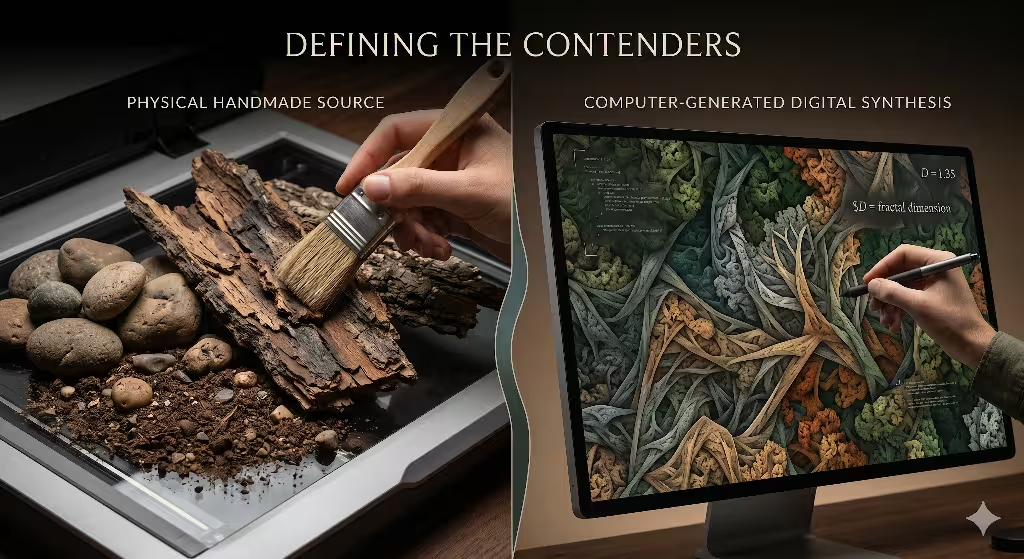
To truly understand the digital landscape, we must look at the building blocks of what we see on the screen. When I work at Silphium Design LLC, I often tell my team that a website is a living thing. The textures we choose are like the skin of that organism.
In this section, I want to compare and contrast the two main ways we create these surfaces. We have handmade earthy textures on one side and digital earthy textures on the other side. Each has a very different origin story. Each affects the human brain in a different way. As a biologist and a web designer, I see this as a battle between the physical laws of nature and the mathematical laws of code.
The Physical Soul of Handmade Earthy Textures
Handmade earthy textures start in the real world. To create them, a designer must step away from the computer. They might go into a forest or a garden. For me, this often happens in the woods near Burlington where I grew up. I look for things that have lived and changed over time. I might find a piece of old oak bark or a flat stone from a riverbed. These objects are the source of handmade earthy textures.
When we bring these objects back to the studio, we use a high-resolution scanner or a professional camera. This process captures the tiny flaws that make nature beautiful. You can see the small cracks in the wood. You can see the bits of dirt and moss. These earthy textures feel heavy and real because they carry the history of the physical world. Nature does not do anything by accident. Every bump on a leaf is there for a reason. When we use handmade earthy textures, we are putting that biological wisdom onto a website.
Handmade earthy textures also include things made by human hands using natural tools. This might be a watercolor wash on thick paper or a print made from a carved block of wood. These earthy textures show the “hand” of the artist. There is a sense of touch involved. When a user sees these earthy textures on a screen, their brain remembers what it feels like to touch paper or wood. This creates a very strong emotional bond. It makes the website feel less like a machine and more like a handmade gift.
However, handmade earthy textures come with a cost. Because they are based on real-world photos or scans, the files are very complex. They have a lot of color data and many small details. This can make the website load more slowly. In the world of SEO, speed is very important and we must remain cognizant of the website loading times. If your earthy textures are too heavy, your visitors will leave before the page even opens. This is why we have to be very smart about how we use them. We must balance the beauty of the real world with the needs of the digital world.
The Mathematical Logic of Digital Earthy Textures
On the other side of the fence, we have digital earthy textures. These are not found in the woods. They are born inside the computer. As a web designer, I find this process fascinating. We use math to mimic the look of nature. There are many ways to do this, but one of the most common is using something called noise.
Imagine a computer program that picks random dots of color and spreads them out. By using different math formulas, we can make those dots look like sand, stone, or clouds. These digital earthy textures are very clean. They do not have the “mess” of the real world unless we tell the computer to add it. One of the biggest benefits of digital earthy textures is that they are very light. They are often made using code rather than a big image file. This means the website can load very fast, which is great for SEO.
Digital earthy textures also have the benefit of being perfect. You can stretch them to fit a huge screen, and they will never get blurry. You can change their color with one click. If you want earthy textures that look like red clay instead of gray stone, you just change a number in the code. This gives the designer a lot of power. At Silphium Design, we use these when we need a website to feel modern and fast but still grounded in nature.
The danger with digital earthy textures is that they can feel fake. The human eye is very good at spotting patterns. If the math is too simple, the brain will see that the texture is repeating. This can make the user feel like they are in a sterile, artificial place. To fix this, we have to use very complex math to create “random” changes. We want the digital earthy textures to trick the brain into thinking it is looking at something real. It is a game of imitation. We are trying to use the language of computers to speak the language of biology.
Comparing the Evolutionary Response
Why does this choice even matter? It matters because of how we evolved. For millions of years, humans lived outdoors. Our eyes and brains are tuned to see the earthy textures of the forest and the plains. When we see handmade earthy textures, our brains recognize the messy, complex patterns of life. This lowers our heart rate and makes us feel safe. This is the heart of biophilic design.
Digital earthy textures can sometimes trigger a different response. If they are too perfect, they can feel “uncanny.” This is a feeling that something is almost real but not quite right. It can make a user feel slightly uneasy. However, if the digital earthy textures are made well, they can still provide that sense of calm. The key is the level of detail. We look for earthy textures that have the right amount of “noise.”
When I look at the traffic for biophilic design, I see that people are drawn to authenticity. They want to feel like they are interacting with something that has a soul. Handmade earthy textures provide that soul very easily. Digital earthy textures have to work harder to earn it. But when you are building a website for a global audience, the speed of digital earthy textures is hard to ignore. We have to ask ourselves if the emotional gain of a handmade scan is worth the loss in loading speed.
The Role of Imperfection in Design
In nature, nothing is perfect. A tree is not a perfect cylinder. A rock is not a perfect sphere. These imperfections are what make earthy textures look natural. Handmade earthy textures are full of these mistakes. There might be a smudge on the paper or a crack in the stone. These “errors” are actually a good thing in web design. They give the eye a place to rest. They make the screen feel like it has depth and weight.
Digital earthy textures often struggle with this. Computers love perfection. To make digital earthy textures look good, we actually have to tell the computer to make mistakes. We add grain. We add shadows. We make the edges a little bit rough. By doing this, we are trying to bridge the gap between the two worlds. We are taking the speed of the digital world and adding the beauty of the handmade world.
At Silphium Design, we spend a lot of time looking at these tiny details. We want our earthy textures to feel like they belong on the screen. If we use a texture that is too rough, it might make the text hard to read. If we use one that is too smooth, it might feel boring. We are looking for the “Goldilocks” zone of earthy textures. It should be just right for the human eye.
Technical Specs and the Future of Textures
As we look toward the future, the line between these two types of earthy textures is starting to blur. We now have tools that can take a photo of handmade earthy textures and turn them into math. This is called procedural generation. It takes the “DNA” of a real-world object and creates a digital version that can go on forever without repeating.
It means we can have the beauty of handmade earthy textures with the performance of digital ones. We can create earthy textures that change based on the time of day or the weather where the user is living. Imagine a website that feels like soft grass in the morning and rough stone at night. This is the next step in biophilic web design.
We are also seeing new file formats that make it easier to use high-quality earthy textures. Formats like WebP allow us to keep all the detail of a handmade scan while making the file size much smaller. This helps our SEO efforts. It means we don’t have to choose between a beautiful site and a fast site. We can use the best earthy textures available and still rank high on search engines.
Choosing the Right Path for Your Site
When you are deciding which type of earthy textures to use, you have to think about your goals. If you are building a website for a luxury brand that values craftsmanship, handmade textures are the way to go. The weight and detail will show the user that you care about quality. The slight imperfections will feel high-end and unique.
If you are building a site that needs to be incredibly fast or works for millions of people on slow phone connections, digital earthy textures are likely better. You can use them to create a sense of nature without slowing anyone down. You can still use colors and patterns that feel organic. You just use the power of the computer to deliver them efficiently.
In my work at Silphium Design, I usually find that a mix is best. We use handmade textures for the “hero” sections where we want to make a big impression. Then we use digital earthy textures for the backgrounds of the rest of the pages. This keeps the whole site feeling like one cohesive ecosystem. It honors the biology of the viewer and the physics of the internet.
Earthy textures are more than just a design choice. They are a way to communicate with the subconscious mind of your visitor. By choosing the right textures, you can tell a story of trust, peace, and natural beauty. You can make your corner of the internet feel like a breath of fresh air in a crowded digital world. Whether you reach for a scanner or a line of code, remember that the goal is always the same. We want to bring the earth back to the screen.
Technical Performance and SEO: The Data Behind the Design
When using these textures, we have to be cognizant about how fast a website loads. This is where the choice of earthy textures becomes very important for search engine optimization, or SEO. Google wants websites to load fast. If a website is slow, Google will not show it to as many people. Handmade earthy textures are often very large files. Because they are made from high-quality scans, they contain a lot of data. If you use too many of these textures without being careful, your website will become heavy and slow. This is bad for your SEO.
Digital earthy textures have a big advantage here. Because they are made with math, the files can be much smaller. We can use code to tell the computer how to draw these earthy textures on the screen. This makes the website load almost instantly. When I monitor the latest trends in SEO, I see that speed is king. However, we do not have to give up on handmade earthy textures. We can use modern tools to shrink the file size. At Silphium Design, we use special formats to make sure these earthy textures do not hurt your rankings. We want the beauty of nature without the weight of a slow site.
The Biophilic Impact: Fractals and Stress Reduction
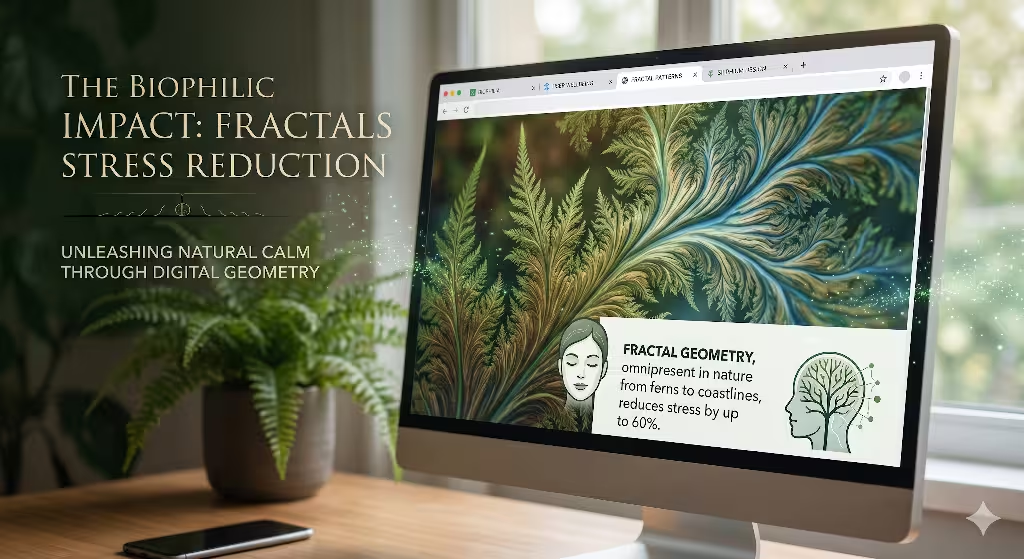
As a biologist, I find the science of earthy textures to be the most exciting part. Humans love nature because of something called fractals. Fractals are patterns that repeat themselves at different scales. You can see them in the branches of a tree or the veins in a leaf. Our brains are designed to process these patterns easily. When we see earthy textures that have these natural patterns, our stress levels go down. This is why biophilic design is so powerful for websites.
Handmade earthy textures are full of these natural fractals. Because they come from real objects, they have the perfect level of complexity. Digital earthy textures can sometimes feel a bit “off” to our brains if the math is too perfect. If the pattern repeats too exactly, our brain knows it is fake. This can actually cause a tiny bit of stress.
To make digital earthy textures work, we have to add “noise” or random dots to make them look more like the real world. When we use the right textures, visitors stay on the website longer. They feel more relaxed and are more likely to trust the brand. This is why choosing the right earthy textures is not just an art; it is a biological necessity.
Frequently Asked Questions about Earthy Textures
Many people ask if using earthy textures will make their website look old-fashioned. The answer is no. In fact, the most modern websites are moving away from flat, boring colors. People want to feel a connection to something real. Another common question is whether earthy textures work on mobile phones. Yes, they do, but you have to be even more careful with file sizes. On a small screen, the detail in your textures needs to be clear but not overwhelming.
People also ask how to choose the best keywords for biophilic design. At Silphium Design, I spend a lot of time looking at what people search for. They search for things like “natural web design” or “organic textures.” But the most important thing is how those earthy textures make the user feel. If the earthy textures help the user find what they need while feeling calm, the website is a success. We also get asked if earthy textures interfere with reading. This is a big concern. You must make sure that your text is easy to see against the background. We often use a soft blur on our textures to make sure the words pop out.
The Strategic Verdict: The Hybrid Approach
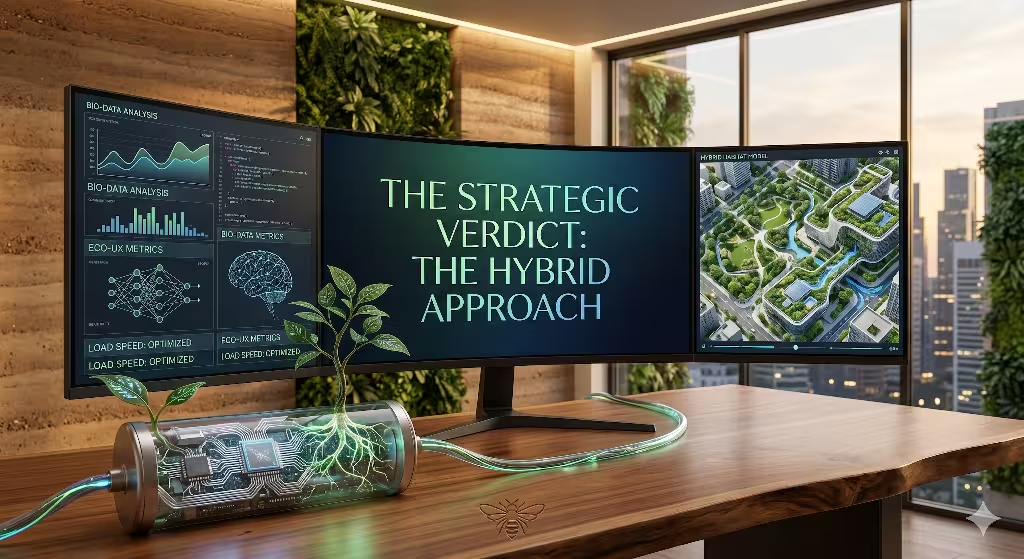
So, which works better? Generally, a mix of both is best. At Silphium Design, we call this the Hybrid Approach. We use handmade earthy textures for the most important parts of the site. This might be the big image at the top of the page. This is where we want the user to feel that deep, human connection. Because it is only one or two images, it won’t slow the site down too much.
For the rest of the website, we use digital earthy textures. We use code to create subtle backgrounds that feel like sand or stone. These earthy textures keep the site fast and professional. By mixing these two styles, we get the best of both worlds. We get the emotional power of handmade earthy textures and the technical speed of digital ones. This is the smartest way to design in 2026. It respects the biology of the user while following the rules of the internet.
Ensuring Accessibility and Legibility
It has to be remembered that design must work for everyone. When we use earthy textures, we have to think about people who might have trouble seeing. If a background has too much detail, it can be hard to read the text. Earthy textures should never get in the way of the message. We use special math to check the contrast between the text and the textures.
We also make sure that the textures do not distract the user. The goal of biophilic design is to create a sense of peace, not a sense of clutter. If the textures are too busy, the user will get confused. We want the earthy textures to feel like they are part of the background, just like the ground beneath your feet when you walk in the woods. You know it is there, and it feels good, but you don’t have to stare at it to move forward.
Nature Always Wins
In the end, the debate between handmade and digital earthy textures is about finding balance. We know that earthy textures make websites better. They make people happier and more relaxed. Whether you choose a scanned leaf or a computer-made stone pattern, the goal is to bring a bit of the earth to the screen.
At Silphium Design LLC, we believe that the future of the internet is green. By using earthy textures wisely, we can create websites that are fast, beautiful, and human. We don’t have to choose between technology and nature. We can have both. By understanding the biology of the user and the physics of the web, we can use earthy textures to build a better digital world. Nature has spent millions of years perfecting its designs. The least we can do is use those earthy textures to make our websites feel like home.
Since we’ve explored the technical and biological benefits of these textures, are you more interested in learning how to technically optimize these images for your site, or would you like to dive deeper into the specific psychological effects of different natural patterns?