
The Symbiosis of Form and Function
In the year 2026, the way we think about a business identity has changed. We used to talk about being sustainable. This meant doing less harm. Now, we talk about being regenerative. This means doing actual good. For a company that works in the circular economy, your branding must do more than just look nice. It must act like an ecosystem.
At Silphium Design LLC, we see a massive shift. People no longer trust a logo just because it is green. They want to see a brand that breathes. They want a brand that grows and heals. This is where biophilic branding comes into play. It is the practice of using natural patterns in your visual identity. It is about making your digital world feel like the real world.
When we design for the circular economy, we are building loops. Nothing goes to waste in nature. A fallen leaf becomes food for a tree. Your biophilic branding should tell this same story. It should show that your business is part of a cycle. My background in biology and web design tells me that the best systems are the ones that mimic life. If your branding feels mechanical, it feels dead. If it feels biological, it feels like it belongs in the future.
In this article, we will look at how to build a biophilic brand that connects people to nature. We will explore how these designs make people feel better. We will also see how they help your website show up in search results. A biophilic brand that mirrors nature is a brand that people will trust and remember. This is the new standard for the circular economy.
Table of Contents
The Biological Basis: Why Biophilic Branding Works
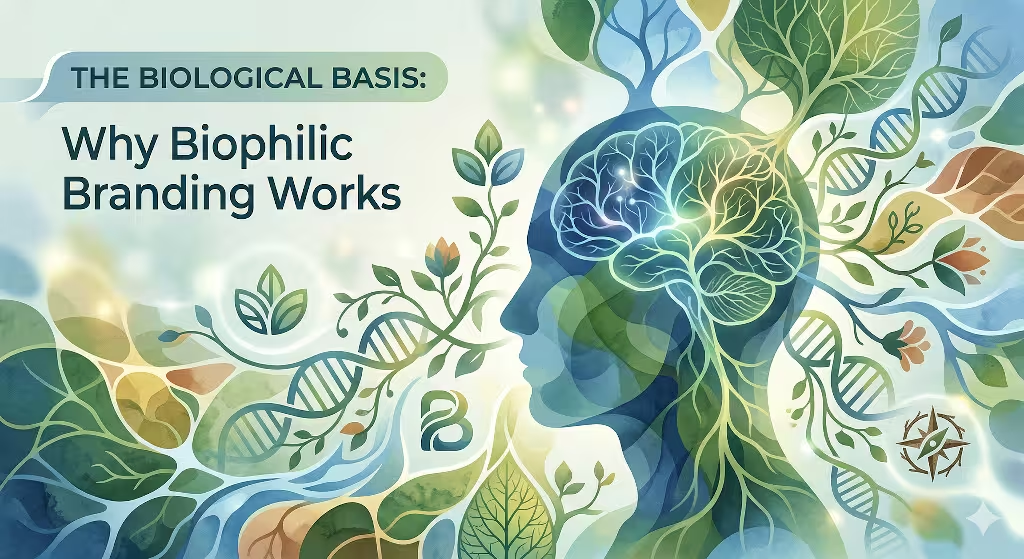
The biological reason why biophilic branding works is found in our history. For most of human life, we lived outdoors. We looked at trees and rivers. We watched the sun move across the sky. Our brains are built to process these natural patterns easily. When a company uses nature in its branding, it is speaking a language our DNA already knows.
As a scientist, I look at how the brain reacts to digital images. I see that modern life often makes us tired. Looking at a screen for a long time causes digital fatigue. This is because most websites use sharp corners and bright colors that do not exist in nature. Biophilic branding changes this by giving the brain what it actually needs to feel safe and happy.
The Biophilia Hypothesis in Modern Business
The term biophilia means a love of life. Biologist Edward O. Wilson made this idea famous. He argued that humans have a physical need to be around nature. In 2026, we apply this to branding to help people feel connected to a company. If your branding looks like a machine, people will treat it like a machine. They will use it and then throw it away. But if your branding feels like a living system, people feel a bond.
This is very important for the circular economy. We want people to care about the products they buy. We want them to keep those products in the loop. By using natural textures and organic lines in your branding, you trigger a positive response in the brain. This response releases chemicals that make a person feel calm. This is why biophilic branding that uses nature is so much more effective than branding that is cold or industrial.
Attention Restoration Theory and Your Digital Identity
Our brains have two types of attention. One is called directed attention. This is what you use when you are working or driving. It is hard work and it makes you tired. The other is called soft fascination. This is what you feel when you look at a sunset or a forest. It does not require any work. It actually helps your brain rest. Branding that uses biophilic design taps into soft fascination. When a customer lands on a website with this type of branding, their brain gets a small break. Their mental battery starts to recharge.
This is a major win for any company. A relaxed customer is a happy customer. They will stay on your site longer. They will read more about your mission. This type of branding creates a space where people want to spend time. It turns a simple website visit into a restorative experience. In the circular economy, we are trying to change how people think about consumption. We want them to slow down. Soft fascination in branding helps them do exactly that. It moves them away from fast, impulsive choices. It moves them toward thoughtful, long-term decisions.
The Science of Fractals in Visual Branding
Fractals are one of the most powerful tools in biophilic branding. A fractal is a pattern that repeats at different scales. You can see them in the way a river branches out or in the veins of a leaf. Scientists have found that our brains can process these patterns very quickly. This is because our visual system was built to recognize them in the wild. When branding uses fractals, it reduces the amount of work the brain has to do. This makes the branding feel beautiful and right.
We often use math to design these patterns for Silphium Design LLC, using the golden ratio. We can create digital art that mimics the growth of moss or the movement of clouds. This type of biophilic branding creates a sense of order without being boring. It is complex but easy to understand. In the circular economy, businesses are often complex. They have to explain how recycling and reuse work. Using fractal branding helps make this complexity feel natural. It makes a complicated business model feel as simple as a growing tree.
Visual Identity for the Circular Economy
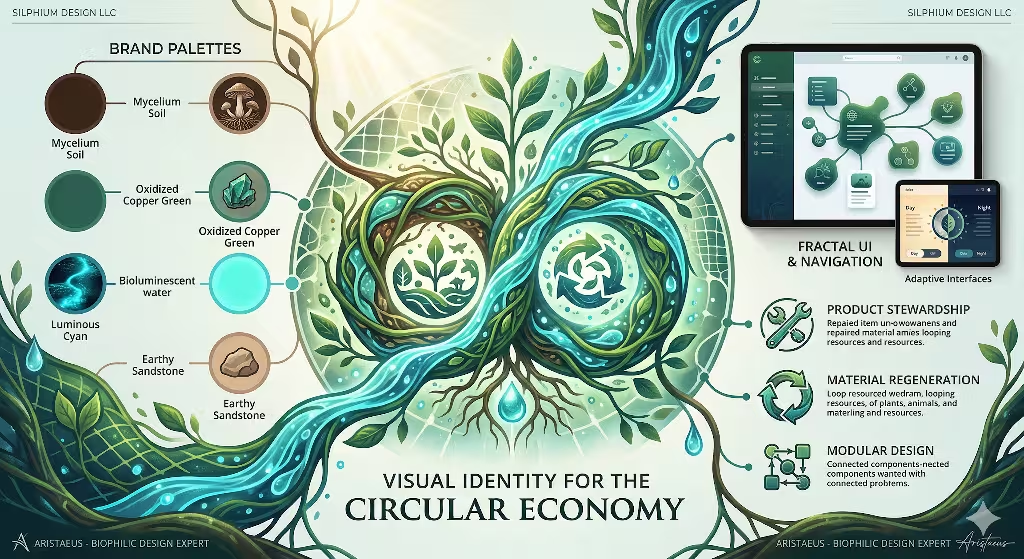
A strong biophilic branding plan for a circular business must focus on loops. Most old businesses use a linear model. They take things, make things, and throw things away. Their branding often looks sharp and rigid. Circular businesses are different. They reuse and recycle. Their branding should reflect this. We call this circular semantics. It means using shapes that imply a path that never ends. You can use soft curves and circles in your logo. You can use icons that show movement and renewal. This makes the customer feel like their purchase is part of a bigger, healthy system. It builds a sense of safety.
Color is also very important in biophilic branding. In the past, companies just used a bright leaf green. In 2026, we are moving past that. We use colors found in real earth and water. We use deep browns that look like healthy soil. We use soft blues that look like a clean sky. We even use colors that look like bioluminescence. These are the glowing colors found in deep-sea fish or mushrooms.
This type of biophilic branding feels modern and high-tech, but also natural. We also change how we lay out a website. Instead of using a grid of squares, we use a grid that looks like branches. This is a fractal grid. It makes the branding feel organic. It guides the eye in a way that feels natural. When your digital space looks like a garden, people want to spend time in it.
Digital Biomimicry: UX as an Ecosystem
Your website is a big part of your biophilic branding. It is often the first place a person meets your business. We believe a website should act like a living thing. This is called digital biomimicry. For example, a plant changes based on the time of day. Your website branding can do the same. We can design sites that change their light and color based on when a person is looking at them. In the morning, the site can be bright and energetic. In the evening, it can turn warmer and softer. This matches the human circadian rhythm. It shows that your branding cares about the health of the user. This is a very powerful way to build a bond.
We also look at micro-interactions. These are the small movements on a screen. When you click a button or scroll down, things move. In standard branding, these moves are often jerky and mechanical. In biophilic branding, these moves are fluid. They might look like water rippling. They might look like a leaf swaying in the wind. These small details make the branding feel premium. They make the user feel like they are interacting with something real.
Also, this type of design is good for SEO. Search engines like websites that are easy to use and keep people happy. When your branding is clean and natural, your code is often cleaner too. This means your site loads faster. A fast site that looks beautiful is exactly what search engines want to see.
Dominating the Green Search Landscape
Search engine optimization, or SEO, is a key part of your biophilic branding. You want people to find you when they search for keywords. For your business, the main keyword is biophilic branding for circular economy businesses. To rank well, we use something called the semantic web. This means we don’t just repeat the same word over and over. We use words that are related to it. We use terms like regenerative design and circularity. This tells the search engine that your branding is about deep ideas, not just surface looks. It proves you are an expert.
Another part of modern branding is being carbon-neutral. Every time someone visits a website, a server uses power. This creates carbon. A truly circular brand should care about this. We can optimize your branding to use less power. We do this by using smaller image files and simpler code. This is called technical SEO. It makes your site faster and better for the planet. When your branding is light and efficient, it sends a message. It says that you practice what you preach. You are not just talking about the circular economy. You are living it in your digital choices. This builds massive trust with users who care about the environment.
Frequently Asked Questions about Biophilic Branding
When people look for information online, they often ask specific questions. Your biophilic branding should answer these questions. Here are the most common things people want to know:
What is biophilic branding?
It is using natural elements to build a company identity. This includes shapes, colors, and patterns that mimic the natural world. It helps humans feel a deep connection to a company. It is a way to make digital spaces feel more human and healthy.
How does the circular economy influence brand identity?
The circular economy is about ending waste. This means the branding must focus on longevity and reuse. Instead of looking “new” and “disposable,” the branding looks “timeless” and “sturdy.” it uses visual loops to show that everything is recycled.
Why is nature-inspired design important for sustainable businesses?
It acts as a visual shortcut. It tells the customer right away that the business cares about the earth. It aligns the look of the company with the mission of the company. It makes the message of sustainability feel real and honest.
Can biophilic design improve website conversion rates?
Yes. When people feel calm, they are more likely to buy. Biophilic branding reduces the stress of shopping online. It makes the website feel like a safe place. This leads to more people signing up or making a purchase.
What are the 3 pillars of biophilic design?
The first is Nature in the Space, which means having real plants or light. The second is Natural Analogues, which means using shapes and patterns that look like nature. The third is Nature of the Space, which means how the space makes you feel, like being in a cozy cave or on a high hill. In digital branding, we focus on the last two.
Case Study: The 2026 Circular Standard
In 2026, new laws in Europe have changed how branding works. Companies now have to show exactly where their products come from. This is called a Digital Product Passport. A smart circular business uses this as a branding tool. They don’t hide the data. They make it a part of the design. We worked with a clothing brand that makes shirts from old fabric. Their branding uses a special pattern. This pattern is made by a computer program that mimics how roots grow. Each shirt has a unique digital pattern that shows its history.
This is a great example of biophilic branding. It uses biology to tell a story about the circular economy. The branding is not just a logo on a tag. The branding is the story of the shirt’s life. This makes the customer feel like they are part of a special club. They are not just buying a shirt. They are helping a forest grow. By using data and nature together, the brand became a leader in its field. They saw a huge jump in search traffic because their branding was so unique.
Implementation: From Linear to Loop
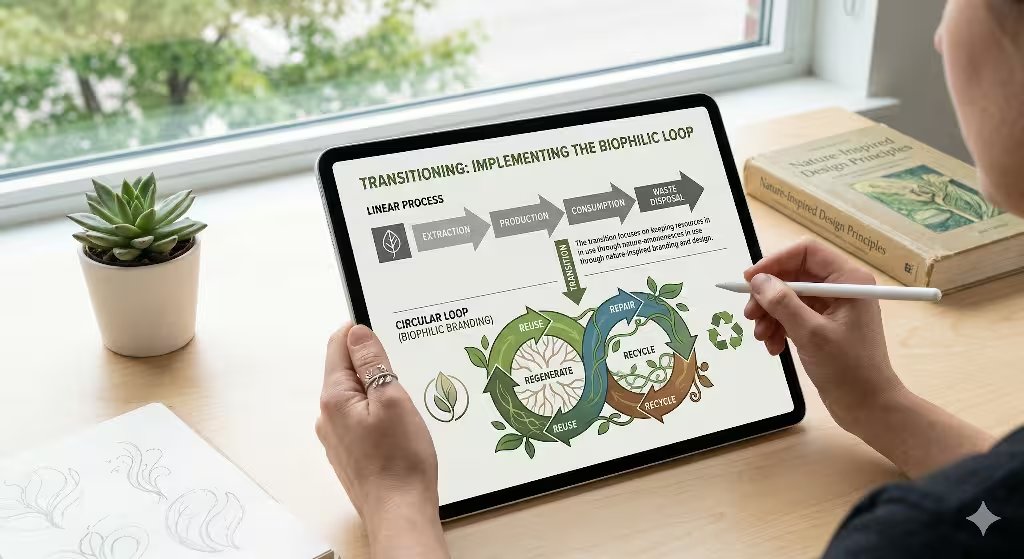
If you want to change your biophilic branding, you should start with an audit. Look at your current logo and website. Does it feel cold and mechanical? Or does it feel warm and alive? You don’t have to change everything at once. You can start by adding natural colors to your branding. You can use photos that show the textures of the earth. You can change your fonts to be more organic and less blocky.
Next, look at your website’s performance. Is it heavy and slow? If so, your branding is hurting the planet. Work on making your digital files smaller. This is a key step for circular branding. It shows you care about energy use. Finally, track your progress. See if people stay on your site longer after you add biophilic elements. Watch your search rankings. When you align your branding with the laws of nature, you will see your business grow. Nature is the best designer in the world. Copying her is the smartest move a business can make.
The Future is Bio-Digital
The world of biophilic branding is moving fast. We can no longer separate the digital world from the natural world. For businesses in the circular economy, this is a great chance. By using biophilic branding, you can show the world that you are a leader. You can build a brand that heals the brain and protects the planet. You can use these natural patterns to win at SEO and build deep trust with your customers.
At Silphium Design LLC, we believe that every business can be a force for good. Your branding is the tool you use to tell that story. Don’t build a digital wall between you and your customers. Plant a digital forest instead. Use the power of biology to make your company stand out. When your biophilic branding reflects the beauty of the earth, everyone wins. The future of business is circular, and the future of branding is biophilic.