
In the world of design, we often look at how things appear. However, at Silphium Design LLC, we look at why things appear the way they do. One truth is that nature never makes a mistake with form. When we look at a sharp thorn on a rose or the soft curve of a river, we are seeing a specific response to the world around it. This is why understanding the relationship between shape and environment is the foundational skill for any modern designer.
Whether you are building a house or a website, the forms you use must match the digital space they live in. If they do not match, the user feels a sense of friction. Our goal is to create a digital ecosystem that feels as natural as a walk in the woods. By mastering the link between shape and environment, we can build tools that do more than just work. We can build tools that feel like they belong to the living world.
Table of Contents
The Theoretical Foundations: Why Form Follows Environment
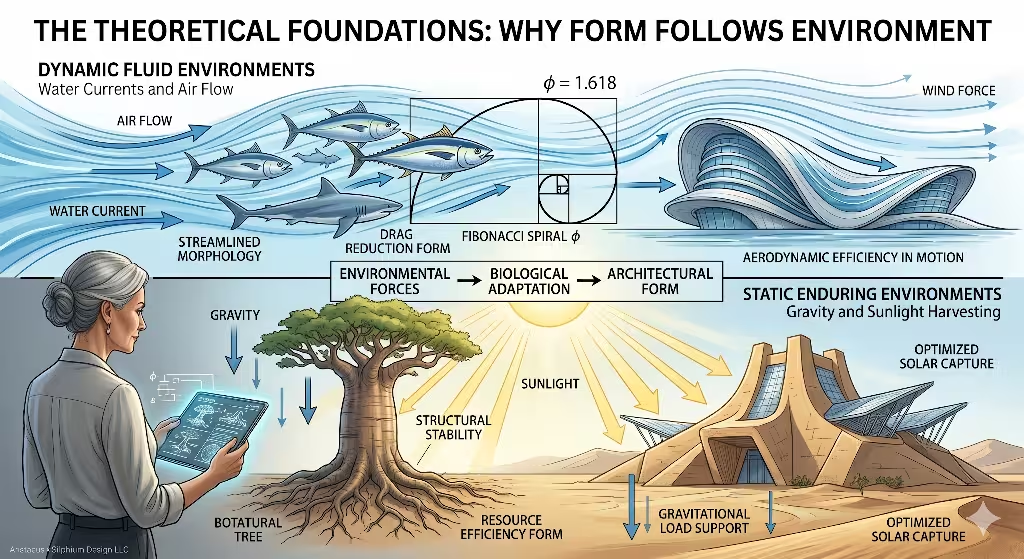
To truly grasp the concept of shape and environment, we must first look at the natural world. Biology tells us that nothing is shaped by accident. Think about a fish. A fish has a sleek, streamlined body. This is because the water provides resistance. To move through the water quickly, the fish must be shaped to slice through it. Here, the water is the environment and the sleekness is the shape. If the fish were shaped like a brick, it would struggle to survive. This shows how shape and environment work together to create efficiency.
In the desert, a cactus has a thick, round shape. This shape helps it hold water and stay cool in the sun. The environment is hot and dry, so the shape responds by minimizing the surface area exposed to the heat. We call this evolutionary morphology. It is the study of how things change their shape to fit where they live.
When we design websites, we must think about the digital environment. Is the user on a busy street using a phone? Or are they sitting in a quiet office? The shape and environment must be balanced to help the user succeed in their specific setting.
The Math of Nature: The Fibonacci Sequence and the Golden Ratio
Nature uses a specific set of rules to manage the link between shape and environment. One of the most famous rules is the Fibonacci sequence. This is a pattern of numbers where each number is the sum of the previous two. You can see this in the way a seashell curves or how seeds sit in a sunflower. These shapes are not just pretty. They are mathematically perfect for their space.
When a plant grows leaves in a spiral, it is ensuring that every leaf gets enough sunlight. The shape and environment are connected through light and growth. In design, we use the Golden Ratio to create layouts that feel balanced. When a website uses these natural ratios, the human eye finds it easy to read. This is because our brains are trained to look for the patterns of shape and environment that we see in the forest. Using these shapes in a digital space reduces the stress a user might feel when looking at a screen.
Understanding the Relationship Between Shape and Environment as a Core Pillar
The most important part of my work at Silphium Design LLC is teaching others about the relationship between shape and environment. This relationship is what we call “contextual resonance.” Resonance happens when two things vibrate at the same frequency. In design, resonance happens when the shapes on the screen match the feelings of the user. If you are designing a website for a spa, you would not use sharp triangles and jagged lines. Those shapes do not fit a relaxing environment and instead would show danger.
Instead, you would use soft circles and flowing waves. This creates a harmony between shape and environment that makes the user feel safe. When the shapes do not match the environment, the user gets confused. This is called “cognitive dissonance.” It means the brain has to work harder to understand what it is seeing. By focusing on the bond between shape and environment, we make the experience effortless. We want the user to flow through the website like water flows through a canyon.
The Syntax of Our Surroundings
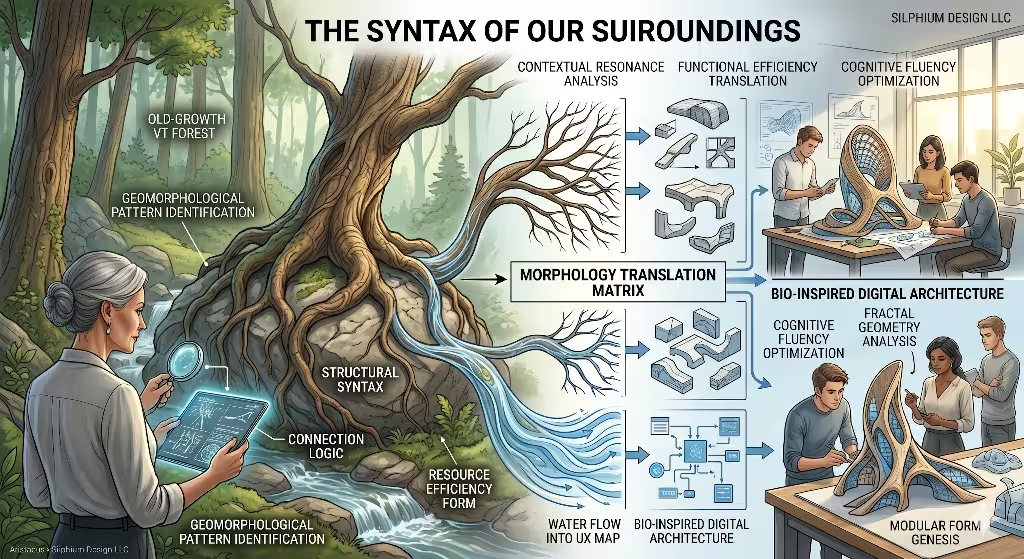
Just like a language has a grammar, our world has a visual grammar. This grammar is built on the link between shape and environment. Think of a mountain range. The jagged peaks tell us about a harsh, cold environment. Now think of a sandy beach. The smooth, flat ground tells us about a calm, open environment. Humans have spent thousands of years learning this visual grammar.
When we create a website, we are building a new world. We must use the right grammar. If our website is meant to be a place of learning, we need a shape and environment that promotes focus. This might mean using clean lines and structured blocks. If our website is a place for art, we can use more organic and free-form shapes. Every choice we make about shape and environment tells the user a story about what the site is for. If the story is clear, the user will stay longer and trust the brand more.
Prospect and Refuge: Designing for Safety
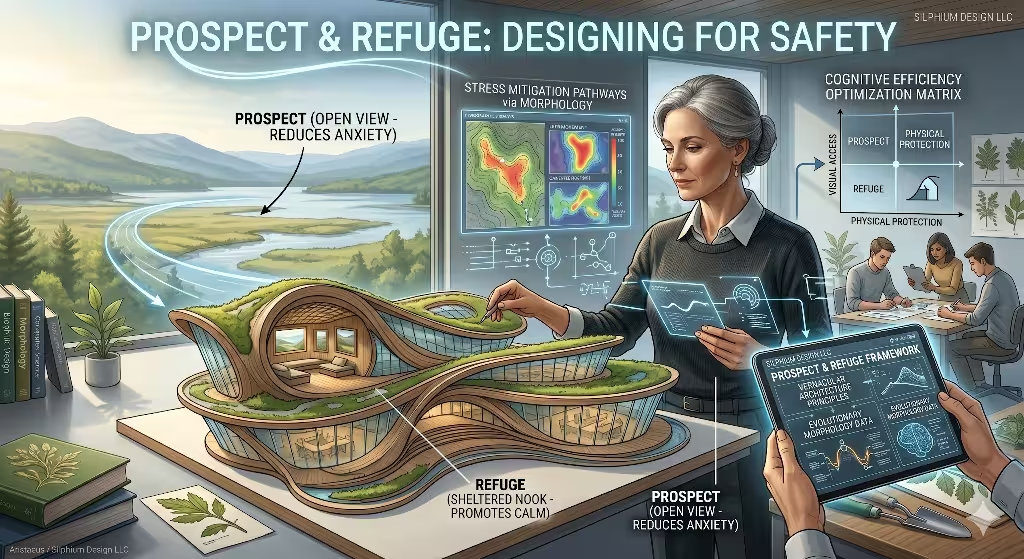
In the study of shape and environment, there is a famous idea called Prospect and Refuge. This comes from how our ancestors lived in the wild. People liked to be in a place where they could see far away (prospect) but also feel protected from behind (refuge). Think of a person sitting in a cave looking out over a valley. This balance of shape and environment made them feel safe from predators while they searched for food.
We can use this in web design too. A good website gives the user a clear view of where they can go. This is the prospect. It also gives them a sense of where they are and keeps them from feeling lost. This is the refuge. By using the right mix of shape and environment, we can make a website feel like a safe home. We use menus and headers to provide refuge, and we use clear call-to-action buttons to provide prospect. Balancing shape and environment this way makes the digital world feel much more human.
Translating Physical Shapes to the Digital User Experience
How do we take a tree and turn it into a website? It sounds hard, but it is actually quite simple. We look at how the tree deals with its shape and environment and we copy the logic. This is called biomimicry. In the digital world, we deal with “cognitive load.” This is the amount of mental effort it takes to use a tool. When we use biomorphic shapes, we lower the cognitive load.
Our brains are very fast at recognizing natural shapes. We can see a circle or a leaf shape much faster than we can see a complex, jagged polygon. Because of this, using natural shapes helps the user understand the site faster. The connection between shape and environment is the bridge that carries the user from being a stranger to being a customer. If the shape and environment are natural, the user does not have to think about how to use the site. They just use it.
Navigation as Digital Foraging
When animals look for food, they follow certain paths. This is called foraging. They look for signs in the shape and environment to tell them where the food is. Users do the same thing on a website. They are foraging for information. As designers, we must leave “scents” or clues for them to follow.
If the link between shape and environment is strong, the clues are easy to find. For example, a button that looks like a smooth stone stands out against a flat background. The user knows to click it because their brain recognizes it as something different in the environment. By designing the shape and environment to guide the user, we make navigation feel like a natural walk. We don’t want them to feel like they are in a maze. We want them to feel like they are following a well-worn path through a beautiful meadow.
The Power of Fractals in Design
A fractal is a shape that repeats itself at different sizes. You see this in ferns, clouds, and lightning. Nature loves fractals because they are an efficient way to fill a space. The relationship between shape and environment in a fractal is very special. It provides a lot of detail without being overwhelming.
In web design, we can use fractals in our layouts. We can have a large image that has smaller versions of its colors or shapes hidden in the icons below it. This creates a sense of unity between shape and environment. When a user sees these repeating patterns, they feel a sense of order. It makes the website feel alive and deep. Using fractals is a great way to respect the bond between shape and environment while keeping the design modern and fresh.
Search Engine Optimization and Biophilic Design
Many people think that SEO is just about words and code. But at Silphium Design LLC, we know that design plays a huge role. Google wants to show people websites that are helpful and easy to use. If your website has a great balance of shape and environment, people will stay on the page longer. This is called “dwell time.”
Google sees that people are staying on your site and thinks, “This must be a good website.” This helps your ranking. The relationship between shape and environment actually helps you show up higher in search results. When a site feels natural, people are less likely to click the “back” button. This reduces your bounce rate. By caring about the shape and environment of your design, you are also doing great SEO work. It is all connected.
Semantic Connectivity and Design Quality
Search engines are getting smarter every day. They now look at how a site is built to see if it makes sense. This is called semantic connectivity. If your images, shapes, and words all work together, the search engine trusts you more. The link between shape and environment tells the search engine that your site is professional.
For example, if you write about nature but your website looks like a cold, gray factory, the search engine might get confused. But if your shape and environment match your topic, the “signals” you send are much stronger. We make sure that every part of the site reinforces the shape and environment of the brand. This creates a powerful message that both humans and computers can understand.
Common Questions About Shape and Environment
I often get asked how these concepts work in the real world. Here are some of the most common questions people have about the relationship between shape and environment.
How does shape affect how we feel about a room?
The shape of a room can change your mood. A room with high, curved ceilings feels open and inspires creativity. A small, square room might feel cozy or it might feel cramped. This is because the shape and environment trigger different parts of our brain. Round shapes often make us feel happier and more relaxed.
What is the link between form and function?
In nature, form always follows function. This means the shape of a thing is decided by what it needs to do. A bird’s wing is shaped to catch the air. A website’s menu is shaped to help you find pages. When we respect the link between shape and environment, we make sure our designs actually work for the person using them.
Why do people like curves more than sharp edges?
Our brains associate sharp edges with danger, like a tooth or a thorn. Curved shapes remind us of things like fruit, clouds, or stones. Because of this, a website with more curves often feels friendlier. The balance of shape and environment is deeply tied to our survival instincts.
How can nature-based shapes help a business?
When a business uses biophilic design, its customers often feel more relaxed. Relaxed customers are more likely to buy things and return to the site. By using the right shape and environment, a business can build a stronger emotional bond with its audience. It is not just about looks; it is about how the business makes people feel.
Related Entities and Concepts
To understand this topic fully, we must look at some other important terms. Biomorphic forms are shapes that look like living things. Stephen Kellert was a famous researcher who helped us understand how nature helps our health. Biomimicry is when we copy nature’s ideas to solve human problems. All of these ideas are part of the larger study of shape and environment.
We also look at Gestalt Principles. These are rules about how humans group things together in their minds. For example, if we see three circles in a row, we see a “line.” This is part of how we process the shape and environment around us. We also use things like the Golden Ratio to make sure our designs are mathematically pleasing. Every one of these entities helps us strengthen the connection between shape and environment in our work.
Technical Tips for Biophilic Web Design
If you want to use these ideas on your own site, here are some practical tips. First, look at your “Hero” section. This is the big area at the top of your homepage. Try using a large, soft curve instead of a straight line to separate it from the rest of the page. This simple change in shape and environment can make your site feel much more welcoming.
Second, think about your negative space. Negative space is the empty area around your content. In nature, this is like the air or the water that surrounds an animal. You need enough space so the shapes can “breathe.” If you crowd your site, you break the balance of shape and environment. Give your buttons and text plenty of room to stand out.
Third, match your colors to your shapes. If you are using organic, leafy shapes, use greens and browns. If you are using watery, wavy shapes, use blues and cyans. This reinforces the relationship between shape and environment and makes the design feel intentional. It tells the user that you have thought about every detail.
The Future of Design at Silphium Design LLC
As we move forward, the internet is becoming more than just a place to find facts. It is becoming a place where we spend our lives. Because of this, we need the digital world to feel like the physical world. We need to focus on the link between shape and environment more than ever. The old way of building websites was like building boxes. The new way is like growing a garden.
At Silphium Design LLC, we believe that the best websites are those that feel natural. We believe that by understanding the relationship between shape and environment, we can make the internet a better place for everyone. We want to reduce stress and increase happiness through design. When you look at a website, you should feel the same peace you feel when looking at a sunset. This is the power of mastering the shape and environment of our digital spaces.
The Role of Natural Language Processing
Even the way we talk about design is changing. Search engines now use Natural Language Processing to understand the “vibe” of a website. When I write about the shape and environment of a site, I am using words that signal quality to the computer. The computer knows that words like “harmony,” “organic,” and “flow” are associated with positive user experiences.
This is why we focus so much on the writing. The words must match the visuals. If the shape and environment are natural, the writing should be natural too. We avoid using “corporate speak” that feels cold and robotic. Instead, we talk like real people. This keeps the shape and environment of the entire brand consistent. It creates a seamless experience from the first click to the last sentence.
Final Thoughts on Shape and Environment
In conclusion, the relationship between shape and environment is the most important tool in a designer’s kit. It is the secret to making things that work well and look beautiful. By looking at nature, we can find the answers to our most complex design problems. Whether it is the curve of a shell or the layout of a webpage, the rules remain the same.
We must always ask ourselves: Does this shape fit this environment? If the answer is yes, then we have created something truly valuable. At Silphium Design LLC, we will continue to lead the way in biophilic design. We will continue to explore the deep bond between shape and environment to help our clients succeed. Thank you for taking the time to learn about this fascinating topic. The world is full of beautiful shapes, and the environment is always there to guide them. All we have to do is look closer and learn from the world around us.
The next time you visit a website, take a moment to look at the shapes. Ask yourself if they feel like they belong there. Do they make you feel calm or stressed? Do they help you find what you need? When you start to see the link between shape and environment, you will never look at the internet the same way again. It is a world of endless possibilities, all waiting to be shaped by the wisdom of nature. We are proud to be part of this journey, and we hope you will join us in creating a more natural, beautiful digital world. Through the careful study of shape and environment, we can build a future that feels like home.