
The Genesis of Digital Biophilia
As we navigate the mid-2020s, the digital world is going through a major change. At Silphium Design LLC, we no longer see a website as a static piece of code. Instead, we view it as a living part of our world. This is why we at Silphium Design focus on organic web architecture. In 2026, the old way of making “disposable” websites is over. We cannot keep building heavy, slow sites that waste energy, especially in a world of energy constraints.
Digital biophilia is the idea that our screens should feel like nature. When you walk through a park, you feel calm. When you use a website built with organic web architecture, you should feel that same peace. This is not just about pretty pictures of trees. It is about how the site is built from the ground up. We use math found in nature to make sites that are easy for your brain to understand. This reduces “digital stress.” By using organic web architecture, we help the planet and the person behind the screen at the same time.
At Silphium Design LLC, our mission is to mix high-level science with smart design. We look at how a cell works to understand how data should move. We look at how a tree grows to understand how a menu should look. Organic web architecture is the answer to a crowded, noisy, and dirty internet. It creates a digital ecosystem where your brand can flourish without harming the environment.
Table of Contents
Defining Organic Web Architecture
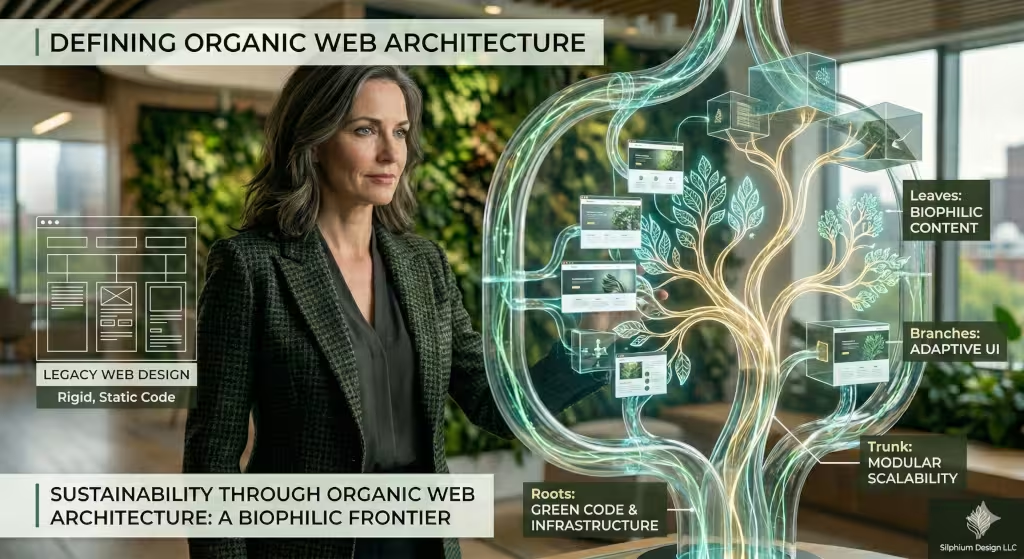
To understand organic web architecture, we must look at how we build things in the real world. Many years ago, architects like Frank Lloyd Wright said that buildings should grow from the land. He called this organic architecture. Today, we take those same ideas and put them into the virtual world. Organic web architecture means a website is built to fit its purpose perfectly, just like a leaf fits a branch. For example, here is a post about website that is inspired by Frank Lloyd Wright and designed by Silphium Design.
In the past, websites were built like boxes. They were rigid and hard to change. If you wanted to add something new, you often had to tear the whole thing down. Organic web architecture is different. It is built to evolve. It uses modular parts that can grow as your business grows. This reduces “digital waste” because you don’t have to start over every two years.
We also look at the Biophilia Hypothesis by Edward O. Wilson. He said that humans have an inner need to be close to nature. When we use organic web architecture, we bring that connection to the smartphone or computer. We use shapes and flows that feel natural to the human eye. This makes the site feel like it belongs in our world.
The Sustainability Pillars: Ecology in Code
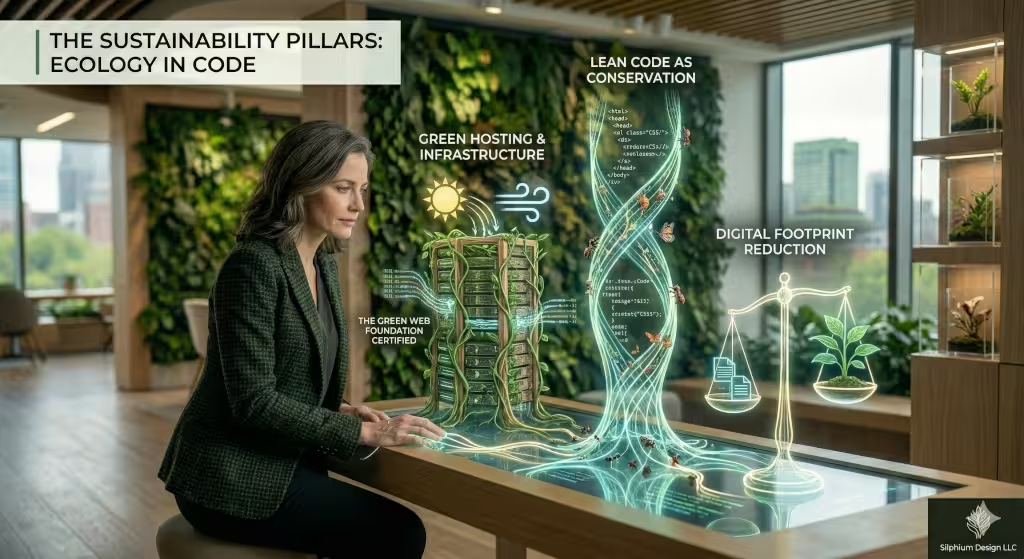
Sustainability is a huge part of organic web architecture. Most people don’t think about it, but the internet uses a lot of electricity. In fact, data centers use more power than many small countries. If we want to be responsible, we have to change how we code. This is where ecology meets technology.
The first pillar is green hosting. This means the servers that hold your website run on sun or wind power. Using organic web architecture means picking partners who care about the earth. We look for “carbon-neutral” servers. This helps reduce your site’s digital footprint. It is the foundation of a clean website.
The second pillar is “Lean Code.” In organic web architecture, every line of code must have a job. If code is messy or too long, it takes more energy to load. We use eco-friendly web development to keep things light. By optimizing scripts, we make sure the server doesn’t have to work as hard. This saves power and makes the site faster.
Biophilic UI/UX: Programming for Human Biology
Designing for humans means understanding how our bodies work. Our brains are hard-wired to recognize patterns in nature. Organic web architecture uses these patterns to make websites feel better. One way we do this is by using the Fibonacci sequence. This is a math pattern found in seashells and flowers. When a website layout follows this math, it feels “right” to the user.
We also use fractal patterns. These are shapes that repeat at different sizes, like the branches of a tree. Organic web architecture uses these to guide the user’s eye. It makes the site less tiring to look at. We call this reducing “cognitive load.” When a site is easy to look at, people stay longer.
Another part of organic web architecture is using non-Euclidean geometry. This is a fancy way of saying we use curves and soft shapes instead of sharp squares. Nature doesn’t have many straight lines or perfect corners. By using organic shapes, we make the digital space feel more welcoming. We also use “circadian-responsive” modes. This means the site colors change based on the time of day to help your eyes rest.
Performance Metrics: Where Biology Meets SEO
Many people think that “green” design is slow or ugly. That is not true with organic web architecture. In 2026, Google cares a lot about how fast and smooth a site is. They call these “Core Web Vitals.” Because organic web architecture focuses on light code and fast loading, it actually helps you rank higher in search results.
Sustainability is now a ranking factor. A site that uses less energy is usually a site that loads faster. This makes the user happy, and it makes search engines happy. When you use organic web architecture, you are building for the long term. You aren’t just following a trend; you are building a high-performance machine.
User engagement also goes up. When a site feels natural, people don’t feel rushed to leave. They feel a “biological link” to the content. This means they spend more time reading your pages. Higher “time on page” is a great signal for SEO. Organic web architecture is the best way to get these results while being kind to the planet.
Common Questions Answered about Organic Web Archecture
When people search for information on the web, they often have specific questions. Organic web architecture addresses these directly. Here are some of the most common things people want to know:
What is organic web architecture?
It is a way of building websites that mimics natural systems. It focuses on growth, flow, and energy efficiency. It treats a website as an ecosystem rather than a static product. By using organic web architecture, designers create sites that are more flexible and sustainable.
How does biophilic design improve website performance?
Biophilic design reduces the mental effort needed to use a site. When people feel calm, they can focus better. This leads to higher conversion rates and better brand trust. Organic web architecture makes sure these biophilic elements don’t slow down the site by using smart coding.
Is organic design more sustainable for the web?
Yes. Organic web architecture uses fewer resources. It requires less server power and less data transfer. This makes the site last longer and reduces the need for frequent, energy-heavy redesigns.
Can digital design truly be sustainable?
While all technology uses energy, organic web architecture aims to minimize that impact. By using green hosting and efficient code, we can offset a huge portion of a site’s carbon footprint. It is about making the best choice for the environment at every step.
Implementation: The Silphium Design Framework
At Silphium Design LLC, we have a special way of using organic web architecture. We treat every project like we are planting a garden. First, we look at the “soil.” This is the technical base of the site. We choose the best green hosting and the cleanest framework.
Next, we look at “Materiality.” Even though the web is digital, it can still feel like it has texture. We use organic web architecture to bring in the feel of wood, stone, or water. This isn’t about using heavy images. It’s about using CSS and smart graphics to give a sense of depth. This makes the user feel more grounded.
Finally, we look at “Biomimicry in Navigation.” Instead of a boring menu, we use flows that mimic how water moves or how plants grow. This makes finding information feel like a natural discovery. With organic web architecture, the user doesn’t feel like they are “using a tool.” They feel like they are “exploring a space.”
Detailed Exploration of Organic Systems
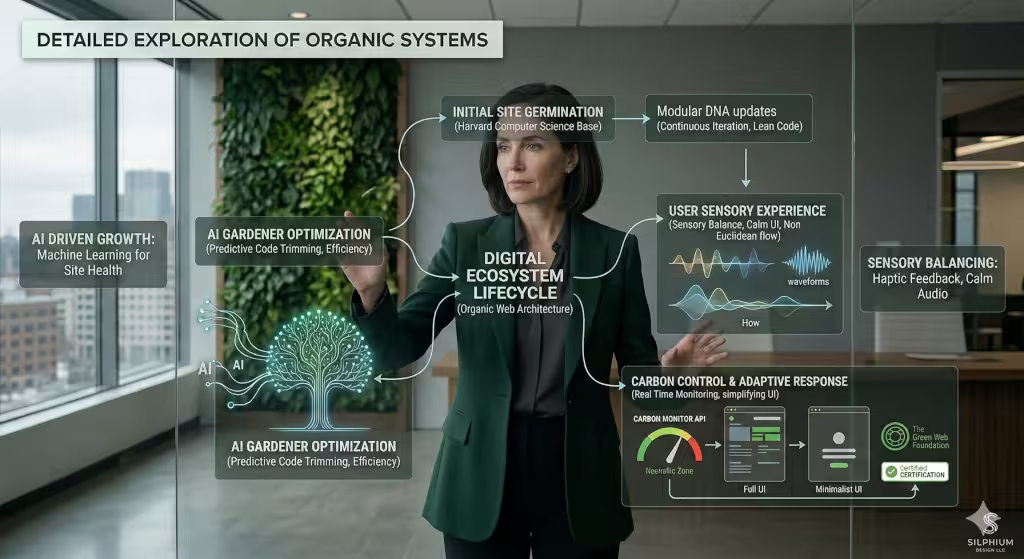
Organic web architecture is a deep topic that touches every part of a website. Let’s look closer at the specific ways it changes how we work. When we talk about organic web architecture, we are talking about a total system. This system includes the code, the visuals, and the server.
The Lifecycle of an Organic Website
In traditional design, a site is born, it lives for three years, and then it is deleted. This is very wasteful. Organic web architecture changes this. We build sites using “Modular DNA.” This means the site is made of small pieces that can be updated one by one. If a new technology comes out, we don’t need a new site. We just update the module. This is the heart of organic web architecture.
This approach saves a lot of energy. Think about the carbon cost of a full redesign. You have to pay for hours of server time, thousands of emails, and large file transfers. Organic web architecture avoids this by staying “evergreen.” A site built this way grows slowly and naturally over time. It is a more mature way to think about the internet.
Sensory Balance in Digital Spaces
Our senses are often overwhelmed by the internet. There are too many pop-ups and bright colors. Organic web architecture seeks to fix this. We use “Sensory Balance” to make sure the site is calm. This involves using soft sounds or haptic feedback that feels natural.
For example, when you click a button in a site using organic web architecture, it might feel like a soft click of a stone. Or the page might transition with the speed of a gentle breeze. These small details matter. They tell your body that this digital space is safe. This is a key part of organic web architecture that helps with user mental health.
Carbon Control and Real-Time Monitoring
In 2026, we can actually see how much carbon a website is making. Organic web architecture uses “Carbon Control APIs.” These are tools that tell us if the site is using too much energy. If the server is working too hard, the site can automatically simplify itself. This is like a plant closing its leaves in the heat of the day.
This kind of “Adaptive Response” is what makes organic web architecture so powerful. The site is smart enough to save energy when it needs to. It can switch to a lower-power mode for users with low battery or slow connections. This ensures that the site is always accessible and always eco-friendly.
The Role of Artificial Intelligence in Organic Growth
AI is a big part of our world now. In organic web architecture, we use AI to help the site “learn.” The AI looks at how people use the site and makes small changes to make it better. It might move a button that people can’t find, or it might suggest a better way to organize the blog.
This isn’t just about efficiency. It’s about making the site more human. The AI in organic web architecture acts like a gardener. It trims the parts that aren’t working and helps the good parts grow. This creates a site that is always getting better without the owner having to do all the work. It is a true partnership between humans, nature, and technology.
Community and the Circular Digital Economy
Organic web architecture also looks at how sites interact with each other. In a forest, trees talk to each other through their roots. In the circular digital economy, websites share resources. This might mean sharing a common pool of images or using shared libraries of code.
By sharing, we reduce the total amount of data stored on the web. This is a core goal of organic web architecture. We want to move away from every site being its own “island.” We want a web that works together to be more efficient. This community-focused approach is what will make the internet sustainable for the next generation.
Final Thoughts on Technical Implementation
Building with organic web architecture requires a high level of skill. You need to understand both biology and advanced computer science. At Silphium Design LLC, we use our PhD-level knowledge to make sure every site is a masterpiece. We look at the “Fractal Efficiency” of our layouts and the “Thermal Impact” of our servers.
Every choice, from the font color to the database structure, is made with organic web architecture in mind. This is how we create websites that are truly “green.” They aren’t just painted green; they are green at their core. If you want a website that stands out and stands the test of time, you need a system based on nature.
The Global Impact of Choosing Organic
If every website used organic web architecture, we could reduce global carbon emissions by a huge amount. It is one of the easiest ways for businesses to help the planet. You don’t have to stop using the internet. You just have to use a better version of it.
Organic web architecture is more than just a design style. It is a choice to be better. It is a choice to build a digital world that we can be proud of. As an expert in this field, I see the change happening every day. More and more people are asking for organic web architecture because they know it is the right thing to do.
Concepts Related to Organic Web Architecture
To truly master organic web architecture, we must use the right tools and standards. In 2026, we follow the WELL Building Institute’s digital standards. These are rules that help us make sure our digital spaces are healthy for humans. We also look at LEED for Web, which tracks how “green” a site really is.
Regenerative web design and circular digital economy describe a world where nothing is wasted. Organic web architecture is the core of this movement. We also use bio-inspired algorithms to help with things like search and data organization. These algorithms work like ants or bees to find the best path for information.
Other important concepts in organic web architecture include natural color palettes and low-energy UI. These aren’t just style choices. They are technical decisions that save battery life on mobile devices. By using these entities and keywords, we ensure our sites are at the top of the industry.
The Future of the Living Web
The future of the internet is not made of cold metal and flashing lights. It is made of organic web architecture. As we look ahead, we see a web that is quieter, cleaner, and more helpful. By following the laws of nature, we can build digital spaces that last for a long time.
Organic web architecture is the only way to balance our need for technology with our love for the earth. It is a biological necessity. When we build with nature in mind, everyone wins. The site owner gets better results, the user feels better, and the planet stays healthier.
Silphium Design LLC is proud to lead the way in organic web architecture. We believe that a website should be more than a screen. It should be a breath of fresh air. Let us build a web that breathes with us.