Today, we are going to walk you through a very important strategy for 2026, which is looking at social media listening for biophilia trends. This is a fancy way of saying we are going to use technology to see how much people crave nature in their daily lives.
Here at Silphium Design we see how the internet changes every day. People are tired of staring at gray screens and concrete walls. They want green plants, sunlight, and natural shapes, much like the background in my zooms. When we use social media listening, we are not just looking for likes. We are looking for the essence of what people want. We want to find those “eco-wellness” conversations and turn them into real results for your business.
Table of Contents
The Digital-Nature Renaissance
In 2026, we are living through something a lot of people call the Digital-Nature Renaissance. For a long time, the internet felt like a place separate from the real world. But now, those two worlds are crashing together. Social media listening for biophilia trends is the process of using software to track every time someone mentions plants, nature-based home design, or the peace they feel in the woods.
Biophilia is a big word, but it has a simple meaning. It is the idea that humans have a biological need to connect with nature. Since most of us spend our time on phones or computers, we are starting to feel “digital fatigue.” This makes us look for nature online. By using social media listening, we can see exactly what kind of nature people are looking for. Are they looking for “forest bathing” videos? Are they looking for desks made of real wood?
When a brand uses social media listening to find these trends, they gain a huge advantage. You are not just guessing what people want. You are hearing them tell you. This leads to more people visiting your website and more people buying your products. It builds a bridge of trust because the customer feels like you truly understand their needs.
Why Biophilia is the Ultimate 2026 Social Signal
To understand why this matters, we have to look at our own history. In the 1980s, a scientist named E.O. Wilson came up with the Biophilia Hypothesis. He said that because our ancestors lived in the wild for millions of years, our brains are hard-wired to love the outdoors. Even though we live in modern houses now, our brains still calm down when we see a tree or hear water. This why houses near water such as the beach or a river as desirable, however, not in a storm situation.
When we perform social media listening, we see this theory in action. People are posting more photos of their “urban jungles” or indoor gardens. But it goes deeper than just plants. Social media listening shows us that people want organic textures and natural lighting in their digital spaces too. They want websites that feel soft and natural, not sharp and cold.
Using social media listening for biophilia trends helps us find keywords that are related to this movement. We see terms like eco-conscious branding and nature-inspired UX appearing more often. UX stands for user experience. It means that even the way a website works can feel like a walk in the park. This is a very strong signal for brands to follow if they want to stay relevant in 2026.
Strategic Social Media Listening: Tools and Techniques
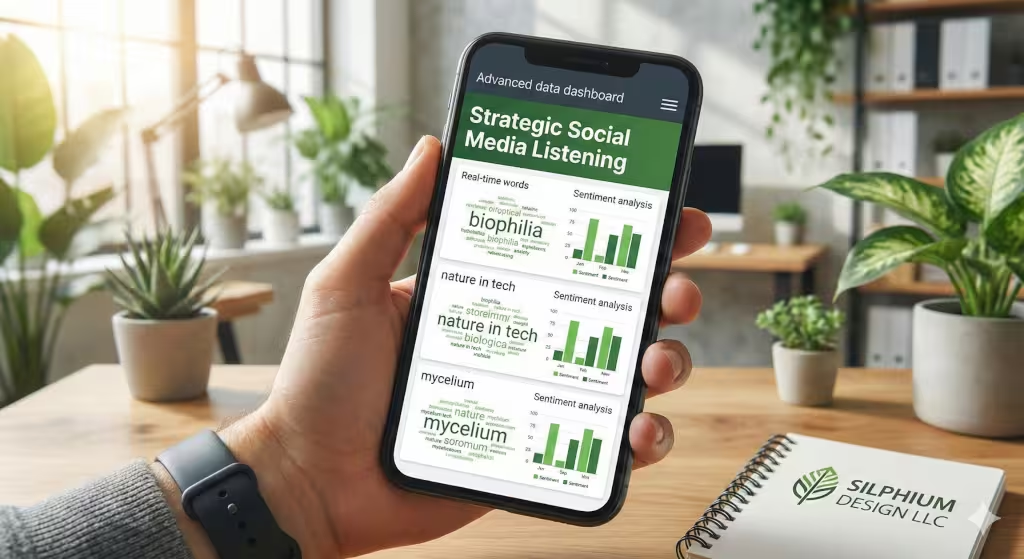
How do we actually do this? We use specific tools to monitor the internet. Social media listening is like having a giant ear that can hear millions of conversations at once. We look at different platforms for different clues.
On Pinterest, we look for visual trends. People pin pictures of things they want to build or buy. If we see a lot of people pinning “moss walls,” we know that is a biophilia trend. On TikTok, we watch for educational videos. Maybe people are teaching each other how to grow herbs in small apartments. On Instagram, we look at the “aesthetic.” This is how things look and feel.
To do this well, we use high-tech tools. Some of these are called Hootsuite or Brand24. These programs use artificial intelligence to read through posts and tell us if the mood is happy or sad. This is part of social media listening. We also look for “entities.” These are important people or groups, like famous architects or wellness startups, who are leading the way in biophilic design. By following what they say, we can predict the next big trend before it even happens.
How to Do Social Media Listening Using AI Such as Google Gemini
I would be happy to explain that! As someone who bridges the gap between MIT computer science and Harvard sociology, I find that Google Gemini is the perfect “bridge” tool. It doesn’t just look at numbers; it looks at the human “why” behind those numbers.
In 2026, we don’t just use AI to write captions. We use it as a powerful engine for social media listening. Here is how you can use Google Gemini to stay ahead of biophilia trends.
To use Google Gemini for social media listening, you aren’t just typing in a search. You are asking the AI to act as a data scientist. Here is the step-by-step process we use at Silphium Design LLC.
1. Analyzing Large Batches of Data
One of the best ways to use Gemini is to upload a CSV file or a spreadsheet of social media comments. You can export these from tools like Hootsuite or Brandwatch. Once you upload the file, you can ask Gemini to “Identify the top five emotional triggers for people talking about indoor plants.”
Gemini can read through thousands of comments in seconds. In 2026, its ability to understand context is much better than old software. It can tell the difference between someone saying a plant is “sick” (meaning cool) and a plant being “sick” (meaning it is dying). This is a huge part of social media listening.
2. Real-Time Trend Prediction
You can use Gemini’s “Deep Research” mode to scan the live web. I often use a prompt like this: “Scan recent Reddit threads and TikTok captions from the last 48 hours. What is the newest biophilic material people are starting to talk about?”
Gemini might find that people are suddenly obsessed with “bacterial cellulose” or “mycelium leather.” Because it has access to the current internet, it performs social media listening in real time. This lets you catch a trend while it is still a “seed” before it grows into a forest.
3. Sentiment and Sarcasm Detection
Old social media listening tools used to struggle with sarcasm. If someone said, “Great, another gray office building, just what I wanted,” a robot might think that was a positive comment because of the word “great.”
Gemini understands the human side. It knows that the person is actually unhappy. You can ask Gemini to “Analyze these 100 comments and give me a ‘frustration score’ regarding modern office design.” This helps you see where people are truly hurting, so your brand can offer a biophilic cure.
4. Personas and Role-Play
This is my favorite trick. You can ask Gemini to “Act as a Gen Z office worker who feels burnt out. Read these biophilia trends and tell me which ones feel most authentic to you.”
By doing this, you aren’t just doing social media listening for data; you are doing it for empathy. It helps you understand the heart of your customer. You can then use those insights to write better ads and create better products.
5. Competitor Gap Analysis
You can paste in the captions and comments from a competitor’s page. Ask Gemini: “What are people asking for in these comments that this brand is not providing?”
This is a clever way to use social media listening to find “gaps” in the market. If people are commenting on a rival’s post saying, “I wish this plant stand was made of sustainable bamboo,” and the rival doesn’t respond, you have just found your next product idea.
Why This Matters for Biophilia
Biophilia is about the connection between humans and life. Google Gemini is a tool that helps us understand that connection on a massive scale. By using social media listening through an AI lens, we can make the internet a more natural and human place.
I always tell my clients that social media listening is not about “spying” on people. It is about “hearing” them. When you use a tool like Gemini, you are becoming a better listener. You are finding out what makes people feel calm, happy, and connected to the earth.
How Does Biophilic Design Affect Consumer Behavior?
This is a question many people ask on Google. Through social media listening, we have found that nature-inspired design makes people feel safe. When a person visits a website that uses earthy colors and photos of nature, their heart rate actually slows down a little bit. They stay on the page longer. This is called “dwell time.”
The longer someone stays on your page, the more likely they are to trust you. Trust is the key to getting someone to buy something. Social media listening tells us that consumers are tired of “loud” advertising. They want “quiet” and “natural” experiences. If your brand provides that, you will stand out from the crowd.
What are the Top Biophilic Design Trends for 2026?
If you look at the data from social media listening, you will see a few big winners this year. One is circadian lighting. This is lighting that changes color during the day to match the sun. Another is the use of curved lines. In nature, there are very few perfectly straight lines. Most things are rounded.
We also see a trend called “living content.” This means using videos or animations that move like nature. Think of a background that gently sways like grass in the wind. Social media listening shows that these small details make a big difference in how people perceive a brand. People are also talking a lot about “fractal patterns.” These are patterns that repeat in nature, like the flakes of a snowflake or the veins in a leaf. Our brains find these patterns very relaxing to look at.
Is Biophilia Just a Trend or a Movement?
Many people wonder if this interest in nature will go away. Based on my research and social media listening, I can tell you it is a permanent shift. It is a movement, not just a passing fad. As our world becomes more digital and more crowded, the value of nature goes up.
People are not just buying a plant because it is trendy. They are buying it because it makes them feel better. Social media listening shows that people are integrating these ideas into their offices, their homes, and even their clothing. This means that if you focus on biophilia now, your business will be prepared for the long term. You are building a brand that cares about human health, and that never goes out of style.
Sentiment Analysis: From Green to Grounded
Sentiment analysis is a more specialized part of social media listening. It means we look at the emotion behind the words to see if it is real. Not all “green” talk is good. Sometimes, a company says they are eco-friendly, but they are lying. People call this “greenwashing.”
Through social media listening, we can see if people are angry or happy about a brand’s claims. In 2026, people are very smart. They can tell when a brand is being fake. They don’t just want “green” products; they want to feel “grounded.” They want authenticity.
We use social media listening to find “topic clusters.” This is when many people talk about the same specific thing. For example, we might see a cluster of people talking about #BiophilicOffice. They are complaining about their gray cubicles and wishing for more windows. This is an opportunity for a company that sells office furniture or lighting to step in and offer a solution.
Content Strategy: Converting Listening into Leads
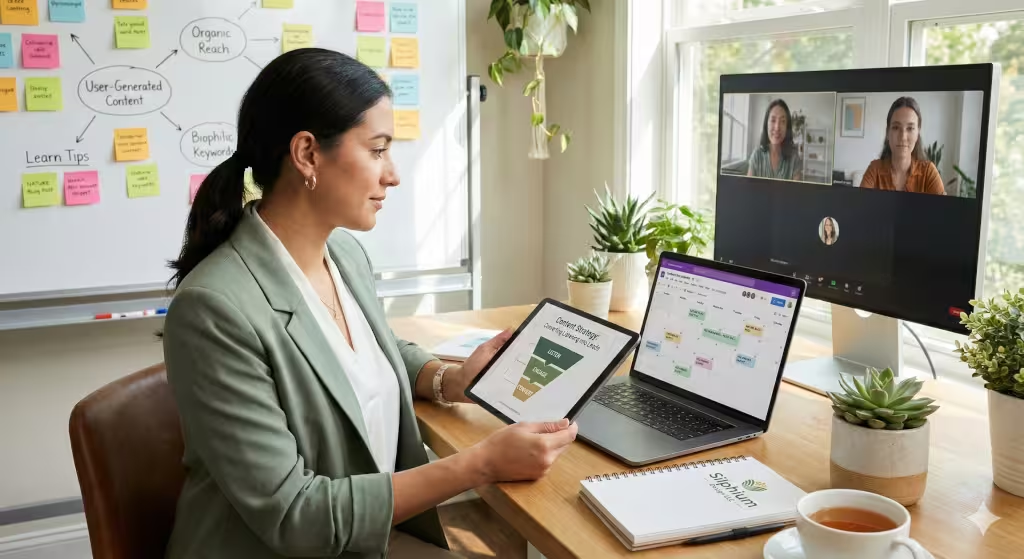
Once we have done our social media listening, we have to use that information. We create a content strategy. One of the best ways to do this is through User-Generated Content, or UGC. We ask our followers to show us their “nature-nooks.” This gets people talking and sharing.
We also want to be seen as an authority. We create articles and posts that explain the science of biophilia. When we do this, we make sure the content is easy for search engines to find. This is called Search Engine Optimization. We also want to be ready for “Answer Engines.” These are AI programs that answer questions directly. By writing clear and helpful information, we make sure the AI chooses our brand to give the answer.
Social media listening helps us know which questions people are asking. If we see a lot of people asking “How do I make my room feel like a forest?”, we write an article with that exact title. This drives traffic to our site and helps us get more leads.
The Role of the Influencer in the Biophilic Niche
In 2026, influencers have changed. Big celebrities with millions of followers are not as important as they used to be. Instead, we look for “micro-influencers.” These are people with smaller but very dedicated groups of followers.
Social media listening helps us find these people. We might find a woman who is an expert in rare mosses or a man who knows everything about building wooden furniture. These people have high trust with their audience. When they talk about a brand, their followers listen.
As a specialist in biophilic web design, I always say that authenticity beats automation. You can’t just use a robot to post for you. You have to listen to how people actually talk. Use their words. If they call their plants “leafy friends,” you should use that term too. This is the heart of social media listening. It is about being a part of the community, not just selling to it.
Technical Implementation: SEO and GEO Best Practices
To make sure people find our work, we have to follow some technical rules. We use something called Schema markup. This is a special code that tells Google what our article is about. It helps us get into those “People Also Ask” boxes you see on search pages.
We also make sure our main keywords are in the right places. For example, we use social media listening for biophilia trends in our headings and in the first part of our article. We also use alt-text for our images. This is a description of the image that helps people who are blind and also helps search engines understand the picture.
GEO, or Generative Engine Optimization, is a newer concept. It is about making sure AI models like the one I am using right now can understand and recommend your content. We do this by being very clear, using facts, and providing high value. When you use social media listening to guide your writing, you are naturally creating content that AI will want to share.
Case Study: A Biophilia Company’s Nature-First Approach
At this imaginary company, called Biophilia Company (BC), they don’t just talk about these things; they do them. BC once worked with a client who sold office supplies. Their brand felt very cold and corporate. BC used social media listening to see what their customers were actually interested in.
BC found out that many of them were working from home and feeling lonely and stressed. They were posting photos of their home offices with lots of plants. BC suggested the client change their marketing. Instead of showing gray staplers on white desks, we showed them on wood desks with sunlight and plants nearby.
BC also changed the colors they used on social media to earthy tones like sage green and warm brown. Because of the insights we gained from social media listening, the client saw a huge increase in how long people stayed on their website. People felt more comfortable and were more likely to buy. This is the power of listening before you speak.
The Future is Living
As we look toward the future, it is clear that our connection to nature will only get stronger. Social media listening is the best way to keep your finger on the pulse of this movement. It is like a stethoscope for your brand. It lets you hear the heartbeat of your customers.
When you use social media listening for biophilia trends, you are doing more than just marketing. You are helping people find the peace and connection they are looking for in a digital world. You are offering them a sanctuary. This builds a brand that people truly love and stay with for years.
I want to encourage you to look at your own social media listening strategy. Are you looking for keywords that relate to wellness and nature? Are you listening to the quiet conversations as much as the loud ones? The brands that win in 2026 will be the ones that listen the best.
Summary of Key Steps
To make this strategy work for you, remember these points:
- Use social media listening to find what nature trends are popular right now.
- Look for the “why” behind the trend, are people stressed, or are they just looking for a new look?
- Create content that uses the same words your customers use.
- Optimize your website so that both humans and AI can find your helpful information.
- Be authentic and focus on real human needs.
By following these steps, you will use social media listening to grow your business in a way that feels natural and sustainable. You will not just be another voice in the noise. You will be a breath of fresh air.
Social media listening is not a one-time task. It is a habit. You should be checking your tools every day to see how the conversation is changing. Maybe today people are talking about indoor water fountains, and tomorrow they will be talking about living roofs. If you are using social media listening, you will always be the first to know.
I hope this guide helps you understand how to navigate the exciting world of biophilia in 2026. It is a beautiful time to be online, as long as we remember to bring the outside in. Using social media listening will give you the maps you need to find your way in this new landscape.
Below is a List of Biophilic Keywords to Get You Started
This is a great next step. To make your social media listening strategy work, you need the right words to track. I have organized these into three levels. This helps you see the big picture while also finding the small, specific conversations that lead to sales.
In my work at Silphium Design LLC, I find that using social media listening requires a mix of common words and technical terms. This ensures you catch the broad trends and the expert discussions. Here is your master list for 2026.
Level 1: The Canopy (Broad Awareness Keywords)
These are the big terms. They have a high search volume. Use these in your social media listening tools to see the general mood of the public. They are great for finding new audiences who are just starting to learn about nature-inspired living.
- Biophilic Design
- Sustainable Living
- Nature-Inspired Decor
- Eco-Conscious Home
- Digital Wellness
- Wellness Architecture
- Green Spaces
- Organic Living
- Environmental Psychology
- Healing Environments
Level 2: The Understory (Targeted Engagement Keywords)
These words are more specific. People using these terms usually know what they are looking for. Tracking these in your social media listening setup will help you find customers who are ready to make a change in their home or office.
- Circadian Lighting
- Living Green Walls
- Indoor-Outdoor Transition
- Biomorphic Patterns
- Natural Analogues
- Vertical Gardens
- Thermal Comfort
- Air Quality Plants
- Acoustic Moss Panels
- Fractal Geometry in Design
Level 3: The Forest Floor (Niche and Emerging Keywords)
These are the “cool” and “new” terms for 2026. By including these in your social media listening, you can stay ahead of your competitors. These terms are often used by influencers and early adopters.
- Mycelium Furniture
- Technobiophilia
- Bacterial Cellulose Surfaces
- Hydroponic Wall Art
- Soft Fascination Theory
- Biophilic Urbanism
- Earthbound Neutrals (Sage, Terracotta, Alabaster)
- Limewash Textures
- Regenerative Interiors
- Biomimetic Shapes
Keyword Taxonomy for 2026
I have created this table to help you see how these different layers of social media listening work together.
| Category | Goal of Tracking | Example Keyword |
| Visual | Finding aesthetic trends | #UrbanJungle |
| Technical | Finding expert research | Circadian Rhythm |
| Emotional | Finding how people feel | Grounded Spaces |
| Product | Finding what people buy | Cork Flooring |
| Sustainability | Finding eco-trends | Circular Economy |
Silphium Design’s Tips for Social Media Listening
To get the most out of your social media listening, you should not just look for the words. You should look for the context.
- Watch for “Eco-Anxiety”: Many people use biophilia as a way to feel better about the world. If you see people talking about stress, offer them nature-based solutions.
- Filter Out the Noise: In your social media listening software, make sure to exclude words that are not related. For example, if you track “Apple,” make sure you tell the computer you don’t want to hear about fruit or the tech company if you are looking for “Apple Wood” furniture.
- Track the “14 Patterns”: The 14 Patterns of Biophilic Design are the gold standard. Use terms like “Prospect and Refuge” or “Non-Visual Connection” to find very high-level design talks.
- Listen to Local Trends: Sometimes a trend starts in a specific city. You can use social media listening to see if “Desert Biophilia” is trending in Arizona or “Forest Bathing” is big in Oregon.
Using these keywords will make your social media listening much more powerful. You will be able to see exactly where the world is going before it even gets there. This gives you the chance to be the leader in the conversation.