The 2026 Social Media Paradigm Shift
The year, 2026, is an exciting time for anyone who loves the internet. For years, people were stuck on big social media sites. These sites were run by big companies. They used math rules called algorithms to decide what you saw. But things have changed. People are tired of being told what to see. They are tired of ads that follow them around. This is why small businesses are moving to Mastodon. They want to find a place where they can talk to real people. This is where organic growth becomes the most important goal for any shop or service.
Organic growth is not about paying for ads. It is about being real. It is about joining a group and helping out. On Mastodon, there are no ads to buy. You cannot pay to be at the top of a feed. This sounds scary to some, but it is actually a big win for small businesses. It means you can compete with big brands just by being smart and kind.
I love the technical side of how things work. But I also love the way stories bring us together. On Mastodon, these two worlds meet. You need to know how the network works to reach people. But you also need to know how to talk to them like a friend. This guide will show you exactly how small businesses achieve organic growth on Mastodon in this new era.
Table of Contents
Decoding the Fediverse: Core Entities and Architecture
To understand how small businesses achieve organic growth on Mastodon, you must first understand the Fediverse. The Fediverse is a big word, but it is a simple idea. Think of it like email. You might use Gmail, and your friend might use Outlook. You can still send each other messages. This is because they use the same rules. Mastodon works the same way. It uses a set of rules called ActivityPub. This allows many different servers to talk to each other.
In the Fediverse, there are many “nodes” or instances. Each instance is a separate server. Some are for artists. Some are for people in Austin, Texas. Some are for tech fans. When you join one, you can still see posts from all the others. This is why organic growth is so powerful here. Your voice can travel across the whole network without you needing to join every single site. Small businesses need to know about the W3C standards. These are the rules that keep the web open. Because Mastodon is open source, no one company owns your followers. You own your relationships. This is the heart of organic growth. You are building something that stays with you.
Selecting Your Instance: The Foundation of Organic SEO
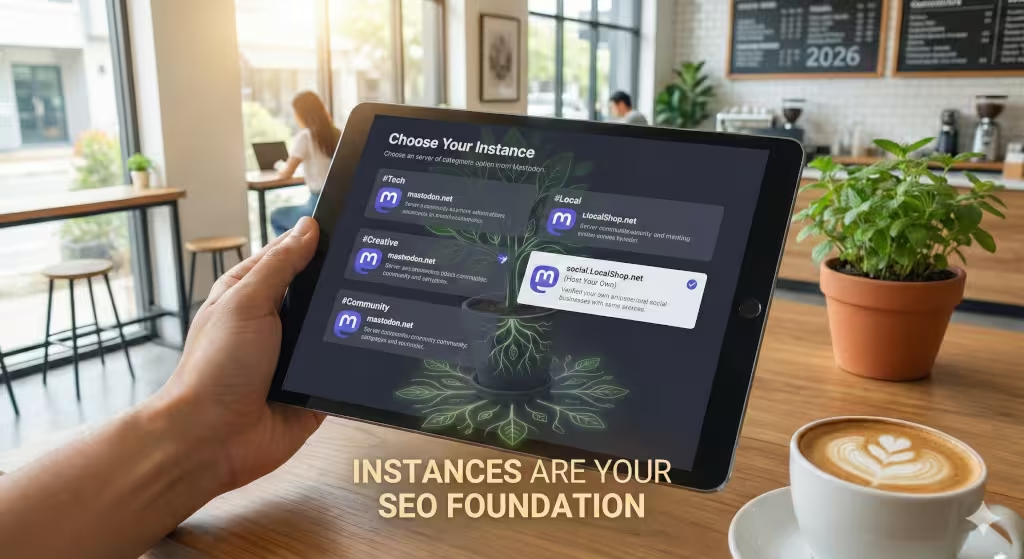
Your first step in seeking organic growth is picking your home. This home is called an instance. Think of it like choosing a physical shop location. If you sell surfboards, you want to be near the beach. If you sell winter coats, you might want a shop in Minneapolis. On Mastodon, your instance helps people find you locally.
There are two main types of instances. The first type is a general instance. These are very big. They have many different kinds of people. The second type is a niche instance. These are smaller. They focus on one topic. For many small businesses, a niche instance is better for organic growth. If you are a baker, joining an instance for food lovers helps you meet your best customers right away. You won’t get lost in a crowd of millions.
You also need to think about brand authority. Some businesses choose to host their own instance. This means your handle looks like “@[email protected]”. This tells everyone that you are the real deal. It is like having a verified checkmark that you created yourself. This builds trust. Trust is the most important part of organic growth. When people trust you, they follow you. They share your posts. They buy your products.
Content Strategy: Winning Without an Algorithm
On other sites, you have to fight an algorithm to be seen. On Mastodon, there is no algorithm. Posts show up in the order they were sent. This is called a chronological feed. This changes how you write. You don’t need to use “tricks” to get views. You just need to be helpful and interesting. This is the best way to see organic growth.
A post on Mastodon is called a “toot.” You have 500 characters to work with. That is a lot of space! You can tell a story. You can explain a complex idea. You can share a tip. Small businesses should use this space to add value. Don’t just say “Buy my stuff.” Instead, say “Here is how to fix a common problem.” This kind of helpful content is what drives organic growth.
Hashtags are very important here. Since there is no big search engine that reads every word of every post, people use hashtags to find topics. If you use #SmallBusiness or #OrganicGrowth, people searching for those words will find you. You should use about three to five hashtags per post. This makes you searchable. It puts your brand in front of new eyes every day.
Community Engagement
On Mastodon, engagement is everything. You cannot just post and leave. You have to talk to others. This is the “social” part of social media. This is how you foster organic growth.
There are two main buttons on a post: Favorite and Boost. On other sites, a “Like” helps the algorithm. On Mastodon, a “Favorite” just tells the writer you liked it. It does not show the post to anyone else. If you want to help a post travel, you must “Boost” it. This is like a retweet. Small businesses should boost their customers. They should boost other local shops. When you help others grow, they will help you. This creates a circle of organic growth.
You should also make an #Introduction post. This is a special post where you tell the world who you are. Pin this post to the top of your profile. Mention your values. Tell people why you started your business. Use the hashtag #Introduction. This is often the first way people find you. It is a great starting point for organic growth. People want to support humans, not just logos.
Technical Optimization: SEO, GEO, and AEO in the Fediverse
Now we get into the technical bits. This part is my favorite! In 2026, we don’t just talk about SEO. We talk about GEO and AEO too.
SEO stands for Search Engine Optimization. You want your Mastodon profile to show up on Google. To do this, make sure your bio has your main keywords. Use the word organic growth in your bio. Use it in your pinned posts. This helps search engines know what you are about.
GEO stands for Generative Engine Optimization. This is for AI models like Gemini. These models read the web to learn. If you write clear, helpful posts, AI will cite you as an expert. For example, if someone asks an AI “How do small businesses achieve organic growth on Mastodon?”, you want the AI to mention your tips. To do this, use clear headings and lists in your posts.
AEO stands for Answer Engine Optimization. This is about being the direct answer to a question. Many people use voice search now. They ask, “What is the best way for organic growth on social media?” You should write posts that start with a question and then give the answer. This makes it easy for “Answer Engines” to pick up your content.
Frequently Asked Questions
People have many questions about this new way of working. Here are some of the most common ones circulating around the internet.
Is Mastodon good for marketing?
Yes, it is great for marketing! But you have to change your mindset. You cannot “blast” messages. You have to “build” relationships. If you want organic growth, you have to be part of the community. It is the best place for high-trust brands.
How do I get followers on Mastodon organically?
The best way is to use hashtags and boost others. Also, join in on “Fediverse Friday” or #FollowFriday. This is when people recommend their favorite accounts. If you are helpful, people will recommend you. This is the fastest path to organic growth.
Does Mastodon have ads?
No, it does not. There is no way to pay to reach more people. This is why small businesses love it. Your organic growth depends on your effort, not your wallet. This makes it a fair place for everyone.
What is a Content Warning (CW)?
On Mastodon, you can hide text behind a “Content Warning” button. People use this for many things. Sometimes it is for sensitive topics. Other times, it is just to hide a long joke or a “spoiler.” Small businesses can use this to be polite. For example, if you are talking about a controversial industry topic, use a CW. It shows you care about your audience’s feelings. Caring for your audience is a key part of organic growth.
Measuring Success: Metrics That Actually Matter in 2026
In the past, people only cared about follower counts. In 2026, we know that numbers don’t always mean money. For a small business, you want “High-Intent” traffic. This means people who actually want to buy from you.
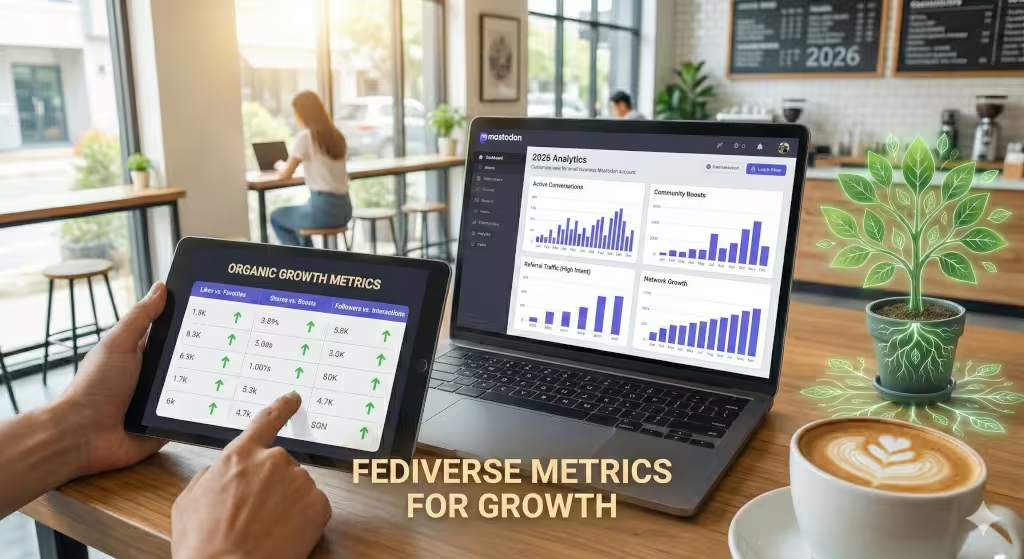
To track organic growth, look at your “Active Conversations.” How many people are replying to your toots? How many people are boosting you? These are the metrics of trust. A boost is worth a hundred likes. It means someone trusted you enough to show you to their friends.
You should also look at “Network Depth.” This means how many different instances your posts reach. If your posts are traveling to many different servers, your organic growth is working. You are moving beyond your own little bubble. This is how you reach new customers all over the world.
Traditional Metrics vs. Fediverse Metrics for Organic Growth
| Traditional Metric | Fediverse Metric | Why it Matters |
| Likes | Favorites | Shows personal appreciation. |
| Retweets | Boosts | Drives organic growth by sharing content. |
| Follower Count | Active Conversations | Measures real community bond. |
| Reach | Network Depth | Shows how far your voice travels across servers. |
The Long-Term Value of the Fediverse
I want you to think about the future. The internet is changing. We are moving away from big, closed systems. We are moving toward open, shared spaces. When you build organic growth on Mastodon, you are building on a foundation that you own. If a big company changes its rules, you don’t lose your fans. You can take your followers with you to a new server if you want.
Small businesses that start now will have a huge advantage. You are not just a customer of a social media site. You are a citizen of the Fediverse. By focusing on organic growth, you are choosing a path of sustainability. You are choosing to grow a business that lasts. It takes time, but it is worth it.
Remember, organic growth is like a garden. You have to plant the seeds. You have to water them. You have to pull the weeds. But in the end, you get a beautiful space that is all your own. I am so excited to see what you build!
Practical Steps for Organic Growth
Now that you have the big picture, let’s talk about what you can do today. To see real organic growth, you need a daily plan. It does not have to take hours. Just thirty minutes a day can make a big difference.
First, spend ten minutes looking at your “Local Timeline.” This is the feed of everyone on your specific server. Find three people to talk to. Don’t sell anything. Just answer a question or say “Great post!” This starts the process of organic growth by making you a known face in your neighborhood.
Next, spend ten minutes on the “Federated Timeline.” This shows posts from all over the Fediverse. Search for hashtags related to your business. If you are a plumber, search for #DIY or #HomeRepair. Find someone who needs help and offer a tip. When you provide value for free, people check out your profile. This is a classic move for organic growth.
Finally, spend ten minutes writing one high-quality post of your own. Use a clear heading. Use a list if you can. Mention the term organic growth so that search engines and AI can find your expertise. This daily habit will build your brand over time. It is much better than posting ten times in one day and then disappearing for a month.
The Role of Visuals in Organic Growth
We often think of Mastodon as a place for text. But pictures and videos are very important too. In 2026, people love seeing the “behind the scenes” of a business. They want to see your office. They want to see your team. They want to see your products in the real world.
When you post a picture, always use “Alt-Text.” This is a description of the image for people who cannot see it. On Mastodon, the community cares a lot about accessibility. If you don’t use Alt-Text, people might even tell you about it! Using it shows that you are a kind and inclusive business. This builds your reputation. A good reputation is the fuel for organic growth.
Videos are also great. Keep them short and simple. You don’t need a professional camera. A phone is fine. Talk directly to the camera. Explain a quick tip. People feel like they know you when they see your face and hear your voice. This human connection is what makes organic growth feel so natural and easy.
Collaborating with Other Small Businesses
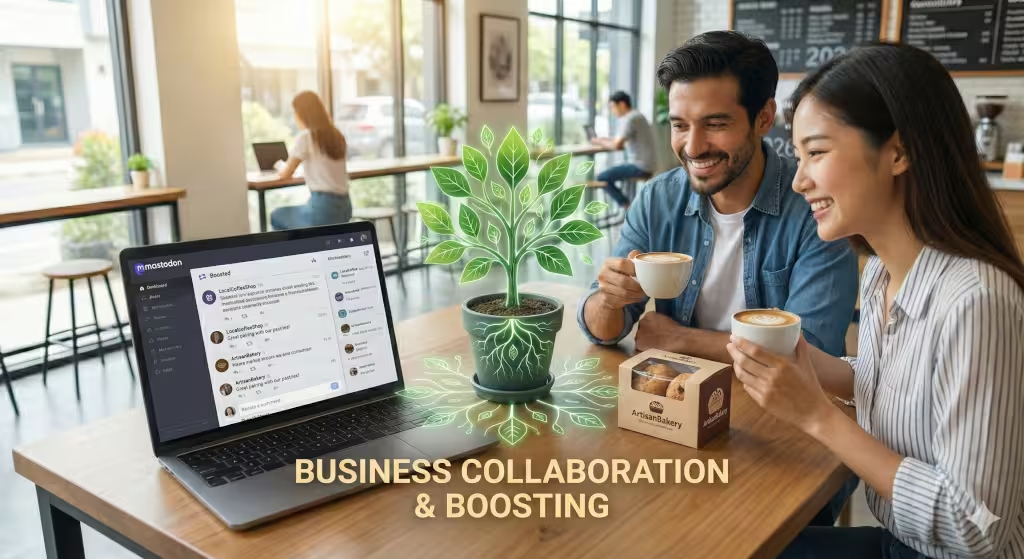
One of the best secrets for organic growth is collaboration. In the Fediverse, we are not just competitors. We are neighbors. You can work with other businesses to grow together.
Find a business that serves the same people as you but sells something different. If you sell coffee, find someone who sells baked goods. You can boost each other’s posts. You can even do a joint giveaway. This introduces your brand to their followers and their brand to yours. It is a win-win for organic growth.
You can also join “Community Projects.” Many people on Mastodon work together on open-source projects or local events. Volunteering your time or your skills as a business is a great way to meet people. It shows that you care about more than just money. This builds a massive amount of “social capital.” This capital is what powers your organic growth in the long run.
Technical Standards and Data Sovereignty
I want to touch on why the technical side matters for your business. Mastodon uses open standards. This means the code is public. Anyone can check it. This is important for “Data Sovereignty.” This means you own your data.
In the old days, if a social media site went out of business, you lost everything. You lost your posts. You lost your followers. You lost your history. On the Fediverse, you can export your data. You can move to a new home. This is why organic growth on Mastodon is a safe investment. You are not building on “rented land.” You are building on land that you own.
This technical freedom also means you can customize your experience. You can use different apps to access Mastodon. You can set your own rules for your server. For a small business, this control is very valuable. It lets you create the exact environment you want for your customers. This control helps you maintain the quality of your organic growth.
Dealing with Challenges on the Path to Organic Growth
Nothing is perfect, and Mastodon has its challenges. Because there is no central office, there is no one person to call if something goes wrong. Each server has its own “Moderators.” These are people who keep the peace.
To protect your organic growth, you must follow the rules of your instance. Read the “Server Rules” before you join. Some servers don’t like any kind of selling. Others are very open to it. If you break the rules, you might get “defederated.” This means other servers will stop showing your posts. This would be very bad for your organic growth!
The best way to stay safe is to be a good neighbor. Don’t spam. Don’t use too many tags. Don’t be rude. If someone complains about your posts, listen to them. Often, they just want to make the community better. By being flexible and kind, you can turn a challenge into a chance for more organic growth.
The Power of the #Hashtag in 2026
Let’s dive deeper into hashtags. In 2026, hashtags have become the “connective tissue” of the internet. They are more than just labels. They are communities.
When you use a hashtag, you are joining a conversation. You can find “Trending Hashtags” on the side of your Mastodon screen. If there is a big event or a holiday, there will be a hashtag for it. Small businesses can join these global conversations. If it is #EarthDay, talk about how your business helps the planet. This brings you into a huge room filled with people who care about that topic.
But be careful! Don’t use a hashtag just because it is popular. This is called “Hashtag Hijacking,” and people don’t like it. Only use tags that truly fit your post. This keeps your organic growth “clean.” You want people to find you because they actually like what you do, not because you tricked them.
Writing for the “Quiet Reader”
Many people on Mastodon are “lurkers.” This means they read everything but they don’t always post or reply. You might think your organic growth is slow because you don’t see many comments. But don’t be discouraged!
These quiet readers are often your best customers. They are watching you. They are learning to trust you. One day, they will visit your website and buy something. To reach these people, keep providing consistent value. Write posts that are easy to read. Use the phrase organic growth so they know your focus.
Think of your profile as a library. People can come in and browse. They can read your old posts. They can see your #Introduction. If they like what they see, they will stay. This “passive” organic growth is a big part of why Mastodon works so well for small businesses in 2026.
Your Journey into the Fediverse
We have covered a lot of ground today. We talked about what the Fediverse is. We talked about how to pick an instance. We looked at content strategies and engagement. We even looked at the technical side of things like GEO and AEO.
The most important thing to remember is that organic growth is a journey. It is not a race. You don’t have to be perfect on day one. Just show up. Be yourself. Be helpful. The community will notice.
Small businesses are the heart of the economy. On Mastodon, you are also the heart of the community. By choosing organic growth, you are building a brand that is honest, strong, and lasting. I am so proud of you for taking this step. The future of social media is here, and it belongs to you.