
Welcome to a new way of thinking about how companies show up in the world. For a long time, we thought of a brand like a giant stone monument. It was tall, heavy, and it never moved. It stood in one place, and everyone had to look up at it. We call this a centralized identity. It is a model based on control and staying the same. But the world has changed. Today, the internet and social media have turned that stone monument into a living, breathing garden. This is where we find rhizomatic branding.
Instead of one single point of control, rhizomatic branding spreads out like the roots of a ginger plant or a patch of grass. It does not have a middle. It does not have a top or a bottom. It just keeps growing and connecting in every direction.
In this article, we are going to look at the death of the old monolith. We will see why the brand as a dictator is losing to the brand as an ecosystem. If you want to understand how the biggest names in the world will grow over the next ten years, you have to understand the power of rhizomatic branding. This shift is not just about a new logo or a clever ad. It is about a whole new architecture of authority. We are moving from a world where one person speaks to many, to a world where everyone speaks to everyone.
Table of Contents
The Death of the Monolith: From Dictator to Ecosystem

For decades, the goal of any big company was to have a centralized identity that was perfectly consistent. You wanted the same logo, the same colors, and the same message in every corner of the globe. This was the era of “Brand as Dictator.” The company told you who they were, and you either bought it or you didn’t. There was no room for the customer to talk back. This model worked well when there were only a few television channels and a handful of magazines.
But the digital world changed the rules. Now, customers want to be part of the story. They don’t want to just buy a product; they want to co-create an experience. This is why we are seeing the rise of rhizomatic branding. In a rhizomatic system, the brand is not a single thing. It is a network of connections. Think of a rhizome in nature. A rhizome is a stem that grows horizontally under the ground. It sends out roots and shoots from its nodes. If you cut one piece off, the rest of the plant keeps growing.
Rhizomatic branding works the same way. It is a paradigm shift. It moves away from the idea that a brand must be one rigid thing. Instead, it allows the brand to be many things at once. It can look one way on TikTok and another way in a high end retail store. It can be a meme in one community and a serious tool in another. By embracing rhizomatic branding, companies can survive in a world that moves too fast for a traditional centralized identity to keep up.
The Roots of Centralized Identity: The Tree Model
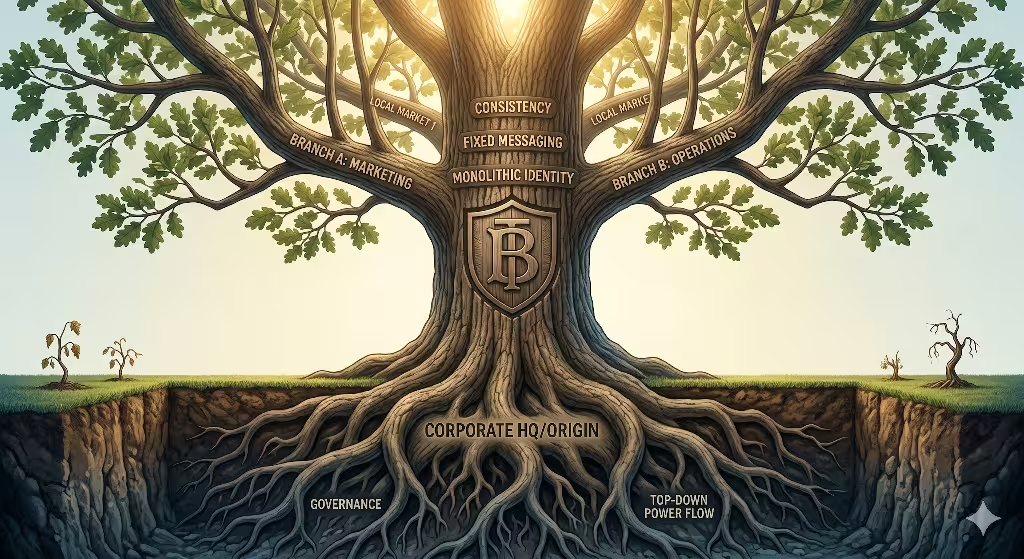
To understand the new way, we have to look closely at the old way. We call the traditional model the “Arborescent” model. That is a fancy word that just means “tree-like.” In this model, everything starts at the bottom with a single root. This root is the corporate headquarters. From there, a thick trunk grows up. This trunk represents the main brand identity. All the branches come off that trunk.
In this system, power flows from the top down. The people at the very top decide exactly what the brand stands for. They create a brand book that is hundreds of pages long. It tells you exactly how much space should be around the logo and what shade of blue you are allowed to use. This focus on centralized identity is all about being one specific thing. It is about consistency and fixed messaging.
Think about legacy giants like Coca-Cola or FedEx. These are perfect examples of a monolithic branding strategy. When you see a Coke bottle anywhere in the world, it looks the same. This creates a lot of trust because you know exactly what you are getting. But this model is also very brittle. If the “trunk” of the tree gets sick, the whole thing can fall over. Because centralized identity relies on one single point of truth, it struggles to adapt when different groups of people want different things. It is a model of subordination, where every branch must answer to the trunk.
Understanding Rhizomatic Branding: The Network Model
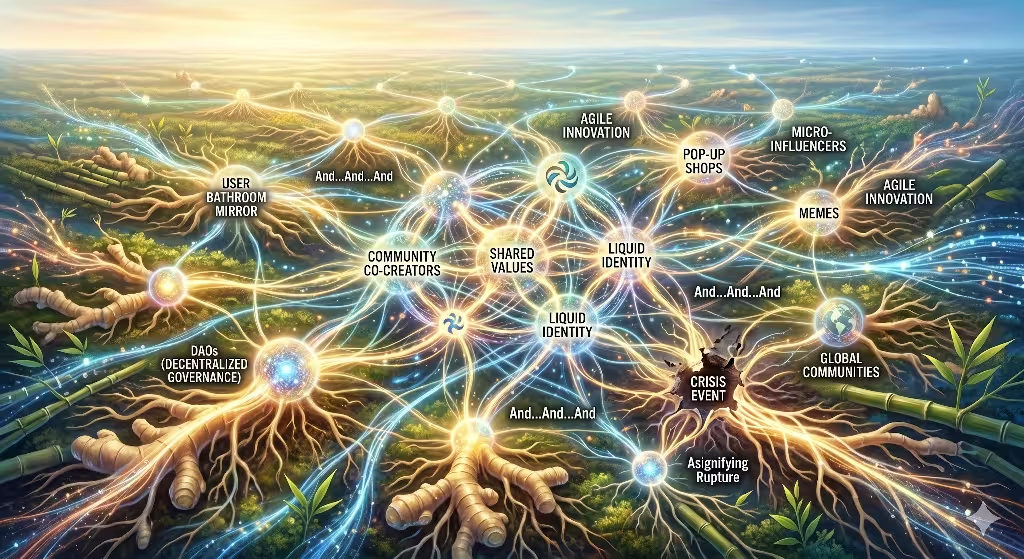
Now, let’s look at the alternative. Rhizomatic branding is based on the network model. The term comes from the work of two philosophers named Gilles Deleuze and Félix Guattari. They wrote about the rhizome as a way to describe systems that don’t have a center. Unlike a tree, which has a beginning and an end, a rhizome is always in the middle. It is a system of “And…And…And.”
When you use rhizomatic branding, you are not trying to be just one thing. You are trying to create a series of connections. A rhizome brand grows by making links between different people, ideas, and places. There is no single “boss” of the brand’s image. Instead, the image is created by everyone who interacts with it. This is the logic of multiplicity. It means the brand can exist in many different versions at the same time without losing its core spirit.
One of the coolest parts of rhizomatic branding is something called “Asignifying Rupture.” This is a big term for a simple idea. It means that you can break a rhizome in any spot, and it will just start growing again along its old lines or even new ones. If a centralized identity brand has a PR crisis, the whole company might suffer. But if a brand using rhizomatic branding has a problem in one niche community, it does not stop the brand from being successful in five other communities. The network is robust because it is decentralized. It does not rely on one single point of failure.
Comparison: Linear Control vs. Nonlinear Influence
To make things easy to see, let’s compare these two ideas directly.
| Feature | Centralized Identity | Rhizomatic Branding |
| Main Shape | A Tree (Vertical) | A Web (Horizontal) |
| Who is in Charge? | Corporate Executives | The Community and Fans |
| The Goal | Perfect Consistency | Constant Connection |
| How it Grows | Step by step (Linear) | In every direction (Nonlinear) |
| Flexibility | Rigid and Fixed | Fluid and Changing |
| Risk Factor | Brittle (One failure hurts all) | Strong (Broken parts grow back) |
As you can see, centralized identity is about keeping things under control. It is like a well-kept lawn where every blade of grass is cut to the same height. Rhizomatic branding is more like a wild forest. It might look messy at first, but it is much more alive and much harder to kill. For a modern business, being rhizomatic means you can influence people without having to control them. You give them the tools to make the brand their own.
Case Study: Glossier and the Community Lab
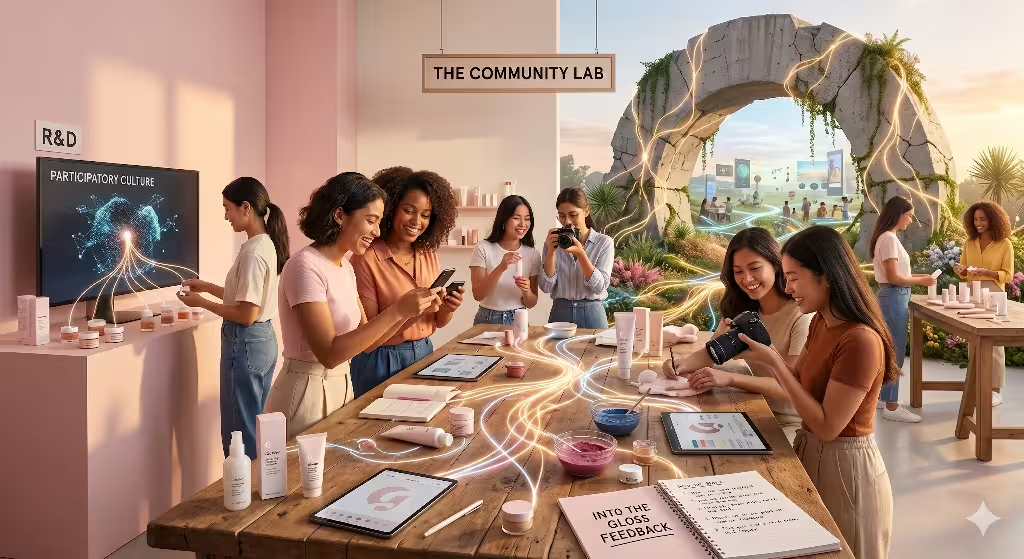
One of the best examples of rhizomatic branding in the real world is the beauty brand Glossier. It did not start as a big company with a huge marketing budget. It started as a blog called “Into the Gloss.” The founder, Emily Weiss, did something very different from the old centralized identity model. Instead of telling women what they should look like, she asked them what they actually used in their bathrooms.
Glossier became a brand by listening to its community. The community became the co-creator of the products. This is a perfect example of how rhizomatic branding works. The brand did not grow from a corporate office down to the fans. It grew from the fans up and out. Glossier products look like they belong on a real person’s shelf, not in a perfect museum.
By using user-generated content, Glossier allowed its identity to be “deterritorialized.” This is another term from philosophy that means taking something out of its original, rigid context and letting it move freely. The beauty conversation moved from the department store counter (the old trunk) to the user’s mirror (the new nodes). This community-led growth is much more powerful than any traditional ad campaign because it feels real. It is a network of people talking to people, which is the heart of rhizomatic branding.
The Rise of Web3 and Decentralized Brand Governance
As we look toward the future, rhizomatic branding is becoming even more important because of new technology like Web3 and the blockchain. In the old world of centralized identity, the company owned the brand 100%. In the new world, communities can actually own a piece of the brand they love.
We are seeing the rise of DAOs, or Decentralized Autonomous Organizations. These are groups where people use digital tokens to vote on how a brand should grow. This is the ultimate form of rhizomatic branding. There is no CEO at the top of a trunk. Instead, there are thousands of nodes, real people, who all have a say.
In this world, brand architecture becomes distributed. A logo might not be one fixed image anymore. It might be a modular piece of art that fans can change and adapt. This creates a “trustless” brand. You don’t have to trust a corporate promise because the rules are written into the code of the network. Rhizomatic branding in Web3 means the brand is everywhere and nowhere at once. It is owned by everyone, which makes it incredibly resilient and exciting.
Questions Answered about Rhizomatic Branding
When people start learning about these concepts, they often have the same questions. Let’s answer a few of them through the lens of rhizomatic branding.
What is the difference between rhizomatic and hierarchical branding?
The biggest difference is how they connect. Hierarchical branding is like a ladder. You have to go up and down the rungs. One thing is always under another thing. Rhizomatic branding is like a spider web. You can move from any point to any other point directly. It is about connectivity versus subordination.
How does a brand stay consistent in a rhizomatic model?
This is a great question. If everyone is in charge, how does it not become a mess? The secret is having a “liquid identity.” Instead of forcing everyone to use the same logo, you share the same values. As long as the “vibe” or the “spirit” of the brand stays the same, the visual parts can change. Rhizomatic branding relies on shared beliefs rather than strict rules.
Can a traditional brand become rhizomatic?
Yes, but it is hard. It requires the leaders to let go of control. A “Branded House” like a traditional bank can start to create smaller, independent communities or sub-brands. They have to move from being a single trunk to being an ecosystem of different nodes. It is a slow transition from centralized identity to a more networked approach.
Is decentralized identity the same as rhizomatic branding?
They are very close cousins. Decentralized identity usually refers to the technical side—how we prove who we are online without a central authority. Rhizomatic branding is the bigger, philosophical idea of how a brand grows and connects. One is the tool, and the other is the strategy.
Exploring the “And…And…And” Logic
Let’s talk a little more about that “And…And…And” logic we mentioned earlier. In a centralized identity, the logic is usually “Either/Or.” You are either a luxury brand or a discount brand. You are either for young people or for old people. This makes life simple for the marketing department, but it limits your growth.
Rhizomatic branding says you can be a luxury brand AND a community-focused brand AND a high-tech innovator. Because you are a network of nodes, different parts of your brand can appeal to different people at the same time. This is how you reach a global audience without losing your soul. You don’t have to pick just one path. You can grow in every direction at once. This is the true freedom of rhizomatic branding.
The Technical Side: LSI Keywords and Semantic Entities
To really get deep into rhizomatic branding, we have to talk about how it maps out. Philosophers like to use the word “Cartography.” This means making a map. A centralized identity is like a “decalcomania,” it is a tracing that you just copy over and over. But rhizomatic branding is a map that you explore. It is open and can be changed by the people using it.
Another important idea is the “Line of Flight.” This is when a brand escapes its own definition to do something totally new. Think about a brand like Supreme. It started as a small shop for skateboarders. But because it used a rhizomatic approach, it was able to make “lines of flight” into high fashion, home goods, and even tools. It didn’t stay stuck in one box. It grew where the connections took it.
In the world of marketing, we call this “Agile Branding.” It means you are ready to move and change based on what the network wants. By focusing on brand equity through social web connections rather than just top-down ads, companies can create a much stronger bond with their customers. Rhizomatic branding is all about these horizontal connections that defy the old vertical rules of business.
Quick Reference Guide: Key Terms Explained Simply
| Term | Simple Meaning | Why it Matters |
| Rhizome | A root system like ginger that grows sideways. | It describes brands with no single center. |
| Centralized Identity | A top-down brand where one office makes all the rules. | It is the traditional but brittle model of business. |
| Node | A single point in a network, like a fan or a small shop. | These are the building blocks of rhizomatic branding. |
| Deterritorialization | Taking an idea out of its old, rigid box. | It allows brands to move into new and exciting areas. |
| Multiplicity | Being many things at the same time. | It lets a brand appeal to many different groups at once. |
| DAO | A group where everyone has a vote through digital tokens. | It is the future of community ownership in branding. |
Strategic Implementation: How to Build Your Network
If you want to move away from a centralized identity and start using rhizomatic branding, you need a plan. You cannot just flip a switch. You have to change how you think about your business.
First, you must Foster Nodes. Stop looking for one big celebrity spokesperson. Instead, find hundreds of micro-influencers and passionate fans. Each of these people is a node in your rhizome. Give them the power to tell their own version of your story. This makes your brand feel much more authentic.
Second, you need to Create Interconnected Entry Points. A customer should be able to find your brand in many different ways. Maybe they see a funny meme on Reddit. Maybe they visit a beautiful pop-up shop. Maybe they read a deep article about your values. In rhizomatic branding, every entry point is equally valid. You don’t have to force everyone through the same “front door.”
Finally, you must Embrace Flux. The world is always changing. Your brand should change too. This is what we call reterritorialization. It means finding new ground and making it yours. If you stay stuck in a centralized identity, you will eventually become a relic of the past. But if you allow yourself to grow like a rhizome, you will always be relevant because you are always connecting to what is happening right now.
Mapping Your Future Success
If you are a business leader, start thinking of yourself as a cartographer—a mapmaker. Stop trying to trace the old patterns of centralized identity. Start looking for where the new connections can be made. Where are your fans talking? What are they saying? How can you give them the tools to grow your brand for you?
Rhizomatic branding is an invitation to play. It is an invitation to be creative and to trust the people who love your products. It might feel scary to let go of the trunk, but I promise you, the view from the network is much better. The world is moving toward decentralized, fluid systems. By embracing rhizomatic branding now, you are putting yourself at the forefront of the next great wave of human connection.
Thank you for exploring this interesting and exciting topic with me. Whether you are building a new startup or managing a global giant, remember that the most beautiful things in nature don’t have a center. They are networks of life, just like your brand can be. Choose the rhizome, and watch your influence grow in ways you never thought possible.
Thriving in the Tangled Web
As we wrap up this look at rhizomatic branding vs. centralized identity, the main lesson is clear. The choice is not between having a plan and having chaos. The choice is between being rigid or being resilient. A centralized identity is easy to understand, but it is hard to maintain in a fast world. It is a tall tree that can be knocked down by a single storm.
Rhizomatic branding is more complex, but it is much more powerful. It is a tangled web of roots that holds the soil together. It allows for creativity, community, and constant growth. In the years to come, the most successful brands will be the ones that let go of the “trunk” and find their strength in the network. They will be the brands that are everywhere and nowhere, growing silently but surely under the surface of the culture.
The future of branding is not about being a monolith. It is about being an ecosystem. By choosing rhizomatic branding, you are choosing to be alive. You are choosing to connect, to change, and to thrive in the beautiful, messy world of the modern internet. So, are you ready to let go of control and start growing your network? The rhizome is waiting for you to make the first connection.