The Biological Imperative of Shape
Have you ever wondered why you feel so relaxed when you look at a rolling hill or a winding river? It is not just a coincidence. For thousands of years, humans lived outdoors. Our eyes and brains grew to love the curves and patterns of the world around us. In the modern world, we spend most of our time looking at screens. Most websites are built with straight lines and sharp corners. These are not natural landscape shapes. Because our brains are not used to these harsh lines, looking at a typical computer screen can actually cause stress.
Here at Silphium Design LLC, we study how we can bring the beauty of the outdoors into the digital world. This is called biophilic design. It means “love of living things.” When we focus on natural landscape shapes in web design, we make websites that feel like a breath of fresh air. Instead of a boxy, boring page, we create a space that feels like a walk in the park. This helps people stay on your website longer. It also makes them feel more at ease. In this article, we will explore why these shapes matter and how you can use them to make your website better for everyone.
Table of Contents
Defining the Forms: What are Natural Landscape Shapes?
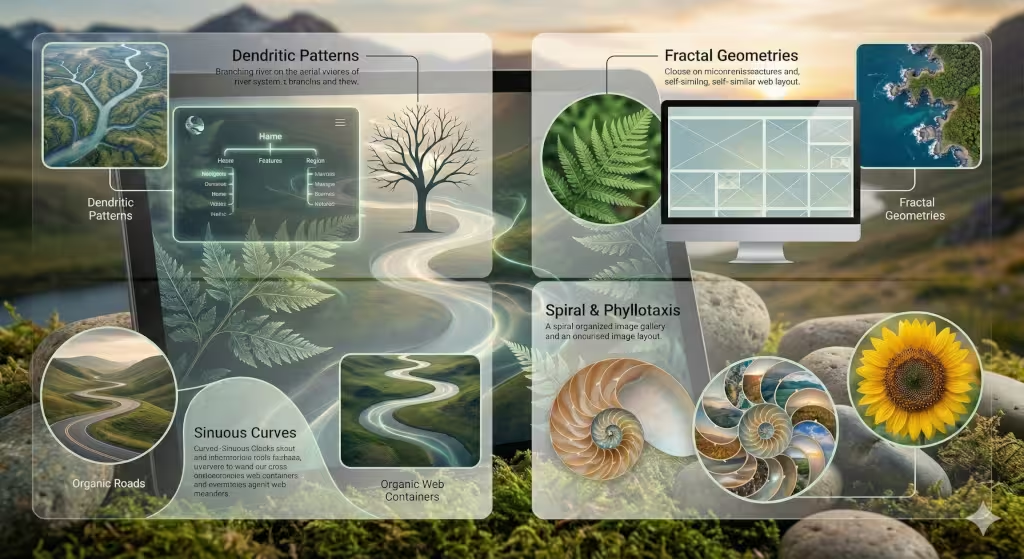
To use these patterns on a website, we first have to know what they are. Nature does not use a ruler. It uses energy, water, and growth to make forms. When we talk about natural landscape shapes, we are usually talking about four main types.
Dendritic Patterns
Think of the branches of a tree or the way a river looks from high up in an airplane. These are called dendritic patterns. They start with one main path and branch out into smaller and smaller paths. On a website, this is perfect for navigation. It helps a user see where to go next without getting lost.
Fractal Geometries
Fractals are shapes that look the same no matter how much you zoom in. A fern leaf is a great example. One small part of the leaf looks just like the whole leaf. Our brains find these shapes very easy to process. When a website uses fractal natural landscape shapes, the viewer does not have to work as hard to understand what they are seeing.
Sinuous Curves
Nature loves a curve. Think of a snake moving or a river meandering through a meadow. These “S” shapes are very soothing. In web design, we use these to guide the eye. Instead of jumping from one block of text to another, a sinuous curve leads the reader’s eyes down the page in a smooth motion.
Spiral and Phyllotaxis
You can see spirals in seashells and the way seeds grow in a sunflower. This is often called the Fibonacci sequence. It is a mathematical way that nature organizes itself to be strong and beautiful. Using these natural landscape shapes in your layout makes your website feel balanced and “right” to the human eye.
The Psychology of Biomorphic Design
Why does any of this matter for a business? It matters because of how the human mind works. People often ask, “How do natural shapes affect the human mind?” The answer is simple: they make us feel safe.
When you see a sharp, jagged edge, your brain thinks of a thorn or a broken rock. It puts you on high alert. But when you see soft natural landscape shapes, your brain relaxes. This is known as the Savannah Hypothesis. Scientists believe that because our ancestors lived on the grassy plains of Africa, we feel best when we see landscapes that remind us of that home. We like to have a clear view of what is ahead (Prospect) and a safe place to hide (Refuge).
By understanding natural landscape shapes, we can build websites that offer this same feeling. A large, beautiful photo at the top of a page provides “Prospect.” A cozy, well-organized sidebar can provide “Refuge.” When a visitor feels safe, they are more likely to trust your brand and buy your products.
Strategic Implementation in Web Design (2026 Trends)
In the year 2026, web design is moving away from the “grid.” For a long time, every website looked like a set of boxes. Now, we are using new tools to bring natural landscape shapes to the screen.
One trend is using “Anti-Grid Layouts.” This does not mean the site is messy. It means the content is placed in a way that feels organic. We use “SVG Masking” to cut images into circles or leaf shapes instead of squares. We also use “Shape Dividers.” Instead of a straight line between two sections of a page, we might use a line that looks like the top of a mountain range or a gentle wave.
We also look at “Micro-interactions.” These are the tiny movements on a site. When you hover your mouse over a button, it should not just flash. It should grow or move like a leaf blowing in the wind. These small uses of natural landscape shapes make the digital world feel alive.
SEO, GEO, and AEO: Why Content Structure Matters
You might think that natural landscape shapes only matter for how a site looks. But they also matter for how search engines find you. Today, we have to think about more than just Google. We have to think about AI engines too. This is called Generative Engine Optimization (GEO) and Answer Engine Optimization (AEO).
AI models like to read content that is organized clearly. When we use headings that talk about natural landscape shapes, we are telling the AI exactly what the page is about. We use “Structured Data” to help the computer understand that a “Dendritic Pattern” is a type of design.
When someone asks an AI, “How do I make my website more calming?” the AI looks for experts who talk about natural landscape shapes. By writing about these topics in a clear, deep way, you can ensure that your website stays at the top of the search results. It is about being the best answer to the user’s question.
Case Studies: Nature-Inspired Entities in the Wild
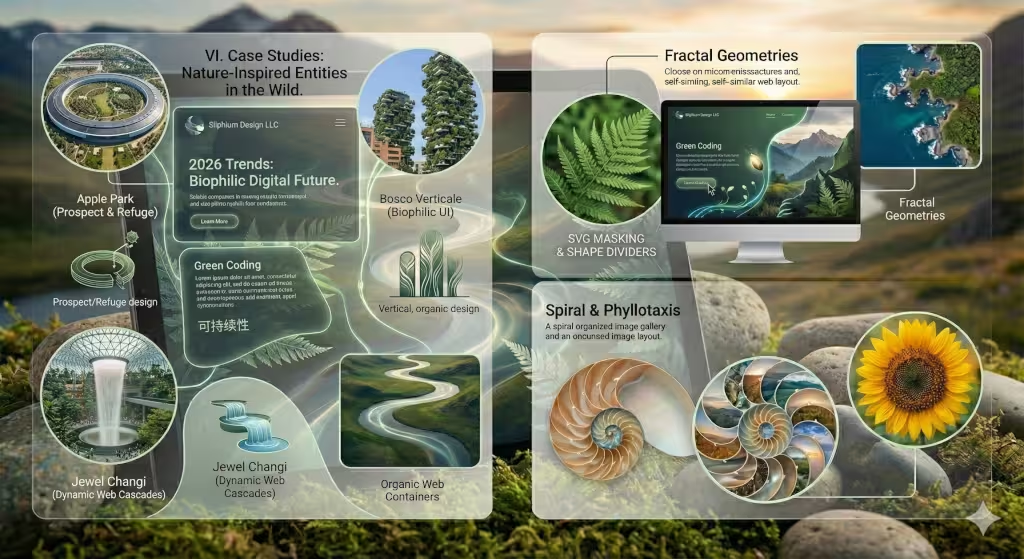
To really see how natural landscape shapes work, we can look at some famous buildings and designs.
Apple Park
The huge Apple headquarters in California is a giant circle. It was built to fit into the trees and hills around it. It uses the “Refuge” and “Prospect” ideas we talked about. The glass walls let you see the nature outside, which makes the workers feel better.
Bosco Verticale
This is a pair of tall buildings in Italy covered in hundreds of trees. It shows how even a “box” can be transformed by natural landscape shapes. The trees soften the hard edges of the building. We can do the same thing on a website by adding organic textures to a standard layout.
The Jewel Changi
This is a famous airport in Singapore with a massive indoor waterfall. The water flows in a perfect circle. This use of natural landscape shapes turns a stressful place like an airport into a peaceful garden. On a website, we can use video or animation of water to create that same peace.
Future-Proofing with “Green Coding” and Sustainability
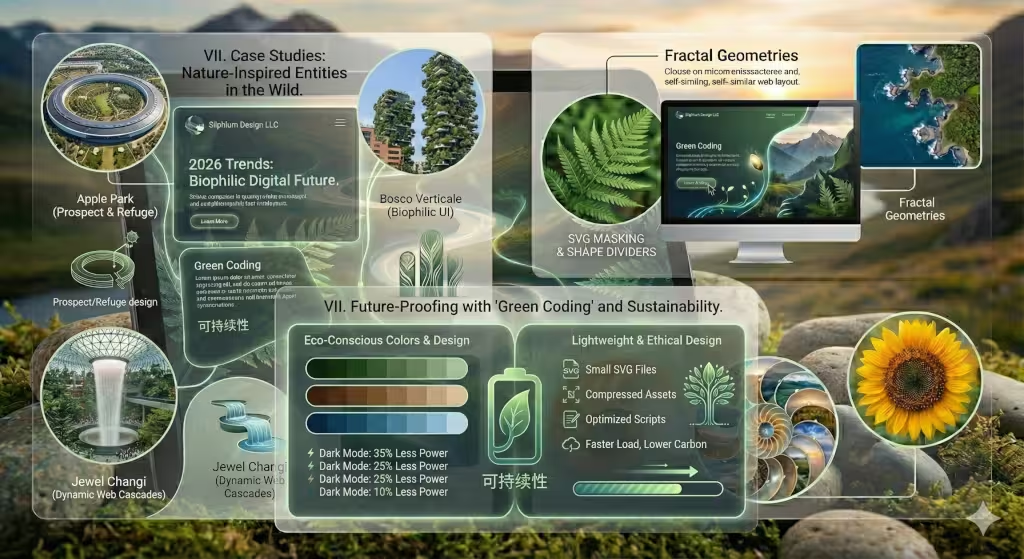
Being an expert in natural landscape shapes also means caring about the planet. “Green Coding” is a way of writing website code that uses less electricity.
Did you know that some colors use more power on a phone screen than others? Darker, natural tones like forest green or deep ocean blue are often better for the battery. Also, using vector-based natural landscape shapes (like SVGs) keeps the file sizes small. Smaller files mean the website loads faster and uses less energy from the servers. This is called “Sustainable Web Design.” It is good for the earth, and it is good for your SEO because fast websites rank higher.
The Evolution of the Digital Ecosystem
The internet is changing. People are tired of cold, glowing boxes. They want to feel a connection to the world around them, even when they are online. By understanding natural landscape shapes, we can build a bridge between the digital and the physical.
Whether it is using the curve of a river to guide a reader’s eye or using the math of a seashell to organize a layout, natural landscape shapes are the key to the future of design. At Silphium Design LLC, we believe that the best websites are the ones that feel like they grew there naturally.
When you use natural landscape shapes, you are not just making a pretty site. You are making a site that respects the human mind and the natural world. This leads to happier users, better search rankings, and a more beautiful internet for everyone.
Understanding the Details
| Design Element | Natural Landscape Shapes Used | Benefit to User |
| Navigation Menu | Dendritic (Tree branching) | Easy to find pages |
| Background Images | Fractal (Clouds, Mountains) | Lowers visual stress |
| Page Transitions | Sinuous (Water waves) | Smooth reading flow |
| Buttons/Icons | Phyllotaxis (Spiral/Petal) | Feels familiar and safe |