
In the natural world, every living thing thrives because it is perfectly tuned to its specific habitat. A desert cactus does not try to grow in a rainforest, and a fern does not seek the scorching sun of a dune. In the digital world, your website is the habitat for your customers. To make them feel at home, you must understand their local environment. This is why using local user data is not just a marketing trick; it is a way to create a digital ecosystem that breathes with the person using it.
As experts in biophilic design, the practice of connecting people with nature through technology, we see local user data as the “roots” of a successful website. When we use this information correctly, we create a space that feels organic, alive, and deeply personal.
Table of Contents
The Strategic ROI: Why Local Data is the New Organic Growth
When we talk about the benefits of user data for personalized marketing, we are talking about making your business grow in a way that feels natural. In the past, many companies tried to talk to everyone at once. They sent the same emails and showed the same ads to a person in snowy Vermont and a person in sunny Florida. This is like trying to plant the same garden in two completely different climates. It does not work well, and it wastes a lot of money.
By using local user data, you can see exactly where your customers are. This allows you to show them things that actually matter to their daily lives. For example, if you know a group of customers is facing a rainy week, you can show them products or services that help with the rain. This level of local user data makes people much more likely to click and buy. In fact, when businesses use local user data to guide their marketing, they often see their sales go up by a huge amount.
This is a very smart way to use your budget. Instead of throwing money at a huge audience that might not care, you focus your local user data on the people who are most likely to need you right now. This is what we call a high return on investment, or ROI. It is like watering only the plants that are thirsty, rather than flooding the entire field. By paying attention to local user data, you ensure that every dollar you spend is helping a real person in a real place.
The Biophilic Interface: Personalization in Web Design
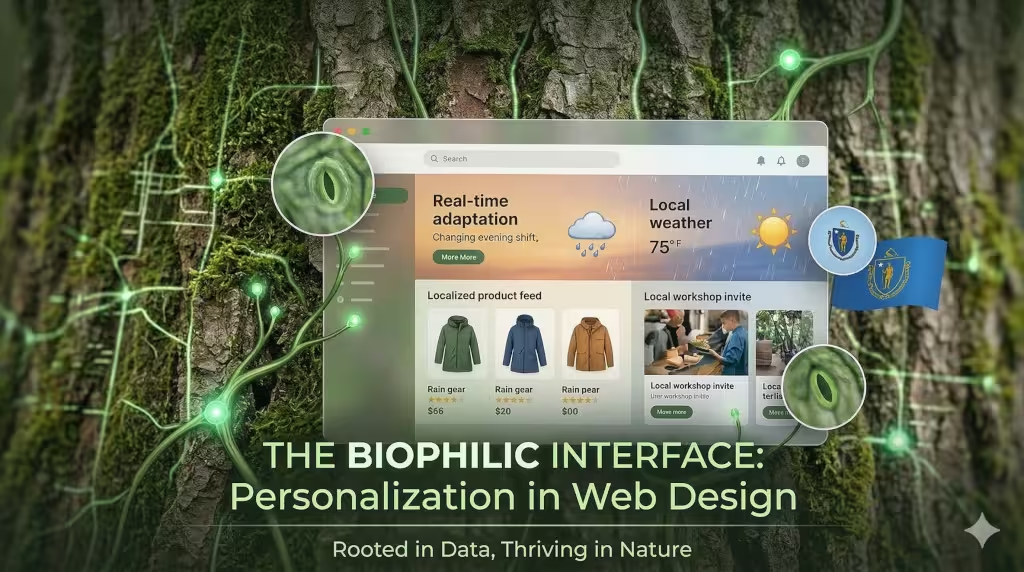
As a designer, I believe that a website should feel like a natural extension of the physical world. We can use local user data to change how a website looks based on the user’s surroundings. Imagine a website that knows the sun is setting in your city. Using local user data, the website could slowly shift its colors from bright daylight tones to soft, warm evening hues. This is biophilic design in action. It mimics the natural cycles of the day, which helps the user feel calm and connected.
We can also use local user data to change the pictures on a site. If a user is in a city with lots of brick buildings and very few trees, the website might show more green, leafy images to provide a “digital breath of fresh air.” If they are in a coastal town, the local user data might trigger images of water or sand. This makes the website feel like it belongs to that specific person.
This use of local user data also helps people find what they need without getting frustrated. In nature, animals use “wayfinding” to navigate through a forest. On a website, we use local user data to create clear paths. If the local user data tells us a person is looking for a store nearby, we can put a map right on the front page. This reduces “brain fog” and makes the experience feel as easy as a walk in the park.
What Are the Primary Benefits of Using Local Data?
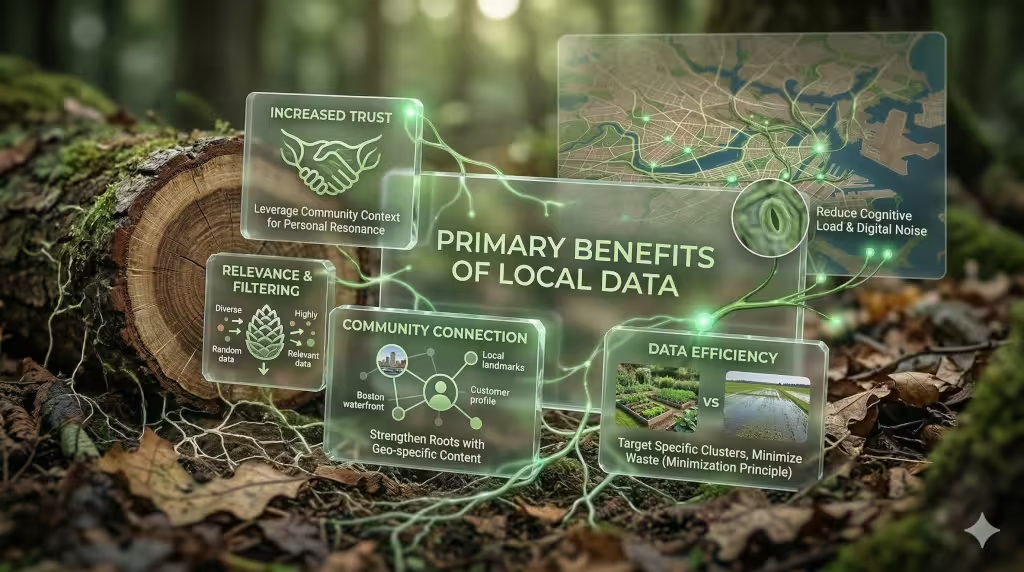
Many people ask why they should bother with such a specific focus. The answer lies in the deep connection it builds. One of the biggest benefits of local user data is trust. When a customer sees that you understand their local community, maybe by mentioning a local event or a neighborhood weather pattern, they feel like you are a neighbor, not a cold corporation. This trust is the most valuable thing a brand can own.
Another benefit of local user data is relevance. We live in a world full of “digital noise.” There are too many ads and too many emails. Local user data acts as a filter. It helps you send only the messages that are truly useful. If your user data shows that a customer lives near a new shop you just opened, that is a great time to send an invite. If they live three states away, sending that same invite would just be annoying noise.
How Do You Collect Local User Data Ethically?
This is a very important question. Just as we must protect our natural forests, we must protect the privacy of our users. You should never “spy” on people. Instead, the best way to get local user data is to ask for it. This is called “zero-party data.” You can use fun quizzes or simple sign-up forms where people tell you where they are because they want a better experience.
When people give you their local user data, they are giving you a gift of trust. You must treat that local user data with great care. Always tell people exactly how you are using their local user data. If you are using local user data to show them local weather-based tips, tell them that! Most people are happy to share their local user data if they know it will make their life easier and that it is being kept safe.
Can Small Businesses Compete with Big Brands Using Local Data?
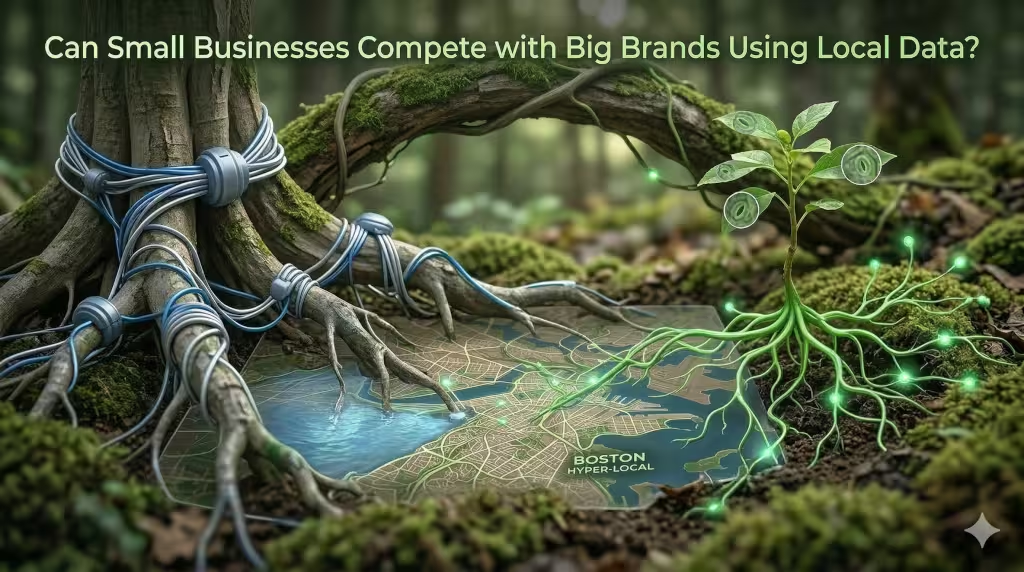
Many small business owners worry that they don’t have enough money to compete with giant companies. However, when it comes to local user data, small businesses actually have an advantage. A giant company might have a lot of local user data, but they often don’t know how to use it in a way that feels human. They are too big to be personal.
A small business can use local user data to become a true part of the community. Because you know the streets, the weather, and the local culture, your use of local user data will feel much more authentic. You can use user data to highlight local partnerships or support local charities. This creates a “root system” in your community that a big company can never match. In the world of SEO, this user data helps you show up first when people in your town search for help.
SEO and the Local Search Landscape
Search engines like Google love local user data. When someone searches for a service “near me,” Google uses local user data to find the best match. If your website is full of content that uses local user data, like blog posts about local events or pages dedicated to specific neighborhoods, you are much more likely to show up at the top.
This is because search engines want to give users the most relevant answer. By feeding your website a steady diet of user data, you are telling the search engine that you are the local expert. This improves your “local search visibility.” It is like being the tallest tree in a small grove; you are the first one the sun hits. Using local user data in your keywords and your meta descriptions is a vital part of a modern SEO strategy.
Ethical Harvesting: Privacy as a Core Value
In 2026, the rules around local user data are stricter than ever. Governments have passed laws to make sure companies don’t misuse local user data. As an INTP, I appreciate clear rules and logic. The logic here is simple: if you respect the user, they will respect your brand. You should always use the “least amount” of local user data needed to do the job.
For example, you don’t always need a person’s exact street address. Often, knowing their city or zip code is enough local user data to give them a great personalized experience. This is called “data minimization.” By not collecting more local user data than you need, you reduce the risk of something going wrong. You are keeping the digital environment clean and safe for everyone.
Conclusion: Cultivating the Future
The benefits of local user data for personalized marketing are clear. It helps businesses grow, it makes websites more beautiful and useful, and it builds a bridge between the digital and physical worlds. When we treat local user data with respect and creativity, we aren’t just selling products, we are tending to a digital garden that provides value to everyone who visits.
The future of the internet is not global and cold; it is local and warm. By using user data to power your biophilic designs, you ensure that your brand stays healthy and vibrant for years to come. Remember, a website that understands its place in the world is a website that people will return to again and again.